The Inquisitory
by Robert Pinget
On This Page
Description
The Inquisitory consists entirely of the interrogation of an old, deaf servant regarding unspecified crimes that may or may not have taken place at his master's French chateau. The servant's replies - which are by turns comic, straightforward, angry, nostalgic, and disingenuous - hint at a variety of seedy events, including murder, orgies, tax fraud, and drug deals. Of course, the servant wasn't involved with any of these activities - if the reader chooses to believe him. In trying to show more convince the inquisitor of his innocence, the servant creates a web of half-truths, vague references, and glaring inconsistencies amid "forgotten" details, indicating that he may know more than he's letting on. show lessTags
Recommendations





































Member Recommendations
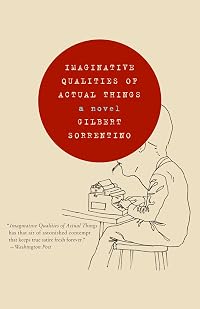
bluepiano Another aged former servant obliquely revea;s his boss's unsavoury nature . Remains is good reading but is pace Inquisitory lite.
Member Reviews
The conceit here is that an investigator, or team of investigators, is questioning the former servant of some rich folk. The servant is old and half-deaf, and he isn't too keen on the questioning, so when they ask him to describe a room he goes on and on about the wallpaper, where each chair came from, how full that ashtray usually is, more and more detail until they finally tell him to stop ("Cut it short.").
To all would-be authors of first-person or stream-of-conscious narrative, I say simply: This is how it's done. No need for an elaborate framing device, a diary or a confessional or a parasite living in the character's brain. Just let them talk.
Pinget demonstrates an understanding of memory that exceeds Proust. The servant show more remembers things as they would be remembered: by association and by moving on to another subject so a forgotten memory will surface at its leisure. He comes close to lecturing his interregator(s) on this, even telling them that they haven't asked the right questions to get him to remember what they want to find out from him.
The novel-of-nobility authors could learn a trick or two as well. Where Thomas Mann will describe a party by detailing the geneology of every notable who walks through the door, thereby boring the pants off any non-geneologists in the audience, Pinget doles out the information as it suits the situation. "Oh the guy she went off with at the party, she had slept with his friend originally, but always had her eye on him, see he is from the Whatever Dynasty of Chateau Somewhere, his parents spent most of the money they got from their lands but he invested the remainder in soybeans, a real talent like his grandfather, the Duc de Somewhere...".
So sure, it's boring at times, and one never learns what the investigators are after, nor even whether they have found it. The interview does not necessarily begin at the start of the book, nor finish at the end; it may continue for days or weeks as the interrogators carefully trip up the servant, or get him to let slip a detail that shows he knows more than he's letting on. It is all incredibly well done, the sort of attention to detail and consistency of character that the majority of 20th century "literary" authors seem to aspire to, but never reach. show less
To all would-be authors of first-person or stream-of-conscious narrative, I say simply: This is how it's done. No need for an elaborate framing device, a diary or a confessional or a parasite living in the character's brain. Just let them talk.
Pinget demonstrates an understanding of memory that exceeds Proust. The servant show more remembers things as they would be remembered: by association and by moving on to another subject so a forgotten memory will surface at its leisure. He comes close to lecturing his interregator(s) on this, even telling them that they haven't asked the right questions to get him to remember what they want to find out from him.
The novel-of-nobility authors could learn a trick or two as well. Where Thomas Mann will describe a party by detailing the geneology of every notable who walks through the door, thereby boring the pants off any non-geneologists in the audience, Pinget doles out the information as it suits the situation. "Oh the guy she went off with at the party, she had slept with his friend originally, but always had her eye on him, see he is from the Whatever Dynasty of Chateau Somewhere, his parents spent most of the money they got from their lands but he invested the remainder in soybeans, a real talent like his grandfather, the Duc de Somewhere...".
So sure, it's boring at times, and one never learns what the investigators are after, nor even whether they have found it. The interview does not necessarily begin at the start of the book, nor finish at the end; it may continue for days or weeks as the interrogators carefully trip up the servant, or get him to let slip a detail that shows he knows more than he's letting on. It is all incredibly well done, the sort of attention to detail and consistency of character that the majority of 20th century "literary" authors seem to aspire to, but never reach. show less
I read this book in French—not too hard for me!—upon an LTer's recommendation. The only other review of this book (by lriley) concludes with: "IMO one of the best books published in the French language in the 20th century." I'm not sure I can be as laudative, but the fact is that this book is really impressive. Pinget, even without having been a member of Oulipo—at least as far as I know—, could have well belonged it. He is what Oulipeans called "un plagiaire par anticipation". (I don't think it's necessary to translate this phrase.)
lriley also states that this book bears a ressemblance to Perec's Life a User's Manual. It does indeed, but also to The Things for all the descriptions of furniture. To me, the difference between show more Pinget and Perec is that Perec, who was more scientifically educated, would have included an index at the end of the book to help the reader with the hundreds of characters that inhabit the book. This number of characters is properly amazing. I guess Pinget had a big headache when he finished his book. From the beginning, I had the impression to be like a dry spunge which is progressively and very slowly imbibed by the narrative and all the descriptions. I thought at first that the absence of punctuation would be a problem, but one forgets it after a few pages.
Quite unexpectedly, there are many unvoluntary puns uttered by the old servant. These are not exactly puns, but rather mispronunciations of words and phrases such as those one can spot sometimes in the speech of uneducated people. I wonder how these puns could be translated to English... For instance, at page 26 (my copy in French begins at page 7 and ends at page 489, in case you have time to look up the English version after computing proportions), there is comme dit Marthe quand on ne sort pas de la cuisine de Jupiter il faut tâcher d'y rentrer which is an allusion to the phrase il croit sortir de la cuisse de Jupiter, literally translated he thinks he's coming out of Jupiter's thigh, meaning he believes he's a god or a half-god, but he's not". /cuisse/ has been changed to /cuisine/, and the servant's statement can be translated as when you don't come out of Jupiter's kitchen, it's better to try to enter it, which of course has no meaning. I wonder how this could be translated to English. This book should have been a nightmare for the translator. I list below some other mispronunciations of words by the servant.
I found a probable misprint (pp 454-455 in my copy). I wonder if this error has been kept in the translation to English: in the following text, Gérard should be replaced by Chantre:
Chantre est venu lui [Marthe] dire au revoir (...) ces messieurs en robe de chambre avec Gérard disaient au revoir à Rivière (...) [Rivière] est monté avec Gérard dans sa voiture c'est une marque anglaise et ils ont démarré et voilà
(...)
Où se rendaient Rivière et Chantre
In conclusion, lriley is right: highly recommendable book for its originality.
My best mispronunciations
moi elle me trouvait l'oeil droit d'un clergyman c'est des gens qui volent tout ce qu'ils trouvent et l'oeil gauche d'un nymphatique
clergyman: read cleptomane
nymphatique: read lymphatique, the deformation nymphatique probably stemming from nymphomane, to rhyme with clergyman/cleptomane
comme dit Marthe quand on ne sort pas de la cuisine de Jupiter il faut tâcher d'y rentrer
See supra
il y a un jet d'eau au milieu à plusieurs jets avec des statues c'est des dieux mythologiques Neptune et Amphibite je crois
Amphibite: read Amphitrite; Amphibite sounds like amphibie, and also rhyme with bite
c'est lui qui a opéré ma soeur de la pandicite
la pandicite: read l'appendicite, la pandicite sounding like la pandémie
il revenait régulièrement crotté à neuf heures et demie pour son bricfesse avec Lady Chastenoy qui était levée
bricfesse: read breakfast; bric evokes the verb briquer, and fesse
ce qui fait que les amis de ces messieurs se désintéressent de lui c'est un misancroque
misancroque: read misanthrope
pour les spectacles ils ont un tripe-tise mieux qu'en ville paraît-il
tripe-tise: read strip-tease
et derrière j'oublie un salon pour les électriciennes qu'ils appellent ça, des manières d'infirmières pour arranger la figure maquillage et tout
électriciennes: read esthéticiennes
c'est après qu'on a su qu'il était maniaque un homme cédé comme on dit
un homme cédé: read un obsédé
La Vinasse comme on l'appelait il aimait trop sa marchandise il est mort d'un sirop du foie
un sirop du foie: read une cirrhose du foie
je n'aime pas avoir affaire à elle sitôt qu'on insiste elle montre ses grands cheveux prenant l'air offensé
elle montre ses grands cheveux: read elle monte sur ses grands chevaux
ça s'appelait les Foutreries d'Escarpin une histoire compliquée où le larbin fait le pitre tout le temps
les Foutreries d'Escarpin: read les Fourberies de Scapin
Je n'ai jamais aimé ça les armures et les crottes de mailles et les cuirasses il n'y a que ça le long des murs
les crottes de mailles: read les cottes de mailles
un visiteur un jour a éteint sa cigarette en plein sur la cuisse d'une noyade
noyade: read naïade
les portes du reste ferment armétique pour la poussière
armétique: read hermétique show less
lriley also states that this book bears a ressemblance to Perec's Life a User's Manual. It does indeed, but also to The Things for all the descriptions of furniture. To me, the difference between show more Pinget and Perec is that Perec, who was more scientifically educated, would have included an index at the end of the book to help the reader with the hundreds of characters that inhabit the book. This number of characters is properly amazing. I guess Pinget had a big headache when he finished his book. From the beginning, I had the impression to be like a dry spunge which is progressively and very slowly imbibed by the narrative and all the descriptions. I thought at first that the absence of punctuation would be a problem, but one forgets it after a few pages.
Quite unexpectedly, there are many unvoluntary puns uttered by the old servant. These are not exactly puns, but rather mispronunciations of words and phrases such as those one can spot sometimes in the speech of uneducated people. I wonder how these puns could be translated to English... For instance, at page 26 (my copy in French begins at page 7 and ends at page 489, in case you have time to look up the English version after computing proportions), there is comme dit Marthe quand on ne sort pas de la cuisine de Jupiter il faut tâcher d'y rentrer which is an allusion to the phrase il croit sortir de la cuisse de Jupiter, literally translated he thinks he's coming out of Jupiter's thigh, meaning he believes he's a god or a half-god, but he's not". /cuisse/ has been changed to /cuisine/, and the servant's statement can be translated as when you don't come out of Jupiter's kitchen, it's better to try to enter it, which of course has no meaning. I wonder how this could be translated to English. This book should have been a nightmare for the translator. I list below some other mispronunciations of words by the servant.
I found a probable misprint (pp 454-455 in my copy). I wonder if this error has been kept in the translation to English: in the following text, Gérard should be replaced by Chantre:
Chantre est venu lui [Marthe] dire au revoir (...) ces messieurs en robe de chambre avec Gérard disaient au revoir à Rivière (...) [Rivière] est monté avec Gérard dans sa voiture c'est une marque anglaise et ils ont démarré et voilà
(...)
Où se rendaient Rivière et Chantre
In conclusion, lriley is right: highly recommendable book for its originality.
My best mispronunciations
moi elle me trouvait l'oeil droit d'un clergyman c'est des gens qui volent tout ce qu'ils trouvent et l'oeil gauche d'un nymphatique
clergyman: read cleptomane
nymphatique: read lymphatique, the deformation nymphatique probably stemming from nymphomane, to rhyme with clergyman/cleptomane
comme dit Marthe quand on ne sort pas de la cuisine de Jupiter il faut tâcher d'y rentrer
See supra
il y a un jet d'eau au milieu à plusieurs jets avec des statues c'est des dieux mythologiques Neptune et Amphibite je crois
Amphibite: read Amphitrite; Amphibite sounds like amphibie, and also rhyme with bite
c'est lui qui a opéré ma soeur de la pandicite
la pandicite: read l'appendicite, la pandicite sounding like la pandémie
il revenait régulièrement crotté à neuf heures et demie pour son bricfesse avec Lady Chastenoy qui était levée
bricfesse: read breakfast; bric evokes the verb briquer, and fesse
ce qui fait que les amis de ces messieurs se désintéressent de lui c'est un misancroque
misancroque: read misanthrope
pour les spectacles ils ont un tripe-tise mieux qu'en ville paraît-il
tripe-tise: read strip-tease
et derrière j'oublie un salon pour les électriciennes qu'ils appellent ça, des manières d'infirmières pour arranger la figure maquillage et tout
électriciennes: read esthéticiennes
c'est après qu'on a su qu'il était maniaque un homme cédé comme on dit
un homme cédé: read un obsédé
La Vinasse comme on l'appelait il aimait trop sa marchandise il est mort d'un sirop du foie
un sirop du foie: read une cirrhose du foie
je n'aime pas avoir affaire à elle sitôt qu'on insiste elle montre ses grands cheveux prenant l'air offensé
elle montre ses grands cheveux: read elle monte sur ses grands chevaux
ça s'appelait les Foutreries d'Escarpin une histoire compliquée où le larbin fait le pitre tout le temps
les Foutreries d'Escarpin: read les Fourberies de Scapin
Je n'ai jamais aimé ça les armures et les crottes de mailles et les cuirasses il n'y a que ça le long des murs
les crottes de mailles: read les cottes de mailles
un visiteur un jour a éteint sa cigarette en plein sur la cuisse d'une noyade
noyade: read naïade
les portes du reste ferment armétique pour la poussière
armétique: read hermétique show less
To me the masterwork of Pinget's novels. The format of 'The Inquisitory' is entirely question and answer revolving around the transcription from a retired butler or servant who throughout the text of the book is being interrogated by some nameless authority who has the power over him to demand answers to everything it asks. As we go deeper and deeper into the book the sometimes reluctant and embattled and flustered old man fleshes out not only every room in the chateau he formerly worked at for many years--painting by sculpture by knickknack, chair by table by loveseat, item by item, but also glimpes into the lives of those for whom he formerly worked (as it turns out 2 gay men), but also their friends and acquaintances, the other show more servants--branching also out to other local people and the small towns and villages that surround the chateau--characteristics being drawn on a wide variety of different people in the past and observations being made on landscapes and landmarks--descriptions of streets, shops, taverns in the surrounding villages and towns. Pinget literally creates through his mouthpiece of an old servant several towns and occupying them with all kinds of people in a variety of occupations including those who are criminal and/or political. Behind all this is a mystery brought about by the disappearance of his employers' former secretary and an apparent coverup by a group of prominent citizens with a somewhat satanic agenda. A fascinating and unique book and very entertaining. Probably the closest book I could compare it to would be Perec's--Life: A user's manual. IMO one of the best books published in the French language in the 20th century. show less
Ratings
Members
- Recently Added By
Author Information

52+ Works 787 Members
Before deciding to write professionally, Pinget practiced law in his native city of Geneva and studied painting at the Ecole des Beaux Arts in Paris. He is one of the less accessible of the so-called new novelists and has seemed little interested in attracting a large following. Nevertheless, The Inquisitory, awarded the 1962 Prix des Critiques, show more became a bestseller in France. It is essentially a monologue, a deaf old servant's meandering, half-truthful responses to the terse questions of an interrogator seeking information on a man who has vanished. As the old man speaks, he brings to light all of the vice and corruption of what appears to be a placid provincial town. In 1965 Pinget's Quelqu'un (Someone), about a man's search for a scrap of paper, won the Prix Femina. In addition to his work as a novelist, Pinget has also written a number of plays. (Bowker Author Biography) show less
Series
Belongs to Publisher Series
Common Knowledge
- Canonical title
- The Inquisitory
- Original title
- L'Inquisitoire
- Original publication date
- 1962
- Important places*
- Sirancy; Agapa
- First words
- Yes or no answer.
- Last words
- (Click to show. Warning: May contain spoilers.)I'm tired.
- Blurbers
- Updike, John
*Some information comes from Common Knowledge in other languages. Click "Edit" for more information.
Classifications
Statistics
- Members
- 175
- Popularity
- 187,801
- Reviews
- 3
- Rating
- (4.09)
- Languages
- 6 — Dutch, English, French, German, Spanish, Turkish
- Media
- Paper
- ISBNs
- 9
- UPCs
- 1
- ASINs
- 5