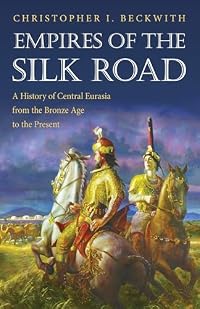
Empires of the Silk Road: A History of Central Eurasia from the Bronze Age to the Present
by Christopher I. Beckwith
On This Page
Description
A classic book now available on audio With narration by Jim Lee, who tells the epic story of the rise and fall of the Silk Road empires The first complete history of Central Eurasia from ancient times to the present day, Empires of the Silk Road represents a fundamental rethinking of the origins, history, and significance of this major world region. Christopher Beckwith describes the rise and fall of the great Central Eurasian empires, including those of the Scythians, Attila the Hun, the show more Turks and Tibetans, and Genghis Khan and the Mongols. In addition, he explains why the heartland of Central Eurasia led the world economically, scientifically, and artistically for many centuries despite invasions by Persians, Greeks, Arabs, Chinese, and others. In retelling the story of the Old World from the perspective of Central Eurasia, Beckwith provides a new understanding of the internal and external dynamics of the Central Eurasian states and shows how their people repeatedly revolutionized Eurasian civilization. Beckwith recounts the Indo-Europeans' migration out of Central Eurasia, their mixture with local peoples, and the resulting development of the Graeco-Roman, Persian, Indian, and Chinese civilizations; he details the basis for the thriving economy of premodern Central Eurasia, the economy's disintegration following the region's partition by the Chinese and Russians in the eighteenth and nineteenth centuries, and the damaging of Central Eurasian culture by Modernism; and he discusses the significance for world history of the partial reemergence of Central Eurasian nations after the collapse of the Soviet Union. Empires of the Silk Road places Central Eurasia within a world historical framework and demonstrates why the region is central to understanding the history of civilization. show lessTags
Recommendations

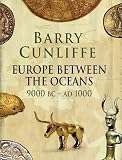
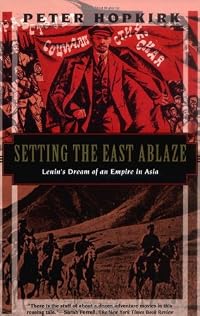
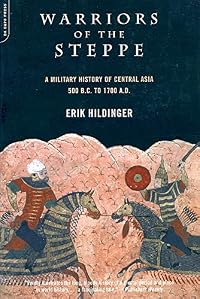
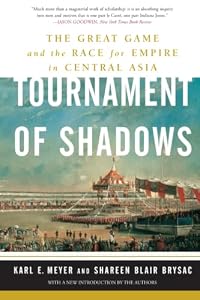





Member Reviews
Beckwith's premise is compelling: The so-called "Silk Road" has been misunderstood as a line connecting the Mediterranean, South Asian and East Asian societies of Antiquity and the Middle Ages. Instead the Silk Road was the entire economic system of a region that was--on and off--a well-spring of culture in its own right. Throughout the book he makes the important distiction of referring to civilizations like the Romans, Persians and Chinese as "peripheral". Rather than casting these societies as the protagonists of history being bothered by pestiferous nomads from the Eurasian interior, he shows they existed in a symbiotic relationship with the steppe zone. Over and over you see the pattern wherein peripheral states seek to limit free show more trade on their frontiers, which causes the nomadic peoples to attempt to re-institute free trade (often through warfare), sometimes resulting in the peripheral state attempting a whole-sale subjugation of the steppe zone, usually having the effect of either instigating their own demise through conquest or else succeeding and causing the complete collapse of the Silk Road economy and a recession beck home.
Beckwith makes a very interesting comparison between steppe nomads (Scythians, Huns, Turks, Mongols, etc.) and Europeans during the Age of Exploration. He posits that trade was--in both instances--the driving motive. Europeans sought to trade in Asian ports and only used force and subjugation when the trading partner was unwilling. Beckwith's premise is interesting but not entirely persuasive. He seeks to frame this behavior as fundamentally benevolent and make European conquest look like an unfortunate but necessary result of "Oriental" intransigence.
Indeed, the further I read the more troubled I became with Beckwith's authorial presence in the text, which is odd considering his vitriolic tirade against post-modernism in historical scholarship. After lambasting the tendency of contemporary scholars to deconstruct perspective and seek out implicit meanings in texts, he ironically peppers his work with intrusions that need hardly be looked for. As examples, he never refers to a government as democratic without including passive-aggressive quotation marks, he considers fascism, communism, rock n' roll music and free verse poetry as together constituting a subversive conspiracy he monolithically term Modernism intended to undermine benevolent monarcho-aristocratic classicism. He frequently blames populism and demagoguery for societies ills and for destroying civilized norms that were built by an aristocratic society that, he says, always exercised a sense of personal responsibility in exercising the levers of power.
His treatment of the pre-modern world is exemplary, but as soon as he steps into talking about the Modern Era his writing literally begins to sound psychotic. He commits dozens of pages to discussions of how much he dislikes Modern Art's destruction of beauty. He hopes that someday there might be Art once more, but he's not optimistic. The connection between this diatribe and anything thematically relevant to the preceding 300 pages is tangential at best, but closer to non-existent. He explicitly says that the term "World War I" is a misnomer since the vast majority of fighting occurred in Western Europe, but he chooses to describe its causes, vicissitudes and consequences in a remedial level of detail that actually insults the reader.
Back to the positive angle, the book was immensely valuable in filling in a portion of themap that used to present a giant question mark. The migrations of peoples and their enthnolinguistic relationships are far clearer to me now. From this book I now see how this formerly mysterious region has actually periodically reseeded the "peripheral" world. The Greco-Roman period was dominated by Indo-European language speakers originating from Iran; the Middle Ages was the result of their displacement by groups emerging from Central Asia and the concomitant synthesis of their Germanic and Romantic cultures; Arab, Indian and Chinese scholarship mixed and fomented in the prosperous Central Asian steppe empires of the medieval period.
The story is ultimately tragic. First, the advent of long-distance open-sea trade routes and, second, the 18th Century partition of Central Eurasia between Russia and China put an end to self-sufficiency, self-determination and entrepreneurial spirit for what had until then always been a dynamic and important region of the world. That subjugation continues today with the Uighers and Tibetans of western China and countless, virtually nameless distinct peoples shrouded from global consciousness by the national designation "Russia". show less
Beckwith makes a very interesting comparison between steppe nomads (Scythians, Huns, Turks, Mongols, etc.) and Europeans during the Age of Exploration. He posits that trade was--in both instances--the driving motive. Europeans sought to trade in Asian ports and only used force and subjugation when the trading partner was unwilling. Beckwith's premise is interesting but not entirely persuasive. He seeks to frame this behavior as fundamentally benevolent and make European conquest look like an unfortunate but necessary result of "Oriental" intransigence.
Indeed, the further I read the more troubled I became with Beckwith's authorial presence in the text, which is odd considering his vitriolic tirade against post-modernism in historical scholarship. After lambasting the tendency of contemporary scholars to deconstruct perspective and seek out implicit meanings in texts, he ironically peppers his work with intrusions that need hardly be looked for. As examples, he never refers to a government as democratic without including passive-aggressive quotation marks, he considers fascism, communism, rock n' roll music and free verse poetry as together constituting a subversive conspiracy he monolithically term Modernism intended to undermine benevolent monarcho-aristocratic classicism. He frequently blames populism and demagoguery for societies ills and for destroying civilized norms that were built by an aristocratic society that, he says, always exercised a sense of personal responsibility in exercising the levers of power.
His treatment of the pre-modern world is exemplary, but as soon as he steps into talking about the Modern Era his writing literally begins to sound psychotic. He commits dozens of pages to discussions of how much he dislikes Modern Art's destruction of beauty. He hopes that someday there might be Art once more, but he's not optimistic. The connection between this diatribe and anything thematically relevant to the preceding 300 pages is tangential at best, but closer to non-existent. He explicitly says that the term "World War I" is a misnomer since the vast majority of fighting occurred in Western Europe, but he chooses to describe its causes, vicissitudes and consequences in a remedial level of detail that actually insults the reader.
Back to the positive angle, the book was immensely valuable in filling in a portion of themap that used to present a giant question mark. The migrations of peoples and their enthnolinguistic relationships are far clearer to me now. From this book I now see how this formerly mysterious region has actually periodically reseeded the "peripheral" world. The Greco-Roman period was dominated by Indo-European language speakers originating from Iran; the Middle Ages was the result of their displacement by groups emerging from Central Asia and the concomitant synthesis of their Germanic and Romantic cultures; Arab, Indian and Chinese scholarship mixed and fomented in the prosperous Central Asian steppe empires of the medieval period.
The story is ultimately tragic. First, the advent of long-distance open-sea trade routes and, second, the 18th Century partition of Central Eurasia between Russia and China put an end to self-sufficiency, self-determination and entrepreneurial spirit for what had until then always been a dynamic and important region of the world. That subjugation continues today with the Uighers and Tibetans of western China and countless, virtually nameless distinct peoples shrouded from global consciousness by the national designation "Russia". show less
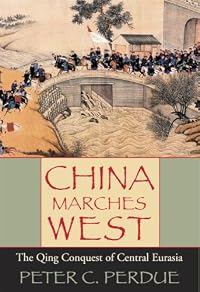
This book describes the political history of Central Asia from the start of the Caucasian diaspora about 4 millenia ago in just 300 pages. Such a book can only be very concise. Unfortunately, what we get is a bewildering list of political leaders and their empires from Ireland to Japan. Key people like Attila and Chinggis Khan are covered in just a few pages. Little attention is given to other aspects that made Central Asia to what it was, e.g. the impact of geography, as does Peter Perdue in “China Marches West”. Also, relatively little attention is paid to the cultural exchange that took place and that was so important for the development of European and East-Asian culture.
Curiously the book ends with a two chapter rant against show more Modernism. The author considers Modernism the root of all modern evil in Central Asia. As a result we learn more about his dislike of Picasso than about the Persian poet Hafiz that he admires.
I find it disappointing to give this book only two stars. Mr. Beckwith is a man of great learning and of great passion for his subject. With better editing a much better book could have been produced. show less
Curiously the book ends with a two chapter rant against show more Modernism. The author considers Modernism the root of all modern evil in Central Asia. As a result we learn more about his dislike of Picasso than about the Persian poet Hafiz that he admires.
I find it disappointing to give this book only two stars. Mr. Beckwith is a man of great learning and of great passion for his subject. With better editing a much better book could have been produced. show less
As a long standing scholar of inner Eurasia, I found this book persuasive, factual and theoretically interesting. It draws on wide empirical sources to support and interpret this region as legitimating the geopolitical thesis of world island / heartland. Moreover it adds a half century of new tadata to build on Owen Lattimore's seminal work "Inner Asian Frontiers" that first establishes the premise that inner Eurasia was central to old world history while "civilizations" were peripheral. As to any comment on what other reviews labeled as a so-called "diatribe" it was so tangential that I barely noticed it. In short, I have used excerpts from this book as a reading for graduate courses on both historical geography of inner Eurasia and show more the Silk Road. Highly recommended for both lay readers and academics. show less
I would have given this four stars (I reserve five for extraordinary works) if not for the weird 30 page diatribe against modernism taword the end which was so out there and not connected that I began to question all else that was written. Besides for that however it was an interesting broad history which attempts to pull central asia from the periphery of know empires and place it at the center of well... asia. The author seemed a little too apologetic for the central asians and too demonizing of the littoral powers (which is interesting as he is unforgiving to others for the reverse) but the book does a good job of presenting a portrait of the long sweep of eurasian history. This is not a book for a begginer not because of the level show more of writing but rather the risk of taking everything in the book as unassailable truth without knowledge of dissenting opinions. I would still highly recommend the book to anyone with a solid general knowledge of history as it does a wonderful job of joining the histories of regions usually thought of as unconnecting and showing how they fit into a larger whole. show less
Very broad scope, geographically and in time span. But because the author wants to cover so much, it becomes soon a sequence of names and kingdoms and events, which for a non-specialist makes it difficult to get through. Ande, to my taste, a strong ant-Chinese biais.
Interesting. Well written. Scholarly.
Ratings
Members
- Recently Added By
Lists

Kindle Non-Fiction
221 works; 1 member

In Our Time books
4,934 works; 2 members
Author Information

11 Works 831 Members
Christopher I. Beckwith is a Professor at Indiana University.
Some Editions
Awards and Honors
Awards
Common Knowledge
- Original publication date
- 2009
- People/Characters
- Attila the Hun; Genghis Khan; Tamerlane
- Important places
- Central Asia; Inner Asia; Mongolia; China; Russian steppes; Russia (show all 9); Eastern Europe; Middle East; Silk Road
- Epigraph
- (Prologue) Born in a bygone age long ago,
Descendant of the wild horse, Zûla Khan,
Bûmba’s grandson, the gentle khan,
Son of Üzeng, the famous khan:
Janghar the matchless he was.
W... (show all)hen he reached the tender age of two
A cruel dragon invaded his homeland
And he was left an orphan.
Attaining the age of three, up onto
Auburn—his charger in his third year—he
Scrambled and mounted,
Smashed the gates of three great fortresses, and
Subdued the great dragon, the ruthless one.
—From Janghar - First words
- (Introduction) Central Eurasia1 is the vast, largely landlocked area in between Europe, the Middle East, South Asia, East Asia,2 and the sub-Arctic and Arctic taïga-tundra zone.
(Prologue) The Lord of Heaven above impregnated the daughter of the Lord of the Waters below, and a son was miraculously born.
(Chapter 1) The Central Eurasian Culture Complex, which dominated much of Eurasia for nearly four millennia, developed among a people known only from historical linguistics: the Proto-Indo-Europeans.
This book presents a new view of the history of Central Eurasia and the other parts of the Eurasian continent directly involved in Central Eurasian history.
In support of the research and writing of this book I was awarded an Indiana University Summer Faculty Fellowship (2004); a Fulbright-Hays Faculty Research Abroad Fellowship (2004-2005), tenure taken in Tokyo, Japan; and a Gu... (show all)ggenheim Foundation Fellowship (2004-2005), tenure taken in 2005-2006 in Bloomington and in Dénia, Spain. - Last words
- (Click to show. Warning: May contain spoilers.)(Epilogue) It is quite possible that Central Eurasia will continue to be impoverished, and could become increasingly disenchanted and dangerous, unless the peripheral powers allow it to once again assume its rightful, historical place as the heartland of Eurasia.
(Click to show. Warning: May contain spoilers.)The modern name Tocharisch 'Tokharian' he gave to the language does therefore represent the local name of the Tokharian people and language, though its meaning is unknown and it is unknown whether the name is an exonym or not. - Blurbers
- Mair, Victor H.; Golden, Peter B.
Classifications
Statistics
- Members
- 440
- Popularity
- 69,440
- Reviews
- 6
- Rating
- (3.64)
- Languages
- English, Polish, Turkish
- Media
- Paper, Audiobook, Ebook
- ISBNs
- 6
- ASINs
- 3