On This Page
Description
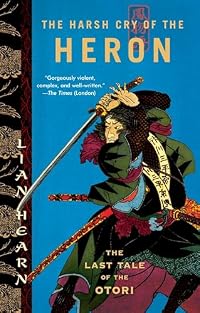
An epic fantasy set in a mythical, medieval Japan, Lian Hearn's Tales of the Otori series has crossed genres, generations, and genders. Grand and complex in its themes, elegantly written, each book in the original trilogy has become a worldwide bestseller. The surprise fourth installment (and real conclusion), The harsh cry of the heron achieves new heights of drama and action.Tags
Recommendations







Member Reviews
Re-reading after 18 years, it's not surprising I remembered nothing, but it is a little surprising that nothing felt familiar. By the time I was 1/3 into it, I should have realized why, but it took until 2/3. The book is boring; the characters aren't allowed any real, good decisions and continue agonizing over their worst ones. Perhaps if I had recently read the 3 books preceding this one, I would have been invested in the characters, but there isn't much shown here that's worth the sunk cost. The plot was drawn out rather than pulled together. For a compelling story of a man going down fighting, I recommend King Hereafter, and that's after 2/3 of the excellent account of him building it up. That's investment.
There are several ways of presenting a book in a series to help the reader getting into things again. Lian Hearn’s tactic is to throw the pretty massive cast of this epic like a tidal wave on the cowering reader in the first fifty pages, with only the briefest of explanations. Add to that the well-known “names from a very different place” syndrome and the whole start becomes a rather tricky affair. I’m forced to resign to the fact that the year since I visited the Three Kingdoms is too long – a lot of the subtleties regarding how loyalties have shifted in the horde of secondary characters in the decade that has passed since the last book is lost on me. One or two of the characters I’m not quite sure of who the heck they are show more even after finishing this brick. In summary – I’m reading this book (almost) as a stand-alone.
Takeo’s and Kaede’s reign has been peaceful and prosperous for over a decade. Takeo is still thinking about the prophecy, but hasn’t found a way of telling his wife about the left out bit – that he is supposed to be killed by his own son. This is unfortunate, because jealousy, plotting and sibling rivalry is drawing the Kingdoms into conflict again – and secrets make lethal weapons. Add to that visitors from overseas with powerful fire weapons, and the prosperity of the the Otori Kingdoms attracting attention from the faraway emperor, and it’s pretty obvious the days of harvesting rice and raising horses are over.
Lian Hearn is writing epics in the true sense of the word, full of flawed characters facing terrible dilemmas, making both good and bad choices. She writes excellent female characters, complex and interesting without ever resorting to an over-compensating heroine stereotype. Kaede herself is a favorite of course, but her sinister twin daughters are pretty damn interesting too, or the aging assassin Shizuka. I also admire Hearn’s no-nonsense approach to characters when the plot calls for it. You can never be certain who comes out of a book alive, which creates a real suspense.
But this book still feels rather bloated and front-heavy. And, as often is the case with books that feel a couple of hundred pages too long, the ending by comparison is steep and abrupt. It’s almost like Hearn is eager to wrap this saga up – even though it in itself is both moving and true to the storyline. I’ll pick up the fifth book sometime, but probably not for another year or so. I can only hope, it being a prequel, I’ll have less trouble with he who is who that time around. show less
Takeo’s and Kaede’s reign has been peaceful and prosperous for over a decade. Takeo is still thinking about the prophecy, but hasn’t found a way of telling his wife about the left out bit – that he is supposed to be killed by his own son. This is unfortunate, because jealousy, plotting and sibling rivalry is drawing the Kingdoms into conflict again – and secrets make lethal weapons. Add to that visitors from overseas with powerful fire weapons, and the prosperity of the the Otori Kingdoms attracting attention from the faraway emperor, and it’s pretty obvious the days of harvesting rice and raising horses are over.
Lian Hearn is writing epics in the true sense of the word, full of flawed characters facing terrible dilemmas, making both good and bad choices. She writes excellent female characters, complex and interesting without ever resorting to an over-compensating heroine stereotype. Kaede herself is a favorite of course, but her sinister twin daughters are pretty damn interesting too, or the aging assassin Shizuka. I also admire Hearn’s no-nonsense approach to characters when the plot calls for it. You can never be certain who comes out of a book alive, which creates a real suspense.
But this book still feels rather bloated and front-heavy. And, as often is the case with books that feel a couple of hundred pages too long, the ending by comparison is steep and abrupt. It’s almost like Hearn is eager to wrap this saga up – even though it in itself is both moving and true to the storyline. I’ll pick up the fifth book sometime, but probably not for another year or so. I can only hope, it being a prequel, I’ll have less trouble with he who is who that time around. show less
I thought I was done when I finished the Tales of the Otori trilogy. Then I discovered this book. Taking place 15 or so years after the trilogy, the story continues the intrigue in a magical version of medieval Japan. The Three Countries have known unparalleled peace and prosperity under Takeo and Kaede's rule, but old enemies are plotting against them. In addition, the emperor has noticed. Not pleased by Takeo's unsanctioned rule, he has demanded a personal appearance of Takeo in the capital.
Hearn opens up her storytelling in this book by telling the tale from many viewpoints, not just the two or three in the previous stories. Most notably are the povs of Takeo's three daughters: Shigeko, the eldest, who does not possess his special show more Tribe talents; and the twins, Maya and Miki, whose talents might surpass those of their father. As twins, they are considered bad luck by the populace and feared by everyday folk. Their own insecurities lead them to actions that help drive the story.
This is a complex tale with less action than the earlier trilogy, but one as intriguing and beguiling as those books. The end is fitting, yet leaves me wanting more, a true sign of a good writer telling a good story. show less
Hearn opens up her storytelling in this book by telling the tale from many viewpoints, not just the two or three in the previous stories. Most notably are the povs of Takeo's three daughters: Shigeko, the eldest, who does not possess his special show more Tribe talents; and the twins, Maya and Miki, whose talents might surpass those of their father. As twins, they are considered bad luck by the populace and feared by everyday folk. Their own insecurities lead them to actions that help drive the story.
This is a complex tale with less action than the earlier trilogy, but one as intriguing and beguiling as those books. The end is fitting, yet leaves me wanting more, a true sign of a good writer telling a good story. show less
I read the rest of this series last year, and found myself enjoying it, almost despite myself. I generally don't like faux Japan stuff, but Hearn really has a good feel for the aesthetics and dialogue styles. There was obviously a lot of research and craft that went into the stories, and into this one, as well.
This book is set a good fifteen years after the events of the last one, and to some degree, it suffers the same problem as that of the previous book I read, in that there's a decent amount at the outset that feels like, "Look, here are the old characters you know, and here's what they're up to now!" Which is fine, but it should be more in service of the story than I felt it to be.
But once you get past that part, it's a very good show more story, a fine tragic tale of a man, Takeo Otori, getting caught up both in his good and bad intentions. Trying to rule a country in a peaceful way can be very hard, when all of your traditions say that the least insult is an excuse for warfare, and the seams are showing a bit in Otori's realm. At the same time, he's keeping a number of secrets, and not always from the right people.
This book expands the scope of the world, and brings in the rest of the not-quite-Japanese islands, with the Emperor and his chosen warlord, along with foreigners and religious issues, too. All of this was handled nicely; I did like the political machinations that generally took the place of the fighting of Brilliance of the Moon. Her dialogue and her views into the thoughts of some of the characters are very nice; Shigeko in particular is a good addition to the cast.
Problems? There are pacing issues still, and some of the characters that are supposed to be important, such as the former female lead, get shunted off a lot. Still, on the whole, I quite liked this... and any tragedy that's enough to wring out a few tears has to be told quite well, right? show less
This book is set a good fifteen years after the events of the last one, and to some degree, it suffers the same problem as that of the previous book I read, in that there's a decent amount at the outset that feels like, "Look, here are the old characters you know, and here's what they're up to now!" Which is fine, but it should be more in service of the story than I felt it to be.
But once you get past that part, it's a very good show more story, a fine tragic tale of a man, Takeo Otori, getting caught up both in his good and bad intentions. Trying to rule a country in a peaceful way can be very hard, when all of your traditions say that the least insult is an excuse for warfare, and the seams are showing a bit in Otori's realm. At the same time, he's keeping a number of secrets, and not always from the right people.
This book expands the scope of the world, and brings in the rest of the not-quite-Japanese islands, with the Emperor and his chosen warlord, along with foreigners and religious issues, too. All of this was handled nicely; I did like the political machinations that generally took the place of the fighting of Brilliance of the Moon. Her dialogue and her views into the thoughts of some of the characters are very nice; Shigeko in particular is a good addition to the cast.
Problems? There are pacing issues still, and some of the characters that are supposed to be important, such as the former female lead, get shunted off a lot. Still, on the whole, I quite liked this... and any tragedy that's enough to wring out a few tears has to be told quite well, right? show less
Sigh... I was SO looking forward to reading this book after loving the first three. Sadly, I am left with a bitter taste of betrayal that has almost entirely harshed my literary buzz. I had to go so far as to create an alternate ending to make me feel better.
First, Takeo broke my heart when he didn't joyfully embrace his long-lost sister. It seemed so out of character that he would turn away from his sister Madaren because of a) his exalted status and b) her employment as a prostitute. I mean, really. A life of slavery and prostitution for his sister was a best-case scenario, horrible as it may be. At least she survived the massacre back in Mino... Also I was disappointed, because I'd been thinking "Right on! What a fabulous In with the show more foreigners! He's so got an advantage over the Arai and the Emperor now!" Nope. He didn't even think that her position as translator to the foreigners could bring information to his power plays. He just didn't want anyone to know about her because it made him feel icky? The Otori family cannot provide some sort of alternate and less shameful employment somewhere in the castle town, if not the household? A world of ewww.
Then the story arc of Kaede's betrayal of Takeo and the Otori just about broke me. I'd liked her so much, despite the way she stupidly rode up to the front door alone and put herself into Lord Fujiwara's hands. I liked her less because she was ashamed of the twin girls, but as long as I remembered the differing cultural mores, I could cope with that. So this part of the story was bad enough, but then at the end she went to Terayama wanting to take comfort in Makoto and realized that her surviving daughter, no longer a twin, finally deserved her mother's love. How I wished I had not read this book.
How disappointing that we never found out what happened to Shizuka, fed by birds in Daikufuji. It would have been nice to see a coda for her character.
My alternate ending: Kaede wakes up in a strange place. She looks in a mirror and sees that her nose is hooked and her body old but strong. Then she finds out that she's an indentured servant in service to the Octomom and Kate Gosselin, surrounded by multiples, bereft of her beauty, a stranger in a strange land, a servant who merits no honor. Let her cry her nights away mired in self pity and regret, wishing that she had not called the guards on Takeo when he tried to talk to her bitch ass.
The moral: Please do not piss me off and disappoint me when I have an emotional love affair with your characters. I'll wait awhile to read "Heaven's Net is Wide," and I fervently hope that I will find something between its covers that will heal the wound to this Gentle Reader's heart. show less
First, Takeo broke my heart when he didn't joyfully embrace his long-lost sister. It seemed so out of character that he would turn away from his sister Madaren because of a) his exalted status and b) her employment as a prostitute. I mean, really. A life of slavery and prostitution for his sister was a best-case scenario, horrible as it may be. At least she survived the massacre back in Mino... Also I was disappointed, because I'd been thinking "Right on! What a fabulous In with the show more foreigners! He's so got an advantage over the Arai and the Emperor now!" Nope. He didn't even think that her position as translator to the foreigners could bring information to his power plays. He just didn't want anyone to know about her because it made him feel icky? The Otori family cannot provide some sort of alternate and less shameful employment somewhere in the castle town, if not the household? A world of ewww.
Then the story arc of Kaede's betrayal of Takeo and the Otori just about broke me. I'd liked her so much, despite the way she stupidly rode up to the front door alone and put herself into Lord Fujiwara's hands. I liked her less because she was ashamed of the twin girls, but as long as I remembered the differing cultural mores, I could cope with that. So this part of the story was bad enough, but then at the end she went to Terayama wanting to take comfort in Makoto and realized that her surviving daughter, no longer a twin, finally deserved her mother's love. How I wished I had not read this book.
How disappointing that we never found out what happened to Shizuka, fed by birds in Daikufuji. It would have been nice to see a coda for her character.
My alternate ending: Kaede wakes up in a strange place. She looks in a mirror and sees that her nose is hooked and her body old but strong. Then she finds out that she's an indentured servant in service to the Octomom and Kate Gosselin, surrounded by multiples, bereft of her beauty, a stranger in a strange land, a servant who merits no honor. Let her cry her nights away mired in self pity and regret, wishing that she had not called the guards on Takeo when he tried to talk to her bitch ass.
The moral: Please do not piss me off and disappoint me when I have an emotional love affair with your characters. I'll wait awhile to read "Heaven's Net is Wide," and I fervently hope that I will find something between its covers that will heal the wound to this Gentle Reader's heart. show less
Vid Hägerns Skarpa Skri är fjärde delen i Sagan om klanen Otori utspelar i ett mytomspunnet medeltida Japan. De tre första delarna är Över näktergalens golv, På kudde av gräs, och under lysande måne. Alla fyra böcker är skrivna med elegans och skönhet, det är en helt underbar saga om stridande klaner, maktbegär och passionerad kärlek. Verkligheten försvinner och man dras in i boken från första till sista sida. : Ännu en fantastisk bok om Ottori klanen
Disappointing after the first four books of the Otori series. From the start, this book seemed darker and my expectation was of disaster. It seemed like the author had a life change after writing the first 4 books and was in a more depressed, less optimistic, hopeful mood and the book reflected that. Not that a happy ending is mandatory for me, but rather a better rendering of the character's lives that fits the past books. This book seemed out of character for how this world was in the earlier stories and less interesting. Previously I could hardly put the books down. With this book it was almost drudgery to finish it.
Members
- Recently Added By
Lists

Books Read in 2015
3,299 works; 129 members

Fantasy by Women Who Broke Away from Europe
144 works; 12 members
Author Information

79+ Works 17,531 Members
Some Editions
Awards and Honors
Awards
Series

Belongs to Publisher Series
Gallimard, Folio (4724)
Common Knowledge
- Canonical title
- The Harsh Cry of the Heron
- Original title
- The Harsh Cry of the Heron
- Original publication date
- 2006
- People/Characters
- Otori Takeo; Otori Shigero; Otori Kaede; Otori Shigeko; Otori Maya; Otori Miki (show all 17); Muto Kenji; Muto Yiki; Kikuta Akio; Kikuta Hisao; Arai Zenko; Arai Hana; Lord Kono; Madaren; Muto Shizuka; Muto Taku; Sugita Hiroshi
- Important places
- Three Countries; Hagi; Teruyama
- Epigraph
- The sound of the Gion Shoja bells echoes the impermanence of all things.
The colour of the sala flowers reveals the truth that the prosperous must decline.
The proud do not endure, they are like a dream on a spring ni... (show all)ght;
The mighty fall at last, they are as dust before the wind.
The Tale of the Heike / Translated by Helen Craig McCullough - Dedication
- For J
- First words
- 'Come quickly! Father and Mother are fighting!'
- Original language*
- Anglais (Royaume-Uni) (Royaume-Uni)
*Some information comes from Common Knowledge in other languages. Click "Edit" for more information.
Classifications
- Genres
- Fiction and Literature, Fantasy, General Fiction, Historical Fiction
- DDC/MDS
- 823.914 — Literature & rhetoric English & Old English literatures English fiction 1900- 1901-1999 1945-1999
- LCC
- PR9619.3 .H3725 .H37 — Language and Literature English English Literature English literature: Provincial, local, etc.
- BISAC
Statistics
- Members
- 1,658
- Popularity
- 13,440
- Reviews
- 28
- Rating
- (3.75)
- Languages
- 14 — Danish, English, Estonian, French, German, Indonesian, Korean, Lithuanian, Norwegian (Bokmål), Norwegian, Polish, Portuguese, Spanish, Swedish
- Media
- Paper, Audiobook, Ebook
- ISBNs
- 50
- UPCs
- 1
- ASINs
- 17