On This Page
Description
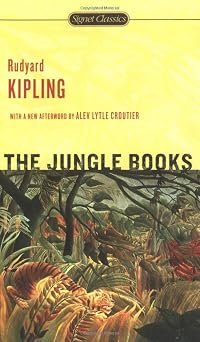
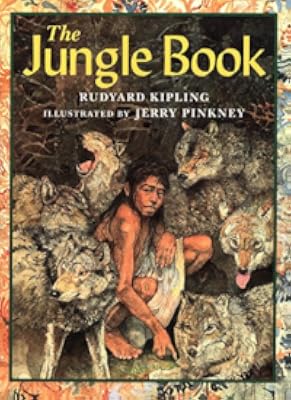
Kipling's tales of Mowgli and his exciting life in the Indian jungle have been loved by children and adults alike ever since their publication in 1895. Mowgli the 'man-cub' must learn to fend for himself against terrible foes like Shere Khan the tiger, but he can always call upon his friends Baloo the Bear, Bagheera the Black Panther and Kaa the Rock Python from whom he learns law of the jungle.Tags
Recommendations











Member Recommendations
Member Reviews
eBook
Once again, I'm struck by the savagery that resonates throughout Kipling's writing. It would be so easy to think of The Jungle Book in a more Disney-fied light: talking animals, singing, the rhythmic cadences of a fairy tale or lullaby. But overarching all that is the ever-present reminder that the world of the jungle is a world of nature, red in tooth and claw. Mowgli is raised by wolves and instructed by Baloo for the explicit purpose of survival in a harsh world that actively seeks his death. Kotick is born and raised amidst bloodshed from two distinct sources: other seals and man. "Rikki-Tikki-Tavi" subverts the traditional story of a pet protecting his master by making the masters little more than incidental characters; show more Rikki-Tikki wants to protect them, but his actions are driven by instinct rather than any familial bond with the humans. Even in the less-obviously blood-drenched stories, violence is a powerful force. Toomai's journey to witness the dance of the elephants puts him at great risk of death.
The story I found most interesting, however, was the one which closes the book, "Her Majesty's Servants." The characters of this particular story are the camp animals for an army, but paradoxically, these might be the most innocent characters in the whole book. All their conversation is about war and its methods, but without any real recognition of what it means. These animals have been tamed by man, stripped of their natural instincts, and so, with the exception of the elephant, they don't realize what war means, content merely to follow orders and limit their perspective to the specifics of their duties.
And maybe that's the true lesson of The Jungle Book. Yes, it's violent, endlessly circling and returning to the themes of death and danger, but in the world of the animals, death and danger exists because they are necessary parts of life. Animals must eat, so animals must hunt and kill. But for people, violence is stripped of that which makes it necessary. Wars don't happen for food and survival; they happen for sport and profit.
Or maybe I'm just a filthy hippie. show less
Once again, I'm struck by the savagery that resonates throughout Kipling's writing. It would be so easy to think of The Jungle Book in a more Disney-fied light: talking animals, singing, the rhythmic cadences of a fairy tale or lullaby. But overarching all that is the ever-present reminder that the world of the jungle is a world of nature, red in tooth and claw. Mowgli is raised by wolves and instructed by Baloo for the explicit purpose of survival in a harsh world that actively seeks his death. Kotick is born and raised amidst bloodshed from two distinct sources: other seals and man. "Rikki-Tikki-Tavi" subverts the traditional story of a pet protecting his master by making the masters little more than incidental characters; show more Rikki-Tikki wants to protect them, but his actions are driven by instinct rather than any familial bond with the humans. Even in the less-obviously blood-drenched stories, violence is a powerful force. Toomai's journey to witness the dance of the elephants puts him at great risk of death.
The story I found most interesting, however, was the one which closes the book, "Her Majesty's Servants." The characters of this particular story are the camp animals for an army, but paradoxically, these might be the most innocent characters in the whole book. All their conversation is about war and its methods, but without any real recognition of what it means. These animals have been tamed by man, stripped of their natural instincts, and so, with the exception of the elephant, they don't realize what war means, content merely to follow orders and limit their perspective to the specifics of their duties.
And maybe that's the true lesson of The Jungle Book. Yes, it's violent, endlessly circling and returning to the themes of death and danger, but in the world of the animals, death and danger exists because they are necessary parts of life. Animals must eat, so animals must hunt and kill. But for people, violence is stripped of that which makes it necessary. Wars don't happen for food and survival; they happen for sport and profit.
Or maybe I'm just a filthy hippie. show less
Viszonyom Kiplinghez még mindig igen ambivalens. Egyfelől zseniális író – olyan mítoszteremtő képességekkel rendelkezik, amitől A Dzsungel könyve a Nagy Irodalmi Univerzumok egyikévé válik, méltó párja Homérosz görögség-víziójának, vagy Tolkien Középföldéjének. Tolla alatt az indiai természeti környezet lélegző, misztikus csodává válik, ami indákat növeszt, hogy az olvasóba kapaszkodjon*. Kipling állatfigurái pedig nem pusztán antropomorfizált négylábúak (vagy nullalábúak, ha feledhetetlen kígyófiguráit is idevesszük), hanem összetéveszthetetlen személyiséggel rendelkező lények, akik mintha fajuk platóni ideáját jelenítenék meg: a magar, a gát krokodilja például show more megtestesíti a krokodilság intézményének valamennyi lényeges toposzát – az már csak a hab a tortán, hogy közben egynémely embertársunkat is felismerjük benne. Szemet gyönyörködtető látni továbbá, Kipling milyen profizmussal helyezi el történeteinek súlypontját, felépítve erőteljes drámai jeleneteit – ahogy például Maugli történetét lezárja, az az angolszász próza egyik nagy ünnepe. Az embernek csaholni támad kedve a tehetetlen dühtől, ha eszébe jut, hogy Mr. Disney miképp herélte ki ezt az egész kozmikus egységet.
Ugyanakkor nem tudok elvonatkoztatni attól, hogy a kiplingi életműből mennyire árad a predesztináció. Van ugye ez a Dzsungel Törvénye – a mindenek felett álló törvény, ami minden lényt beosztott a maga szűk kategóriájába, amiből lehetetlen kitörni. Olyan ez, mint a kasztrendszer – aki sakál, az mindörökre sakál marad, sakáltulajdonságokkal rendelkezik, és sakálként fogják megítélni. Ebben a világban a nemesség a jellem csúcsa, amiben sajátosan összemosódik az erő a szépséggel, a bölcsesség a bátorsággal, és bizony ezt a tulajdonságot az, aki sakálnak született, soha nem tudja megszerezni. Az egyetlen lény, aki képes valamennyire felülemelkedni a Dzsungel Törvényén, az ember. De nem ám akármelyik ember! A bennszülött indiaiak például nem – ők leginkább a bandar-lógok (a szürkemajmok) updatált verzióinak tűnnek. Ám az angol fehérek – azok aztán valakik! Olyan, mintha ők testesítenék meg a Sorsot: ők viszik el a végzetet a végzetes krokodilnak, és őket szolgálja Riki-Tiki-Tévi is – mégpedig boldogan. Mert Kipling szerint az igazán boldog, aki szolgál, feltéve ha igazságos és bölcs ura van – a gyarmatosító sorsa pedig teher, mert muszáj igazságossá és bölccsé válnia. Úgyhogy én is keresek gyorsan magamnak valami gyarmatosítót, mielőtt gyomorfekélyt kapok a saját individualizmusomtól.
(És még pár szó az új kiadásról: a prózai fordítás szerintem hibátlan. A versbetétek is többnyire jók, bár a szlengesítést nem tartottam indokoltnak. Szabó Levente illusztrációi egyszerűségükben gyönyörűek, de leginkább a könyv fizikai jellege okozott örömet: valahogy kényelmes volt olvasni ezt a könyvet, mert mind a szedés, mind a papírminőség dédelgeti a szemet meg az ujjat. Így kell visszafogottan luxuscikket csinálni egy könyvből. Csak a tartalomjegyzék oldalszámozásai csúsztak el kicsit, de ezt – mondjuk – észre sem vettem.)
* De Kipling akkor is fantasztikus, ha nem Indiáról beszél. A kötetben két sarkvidéki elbeszélést is találunk, amik szintén működnek. Olvasva őket pedig óhatatlanul eszembe jutott, hogy Jack London is bizony a kiplingi köpönyegből bújt elő. (No meg a stevensoniból.) show less
Ugyanakkor nem tudok elvonatkoztatni attól, hogy a kiplingi életműből mennyire árad a predesztináció. Van ugye ez a Dzsungel Törvénye – a mindenek felett álló törvény, ami minden lényt beosztott a maga szűk kategóriájába, amiből lehetetlen kitörni. Olyan ez, mint a kasztrendszer – aki sakál, az mindörökre sakál marad, sakáltulajdonságokkal rendelkezik, és sakálként fogják megítélni. Ebben a világban a nemesség a jellem csúcsa, amiben sajátosan összemosódik az erő a szépséggel, a bölcsesség a bátorsággal, és bizony ezt a tulajdonságot az, aki sakálnak született, soha nem tudja megszerezni. Az egyetlen lény, aki képes valamennyire felülemelkedni a Dzsungel Törvényén, az ember. De nem ám akármelyik ember! A bennszülött indiaiak például nem – ők leginkább a bandar-lógok (a szürkemajmok) updatált verzióinak tűnnek. Ám az angol fehérek – azok aztán valakik! Olyan, mintha ők testesítenék meg a Sorsot: ők viszik el a végzetet a végzetes krokodilnak, és őket szolgálja Riki-Tiki-Tévi is – mégpedig boldogan. Mert Kipling szerint az igazán boldog, aki szolgál, feltéve ha igazságos és bölcs ura van – a gyarmatosító sorsa pedig teher, mert muszáj igazságossá és bölccsé válnia. Úgyhogy én is keresek gyorsan magamnak valami gyarmatosítót, mielőtt gyomorfekélyt kapok a saját individualizmusomtól.
(És még pár szó az új kiadásról: a prózai fordítás szerintem hibátlan. A versbetétek is többnyire jók, bár a szlengesítést nem tartottam indokoltnak. Szabó Levente illusztrációi egyszerűségükben gyönyörűek, de leginkább a könyv fizikai jellege okozott örömet: valahogy kényelmes volt olvasni ezt a könyvet, mert mind a szedés, mind a papírminőség dédelgeti a szemet meg az ujjat. Így kell visszafogottan luxuscikket csinálni egy könyvből. Csak a tartalomjegyzék oldalszámozásai csúsztak el kicsit, de ezt – mondjuk – észre sem vettem.)
* De Kipling akkor is fantasztikus, ha nem Indiáról beszél. A kötetben két sarkvidéki elbeszélést is találunk, amik szintén működnek. Olvasva őket pedig óhatatlanul eszembe jutott, hogy Jack London is bizony a kiplingi köpönyegből bújt elő. (No meg a stevensoniból.) show less
I had come across references to The Jungle Book numerous times over the years, most recently in The Tiger's Wife, where it plays quite an important role, which convinced me it was time to acquaint myself with this classic of children's literature. I vaguely recall reading the abridged and illustrated Mowgli stories as a child, but was quite unprepared for what I found in this omnibus version containing both Jungle Books. The first thing that struck me was the level of sophistication of the stories, which seemed to be possibly too complex, in language at least, to be fully intelligible to children today. The second thing which surprised me was that other than the Mowgli stories—about a boy raised by wolves who becomes the king of the show more jungle, so to speak—none of the other short stories were set in the jungle, and in at least a couple of them, animals were secondary characters only. As is the case with most people, I enjoyed the Mowgli stories most, because of the jungle setting and the variety of wild animals who each in turn are given ample room to express themselves and display their anthropomorphized characters. I've always been fascinated by the notion that certain human beings have a gift for communicating with and understanding animals, and was well regaled here, albeit only in fantasy. It's impossible to read these stories and not be impressed by the unique mentalities and behaviour of the main characters; Akela the wolf, Baloo the bear, Bagheera the panther, Kaa the snake and of course the lame tiger Shere Khan, have all become legendary because each has important life lessons to teach Mowgli and the reader, but more importantly because they become familiar to us as the stories progress while also retaining their mythical status.
Had I only rated the Mowgli stories as a whole, some favourites of which are Mowgli's Brothers, Kaa's Hunting, How Fear Came, Red Dog, along with another great favourite, Rikki-Tikki-Tavi—about the eponymous mongoose who outwits a pair of dangerous snakes—I would probably have given the books four stars at least. But some of the other stories, such as Her Majesty's Servants, The Undertakers and Quiquern did not at all appeal to me and diluted the experience. Because of this, it is very likely that I will read my favourite selection from the Jungle Book and The Second Jungle Book again sometime, and will likely appreciate those stories all the more as I revisit what will by then have become familiar and beloved characters. show less
Had I only rated the Mowgli stories as a whole, some favourites of which are Mowgli's Brothers, Kaa's Hunting, How Fear Came, Red Dog, along with another great favourite, Rikki-Tikki-Tavi—about the eponymous mongoose who outwits a pair of dangerous snakes—I would probably have given the books four stars at least. But some of the other stories, such as Her Majesty's Servants, The Undertakers and Quiquern did not at all appeal to me and diluted the experience. Because of this, it is very likely that I will read my favourite selection from the Jungle Book and The Second Jungle Book again sometime, and will likely appreciate those stories all the more as I revisit what will by then have become familiar and beloved characters. show less
I didn't expect to love this book as much as I did. Well, as much as I loved a good half of it. This isn't a novel, but a collection of 15 stories. Eight of them do involve Mowgli, a young Indian boy orphaned by the evil tiger Shere Khan, raised by wolves and who can count as friends and protectors Bagheera the black panther, Baloo the bear and Kaa the rock python. I've actually never seen the famous Disney film made from those stories, but that might have helped make the reading experience all the more fresh and delightful. What particularly struck me was the close observation of nature and animals evident right from the first sentence. If I were rating the Mowgli stories alone, I'd rank this book a five.
But there are seven other show more stories, and these I felt more mixed about. I did love "Rikki-Tikki-Tavi" about a brave mongoose versus cobras every bit as much as the Mowgli stories. I really liked two stories of the arctic, "The White Seal" about an Alaskan seal trying to find a sanctuary from men seeking to kill seals for fur and "Quiquern" about Canadian Inuits and their dogs searching for food. I liked "The Miracle of Purun Bhagat" and thought "Toomai of the Elephants" Okay.
But I didn't like "The Undertakers" at all and hated "Her Majesty's Servants." One of the reasons I didn't expect to like Kipling much at all is his reputation as an imperialist and racist. He's notoriously the author of the poem "The White Man's Burden." (And just because you're the first doesn't mean you're the second. Arthur Conan Doyle struck me as uncritical of imperialism but it was clear from his stories he was no racist--even believed in racial intermarriage. Kipling's views are quite different judging from the introduction to the edition I read.) Despite Kipling's politics though I found reading this book there were good reasons why Indian authors such as Arundhati Roy, V.S. Naipaul and Salman Rushdie find Kipling impressive and even influential. Kipling can be a wonderful storyteller. Rushdie has said Kipling's writing has "the power simultaneously to infuriate and to entrance." Mostly I was entranced. But a few times, and especially in "Her Majesty's Servants," I thought the dark side of Kipling, and his unapologetic imperialism and certainty everyone had their place and should obediently stay in it, was at its worst. show less
But there are seven other show more stories, and these I felt more mixed about. I did love "Rikki-Tikki-Tavi" about a brave mongoose versus cobras every bit as much as the Mowgli stories. I really liked two stories of the arctic, "The White Seal" about an Alaskan seal trying to find a sanctuary from men seeking to kill seals for fur and "Quiquern" about Canadian Inuits and their dogs searching for food. I liked "The Miracle of Purun Bhagat" and thought "Toomai of the Elephants" Okay.
But I didn't like "The Undertakers" at all and hated "Her Majesty's Servants." One of the reasons I didn't expect to like Kipling much at all is his reputation as an imperialist and racist. He's notoriously the author of the poem "The White Man's Burden." (And just because you're the first doesn't mean you're the second. Arthur Conan Doyle struck me as uncritical of imperialism but it was clear from his stories he was no racist--even believed in racial intermarriage. Kipling's views are quite different judging from the introduction to the edition I read.) Despite Kipling's politics though I found reading this book there were good reasons why Indian authors such as Arundhati Roy, V.S. Naipaul and Salman Rushdie find Kipling impressive and even influential. Kipling can be a wonderful storyteller. Rushdie has said Kipling's writing has "the power simultaneously to infuriate and to entrance." Mostly I was entranced. But a few times, and especially in "Her Majesty's Servants," I thought the dark side of Kipling, and his unapologetic imperialism and certainty everyone had their place and should obediently stay in it, was at its worst. show less
I found myself a bit torn by this book. On one level enjoyed the stories and the characters in them. Both human and non human. But on another level I was a quite offended by the sense of upper class British Imperialism that comes through in Kipling's work. I got a real sense that Kipling felt that the British were actually doing the natives of India a favor by taking over their lands and teaching them how to tame the Jungle.
Don't let Disney put you off this -- it's neither sentimental nor soppy. This is an imaginative and sensitive collection of short stories, which do nothing less than imagine the animal kingdom as not the polar opposite to human society but as a parallel society with their own laws and customs. Anyone with an interest in mythology or cultural traditions will find a lot to like in this book. Neither do you have to be a fan of British colonialism: Kipling does not seem to take some of the simplistic attitudes towards India or the British empire that some (but not all) members of the British Raj seemed to take.
In short -- if, like me, you had somewhat negative preconceptions of Kipling's work, it's well worth putting them aside and trying show more reading it. You will probably find it quite different to what you were expecting. show less
In short -- if, like me, you had somewhat negative preconceptions of Kipling's work, it's well worth putting them aside and trying show more reading it. You will probably find it quite different to what you were expecting. show less
If you've only experienced Disney's version of the Mowgli stories, the books will show you a whole new world. The jungle is a dark and often violent place. Kipling's adventure tales are also commentaries on what he saw in the world of his time, and adults will find them as enthralling as their children.
Many editions of these tales are heavily abridged...always to their detriment, in my opinion. My parents gave me this edition when I was 11 and it's remained my favorite. Whichever version you read, make sure it's a complete one as the stories of Rikki-Tikki-Tavi, Toomai and the others are just as good a read as the more famous Mowgli adventures.
Many editions of these tales are heavily abridged...always to their detriment, in my opinion. My parents gave me this edition when I was 11 and it's remained my favorite. Whichever version you read, make sure it's a complete one as the stories of Rikki-Tikki-Tavi, Toomai and the others are just as good a read as the more famous Mowgli adventures.
Members
- Recently Added By
Lists

Nonhuman Protagonists
235 works; 34 members

1,000 Good Books of John Senior
36 works; 6 members

Mensa for Kids Excellence in Reading Award Program (Grades 4-6)
64 works; 9 members

Literature of Honor for Boys
91 works; 3 members
Ambleside Books
459 works; 18 members

A Child's Book Tour of India
71 works; 3 members

Puffin Books 70th anniversary handbook recommendations
537 works; 10 members

Unread books
1,063 works; 83 members

XB-1: Osobnosti zanru doporucuji
67 works; 1 member

Most Popular Books Tagged India
36 works; 5 members

BingoDOG - Animals in Adult Fiction
78 works; 20 members

The Seven-League Shelf
57 works; 3 members

el
1,139 works; 1 member

In Our Time books
4,934 works; 2 members

100 knjiga
100 works; 1 member
Honey For a Child's Heart
1,152 works; 25 members
Author Information

2,469+ Works 91,179 Members
Kipling, who as a novelist dramatized the ambivalence of the British colonial experience, was born of English parents in Bombay and as a child knew Hindustani better than English. He spent an unhappy period of exile from his parents (and the Indian heat) with a harsh aunt in England, followed by the public schooling that inspired his "Stalky" show more stories. He returned to India at 18 to work on the staff of the Lahore Civil and Military Gazette and rapidly became a prolific writer. His mildly satirical work won him a reputation in England, and he returned there in 1889. Shortly after, his first novel, The Light That Failed (1890) was published, but it was not altogether successful. In the early 1890s, Kipling met and married Caroline Balestier and moved with her to her family's estate in Brattleboro, Vermont. While there he wrote Many Inventions (1893), The Jungle Book (1894-95), and Captains Courageous (1897). He became dissatisfied with life in America, however, and moved back to England, returning to America only when his daughter died of pneumonia. Kipling never again returned to the United States, despite his great popularity there. Short stories form the greater portion of Kipling's work and are of several distinct types. Some of his best are stories of the supernatural, the eerie and unearthly, such as "The Phantom Rickshaw," "The Brushwood Boy," and "They." His tales of gruesome horror include "The Mark of the Beast" and "The Return of Imray." "William the Conqueror" and "The Head of the District" are among his political tales of English rule in India. The "Soldiers Three" group deals with Kipling's three musketeers: an Irishman, a Cockney, and a Yorkshireman. The Anglo-Indian Tales, of social life in Simla, make up the larger part of his first four books. Kipling wrote equally well for children and adults. His best-known children's books are Just So Stories (1902), The Jungle Books (1894-95), and Kim (1901). His short stories, although their understanding of the Indian is often moving, became minor hymns to the glory of Queen Victoria's empire and the civil servants and soldiers who staffed her outposts. Kim, an Irish boy in India who becomes the companion of a Tibetan lama, at length joins the British Secret Service, without, says Wilson, any sense of the betrayal of his friend this actually meant. Nevertheless, Kipling has left a vivid panorama of the India of his day. In 1907, Kipling became England's first Nobel Prize winner in literature and the only nineteenth-century English poet to win the Prize. He won not only on the basis of his short stories, which more closely mirror the ambiguities of the declining Edwardian world than has commonly been recognized, but also on the basis of his tremendous ability as a popular poet. His reputation was first made with Barrack Room Ballads (1892), and in "Recessional" he captured a side of Queen Victoria's final jubilee that no one else dared to address. (Bowker Author Biography) show less

Rudyard Kipling has a Legacy Library. Legacy libraries are the personal libraries of famous readers, entered by LibraryThing members from the Legacy Libraries group.
Some Editions
Awards and Honors
Series

Belongs to Publisher Series
Berömd litteratur (Baltiska förlaget)
Nobelpreisträger Coron-Verlag (weiß) (1907 (Großbritannien))
Penguin Clothbound Classics (2014)
Airmont Classics (109)
Work Relationships
Is contained in
Contains
Has the adaptation
Inspired
Has as a student's study guide
Common Knowledge
- Canonical title
- The Jungle Books
- Original title
- The Jungle Books
- Original publication date
- 1894 (The Jungle Book) (The Jungle Book); 1895 (The Second Jungle Book) (The Second Jungle Book)
- People/Characters
- Mowgli; Akela (wolf); Bagheera (panther); Baloo; Shere Khan (tiger); Kotick (show all 18); Kaa; Chil; Raksha (Mother Wolf, the Demon); Nag; Rikki-Tikki-Tavi (mongoose); Nagina; Hathi; Kotuko; Toomai; Messua; Darzee; Kala Nag
- Important places
- India; Lukannon Beach, St Paul Island, Pribilof Islands, Alaska, USA
- Related movies
- The Jungle Book (1967 | IMDb); The Jungle Book (1994 | IMDb); The Jungle Book (1994 | IMDb); The Second Jungle Book: Mowgli & Baloo (1997 | IMDb); The Jungle Book 2 (2003 | IMDb); Maugli (1973 | IMDb) (show all 12); The Jungle Book (1996 | IMDb); The Jungle Book: Mowgli's Story (1998 | IMDb); Jungle Book: Rikki-Tikki-Tavi to the Rescue (2006 | IMDb); Rikki-Tikki-Tavi (1975 | IMDb); Rikki-Tikki-Tavi (1966 | IMDb); The White Seal (1975 | IMDb)
- Epigraph
- Now Rann, the Kite, brings home the night
That Mang, the Bat, sets free—
The herds are shut in byre and hut,
For loosed till dawn are we.
This is the hour of pride and power,
Talon and tush and claw.
Oh,he... (show all)ar the call!—Good Hunting all
That keep the Jungle Law!
—Night Song in the Jungle - First words
- It was seven o' clock of a very warm evening in the Seeonee hills when Father Wolf woke up from his days rest, scratched himself, yawned, and spread out his paws one after the other to get rid of the sleepy feeling in their t... (show all)ips.
- Last words
- (Click to show. Warning: May contain spoilers.)Wood and Water, Wind and Tree,
Jungle-Favour go with thee! - Original language
- English
- Disambiguation notice
- "The Jungle Books" is the title usually used for the combined "The Jungle Book" & "The Second Jungle Book.”
Classifications
Statistics
- Members
- 6,677
- Popularity
- 1,805
- Reviews
- 60
- Rating
- (3.92)
- Languages
- 21 — Bosnian, Catalan, Czech, Danish, Dutch, English, Finnish, French, German, Hebrew, Hungarian, Italian, Norwegian (Nynorsk), Norwegian (Bokmål), Norwegian, Romanian, Serbian, Croatian, Spanish, Swedish, Portuguese (Brazil)
- Media
- Paper, Audiobook, Ebook
- ISBNs
- 197
- UPCs
- 1
- ASINs
- 138