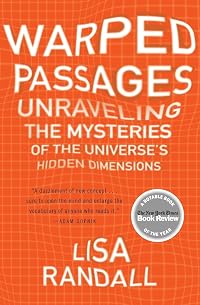
Warped Passages: Unraveling the Mysteries of the Universe's Hidden Dimensions
by Lisa Randall
On This Page
Description
Discusses dimensions of space, early twentieth-century advances, the physics of elementary particles, string theory and branes, and proposals for extra-dimension universes.Tags
Recommendations


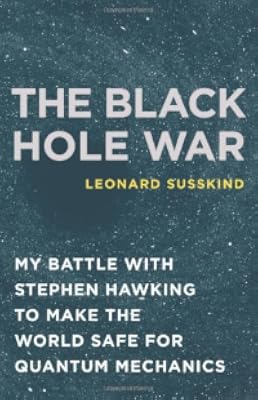
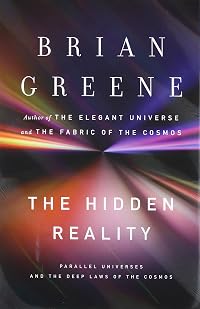
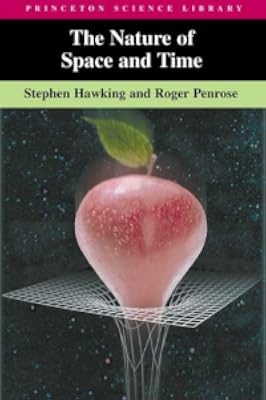
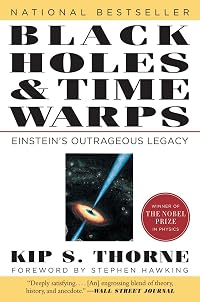
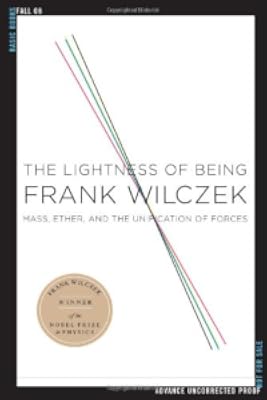
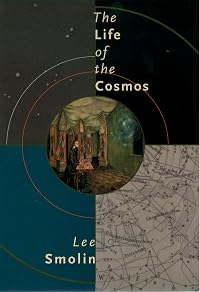
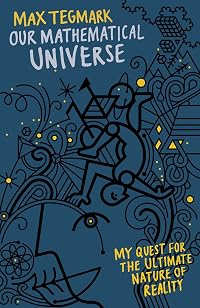
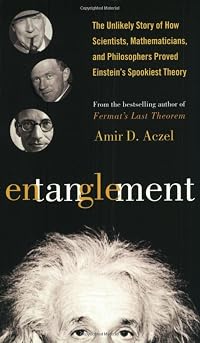
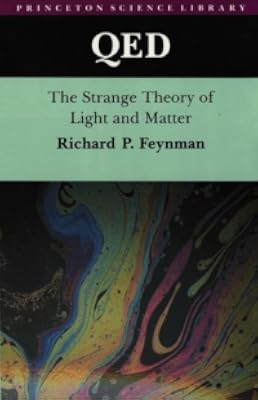
Member Recommendations
waltzmn Randall's book on the advanced theoretical (very theoretical!) physics can be difficult even for a person who has had physics training. I frankly got lost several times. Those seeking to build some foundations will be well-served by this small but clear book by John Polkinghorne.
Member Reviews
I reviewed this once before and a tecnical snafu ate it when I tried to up load it...
This book is dreadful: here are the many reasons why:
The material is disorganised. The book is ostensibly about extra spatial dimensions. The concepts are introduced in the first few chapters then don't re-appear until the last few chapters. The Standard Model is introduced twice.
The explanations are poor and sometimes wrong. The section on the Pauli Principle is riddled with errors and omissions that should embarress a good A-level chemistry student. The section on CP symmetry and CPT symmetry is so bad that I did not recognise these concepts for what they were until several chapters later. These concepts are not actually difficult to explain, even if show more it is hard to see why they should be true: In CP symmetry, all matter is swapped for it's antimatter equivalent and the directions left and right are reversed. When this is done, no difference can be detected between before and after the swap. This symmetry is known to work for all physical processes except those involving the weak nuclear force. In CPT symmetry, as well as swapping matter for antimatter and left for right, the direction of time is reversed. This symmetry was believed to hold for all circumstances - it could have happened five times since you started reading this review and you would never be able to tell the difference! However, very recent results have suggested that neutrinos and antinuetrinos may have different masses which would mean that CPT symmetry does not apply to them. This isn't a well established result yet, though. So, really, how hard was that to explain? Randall also offers the worst introduction to the fundamental mysteries of quantum mechanics I've ever read (and I've read quite a number).
Randall can't write: Additionally to giving bad explanations, Randall also gives us a very bad story at the beginning of each chapter. These stories have no literary merit and do not make understanding the forthcoming material any easier. They are like the dialogues from Godel, Escher, Bach by Hofstadter with all wit, literary merit and purpose removed, except they aren't dialogues, either.
Pop song wisdom: Each chapter begins with a quote from a pop song. These are not profound or witty. Many, many years ago I developed the principle, "Do not get your life wisdom from pop songs." One could also say, "Do not quote pop songs at the heads of chapters unless you want to look as if you've never read a book in your life."
Repetition: Using the same unclear explanation over and over again does not make a topic easier to understand. Since it was very difficult to understand Randall's explanations of concepts I am already familiar with repeating them isn't helpful.
Bloat: The new "physics" Randall wants to explain comes in the final two chapters of a long book which is full of digressions that are irrelevant to the main thrust. Weirdly the author includes every theoretical development of the last 20 years except the only one that has a firm experimental basis (i.e. neutrino oscillation, which I'm not going to explain here). Weirdly, this would have been useful, unlike the ones she does include, because the issue of "flavour mixing" comes up at one point. Again it took me some time to realise that this "flavour mixing" was something I knew about - neutrino oscillation!
Is there anything good about this book? Well, there's an explanation of why one theory of relativity is Special and the other is General that you won't find in many other places. Is that compensation for nearly 500p of tedious, repetitive and extremely speculative barely comprehensible explanations?
Stick to the maths, Lisa; you're good at maths. show less
This book is dreadful: here are the many reasons why:
The material is disorganised. The book is ostensibly about extra spatial dimensions. The concepts are introduced in the first few chapters then don't re-appear until the last few chapters. The Standard Model is introduced twice.
The explanations are poor and sometimes wrong. The section on the Pauli Principle is riddled with errors and omissions that should embarress a good A-level chemistry student. The section on CP symmetry and CPT symmetry is so bad that I did not recognise these concepts for what they were until several chapters later. These concepts are not actually difficult to explain, even if show more it is hard to see why they should be true: In CP symmetry, all matter is swapped for it's antimatter equivalent and the directions left and right are reversed. When this is done, no difference can be detected between before and after the swap. This symmetry is known to work for all physical processes except those involving the weak nuclear force. In CPT symmetry, as well as swapping matter for antimatter and left for right, the direction of time is reversed. This symmetry was believed to hold for all circumstances - it could have happened five times since you started reading this review and you would never be able to tell the difference! However, very recent results have suggested that neutrinos and antinuetrinos may have different masses which would mean that CPT symmetry does not apply to them. This isn't a well established result yet, though. So, really, how hard was that to explain? Randall also offers the worst introduction to the fundamental mysteries of quantum mechanics I've ever read (and I've read quite a number).
Randall can't write: Additionally to giving bad explanations, Randall also gives us a very bad story at the beginning of each chapter. These stories have no literary merit and do not make understanding the forthcoming material any easier. They are like the dialogues from Godel, Escher, Bach by Hofstadter with all wit, literary merit and purpose removed, except they aren't dialogues, either.
Pop song wisdom: Each chapter begins with a quote from a pop song. These are not profound or witty. Many, many years ago I developed the principle, "Do not get your life wisdom from pop songs." One could also say, "Do not quote pop songs at the heads of chapters unless you want to look as if you've never read a book in your life."
Repetition: Using the same unclear explanation over and over again does not make a topic easier to understand. Since it was very difficult to understand Randall's explanations of concepts I am already familiar with repeating them isn't helpful.
Bloat: The new "physics" Randall wants to explain comes in the final two chapters of a long book which is full of digressions that are irrelevant to the main thrust. Weirdly the author includes every theoretical development of the last 20 years except the only one that has a firm experimental basis (i.e. neutrino oscillation, which I'm not going to explain here). Weirdly, this would have been useful, unlike the ones she does include, because the issue of "flavour mixing" comes up at one point. Again it took me some time to realise that this "flavour mixing" was something I knew about - neutrino oscillation!
Is there anything good about this book? Well, there's an explanation of why one theory of relativity is Special and the other is General that you won't find in many other places. Is that compensation for nearly 500p of tedious, repetitive and extremely speculative barely comprehensible explanations?
Stick to the maths, Lisa; you're good at maths. show less
Absolutely wonderful book. Lisa manages to describe without maths what is behind current theories in physics and the workings of the fundamental particles of all matter. She actually makes the unfolding mysteries of quarks and leptons fascinating reading, describing the paths that research has taken in the last 50 years or so and what is left to find out. You won't remember much of the details but what you will get is a general understanding of what they are looking for and how they do it.
Randall's book is quite comprehensive and largely understandable for a non-scientist reader like myself. Warped Passages gives a good overview of the evolution of theory about the makeup of the particles, forces and and dimensions that our universe may or may not be comprised of. The trick is not to try to comprehend every single concept and theory or to wrestle every paragraph to the ground before continuing on. Randall is an all-star of the physics world herself, so it is interesting reading about the developments of various theories from her point of view. It took a long time to get through this book: it's 450 pages and the going is sometimes slow. Also, I thought that Randall did not need to go into so much detail describing every show more single theory that's come down the pike. On the other hand, the book is very well organized, and Randall is frequently candid in saying when upcoming sections can be skipped without endangering a reader's understanding of the overall chronology of string and/or particle theory. My 50-Book challenge for this year went down the drain a while ago, so this was as good a time as any to tackle this challenging but interesting material. show less
Engaging most of the time, ponderous at others, this took a bit to get through. I think Ms. Randall did a brilliant job making her world accessible. To think that there are exponential pages of materiel behind this that she and her colleagues work with every day...
My one ding - and it's a pet peeve - is that she used the term "GPS system" seven times when talking about a real world example of compensation for relativity. "GPS", of course, is an acronym for "Global Positioning System", and "GPS System" is redundant.
Still...a brilliant work.
My one ding - and it's a pet peeve - is that she used the term "GPS system" seven times when talking about a real world example of compensation for relativity. "GPS", of course, is an acronym for "Global Positioning System", and "GPS System" is redundant.
Still...a brilliant work.
This is not an easy book to read. What's easy about quantum mechanics? To my own astonishment, however, Lisa Randall took me from basic physics to the esoteric theories of warp geometry, string theory and added dimensions in a way that I could understand and actually remember. She uses examples from our daily lives in an imaginative and fun way to make the readers understand some extraordinarily difficult concepts and take us along the road of discovery and, of course, speculation.
This book has nothing to do with Star Trek or Star Wars but I found it just as fascinating.
This book has nothing to do with Star Trek or Star Wars but I found it just as fascinating.
This is a beautifully written account of complex scientific ideas. The book covers extra spatial dimensions – how they might come about and what consequences they would have. Most features are ably explained by using an analogy. Thus as the provider of a popular account of recent speculations, this book fares very well.
Yet there is also a political undercurrent to slightly unnerve. For instance she neatly sidesteps controversies by simply expressing her opinion. So she opines that string theory is the ‘best’ of current suggestions for a more fundamental theory. Thus she misses opportunities to give more convincing reasons for the studies. For work that has drifted so far from the mainstream and piled up speculation on top of show more speculation that larger justification would have given the book more meaning. show less
Yet there is also a political undercurrent to slightly unnerve. For instance she neatly sidesteps controversies by simply expressing her opinion. So she opines that string theory is the ‘best’ of current suggestions for a more fundamental theory. Thus she misses opportunities to give more convincing reasons for the studies. For work that has drifted so far from the mainstream and piled up speculation on top of show more speculation that larger justification would have given the book more meaning. show less
In his best selling book, A Brief History of Time, Stephen Hawking quipped that a friend told him each equation in his book “would halve the sales.” Fortunately, Lisa Randall collected hundreds of equations as endnotes, so I could happily ignore all those superscript numbers and only worry about the asterisks which took me to the bottom of the pages.
Wow! Warped Passages is for serious amateurs with an interest in esoteric science. At one time, I read a lot more of this stuff than I do now, so I will admit to being a little rusty. The interview I heard on NPR mentioned string theory, which I find endlessly fascinating, if not entirely understandable. Randall’s fluid prose added to my knowledge there, but I was lost when she started show more talking about “branes.” She defines these as “A membrane-like object in higher-dimensional space that can carry energy and confine particles and forces” (460). This gives you some idea of what I was up against. Still I slogged on, and I am glad I did.
Branes are an extension of string theory, and the idea is that they hold the key to extra dimensions in space. Maybe all those UFOs have found a way to pass between branes and enter our plane of existence.
I know I will come back to this book in the future, because it makes an excellent reference work. A handy glossary and summaries at the end of each chapter are extremely helpful. Her line drawings were also good for illustrating some of her ideas. Four gold stars!
--Jim, 7/17/08 show less
Wow! Warped Passages is for serious amateurs with an interest in esoteric science. At one time, I read a lot more of this stuff than I do now, so I will admit to being a little rusty. The interview I heard on NPR mentioned string theory, which I find endlessly fascinating, if not entirely understandable. Randall’s fluid prose added to my knowledge there, but I was lost when she started show more talking about “branes.” She defines these as “A membrane-like object in higher-dimensional space that can carry energy and confine particles and forces” (460). This gives you some idea of what I was up against. Still I slogged on, and I am glad I did.
Branes are an extension of string theory, and the idea is that they hold the key to extra dimensions in space. Maybe all those UFOs have found a way to pass between branes and enter our plane of existence.
I know I will come back to this book in the future, because it makes an excellent reference work. A handy glossary and summaries at the end of each chapter are extremely helpful. Her line drawings were also good for illustrating some of her ideas. Four gold stars!
--Jim, 7/17/08 show less
Members
- Recently Added By
Lists

Books Read in 2018
4,360 works; 110 members

Club Read's Recommended Nonfiction Written by Women
618 works; 30 members
Author Information

8+ Works 3,055 Members
Lisa Randall studies theoretical particle physics and cosmology at Harvard University, where she is Frank B. Baird, Jr., Professor of Science. A member of the National Academy of Sciences, the American Philosophical Society, and the American Academy of Arts and Sciences, she is the recipient of many awards and honorary degrees and was named one of show more Time magazine's "100 Most Influential People" in 2007. Warped Passages (2005) and Knocking on Heaven's Door (2011) were New York Times bestsellers and 100 Notable Books. Her standalone e-book, Higgs Discovery: The Power of Empty Space, was published in 2012. show less
Some Editions
Awards and Honors
Distinctions
Notable Lists
Series
Belongs to Publisher Series
Common Knowledge
- Canonical title
- Warped Passages: Unraveling the Mysteries of the Universe's Hidden Dimensions
- Original title
- Warped Passages: Unraveling the Mysteries of the Universe's Hidden Dimensions
- Original publication date
- 2005
- First words
- The universe has its secrets.
- Quotations
- Whatever shape the rolled-up extra dimensions take, and however many there are, at each point along the infinite dimensions there would be a small compact space containing all the curled-up dimensions. So, for example, if str... (show all)ing theorists are right, everywhere in visible space—at the tip of your nose, at the North Pole of Venus, at the spot above the tennis court where your racket hit the ball the last time you served—there would be a six-dimensional Calabi-Yau manifold of invisibly tiny size. The higher-dimensional geometry would be present at every point in space.
- Last words
- (Click to show. Warning: May contain spoilers.)I, for one, can't wait.
- Blurbers
- Gross, David J.; Smolin, Lee; Pinker, Steven; Gopnik, Adam
Classifications
Statistics
- Members
- 1,466
- Popularity
- 15,977
- Reviews
- 27
- Rating
- (3.74)
- Languages
- 9 — Czech, Dutch, English, German, Italian, Japanese, Polish, Spanish, Turkish
- Media
- Paper, Audiobook, Ebook
- ISBNs
- 19
- ASINs
- 10