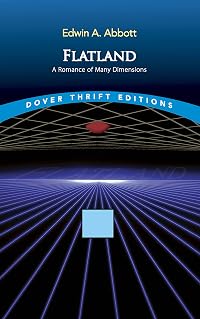
Flatland: A Romance of Many Dimensions
by Edwin A. Abbott
On This Page
Description
A square, who is a resident of the two-dimensional Flatland, dreams of the one-dimensional Lineland. He attempts to convince the monarch of Lineland of the possibility of another dimension, but the monarch cannot see outside the line. The square is then visited himself by a Sphere from three-dimensional Spaceland, who must show the square Spaceland before he can conceive it. As more dimensions enter the scene, the story's discussion of fixed thought and the kind of inhuman action which show more accompanies it intensifies. show lessTags
Recommendations












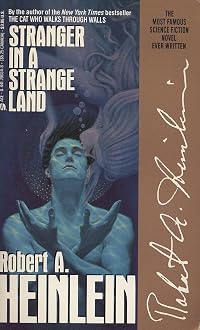
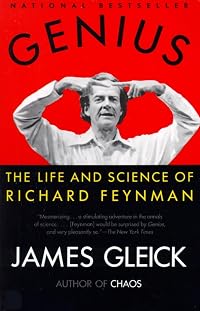
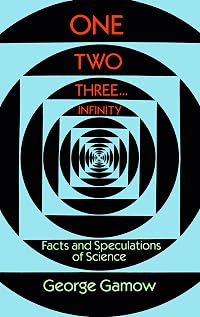
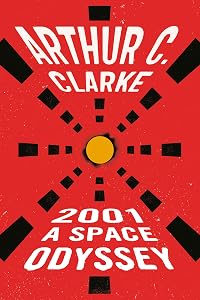




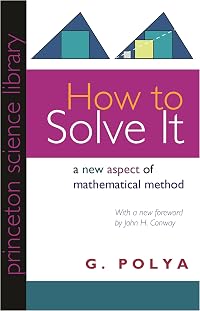
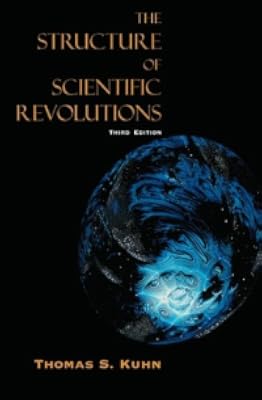


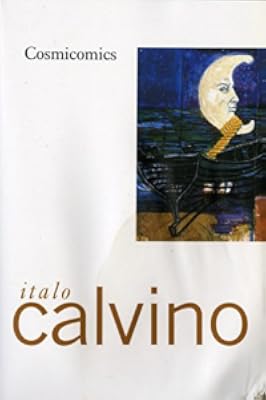

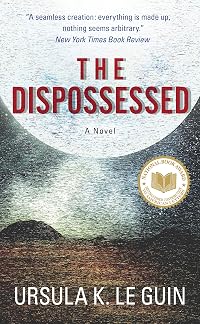
Member Recommendations
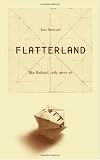



beyondthefourthwall Well-developed thought-experiments about slightly alternative societies, partially satirising Victorian Britain.



paradoxosalpha "The fourth dimension as the esoteric key of reality."
37
BrynDahlquis The books are seemingly completely different, but they both are rather surreal and deal with dimensions (of a sort) and wondering if your "world" is actually all there is.
05
Member Reviews
This book was recommended to me more than fifty years ago. I finally read it. The basic approach is a challenge. Abbott wants you to imagine what if. He pushes us to realize how things would look if there were only two dimensions. Everything would appear flat. Beyond that different shapes in a two dimensional world would have slight differences visible from only certain ways one would come upon them. It points out how a circle would appear as opposed to how a triangle would appear and that would depend on which direction you approached it, approaching the base or one on the angles. And then there's a square with more bases, and then hexagons, etc. More bases, larger angles, seen from the inside and less severe when approached from the show more outside. Interesting. This approach is taken to another level when one shape is considered superior to another and combined with increased or decreased likelihood of progeny being shaped like the more superior shape. Yikes, sounds like eugenics. Put that aside for a moment.
Abbott takes us in two different directions, fewer and more dimensions. If the world had only one dimension shapes would disappear, things could only be dots or lines. Fascinating. Even more fascinating is what happens when the world has a third dimension. Not just north and south but actually up and down. Now we get even more interesting objects. The concept of volume becomes important. Inside and outside even have deeper, richer meaning. Abbott then speculates about what if there are more dimensions. Wow. What would that look like? We don't even have language rich enough to handle that.
If this was all this book contained that would be great. But introducing hierarchy and it's corollary, caste, begins to show us the darker side. Eugenics seems....normal. But this goes off the rails with misogyny. Woman are worthless according to Abbott, They can't comprehend the richness of any of these worlds. Really? I have to stop and realize this book was written in a very different world, the 1880s. Women did not even have the right to vote and were treated more like property than people. This is a problem with many classics. They have aspects we no longer consider appropriate. I would love if someone would rewrite this classic without the negative baggage. That would be a much better book. show less
Abbott takes us in two different directions, fewer and more dimensions. If the world had only one dimension shapes would disappear, things could only be dots or lines. Fascinating. Even more fascinating is what happens when the world has a third dimension. Not just north and south but actually up and down. Now we get even more interesting objects. The concept of volume becomes important. Inside and outside even have deeper, richer meaning. Abbott then speculates about what if there are more dimensions. Wow. What would that look like? We don't even have language rich enough to handle that.
If this was all this book contained that would be great. But introducing hierarchy and it's corollary, caste, begins to show us the darker side. Eugenics seems....normal. But this goes off the rails with misogyny. Woman are worthless according to Abbott, They can't comprehend the richness of any of these worlds. Really? I have to stop and realize this book was written in a very different world, the 1880s. Women did not even have the right to vote and were treated more like property than people. This is a problem with many classics. They have aspects we no longer consider appropriate. I would love if someone would rewrite this classic without the negative baggage. That would be a much better book. show less
ORIGINALLY POSTED AT Fantasy Literature.
Flatland: A Romance of Many Dimensions, published in 1884, is Edwin A. Abbott's social satire and Christian apologetic. As a Cambridge mathematician, theologian, and schoolmaster, Abbott had a lot to say about his Victorian society and about being open-minded to the supernatural. He does this from the point of view of a humble square that lives in Flatland, a world of only two dimensions.
For the first half of the book ("This World"), the square explains the demography of Flatland, all the while offering hilarious social satire. He begins at the lowest social stratum (women, who are straight lines) and ends with the king, who has so many sides that he's indistinguishable from a circle. Low-class show more men, such as soldiers, are isosceles triangles with sharp acute angles. Since the brain is the size of the smallest angle, these men are stupid, but their sharp angles provide offensive weapons. Anyone who has an angle under 60?ø is a serf. Women, of course, have no angles, which means they are brainless and irrational (and Abbot provides plenty of tongue-in-cheek evidence for this fact). But women have a mouth on one end, and it can effectively be used as a dagger. When viewed from the back, a woman is hard to notice since she is seen only as a point, thus she must sway her bottom back and forth to alert others of her dangerous presence.
Pretending that he's merely explaining Flatland society to his readers in "Spaceland," Abbot mercilessly mocks his era's class structure, fashion, aristocratic marriage and parenting practices, the education system and school board politics, and government. All of this is done in a reasonable-sounding lecturing tone:
"Obviously then a Woman is not to be irritated as long as she is in a position where she can turn round. When you have them in their apartments -- which are constructed with a view to denying them that power -- you can say and do what you like; for they are then wholly impotent for mischief, and will not remember a few minutes hence the incident for which they may be at this moment threatening you with death, nor the promises which you may have found it necessary to make in order to pacify their fury."
In the second half of the book ("Other Worlds") the square explains his vision of a one-dimensional realm called "Lineland" where he meets the king of Lineland who can't imagine Flatland, a world of two dimensions. The square thinks this is amusing, so he torments the belligerent king by using the second dimension to speak to the king from above, to magically pop in and out of the King's view, and to offer predictions about who is approaching the king from afar (image below). With his omniscience and omnipresence, the square bewilders the king of Lineland.
Upon his return to Flatland, the square is confronted by a sphere from our Spaceland of three dimensions who, poised in the third dimension, can view all of Flatland. To the Flatlanders the sphere looks like a circle of changing diameter, and to Linelanders he seems to be only two lines. The sphere can pop in and out of Flatland and Lineland as he wills, can see inside (and even manipulate) houses and bodies, and can make predictions about the future based on what he sees from his viewpoint.
Our square, who harassed the king of Lineland for his inability to imagine Flatland, is now flummoxed at the thought of a dimension he can't perceive, but he believes it because he has witnessed the sphere's power and he remembers his analogous encounter in one-dimensional Lineland. When the square tries to preach this new teaching, though, he meets resistance from unbelievers.
The metaphor, of course, is that we in Spaceland, being confined to only the dimensions we are able to perceive, can't imagine more dimensions in which other beings exist and may be able to visit, view, or manipulate us. This idea isn't at all new to me, but I found Abbott's explanation to be a very convincing line of reasoning and, perhaps, a way to imagine what it must be like to be God. Flatland is best known, by the way, as a treatise on dimensionality and is considered by scientists to be prophetic in its use of unseen dimensions to explain physical phenomena.
Flatland is available in the public domain, but I chose to listen to Blackstone Audio's recent version which is four hours long and read by Robin Field. The audiobook does not come with Edwin Abbott's drawings, but I had no trouble imagining them because they're thoroughly described by Abbott in the text. However, it's easy to refer to them in public domain sources if you wish. I loved Robin Field's narration and, even though the material seems heavy, I didn't have any problem following along. I did, however, have to maintain constant focus just to translate all of the geometric metaphors into social analogies during the first section of the book. For that reason, Flatland is hard work, but immensely rewarding. I thought it was brilliant.
ORIGINALLY POSTED AT Fantasy Literature. show less
Flatland: A Romance of Many Dimensions, published in 1884, is Edwin A. Abbott's social satire and Christian apologetic. As a Cambridge mathematician, theologian, and schoolmaster, Abbott had a lot to say about his Victorian society and about being open-minded to the supernatural. He does this from the point of view of a humble square that lives in Flatland, a world of only two dimensions.
For the first half of the book ("This World"), the square explains the demography of Flatland, all the while offering hilarious social satire. He begins at the lowest social stratum (women, who are straight lines) and ends with the king, who has so many sides that he's indistinguishable from a circle. Low-class show more men, such as soldiers, are isosceles triangles with sharp acute angles. Since the brain is the size of the smallest angle, these men are stupid, but their sharp angles provide offensive weapons. Anyone who has an angle under 60?ø is a serf. Women, of course, have no angles, which means they are brainless and irrational (and Abbot provides plenty of tongue-in-cheek evidence for this fact). But women have a mouth on one end, and it can effectively be used as a dagger. When viewed from the back, a woman is hard to notice since she is seen only as a point, thus she must sway her bottom back and forth to alert others of her dangerous presence.
Pretending that he's merely explaining Flatland society to his readers in "Spaceland," Abbot mercilessly mocks his era's class structure, fashion, aristocratic marriage and parenting practices, the education system and school board politics, and government. All of this is done in a reasonable-sounding lecturing tone:
"Obviously then a Woman is not to be irritated as long as she is in a position where she can turn round. When you have them in their apartments -- which are constructed with a view to denying them that power -- you can say and do what you like; for they are then wholly impotent for mischief, and will not remember a few minutes hence the incident for which they may be at this moment threatening you with death, nor the promises which you may have found it necessary to make in order to pacify their fury."
In the second half of the book ("Other Worlds") the square explains his vision of a one-dimensional realm called "Lineland" where he meets the king of Lineland who can't imagine Flatland, a world of two dimensions. The square thinks this is amusing, so he torments the belligerent king by using the second dimension to speak to the king from above, to magically pop in and out of the King's view, and to offer predictions about who is approaching the king from afar (image below). With his omniscience and omnipresence, the square bewilders the king of Lineland.
Upon his return to Flatland, the square is confronted by a sphere from our Spaceland of three dimensions who, poised in the third dimension, can view all of Flatland. To the Flatlanders the sphere looks like a circle of changing diameter, and to Linelanders he seems to be only two lines. The sphere can pop in and out of Flatland and Lineland as he wills, can see inside (and even manipulate) houses and bodies, and can make predictions about the future based on what he sees from his viewpoint.
Our square, who harassed the king of Lineland for his inability to imagine Flatland, is now flummoxed at the thought of a dimension he can't perceive, but he believes it because he has witnessed the sphere's power and he remembers his analogous encounter in one-dimensional Lineland. When the square tries to preach this new teaching, though, he meets resistance from unbelievers.
The metaphor, of course, is that we in Spaceland, being confined to only the dimensions we are able to perceive, can't imagine more dimensions in which other beings exist and may be able to visit, view, or manipulate us. This idea isn't at all new to me, but I found Abbott's explanation to be a very convincing line of reasoning and, perhaps, a way to imagine what it must be like to be God. Flatland is best known, by the way, as a treatise on dimensionality and is considered by scientists to be prophetic in its use of unseen dimensions to explain physical phenomena.
Flatland is available in the public domain, but I chose to listen to Blackstone Audio's recent version which is four hours long and read by Robin Field. The audiobook does not come with Edwin Abbott's drawings, but I had no trouble imagining them because they're thoroughly described by Abbott in the text. However, it's easy to refer to them in public domain sources if you wish. I loved Robin Field's narration and, even though the material seems heavy, I didn't have any problem following along. I did, however, have to maintain constant focus just to translate all of the geometric metaphors into social analogies during the first section of the book. For that reason, Flatland is hard work, but immensely rewarding. I thought it was brilliant.
ORIGINALLY POSTED AT Fantasy Literature. show less
En haut, en bas... Voilà deux expressions qui n'ont pas cours à Flatland. A les employer, on risque de perdre la tête, au propre comme au figuré. Car si les habitants de cet univers qui ne connaît que Deux Dimensions n'ont pas à craindre que le ciel leur tombe sur la tête, ils détestent les illuminés et les faux prophètes qui prêchent l'évangile de la Troisième dimension. Pourtant, le narrateur de cette étrange aventure, un très raisonnable Carré, est certain d'avoir été visité par une Sphère, chose impossible pour ses concitoyens qui ne peuvent y voir qu'un Cercle... Mais ne riez pas de leur aveuglement. Comment réagissez-vous quand on vous parie de la Quatrième dimension ?
I'm not sure why the subtitle contains the word 'romance'.
This book reminded me of Star Maker, but luckily Flatland is much shorter and consists of beautiful English prose. Flatland is a monologue describing an epiphany concerning the Nature of the Universe. I also see connections with thought experiments such as Plato's allegory of the cave. It invites the reader to extend the analogy to our own experience.
The tone of the narrator is scientific and slightly sad, which makes it (despite its short length) a bit of a heavy read. There's also a distopian tinge to the story.
The Flatland States are conservative and very woman-unfriendly. Can't tell if the writer is a bigot or a satirist. ;)
This book reminded me of Star Maker, but luckily Flatland is much shorter and consists of beautiful English prose. Flatland is a monologue describing an epiphany concerning the Nature of the Universe. I also see connections with thought experiments such as Plato's allegory of the cave. It invites the reader to extend the analogy to our own experience.
The tone of the narrator is scientific and slightly sad, which makes it (despite its short length) a bit of a heavy read. There's also a distopian tinge to the story.
The Flatland States are conservative and very woman-unfriendly. Can't tell if the writer is a bigot or a satirist. ;)
Flatland is a clever book. It may be about two dimensions, but it works on more than one. Like a lot of the best science fiction, it allows us to imagine a world unlike ours while telling us something about the world like ours. At the same time Abbott through his obtuse (lol) narrator, A. Square, is telling us about this fantastic two-dimensional world he's constructed, he's also telling us something about our world; there's a lot of commentary on Victorian gender packed in here, for example. For example, the greatest men actually have what are technically feminine characteristics-- so a law has to be passed to make it clear that that characteristic is good in a man, but bad in a woman (55). Oddly, like in Bulwer's The Coming show more Race from a decade prior, women in the world of Flatland have enormous destructive power (27-8). There must be some kind of metaphor going on that I can't quite unpack; in Flatland, apartments are designed to prevent women from exercising their power (31), and that has to be some kind of commentary on the Victorian home, surely?
The best part of the book in my mind is surely the story of the Sphere who lords his extra dimension over A. Square, but cannot conceive of a four-dimensional world where he himself is less powerful. A. Square can extrapolate by analogy even though he has never seen such a world, but the Sphere cannot. To draw a connection to another late Victorian science fiction work, it puts me in mind of what Wells did in The War of the Worlds: the Martians were to the English as the English were to the Tasmanians, but until the Martians came, no one could conceive of a power with that relationship to us. By giving us a world with fewer dimensions than our own, Flatland prompts us to imagine that there must be a world out there with more, and that is its greatest cleverness. show less
The best part of the book in my mind is surely the story of the Sphere who lords his extra dimension over A. Square, but cannot conceive of a four-dimensional world where he himself is less powerful. A. Square can extrapolate by analogy even though he has never seen such a world, but the Sphere cannot. To draw a connection to another late Victorian science fiction work, it puts me in mind of what Wells did in The War of the Worlds: the Martians were to the English as the English were to the Tasmanians, but until the Martians came, no one could conceive of a power with that relationship to us. By giving us a world with fewer dimensions than our own, Flatland prompts us to imagine that there must be a world out there with more, and that is its greatest cleverness. show less
"Estar satisfecho de sí mismo es ser ruin e ignorante, y [tener] algo a que aspirar es mejor que ser ciega e impotentemente feliz"
Este libro ha significado para mi una grata sorpresa. Lo comencé con incredulidad, dada su fama de libro didáctico de matemáticas, con lo cuál cumple en aspectos que son muy sencillos de entender, pero al mismo tiempo cuenta con una historia que bien podría pasar, en parte, como una muy rara distopía (aunque tampoco podría simplemente embolsarlo en ese genero).
"Todos somos proclives a los mismo errores, todos igual de esclavos de nuestros respectivos prejuicios"
La historia va narrada por un cuadrado que nos cuenta la vida y los habitantes, así como la jerarquía social, de Planilandia, una show more "ciudad/país/universo" de 2 dimensiones, cuya estructura es una muestra muy representativa de como se regia la sociedad hacia finales de los 1800, muy inteligente la forma en que,sin resultar políticamente incorrecto, Abbott ofreció una buena crítica a la actitud de los gobernantes, el relegado papel de la mujer y la imposibilidad de lograr alcanza una vida mejor.
"Os creéis la perfección de la existencia y sois en realidad el más imperfecto y estúpido de los seres"
La vida de este cuadrado da un giro dramático la noche del cambio de milenio, cuando tiene un sueño acerca de un universo completamente diferente al suyo. Tras este revelación (y otras posteriores) la vida del cuadrado, y su percepción de ella, cambia completamentehasta que finalmente es llevado a la cárcel por revelar una verdad que los gobernantes de Planilandia no creen, y no desean que sea difundida . A partir de este punto Abbott comienza a dar mayor interés a la historia.
El final es simplemente la realidad de lo que sucede cuando un individuo, aunque tenga razón, se contrapone y desobedece los designio de quienes están en el poder, pero al mismo tiempo muestra que a pesar de la adversidad uno debe mantener su ideología y su esencia. show less
Este libro ha significado para mi una grata sorpresa. Lo comencé con incredulidad, dada su fama de libro didáctico de matemáticas, con lo cuál cumple en aspectos que son muy sencillos de entender, pero al mismo tiempo cuenta con una historia que bien podría pasar, en parte, como una muy rara distopía (aunque tampoco podría simplemente embolsarlo en ese genero).
"Todos somos proclives a los mismo errores, todos igual de esclavos de nuestros respectivos prejuicios"
La historia va narrada por un cuadrado que nos cuenta la vida y los habitantes, así como la jerarquía social, de Planilandia, una show more "ciudad/país/universo" de 2 dimensiones, cuya estructura es una muestra muy representativa de como se regia la sociedad hacia finales de los 1800, muy inteligente la forma en que,sin resultar políticamente incorrecto, Abbott ofreció una buena crítica a la actitud de los gobernantes, el relegado papel de la mujer y la imposibilidad de lograr alcanza una vida mejor.
"Os creéis la perfección de la existencia y sois en realidad el más imperfecto y estúpido de los seres"
La vida de este cuadrado da un giro dramático la noche del cambio de milenio, cuando tiene un sueño acerca de un universo completamente diferente al suyo. Tras este revelación (y otras posteriores) la vida del cuadrado, y su percepción de ella, cambia completamente
El final es simplemente la realidad de lo que sucede cuando un individuo, aunque tenga razón, se contrapone y desobedece los designio de quienes están en el poder, pero al mismo tiempo muestra que a pesar de la adversidad uno debe mantener su ideología y su esencia. show less
I don't remember how I stumbled across Flatland for the category A Book With Non-Human Characters—most search results list books with animals—but I'm glad I did. The first-person narrator of Edwin A. Abbott's short novel first explains the physical mechanics and societal organization of his two-dimensional space, which he calls Flatland for his readers' benefit, then relays his "personal" story of leaving Flatland for the three-dimensional world with the assistance of an alien visitor, Sphere. The quotes around the word personal reflect the fact that our narrator is a square, rather than a human, who occupies the respectable position of attorney due to his four sides. In Flatland, the more sides an individual has, the higher his show more position in society. Sphere has a third dimension previously unknown and unimagined in two-dimensional Flatland, a dimension which confers status far beyond that of any shape living in Flatland. Eventually, the square comes to treat Sphere as a god.
In some ways Flatland is reflective of its time (1884) and place (England). Flatland is a patriarchal society, where women are the simplest geometric shape (straight lines) and are restricted from education. It's telling that, when viewed head-on, women are essentially invisible. Owing to the sharpness of their terminal ends, they are also extremely dangerous physically to the other inhabitants of Flatland and are required to emit a Peace-cry to warn those around them of their presence. The highest societal position is that of Priests, who are circles.
In other ways, it is still relatable decades after its initial publication. The conflict between the various shapes is analogous to today's world. The upper shapes look down on and use the lower shapes for their own benefit. The lower shapes resent the upper shapes. Their attempt to overthrow the societal hierarchy employs color, rather than weapons, to eliminate the cognitive differences between the shapes.
Flatland is an interesting thought experiment about the universality of human nature, regardless of physical reality. show less
In some ways Flatland is reflective of its time (1884) and place (England). Flatland is a patriarchal society, where women are the simplest geometric shape (straight lines) and are restricted from education. It's telling that, when viewed head-on, women are essentially invisible. Owing to the sharpness of their terminal ends, they are also extremely dangerous physically to the other inhabitants of Flatland and are required to emit a Peace-cry to warn those around them of their presence. The highest societal position is that of Priests, who are circles.
In other ways, it is still relatable decades after its initial publication. The conflict between the various shapes is analogous to today's world. The upper shapes look down on and use the lower shapes for their own benefit. The lower shapes resent the upper shapes. Their attempt to overthrow the societal hierarchy employs color, rather than weapons, to eliminate the cognitive differences between the shapes.
Flatland is an interesting thought experiment about the universality of human nature, regardless of physical reality. show less
Members
- Recently Added By
Lists

1001 Books You Must Read Before You Die
1,448 works; 1,134 members

Best Science Fiction Novels
816 works; 426 members
Best Dystopias
280 works; 276 members
Survey of Classic Science Fiction
171 works; 48 members

Classics you know you should have read but probably haven't
421 works; 408 members

S.F. Masterworks (Complete)
229 works; 15 members

Weird and Weirder Fiction
270 works; 35 members

Easton Press Masterpieces of Science Fiction
30 works; 2 members

Short and Sweet
246 works; 24 members

Fantasy: The 100 Best Books
11 works; 3 members

Experimental Literature
141 works; 18 members

Cawthorn and Moorcock's Fantasy: The 100 Best Books
110 works; 7 members

Speculative Fiction: The Classics
36 works; 5 members

Books Read in 2024
4,623 works; 126 members

Top 50 Favourite Books
50 works; 2 members

Books Read in 2025
4,091 works; 97 members

Out of Copyright
244 works; 14 members

1880s
14 works; 2 members

Maybe This Year? Books to Look Forward To
409 works; 9 members

Book Worlds We'd Like To Visit
322 works; 158 members
Reading LIst
648 works; 1 member

Bookshelf from Interstellar
62 works; 1 member

Mustich's 1000 Books to Read Before You Die: A Life Changing List
1,001 works; 19 members

Unread books
1,063 works; 85 members

Books Read in 2016
4,666 works; 197 members

Books Read in 2011
684 works; 20 members

recalling favorites...
105 works; 2 members

Blue Pyramid 1,276 Best Books of All Time
1,248 works; 32 members

Is the book too misogynist to read/recommend?
40 works; 9 members

SantaThing 2014 Gifts
299 works; 17 members

Books Read in 2014
2,343 works; 87 members
Fiction for Readers Who Love Science and Math
57 works; 15 members

Favourite Books
1,819 works; 308 members

HS Mathematics class library
79 works; 6 members

Victorian Period
113 works; 10 members
Best Fantasy Novels
821 works; 361 members
19th Century
190 works; 16 members

Mathematics
3 works; 1 member
Author Information

Edwin A. Abbott was born December 20, 1838. He attended City of London School and Cambridge, where he was an honor student in the classics. Following the career path of his father, Abbott was ordained an Anglican minister. Later he rejected a career as a clergyman and at the age of twenty-six, he returned to City of London School as Headmaster, a show more position he held for twenty-five years. Always curious about views from varying perspectives, he promoted a liberal attitude toward people of differing backgrounds. As president of the Teachers Training Society, for example, he lobbied for access to university education for women. He resigned as Headmaster at age fifty-three in protest of proposed changes to the mission of the school. Abbott wrote more than fifty books on widely different topics. He had published two series of his sermons while at Cambridge, a book on Shakespearean grammar, and accounts of his efforts to admit women to higher education. His most notable work is Flatland, written in 1884. Flatland is still widely read by both mathematicians and science-fiction readers because of its portrayal of the idea of higher dimensions. The narrator, a two-dimensional square called A Square happens into a three-dimensional world where he gains a wider vision into objects in his two-dimensional home. The book was a favorite with C. S. Lewis. Abbott died on October 12, 1926. (Bowker Author Biography) show less
Some Editions
Awards and Honors
Series
Belongs to Publisher Series
Work Relationships
Is contained in
The Ultimate Science Fiction Mega Collection: 24 of the Best Sci-Fi Books of All Time: A Journey to the Center of the Earth, 20,000 Leagues Under the Sea, Around the World in 80 Days, John Carter of Mars Trilogy, The War of the Worlds, The Time Machine, Frankenstein, Dr. Jekyll and Mr. Hyde, 3 Ray Bradbury Stories, Flatland, & More by Jules Verne
Has the (non-series) sequel
Has the adaptation
Inspired
Has as a reference guide/companion
Common Knowledge
- Canonical title
- Flatland: A Romance of Many Dimensions
- Original title
- Flatland: A Romance of Many Dimensions
- Alternate titles*
- Flatlandia: Racconto fantastico a più dimensioni
- Original publication date
- 1884
- People/Characters
- A. Square; King of Lineland; A. Sphere
- Important places
- Flatland; Lineland; Spaceland; Pointland
- Related movies
- Flatland (1965 | IMDb); Flatlandia (1982 | IMDb); Flatland (2007 | IMDb); Flatland: The Movie (2007 | IMDb)
- Epigraph
- "O day and night, but this is wondrous strange"
"Fie, fie, how franticly I square my talk!" - Dedication
- To
The Inhabitants of SPACE IN GENERAL
And H. C. IN PARTICULAR
This Work is Dedicated
By a Humble Native of Flatland
In the Hope that
Even as he was Initiated into the Mysteries
Of THREE Dimensions
Hav... (show all)ing been previously conversant
With ONLY TWO
So the Citizens of that Celestial Region
May aspire yet higher and higher
To the Secrets of FOUR FIVE OR EVEN SIX Dimensions
Thereby contributing
To the Enlargement of THE IMAGINATION
And the possible Development
Of that most rare and excellent Gift of MODESTY
Among the Superior Races
Of SOLID HUMANITY - First words
- Since its first appearance in 1884, Edwin Abbott Abbott's Flatland: A Romance of Many Dimensions has charmed and intrigued readers and scholars alike with its inventive mix of fantasy and reality. What on the surface a... (show all)mounts to a clever means of teaching principles of mathematics and science, upon deeper inspection emerges as an entertaining yet thought-provoking literary experiment. -Introduction, Lori M. Campbell
If my poor flatland friend retained the vigour of mind which he enjoyed when he began to compose these Memoirs, I should not now need to represent him in this preface, in which he desires, firstly, to return his thanks to his... (show all) readers and critics in Spaceland whose appreciation has, with unexpected celerity, required a second edition of his work, secondly, to apologize for certain errors and misprints (for which, however, he is not entirely responsible), and, thirdly, to explain one or two misconceptions. -Preface to the Second Revised Edition, 1884
I call our world Flatland, not because we call it so, but to make its nature clearer to you, my happy readers, who are privileged to live in Space. -Section 1, Of the Nature of Flatland - Last words
- (Click to show. Warning: May contain spoilers.)It is part of the martyrdom which I endure for the cause of the Truth that there are seasons of mental weakness, when Cubes and Spheres flit away into the background of scarce-possible existences: when the Land of Three Dimensions seems almost as visionary as the Land of One or None; nay, when even this hard wall that bars me from my freedom, these very tablets on which I am writing, and all the substantial realities of Flatland itself, appear no better than the offspring of a diseased imagination, or the baseless fabric of a dream.
- Original language
- English
- Canonical DDC/MDS
- 530.11; 823.8; 516.15; 516.158
- Canonical LCC
- QA699 .A13
- Disambiguation notice
- The Annotated Flatland has substantial commentary by Ian Stewart and so is a separate work. Flatland: The Movie Edition includes the script for the movie as well as commentary specific to the movie, and so is a ... (show all)separate work.
*Some information comes from Common Knowledge in other languages. Click "Edit" for more information.
Classifications
Statistics
- Members
- 10,842
- Popularity
- 864
- Reviews
- 203
- Rating
- (3.75)
- Languages
- 18 — Catalan, Czech, Dutch, English, Estonian, Finnish, French, German, Greek, Hebrew, Hungarian, Italian, Polish, Portuguese, Romanian, Spanish, Swedish, Turkish
- Media
- Paper, Audiobook, Ebook
- ISBNs
- 372
- UPCs
- 2
- ASINs
- 128