
Alan Lightman
Author of Einstein's Dreams
About the Author
Alan Lightman was born in Memphis, Tennessee on November 28, 1948. After completing an A.B. at Princeton University in 1970, a Ph.D. at the California Institute of Technology in 1974, and postdoctoral studies at Cornell University in 1976, he moved directly into academia, teaching astronomy and show more physics at Harvard University, the Smithsonian Astrophysical Observatory, and the Massachusetts Institute of Technology. In the 1980s, he found a way to combine his literary and scientific interests when he began to write essays about science. He explored astronomy, cosmology, particle physics, space exploration, and the life of a scientist, writing about these topics in a way that makes them understandable to the average reader. Many of his essays can be found in the collections Time Travel and Papa Joe's Pipe and A Modern-Day Yankee in a Connecticut Court and Other Essays on Science. He is the author of Ancient Light: Our Changing View of the Universe, which won the Boston Globe's 1991 Critics' Choice award for non-fiction; and is co-author of Origins: The Lives and Worlds of Modern Cosmologists, which received an award from the Association of American Publishers in 1990. In the 1990's, he branched out into fiction, although still with a focus on science. His novels include Einstein's Dreams, Good Benito, and The Diagnosis. (Bowker Author Biography) show less
Image credit: Brian Smith
Works by Alan Lightman
The Discoveries: Great Breakthroughs in 20th-Century Science, Including the Original Papers (2005) 322 copies, 2 reviews
Great Ideas in Physics : The Conservation of Energy, The Second Law of Thermodynamics, The Theory of Relativity and Quantum Mechanics (1992) 149 copies, 1 review
Living with the Genie: Essays On Technology And The Quest For Human Mastery (2003) — Editor — 44 copies, 1 review
Reprisals (Kindle Single) 4 copies
Visurile lui Einstein 1 copy
Associated Works
Flatland: A Romance of Many Dimensions (1884) — Introduction, some editions — 10,855 copies, 203 reviews
This I Believe: The Personal Philosophies of Remarkable Men and Women (2006) — Contributor — 1,146 copies, 36 reviews
Lost Classics: Writers on Books Loved and Lost, Overlooked, Under-read, Unavailable, Stolen, Extinct, or Otherwise Out of Commission (2000) — Contributor — 319 copies, 6 reviews
The Graphic Canon, Vol. 3: From Heart of Darkness to Hemingway to Infinite Jest (2013) — Contributor — 162 copies, 1 review
Over X-jes, de zandloper en de herenbobbel. Een handleiding tot de kunsten voor Maarten Asscher (1998) — Contributor — 1 copy
Readings in Cosmology and Extragalactic Astronomy: Physics 361-01 Cosmology, Spring Semester 1995 (1995) — Contributor — 1 copy
Tagged
Common Knowledge
- Legal name
- Lightman, Alan Paige
- Birthdate
- 1948-11-28
- Gender
- male
- Education
- Princeton University (1970 | Physics)
California Institute of Technology (1974 | Ph.D. | Theoretical Physics) - Occupations
- professor
writer
director (MIT program in writing and humanistic studies)
physicist - Organizations
- Harpswell Foundation
Phi Beta Kappa
Harvard-Smithsonian Center for Astrophysics
Massachusetts Institute of Technology - Awards and honors
- Fellow, American Academy of Arts and Sciences (1996)
Honorary Doctorate of Letters (Bowdoin College | 2005)
Honorary Doctorate of Fine Arts (Memphis College of Arts | 2006)
Honorary Doctorate of Humanities (University of Maryland | 2006)
Literary Light of the Boston Public Library (1995)
Andrew Gemant Award (1996 | American Institute of Physics) (show all 11)
Distinguished Alumni Award (California Institute of Technology | 2003)
Distinguished Arts and Humanities Medal for Literature (Germantown Arts Alliance of Tennessee | 2003)
John P. McGovern Science and Society Award (Sigma Xi | 2006)
Sydney Award (2011, 2016)
Gyorgy Kepes Prize in the Arts (1998) - Short biography
- Alan Paige Lightman is an American physicist, writer, and social entrepreneur. He has served on the faculties of Harvard University and Massachusetts Institute of Technology and is currently a professor of the practice of the humanities at the Massachusetts Institute of Technology
- Nationality
- USA
- Birthplace
- Memphis, Tennessee, USA
- Places of residence
- Memphis, Tennessee, USA (birth)
Princeton, New Jersey, USA
Pasadena, California, USA
Ithaca, New York, USA
Cambridge, Massachusetts, USA - Associated Place (for map)
- USA
Members
Reviews
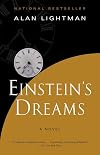
This is a series of interludes about time, the meaning of time, and alternate worlds where it moves or behaves differently. From time moving backwards to behaving differently depending on elevation, to every time being local or more poetically being captured in birds. The trouble is how extremely half-baked everything is, and presented almost breathlessly as if you've never dared to consider such a world before, when I'd wager most of us have and much more extensively. So much so that you're show more asking if time moves backwards why is someone still enjoying tea and not having it coming up out of their stomach to fill a cup.
Every Twilight Zone premise is just a couple of pages, barely an outline for the concept. There's no time to develop the idea or its consequences, and if you really cared about that you'd be reading a scifi story, which the target audience for this book would likely scoff at and refuse.
Alternatives: The short form and hypothetical interludes reminds me most of Jorge Luis Borges, who manages to do far more what-if's with the same sparse word count.
Or, dip into hard sci fi that will bend your mind around alternative physics: Schild's Ladder show less
Every Twilight Zone premise is just a couple of pages, barely an outline for the concept. There's no time to develop the idea or its consequences, and if you really cared about that you'd be reading a scifi story, which the target audience for this book would likely scoff at and refuse.
Alternatives: The short form and hypothetical interludes reminds me most of Jorge Luis Borges, who manages to do far more what-if's with the same sparse word count.
Or, dip into hard sci fi that will bend your mind around alternative physics: Schild's Ladder show less
For me this book is structured more like music than like prose -- a set of variations on the theme of time, not a novelistic examination of the topic. Lightman's "hero" is the young Einstein, living in Bern in 1905, working in a patent office but spending all his energies on his theory of relativity. But it isn't Einstein's daytime life that is the subject of this book, though that is touched on in a prologue, three interludes, and an epilogue. Rather, what matters here are thirty chapters show more showing us thirty different dreams that Einstein has about time. These explore different ways in which time might work, and the ways in which people would react under those assumptions, and they are altogether delightful. Some read like visions, some like the premises of sci-fi stories, some like -- dreams. The writing is beautiful, highly concrete about physical detail and more than occasionally witty, both of which help anchor these visions. I don't have the scientific knowledge to appreciate some of what is going on -- some of the different varieties of time, I am told, reflect thinking about relativity and other great matters. But I didn't need it to enjoy this book a great deal. Those who love Calvino's "Invisible Cities" may be particularly entranced. show less
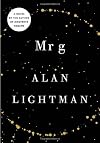
As I remember, I had just woken up from a nap when I decided to create the universe.
This is one of those first sentences that belongs on the list of the best ever openings of a novel. Who could not continue reading?
Alan Lightman, who has called himself both a scientist and a humanist, has presented the story of the creation from God's point of view and, in so doing, has made God seem almost human. We share in the joys and delights of creation as well as the discomforts caused by unintended show more consequences.
Almost anything that I could say about the plot would be a spoiler, that is, unless you have read the Biblical story of creation, and even the Book of Job. The plot is not the point. It is the manner in which the tale is told that makes all the difference. This is a delightful book, poetic and concise, reminiscent in its delivery of Lightman's other minor masterpiece, [Einstein's Dreams]. Highly recommended. show less
This is one of those first sentences that belongs on the list of the best ever openings of a novel. Who could not continue reading?
Alan Lightman, who has called himself both a scientist and a humanist, has presented the story of the creation from God's point of view and, in so doing, has made God seem almost human. We share in the joys and delights of creation as well as the discomforts caused by unintended show more consequences.
Almost anything that I could say about the plot would be a spoiler, that is, unless you have read the Biblical story of creation, and even the Book of Job. The plot is not the point. It is the manner in which the tale is told that makes all the difference. This is a delightful book, poetic and concise, reminiscent in its delivery of Lightman's other minor masterpiece, [Einstein's Dreams]. Highly recommended. show less
There are experiences of things seen that have never left me. Green trees filled with thousands of white egrets during spring migration. A Green Heron in tandem flight with a jet just taking off from an airport. The majesty of Niagara Falls. The view of the ocean from the cliffs of Mt. Desert Island. The stars scattered across the heavens that made me feel small. The eerie coolness and dusk of a solar eclipse. The Northern Lights over Lake Superior. The colors of autumn trees, the exuberant show more colors of flowers visited by butterflies and bees.
It is not only nature that leaves indelible marks. Last year we saw the Van Gogh in America exhibit at the Detroit Institute of Art. Half way through the exhibit, my emotions took over and I cried. Cried for the beauty I was seeing, cried for the artist who captured these images. And, often at the Detroit Symphony Orchestra concerts I feel a chill run up my spine, my heart exploding, tears streaming down my cheeks.
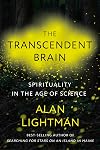
Transcendent moments are mysterious. Alan Lightman begins The Transcendent Brain with the story of watching an osprey nest until the fledglings flew off. He writes, “I found that I was shaking, and in tears. To this day, I don’t understand what happened in that half second. But it was a profound connection to nature. And a feeling of being part of something much large than myself.”
Alan Lightman describes himself as a Spiritual Materialist. A materialist understands that matter is all that exists. A spiritual person is concerned with the spirit or soul, things that can’t be reduced to atoms. Lightman contends that our spiritual nature arises from our biological nature.
He takes us through the historical understanding of the soul, starting with Moses Mendelssohn, a brilliant polymath who presented a science-based, logical proof of the existence of the soul. He then turns to the Ancient Egyptians who believed in a duality of souls, one housing the personal, and another a part of the universal. He looks at the Greeks and Saints Augustine and Thomas Aquinas, and then Descartes and Gottfried Wilhelm Leibniz, and finally to Andrei Linde who sees the universe as in eternal creation.
Lightman next turns to the history of Materialism, from Ancient Greece and Rome, delving into Lucretius who wrote about atoms which could not be created or destroyed, and who thought that the soul was also material. On the other side of the world in China, Wand Ch’ung disputed the existence of an afterlife, contending that the “souls of the dead are dissolved”. He notes the conflict between vitalism and mechanism; is there a mysterious life force, or are we mere material machines? He looks to physics as proving the world is only material.
He argues that consciousness, the “I-ness” we experience, arises from the material brain, presenting studies and experiments. Other creatures on Earth had large brains and show thinking and even awareness of death, indicating there are levels of consciousness. Consciousness arises from the material brain. This is a long chapter, and one I am still processing.
Lightman argues that spirituality arises from the material brain. He respects those who align transcendent moments with a belief in God. But he holds a nonreligious spirituality that he believes has evolved for evolutionary benefit. Our affinity to nature and its beauty arose from our deep dependence on understanding the physical world. Our interconnectedness and need for community arose to ensure our survival. The human love of beauty arose from attraction to healthy mates, but he walks us through how beauty is mathematical.
Artists lose themselves during the act of creation; the creative transcendent is well described by Lightman. Perhaps it arose out of a need for discovery, exploring the outer world, and looking inward to discover new connections to the world.
Society is split: some people think that science offers solutions and truth, while other feel that scientists are an elite group threatening their beliefs. Understanding the world through science does not negate human experiences of awe.
The concluding paragraphs left me moved. Lightman sees beauty in knowing that his atoms will return to the ongoing creation of the world, connecting him to both the past and the future. It is, frankly, what I had believed since I was a young woman. Many times while reading this book, when he spoke of death, a chill went up my spine. At seventy years of age, realizing the brevity of life has brought anxiety. I think how I will be forgotten, my life losing its meaning. But reading those lines, the grace and hope of them, were affirming. I need to reaffirm living with the mystery.
Thanks to A. A. Knopf for a free book. show less
It is not only nature that leaves indelible marks. Last year we saw the Van Gogh in America exhibit at the Detroit Institute of Art. Half way through the exhibit, my emotions took over and I cried. Cried for the beauty I was seeing, cried for the artist who captured these images. And, often at the Detroit Symphony Orchestra concerts I feel a chill run up my spine, my heart exploding, tears streaming down my cheeks.
Transcendent moments are mysterious. Alan Lightman begins The Transcendent Brain with the story of watching an osprey nest until the fledglings flew off. He writes, “I found that I was shaking, and in tears. To this day, I don’t understand what happened in that half second. But it was a profound connection to nature. And a feeling of being part of something much large than myself.”
Alan Lightman describes himself as a Spiritual Materialist. A materialist understands that matter is all that exists. A spiritual person is concerned with the spirit or soul, things that can’t be reduced to atoms. Lightman contends that our spiritual nature arises from our biological nature.
He takes us through the historical understanding of the soul, starting with Moses Mendelssohn, a brilliant polymath who presented a science-based, logical proof of the existence of the soul. He then turns to the Ancient Egyptians who believed in a duality of souls, one housing the personal, and another a part of the universal. He looks at the Greeks and Saints Augustine and Thomas Aquinas, and then Descartes and Gottfried Wilhelm Leibniz, and finally to Andrei Linde who sees the universe as in eternal creation.
Lightman next turns to the history of Materialism, from Ancient Greece and Rome, delving into Lucretius who wrote about atoms which could not be created or destroyed, and who thought that the soul was also material. On the other side of the world in China, Wand Ch’ung disputed the existence of an afterlife, contending that the “souls of the dead are dissolved”. He notes the conflict between vitalism and mechanism; is there a mysterious life force, or are we mere material machines? He looks to physics as proving the world is only material.
He argues that consciousness, the “I-ness” we experience, arises from the material brain, presenting studies and experiments. Other creatures on Earth had large brains and show thinking and even awareness of death, indicating there are levels of consciousness. Consciousness arises from the material brain. This is a long chapter, and one I am still processing.
Lightman argues that spirituality arises from the material brain. He respects those who align transcendent moments with a belief in God. But he holds a nonreligious spirituality that he believes has evolved for evolutionary benefit. Our affinity to nature and its beauty arose from our deep dependence on understanding the physical world. Our interconnectedness and need for community arose to ensure our survival. The human love of beauty arose from attraction to healthy mates, but he walks us through how beauty is mathematical.
Artists lose themselves during the act of creation; the creative transcendent is well described by Lightman. Perhaps it arose out of a need for discovery, exploring the outer world, and looking inward to discover new connections to the world.
Society is split: some people think that science offers solutions and truth, while other feel that scientists are an elite group threatening their beliefs. Understanding the world through science does not negate human experiences of awe.
The concluding paragraphs left me moved. Lightman sees beauty in knowing that his atoms will return to the ongoing creation of the world, connecting him to both the past and the future. It is, frankly, what I had believed since I was a young woman. Many times while reading this book, when he spoke of death, a chill went up my spine. At seventy years of age, realizing the brevity of life has brought anxiety. I think how I will be forgotten, my life losing its meaning. But reading those lines, the grace and hope of them, were affirming. I need to reaffirm living with the mystery.
Thanks to A. A. Knopf for a free book. show less
Lists
Short and Sweet (1)
Favourite Books (1)
Awards


You May Also Like


Associated Authors
Statistics
- Works
- 42
- Also by
- 15
- Members
- 11,164
- Popularity
- #2,114
- Rating
- 3.8
- Reviews
- 293
- ISBNs
- 283
- Languages
- 20
- Favorited
- 15


