On This Page
Description
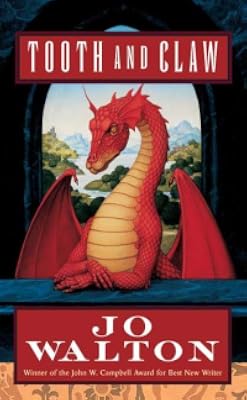
A tale of contention over love and money - among dragons. Jo Walton returns with a very different kind of fantasy story: the tale of a family dealing with the death of their father, of a son who goes to law for his inheritance, a son who agonizes over his father's deathbed confession, a daughter who falls in love, a daughter who becomes involved in the abolition movement, and a daughter sacrificing herself for her husband. Except that everyone in the story is a dragon, red in tooth and claw. show more Here is a world of politics and train stations, of churchmen and family retainers, of courtship and country houses ... in which, on the death of an elder, family members gather to eat the body of the deceased. In which society's high-and-mighty members avail themselves of the privilege of killing and eating the weaker children, which they do with ceremony and relish, growing stronger thereby. show lessTags
Recommendations


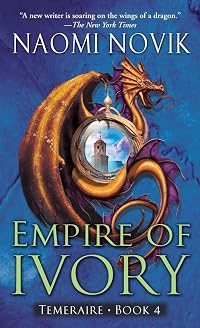
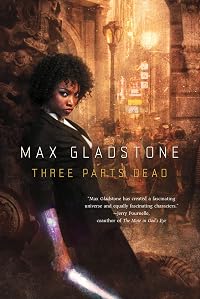

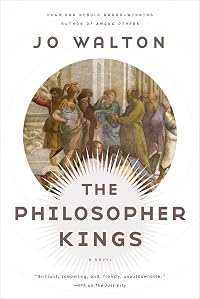
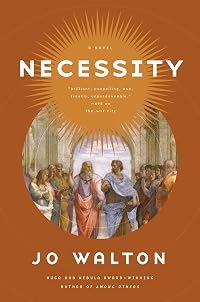


Member Recommendations

InfoQuest As Walton notes in the book's introduction, Trollope's Framley Parsonage provides some of the plot and characters for Tooth and Claw and is a very good Victorian novel (of the Barsetshire series, though it can easily stand alone).
40

Mint.ChocolateOcelot Tooth and Claw is similar to Magicians & Mrs. Quent because of the Society of it. Things like marrying outside your social class, fancy parties, and where Mr. So-and-so was last night are all issues that characters in both books face.
Unless you don't care for books with human characters, I think if you enjoyed Tooth and Claw, you will enjoy The Magicians and Mrs. Quent
11
beyondthefourthwall Well-developed thought-experiments about slightly alternative societies, partially satirising Victorian Britain.
Member Reviews
Let me just start by saying that I really, really hate it when people compare things to Jane Austen novels. I think we always do this because 1)she's the only nineteenth century manners novelist we can think of 2)there are very few women considered "classic" novelists.
That said, I was reminded, while reading this book (only the tiniest, tiniest bit) of Miss Austen, in an allusive sense. Of course, Austen would have written a much longer novel than this slim volume, and would have tied off far more of those pesky loose ends, and, and- so many things. Mostly I am referring to the fact that this is a novel of manners and of society and of the careful structure of those things, and of relationships; it has this subtle humor and wit to it show more which I definitely missed in Austen's work when I was in high school slogging through P&P.
Oh yes, but let's return to the fact that this is a book about DRAGONS. Did I mention that? These dragons wear hats and talk of marriage prospects, but they also are undeniably dragons down to their attitudes about *ahem* what is appropriate to eat and how to eat it. To be delicate. And without inventing a sparkly vampire, Walton manages to come up with a whole new mythology and a class system which somehow absolutely makes sense to the reader.
Jo Walton is a new author to me. I read Among Others, and I enjoyed it enough to pick up this one from the library. What I did not expect is how much I would love this book. Now I'm reading another one of hers, Farthing, an alternate historical, and what I can tell you is that Jo Walton is a rare treat: an author who creates a wholly original story every time she sits down to write.
I wish that this book was longer, or that there were more volumes. There is not nearly enough time to get into everything and everyone before you are closing the book with a sigh of regret. Nonetheless, I really think that you should read this if you are interested in reading imaginative works that aren't also brain sludge (sorry, Urban Fantasy- I love you but you're often brainless). show less
That said, I was reminded, while reading this book (only the tiniest, tiniest bit) of Miss Austen, in an allusive sense. Of course, Austen would have written a much longer novel than this slim volume, and would have tied off far more of those pesky loose ends, and, and- so many things. Mostly I am referring to the fact that this is a novel of manners and of society and of the careful structure of those things, and of relationships; it has this subtle humor and wit to it show more which I definitely missed in Austen's work when I was in high school slogging through P&P.
Oh yes, but let's return to the fact that this is a book about DRAGONS. Did I mention that? These dragons wear hats and talk of marriage prospects, but they also are undeniably dragons down to their attitudes about *ahem* what is appropriate to eat and how to eat it. To be delicate. And without inventing a sparkly vampire, Walton manages to come up with a whole new mythology and a class system which somehow absolutely makes sense to the reader.
Jo Walton is a new author to me. I read Among Others, and I enjoyed it enough to pick up this one from the library. What I did not expect is how much I would love this book. Now I'm reading another one of hers, Farthing, an alternate historical, and what I can tell you is that Jo Walton is a rare treat: an author who creates a wholly original story every time she sits down to write.
I wish that this book was longer, or that there were more volumes. There is not nearly enough time to get into everything and everyone before you are closing the book with a sigh of regret. Nonetheless, I really think that you should read this if you are interested in reading imaginative works that aren't also brain sludge (sorry, Urban Fantasy- I love you but you're often brainless). show less
I loved this book - pure and simple. In essence, a partial retelling of Anthony Trollope's Framley Parsonage with the important difference that the protagonists are all dragons. Civilised dragons of course, as dragons judge these things, but definitely dragons. I've not read Framley Parsonage but I've read enough of Trollope's other books to recognise the style: finely nuanced class-distinctions; family quarrels; lawsuits; church politics; and of course the importance of making a suitable marriage. But all with dragons.
The Dignified Bon Agornin lies dying on his hoard of gold. A rather smaller hoard of gold than he would have liked to leave, as the entry of Penn Agornin, his elder son, into the church had been expensive, and a large show more dowry had been demanded on the marriage of his eldest daughter, Berend, to the richer and more powerful dragon, the Illustrious Daverak. But to compensate his three younger children, his son Avan and his younger daughters Haner and Selandra, Bon Agornin intends that they should eat the larger part of his body after he is dead. After all, dragons must have dragon flesh or else how will they grow? And an important Illustrious Lord like Daverak has plenty of weakling dragonets on his estates that the Church teaches must be weeded out, so surely he will not expect more than a token bite of his father-in-law's body. But Daverak does not see it like that and together with his wife and children he consumes most of the body, leaving Bon Agornin's three remaining children to share what is left. Dragon flesh can be the difference between life and death to an up and coming dragon like Avan, so he decides to launch a lawsuit against Daverak on behalf of himself and his sisters, to get his rights. But how can the Blessed Penn Agornin testify to his Father's last words, when to do so would mean that he had to disclose the shocking fact that his father had asked him to hear his confession, a rite strictly forbidden by the church, and that in that confession he had admitted the almost as shocking crime of eating his own brother and sister, when they were not even ailing ... And with very small dowries, and their father now dead, how will Selandra and Haner ever make successful marriages,
It was the whole world of the dragons that I loved, a world essentially governed by a hereditary aristocracy, where a self-made dragon such as Bon Agornin, is looked down upon by those of higher rank. But it is a world that is changing with the introduction of the railways, and radical ideas about freedom for all dragons being whispered. The way in which Walton has created a society governed on the one hand by rank and privilege and etiquette, and on the other with the underlying need of the dragons to eat each other! Highly recommended to all fantasy lovers. show less
The Dignified Bon Agornin lies dying on his hoard of gold. A rather smaller hoard of gold than he would have liked to leave, as the entry of Penn Agornin, his elder son, into the church had been expensive, and a large show more dowry had been demanded on the marriage of his eldest daughter, Berend, to the richer and more powerful dragon, the Illustrious Daverak. But to compensate his three younger children, his son Avan and his younger daughters Haner and Selandra, Bon Agornin intends that they should eat the larger part of his body after he is dead. After all, dragons must have dragon flesh or else how will they grow? And an important Illustrious Lord like Daverak has plenty of weakling dragonets on his estates that the Church teaches must be weeded out, so surely he will not expect more than a token bite of his father-in-law's body. But Daverak does not see it like that and together with his wife and children he consumes most of the body, leaving Bon Agornin's three remaining children to share what is left. Dragon flesh can be the difference between life and death to an up and coming dragon like Avan, so he decides to launch a lawsuit against Daverak on behalf of himself and his sisters, to get his rights. But how can the Blessed Penn Agornin testify to his Father's last words, when to do so would mean that he had to disclose the shocking fact that his father had asked him to hear his confession, a rite strictly forbidden by the church, and that in that confession he had admitted the almost as shocking crime of eating his own brother and sister, when they were not even ailing ... And with very small dowries, and their father now dead, how will Selandra and Haner ever make successful marriages,
It was the whole world of the dragons that I loved, a world essentially governed by a hereditary aristocracy, where a self-made dragon such as Bon Agornin, is looked down upon by those of higher rank. But it is a world that is changing with the introduction of the railways, and radical ideas about freedom for all dragons being whispered. The way in which Walton has created a society governed on the one hand by rank and privilege and etiquette, and on the other with the underlying need of the dragons to eat each other! Highly recommended to all fantasy lovers. show less
This book was a delight in many ways. In one light, it's a furry (scaly?) version of a novel of manners, full of the genteel courses of love and inheritance, where the good end happily and the bad messily (I'm not even tagging that as a spoiler, as that is how this sort of book goes) with the only oddity being that everyone is a dragon. (And the gracenotes of draconic society are delightful all by themselves.) In another light, it's a cunning and cutting analogy of how thin the veil of "civilised" society truly was and is, how deeply we are still steeped in viciousness, albeit with our consumption of our "less worthy" fellows metaphorical rather than literal.
In any case, it was a delight to read. Both sincerely shadowing Victorian show more novels and often tongue-in-cheek, and sprightly all the while, the prose was charming, the characters interesting, and the happenings amusing in their details while predictable in their general thrust. A wonderful combination of comfort and concept. show less
In any case, it was a delight to read. Both sincerely shadowing Victorian show more novels and often tongue-in-cheek, and sprightly all the while, the prose was charming, the characters interesting, and the happenings amusing in their details while predictable in their general thrust. A wonderful combination of comfort and concept. show less
This complex novel finally answers the age-old question of what would a Regency-Era romance look like if all the characters were dragons.
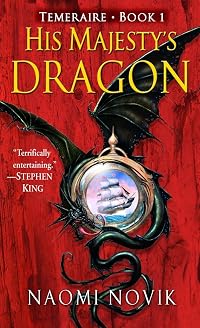
No, this isn't a Novak novel. This came out before. Indeed, this was popular enough to win the World Fantasy Award and it is well-deserved.
Far from being a gimmick, the core 'tail' tackles all the original Austen-like social criticisms such as inheritance law, marriage customs, a Pride and Prejudice level of anxiety, quips, and misunderstandings, the full issue of religious practice, slavery, and it even drags the Regency into a modern-era level of Equality.
As a novel about Dragons.
Hell, it succeeds on both levels. If you love Regency novels and you love dragons, I'm certain you and this novel are show more going to get along famously.
I particularly liked the inheritance issue. I mean, the peeps in England never LITERALLY let their families eat old, dear papa... :) show less
No, this isn't a Novak novel. This came out before. Indeed, this was popular enough to win the World Fantasy Award and it is well-deserved.
Far from being a gimmick, the core 'tail' tackles all the original Austen-like social criticisms such as inheritance law, marriage customs, a Pride and Prejudice level of anxiety, quips, and misunderstandings, the full issue of religious practice, slavery, and it even drags the Regency into a modern-era level of Equality.
As a novel about Dragons.
Hell, it succeeds on both levels. If you love Regency novels and you love dragons, I'm certain you and this novel are show more going to get along famously.
I particularly liked the inheritance issue. I mean, the peeps in England never LITERALLY let their families eat old, dear papa... :) show less
What a fascinating book! Just like it sounds -- a period courtroom drama among dragons. Well written and intricate in social nuances. Funny and horrifying -- I think it's much better than Pride and Prejudice and Zombies, but it has the same narrative effect -- amplifying social dangers to a height perhaps our changed society can better comprehend. It's such a different game when the alternative to propriety is to be eaten.
Absolutely fucking delightful! Jane Austen comedy of manners but where all the characters are dragons; absolutely masterpiece of the fucking around with alien cultures jawn that I love deeply.
The plot starts with a dispute over who gets to eat the recently deceased father's body, and ends in a hilarious courtroom drama that I would love to see adapted for screen, but that doesn't give much away at all: there's lots more plot and some great characters, including radicals and activists of many stipes.
The plot starts with a dispute over who gets to eat the recently deceased father's body, and ends in a hilarious courtroom drama that I would love to see adapted for screen, but that doesn't give much away at all: there's lots more plot and some great characters, including radicals and activists of many stipes.
This was an easy sell for me, as I adore both dragons and the Victorian novel.
I always enjoy dragons done differently, and I've never encountered dragons with a culture and society quite like the ones in this book's world. Walton manages to create a species that eats its own dead (and practices eugenics) and yet also comes off as nuanced and (in some cases) sympathetic: that tweak adds intriguing tensions to a novel that's also far more traditional and fun than that sounds. Pleased to have discovered this one at last.
p.s.: While I realize that Walton draws heavily on Trollope here, a huge chunk of the goodness of Austen novels also shows up, as does a great deal of Dickens. And, you know, great big very carnivorous dragons.
I always enjoy dragons done differently, and I've never encountered dragons with a culture and society quite like the ones in this book's world. Walton manages to create a species that eats its own dead (and practices eugenics) and yet also comes off as nuanced and (in some cases) sympathetic: that tweak adds intriguing tensions to a novel that's also far more traditional and fun than that sounds. Pleased to have discovered this one at last.
p.s.: While I realize that Walton draws heavily on Trollope here, a huge chunk of the goodness of Austen novels also shows up, as does a great deal of Dickens. And, you know, great big very carnivorous dragons.
Members
- Recently Added By
Lists

Best Fantasy Novels
821 works; 361 members

Here There Be Dragons
143 works; 23 members

Gaslamp Fantasy
87 works; 15 members

Female Author
1,234 works; 66 members

Future Green Dragon Group Read Books
80 works; 6 members
Fantasy of manners
54 works; 4 members

Nonhuman Protagonists
245 works; 35 members

Parallel Novels
37 works; 6 members
Speculative Fiction to Read
706 works; 32 members

Recommended Speculative Fiction by Women and People of Color
298 works; 45 members

Shelf 101
60 works; 1 member

Top Five Books of 2025
954 works; 304 members
Books With Body Parts in the Title
153 works; 9 members

Comedy of Manners
73 works; 1 member

KayStJ's to-read list
1,616 works; 11 members

Books Read in 2017
4,249 works; 130 members

Unshelved Book Clubs
579 works; 5 members

Stories Inspired by Other Fiction
127 works; 24 members

Inheritance and Succession Literature
24 works; 5 members

2025 Christmas Gifts
70 works; 19 members
Author Information

61+ Works 14,737 Members

Jo Walton is a LibraryThing Author, an author who lists their personal library on LibraryThing.
Some Editions
Awards and Honors
Awards
Distinctions
Series

Belongs to Publisher Series
Gallimard, Folio SF (643)
Work Relationships
Was inspired by
Common Knowledge
- Canonical title
- Tooth and Claw
- Original title
- Tooth and Claw
- Original publication date
- 2003
- People/Characters
- Penn; Selendra; Haner; Davorek
- Important places*
- Domaine Agornin; Domaine Benandi; Domaine Daverak; Irieth
- Epigraph
- Man, her last work, who seem'd so fair,
Such splendid purpose in his eyes,
Who roll'd the psalm to wintry skies,
Who built him fanes of fruitless prayer,
Who trusted God was love indeed
And love Cre... (show all)ation's final law—
Tho' Nature, red in tooth and claw
With ravine, shriek'd against his creed—
Who loved, who suffer'd countless ills,
Who battled for the True, the Just,
Be blown about the desert dust,
Or seal'd within the iron hills?
No more? A monster then, a dream,
A discord. Dragons of the prime,
That tare each other in their slime,
Were mellow music match'd with him.
Alfred, Lord Tennyson, from
In Memoriam AHH, 1850.
She'd like me to bring a dragon home, I suppose. It would serve her right if I did, some creature that would make the house intolerable to her.
Anthony Trollope, Framley Parsonage, 1859 - Dedication
- This is for my aunt, Mary Lace, for coming so far down the road towards fantasy for me, and for coming down so many other roads with me, plenty of them real as well as metaphorical.
- First words
- Bon Agornin writhed on his deathbed, his wings beating as if he would fly to his new life in his old body.
- Last words
- (Click to show. Warning: May contain spoilers.)And there, as Sher came to join them, as Avan and Sebeth waited to be greeted, as Penn danced with Felin and Haner with Londaver, as the servants carried heavy trays of refreshments about the room, we shall leave them to take refuge in the comfort of gentle hypocrisy.
- Publisher's editor
- Nielsen Hayden, Patrick
- Blurbers
- Yolen, Jane; Link, Kelly
- Original language
- English
*Some information comes from Common Knowledge in other languages. Click "Edit" for more information.
Classifications
Statistics
- Members
- 1,671
- Popularity
- 13,435
- Reviews
- 102
- Rating
- (3.87)
- Languages
- 5 — Czech, English, French, German, Spanish
- Media
- Paper, Audiobook, Ebook
- ISBNs
- 16
- ASINs
- 8