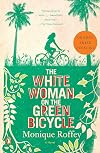
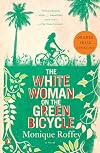
The White Woman on the Green Bicycle
by Monique Roffey
On This Page
Description
A beautifully written, unforgettable novel of a troubled marriage, set against the lush landscape and political turmoil of Trinidad. Monique Roffey's Orange Prize-shortlisted novel is a gripping portrait of post-colonialism that stands among great works by Caribbean writers like Jamaica Kincaid and Andrea Levy. When George and Sabine Harwood arrive in Trinidad from England, George is immediately seduced by the beguiling island, while Sabine feels isolated, heat-fatigued, and ill-at-ease. As show more they adapt to new circumstances, their marriage endures for better or worse, despite growing political unrest and racial tensions that affect their daily lives. But when George finds a cache of letters that Sabine has hidden from him, the discovery sets off a devastating series of consequences as other secrets begin to emerge. show lessTags
Recommendations


















Member Recommendations
EllieM Book shipping News and White Woman on the Green Bicycle ar books firmly placed in a geogrphic and climatic setting (D H Lawrence like in the description) . I loved them both.
Member Reviews
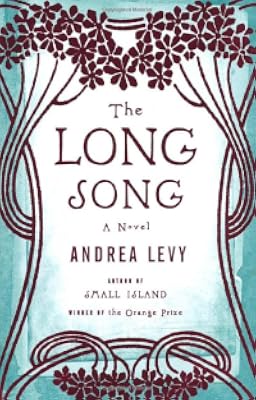
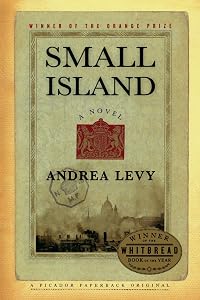
Well this book was my initiation into learning something of the history of Trinidad. It is delivered in a very palatable story. For me the book was reminiscent of [Chinaman] by [[Sheehan Karunatilaka]] and [The Long Song] by [[Andrea Levy]].
George Harwood, recently married Englishman, arrives in Trinidad with his wife Sabine to begin their new life. George immediately becomes absorbed into the lifestyle with a passion, whereas Sabine hates the heat and culture of the island with equal passion and longs to return home.
The book opens with an horrific act of violence perpetrated on the son of their loyal staff member. The Harwoods are in there seventies, no longer full of zest. Sabine feels crushed, sucked dry by the heat, whilst George show more still retains an obsessive love for the island. This first half focuses on the damage reeked on their relationships by their conflicting feelings. The brutal event serves as a catalyst for George to prove his love for Sabine with tragic consequences. The second half takes the reader to their arrival on the island and we witness the effects of the political changes on the expat community as experienced through Sabine's eyes.
I loved this book, probably one of my favourites this year. Highly recommended. show less
George Harwood, recently married Englishman, arrives in Trinidad with his wife Sabine to begin their new life. George immediately becomes absorbed into the lifestyle with a passion, whereas Sabine hates the heat and culture of the island with equal passion and longs to return home.
The book opens with an horrific act of violence perpetrated on the son of their loyal staff member. The Harwoods are in there seventies, no longer full of zest. Sabine feels crushed, sucked dry by the heat, whilst George show more still retains an obsessive love for the island. This first half focuses on the damage reeked on their relationships by their conflicting feelings. The brutal event serves as a catalyst for George to prove his love for Sabine with tragic consequences. The second half takes the reader to their arrival on the island and we witness the effects of the political changes on the expat community as experienced through Sabine's eyes.
I loved this book, probably one of my favourites this year. Highly recommended. show less
Roffey's writing is vivid, earthy and visceral but not always comfortable. When I started reading, I felt shock at the sudden immersion into a strange new world and didn't immediately take to the central characters Sabine and George, ex-pats who appeared neither likeable or sympathetic. Yet it didn't take me long to become drawn in by Roffey's Trinidad. I quickly warmed to the minor characters and started to become intrigued by the ex-pats in their seventies with a love-hate relationship with Trinidad.
The first half of the book is told in the third person and is a vibrant description of Trinidad in the present day. After a shocking conclusion to Sabine and George's story, the book goes back to the 1960s when Sabine and George first show more arrived in England. Sabine expected this to be a temporary arrangement but George became obsessed with the country and refused to consider leaving.
In part one of the book, Sabine accused George of never thinking of anything or anyone else once he arrived.
"You fell in love, lost your senses."
As for George,
"Truth was, he preferred Trinidad - always had. He preferred these wild emerald hills, the brash forests, the riotous and unpredictable landscape of Trinidad to the prim hazy pastures of his own country, England. He wanted this bold land. Not the mute grey-drizzle of Harrow on the Hill. He liked the extrovert people, not the prudish and obedient couples his parents had mixed with. He felt alive here, unlike Sabine."
The second part is told by Sabine and has a calmer tone. Here the reader reaches a clearer understanding of Sabine, her marriage and the events which led her to be who she was when we first met her in part one and which also led to what she eventually does. We also learn more about Trinidad's recent history. Colonalism, racism and political activism become part of the story effortlessly and without a hint of polemics.
An evocative, believable story and I think, well worth reading. show less
The first half of the book is told in the third person and is a vibrant description of Trinidad in the present day. After a shocking conclusion to Sabine and George's story, the book goes back to the 1960s when Sabine and George first show more arrived in England. Sabine expected this to be a temporary arrangement but George became obsessed with the country and refused to consider leaving.
In part one of the book, Sabine accused George of never thinking of anything or anyone else once he arrived.
"You fell in love, lost your senses."
As for George,
"Truth was, he preferred Trinidad - always had. He preferred these wild emerald hills, the brash forests, the riotous and unpredictable landscape of Trinidad to the prim hazy pastures of his own country, England. He wanted this bold land. Not the mute grey-drizzle of Harrow on the Hill. He liked the extrovert people, not the prudish and obedient couples his parents had mixed with. He felt alive here, unlike Sabine."
The second part is told by Sabine and has a calmer tone. Here the reader reaches a clearer understanding of Sabine, her marriage and the events which led her to be who she was when we first met her in part one and which also led to what she eventually does. We also learn more about Trinidad's recent history. Colonalism, racism and political activism become part of the story effortlessly and without a hint of polemics.
An evocative, believable story and I think, well worth reading. show less
This novel tell the story of a marriage, and simultaneously of politics in Trinidad and Tobago in the latter half of the 20th century. The book begins in 2007, with George and Sabine Harwood, a couple who moved to Trinidad in the 1950s, for George’s work. While he instantly loves the island, Sabine struggles with life there, and is always looking forward to when they can return to England. However, as disenchanted as she is with Trinidad, she cannot help being fascinated by young dashing politician Eric Williams, who becomes the Prime Minister, promising great things for Trinidadians. Sabine writes to Williams on a daily basis, although she can never bring herself to send the letters. By turns, she is both adoring and loathing of show more Williams, resenting what she sees as his ineffective efforts to improve life for the citizens of the country.
After the first part of the story, the book goes back to the Harwoods’ arrival on the island, as a young and very happily married couple, and then shows how the struggles of Trinidad itself are mirrored in their personal struggles to keep their marriage alive.
I had had this book on my shelf for years, and eventually picked it up when I wasn’t sure what I fancied reading, and I thoroughly enjoyed it from the very first page. George and – particularly – Sabine were very well drawn characters, entirely believable, but not always likeable. However, I really liked Venus, the young woman who became maid and friend to Sabine; loyal and kind, but caught between the rich white people who she worked for, and those in Trinidad who wanted rid of them.
The book is informative about the political struggles of the country from the 1950s onwards, and demonstrates how Eric Williams started out as a new hope for its citizens, but was eventually unable to make the improvements to their lives which he promised and hoped to do. The Trinidad riots of 1970 are shown from Sabine’s terrified point of view, and I made a point of learning more about Williams and his PNM party as a result of reading the book.
Brilliantly written, with eloquent but never flowery language, this book is compulsively readable, perfectly balancing the story of two people with the story of a country and it’s leader.
I loved The White Woman on the Green Bicycle, and would highly recommend it. show less
After the first part of the story, the book goes back to the Harwoods’ arrival on the island, as a young and very happily married couple, and then shows how the struggles of Trinidad itself are mirrored in their personal struggles to keep their marriage alive.
I had had this book on my shelf for years, and eventually picked it up when I wasn’t sure what I fancied reading, and I thoroughly enjoyed it from the very first page. George and – particularly – Sabine were very well drawn characters, entirely believable, but not always likeable. However, I really liked Venus, the young woman who became maid and friend to Sabine; loyal and kind, but caught between the rich white people who she worked for, and those in Trinidad who wanted rid of them.
The book is informative about the political struggles of the country from the 1950s onwards, and demonstrates how Eric Williams started out as a new hope for its citizens, but was eventually unable to make the improvements to their lives which he promised and hoped to do. The Trinidad riots of 1970 are shown from Sabine’s terrified point of view, and I made a point of learning more about Williams and his PNM party as a result of reading the book.
Brilliantly written, with eloquent but never flowery language, this book is compulsively readable, perfectly balancing the story of two people with the story of a country and it’s leader.
I loved The White Woman on the Green Bicycle, and would highly recommend it. show less
More like a 3.75 on the nat-o-meter
Characters don't have to walk off the page for me to keep turning the pages but this is a novel that would be better as a screenplay or even a script and set design - somehow it is missing that breath of life that actors can bring to a story - if well cast, well staged, and strongly acted, the circumstances of this tale and the observers' perspective on the characters' experiences would light this world of contradictions on fire.
Characters don't have to walk off the page for me to keep turning the pages but this is a novel that would be better as a screenplay or even a script and set design - somehow it is missing that breath of life that actors can bring to a story - if well cast, well staged, and strongly acted, the circumstances of this tale and the observers' perspective on the characters' experiences would light this world of contradictions on fire.
I really enjoyed this novel, although I think I would have preferred it if the narrative had followed a linear time line, rather than started in the present and then gone back to the 1950s. However, that is a small niggle that I think just spoilt some of the action as I knew the result later on in the 1970s. The novel has three parts: the present day, 1956 and 1970 and these are periods of significance for Trinidad. The novel follows political action and the action of a family and particularly a couple who arrive from England. They mix with other ex-pats and the local people are generally servants. The novel is written very well and it was engaging. The images were beautiful and well drawn, particularly the landscape of the island, the show more rounded hills, the savannah, the beaches, there are some beautifully drawn scenes that give this a strong sense of place. show less
“It’s a woman’s curse to love bad and foolish men, even when they fuck up miserably.”
So says Sabine Harwood, the white woman of the title in Monique Roffey’s exciting political-historical novel The White Woman on the Green Bicycle. Her curt words sum up her decades-long experiences in post-colonial Trinidad, the setting of the novel.
Sabine and her husband George arrive in Trinidad, newly married and very much in love, in 1956 at the tail end of British colonial rule and the dawn of Trinidad’s Peoples’ National Movement, a grassroots political movement stressing independence and self-determination and led by a charismatic young iconoclast, Dr. Eric Williams. Sabine is immediately disenchanted with Trinidad – the heat, show more the rawness, the shameful history of racial oppression – but is just as immediately enchanted and charmed by the dashing Williams. She hears him speak, watches him move his masses of followers with his words and she is moved to begin writing him a series of intimate letters she keeps completely secret from her husband George.
Centuries of British rule have created layers of privilege and the opportunity for whites to exploit the native people and resources of Trinidad. George embraces his privileged position and begins using it for his own gain. Sabine grows to resent him for perpetuating the inequality she cannot tolerate and focuses on Eric Williams as the antithesis of her colonialist husband. Williams is lauded as the father of the country (followers call him Papa) and he embodies a hope and a promise of a better future for Trinidad’s black population. The historical facts of the novel are accurate and well-documented , so I’m not giving anything away when I tell you that Williams disappoints Sabine – and the Trinidadian people – when he fails to live up to his revolutionary promises and, instead, settles into the structures of privilege abandoned by the British. He abandons nothing and ends up, in behavior, the twin of Sabine’s husband George, not the antithesis she had imagined he would be, and, therefore, just another fuck-up. “Power corrupts, absolute power corrupts absolutely.”
To say that Sabine is an idealistic character is to severely understate the facts. She expects too much from people without understanding the internal and external forces arrayed against them. Perhaps she is all-to-human and makes the mistake of believing people will do exactly what they say they will do. When they fail her, she is quick to condemn them. I found her quite a bit slower and less harsh in ever turning that judgmental eye on herself. It is not until the very end of the story that Sabine does much more than complain about conditions and corruption in Trinidad and finally take action herself. When she does act, her actions are significant and dramatic, though you’ll have to read the novel yourself to determine whether you think they will be effective at bringing about the change she desires. Suffice to say that, agree or disagree with her, you will be effected by Sabine – her actions and attitudes will lead you to question your own attitudes about the issues at play in the novel – and that is a primary pleasure of reading this novel.
Cleverly structured, the book covers fifty years in the lives of its characters, but not in a straight line: it begins at the end, middles in the beginning and ends in the middle (opens in 2006, middles in 1956, ends in the 1970s). Beginning the book by showing us the end outcomes for its characters lends a deeper poignancy to the latter half of the book when we see the characters at an earlier time full of hope and untrammeled idealism. The White Woman on the Green Bicycle is an exciting, passion-inducing, deeply engaging book. After reading it, you may be moved to learn about the post-colonial history in Trinidad. I certainly was, and found that the country presents complexities that far surpass the country’s physical size and are still far from resolved. In a 2010 interview, Roffey revealed that the Trinidad Tourist Board wants nothing to do with the book. That’s a shame as I found that, in addition to feeling for and pulling for the characters in the book, I finished the book, like Sabine, pulling for Trinidad too. show less
So says Sabine Harwood, the white woman of the title in Monique Roffey’s exciting political-historical novel The White Woman on the Green Bicycle. Her curt words sum up her decades-long experiences in post-colonial Trinidad, the setting of the novel.
Sabine and her husband George arrive in Trinidad, newly married and very much in love, in 1956 at the tail end of British colonial rule and the dawn of Trinidad’s Peoples’ National Movement, a grassroots political movement stressing independence and self-determination and led by a charismatic young iconoclast, Dr. Eric Williams. Sabine is immediately disenchanted with Trinidad – the heat, show more the rawness, the shameful history of racial oppression – but is just as immediately enchanted and charmed by the dashing Williams. She hears him speak, watches him move his masses of followers with his words and she is moved to begin writing him a series of intimate letters she keeps completely secret from her husband George.
Centuries of British rule have created layers of privilege and the opportunity for whites to exploit the native people and resources of Trinidad. George embraces his privileged position and begins using it for his own gain. Sabine grows to resent him for perpetuating the inequality she cannot tolerate and focuses on Eric Williams as the antithesis of her colonialist husband. Williams is lauded as the father of the country (followers call him Papa) and he embodies a hope and a promise of a better future for Trinidad’s black population. The historical facts of the novel are accurate and well-documented , so I’m not giving anything away when I tell you that Williams disappoints Sabine – and the Trinidadian people – when he fails to live up to his revolutionary promises and, instead, settles into the structures of privilege abandoned by the British. He abandons nothing and ends up, in behavior, the twin of Sabine’s husband George, not the antithesis she had imagined he would be, and, therefore, just another fuck-up. “Power corrupts, absolute power corrupts absolutely.”
To say that Sabine is an idealistic character is to severely understate the facts. She expects too much from people without understanding the internal and external forces arrayed against them. Perhaps she is all-to-human and makes the mistake of believing people will do exactly what they say they will do. When they fail her, she is quick to condemn them. I found her quite a bit slower and less harsh in ever turning that judgmental eye on herself. It is not until the very end of the story that Sabine does much more than complain about conditions and corruption in Trinidad and finally take action herself. When she does act, her actions are significant and dramatic, though you’ll have to read the novel yourself to determine whether you think they will be effective at bringing about the change she desires. Suffice to say that, agree or disagree with her, you will be effected by Sabine – her actions and attitudes will lead you to question your own attitudes about the issues at play in the novel – and that is a primary pleasure of reading this novel.
Cleverly structured, the book covers fifty years in the lives of its characters, but not in a straight line: it begins at the end, middles in the beginning and ends in the middle (opens in 2006, middles in 1956, ends in the 1970s). Beginning the book by showing us the end outcomes for its characters lends a deeper poignancy to the latter half of the book when we see the characters at an earlier time full of hope and untrammeled idealism. The White Woman on the Green Bicycle is an exciting, passion-inducing, deeply engaging book. After reading it, you may be moved to learn about the post-colonial history in Trinidad. I certainly was, and found that the country presents complexities that far surpass the country’s physical size and are still far from resolved. In a 2010 interview, Roffey revealed that the Trinidad Tourist Board wants nothing to do with the book. That’s a shame as I found that, in addition to feeling for and pulling for the characters in the book, I finished the book, like Sabine, pulling for Trinidad too. show less
A novel that starts off looking small--focusing on conflicts in a marriage--and gradually reveals its large scope--seeing the rifts in the marriage as a way of seeing conflicts and tension within Trinidad. There is some nice parallelism, many amusing. There is also some lovely description. What is best rendered, though, is the dialogue and behavior of people in a relationship who are punishing each other for reasons they can't articulate well.
4.5 stars, but I rounded down rather than up because at the last minute (literally--on the next to last page)--the protagonist spends a paragraph saying what we already know, in clunky exposition. If this had been mid-book it wouldn't have mattered, but it spoiled the momentum of the ending.
4.5 stars, but I rounded down rather than up because at the last minute (literally--on the next to last page)--the protagonist spends a paragraph saying what we already know, in clunky exposition. If this had been mid-book it wouldn't have mattered, but it spoiled the momentum of the ending.
Members
- Recently Added By
Lists

Favourite Women's Prize for Fiction, Orange & Bailey's Prize contenders
132 works; 52 members

Recommend the 20 best books you've read in the last five years
2,168 works; 606 members

Best books read in 2011
200 works; 50 members

Books Read in 2015
3,299 works; 126 members

5 Best 5 Years
71 works; 4 members
Talk Discussions
Past Discussions
The White Woman on the Green Bicycle by Monique Roffey in Orange January/July (July 2011)
Author Information

8+ Works 1,371 Members
Monique Roffey is now center director at The Arvon Foundation's residential center for writers in Devon.
Awards and Honors
Awards
Notable Lists
Common Knowledge
- Canonical title
- The White Woman on the Green Bicycle
- Original publication date
- 2009
- People/Characters
- Sabine Harwood; George Harwood; Eric Williams
- Important places
- Trinidad
- Dedication
- For my mother, Yvette Roffey
- First words
- They took him to the top of Paramin Hill.
- Last words
- (Click to show. Warning: May contain spoilers.)Never.
- Blurbers
- Gee, Maggie; Senior, Olive; Hall, Sarah; Smyth, Amanda; Angier, Carole; Berne, Suzanne
Classifications
Statistics
- Members
- 486
- Popularity
- 62,500
- Reviews
- 32
- Rating
- (3.60)
- Languages
- English, French
- Media
- Paper, Audiobook, Ebook
- ISBNs
- 17
- ASINs
- 8