On This Page
Description
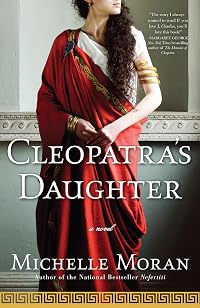
Transport to the colorful and dangerous court of imperial Rome and into the remarkable lives of two young captives-- the children of Cleopatra, Egypt's most powerful and notorious ruler, and her lover Marc Antony. Taken in chains to Rome as ten-year-olds, twins Selene and Alexander cling to each other, and to the hope of one day returning to their rightful place on the throne of Egypt.Tags
Recommendations

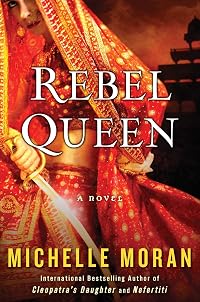
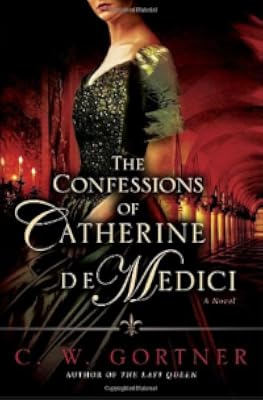
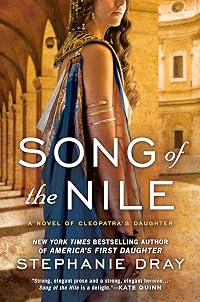
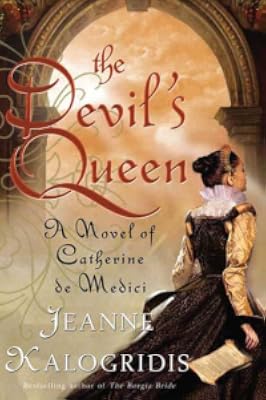

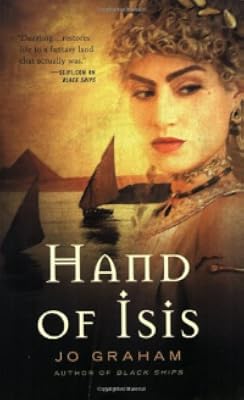
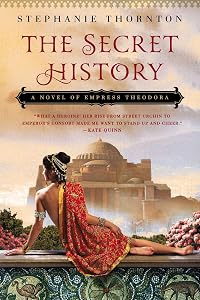




Member Recommendations
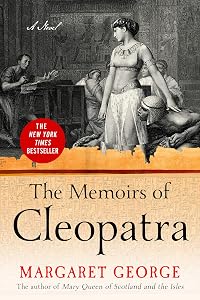
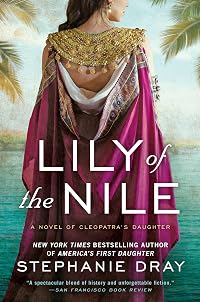
jordantaylor Both books are about Cleopatra's daughter, Selene, and her time in Rome.
30
fyrefly98 Hand of Isis gives a unique perspective on Cleopatra's life while Cleopatra's Daughter focuses on the next generation, but both are well-crafted historical fiction that do an excellent job of bringing the period and the people to life.
Member Reviews
7/5 easily. This is the best book I've read all year. I'm still in awe. It was a roller coaster from start to finish. I laughed. I cried. I clenched my book and sat on the edge of my seat. I never guessed the ending, and it was fantastic. After all the books I've read, it's wonderful when one surprises you. It's like getting a puppy at Christmas or falling in love.
Everything about this was flawless. The characters were three-dimensional and two-faced. You never knew what anyone was thinking, and neither did the heroine Selene, which is as it should be. I grew with her. As she learned more about the people around her and shed her judgements, so did I. This book was a great reminder that you should always treat people with kindness show more because you never know what they're dealing with, and everyone has their own problems. That wasn't the message from the book, but it's one I took.
The pacing was perfect. It flowed seamlessly from action to expositional to emotional; from sad to happy to scary. There was never a dull moment in this book, and every scene had a purpose. It's so rare to find a book like that. I must extol its virtues when I do find it.
Due to the expert sprinkling of historical facts, complex characters, and dramatic scenes, I felt fully immersed in Ancient Rome (and Alexandria for the brief time we were there). I thought only Kate Quinn could bring ancient civilizations to life. While I enjoy all of Michelle Moran's books, this is her best work of what I've read so far (I've read Nefertiti, Heretic Queen, and Second Empress). It's not as sweeping or emotional as her other works. It's more balanced, more nuanced. All of her books are worth reading, but if you only have time for one, make it this one. show less
Everything about this was flawless. The characters were three-dimensional and two-faced. You never knew what anyone was thinking, and neither did the heroine Selene, which is as it should be. I grew with her. As she learned more about the people around her and shed her judgements, so did I. This book was a great reminder that you should always treat people with kindness show more because you never know what they're dealing with, and everyone has their own problems. That wasn't the message from the book, but it's one I took.
The pacing was perfect. It flowed seamlessly from action to expositional to emotional; from sad to happy to scary. There was never a dull moment in this book, and every scene had a purpose. It's so rare to find a book like that. I must extol its virtues when I do find it.
Due to the expert sprinkling of historical facts, complex characters, and dramatic scenes, I felt fully immersed in Ancient Rome (and Alexandria for the brief time we were there). I thought only Kate Quinn could bring ancient civilizations to life. While I enjoy all of Michelle Moran's books, this is her best work of what I've read so far (I've read Nefertiti, Heretic Queen, and Second Empress). It's not as sweeping or emotional as her other works. It's more balanced, more nuanced. All of her books are worth reading, but if you only have time for one, make it this one. show less
Michelle Moran has once again entranced me with her writing. Cleopatra’s daughter is the story of Marc Antony & Cleopatra’s (Kleopatra) children after they are taken to Rome after the deaths of their parents and the fall of Egypt to the Roman Caesar Octavian.
As always with Michelle Moran’s books I could not put this one down. She has researched so well into life in this time period the Romans to me were quite barbaric and the way most of them treated their slaves and their women (wives & daughters) was extremely heartbreaking.
The characters are brought to life by great writing and character development that some you want to be friends with and others you’d like to throttle. My favorite characters were Selene daughter of Antony & show more Cleopatra, Octavia sister and complete opposite of her brother Octavian and Gallia the Gaul Princess who became a slave after her country was overtaken. Julia daughter of Octavian was not my favorite character but when you are given some insight into what she has been through you are a little more sympathetic towards her. And you would think that the biggest villain of them all would be Octavian but you would be wrong it is his wife Livia what an awful woman she was!
Selene and her brother Alexander longed for their home in Alexandria and lived in the hope that one day they would return, but even though when they are brought to Rome they are kept in a fashion becoming of a Prince and Princess some things can only be a dream.
It was very interesting to me the kinds of relationships people had with each other , many marriages, affairs and children, how strange it must be to sit in the Forum and be told see that man over there he is your half brother, and not be allowed to even talk to them. Or for some to not be allowed to see or even mention your mother or father.
As I have said before I will read anything Michele Moran writes so I hope her next book is on the way because I have now read everything she has written.
Great book, beautiful descriptions that take you back in time, great characters so fully developed you don’t want to leave them behind when the book ends.
I recommend this book to anyone who reads historical fiction and even if you’re just discovering it this is a great place to start!
5 Stars show less
As always with Michelle Moran’s books I could not put this one down. She has researched so well into life in this time period the Romans to me were quite barbaric and the way most of them treated their slaves and their women (wives & daughters) was extremely heartbreaking.
The characters are brought to life by great writing and character development that some you want to be friends with and others you’d like to throttle. My favorite characters were Selene daughter of Antony & show more Cleopatra, Octavia sister and complete opposite of her brother Octavian and Gallia the Gaul Princess who became a slave after her country was overtaken. Julia daughter of Octavian was not my favorite character but when you are given some insight into what she has been through you are a little more sympathetic towards her. And you would think that the biggest villain of them all would be Octavian but you would be wrong it is his wife Livia what an awful woman she was!
Selene and her brother Alexander longed for their home in Alexandria and lived in the hope that one day they would return, but even though when they are brought to Rome they are kept in a fashion becoming of a Prince and Princess some things can only be a dream.
It was very interesting to me the kinds of relationships people had with each other , many marriages, affairs and children, how strange it must be to sit in the Forum and be told see that man over there he is your half brother, and not be allowed to even talk to them. Or for some to not be allowed to see or even mention your mother or father.
As I have said before I will read anything Michele Moran writes so I hope her next book is on the way because I have now read everything she has written.
Great book, beautiful descriptions that take you back in time, great characters so fully developed you don’t want to leave them behind when the book ends.
I recommend this book to anyone who reads historical fiction and even if you’re just discovering it this is a great place to start!
5 Stars show less
After her mother Cleopatra's downfall when Octavian conquers Egypt, ten-year-old Selene and her twin brother Alexander are taken prisoner to Rome. In the household of Octavian's sister, they come of age - never giving up hope of reclaiming their rightful place as rulers of Egypt. But along the way, they are caught up in the ambitions of Octavian and his family, Selene discovers a deep love of architecture that she fights to be allowed to nourish, and both twins hope for love in difficult circumstances.
I read this quite a while ago, but one thing the delay has made clear is that Moran's Cleopatra's Daughter really stays with you. I can still remember interesting tidbits from the story and how completely drawn into the lives of ancient show more Rome I became. I loved to read of Selene's intelligence and her competition with the young men at school, but also how simultaneously difficult and necessary it was to be friends with her romantic rival - one of the few companions allowed her.
It was sad but fascinating to read about the plight of slaves in ancient Rome - particularly the court cases that Selene ends up attending. The power of corruption, but also the hateful and terrifying powers of the mob are well-demonstrated. And Selene more than once must confront the fact that despite her favored position, she could soon be reduced to just such a position of slavery, if she does not make herself indispensable to the man she abhors more than any other.
I was completely immersed in the world of ancient Rome that Moran reveals from the marketplaces to the gladiatorial arena to Augustus' palace. She really made everything come alive in all its dirt and splendor - it's definitely a setting that sticks with you. And so do the characters. Selene in particular is wonderfully conflicted and complex - I loved how she truly applied herself to her schoolwork and how dedicated she was to her studies of architecture, but how she enjoyed being 'girly' and helping Julia with dress and makeup. Her mixture of submission and rebelliousness perfectly captured the way such an intelligent young woman would chafe under her restraints, but understand that she could not openly defy them.
A lovely portrait of a strong young woman and of ancient Rome. I can't wait to read more of Moran's historical novels!
Also at A Hoyden's Look at Literature.
FTC Disclosure: I received a free copy for review from the author. show less
I read this quite a while ago, but one thing the delay has made clear is that Moran's Cleopatra's Daughter really stays with you. I can still remember interesting tidbits from the story and how completely drawn into the lives of ancient show more Rome I became. I loved to read of Selene's intelligence and her competition with the young men at school, but also how simultaneously difficult and necessary it was to be friends with her romantic rival - one of the few companions allowed her.
It was sad but fascinating to read about the plight of slaves in ancient Rome - particularly the court cases that Selene ends up attending. The power of corruption, but also the hateful and terrifying powers of the mob are well-demonstrated. And Selene more than once must confront the fact that despite her favored position, she could soon be reduced to just such a position of slavery, if she does not make herself indispensable to the man she abhors more than any other.
I was completely immersed in the world of ancient Rome that Moran reveals from the marketplaces to the gladiatorial arena to Augustus' palace. She really made everything come alive in all its dirt and splendor - it's definitely a setting that sticks with you. And so do the characters. Selene in particular is wonderfully conflicted and complex - I loved how she truly applied herself to her schoolwork and how dedicated she was to her studies of architecture, but how she enjoyed being 'girly' and helping Julia with dress and makeup. Her mixture of submission and rebelliousness perfectly captured the way such an intelligent young woman would chafe under her restraints, but understand that she could not openly defy them.
A lovely portrait of a strong young woman and of ancient Rome. I can't wait to read more of Moran's historical novels!
Also at A Hoyden's Look at Literature.
FTC Disclosure: I received a free copy for review from the author. show less
Following their defeat at the Battle of Actium, Cleopatra of Egypt and Mark Antony of Rome commit suicide, leaving behind their twins Selene and Alexander and younger son Ptolemy, in the hands of Octavian and his invading army. The children are bound and transported to Rome where, to their surprise, they are settled rather comfortably in the household of Octavian's sister Octavia. However, as the only living heirs to the throne of Egypt, they know their fates are still uncertain.
What I enjoyed about this book was the fleshed-out imaginings of Selene's and Alexander's lives after their removal from Egypt, even though a reader must always take historical fiction with a grain of salt. The entire length of my read I was itching to research show more Selene to discover how much of the detail was factual and what her fate really was, but I managed to hold off until finishing the story. I was a little dubious about Marcellus' and Juba's surprisingly modern opinions on the less palatable aspects of Roman culture. It was probably meant to make them more sympathetic to contemporary readers, but it sort of rings falsely. Overall, an entertaining if fanciful read. show less
What I enjoyed about this book was the fleshed-out imaginings of Selene's and Alexander's lives after their removal from Egypt, even though a reader must always take historical fiction with a grain of salt. The entire length of my read I was itching to research show more Selene to discover how much of the detail was factual and what her fate really was, but I managed to hold off until finishing the story. I was a little dubious about Marcellus' and Juba's surprisingly modern opinions on the less palatable aspects of Roman culture. It was probably meant to make them more sympathetic to contemporary readers, but it sort of rings falsely. Overall, an entertaining if fanciful read. show less
I love reading about the time period between the Caesars Julius and Augustus. I find the time and the people fascinating and while I’ve read many books on various people involved in those families and households, I’d never read one about Selene Kleopatra (daughter to Marc Antony and Cleopatra). I thoroughly enjoyed reading about how Selene and her twin brother came to Rome and how their lives unfolded in the following years. Selene was engaging and was easy to sympathise with, as was her brother. And while this is mainly Selene’s story, I was most taken with Alexander and felt so badly about his fate. I, like Selene, took that one hard to heart. The other characters that I knew well from the time were well rendered and I always show more enjoy seeing them from the perspective others. Selene’s was unique in that she was a Roman citizen but she was also in Caesar’s care due to his successful conquer of Egypt and her parents. An uneasy relationship and disquiet of position would be an understatement for anyone in such a household. I was glad when her fate was revealed and relieved. I also liked how the B-story of the Red Eagle mystery was woven throughout and resolved. It added very nice depth to the story. This was a good story telling of a not much covered woman of the ancient world. Definitely recommended and I'm glad I picked this one up at the library. show less
To anyone who has read Margaret George's Cleopatra, read this book! If you got bogged down in George's detail- read this book! It's a lot shorter but just as good. Sort of like Cleopatra, part deux.
I have always been fascinated by Cleopatra. I don't know why a story two thousand years old invokes sich ire and sadness and regret in me, but it does. I have been absolutely infuriated by the fate ofthe Pto9lemies since I first read George's book in junior high. I feel a personal desire to exact some sort of vengeance upon Octavian and it disgusts me that he is remembered as the first Emperor of Rome while Cleopatra is remembered by many as little more than a trollop. The woman spoke 9 languages and she is best remembered for rolling herself show more up in a carpet and trading her body for the freedom of Egypt.
At any rate I have always wondered what happened to Selene. I knew that she alone of the children lived and it makes me rahter unreasonably happy to know that the last of the Ptolemy's found some measure of happiness in her life. I am in all likelyhood more than a little mad but knowing that she was able to not only keep from being killed but to, from appearences anyway, make a love match and have a good life makes me extremely happy- millenia ago or not. show less
I have always been fascinated by Cleopatra. I don't know why a story two thousand years old invokes sich ire and sadness and regret in me, but it does. I have been absolutely infuriated by the fate ofthe Pto9lemies since I first read George's book in junior high. I feel a personal desire to exact some sort of vengeance upon Octavian and it disgusts me that he is remembered as the first Emperor of Rome while Cleopatra is remembered by many as little more than a trollop. The woman spoke 9 languages and she is best remembered for rolling herself show more up in a carpet and trading her body for the freedom of Egypt.
At any rate I have always wondered what happened to Selene. I knew that she alone of the children lived and it makes me rahter unreasonably happy to know that the last of the Ptolemy's found some measure of happiness in her life. I am in all likelyhood more than a little mad but knowing that she was able to not only keep from being killed but to, from appearences anyway, make a love match and have a good life makes me extremely happy- millenia ago or not. show less
This book was chosen for the May/June 2010 group read in the historical fiction group that I moderate here on Goodreads, and I couldn't wait to read it, so I started a teensy bit early. *blush* I'd been wanting to read one of Michelle Moran's books for a while, since I hear so much praise for them, and I'd planned on starting with "Nefertiti" with a friend, but that kind of fell apart due to other obligations. So I was thrilled when "Cleopatra's Daughter" was chosen, as it gave me the perfect excuse to shove all of my obligations off to the side for a day and read this.
And it literally only took me a day to read it. I could not put it down. I've always been fascinated by Ancient Egypt and Rome, so this one was right up my alley. (All show more of Moran's books at this point are right up my alley, actually!) I was not disappointed. The book starts with a bang with Cleopatra's rule crumbling around her, and follows Selene (Cleopatra's daughter) as she's taken from her home and country to Rome, which is rife with danger, uncertainty, spies, cattiness and political roller-coasters. Selene and her twin brother, Alexander, are guest/prisoners of the royal family, and never know what the next day will bring - an unwanted and unhappy marriage, slavery, death?
It's fascinating. I would have gladly read another 400 pages. There was so much going on between these covers that even though it was not action-packed, it felt like it was, and I just had to know what would happen next. This is the kind of book that made me love historical fiction - books that can bring a name and date-range to life, and make me not only intrigued by their life, but care about them, and empathize with them. So much in history is distant and boring that unless you have a real interest and passion for it, we forget to keep it alive. And much of history was so brutal and harsh that we forget that people who lived it were really people, and had hopes and dreams and fears that were probably cut short by the brutality and upheaval. It's easy to distance ourselves from that brutality, so that 30,000 deaths in such and such battle becomes just a number, and not a staggering atrocity.
But this book brought these ancient people to life, and I crossed my fingers for them, and mourned with them, and was angry on their behalf even though they've all been dead for 2000 years. I loved Selene's character. I admired her courage to do the right thing even when it could have cost her her life at any time. Her life was one thread away from forfeited as soon as she stepped foot off of Egyptian soil, but she still spoke up for those who could not speak for themselves. And this, in a time when callousness and bloodlust seemed to be an artform, is admirable.
I also loved the way that Octavian Caesar's loyal men were humanized, rather than just being expressionless moving statues which do the Caesar's bidding, they were men who were able to think and feel and hope themselves.
I also loved the political and societal issues depicted. Octavian's fear of any potential threat, his genius political maneuvering and manipulation, his ruthlessness all gave me chills. Livia's too, and her pure maliciousness made me want to slap her. I couldn't imagine living under the thumb of people like that. But then to counter them, Octavia, his sister, was kind and compassionate and charitable, even when she had cause not to be, and when it was almost pointless given the attitudes of the time.
Moran pulls no punches with this book, and shows the harshness of living in Rome at this time. Slaves were everywhere and harshly ruled and even more harshly punished at their owners' and/or corrupt judges' whims. Babies are cast out for being born the wrong sex, or for having a deformity, or for no reason at all other than that they are unwanted and are left to die of starvation or by the elements if not for charitable wet-nurses. It's appalling, but all of this combined to create a Rome that felt real to me.
I also liked the subtle nod to homosexuality in the book, and how it's accepted in private, but kept quiet in public. I'm glad that we're at a point now where being gay is socially accepted (by most) and doesn't need to be hidden.
Anyway, in short, I loved this book. The only thing that I can think of to complain about is a single misspelling: quite should have been quiet, and that should have been caught by an editor. ;) I will definitely be reading more of Moran's books. If they are half as good as this one it will be well worth it. :) show less
And it literally only took me a day to read it. I could not put it down. I've always been fascinated by Ancient Egypt and Rome, so this one was right up my alley. (All show more of Moran's books at this point are right up my alley, actually!) I was not disappointed. The book starts with a bang with Cleopatra's rule crumbling around her, and follows Selene (Cleopatra's daughter) as she's taken from her home and country to Rome, which is rife with danger, uncertainty, spies, cattiness and political roller-coasters. Selene and her twin brother, Alexander, are guest/prisoners of the royal family, and never know what the next day will bring - an unwanted and unhappy marriage, slavery, death?
It's fascinating. I would have gladly read another 400 pages. There was so much going on between these covers that even though it was not action-packed, it felt like it was, and I just had to know what would happen next. This is the kind of book that made me love historical fiction - books that can bring a name and date-range to life, and make me not only intrigued by their life, but care about them, and empathize with them. So much in history is distant and boring that unless you have a real interest and passion for it, we forget to keep it alive. And much of history was so brutal and harsh that we forget that people who lived it were really people, and had hopes and dreams and fears that were probably cut short by the brutality and upheaval. It's easy to distance ourselves from that brutality, so that 30,000 deaths in such and such battle becomes just a number, and not a staggering atrocity.
But this book brought these ancient people to life, and I crossed my fingers for them, and mourned with them, and was angry on their behalf even though they've all been dead for 2000 years. I loved Selene's character. I admired her courage to do the right thing even when it could have cost her her life at any time. Her life was one thread away from forfeited as soon as she stepped foot off of Egyptian soil, but she still spoke up for those who could not speak for themselves. And this, in a time when callousness and bloodlust seemed to be an artform, is admirable.
I also loved the way that Octavian Caesar's loyal men were humanized, rather than just being expressionless moving statues which do the Caesar's bidding, they were men who were able to think and feel and hope themselves.
I also loved the political and societal issues depicted. Octavian's fear of any potential threat, his genius political maneuvering and manipulation, his ruthlessness all gave me chills. Livia's too, and her pure maliciousness made me want to slap her. I couldn't imagine living under the thumb of people like that. But then to counter them, Octavia, his sister, was kind and compassionate and charitable, even when she had cause not to be, and when it was almost pointless given the attitudes of the time.
Moran pulls no punches with this book, and shows the harshness of living in Rome at this time. Slaves were everywhere and harshly ruled and even more harshly punished at their owners' and/or corrupt judges' whims. Babies are cast out for being born the wrong sex, or for having a deformity, or for no reason at all other than that they are unwanted and are left to die of starvation or by the elements if not for charitable wet-nurses. It's appalling, but all of this combined to create a Rome that felt real to me.
I also liked the subtle nod to homosexuality in the book, and how it's accepted in private, but kept quiet in public. I'm glad that we're at a point now where being gay is socially accepted (by most) and doesn't need to be hidden.
Anyway, in short, I loved this book. The only thing that I can think of to complain about is a single misspelling: quite should have been quiet, and that should have been caught by an editor. ;) I will definitely be reading more of Moran's books. If they are half as good as this one it will be well worth it. :) show less
Members
- Recently Added By
Lists

Best Historical Fiction
620 works; 261 members

Historical Fiction
889 works; 89 members

Fiction Featuring Real People
81 works; 17 members

Some of my Favourite Historical Fiction
15 works; 1 member

Excellent Young Adult
12 works; 1 member

ALA The Reading List
490 works; 28 members
Author Information

9+ Works 7,504 Members
Michelle Moran is the international bestselling author of seven historical novels. She attended Pomona College, then earned a Masters Degree from the Claremont Graduate University. During her six years as a public high school teacher she used her summers to travel around the world, and it was her experiences as a volunteer on archaeological digs show more that inspired her to write historical fiction. Moran's books include Rebel Queen, The Second Empress, Madame Tussaud, Cleopatra's Daughter, The Heretic Queen, and Nefertiti. (Bowker Author Biography) show less
Awards and Honors
Awards
Series

Work Relationships
Is contained in
Common Knowledge
- Canonical title
- Cleopatra's Daughter
- Original publication date
- 2009-09-15
- People/Characters
- Cleopatra Selene II (as Kleopatra Selene); Alexander Helios; Augustus Caesar (Octavian); Juba II; Octavia Minor; Marcellus (show all 14); Livia Drusilla; Julia; Gallia; Tiberius Caesar, Roman Emperor; Vitruvius; Magister Verrius; Ptolemy Philadelphus; Scribonia
- Important places
- Ancient Rome; Alexandria, Egypt
- Important events
- Death of Cleopatra
- Dedication
- For Matthew, amor meus, amicus meus
- First words
- While we waited for the news to arrive, we played dice.
- Last words
- (Click to show. Warning: May contain spoilers.)I nodded and pressed my lips against his.
- Publisher's editor
- Proulx, Heather; O'Neill, Suzanne; Fletcher, Janet
- Blurbers
- Penman, Sharon Kay; Raybourn, Deanna; Maxwell, Robin; Gortner, C.W.; George, Margaret
- Original language
- English
Classifications
Statistics
- Members
- 1,716
- Popularity
- 12,951
- Reviews
- 100
- Rating
- (3.97)
- Languages
- English, Croatian, Turkish
- Media
- Paper, Audiobook, Ebook
- ISBNs
- 15
- ASINs
- 5