On This Page
Description
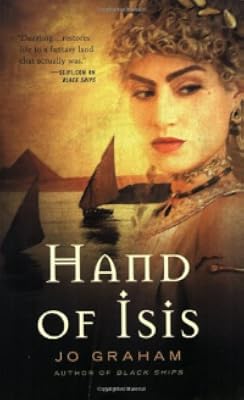
Set in Ancient Egypt, "Hand of Isis" is the story of Charmian, a handmaiden to Cleopatra and devotee of Isis, and her two sisters. It is a novel of lovers who transcend death, of gods who meddle in mortal affairs, and of women who guide empires.Tags
Recommendations
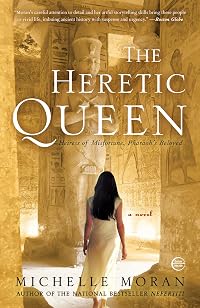

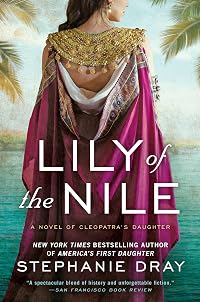

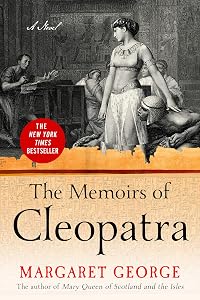

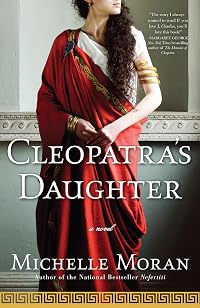























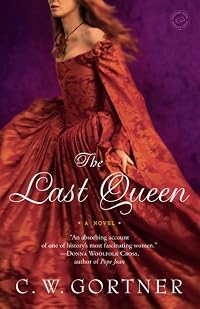
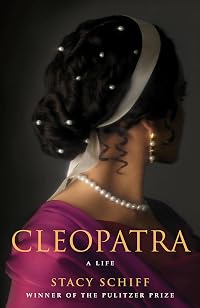
Member Recommendations
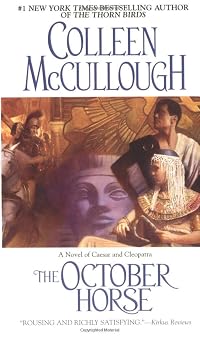
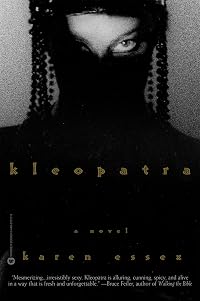
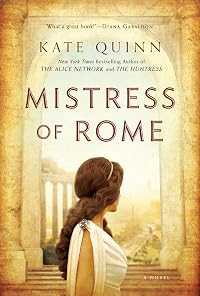
fyrefly98 Hand of Isis gives a unique perspective on Cleopatra's life while Cleopatra's Daughter focuses on the next generation, but both are well-crafted historical fiction that do an excellent job of bringing the period and the people to life.
Member Reviews
After enjoying [b:Black Ships|2192272|Black Ships (Numinous World, #1)|Jo Graham|https://d.gr-assets.com/books/1442089577s/2192272.jpg|2198000], I was eager to see what Graham could do with the Cleopatra story. Well -- marvelous! This is a perspective on Egypt's queen I hadn't read before, through the eyes of her half-sister and hand-maiden (born to a slave or the same father, Pharoah, and pledged to Egypt's service). The writing is so accomplished but never calls attention to itself. Graham isn't a historian (good!) so I'm not commenting on what we know of the event. But the way she animates her main characters and brings us into the life of ruling a regional power is fascinating. Her female leads are spot on -- smart, capable, in show more control of their lives and decisions until the end. Among other things, sex (and one riveting scene of rape) are handled brilliantly. The rape victim never becomes degraded, but the pain and shock of that moment reverberate through the book. And when the main character has ho-hum sex with suitors we feel her disappointment and distance. But when she's with her lover later -- a bisexual Roman aide to Caesar's right-hand man and Cleopatra's final lover -- the heat sizzles, especially when there's a menage a trois with the aide's male lover. It's not salacious, but beautiful and the love that connects them is lovely. Highly recommended. show less
I asked for this novel because I love historical fiction, but it was with some trepidation that I actually began reading it. I mean, I've read a lot of historical fiction about this period ~ from a YA novel read in my youth to McCullough's version and many in between. To be honest, I thought it might turn into just another rehash of the love affairs of Cleopatra. Plus, I'm not a fan of first-person novels. What a pleasant surprise, then, to find Hand of Isis was really good ~ well-written, with fully developed, interesting characters, and a detailed and historically accurate plot that brought the politics, time period, and Alexandria to life. Plus, I really liked the element of mysticism that was introduced.
The story of three sisters show more facing the world and their fates together, while tragic, was charming. Charmian, the narrator, was easy to like, flaws and all. I did find the seminal scene with Agrippa a bit unrealistic considering Charmian's otherwise kindly nature, but without a huge misunderstanding like that he wouldn't be as likely to turn out as he did. Anyway, I also found Dion and Emrys wonderfully realized, and the relationship between the three of them was beautiful. Cleopatra, at least in the beginning, was well-realized and surprisingly likeable. Later on, though, I thought what she did with Marcus Antonius went pretty much against her earlier described nature, although I imagine it's possible that the tragedy she experienced on her way back to Egypt from Rome effected her in such a way that her later actions are understandable. Afraid I didn't get much of a feeling for Iras, which is a shame, as she could have been a strong, memorable character too.
I admit that it took me awhile to get to the point where I just couldn't put the novel down; although I enjoyed it from the beginning, it didn't hook me until about page 200. Then, I read the next 282 pages in one big gulp.
As one of the earlier reviewers noted, being written from an Egyptian point of view rather than a Roman was one reason I found the story fresher, and I too found the juxtaposition of Eastern and Western philosophies fascinating. Finally, I didn't have a problem with the sex scenes, although I didn't find them all that necessary. I tend to skim over most sex scenes anyway.
Only regret is that I didn't read Black Ships first, although I'm told it's not necessary, just that it might have added to my enjoyment. All in all, a worthwhile novel that I highly recommend to those who enjoy historical fiction, strong female (and male) characters, and legendary times brought to life. show less
The story of three sisters show more facing the world and their fates together, while tragic, was charming. Charmian, the narrator, was easy to like, flaws and all. I did find the seminal scene with Agrippa a bit unrealistic considering Charmian's otherwise kindly nature, but without a huge misunderstanding like that he wouldn't be as likely to turn out as he did. Anyway, I also found Dion and Emrys wonderfully realized, and the relationship between the three of them was beautiful. Cleopatra, at least in the beginning, was well-realized and surprisingly likeable. Later on, though, I thought what she did with Marcus Antonius went pretty much against her earlier described nature, although I imagine it's possible that the tragedy she experienced on her way back to Egypt from Rome effected her in such a way that her later actions are understandable. Afraid I didn't get much of a feeling for Iras, which is a shame, as she could have been a strong, memorable character too.
I admit that it took me awhile to get to the point where I just couldn't put the novel down; although I enjoyed it from the beginning, it didn't hook me until about page 200. Then, I read the next 282 pages in one big gulp.
As one of the earlier reviewers noted, being written from an Egyptian point of view rather than a Roman was one reason I found the story fresher, and I too found the juxtaposition of Eastern and Western philosophies fascinating. Finally, I didn't have a problem with the sex scenes, although I didn't find them all that necessary. I tend to skim over most sex scenes anyway.
Only regret is that I didn't read Black Ships first, although I'm told it's not necessary, just that it might have added to my enjoyment. All in all, a worthwhile novel that I highly recommend to those who enjoy historical fiction, strong female (and male) characters, and legendary times brought to life. show less
 This review was written for LibraryThing Early Reviewers.
Summary: Charmian may have been the daughter of a slave, but she was also handmaiden, advisor, and half-sister to Cleopatra, who became one of the most powerful woman the world has ever known. They, along with their sister Iras, are inseparable as girls, playing in the palace and sneaking out into the streets of Alexandria, the freest city in the world. However, the when Pharaoh dies, their world is thrown into upheaval - Cleopatra's elder siblings are engaged in a bloody battle of succession, and Cleopatra and her sisters must flee the city or be caught in the political machinations. While in exile, the girls make a pledge to Isis, the Mother of Egypt and the Mother of the World - a pledge to do her work on Earth, to care for Egypt, show more and her people, despite the cost to themselves. Isis accepts, and so they are set upon their journey, for it is a time of great political currents, which Cleopatra - with her sisters' aid - must weather if she wants to keep her people free from Roman rule. Charmian - who would have been called an oracle in a more superstitious time - can catch glimpses of the Great Story through which they move, but will that be enough to alter the course of events in Egypt's favor?
Review: Jo Graham's debut book, Black Ships, was one of the best books I read last year, so I was understandably excited to get my hands on her next novel. And while Hand of Isis didn't quite live up to its predecessor, it was still a solid, well-researched, well-crafted, and enjoyable piece of historical fiction. Most stories of Cleopatra, whether sympathetic or not, are told from a Roman perspective, so it was fascinating to see her put into the context of her own country, history, and culture. Graham's portrayal of Alexandria was equally vivid and nuanced - a much more modern-feeling city than we would normally imagine during the Classical period.
I think where this novel lost me was in the politics. I almost always prefer characters to plot, and large-scale political machinations have to be exceptionally well-presented for me not to tune them out. While it's undeniable that the movements of Roman armies and alliances are important to understanding Cleopatra's story, it would take a much more detailed map than the one in the front for me to keep all of the troop deployments straight... if I cared enough to do so. The most interesting parts of the story are the most personal, and since our narrator never sees the battles, reading the endless war dispatches over her shoulder gets somewhat tedious. The first half of the book - when the sisters are girls, and the early stages of Cleopatra and Caesar's relationship - was easily the best, since we got to spend time with the people as people, instead of reserved and distant politicians. In the later half of the book, we get more of Charmian growing into her own place and her own life and loves, which was great (and extremely touching in parts), but we lose a lot of the personal insight into Cleopatra, which was a shame.
I also really enjoyed the mysticism aspects of the story. It's not fantasy proper, but more small touches of the gods interfering in mortal affairs. I particularly enjoyed Charmian's visions, and the subtle way things tied back to Black Ships. Although in many ways Charmian is Gull reincarnate, it's not a sequel proper, and either book could be read on its own. However, for those who have read Black Ships, there are nice "Oh!" moments scattered throughout where another little piece fits together, and resonance and power of the whole story is amplified.
I think the best recommendation I can make for this book was that even though I knew how it was going to end - hard to stay spoiler-free for a novel as historically accurate as this one - I still got more than a little misty-eyed at the end. 4 out of 5 stars.
Recommendation: Historical fiction fans - particularly those interested in Egypt, or those who like the other side of the story to major historical events - should definitely seek this one out. show less
Review: Jo Graham's debut book, Black Ships, was one of the best books I read last year, so I was understandably excited to get my hands on her next novel. And while Hand of Isis didn't quite live up to its predecessor, it was still a solid, well-researched, well-crafted, and enjoyable piece of historical fiction. Most stories of Cleopatra, whether sympathetic or not, are told from a Roman perspective, so it was fascinating to see her put into the context of her own country, history, and culture. Graham's portrayal of Alexandria was equally vivid and nuanced - a much more modern-feeling city than we would normally imagine during the Classical period.
I think where this novel lost me was in the politics. I almost always prefer characters to plot, and large-scale political machinations have to be exceptionally well-presented for me not to tune them out. While it's undeniable that the movements of Roman armies and alliances are important to understanding Cleopatra's story, it would take a much more detailed map than the one in the front for me to keep all of the troop deployments straight... if I cared enough to do so. The most interesting parts of the story are the most personal, and since our narrator never sees the battles, reading the endless war dispatches over her shoulder gets somewhat tedious. The first half of the book - when the sisters are girls, and the early stages of Cleopatra and Caesar's relationship - was easily the best, since we got to spend time with the people as people, instead of reserved and distant politicians. In the later half of the book, we get more of Charmian growing into her own place and her own life and loves, which was great (and extremely touching in parts), but we lose a lot of the personal insight into Cleopatra, which was a shame.
I also really enjoyed the mysticism aspects of the story. It's not fantasy proper, but more small touches of the gods interfering in mortal affairs. I particularly enjoyed Charmian's visions, and the subtle way things tied back to Black Ships. Although in many ways Charmian is Gull reincarnate, it's not a sequel proper, and either book could be read on its own. However, for those who have read Black Ships, there are nice "Oh!" moments scattered throughout where another little piece fits together, and resonance and power of the whole story is amplified.
I think the best recommendation I can make for this book was that even though I knew how it was going to end - hard to stay spoiler-free for a novel as historically accurate as this one - I still got more than a little misty-eyed at the end. 4 out of 5 stars.
Recommendation: Historical fiction fans - particularly those interested in Egypt, or those who like the other side of the story to major historical events - should definitely seek this one out. show less
Hand of Isis is the second book in Jo Graham's fascinating series about the ancient world titled Numinous World. I have to admit a mistake here -I actually read book three, Stealing Fire, before Hand of Isis, so I was a little out-of-order when I started this book. Thankfully, the plot lines of each novel are unique enough that it doesn't make a big difference. But I will point out that I think Hand of Isis is the best of the Numinous World books. Seriously -if you think this type of stuff isn't for you, try out Hand of Isis. It's worth it.
Hand of Isis follows the fascinating life of Cleopatra through the eyes of her handmaid, Charmian, her illegitimate half-sister. From a young age, Charmian and Cleopatra have an unmistakable bond, and show more the two become confidants. Charmain isn't just any other handmaiden though, she is also a seer of Isis who has visions from the goddess.
Charmain's story unfolds in Graham's well-constructed, almost lyrical prose, which is filled with plenty of history and lush description, but filled in with just enough fantasy and fiction to keep things from being too predictable. The story is actually framed as a series of flashbacks told by Charmain to the gods Isis and Horus after she dies, about her life and, of course, about Cleopatra.
While Charmain is as interesting characters with plenty of struggles of her own, mostly in the romance department, the real draw is Cleopatra. The Egyptian queen is portrayed from her younger years up to her dramatic death, and, unlike is some other interpretations, she's given a very human face that's sympathetic and real. More interestingly enough, Graham injects a heavy dose of Egyptian mysticism and religion into Hand of Isis, which I found fascinating.
By far the best book in Graham's Numinous World series, I'd honestly vote to just skip the other books (or perhaps even bot bother with them) and just go for Hand of Isis. show less
Hand of Isis follows the fascinating life of Cleopatra through the eyes of her handmaid, Charmian, her illegitimate half-sister. From a young age, Charmian and Cleopatra have an unmistakable bond, and show more the two become confidants. Charmain isn't just any other handmaiden though, she is also a seer of Isis who has visions from the goddess.
Charmain's story unfolds in Graham's well-constructed, almost lyrical prose, which is filled with plenty of history and lush description, but filled in with just enough fantasy and fiction to keep things from being too predictable. The story is actually framed as a series of flashbacks told by Charmain to the gods Isis and Horus after she dies, about her life and, of course, about Cleopatra.
While Charmain is as interesting characters with plenty of struggles of her own, mostly in the romance department, the real draw is Cleopatra. The Egyptian queen is portrayed from her younger years up to her dramatic death, and, unlike is some other interpretations, she's given a very human face that's sympathetic and real. More interestingly enough, Graham injects a heavy dose of Egyptian mysticism and religion into Hand of Isis, which I found fascinating.
By far the best book in Graham's Numinous World series, I'd honestly vote to just skip the other books (or perhaps even bot bother with them) and just go for Hand of Isis. show less
Synopsis: Set in the desert plains of Egypt, Charmian, the half-sister of the infamous Queen Cleopatra, recounts her life's tale in this epic historical fantasy by Jo Graham. Charmian tells of a sparse childhood being raise by just her mother, who was a servant to the pharaoh. Not knowing that her father was the pharaoh, Charmian is startled when she learns that the Princess Cleopatra is her half-sister. She's even more stunned to learn that she has another half-sister, Iras, and that Iras and Charmian are to be live-in playmates to the Princess.As the three girls grow up, they become closer than playmates. The grow into the sisters they actually are. While Charmian recounts a seemingly normal childhood for the girls, she details show more Cleopatra's tumultuous and dangerous rise to the thrown and her struggle to keep it. She lends her voice to the details of Cleopatra's romances, first with Julius Caesar and then with Mark Antony. But Charmian has her own tale to tell and she tells of her own passions, of becoming a mother, and of being in the most impossible of love relationships.When the end finally comes for the great Cleopatra and her sisters, it is Charmian who carries the reader into the afterlife and on the next part of her journey.Review: I have read nothing else by Jo Graham, but after reading The Hand of Isis, I most definitely will. Graham is an extraordinary writer and the author's talent lies within the details of the novel. Almost everyone is familiar with the story of Cleopatra, Julius Caesar, and Mark Antony. Told from Charmian's point of view and with the most dazzling attention to detail, Graham breathes new life into this familiar tale. Graham takes such care with descriptions and details in this novel, that the reader cannot help but feel the sands of the desert blow across them, or to hear the lapping of the Nile river.Charmian as the narrator pulls you in with her strength and honesty. Her voice is genuine and tangible. The reader feels as if Charmian is sitting with them, telling them her story personally. She adds a dimension to this novel that no other character could, and while Cleopatra is very obviously the focus of the novel, the reader wants to hear and experience Charmian's life, just as much as they do the Queen's.I highly, highly recommend this novel. show less
The Hand of Isis is the story of Cleopatra told through the eyes of her loving sister Charmian. It spans Cleopatra’s life from her birth and childhood to her death.
Some people won’t like the sex scenes and the candid way sex was part of the story. However, I found it refreshing. Additionally, including homosexual and bisexual characters made it feel representative of people generally. I loved Charmian’s candid approach towards sex.
A significant part of the story involves the Egyptian gods and Jo Grahams slightly odd way of dealing with faith and dead. This will alienate some readers, however I found it an interesting angle to take and felt it added something to the story. It raises some questions about the role of religion in show more understanding and dealing with death, and asks questions about our abilities to accept people with different beliefs to our own.
My complaints about the book are mostly a feeling that the pacing was inconsistent, meaning my attention was lost at times. Normally this type of book compels me to complete reading it quickly; however, I put it down for days at a time and eventually finished it in little over a month. It seemed to jump focus. Towards the middle, I felt told about Cleopatra’s activities and character, and not shown them. The relationship between the sisters was weaker in the second half, which was unfortunate as this was a major strength of the book in the first half.
This was a book I didn’t quite know what to think about. My opinion of it changed so much depending on my mood. Sometimes I genuinely didn’t think it was very good. Yet somehow, I couldn’t forget about it. It was almost as if it was haunting me, making me read until the very end. I didn’t want to read the end. I’m not too clued up about the history of Cleopatra. I’ve never watched a film about her and this is the first book about her I’ve read. I did however know she would die. I didn’t want her to die. Maybe it was the conflicting emotions that made me dislike the book at times. Sometimes I loved it. I could relate to the characters which seeing as they lived over 2000 years ago and had a very different standing in life, not to mention living in a different continent and society, seems like an achievement. The vivid descriptions made me want to know more about Alexandrian society and the scientific and engineering inventions mentioned.
I look forward to reading more of Jo Graham’s work, but I’m going to wait a while until I do. show less
Some people won’t like the sex scenes and the candid way sex was part of the story. However, I found it refreshing. Additionally, including homosexual and bisexual characters made it feel representative of people generally. I loved Charmian’s candid approach towards sex.
A significant part of the story involves the Egyptian gods and Jo Grahams slightly odd way of dealing with faith and dead. This will alienate some readers, however I found it an interesting angle to take and felt it added something to the story. It raises some questions about the role of religion in show more understanding and dealing with death, and asks questions about our abilities to accept people with different beliefs to our own.
My complaints about the book are mostly a feeling that the pacing was inconsistent, meaning my attention was lost at times. Normally this type of book compels me to complete reading it quickly; however, I put it down for days at a time and eventually finished it in little over a month. It seemed to jump focus. Towards the middle, I felt told about Cleopatra’s activities and character, and not shown them. The relationship between the sisters was weaker in the second half, which was unfortunate as this was a major strength of the book in the first half.
This was a book I didn’t quite know what to think about. My opinion of it changed so much depending on my mood. Sometimes I genuinely didn’t think it was very good. Yet somehow, I couldn’t forget about it. It was almost as if it was haunting me, making me read until the very end. I didn’t want to read the end. I’m not too clued up about the history of Cleopatra. I’ve never watched a film about her and this is the first book about her I’ve read. I did however know she would die. I didn’t want her to die. Maybe it was the conflicting emotions that made me dislike the book at times. Sometimes I loved it. I could relate to the characters which seeing as they lived over 2000 years ago and had a very different standing in life, not to mention living in a different continent and society, seems like an achievement. The vivid descriptions made me want to know more about Alexandrian society and the scientific and engineering inventions mentioned.
I look forward to reading more of Jo Graham’s work, but I’m going to wait a while until I do. show less
Although Hand of Isis didn't pull me in so quickly as Black Ships, Graham's writing still brought the world of ancient Egypt to life in such a visual way that the book was difficult to put down. For me, the characters weren't quite as compelling as they had been in Black Ships, which was the major difference, but readers who were more wrapped up in the world and the story may even enjoy this one more. Graham's writing works to do justice to each moment and each scene, which is no small undertaking in a world that's so foreign to most readers, and I came away from the book feeling as if I'd journeyed backward in a history class and watched a story unfold, which was pretty wonderful.
All told, I'd recommend it.
All told, I'd recommend it.
Members
- Recently Added By
Lists

Fantasy by Women Who Broke Away from Europe
144 works; 12 members
Author Information

26 Works 2,098 Members
Some Editions
Series

Common Knowledge
- Canonical title
- Hand of Isis
- Original publication date
- 2009-03
- People/Characters
- Charmian; Cleopatra VII; Julius Caesar (Gaius Julius Caesar); Iras; Marcus Antonius; Dion (show all 12); Emrys; Marcus Vipsanius Agrippa; Octavius Caesar; Ptolemy Auletes; Ptolemy Cesarion; Isis
- Important places
- Alexandria, Egypt; Rome, Italy
- Important events
- Death of Julius Caesar
- Epigraph
- The city of Alexandria is teacher, apex of Panhellenism, and in all fields of knowledge and arts the wisest. -- C P Cavafy
- Dedication
- For Amy
- First words
- In twilight I approached the doors, and in twilight they stood open for me.
- Quotations
- You do not know, in your innocence, how rare it is, how precious, this [Alexandria] where all the peoples of the world mingle, and where anyone can believe what they will without fear.
- Last words
- (Click to show. Warning: May contain spoilers.)"You're right," I said, and in that moment all my life stretched before me. "I am."
- Publisher's editor
- Pillai, Devi
- Blurbers
- Scott, Melissa; Stirling, S. M.
- Original language
- English
Classifications
Statistics
- Members
- 338
- Popularity
- 93,986
- Reviews
- 35
- Rating
- (3.90)
- Languages
- English
- Media
- Paper, Audiobook, Ebook
- ISBNs
- 7
- ASINs
- 4