On This Page
Description
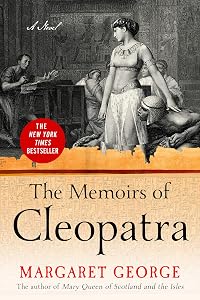
A famous femme fatale tells all in this memoir of her reign as Cleopatra VII, queen of Egypt. Yes, it is true, she did have herself smuggled, wrapped in a rug to Julius Caesar's bedroom, and was pleasantly surprised. As for Marc Antony, a gorgeous man. From her earliest memories, to her final days as she prepares to commit suicide by snake bite. By the author of The Autobiography of Henry VIII.Tags
Recommendations




Member Reviews
The Memoirs of Cleopatra explores the life of this most famous Queen of Egypt, from the time she is three years old, witness to her mother's death, to her own at the age of 39. Through her eyes, we discover how she evolves from a naive child to a cunning, ambitious and manipulative politician. Her affairs with Julius Caesar and Marc Antony are also explored in magnificent detail, as well as the manner which her enemies viewed her. Although the story is written from Cleopatra's point of view, the reader sees both sides of the coin, as she recounts much of the propaganda that was written against her by Cicero and Octavian Caesar (who would later become Augustus Caesar).
Cleopatra is portrayed differently in her private and public life. show more With her family and closest friends, she is very caring, loving and passionate. As a politician and ruler of the wealthiest country in the known world, she is manipulative, shrewd and ambitious. Everything she does, she does for Egypt. She's even willing to put Egypt before her own children at times, and she's desperate to have her country return to the glory of old, and have one of her children succeed her to the throne. Thus, she surrounds herself with the most loyal counselors, some of whom are her childhood friends. She has many allies, but more powerful enemies in Rome, including Octavius Caesar, who will do anything to ruin her, even invade Egypt if he must.
Both her affairs with Julius Caesar, and later with Marc Antony are recounted in a very nuanced way, both of them being similar yet completely different. Caesar is three decades her senior; he will be the one to teach her about the art of politics and warfare. Passion is present, indeed. But the Queen is young and has just reclaimed her throne. This love is one of infatuation; he's a god to her, she doesn't see his faults.
Cleopatra is older and wiser when she decides to take Marc Antony. Her love for him his genuine, but she immediately sees his faults and uses them to her advantage. She knows he would do anything for her, including declaring her as his one and true wife. He is honourable down to the bone, and although he is a great general on the battlefield, his is much too quick to trust, and can't seem to see people's flaws until it is too late. Perhaps his sense of honour and her own ambition, as well as Octavius' friendship with his own general Agrippa, was their downfall.
This novel, much like The Autobiography of Henry VIII, is very well researched, the author even offering some of her sources and even including her own afterthoughts on what facets were facts and which were fictitious, and offers suggestions of other books on the subject.
Her style is impeccable, and the novel is completely engrossing, as if the reader was actually there. As we follow Cleopatra through all her travels, all the locations she visits are described in amazing details, down to the very colours at any time of day. It's almost as if you could feel the Egyptian sun baking the sand, and the foul smells of Rome.
Furthermore, all the characters were interesting in their own way, from Cleopatra herself to her wardrobe specialist Charmian, to even Octavius, who is here portrayed as one of the antagonists in this novel.
He would be indeed, since he has become Cleopatra's enemy.
4.5/5 show less
Cleopatra is portrayed differently in her private and public life. show more With her family and closest friends, she is very caring, loving and passionate. As a politician and ruler of the wealthiest country in the known world, she is manipulative, shrewd and ambitious. Everything she does, she does for Egypt. She's even willing to put Egypt before her own children at times, and she's desperate to have her country return to the glory of old, and have one of her children succeed her to the throne. Thus, she surrounds herself with the most loyal counselors, some of whom are her childhood friends. She has many allies, but more powerful enemies in Rome, including Octavius Caesar, who will do anything to ruin her, even invade Egypt if he must.
Both her affairs with Julius Caesar, and later with Marc Antony are recounted in a very nuanced way, both of them being similar yet completely different. Caesar is three decades her senior; he will be the one to teach her about the art of politics and warfare. Passion is present, indeed. But the Queen is young and has just reclaimed her throne. This love is one of infatuation; he's a god to her, she doesn't see his faults.
Cleopatra is older and wiser when she decides to take Marc Antony. Her love for him his genuine, but she immediately sees his faults and uses them to her advantage. She knows he would do anything for her, including declaring her as his one and true wife. He is honourable down to the bone, and although he is a great general on the battlefield, his is much too quick to trust, and can't seem to see people's flaws until it is too late. Perhaps his sense of honour and her own ambition, as well as Octavius' friendship with his own general Agrippa, was their downfall.
This novel, much like The Autobiography of Henry VIII, is very well researched, the author even offering some of her sources and even including her own afterthoughts on what facets were facts and which were fictitious, and offers suggestions of other books on the subject.
Her style is impeccable, and the novel is completely engrossing, as if the reader was actually there. As we follow Cleopatra through all her travels, all the locations she visits are described in amazing details, down to the very colours at any time of day. It's almost as if you could feel the Egyptian sun baking the sand, and the foul smells of Rome.
Furthermore, all the characters were interesting in their own way, from Cleopatra herself to her wardrobe specialist Charmian, to even Octavius, who is here portrayed as one of the antagonists in this novel.
He would be indeed, since he has become Cleopatra's enemy.
4.5/5 show less
This novel is wonderfully researched, features a great capturing of historical figures (Cleopatra, Marc Antony, Julius Caesar, Caesar Augustus), and a perceptive take on their personalities. It's a vibrant panorama of the Meditteranean, particularly Egypt and Rome. The writing is great and it's easy to read (although, if I had a dollar for every exclamation mark ...). But it's a long slog, and not just because it's a large book. The title includes the word 'memoir' and that's exactly what it is, a fictional memoir rather than obeying a novel's classic structure of rising action and tension. Consequently the action and pace rises and falls throughout, unable to sustain itself as the story remains doggedly true to the facts of Cleopatra's show more life (and knowing how it's all going to end doesn't help matters either).
Another drawback is that although many significant political and military events take place during Cleopatra's lifetime, she witnessed only a minority of them in person. We have to hear about most of them through exposition as Cleopatra receives a letter or messenger to impart the news. Marc Antony's perspective might have made a superior choice for having been more frequently first-hand. Just about anything I picked up to read on the side was more engaging than this novel despite its many excellent qualities, and it was increasingly a chore to come back to. I'm glad I read it, but I'm glad it's over. I prefer the other Margaret George novel I read this year about Henry VIII, which I felt was better structured. show less
Another drawback is that although many significant political and military events take place during Cleopatra's lifetime, she witnessed only a minority of them in person. We have to hear about most of them through exposition as Cleopatra receives a letter or messenger to impart the news. Marc Antony's perspective might have made a superior choice for having been more frequently first-hand. Just about anything I picked up to read on the side was more engaging than this novel despite its many excellent qualities, and it was increasingly a chore to come back to. I'm glad I read it, but I'm glad it's over. I prefer the other Margaret George novel I read this year about Henry VIII, which I felt was better structured. show less
This is a long, but rewarding read. It is so interesting to look at Rome's transition from republic to empire (and of course to look at Cleopatra herself) through the eyes of Cleopatra, to think about what SHE must have experienced during those years.
One impression I got reading the book was sadness, a feeling of loss. That is, a feeling like Cleopatra could have been even more than she was (or, alternately, that she could have had a much longer, less troubled life as a successful ruler) if not for getting involved with Antony. We forget looking at it from the present that "Augustus'" rise to ultimate power was not inevitable, but as all history is, was very much contingent on numerous factors and personalities. You also feel like show more Antony should have been more than he was (though he didn't want to be--and as the book says at one point, you have to absolutely want to be the absolute ruler).
On a lighter side, it's a pleasure to come to feel you know the Queen's advisors (especially Mardian, who adds a touch of humor with his stoutness).
As with Colleen McCollough's books, I feel at the end like I have gotten to live a slice of ancient time--what more can you ask from historical fiction? Highly recommended. show less
One impression I got reading the book was sadness, a feeling of loss. That is, a feeling like Cleopatra could have been even more than she was (or, alternately, that she could have had a much longer, less troubled life as a successful ruler) if not for getting involved with Antony. We forget looking at it from the present that "Augustus'" rise to ultimate power was not inevitable, but as all history is, was very much contingent on numerous factors and personalities. You also feel like show more Antony should have been more than he was (though he didn't want to be--and as the book says at one point, you have to absolutely want to be the absolute ruler).
On a lighter side, it's a pleasure to come to feel you know the Queen's advisors (especially Mardian, who adds a touch of humor with his stoutness).
As with Colleen McCollough's books, I feel at the end like I have gotten to live a slice of ancient time--what more can you ask from historical fiction? Highly recommended. show less
George's first published novel, The Autobiography of Henry VIII is one of my all time favorite historical novels. Both that book and The Memoirs of Cleopatra are doorstopper monsters, almost a thousand pages in length. Yet the Henry VIII book was riveting, just flew by and was very moving. I gave it five stars and it's on my favorites shelf. Having finished the Henry VIII book--years ago--I eagerly bought the Cleopatra book--and found it tedious going. I gave up and the book lay on my bookshelf for over a decade unfinished until I decided to try again.
It's a well-researched book, with lots of rich historical detail, and goodness knows the events of Cleopatra's reign makes for stuff just as fascinating, if not more, than Henry of show more England and his six wives. Yet this book just isn't the engrossing and moving experience of her earlier book. There's an art to taking a historical figure who has had bad press and manage to flesh out and make the character sympathetic. I consider the historic Henry VIII something of a monster, so I thought it a great achievement George gained my sympathy. It might have helped that Henry's "autobiography" had comments appended to it by the king's fool--Will Somers. A man who loved Henry, but wasn't blind to his flaws and could let us know those things Henry couldn't see clearly. Another brilliant book that deals with a villainized monarch is Sharon Kay Penman's The Sunne in Splendour, regarding Richard III. That one is told third person from multiple points of view--and shows us Penman's vision of who she thinks is the true Richard.
But Cleopatra's first person voice just can't carry the weight. Too often George comes across as an apologist for Cleopatra. Glossing over flaws that would have made her much more interesting, and with little asides about what her enemies say about her that for me beg the question about the real queen. The book reminded me a lot of Anchee Min's Empress Orchid, a first-person novel of the much villainized "Dragon Lady" of late Imperial China. I thought Min too often flinched from dealing with her heroine's dark side, her ruthlessness, and that made the characterization fall flat for me. The same is true of George's Cleopatra, making her far less interesting than the historical record suggests.
I see that especially when the novel deals with her affair with Caesar. George writes the relationship as romance novel love at first sight. We have this ruthless teenage queen who didn't flinch from pushing aside one brother from power and may very well have had her other brother-spouse poisoned. A strong queen who got involved with two of the most powerful men in the Roman Empire. I could see a Cleopatra determined to use Caesar to preserve her throne, then maybe falling for him--but the way the book depicts the affair, with her melting into a puddle of goo after one look at his masterful face doesn't feel real to me. And no where in this Cleopatra's voice do I get the sense of her being of a time and place alien to modern sensibilities.
I feel I get the glittery surface of onyx and citrus wood and dates and incense, but am left with no insight into Cleopatra and her times. This in contrast to the Henry VIII book, even though I knew the Tudor period well and the story of Henry and his wives was very familiar to me, George's take felt fresh and thought-provoking. This Cleopatra book, however, definitely isn't a book I consider a keeper, and it's not keeping its place on my bookshelves.
But that leaves me with a dilemma. Which is the real Margaret George? The author of The Autobiography of Henry VIII or the author of The Memoirs of Cleopatra? George has written other biographical fiction about fascinating female historical figures: Helen of Troy, Mary Magdalene, Mary Queen of Scots and Elizabeth I. All at doorstopper length. I'm just left wondering which of the books I've read is the anomaly, and whether I should read more of George. Anyone read more of her who can let me know if the other books earned their length? show less
It's a well-researched book, with lots of rich historical detail, and goodness knows the events of Cleopatra's reign makes for stuff just as fascinating, if not more, than Henry of show more England and his six wives. Yet this book just isn't the engrossing and moving experience of her earlier book. There's an art to taking a historical figure who has had bad press and manage to flesh out and make the character sympathetic. I consider the historic Henry VIII something of a monster, so I thought it a great achievement George gained my sympathy. It might have helped that Henry's "autobiography" had comments appended to it by the king's fool--Will Somers. A man who loved Henry, but wasn't blind to his flaws and could let us know those things Henry couldn't see clearly. Another brilliant book that deals with a villainized monarch is Sharon Kay Penman's The Sunne in Splendour, regarding Richard III. That one is told third person from multiple points of view--and shows us Penman's vision of who she thinks is the true Richard.
But Cleopatra's first person voice just can't carry the weight. Too often George comes across as an apologist for Cleopatra. Glossing over flaws that would have made her much more interesting, and with little asides about what her enemies say about her that for me beg the question about the real queen. The book reminded me a lot of Anchee Min's Empress Orchid, a first-person novel of the much villainized "Dragon Lady" of late Imperial China. I thought Min too often flinched from dealing with her heroine's dark side, her ruthlessness, and that made the characterization fall flat for me. The same is true of George's Cleopatra, making her far less interesting than the historical record suggests.
I see that especially when the novel deals with her affair with Caesar. George writes the relationship as romance novel love at first sight. We have this ruthless teenage queen who didn't flinch from pushing aside one brother from power and may very well have had her other brother-spouse poisoned. A strong queen who got involved with two of the most powerful men in the Roman Empire. I could see a Cleopatra determined to use Caesar to preserve her throne, then maybe falling for him--but the way the book depicts the affair, with her melting into a puddle of goo after one look at his masterful face doesn't feel real to me. And no where in this Cleopatra's voice do I get the sense of her being of a time and place alien to modern sensibilities.
I feel I get the glittery surface of onyx and citrus wood and dates and incense, but am left with no insight into Cleopatra and her times. This in contrast to the Henry VIII book, even though I knew the Tudor period well and the story of Henry and his wives was very familiar to me, George's take felt fresh and thought-provoking. This Cleopatra book, however, definitely isn't a book I consider a keeper, and it's not keeping its place on my bookshelves.
But that leaves me with a dilemma. Which is the real Margaret George? The author of The Autobiography of Henry VIII or the author of The Memoirs of Cleopatra? George has written other biographical fiction about fascinating female historical figures: Helen of Troy, Mary Magdalene, Mary Queen of Scots and Elizabeth I. All at doorstopper length. I'm just left wondering which of the books I've read is the anomaly, and whether I should read more of George. Anyone read more of her who can let me know if the other books earned their length? show less
I truly got lost in this novel - such lush detail and an almost neverending string of trips, banquets, intrigue, affairs, sieges, battles, triumphs -- mesmerizing! And it sounds corny, but I could almost feel Cleopatra's life force while reading this novel. It made me realize that she and Antony and Cesaer were actual flesh and blood at one time -- not just the stuff of legends.
While I realize this was a biased account -- I both admire and mourn for Cleopatra; I will miss reading about her. I thought this novel was superior to Helen of Troy. George still tends to be a little too sentimental for my taste, but she weaves magic, and I plan to plunge into another one of her tomes.
While I realize this was a biased account -- I both admire and mourn for Cleopatra; I will miss reading about her. I thought this novel was superior to Helen of Troy. George still tends to be a little too sentimental for my taste, but she weaves magic, and I plan to plunge into another one of her tomes.
Cleopatra. The Ancient Egyptian Queen: she who dissolved pearls in vinegar, had affairs with Julius Caesar and Marc Anthony, was smuggled in to see Caesar in a rug, and committed suicide by being bitten by an Asp.
This is what I knew of Cleopatra, and assumed at least some of it must be myth or rumour. That, and how she was portrayed in Asterix and Cleopatra. So this was certainly interesting and illuminating.
The book does exactly what it says on the tin, telling of Cleopatra's life in the first person, from her earliest memories onwards. We are given insight into her thoughts, opinions and reasons behind her actions, and her childhood and upbringing used to attempt to explain future choices.
The writing by Margaret George is, as ever, show more both intricate and light-heartened; despite its length, this novel never felt a chore or a slog. Indeed, as you get further in and know from history the fates of many of the characters, I read faster and faster, all the time wishing that what was going to happen didn't. The characters - both famous and not - are well formed and complete in their creation.
My innate cynicism only kicked in a couple of times, mainly in the reasons behind her taking both Caesar and Anthony as lovers, but as no one will ever know the truth, it doesn't really matter. I was more surprised by the amount of things I learnt here that I didn't know before, and how many of those myths around her are in fact true.
The main let down is the notes at the end, after her suicide. Having established such a strong and compelling narrator in Cleopatra, the loss of her telling is noticeable, although this could be on purpose.
Other than that - I would definitely recommend this to anyone interested in either history, historical fiction, or strong characters of the past. And don't be put off by the length. It didn't feel that long at all!
Oh, and I should add: if you're going to read this, I'd suggest having a quick glance over this map http://en.wikipedia.org/wiki/File:Roman_Empire_full_-_Referenced.jpg of Roman territories, as some of the places described aren't where they are now! show less
This is what I knew of Cleopatra, and assumed at least some of it must be myth or rumour. That, and how she was portrayed in Asterix and Cleopatra. So this was certainly interesting and illuminating.
The book does exactly what it says on the tin, telling of Cleopatra's life in the first person, from her earliest memories onwards. We are given insight into her thoughts, opinions and reasons behind her actions, and her childhood and upbringing used to attempt to explain future choices.
The writing by Margaret George is, as ever, show more both intricate and light-heartened; despite its length, this novel never felt a chore or a slog. Indeed, as you get further in and know from history the fates of many of the characters, I read faster and faster, all the time wishing that what was going to happen didn't. The characters - both famous and not - are well formed and complete in their creation.
My innate cynicism only kicked in a couple of times, mainly in the reasons behind her taking both Caesar and Anthony as lovers, but as no one will ever know the truth, it doesn't really matter. I was more surprised by the amount of things I learnt here that I didn't know before, and how many of those myths around her are in fact true.
The main let down is the notes at the end, after her suicide. Having established such a strong and compelling narrator in Cleopatra, the loss of her telling is noticeable, although this could be on purpose.
Other than that - I would definitely recommend this to anyone interested in either history, historical fiction, or strong characters of the past. And don't be put off by the length. It didn't feel that long at all!
Oh, and I should add: if you're going to read this, I'd suggest having a quick glance over this map http://en.wikipedia.org/wiki/File:Roman_Empire_full_-_Referenced.jpg of Roman territories, as some of the places described aren't where they are now! show less
This is a masterful bit of historical fiction. Not only that but, coming in at a svelte 965 pages, it is quite a nice counterweight for bicep and tricep days. The section breaks were also cool because they were marked off my the titular queen’s cartouche (hieroglyphic name ring). I loved reading this, though it will likely be a few years before I try it again.
Members
- Recently Added By
Lists

Historical Fiction
889 works; 90 members

Best historical fiction set in the ancient world
126 works; 40 members

Top Five Books of 2018
802 works; 265 members

KayStJ's to-read list
1,616 works; 11 members

Books Read in 2018
4,360 works; 110 members

Books That Made Us Cry
278 works; 145 members

el
1,139 works; 1 member
Author Information

18+ Works 13,533 Members
Margaret George lives with her husband in Madison, Wisconsin.
Some Editions
Series

Belongs to Publisher Series
Work Relationships
Common Knowledge
- Canonical title
- The Memoirs of Cleopatra
- Original publication date
- 1997
- People/Characters
- Cleopatra VII; Julius Caesar; Marcus Antonius; Cleopatra Selene II; Alexander Helios; Ptolemy Philadelphus (show all 29); Ptolemy XII Auletes (father of Cleopatra); Cleopatra VI Tryphaena (oldest sister of Cleopatra); Berenice IV (older sister of Cleopatra); Arsinoë IV (younger sister of Cleopatra); Ptolemy XIII (younger brother of Cleopatra); Ptolemy XIV (youngest brother of Cleopatra); Pompey the Great (Roman general); Charmian (servant to Cleopatra); Pothinus (regent for Ptolemy XIII); Achillas (guardian of Ptolemy XIII); Theodotus of Chios (tutor of Ptolemy XIII); Ptolemy XV Caesarion (eldest son of Cleopatra); Augustus Caesar (as Octavian); Octavia Minor (sister of Octavian); Marcus Vipsanius Agrippa (Agrippa); Cornelia (wife of Caesar); Marcus Junius Brutus (Brutus); Servilia (mother of Brutus); Sosigenes of Alexandria (astronomer); Gaius Cassius Longinus (Cassius); Decimus Junius Brutus Albinus (Decimus); Marcus Tullius Cicero (Cicero); Marcus Aemilius Lepidus (triumvir)
- Important places
- Alexandria, Egypt; Ptolemaic Egypt; Egypt; Nile River; Philae, Egypt; Nubia (show all 8); Meroë, Ethiopia; Ancient Rome
- Important events
- Reign of Cleopatra VII (51 BCE | 30 BCE); Siege of Alexandria (48 BCE | 47 BCE); Battle of the Nile (47 BCE); Assassination of Julius Caesar (44 BCE-03-15); End of the Hellenistic Age (33 BCE); Battle of Actium (31 BCE-09-02)
- Related movies
- Cleopatra (1999 | IMDb)
- Dedication
- for
Cleopatra
Queen, Goddess, Scholar, Warrior
69-30 B.C.
and Alison,
my Cleopatra Selene,
and Paul
a bit of Caesar, Antony, and especially Olympos
all in one - First words
- Warmth. Wind. Dancing blue waters, and the sound of waves.
- Last words
- (Click to show. Warning: May contain spoilers.)At last I believe that, and surrender you with joy.
- Original language
- English
Classifications
Statistics
- Members
- 2,880
- Popularity
- 6,282
- Reviews
- 50
- Rating
- (4.01)
- Languages
- 11 — Danish, Dutch, English, Estonian, Finnish, German, Italian, Norwegian (Bokmål), Russian, Spanish, Swedish
- Media
- Paper, Audiobook, Ebook
- ISBNs
- 42
- ASINs
- 13