A Book of Nonsense
by Edward Lear
On This Page
Description
A collection of over 100 limericks with the author's original illustrations.Tags
Recommendations

















Member Reviews
I don't think any parent (or grandparent) would purchase this book were it to be written and published today. More than half of the subjects are killed off, and most by incredibly nasty means. Even considering British pronunciation, the rhyming schemes are stretched beyond belief.
So why did I give it four stars, you may well ask.
1. These children's nonsense rhymes are part of our cultural heritage--at least those of us from an English-speaking background.
2. Lear exposes children to an incredibly rich vocabulary. In a time when so much is "dumbed down" for our children, it is a pleasure to find that such words as:
incongruous
imprudent
intrinsic
globular
futile
capricious
invidious
to name but a few, are at the very least, being exposed to show more their ear. And then there are some words, which at the least should provoke a fun discussion as to their meaning (as in "ombliferous"), and teach our children that language isn't static , but is a living entity.
If you haven't been exposed to the Guttenberg Project, please check it out. Free digitized copies of books in the public domain. What a treasure! show less
So why did I give it four stars, you may well ask.
1. These children's nonsense rhymes are part of our cultural heritage--at least those of us from an English-speaking background.
2. Lear exposes children to an incredibly rich vocabulary. In a time when so much is "dumbed down" for our children, it is a pleasure to find that such words as:
incongruous
imprudent
intrinsic
globular
futile
capricious
invidious
to name but a few, are at the very least, being exposed to show more their ear. And then there are some words, which at the least should provoke a fun discussion as to their meaning (as in "ombliferous"), and teach our children that language isn't static , but is a living entity.
If you haven't been exposed to the Guttenberg Project, please check it out. Free digitized copies of books in the public domain. What a treasure! show less
When I was a child, I enjoyed Lear, but I read only a poem or two at a time. This book was "way too much of a good thing." If I ever read another "There was an old man from" or "There was an old person from" poem again, it will be too soon. He had several alphabets. Many used the same thing for the letters. For example, all used "Xerxes" for the letter "X." Why not a xylophone? In addition to poems and alphabets, Lear included some nonsensical biological drawings and a couple short stories. "The Owl and the Pussycat" is probably Lear's best-known work, and there's a reason for that. It's his best. Lear is best consumed in small doses, and this volume gives one entirely too much nonsense.
Edward Lear almost never fails to put a smile on my face. Though, his recipes are rather vicious...
"When the paste is perfectly dry, but not before, proceed to beat the Pig violently, with the handle of a large broom. If he squeals, beat him again." - Quote from TO MAKE GOSKY PATTIES
"When the paste is perfectly dry, but not before, proceed to beat the Pig violently, with the handle of a large broom. If he squeals, beat him again." - Quote from TO MAKE GOSKY PATTIES
Lear's limericks are fun and silly, with some of that absurd humor I might also find in Dr. Seuss or Carroll's poetry. He makes up foolish words to suit his odd characters, who range from regular people who perform peculiar actions to bizarre figures who might be doing the mundane or the odd. A young woman has a chin so sharp she plays the harp, and a different fellow has a head so tiny that he purchases an immense wig to enlarge it. The edition I bought as an ebook had no illustrations. I had never read his poetry before, only seen references to it in other books, but even so, I knew something was missing. Fortunately, I easily found his limericks online with the accompanying pictures. (Now why did I buy that ebook?) The pictures are show more black-and-white sketches, as lugubrious and ridiculous as the poetry.
I had an amusing hour as I read this book. Limericks aren't my favorite style, but I've never spent more than a passing moment with them, so it was interesting to read an entire collection of them. From what I gather, Lear is one of the better known limerick writers. He managed to instill his own style into a poetic form that has very set rules. The humor is mostly silly, but can be gruesome, with people dying and being cruel to others. I felt like it was an early form of black humor. I like trying new things, and don't regret spending time with this book, although I probably won't be seeking out other limericks in the near future. show less
I had an amusing hour as I read this book. Limericks aren't my favorite style, but I've never spent more than a passing moment with them, so it was interesting to read an entire collection of them. From what I gather, Lear is one of the better known limerick writers. He managed to instill his own style into a poetic form that has very set rules. The humor is mostly silly, but can be gruesome, with people dying and being cruel to others. I felt like it was an early form of black humor. I like trying new things, and don't regret spending time with this book, although I probably won't be seeking out other limericks in the near future. show less
These may have been quite funny when published in 1895, and maybe there was nothing quite like it for children at the time - off-colour, nonsensical, silly with simple black and white drawings and short limericks on the right of each double-page spread and a blank page on the left. I can see why it could be said to be in a category with or inspiration for the likes of Shel Silverstein, but I think each are in a category of their own. This is a unique book, and author, to look at from a research perspective on the development of children's genre poetry, but I would not recommend it to a child today.
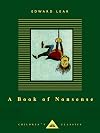
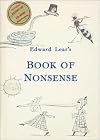
From the benighted Old man with a Beard to the erudite Perpendicular Purple Polly, Edward Lear's world is inhabited by a bewildering variety of oddities. Pelicans and parrots, seals and rhinoceroses and other queer creatures cavorted gaily with Dongs and Pobbles, not to mention the Quangle-Wangles! Here, after 140 years, is the original edition of A Book of Nonsense, from the original publishers. Complete with Lear's own illustrations - by turns surreal, hilarious and simply nonsensical - this treasure trove of nonsense is guaranteed to hold readers spellbound.
As expected, it reminded me of the nonsense verse I used to love as a child. I have no great interest in poetry, but something in this kind of funny, nonsensical turn of phrase intrigues me. A very quick read for a wet morning when you need the literary equivalent of a tickle!
Members
- Recently Added By
Lists

Puffin Books 70th anniversary handbook recommendations
537 works; 10 members

Books Read in 2015
3,299 works; 126 members

Before Austen Comes Aesop
318 works; 9 members
Author Information

309+ Works 11,249 Members
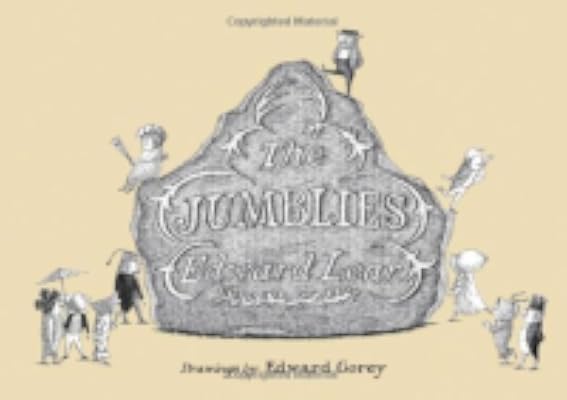
Edward Lear was born in Holloway, England, to Jeremiah (a stockbroker) and Ann Lear, tutored at home by his sister, and briefly attended the Royal Academy schools. Both an author and an illustrator, he earned his living as an artist from the age of 15, mainly by doing landscapes. What he is remembered for is his nonsense books, especially his show more popularization of the limerick. Along with Lewis Carroll, he is considered to be the founder of nonsense poetry. In addition to his limericks, he created longer nonsense poems. The best---and best known---is The Jumblies, in which the title characters go to sea in a sieve; it is a brilliant, profound, silly, and sad expression of the need to leave the security of the known world and experience the wonder and danger of the unknown. His other most notable work is The Owl and the Pussy Cat, a less complex poem whose title characters also go to sea. Lear produced humorous alphabets and botany books as well. His wordplay, involving puns, neologisms, portmanteau words, and anticlimax, retains its vitality today and has influenced such contemporary writers of children's nonsense verse as Shel Silverstein, Ogden Nash, and Laura Richards (Bowker Author Biography) show less
Some Editions
Awards and Honors
Series
Belongs to Publisher Series
Work Relationships
Is contained in
Common Knowledge
- Canonical title
- A Book of Nonsense
- Original title
- A Book of Nonsense
- Original publication date
- 1846
- Epigraph
- SELF-PORTRAIT OF THE LAUREATE OF NONSENSE
How pleasant to know> Mr. Lear!
Who has written such volumes of stuff!
Some think him ill-tempered and queer,
But a few think him pleasant enough.
His mind i... (show all)s concrete and fastidious,
His nose is remarkably big;
His visage is more or less hideous,
His beard it resembles a wig.
He has ears, and two eyes, and ten fingers,
Leastways if you reckon two thumbs;
Long ago he was one of the singers,
But now he is one of the dumbs.
He sits in a beautiful parlour
With hundreds of books on the wall;
He drinks a great deal of Marsala,
But never gets tipsy at all.
He has many friends, laymen and clerical;
Old Foss is the name of his cat;
His body is perfectly spherical,
He weareth a runcible hat.
When he walks in a waterproof white,
The children run after him so!
Calling out, 'He's come out in his night-
Gown, that crazy old Englishman, oh!'
He weeps by the side of the ocean,
He weeps on the top of the hill;
He purchases pancakes and lotion,
And chcolate shrimps from the mill.
He reads but he cannot speak Spanish,
He cannot abide ginger-beer;
Ere the days of his pilgrimage vanish, How pleasant to know Mr. Lear!
EDWARD LEAR (Everyman's Library Children's Classics Edition) - First words
- There was an Old Man with a nose,
Who said, “If you choose to suppose
There was an Old Man with a beard,
Who said 'It is just as I feared!
--Everyman's Library Children's Classics Edition - Last words
- (Click to show. Warning: May contain spoilers.)But she said, “I don't care! all the birds in the air
Are welcome to sit on my bonnet!”
(Click to show. Warning: May contain spoilers.)'We think we've all heard quite enough of this your sad disaster!'
--Everyman's Library Children's Classics edition - Original language
- English
Classifications
Statistics
- Members
- 758
- Popularity
- 36,993
- Reviews
- 20
- Rating
- (3.47)
- Languages
- 6 — Catalan, English, Finnish, French, German, Swedish
- Media
- Paper, Audiobook, Ebook
- ISBNs
- 62
- ASINs
- 22