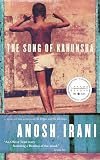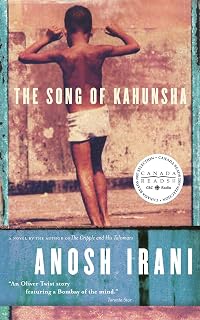
The Song of Kahunsha
by Anosh Irani
On This Page
Description
Ten-year-old Chamdi has rarely ventured outside his orphanage and entertains a fantasy of what Bombay is like beyond its garden walls ? a paradise he calls Kahunsha, ?the city of no sadness." He runs away to search for his long-lost father and finds himself thrust into chaos. Moving, poignant, and wonderfully rich in the sights and sounds of Bombay, this novel is the story of Chamdi's struggle for survival on the city's dangerous streets.Tags
Recommendations


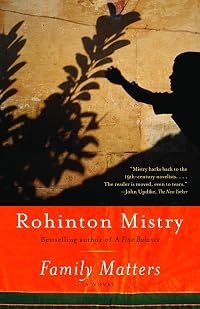
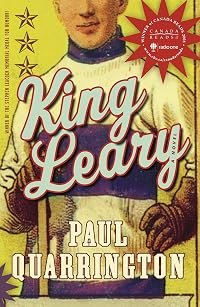


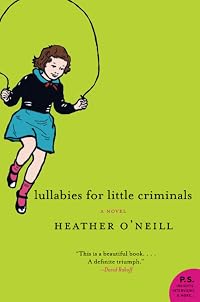


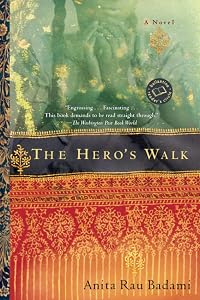




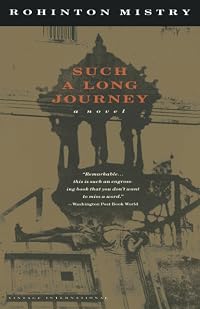
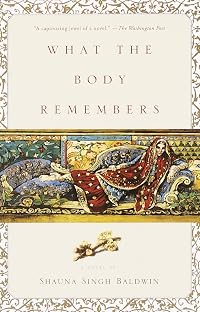





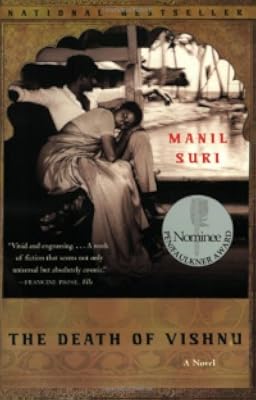


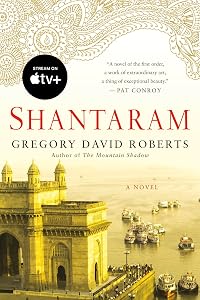


















Member Recommendations

Member Reviews
Chamdi is a 10 year old boy raised in an orphanage in Bombay. For his entire life, he has been awaiting the return of one of his parents to take him home. He has not been outside the walls of the orphanage, but is sure that the city of Bombay is beautiful and full of loving people. He imagines a beautiful place and names it "Kahunsha", which to him meant "the city of no sadness." When the matron tells the children that the orphanage will be moving, Chamdi decides to run away and look for his father.
When Chamdi arrives on the streets of Bombay he quickly learns that people are not kind. He spends a night and two days on the street with nothing to eat, scorned by the people around him. On his second night he is approached by a girl his show more age, and she brings him to an alley where she lives with her brother and their mother who is schizophrenic and detached from reality. The girl, Guddi, and her brother, Sumdi, had approached Chamdi because they had noticed how thin he was, and felt that they could make use of him to slip through the bars of a nearby temple and steal the offering plate. Chamdi is horrified at the thought of stealing, but Guddi and Sumdi have been kind to him and fed him, so he decides to stay with them as they teach him the art of begging. They introduce him to their "Boss", Anand Bhai, an older man to whom they must daily turn over the proceeds of their begging, and be rewarded with a small amount in return. On his first meeting, Chamdi witnesses Anand casually gouge out the eye of another child beggar he caught withholding some of his earnings.
Over the next several days Chambi learns to live on the streets. He is surprised to find so many people sleeping in the streets, and begins to view the entire city of Bombay as an orphanage. He sees and experiences many horrors, but Chambi tries to maintain his illusions. All of this takes place against sectarian violence that broke out when Hindus destroyed a particularly holy mosque. Chambi and his friends are ultimately unable to avoid this violence.
The novel is narrated from the pov of Chamdi, and his is a delightful and charming voice, despite the grimness of his experiences.
Recommended
3 1/2 stars show less
When Chamdi arrives on the streets of Bombay he quickly learns that people are not kind. He spends a night and two days on the street with nothing to eat, scorned by the people around him. On his second night he is approached by a girl his show more age, and she brings him to an alley where she lives with her brother and their mother who is schizophrenic and detached from reality. The girl, Guddi, and her brother, Sumdi, had approached Chamdi because they had noticed how thin he was, and felt that they could make use of him to slip through the bars of a nearby temple and steal the offering plate. Chamdi is horrified at the thought of stealing, but Guddi and Sumdi have been kind to him and fed him, so he decides to stay with them as they teach him the art of begging. They introduce him to their "Boss", Anand Bhai, an older man to whom they must daily turn over the proceeds of their begging, and be rewarded with a small amount in return. On his first meeting, Chamdi witnesses Anand casually gouge out the eye of another child beggar he caught withholding some of his earnings.
Over the next several days Chambi learns to live on the streets. He is surprised to find so many people sleeping in the streets, and begins to view the entire city of Bombay as an orphanage. He sees and experiences many horrors, but Chambi tries to maintain his illusions. All of this takes place against sectarian violence that broke out when Hindus destroyed a particularly holy mosque. Chambi and his friends are ultimately unable to avoid this violence.
The novel is narrated from the pov of Chamdi, and his is a delightful and charming voice, despite the grimness of his experiences.
Recommended
3 1/2 stars show less
Bombayisan unhappy place for a young orphan who runs away from an orphanage to find his father. Life on the streets is heartless and cruel and clearly depicted in “ The song of Kahunsha”. Chamdi’s innocence is stolen and we can only hope that his imagination, his sweetness and his eternal hope survives the violence of the Hindu / Muslim slums.
Chamdi is a 10-year-old orphan Who lives in an orphanage in Bombay. The orphanage Is about to get closed down, and the children will be sent north to an unknown place. Chamdi doesn't want to leave Bombay because he dreams of finding his father, so one night he runs away. Instead of finding his father, he finds a corrupt landscape where he's drawn unwittingly into the grip of the leader of a ruthless gang.
Beautiful and terribly sad, full of characters to love and despair of, and descriptions of vivid, at times revolting sights and smells.
Beautiful and terribly sad, full of characters to love and despair of, and descriptions of vivid, at times revolting sights and smells.
This is a horrifying account of the life of abandoned children in the slums of Mumbai where they are mutilated to make them into more compelling beggars or used as sex slaves. The book tries to end on a hopeful note -- the imagination and spirit of the central character is not crushed by the nightmare world around him. I found the work unrelentingly bleak. I believe the world depicted is accurate. When I was in Hyderabad, India, I read a newspaper account of a eunuch who was opening a school. Apparently, poor boys are sometimes castrated by their parents so they can support themselves as prostitutes to heterosexual men. What a world!
Shocking, hard hitting and incredibly sad story of a boy who flees an orphanage to live on the streets of Mumbai finding life, death, love, hatred, squalor and every imaginable nastiness. Through it all, he hangs on to some shard of hope. The language is simple as befits the story being told from the boy's point of view, but it is powerful and moving and, like Anita Badami Rau's "I hear the nightbird call" drives home with a sledgehammer and a heavy spike the manner in which large religious conflicts are played out at the level of individual lives.
I really had no clue what to expect with The Song of Kahunsha - in fact, I had never heard of it until my book club picked it. From the moment I started reading, I was drawn into Chamdi's story. Much like Oliver from Oliver Twist, Chamdi is an orphan who must leave the orphanage and ends up falling in with the wrong crowd. However, Chamdi's story is much rougher and at times, it is hard to stomach. Irani's writing, though, is very beautiful and simple.
Chamdi’s name means “a boy of thick skin,” as appropriately given to him by Mrs. Sadiq, his caretaker at the orphanage where he has spent his short life sheltered from the evils that lurk behind the towering and concrete walls, in the streets of Bombay. His upbringing has been humble, with the same meals of rice and vegetables provided three times a day, a cot with a white sheet to sleep on, and a basic education affording him the knowledge to read and write. You can’t help but feel sad for Chamdi and his situation, until the closing of the orphanage sends him to the streets of Bombay where we quickly learn things can be much worse than he had ever experienced.
Chamdi’s road becomes increasingly harder, as he struggles to stay show more alive with no food in his tummy, money in his hand or a roof over his head. His saving grace and the true inspiration of this story is Chamdi’s ability to dream in colours. No matter how dark, dismal and desolate his circumstances appear to be, Chamdi need only close his eyes and dream of Kahunsha, his make believe recreation of Bombay, where there is no sadness, criminals, or starvation. This is a truly inspirational story that will not only make you thankful for all that you have, but hopeful for all that you have the power to imagine. show less
Chamdi’s road becomes increasingly harder, as he struggles to stay show more alive with no food in his tummy, money in his hand or a roof over his head. His saving grace and the true inspiration of this story is Chamdi’s ability to dream in colours. No matter how dark, dismal and desolate his circumstances appear to be, Chamdi need only close his eyes and dream of Kahunsha, his make believe recreation of Bombay, where there is no sadness, criminals, or starvation. This is a truly inspirational story that will not only make you thankful for all that you have, but hopeful for all that you have the power to imagine. show less
Members
- Recently Added By
Lists

Childhood: Books for or about children in different cultures around the wor
345 works; 18 members

Canada Reads Winners and Nominees
129 works; 9 members
Author Information

8+ Works 468 Members
Awards and Honors
Common Knowledge
- Canonical title*
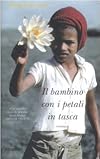
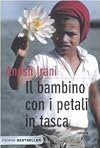
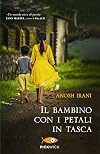
- Il bambino con i petali in tasca
- Original title
- The Song of Kahunsha
- Important places
- Bombay, India; Mumbai, India
*Some information comes from Common Knowledge in other languages. Click "Edit" for more information.
Classifications
Statistics
- Members
- 213
- Popularity
- 154,047
- Reviews
- 14
- Rating
- (3.56)
- Languages
- 6 — Chinese, English, French, Italian, Portuguese, Spanish
- Media
- Paper, Ebook
- ISBNs
- 17
- ASINs
- 3