On This Page
Description
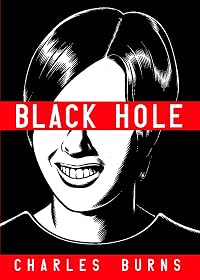
A chilling graphic novel set in suburban Seattle during the mid-1970s describes the lives of the area's teenagers, who are suddenly faced with a devastating, disfiguring, and incurable plague that has descended on the young people of Seattle.Tags
Recommendations


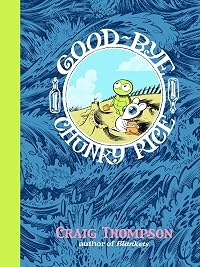

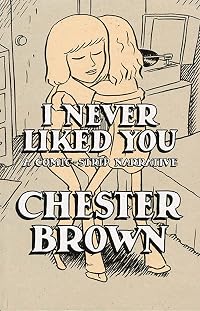
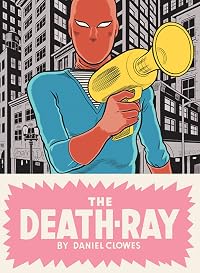
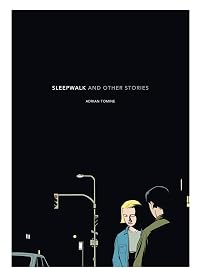



Member Recommendations
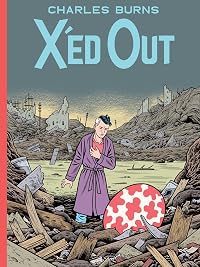
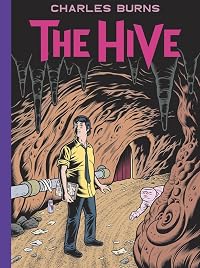
tootstorm If you enjoyed Black Hole, Burns' newer trilogy of short graphic novels should not be missed. The X'ed Out series features a ~heavy~ dose of intentional David Lynch influence--think the dreamscape nonsense of Eraserhead AND the obtuse-as-hell symbolism of Mulholland Dr. (It also features a really bad title. 'X'ed Out.' Wow, that's bad.)
20

Member Reviews
Talk about grotesque horror! I tend to stay away from comics that are clearly for adults with content that borders disturbing, but shockingly enough I was able to completely read Black Hole's 12 issues and actually enjoy it! I just had to know what was going to happen to all those affected by the disease. This series does not have the typically happy ending of the main male lead ending up with the main female lead. I quickly had to learn to squash all hopes of that happening. Although I found Chris to be such a frustrating character, for deciding to live in the woods and not seek out help from her family, I found that my mindset as well had to understand that "The Bug" was more than just a mutation. Shame, embarrassment, feeling like show more you do not belong- there are some themes that can be easily relatable. The profile images of an affected teen following by a blurb of their thoughts and feelings- these images allowed readers to understand the injustice that most of these characters faced. The black and white illustrations, especially when the drug induced imagery came up, were disturbing but made me want to understand the struggles and hardships of these characters. show less
Burns' has created a deeply unsettling novel that uses exaggerated and alien disease as a metaphor for teenage alienation in twentieth century America. Here, the teenage body is a desperate plea for acceptance and understanding that society disavows and distorts until that body no longer knows or values itself. A quasi-horror narrative that is an explicit social comment, grabbing your attention with artwork that will make your skin crawl.
I feel like I need to take a cold shower after finishing this. It was so dark, despondent and creepy. The illustrations and plot are fantastic though. The 70's were an idyllic time to live if you were a white teenager in suburbia. That is unless you contracted a weird sexually transmitted "bug" that morphed some body deformity. It could be a tail, boils, webbed hands, an extra mouth, shedding skin; it's different for every person. The spread is slow, but it's totally alienating. The shame is all consuming and soon there is nothing to but live in the woods with other afflicted teenagers. There is no hope, no cure, no prevention, and no awareness. This graphic novel is shown through the eyes of several teenagers who have it or will soon show more contract it. It's dark, weird, and so messed up. It's very nihilistic and unique. I have a lot of thoughts about this book, but I'm not entire sure how to write them out. Read with an open mind and always use a rubber. show less
We watched Riverdale recently, The CW's newish series based on the Archie comics, and I found it a frustrating experience. It had all the elements that I normally love – namely, small-town America, murder, secrets and sexual tension among high-schoolers – and yet it didn't go nearly dark enough or deep enough to really hit the spot. I was fretting vaguely about these themes for some time afterwards, and when I saw a copy of Charles Burns's Black Hole in a bookshop, I realised that it was exactly what I'd been looking for.
I haven't read this since, I don't know, some time in the early 2000s, and I don't know if I ever read it all the way through at the time – doing so now, I realise what a superb achievement it is, surely one of show more the greatest comics to come out of the American tradition. In his chunky, moonlit panels, Burns builds up a shifting association of images linking the erotic with the horrific until you are primed to react to the slightest of his gestures with great surges of dread or excitement.
The teenage protagonists of this book live in a small town in the American northwest of the mid-1970s (you can date it only by a fleeting reference to Bowie's new album Diamond Dogs). Here, the usual confusion of peer groups, social cliques and sexual frustration is exacerbated and exemplified by ‘The Bug’, a sexually-transmitted condition that causes bodily mutations, some of them extreme – forcing their sufferers to live feral in the woods – and some more benign, allowing kids to ‘pass’ as normal.
This body-horror metaphor for guilty sexual awakenings in Protestant America may have been done a million times, but it just goes to show it can always be done again by someone brilliant. And Burns really does it well: Black Hole, as well as being technically excellent and superbly emotional, has that quality that I look for in every work of art I love – that sense of what the fuck is that. Some of the details here are exquisitely creepy, like the boy with a second mouth above his sternum which, when he's asleep, calls out in a high-pitched childlike voice to the girl he's lying with: “unn…it…it won't work…it can't last…nnn…never make it out alive…” as she shakes him and yells, ‘R-Rob? Come on wake up! Rob?’
Burns's artwork is marked by its thick black lines and a certain flat, depthless quality to the panels – as with a white-line etching, there's oceans of inky black background, and often his images have the stark clarity of a woodcut.
There's a lot of nudity in Black Hole, both male and female, which I particularly noticed this time around because I read most of it sitting at a pavement café on Bahnhofstrasse where my waitress did not seem to be a fan. But voyeurism is a very minor component – naked bodies here are not just about sexiness (though sometimes they are about that), they are also about vulnerability, the raw facticity of your physical frame that, as a teenager, is still new and strange; the absurdity of this shaped packet of meat that inspires pity, protectiveness, desire, or revulsion. This point comes across very strongly when one character leafs furtively through a porn mag, and we see the huge gulf between the sexualised nakedness of the models there and the awkward, defenceless nakedness of the teens in the actual story.
If it has faults, they perhaps come in the final couple of sections, where Burns can't quite find a resolution that lives up to the weight of mystery and feverish emotion that's gone before. But you're in good shape if you're falling victim to your own successes, and this is definitely a success – weird and transformative, it'll touch the parts that other comics, or TV shows, can't reach. Whether you want it to touch you there is another matter. show less
I haven't read this since, I don't know, some time in the early 2000s, and I don't know if I ever read it all the way through at the time – doing so now, I realise what a superb achievement it is, surely one of show more the greatest comics to come out of the American tradition. In his chunky, moonlit panels, Burns builds up a shifting association of images linking the erotic with the horrific until you are primed to react to the slightest of his gestures with great surges of dread or excitement.
The teenage protagonists of this book live in a small town in the American northwest of the mid-1970s (you can date it only by a fleeting reference to Bowie's new album Diamond Dogs). Here, the usual confusion of peer groups, social cliques and sexual frustration is exacerbated and exemplified by ‘The Bug’, a sexually-transmitted condition that causes bodily mutations, some of them extreme – forcing their sufferers to live feral in the woods – and some more benign, allowing kids to ‘pass’ as normal.
This body-horror metaphor for guilty sexual awakenings in Protestant America may have been done a million times, but it just goes to show it can always be done again by someone brilliant. And Burns really does it well: Black Hole, as well as being technically excellent and superbly emotional, has that quality that I look for in every work of art I love – that sense of what the fuck is that. Some of the details here are exquisitely creepy, like the boy with a second mouth above his sternum which, when he's asleep, calls out in a high-pitched childlike voice to the girl he's lying with: “unn…it…it won't work…it can't last…nnn…never make it out alive…” as she shakes him and yells, ‘R-Rob? Come on wake up! Rob?’
Burns's artwork is marked by its thick black lines and a certain flat, depthless quality to the panels – as with a white-line etching, there's oceans of inky black background, and often his images have the stark clarity of a woodcut.
There's a lot of nudity in Black Hole, both male and female, which I particularly noticed this time around because I read most of it sitting at a pavement café on Bahnhofstrasse where my waitress did not seem to be a fan. But voyeurism is a very minor component – naked bodies here are not just about sexiness (though sometimes they are about that), they are also about vulnerability, the raw facticity of your physical frame that, as a teenager, is still new and strange; the absurdity of this shaped packet of meat that inspires pity, protectiveness, desire, or revulsion. This point comes across very strongly when one character leafs furtively through a porn mag, and we see the huge gulf between the sexualised nakedness of the models there and the awkward, defenceless nakedness of the teens in the actual story.
If it has faults, they perhaps come in the final couple of sections, where Burns can't quite find a resolution that lives up to the weight of mystery and feverish emotion that's gone before. But you're in good shape if you're falling victim to your own successes, and this is definitely a success – weird and transformative, it'll touch the parts that other comics, or TV shows, can't reach. Whether you want it to touch you there is another matter. show less
3.3/5 - GREAT.
The story in Black Hole isn't anything special, particularly when read later in life. But with the care and consideration Charles Burns took in writing and illustrating the work, Black Hole becomes a timeless coming of age piece. The story follows a group of teenagers exploring the forays of sex and love for the first time, applying the motif of an STI that inflicts body horrors onto the host. While Burns has stated the mutation reflects an adolescence tranformation into adulthood, I prefer to see it as a reflection of the sense of permanence each of us feel in our youth; every decision, consequence, and state of being will continue on in perpetuity. My only evidence would be the reveal that the mutations eventually show more disappear and victims return to (relatively) normal appearance.
The actions of the book reflect how various characters adapt to that illusion permanence. Many hide away in darkness, not wanting to expose their vulnerabilities and finding others like them to empathise with. Some are fully enveloped by that darkness and look to drag as many others down into their misery as possible. Others want to understand what they are going through and find someone to understand both themselves and the world around them. And then there are those who look to redeem themselves, however poorly.
It is a short series, 12 trade-paperbacks worth of content, with a tendency to drag through the middle-third, but it was a warm memory of a time gone by for me. The events readers witness do go to some unnecessary (fantastical) extremes - and there are some loose ends left untied - but the language used doesn't date the contents. Despite being written throughout the 90s and 00s, the setting is a suburban America of the late 70s early 80s. The art further lends itself to it being of a bygone era without feeling out of place - seemingly combining 1950s pop line-art with a wood carving asthetic. The simplicity of some panels allows for the extremes of horror and psychodelia to leap off of the page.
In general, this would be a strong recommendation for late-teenagers (that can stomach gore and violence) to reassure them that they are not alone in some of the struggles they inevitable go through. show less
The story in Black Hole isn't anything special, particularly when read later in life. But with the care and consideration Charles Burns took in writing and illustrating the work, Black Hole becomes a timeless coming of age piece. The story follows a group of teenagers exploring the forays of sex and love for the first time, applying the motif of an STI that inflicts body horrors onto the host. While Burns has stated the mutation reflects an adolescence tranformation into adulthood, I prefer to see it as a reflection of the sense of permanence each of us feel in our youth; every decision, consequence, and state of being will continue on in perpetuity. My only evidence would be the reveal that the mutations eventually show more disappear and victims return to (relatively) normal appearance.
The actions of the book reflect how various characters adapt to that illusion permanence. Many hide away in darkness, not wanting to expose their vulnerabilities and finding others like them to empathise with. Some are fully enveloped by that darkness and look to drag as many others down into their misery as possible. Others want to understand what they are going through and find someone to understand both themselves and the world around them. And then there are those who look to redeem themselves, however poorly.
It is a short series, 12 trade-paperbacks worth of content, with a tendency to drag through the middle-third, but it was a warm memory of a time gone by for me. The events readers witness do go to some unnecessary (fantastical) extremes - and there are some loose ends left untied - but the language used doesn't date the contents. Despite being written throughout the 90s and 00s, the setting is a suburban America of the late 70s early 80s. The art further lends itself to it being of a bygone era without feeling out of place - seemingly combining 1950s pop line-art with a wood carving asthetic. The simplicity of some panels allows for the extremes of horror and psychodelia to leap off of the page.
In general, this would be a strong recommendation for late-teenagers (that can stomach gore and violence) to reassure them that they are not alone in some of the struggles they inevitable go through. show less
Não é uma obra que arrematou tantos prêmio à toa. É uma graphic novel fantástica e perturbadora. A arte de Charles Burns é incrível, a edição da Dark Side ficou linda, à altura de uma obra tão impactante. Fiquei com a sensação de ser uma crítica à contra cultura dos anos 1970, o "amor livre" algo pré-Aids, mas não somente isso, tem coisas sobre o pavor de ser adulto, das relações sociais convencionais, talvez mais profundamente neste sentido. Vou precisar pensar mais a respeito. Enfim, a leitura é mais do que recomendada.
Uno stile cupo, visionario e inquietante per raccontare le vite di un gruppo di adolescenti, le loro giornate e la mutazione di cui sono vittime: una mutazione che qualcuno subisce senza volerla e che qualcun'altro, invece, cerca con coscienza.
Molti si sono chiesti che cosa l'autore volesse simboleggiare con questa mutazione, molti hanno pensato che si trattasse di una metafora per l'AIDS, ma non penso che sia così... Penso piuttosto che la mutazione sia una metafora della crescita, qualcosa che ci costringe, volenti o nolenti, a trasformarci in qualcos'altro, a confrontarci con nuovi problemi e nuove sfide: qualcosa a cui molti tentano di sfuggire e molti altri, invece, sfidano a viso aperto.
Così è per i protagonisti della Graphic show more Novel di Charles Burn, ragazzi che inseguono e rifuggono qualcosa, senza capire che tutto ciò che li agita è solamente il bisogno di amore e di essere compresi. show less
Molti si sono chiesti che cosa l'autore volesse simboleggiare con questa mutazione, molti hanno pensato che si trattasse di una metafora per l'AIDS, ma non penso che sia così... Penso piuttosto che la mutazione sia una metafora della crescita, qualcosa che ci costringe, volenti o nolenti, a trasformarci in qualcos'altro, a confrontarci con nuovi problemi e nuove sfide: qualcosa a cui molti tentano di sfuggire e molti altri, invece, sfidano a viso aperto.
Così è per i protagonisti della Graphic show more Novel di Charles Burn, ragazzi che inseguono e rifuggono qualcosa, senza capire che tutto ciò che li agita è solamente il bisogno di amore e di essere compresi. show less
Members
- Recently Added By
Published Reviews
ThingScore 70
A high-school kid keels over and faints after hacking open a frog in biology class, and within weeks a plague is moving through 1970s Seattle. Spread by sexual contact and fluid exchange, it attacks only teenagers. One grows a little tail. One begins to shed her skin like a snake. Some lose their noses; some get harelips; some degenerate into little more than skulls. Deformed and cast out, the show more victims retreat to tents in the woods and live a hand-to-mouth existence among their own kind. But something is stalking them there too... show less
added by stephmo
Black Hole is presented as a supposedly autobiographical novel. It was originally published serially as a comic, and 10 years of labour went into its making. Its serious intent is not in doubt; but what about the execution?
added by stephmo
"Everything's either concave or -vex," the Danish poet Piet Hein once wrote, "so whatever you dream will be something with sex." In Charles Burns' decade-in-the-making graphic novel "Black Hole," the natural concavity and -vexity of everything leaps out at you: Nearly every image is a sexual metaphor, with the distorted clarity and mutability of a nightmare. And sex in "Black Hole" also means show more body horror, sickening transformations and loss. The first page's abstraction -- a thin, wobbling slit of light on a black background -- opens up to become wider and fleshier, then to become a blatantly vaginal gash in a frog on a dissecting pan (surrounded by pools and pearls of liquid). show less
added by stephmo
Lists

Recommended Comics / Graphic Novels
595 works; 122 members

Best Science Fiction Comics and Graphic Novels
144 works; 11 members

Best Stand-Alone Graphic Novels
107 works; 19 members

70 of the Best Horror Comics
178 works; 5 members

Books for Fans of Stranger Things
84 works; 7 members

Read These Too
458 works; 9 members
Drawn Out: The 50 Best Non-Superhero Graphic Novels
175 works; 8 members

Adult Books for YA Readers
194 works; 6 members

Bull Tongue
319 works; 2 members

98
14 works; 1 member

Books Read in 2006
421 works; 8 members

Children's and YA Dystopias
123 works; 11 members

Reading Glasses Podcast
410 works; 3 members
Author Information

78+ Works 5,603 Members
Some Editions
Awards and Honors
Awards
Distinctions
Series

Belongs to Publisher Series
Work Relationships
Contains
Common Knowledge
- Canonical title
- Black Hole
- Original title
- Black Hole
- Original publication date
- 2005
- People/Characters
- Keith; Chris; Rob; Eliza; Dave; Dee (show all 7); Jill
- Important places
- Seattle, Washington, USA; USA
- Dedication
- This book is dedicated to Dean, Mark, J., Phil, Casey, Colleen, Vickie, Mike, Patty, Janet Penny, Lisa, Jeri, John, Karen, Kathy, Reta, Claudia, Ted, Terri, Doug, Paul, Jan, Tom, Scott, Kurt, Ann, Kim,Diane, Sally, Kathleen, ... (show all)Mari, Libby, Jon, Jim, Pat and Pete. I never forgot you.
Thanks to John Kuramoto for his technical assistance and to Susan Moore who lettered this entire book. - First words
- It was so weird.
- Last words
- (Click to show. Warning: May contain spoilers.)I'd stay out here forever if I could.
- Original language
- English
- Disambiguation notice
- Contains material originally published in single magazine form as Black Hole #1-12.
Classifications
- Genres
- Graphic Novels & Comics, Horror, Teen
- DDC/MDS
- 741.5973 — Arts & recreation Drawing & decorative arts Drawing Comic books, graphic novels, fotonovelas, cartoons, caricatures, comic strips History, geographic treatment, biography North American United States (General)
- LCC
- PN6727 .B87 .B53 — Language and Literature Literature (General) Literature (General) Collections of general literature Comic books, strips, etc.
- BISAC
Statistics
- Members
- 3,031
- Popularity
- 5,843
- Reviews
- 91
- Rating
- (3.81)
- Languages
- 16 — Czech, Danish, Dutch, English, Finnish, French, German, Greek, Italian, Norwegian (Bokmål), Polish, Russian, Spanish, Swedish, Turkish, Portuguese (Portugal)
- Media
- Paper, Ebook
- ISBNs
- 30
- ASINs
- 4