
Nocturnes: Five Stories of Music and Nightfall
by Kazuo Ishiguro
On This Page
Description
One of the most celebrated writers of our time gives us his first cycle of short fiction: five brilliantly etched, interconnected stories in which music is a vivid and essential character.Tags
Recommendations














Member Reviews
In this quintet of music-related short stories, Ishiguro explores the hopes and dreams of five musician-protagonists. He examines potential, talent, disillusionment, and the importance society has placed on appearance. These stories are beautifully written. Some are sad and filled with regrets, and others are infused with elements of humor. These stories end without firm resolutions. I am impressed by Ishiguro’s expressive writing style. He excels at creating poignant scenes. He always leaves me with something to ponder.
“Playing together every day like this, you come to think of the band as a kind of family, the other members as your brothers. And if every now and then someone moves on, you want to think he’ll always stay in show more touch, sending back postcards from Venice or London or wherever he’s got to, maybe a Polaroid of the band he’s in now—just like he’s writing home to his old village. So a moment like that comes as an unwelcome reminder of how quickly things change. How the bosom pals of today become lost strangers tomorrow, scattered across Europe, playing the Godfather theme or “Autumn Leaves” in squares and cafes you’ll never visit.” show less
“Playing together every day like this, you come to think of the band as a kind of family, the other members as your brothers. And if every now and then someone moves on, you want to think he’ll always stay in show more touch, sending back postcards from Venice or London or wherever he’s got to, maybe a Polaroid of the band he’s in now—just like he’s writing home to his old village. So a moment like that comes as an unwelcome reminder of how quickly things change. How the bosom pals of today become lost strangers tomorrow, scattered across Europe, playing the Godfather theme or “Autumn Leaves” in squares and cafes you’ll never visit.” show less
In this quintet of music-related short stories, Ishiguro explores the hopes and dreams of five musician-protagonists. He examines potential, talent, disillusionment, and the importance society has placed on appearance. These stories are beautifully written. Some are sad and filled with regrets, and others are infused with elements of humor. These stories end without firm resolutions. I am impressed by Ishiguro’s expressive writing style. He excels at creating poignant scenes. He always leaves me with something to ponder.
“Playing together every day like this, you come to think of the band as a kind of family, the other members as your brothers. And if every now and then someone moves on, you want to think he’ll always stay in show more touch, sending back postcards from Venice or London or wherever he’s got to, maybe a Polaroid of the band he’s in now—just like he’s writing home to his old village. So a moment like that comes as an unwelcome reminder of how quickly things change. How the bosom pals of today become lost strangers tomorrow, scattered across Europe, playing the Godfather theme or “Autumn Leaves” in squares and cafes you’ll never visit.” show less
“Playing together every day like this, you come to think of the band as a kind of family, the other members as your brothers. And if every now and then someone moves on, you want to think he’ll always stay in show more touch, sending back postcards from Venice or London or wherever he’s got to, maybe a Polaroid of the band he’s in now—just like he’s writing home to his old village. So a moment like that comes as an unwelcome reminder of how quickly things change. How the bosom pals of today become lost strangers tomorrow, scattered across Europe, playing the Godfather theme or “Autumn Leaves” in squares and cafes you’ll never visit.” show less
Nocturnes are short musical compositions that are meant to praise the beauty of the night. Most of the famous nocturnes were written in the romance era of classical music. Frédéric Chopin and Claude Debussy are my personal favorite nocturne composers. Now, I do not dare much to claim myself to be a classical music geek but yes, I am one of those fortunate people on earth who are tremendously touched by the beauty of it. My addiction towards classical music often forced me to rummage through the internet for getting more and more and more. Literature and music, according to my belief, complements each other. They are just identical twins who keep morphing into one another. Having said so, never did it occur to me that short stories show more could be compared with nocturnes, literally! And Kazuo Ishiguro introduced me with this crazy idea in this book. Like musical ones, Ishiguro's nocturnes are short, sweet, appealingly beautiful and of course 'melodic'. Indeed, when I picked up the book in my hand for the first time, it baffled me with its name. After reading it, I now know Ishiguro truly composed 5 nocturnes!
Japanese born Kazuo Ishiguro was brought to England at a very little age. That probably explains how he got this typical British sense of humor. His brilliant observations and portraits of the comedic scenes often reminded me of William Somerset Maugham! Not as wordy as Maugham, okay, but witty. All the five stories are written from a musician's (or maybe five musicians) perspective and his (or their) wit is quite sardonic too. I particularly liked 'Come Rain or Come Shine', 'Nocturne' and 'Cellists'. There's this belief goes by that one doesn't necessarily have to write poems to be a poet! It's just a matter of having a poetic mind. The final story of the collection, 'Cellists' reflects this idea. There's a very good chance that you won't want to buy this belief but then again, what does a film director do? A good director just knows which piece fits best where. Definitely it's a very argumentative issue but hey, I am only extolling Ishiguro! I literally laughed out loud while reading 'Come Rain or Come Shine', named after the famous song performed by even famous artist Ray Charles. After writing all these words about this book, now if I don't mention the short story 'Nocturne', it would be simply a crime! This story is weird, funny and strangely sad. Short yet dark, just like nightfall. 'Nocturne' is probably too literally a nocturne!
A Japanese brain and an English humor, what else do you need to see in a writer? It's a fast read and it's strange too. Not that everyone would appreciate it equally but if you're into music, specially classical ones, you might want to check this out. show less
Japanese born Kazuo Ishiguro was brought to England at a very little age. That probably explains how he got this typical British sense of humor. His brilliant observations and portraits of the comedic scenes often reminded me of William Somerset Maugham! Not as wordy as Maugham, okay, but witty. All the five stories are written from a musician's (or maybe five musicians) perspective and his (or their) wit is quite sardonic too. I particularly liked 'Come Rain or Come Shine', 'Nocturne' and 'Cellists'. There's this belief goes by that one doesn't necessarily have to write poems to be a poet! It's just a matter of having a poetic mind. The final story of the collection, 'Cellists' reflects this idea. There's a very good chance that you won't want to buy this belief but then again, what does a film director do? A good director just knows which piece fits best where. Definitely it's a very argumentative issue but hey, I am only extolling Ishiguro! I literally laughed out loud while reading 'Come Rain or Come Shine', named after the famous song performed by even famous artist Ray Charles. After writing all these words about this book, now if I don't mention the short story 'Nocturne', it would be simply a crime! This story is weird, funny and strangely sad. Short yet dark, just like nightfall. 'Nocturne' is probably too literally a nocturne!
A Japanese brain and an English humor, what else do you need to see in a writer? It's a fast read and it's strange too. Not that everyone would appreciate it equally but if you're into music, specially classical ones, you might want to check this out. show less
‘’So a moment like that comes as an unwelcome reminder of how quickly things change. How the bosom pals of today become lost strangers tomorrow, scattered across Europe, playing the Godfather theme or ‘Autumn Leaves’ in squares and cafes you’ll never visit.’’
I believe that most of us have a writer that acts as a comfort. A writer whose work we choose to revisit once we feel that nothing is as it should be. This is a period which has taken a significant toll on me on a number of levels. Kazuo Ishiguro and his tender, sensitive, hopeful writing felt like a suitable choice. It goes without saying that this collection is one of my favourite creations by this master of Literature.
In five stories, Ishiguro writes about love, show more loss, uncertainty, change and music. Music above all. As the beautiful title of this collection reveals, these are stories centered around musicians and the turning point in their lives. The crucial moments in each story take place during evenings filled with memory, sadness and the glimpse of a fragile hope that everything may actually become whole again. In each story, the shaky relationships are witnessed by a ‘’bystander’’ that reflects on love and the human tendency to break apart what we’ve managed to build over the years. Why? Just because we can, apparently…
Crooner: In Venice, a musician from a country of the former Iron Curtain meets an American singer. A story of memories, aspirations and disappointments.
Come Rain or Come Shine: A very sympathetic academic is the reluctant witness of his best friends’ desperate fight to tear down their marriage, despite the fact that they are obviously obsessed with each other. A darkly humorous story where CDs may very well be the absolute victims…
Malvern Hills: A young, aspiring musician meets a middle-aged couple of professional musicians while working in his sister’s inn. A couple that is obviously miss-matched but united in their love for music in an extremely ‘’picturesque’’ story.
Nocturne: An underachieving musician is advised to consider a plastic surgery to become more handsome...And he accepts. He meets a famous woman whose nocturnal escapades in their hotel provide a chance for contemplation and a possible moment of realization regarding fame and vanity.
Cellists: A young Hungarian musician meets a beautiful cellist. But nothing is as it seems. This was my favourite story in the collection, its ending almost brought tears to my eyes.
Ishiguro’s stories take us to Italy, to England, to Austria, to Eastern Europe with its tremendous musical tradition. Couples are dancing under the summer nightly sky, they explore hotels in the middle of the night, they try to regain confidence in themselves and the others. Some succeed, some fail. Through Ishiguro’s quiet, powerful writing, the characters become our friends, people we care about. Love and music go hand-in-hand. Nightfall is the most suitable chaperone for both. Upon finishing Nocturnes, I felt a little lighter, a little more optimistic…
‘’But for another few minutes at least, we were safe, and we kept dancing under the starlit sky.’’
My reviews can also be found on https://theopinionatedreaderblog.wordpress.com show less
I believe that most of us have a writer that acts as a comfort. A writer whose work we choose to revisit once we feel that nothing is as it should be. This is a period which has taken a significant toll on me on a number of levels. Kazuo Ishiguro and his tender, sensitive, hopeful writing felt like a suitable choice. It goes without saying that this collection is one of my favourite creations by this master of Literature.
In five stories, Ishiguro writes about love, show more loss, uncertainty, change and music. Music above all. As the beautiful title of this collection reveals, these are stories centered around musicians and the turning point in their lives. The crucial moments in each story take place during evenings filled with memory, sadness and the glimpse of a fragile hope that everything may actually become whole again. In each story, the shaky relationships are witnessed by a ‘’bystander’’ that reflects on love and the human tendency to break apart what we’ve managed to build over the years. Why? Just because we can, apparently…
Crooner: In Venice, a musician from a country of the former Iron Curtain meets an American singer. A story of memories, aspirations and disappointments.
Come Rain or Come Shine: A very sympathetic academic is the reluctant witness of his best friends’ desperate fight to tear down their marriage, despite the fact that they are obviously obsessed with each other. A darkly humorous story where CDs may very well be the absolute victims…
Malvern Hills: A young, aspiring musician meets a middle-aged couple of professional musicians while working in his sister’s inn. A couple that is obviously miss-matched but united in their love for music in an extremely ‘’picturesque’’ story.
Nocturne: An underachieving musician is advised to consider a plastic surgery to become more handsome...And he accepts. He meets a famous woman whose nocturnal escapades in their hotel provide a chance for contemplation and a possible moment of realization regarding fame and vanity.
Cellists: A young Hungarian musician meets a beautiful cellist. But nothing is as it seems. This was my favourite story in the collection, its ending almost brought tears to my eyes.
Ishiguro’s stories take us to Italy, to England, to Austria, to Eastern Europe with its tremendous musical tradition. Couples are dancing under the summer nightly sky, they explore hotels in the middle of the night, they try to regain confidence in themselves and the others. Some succeed, some fail. Through Ishiguro’s quiet, powerful writing, the characters become our friends, people we care about. Love and music go hand-in-hand. Nightfall is the most suitable chaperone for both. Upon finishing Nocturnes, I felt a little lighter, a little more optimistic…
‘’But for another few minutes at least, we were safe, and we kept dancing under the starlit sky.’’
My reviews can also be found on https://theopinionatedreaderblog.wordpress.com show less
I’ve read none of Kazuo Ishiguro’s novels; I haven’t even seen the famous Merchant & Ivory film production of The Remains of the Day. I thought Nocturnes: Five Stories of Music and Nightfall might be a good introduction to this writer’s work, especially given my love of novella-length fiction.
I was very wrong.
Nocturnes is disappointing in many ways. The stories are neither realistic nor surrealistic, but merely present sketchily drawn characters in unbelievable circumstances. The writing is not particularly special; there are no passages I would point to as being beautifully written or particularly apt or insightful. Though the setting of two of the stories is Venice, there is no real sense of place conveyed by anything more show more than a reference to pigeons in the square and canals carrying boats manned by gondoliers. Each story purports to be about music in some fashion, but the music is incidental, rather than the core of the story. On the evidence of this book, it is difficult for me to understand why Ishiguro is so well-regarded that he has been knighted in England and named a Chevalier de l’Ordre des Arts et des Lettres by the French government.
This book goes wrong from the very first story, “Crooner.” This tale of an American singer, Tony Gardner, who specializes in the old standards, famous in the days when we still listened to music on turntables, is about the end of a marriage. I presume Ishiguro meant the story to be bittersweet, but the denouement undercuts this intention by replacing sweetness with Gardner’s stupidity about love and his overwhelming desire to make a comeback, and his beliefs about how love and fame interact. If the world really works the way Gardner believes it does – something that seems completely unrealistic to me – then I’m glad fame and fortune are not on my to-do list. None of the characters is likable in the least, with the possible exception of the narrator, a guitar player hired by the singer to help him serenade his soon-to-be ex-wife.
“Come Rain or Come Shine” is even more unbelievable. The narrator in this first-person tale visits a pair of college friends who are married to one another, but apparently going through a hard time in their marriage. The narrator has little in common with this couple except for a shared love of the American songbook with the wife, Emily – a love that seems to have died over the years, but which still lingers as a link between the three. The husband thinks that the narrator can help rekindle his marriage by keeping his wife company while the husband goes on a business trip. He hopes to return and greet his wife as if nothing ever happened, and that she will accept this after a few days entertaining the narrator, a plan so stupid that there can’t be a husband alive who really believes it would work. It gets worse when the narrator looks at the wife’s forbidden diary, and, in anger at what was written there about him, scrunches a page. He decides he has to hide his indiscretion at peering at the diary, but can’t get the page to return to its previous smooth and uncrumpled state; so he decides he needs to destroy the entire house and claim it was all done by a dog – including the scrunched page – in order to hide his indiscretion. There is no point to all this, no credible plot to follow, no consequences from anything any of the characters do. This isn’t a story; it’s a postmodern bit of nothing.
“Malvern Hills” is similarly disappointing. The narrator, a self-absorbed guitarist leeching off his sister for a summer, points a couple of tourists who have annoyed him to a bed and breakfast that he believes to be the worst in the area. When he meets up with the couple again on a hike, he feels guilty about what he did, but it relieved to hear that the husband actually thinks he’s gotten a good lead. The wife knows what the narrator has done, as she reveals later, but once again there are no consequences for anyone, no actual plot; nothing happens, and it happens at length.
“Nocturne” features Lindy Gardner, the wife of the crooner in the first story, and the narrator, a saxophonist, both immediately post-plastic surgery in an exclusive and expensive clinic. Lindy has had surgery in order to help her find a new husband; the narrator has had surgery because he’s allowed himself to be persuaded that the only reason his career has never taken off is because he’s ugly. The two strike up an acquaintance and get into a scrape while wandering the hospital in the middle of the night. Again, there are no consequences, no point, unattractive characters incompletely drawn, and no saving grace in the form of beautiful writing.
“Cellists” takes us back to St. Mark’s Square in Venice, where a young man is mentored by a woman who claims to be a cello virtuoso, though he never sees her play and she doesn’t even seem to have an instrument with her. There is some mystery as to her claim to virtuosity, but it’s relatively transparent (though her explanation is absurd).
The theme of this book, music and the night, led me to expect so much more from this book than I got. I do not know what Ishiguro intended with his recurring musical allusions, but it comes across as nothing but a gimmick by which to sell an interlinked group of stories. I expected sublimity, and got the worst sort of absurdity – not the absurdity of a Kafka story, but absurdity as pointlessness. I expected beautiful writing, and got workmanlike prose. I expected actual stories, or at least interesting postmodern experimentation, and got neither. This is, by far, the most disappointing book I’ve read this year. show less
I was very wrong.
Nocturnes is disappointing in many ways. The stories are neither realistic nor surrealistic, but merely present sketchily drawn characters in unbelievable circumstances. The writing is not particularly special; there are no passages I would point to as being beautifully written or particularly apt or insightful. Though the setting of two of the stories is Venice, there is no real sense of place conveyed by anything more show more than a reference to pigeons in the square and canals carrying boats manned by gondoliers. Each story purports to be about music in some fashion, but the music is incidental, rather than the core of the story. On the evidence of this book, it is difficult for me to understand why Ishiguro is so well-regarded that he has been knighted in England and named a Chevalier de l’Ordre des Arts et des Lettres by the French government.
This book goes wrong from the very first story, “Crooner.” This tale of an American singer, Tony Gardner, who specializes in the old standards, famous in the days when we still listened to music on turntables, is about the end of a marriage. I presume Ishiguro meant the story to be bittersweet, but the denouement undercuts this intention by replacing sweetness with Gardner’s stupidity about love and his overwhelming desire to make a comeback, and his beliefs about how love and fame interact. If the world really works the way Gardner believes it does – something that seems completely unrealistic to me – then I’m glad fame and fortune are not on my to-do list. None of the characters is likable in the least, with the possible exception of the narrator, a guitar player hired by the singer to help him serenade his soon-to-be ex-wife.
“Come Rain or Come Shine” is even more unbelievable. The narrator in this first-person tale visits a pair of college friends who are married to one another, but apparently going through a hard time in their marriage. The narrator has little in common with this couple except for a shared love of the American songbook with the wife, Emily – a love that seems to have died over the years, but which still lingers as a link between the three. The husband thinks that the narrator can help rekindle his marriage by keeping his wife company while the husband goes on a business trip. He hopes to return and greet his wife as if nothing ever happened, and that she will accept this after a few days entertaining the narrator, a plan so stupid that there can’t be a husband alive who really believes it would work. It gets worse when the narrator looks at the wife’s forbidden diary, and, in anger at what was written there about him, scrunches a page. He decides he has to hide his indiscretion at peering at the diary, but can’t get the page to return to its previous smooth and uncrumpled state; so he decides he needs to destroy the entire house and claim it was all done by a dog – including the scrunched page – in order to hide his indiscretion. There is no point to all this, no credible plot to follow, no consequences from anything any of the characters do. This isn’t a story; it’s a postmodern bit of nothing.
“Malvern Hills” is similarly disappointing. The narrator, a self-absorbed guitarist leeching off his sister for a summer, points a couple of tourists who have annoyed him to a bed and breakfast that he believes to be the worst in the area. When he meets up with the couple again on a hike, he feels guilty about what he did, but it relieved to hear that the husband actually thinks he’s gotten a good lead. The wife knows what the narrator has done, as she reveals later, but once again there are no consequences for anyone, no actual plot; nothing happens, and it happens at length.
“Nocturne” features Lindy Gardner, the wife of the crooner in the first story, and the narrator, a saxophonist, both immediately post-plastic surgery in an exclusive and expensive clinic. Lindy has had surgery in order to help her find a new husband; the narrator has had surgery because he’s allowed himself to be persuaded that the only reason his career has never taken off is because he’s ugly. The two strike up an acquaintance and get into a scrape while wandering the hospital in the middle of the night. Again, there are no consequences, no point, unattractive characters incompletely drawn, and no saving grace in the form of beautiful writing.
“Cellists” takes us back to St. Mark’s Square in Venice, where a young man is mentored by a woman who claims to be a cello virtuoso, though he never sees her play and she doesn’t even seem to have an instrument with her. There is some mystery as to her claim to virtuosity, but it’s relatively transparent (though her explanation is absurd).
The theme of this book, music and the night, led me to expect so much more from this book than I got. I do not know what Ishiguro intended with his recurring musical allusions, but it comes across as nothing but a gimmick by which to sell an interlinked group of stories. I expected sublimity, and got the worst sort of absurdity – not the absurdity of a Kafka story, but absurdity as pointlessness. I expected beautiful writing, and got workmanlike prose. I expected actual stories, or at least interesting postmodern experimentation, and got neither. This is, by far, the most disappointing book I’ve read this year. show less
Nyilván nem úgy volt, hogy Ishiguro elment a vurstliba, és a céllövöldében lőtt magának egy Nobel-díjat. Ezek az elbeszélések is jelzik, gazdag fantáziájú, jó mesélőkéjű úriemberrel állunk szemben, aki rendelkezik a kellő pszichológiai érzékkel ahhoz, hogy új dolgokat mondjon ember és ember közti viszonyról – erről az ezerszer lerágott csontról. Nem mondom, hogy nem olvastam ennél jobb Ishigurót, mégpedig azért, mert olvastam már ennél jobb Ishigurót. De azért bőven megjárja a kötet. Na ja, egy Nobel-díjastól az a minimum.
Arról most nem beszélnék, hogy a zenei téma mennyire köti össze ezeket a novellákat. Igen, tele van a kötet zenészekkel, de amelyikben egy fia muzsikust sem show more találunk, abban is hangsúlyos a zenei motívum. Számomra lényegesebb, hogy ezek háromszög-elbeszélések: adott egy párkapcsolat (amelynek egyik tagja gyakran rejtve marad – de ne hagyjuk magunkat megvezetni, ettől még szerepe központi), és adott egy külső, jobbára tapasztalatlan vendég, aki akaratlanul is ennek a kapcsolatnak a mágneses terébe kerül. Nem igazán érti, mibe csöppent, mert a kapcsolat belső törvényszerűségei számára láthatatlanok (ahogy az olvasó számára is), ennek következtében reakciói néha a komikumig groteszkek*, és hát úgy általában elmondható róla, hogy amikor kilép a szövegből, majd ugyanannyi (vö.: „kevés”) információval rendelkezik, mint amikor belépett. Csak belökték egy sötét szobába, de még mielőtt felkapcsolta volna a villanyt, már ki is akolbólították onnan. Ettől olyanok ezek az írások, mintha befejezetlenek lennének: a permanens információhiánytól, ami az olvasóra is átháramlik. De egyben ettől olyan izgalmasak is. Vagy idegesítőek. Kinek hogy.
Biztos jobban lelkesedtem volna amúgy érte, ha ennek a végén is elpicsázzák Voldemortot. Mindegy, ezen már nem segíthetünk.
* Erre legjobb példa az Akár esik, akár fúj c. elbeszélés Raymondja, aki egészen elképesztő börleszkjelenetekbe hajszolja magát. show less
Arról most nem beszélnék, hogy a zenei téma mennyire köti össze ezeket a novellákat. Igen, tele van a kötet zenészekkel, de amelyikben egy fia muzsikust sem show more találunk, abban is hangsúlyos a zenei motívum. Számomra lényegesebb, hogy ezek háromszög-elbeszélések: adott egy párkapcsolat (amelynek egyik tagja gyakran rejtve marad – de ne hagyjuk magunkat megvezetni, ettől még szerepe központi), és adott egy külső, jobbára tapasztalatlan vendég, aki akaratlanul is ennek a kapcsolatnak a mágneses terébe kerül. Nem igazán érti, mibe csöppent, mert a kapcsolat belső törvényszerűségei számára láthatatlanok (ahogy az olvasó számára is), ennek következtében reakciói néha a komikumig groteszkek*, és hát úgy általában elmondható róla, hogy amikor kilép a szövegből, majd ugyanannyi (vö.: „kevés”) információval rendelkezik, mint amikor belépett. Csak belökték egy sötét szobába, de még mielőtt felkapcsolta volna a villanyt, már ki is akolbólították onnan. Ettől olyanok ezek az írások, mintha befejezetlenek lennének: a permanens információhiánytól, ami az olvasóra is átháramlik. De egyben ettől olyan izgalmasak is. Vagy idegesítőek. Kinek hogy.
Biztos jobban lelkesedtem volna amúgy érte, ha ennek a végén is elpicsázzák Voldemortot. Mindegy, ezen már nem segíthetünk.
* Erre legjobb példa az Akár esik, akár fúj c. elbeszélés Raymondja, aki egészen elképesztő börleszkjelenetekbe hajszolja magát. show less
I'm not typically a fan of short stories. However I am a fan of Kazuo Ishiguro's writing. His characters are so well drawn that we see in them all that they are unable to see in themselves. This is true for these five stories as well. The mingling of music, longing, and loss in these stories reminds me of the way he used the title song throughout the story in Never Let Me Go, another of my favorites. In the story "Come Rain or Come Shine" the story descends into a slapstick humorous scene that had me visualizing John Cleese playing the narrator's role.
This collection of stories has left me wondering about Ishiguro's relationship to music.
This collection of stories has left me wondering about Ishiguro's relationship to music.
Members
- Recently Added By
Published Reviews
ThingScore 67
Novellen ”Schlagersångaren” är suverän, men även de andra är speciella och mycket läsvärda. Samtliga har temat musik och uppbrott eller slut. En sorgesång över något som människan fabricerat åt helsicke. Musik ur ”Gudfadern” är kongenialt ledmotiv i boken.
added by Jannes
Unfortunately for the reader, these stories do not share the exquisite narrative command, the carefully modulated irony or the elliptical subtlety of Mr. Ishiguro’s strongest works like “Remains of the Day” and “Never Let Me Go.” Instead they read like heavy-handed O. Henry-esque exercises; they are psychologically obtuse, clumsily plotted and implausibly contrived.
added by Shortride
Ishiguro's battery of talents are applied in Nocturnes to one goal—the scrubbing away of false romance, of clichéd resolutions, in life and in his writing. The result is a pitch-perfect riff on the sheer quirkiness of reality.
added by Shortride
Lists

Best 21st Century Books (So Far)
679 works; 86 members

Books Read in 2015
3,299 works; 126 members

Books Read in 2024
4,727 works; 125 members
Author Information

62+ Works 82,306 Members
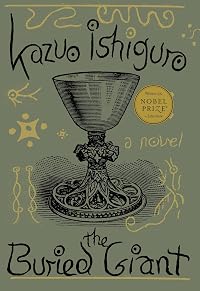
Kazuo Ishiguro was born in Nagasaki, Japan on November 8, 1954. In 1960, his family moved to England. He received a bachelor's degree in English and philosophy from the University of Kent in 1978 and a master's degree in creative writing from the University of East Anglia in 1980. He became a British citizen in 1982. His first novel, A Pale View show more of Hills, received the Winifred Holtby Award from the Royal Society of Literature. His second novel, An Artist of the Floating World, received the Whitbread Book of the Year Award in 1986. His third novel, The Remains of the Day, received the Man Booker Prize for Fiction in 1989 and was adapted into a film starring Anthony Hopkins and Emma Thompson. His other works include The Unconsoled, When We Were Orphans, Never Let Me Go, Nocturnes: Five Stories of Music and Nightfall, and The Buried Giant. He was awarded the OBE in 1995 for services to literature and the Chevalier de l'Ordre des Arts et des Lettres by the French government in 1998. He received the 2017 Nobel Prize in Literature. He has also written several songs for jazz singer Stacey Kent and screenplays for both film and television. (Bowker Author Biography) show less
Some Editions
Awards and Honors
Awards
Distinctions
Notable Lists
Series
Belongs to Publisher Series
Work Relationships
Common Knowledge
- Canonical title
- Nocturnes: Five Stories of Music and Nightfall
- Original title
- Nocturnes : five stories of music and nightfall
- Original publication date
- 2009
- People/Characters
- Lindy Gardner; Tony Gardner; Eloise McCormack
- Important places
- Venice, Veneto, Italy; Beverly Hills, California, USA; Malvern Hills, Worcestershire, England, UK; London, England, UK
- Dedication
- For Deborah Rogers
- First words
- The morning I spotted Tony Gardner sitting among the tourists, spring was just arriving here in Venice.
- Last words
- (Click to show. Warning: May contain spoilers.)If he comes back to the square, and I'm not playing, I'll go over and have a word with him.
- Publisher's editor
- Cargill, Angus
- Blurbers
- Sexton, David
- Original language*
- englanti
- Canonical DDC/MDS
- 823.914; 823.92
- Canonical LCC
- PR6059.S5
*Some information comes from Common Knowledge in other languages. Click "Edit" for more information.
Classifications
Statistics
- Members
- 2,611
- Popularity
- 7,279
- Reviews
- 118
- Rating
- (3.57)
- Languages
- 22 — Arabic, Catalan, Chinese, Czech, Danish, Dutch, English, Estonian, Finnish, French, German, Greek, Hungarian, Italian, Japanese, Farsi/Persian, Polish, Russian, Spanish, Swedish, Turkish, Portuguese (Portugal)
- Media
- Paper, Audiobook, Ebook
- ISBNs
- 71
- ASINs
- 15