
The Midwich Cuckoos
by John Wyndham
On This Page
Description
In the sleepy English village of Midwich, a mysterious silver object appears and all the inhabitants fall unconscious. A day later the object is gone and everyone awakens unharmed - except that all the women in the village are discovered to be pregnant. The resultant children of Midwich do not belong to their parents: all are blonde, all are golden eyed. They grow up too fast and their minds exhibit frightening abilities that give them control over others and brings them into conflict with show more the villagers, just as a chilling realisation dawns on the world outside ...The Midwich Cuckoos is the classic tale of aliens in our midst, exploring how we respond when confronted by those who are innately superior to us in every conceivable way. show lessTags
Recommendations

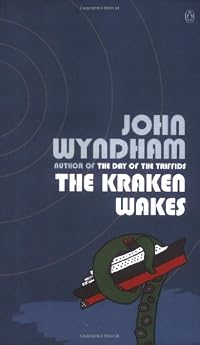

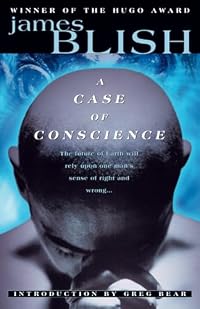


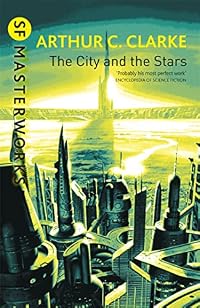


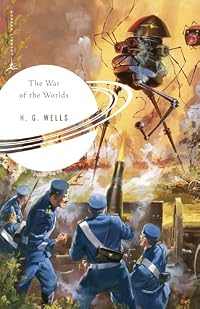
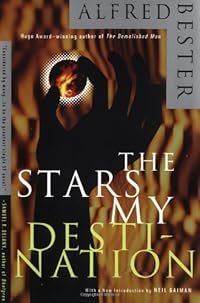


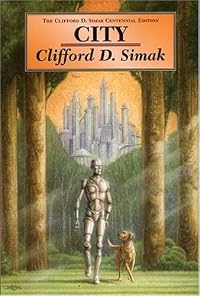
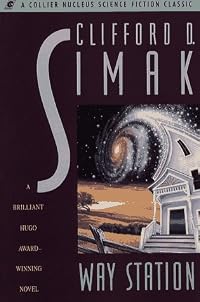
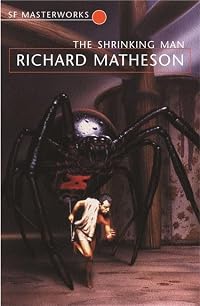





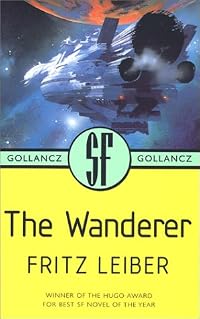
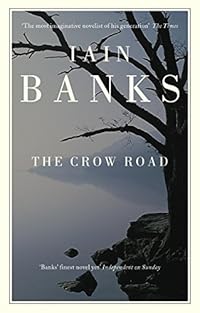


Member Recommendations
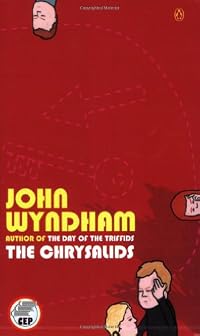
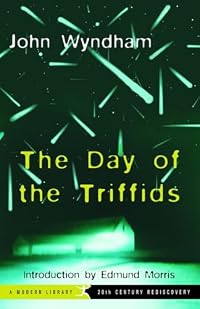
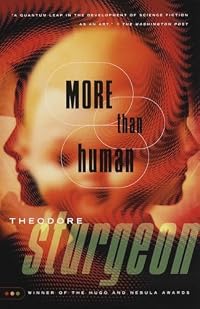
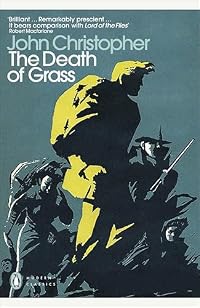
SomeGuyInVirginia Each book compliments the other, describing the same fundamental theme from two points of view. I enjoyed the Midwich Cuckoos more.
60

SnootyBaronet Teddy boys

Member Reviews
(I have 2 different copies of this book as I am unable to resist buying more John Wyndham editions whenever i come across them)
I re-read this in June 2022 after starting to watch the new TV series while I was stuck home with Covid. I realised I couldn't remember much detail of the book as it had been ages since I had read it. This started a mini Wyndham phase. Shortly after there was a Backlisted episode covering it too, so it certainly felt like something was in the air about Cuckoos.
It's a really great book, as ever with John Wyndham he sets up a weird situation and then examines how people react to it. There is interesting gender politics and proto-feminism here, oblique mentions of abortion and a lesbian relationship, both of show more which were illegal when it was written I think. The cuckoos are creepy and unsettling and the ending is blunt. show less
I re-read this in June 2022 after starting to watch the new TV series while I was stuck home with Covid. I realised I couldn't remember much detail of the book as it had been ages since I had read it. This started a mini Wyndham phase. Shortly after there was a Backlisted episode covering it too, so it certainly felt like something was in the air about Cuckoos.
It's a really great book, as ever with John Wyndham he sets up a weird situation and then examines how people react to it. There is interesting gender politics and proto-feminism here, oblique mentions of abortion and a lesbian relationship, both of show more which were illegal when it was written I think. The cuckoos are creepy and unsettling and the ending is blunt. show less
“Knowledge is simply a kind of fuel; it needs the motor of understanding to convert it into power.”
Perhaps not one of Wyndham's best known novels and on the face of it this is a fairly straight forward and cosy SF thriller however, read it more carefully and you will realise that it is much more than this.
The village of Midwich is shut off from the outside world and put to sleep for 24 hours. Some weeks later all the women of childbearing age find that they are pregnant, and give birth to golden-eyed children who look remarkably alike and seem to have telepathic powers which they use to coerce initially their mothers than later the villagers as a whole. The narrator, Richard Gayford, is clear that the children are a simple threat show more not just to the village but also the whole of humanity and must be destroyed, yet he is a fallible narrator who seems quite unaware as to what is going on under his very nose.
By reading purely what is written on the page the novel appears to be a about a struggle between aliens and humans – but delve a little deeper it becomes apparent it's actually about a struggle between men and women. There is pregnancy, abortion, childbirth and motherhood, and whilst the children may have alien fathers they also have human mothers,a point the narrator seems to totally disregard. In fact the women's' opinions go largely unheard. The ending, an act of genocide, only underlines this point.
This novel would no doubt be regarded nowadays as being at the softer end of the SF genre yet still goes on to ask some pretty profound questions about the limits of our culture and perhaps what it means to be truly human, all of which is achieved with subtle irony and ambiguity. This book deserves to be on the 1001 list and also deserves to be read more widely. show less
Perhaps not one of Wyndham's best known novels and on the face of it this is a fairly straight forward and cosy SF thriller however, read it more carefully and you will realise that it is much more than this.
The village of Midwich is shut off from the outside world and put to sleep for 24 hours. Some weeks later all the women of childbearing age find that they are pregnant, and give birth to golden-eyed children who look remarkably alike and seem to have telepathic powers which they use to coerce initially their mothers than later the villagers as a whole. The narrator, Richard Gayford, is clear that the children are a simple threat show more not just to the village but also the whole of humanity and must be destroyed, yet he is a fallible narrator who seems quite unaware as to what is going on under his very nose.
By reading purely what is written on the page the novel appears to be a about a struggle between aliens and humans – but delve a little deeper it becomes apparent it's actually about a struggle between men and women. There is pregnancy, abortion, childbirth and motherhood, and whilst the children may have alien fathers they also have human mothers,a point the narrator seems to totally disregard. In fact the women's' opinions go largely unheard. The ending, an act of genocide, only underlines this point.
This novel would no doubt be regarded nowadays as being at the softer end of the SF genre yet still goes on to ask some pretty profound questions about the limits of our culture and perhaps what it means to be truly human, all of which is achieved with subtle irony and ambiguity. This book deserves to be on the 1001 list and also deserves to be read more widely. show less
Cuckoos in the nest. In the nest of humanity.
Cuckoos that are intelligent but without empathy, upsetting all human Mid-wichian ways. What to do? What to do with the cold dangerous opportunism, when you see yourself as emphatic, as bound by laws religious and non-religious to show compassion?
Most of the book is spent on showing us that we do not recognize the cuckoos in the humanitarian nest: We cannot believe they are all that bad: "I know when I was a child there were injustices which positively made me burn inside. If i had had the strength to do what I wanted to do it would have been dreadful, really dreadful, I assure you", says one of the village sweet old ladies when the cuckoo killed the first time, not grasping anything but the show more child-like innocent superficial look of the cuckoo. Or we see, but cannot do anything with what we see because: "Your more liberal, responsibly minded and religious people will be greatly troubled over the ethical position. Opposed to any form of drastic action at all, you will have your true idealist - and also your sham idealist: the quite large number of people who profess ideals as a premium for other-life-insurance, and are content to lay up slavery and destitution for their descendants so long as they are enabled to produce personal copybooks of elevated views at the gate of heaven", as put by the book´s invading Cuckoos themselves.
The book raises a difficult question: How do we defend humanity against opportunism? What to do with non-compassionate when humanity as a system is built on empathy?
Do we need to answer the question? Are there any life-threatening anti-humanitarian opportunism unfolding itself amongst us half-blind believing-ourselves-to-be-quite-emphatic mid-everything-beings? Who gains from the production of weapons? The inequality of the distribution of wealth? CO2 quotas? The ice melting? Will it enslave our children and children´s children to turn a blind eye towards it? Where does the opportunists´ opportunity come from? Has the mid-majority´s blindness, idealism - and sham idealism (which of course is opportunism in itself) anything to do with it? Lack of courage? Laziness? Selfishness?
By choosing aliens as cuckoos the questions asked is not bound in time or space, but more important, having aliens as cuckoos underline Wyndham´s point: few of us recognize the opportunism in ourselves, it is quite alien. The one that in fact acts in the end, is a philosopher; We cannot do anything with our anti-humanitarian ways until we know ourselves. show less
Cuckoos that are intelligent but without empathy, upsetting all human Mid-wichian ways. What to do? What to do with the cold dangerous opportunism, when you see yourself as emphatic, as bound by laws religious and non-religious to show compassion?
Most of the book is spent on showing us that we do not recognize the cuckoos in the humanitarian nest: We cannot believe they are all that bad: "I know when I was a child there were injustices which positively made me burn inside. If i had had the strength to do what I wanted to do it would have been dreadful, really dreadful, I assure you", says one of the village sweet old ladies when the cuckoo killed the first time, not grasping anything but the show more child-like innocent superficial look of the cuckoo. Or we see, but cannot do anything with what we see because: "Your more liberal, responsibly minded and religious people will be greatly troubled over the ethical position. Opposed to any form of drastic action at all, you will have your true idealist - and also your sham idealist: the quite large number of people who profess ideals as a premium for other-life-insurance, and are content to lay up slavery and destitution for their descendants so long as they are enabled to produce personal copybooks of elevated views at the gate of heaven", as put by the book´s invading Cuckoos themselves.
The book raises a difficult question: How do we defend humanity against opportunism? What to do with non-compassionate when humanity as a system is built on empathy?
Do we need to answer the question? Are there any life-threatening anti-humanitarian opportunism unfolding itself amongst us half-blind believing-ourselves-to-be-quite-emphatic mid-everything-beings? Who gains from the production of weapons? The inequality of the distribution of wealth? CO2 quotas? The ice melting? Will it enslave our children and children´s children to turn a blind eye towards it? Where does the opportunists´ opportunity come from? Has the mid-majority´s blindness, idealism - and sham idealism (which of course is opportunism in itself) anything to do with it? Lack of courage? Laziness? Selfishness?
By choosing aliens as cuckoos the questions asked is not bound in time or space, but more important, having aliens as cuckoos underline Wyndham´s point: few of us recognize the opportunism in ourselves, it is quite alien. The one that in fact acts in the end, is a philosopher; We cannot do anything with our anti-humanitarian ways until we know ourselves. show less
I am not a sci-fi fan, but when I saw this was on the 1001 list, I thought I'd give it ago.
The first person narrative really pulls you in from the first page, a recent arrival, with his wife, Janet, in the sleepy village of Midwich. On the evening of the 27 September, the village suffers a "dayout", with everyone within a certain distance, as well as animals, falling into unconsciousness. Not long after, all women of a child-bearing age find themselves pregnant, causing panic, especially with the unmarried women. When the children are born, they are strange, all from the same pod with yellow eyes and strange skin.
Not wanting to give to much away, yes this is a sci-fi book of the enemy, or should I say the alien, within, but it also show more brings to light other issues. One is that as they are clearly not human, can the Children be bound by our moral code? This is an issue, which comes up when the Children feel threatened and act out aggressively in defence. Another is a look at how a village copes with a bomb delivered by the stork, marriages tested, especially when we see the book was written in 1957. One observation which made me giggle was that according to one of the characters, the Brits and the Americans react differently to the idea of an alien invasion, the former with sceptism and the latter running for the coast!
Although it is clear that the book was written in the '50s from the language and the snapshot of post-war British life, it is still a good book to read now. I suppose the accurate depictions of the village and the characters give it a reality that makes me, as a non-sci-fi fan, really enjoy it. show less
The first person narrative really pulls you in from the first page, a recent arrival, with his wife, Janet, in the sleepy village of Midwich. On the evening of the 27 September, the village suffers a "dayout", with everyone within a certain distance, as well as animals, falling into unconsciousness. Not long after, all women of a child-bearing age find themselves pregnant, causing panic, especially with the unmarried women. When the children are born, they are strange, all from the same pod with yellow eyes and strange skin.
Not wanting to give to much away, yes this is a sci-fi book of the enemy, or should I say the alien, within, but it also show more brings to light other issues. One is that as they are clearly not human, can the Children be bound by our moral code? This is an issue, which comes up when the Children feel threatened and act out aggressively in defence. Another is a look at how a village copes with a bomb delivered by the stork, marriages tested, especially when we see the book was written in 1957. One observation which made me giggle was that according to one of the characters, the Brits and the Americans react differently to the idea of an alien invasion, the former with sceptism and the latter running for the coast!
Although it is clear that the book was written in the '50s from the language and the snapshot of post-war British life, it is still a good book to read now. I suppose the accurate depictions of the village and the characters give it a reality that makes me, as a non-sci-fi fan, really enjoy it. show less
My fourth John Wyndham has been somewhat of a second chance for an author I respect, but previously have barely enjoyed. Midwich Cuckoos' strength is in its quaint, grounded Britishness and understated horror, but it has also solidified my opinion that Wyndham had the remarkable ability to take an excellent premise and make it as dull as possible.
What makes it even more British is that it’s like being on a train journey which starts off at pace then slows down towards the next station and stops just outside as you wait for the interminable signal change, before slowly crawling up to the platform to let you off.
What makes it even more British is that it’s like being on a train journey which starts off at pace then slows down towards the next station and stops just outside as you wait for the interminable signal change, before slowly crawling up to the platform to let you off.
A spaceship lands at Midwich, England for a day and in few weeks all the women of childbearing age discover they're pregnant. The children are born within days of each other and soon enough it is clear, that they're not entirely human and have supernatural mental capacities.
As the story is told by a man, who was not there for the ship landing and left the village shortly after the children's first birthdays, we do not know what have happened there for the 8 years the narrator was absent. But he's back for the grand finale and all the related discussions.
The book is very well written in terms of the plot development, the characters and the language. The way author looks at the women in the described situation is refreshingly modern and show more points out all the blind spots of any patriarchal society. It also sheds a critical light on any governmental strategy during the Cold war and inadvertently poses a question of what kind of people are we if any first contact with extraterrestrial civilization is described as a way to a conflict. show less
As the story is told by a man, who was not there for the ship landing and left the village shortly after the children's first birthdays, we do not know what have happened there for the 8 years the narrator was absent. But he's back for the grand finale and all the related discussions.
The book is very well written in terms of the plot development, the characters and the language. The way author looks at the women in the described situation is refreshingly modern and show more points out all the blind spots of any patriarchal society. It also sheds a critical light on any governmental strategy during the Cold war and inadvertently poses a question of what kind of people are we if any first contact with extraterrestrial civilization is described as a way to a conflict. show less
An intelligent and thought provoking slice of 1950s Cold War-influenced British science fiction. I enjoyed the bourgeoise village life evoked by John Wyndham. That said the book does also show its age: not only are the female characters all underdeveloped, they are generally too distracted, and/or besotted by the Children (the Cuckoos of the book's title), to contribute anything meaningful to the more weighty discussions of the male characters.
It is actually the discussions, and there are plenty of them (perhaps too many?), that are what make the book interesting. The village's resident philosopher, Zallaby, spends pages pontificating about the moral implications of the Children. These discourses embrace evolution, politics, show more anthropology, power and authority, and philosophy. Some of these discussions are a bit overcooked and I felt the story could probably have been told in about half the total word count.
The ending, which is signposted a good few pages before the last page, is too neat, and I would have preferred a more ambiguous conclusion. One where the reader is left to consider the implications of the Children reaching maturity and what that might mean for the human race. Instead we end the book very much as we start it with Midwich being, quite possibly, the most boring and uneventful place in the UK. Still, there is much to enjoy, and plenty of food for thought in this sci fi classic. show less
It is actually the discussions, and there are plenty of them (perhaps too many?), that are what make the book interesting. The village's resident philosopher, Zallaby, spends pages pontificating about the moral implications of the Children. These discourses embrace evolution, politics, show more anthropology, power and authority, and philosophy. Some of these discussions are a bit overcooked and I felt the story could probably have been told in about half the total word count.
The ending, which is signposted a good few pages before the last page, is too neat, and I would have preferred a more ambiguous conclusion. One where the reader is left to consider the implications of the Children reaching maturity and what that might mean for the human race. Instead we end the book very much as we start it with Midwich being, quite possibly, the most boring and uneventful place in the UK. Still, there is much to enjoy, and plenty of food for thought in this sci fi classic. show less
Members
- Recently Added By
Lists

The Guardian's 1000 Novels Everyone Must Read
1,005 works; 546 members

1001 Books You Must Read Before You Die
1,448 works; 1,132 members

Best Science Fiction Novels
816 works; 426 members

Read the book and saw the movie
1,170 works; 192 members

S.F. Masterworks (Complete)
229 works; 15 members

Recommend the 20 best books you've read in the last five years
2,167 works; 606 members

David Pringle's Science Fiction: The 100 Best Novels
101 works; 9 members

SF Masterworks
193 works; 8 members

The 5 Parsec Shelf
50 works; 7 members

Reader's Digest 50 Best Horror Books to Read
50 works; 3 members

Jean's Sci Fi/Fantasy Reading list
189 works; 12 members

Jones and Newman's Horror: Another 100 Best Books
100 works; 7 members

To Read - Horror
137 works; 14 members

75 Books Challenge 2015 Halloween Read long list
45 works; 4 members

Best Horror Mega-List
342 works; 6 members

Books Tagged Clones
14 works; 6 members

Speculative Fiction: The Classics
36 works; 5 members
1950s
340 works; 22 members

Books Read in 2023
5,547 works; 145 members

To Read
29 works; 2 members

Nightmares Not Included
175 works; 3 members

Books Set in Small Towns and Villages
278 works; 16 members

Books Read in 2017
4,248 works; 130 members

Books Read in 2020
4,379 works; 124 members

1,001 BYMRBYD Concensus
723 works; 27 members
Horror Reading: Creepy Kids
9 works; 3 members
Animals in the Title
498 works; 11 members
Folio Society
831 works; 48 members

Books Read in 2014
2,341 works; 89 members

Dishonourable Mentions of 2013
189 works; 62 members

BlackDog's Complete Paperbacks From Hell List
639 works; 3 members
Talk Discussions
Past Discussions
The Midwich Cuckoos in And we Recommend... (August 2011)
Author Information

Some Editions
Awards and Honors
Notable Lists
Series
Belongs to Publisher Series
Ursan scifi-sarja (12)
Urania [Mondadori] (200)
Présence du futur (28)
Orpheuse Raamatukogu (59)
SF Masterworks (New design)
Work Relationships
Is contained in
Has the (non-series) sequel
Has the adaptation
Is abridged in
Inspired
Has as a study
Has as a commentary on the text
Common Knowledge
- Canonical title*
- Le Village des damnés
- Original title
- The Midwich Cuckoos
- Alternate titles
- Village of The Damned
- Original publication date
- 1957
- People/Characters
- Gordon Zellaby; Richard Gayford; Bernard Wescott; Janet Gayford; Anthea Zellaby
- Important places
- Midwich, Winshire, England, UK; Winshire, England, UK; England, UK
- Related movies
- Village of the Damned (1960 | IMDb); Children of the Damned (1964 | IMDb); Village of the Damned (1995 | IMDb)
- First words
- One of the luckiest accidents in my wife's life is that she happened to marry a man who was born on the 26th of September.
- Last words
- (Click to show. Warning: May contain spoilers.)"If you want to keep alive in the jungle, you must live as the jungle does ..."
- Original language
- English
- Canonical DDC/MDS
- 823.08762
*Some information comes from Common Knowledge in other languages. Click "Edit" for more information.
Classifications
- Genres
- Science Fiction, Fiction and Literature, Horror
- DDC/MDS
- 823.08762 — Literature & rhetoric English & Old English literatures English fiction By type Genre fiction Adventure fiction Speculative fiction Science fiction
- LCC
- PZ3 .H2422 .M — Language and Literature Fiction and juvenile belles lettres Fiction and juvenile belles lettres Fiction in English
- BISAC
Statistics
- Members
- 3,365
- Popularity
- 4,975
- Reviews
- 100
- Rating
- (3.82)
- Languages
- 11 — Czech, Dutch, English, Finnish, French, German, Hungarian, Italian, Polish, Russian, Spanish
- Media
- Paper, Audiobook, Ebook
- ISBNs
- 55
- ASINs
- 60