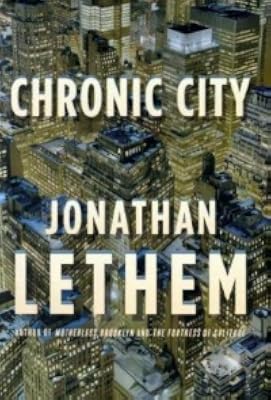
Chronic City
by Jonathan Lethem
On This Page
Description
A New York Times Book Review Best Book of the Year.A searing and wildly entertaining love letter to New York City from the bestselling author of Motherless Brooklyn and Fortress of Solitude.
Chase Insteadman, former child television star, has a new role in life—permanent guest on the Upper East Side dinner party circuit, where he is consigned to talk about his astronaut fiancée, Janice Trumbull, who is trapped on a circling Space Station. A chance encounter collides Chase with show more Perkus Tooth, a wily pop culture guru with a vicious conspiratorial streak and the best marijuana in town. Despite their disparate backgrounds and trajectories Chase and Perkus discover they have a lot in common, including a cast of friends from all walks of life in Manhattan. Together and separately they attempt to define the indefinable, and enter into a quest for the most elusive of things: truth and authenticity in a...
. show less
Tags
Recommendations
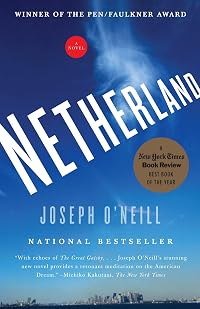
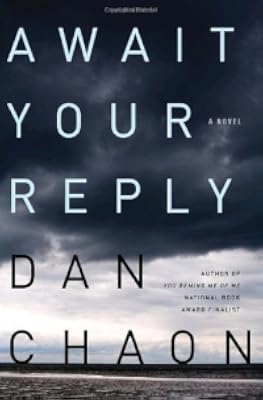
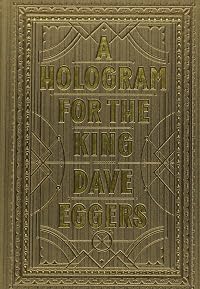
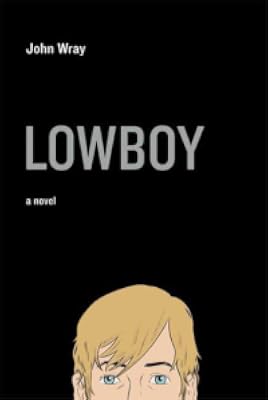

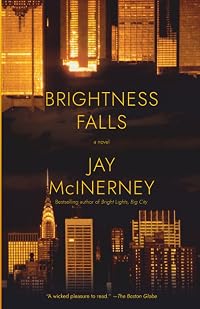
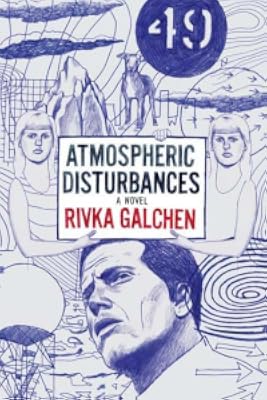
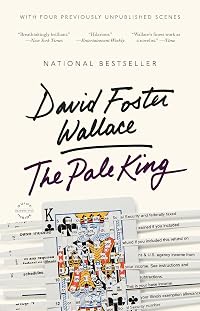
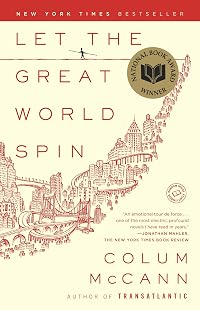




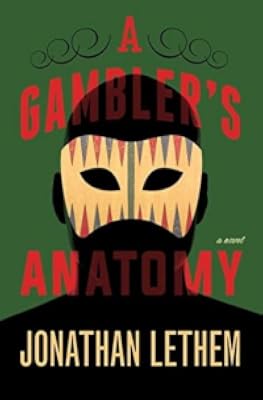
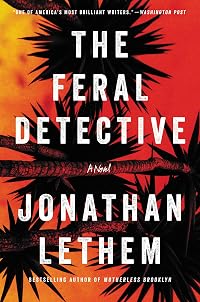
Member Recommendations
Member Reviews
Probably the ultimate dystopian novel is one in which neither the characters nor the readers realize that they are in a dystopia -- at least, not until the end. This is what Jonathan Lethem has done in Chronic City.
The novel is set in a New York City that's almost, but not quite, our New York City (more on that later). The narrator, Chase Insteadman, is a former child actor whose current occupation is tragic fiance to a heroic astronaut stranded on the space station by Chinese low-orbit mines. Chase is also a useful decoration at the dinner parties of the super-rich. He is not, however, a particularly ambitious or thoughtful person. He is most like an empty vase, waiting to be filled (vases figure prominently in Chronic City, by the show more way).
Then he meets Perkus Tooth. Perkus is a character we should recognize instantly. He exists at the fringes of society, set apart by his squalid apartment and weird vintage clothing, subsisting on a diet of coffee, pot and cheeseburgers. His brain is stuffed with obscure facts about pop culture, which he obsessively spins into a complicated conspiracy theory suggesting that all of reality may be manufactured. He pours his theories into Chase, who absorbs them raptly, although he doesn't fully grasp them.
But there is something decidedly off about the alternate universe that these characters inhabit, not the least of which is that Muppets are called Gnuppets there. In Chase and Perkus's New York, the Twin Towers still stand but are permanently enshrouded in gray fog. A tiger -- whether real or mechanical or both is unclear -- randomly destroys buildings around Manhattan. Yawning chasms decorate downtown as abstract art, while also providing a convenient location for suicides. Sometimes the aroma of chocolate hangs over the city for days.
When the tiger demolishes Perkus's favorite cheeseburger restaurant, reality begins to rapidly unravel, calling into question everything we have been told so far as readers. Indeed, Lethem seems to be challenging us to take a close look at our own personal realities. Everything we see on the news, all the stories we tell ourselves -- couldn't they merely be comfortable fantasies that prevent us from seeing how fragile everything really is? Delusions we created to protect ourselves from looking down into the chasms in our own world? But as Perkus points out, before you tell a friend that he is living an illusion, you have to ask yourself whether the illusion makes him happier than knowing the truth would. show less
The novel is set in a New York City that's almost, but not quite, our New York City (more on that later). The narrator, Chase Insteadman, is a former child actor whose current occupation is tragic fiance to a heroic astronaut stranded on the space station by Chinese low-orbit mines. Chase is also a useful decoration at the dinner parties of the super-rich. He is not, however, a particularly ambitious or thoughtful person. He is most like an empty vase, waiting to be filled (vases figure prominently in Chronic City, by the show more way).
Then he meets Perkus Tooth. Perkus is a character we should recognize instantly. He exists at the fringes of society, set apart by his squalid apartment and weird vintage clothing, subsisting on a diet of coffee, pot and cheeseburgers. His brain is stuffed with obscure facts about pop culture, which he obsessively spins into a complicated conspiracy theory suggesting that all of reality may be manufactured. He pours his theories into Chase, who absorbs them raptly, although he doesn't fully grasp them.
But there is something decidedly off about the alternate universe that these characters inhabit, not the least of which is that Muppets are called Gnuppets there. In Chase and Perkus's New York, the Twin Towers still stand but are permanently enshrouded in gray fog. A tiger -- whether real or mechanical or both is unclear -- randomly destroys buildings around Manhattan. Yawning chasms decorate downtown as abstract art, while also providing a convenient location for suicides. Sometimes the aroma of chocolate hangs over the city for days.
When the tiger demolishes Perkus's favorite cheeseburger restaurant, reality begins to rapidly unravel, calling into question everything we have been told so far as readers. Indeed, Lethem seems to be challenging us to take a close look at our own personal realities. Everything we see on the news, all the stories we tell ourselves -- couldn't they merely be comfortable fantasies that prevent us from seeing how fragile everything really is? Delusions we created to protect ourselves from looking down into the chasms in our own world? But as Perkus points out, before you tell a friend that he is living an illusion, you have to ask yourself whether the illusion makes him happier than knowing the truth would. show less
This book came very highly recommended by two trusted reader friends and was my first excursion with Lethem. I suspected I would find it a bit...predictably corny? Also suspected it would neatly fit within the realm of a certain Literati boys' club. Then I started reading and was absolutely blown away by the writing! I mean, really enviable, marvelous writing. From that aspect, I could read Lethem all day. However, as the book went on, I found it increasingly difficult to return to reading it. I was even actively procrastinating it. It did fit in that boys' club. The references to DFW were a bit annoying. The Pynchonian nomenclature was a lot annoying. The plot was absent for much of the book. I don't really enjoy spending that much show more time with two entitled, adult characters who don't have to work and instead get high and endlessly indulge themselves. It was, quite frankly, DULL. I carried on for one reason only: when the book annoyed me and bored me to tears, the writing was still so masterful I could simply focus at the sentence level and find some enjoyment. An odd combination for me: great writing + trite, boring book = 2 stars. I will possibly try him again, but only if the next one I try is MUCH shorter so I don't risk so much time. show less
I think I am not a rare breed of reader. In many ways I think I read to assuage the disappointment of not having what takes to write. I read as an act of erasure, as though by eliminating all the books I like that have already been written I could stumble upon the outline of the one that's missing because I ought to have written it. In Lethem's Chronic City I felt like I he'd done what I once contemplated as a way to go about writing a novel: make a list of more or less random details you want to talk about (a tiger loose in NYC, a stranded space station, virtual worlds, non-profits providing furnished apartments for dogs, war-free editions of the newspaper, chocolate-scented smog) and then filling in a plot around them. I'm less show more interested in talking about how well accomplished that task than in mentioning a piece of reader's serendipity that occurred around my reading this book, mostly because I can't find part of it confirmed anywhere. I like to have multiple books going at once, both for the variety and because you end up accidentally encountering cool parallels. In the summers I like to set myself the task of reading 1 short story a day. While reading Chronic City I therefore happened to be also alternating between Kafka and Poe tales (which themselves pair very nicely). The first alignment with the novel was blatant. I had just read Kafka's Investigations of a Dog when Lethem's character Perkus Tooth began quoting from the story! Improbable enough, but the next one was crazier, if murkier. It has to do with the book's Bloomberg-stand-in Jules Arnheim. Poe has a short piece entitled the Domain of Arnheim about a wealthy man who expends his wealth on landscape gardening to create elaborate artificial landscapes. That parallel (for those who have read Chronic City already) can't be a coincidence, right? I googled the heck out of the terms Poe, Lethem, Arnheim, Chronic City and Domain but got nothing. In a scathing review of the book I even read a comment that Lethem's character's "names sound like riddles, which at first makes you think and, later, when you realize none of this is going anywhere, roll your eyes." This one name at least does seem to mean something, the key just happened to be hidden in one of a 209-year-old author's most obscure short stories. Weird. Also, I met Lethem once before I'd ever heard of him. Turns out he lived in my dorm room at my college before he dropped out, and he came to relive old times. I remember standing there awkwardly because I could tell I was supposed to know who he was. show less
I read this slowly, but not because it's a slow book. It is stimulatingly strange, full of blistering funny details, and has a dark core of philosophical melancholy. I savored it. And I've thought back on what a unique alternate Manhattan Lethem created in this book, simultaneously a kooky near future and somehow an accurately pop-culture-and-celebrity-encrusted 90's. Great satire, like black gold. File with: The Loved One, Cuckoo's Nest, Being There, Catch-22, White Noise, Cat's Cradle, V, Barthelme & George Saunders' stories.
This book deserves another high 4 stars...as in more like 4 1/2 stars. I liked it just as much as I liked Lethem's Fortress of Solitude though there are many differences between the two (I do need to go back and re-read the former, though, as it has been about 6 or 7 years since I read it)
In any case, this novel is also another example of experimental fiction done well. When it works, it's a fascinating adventure. When it doesn't work, it's a hot mess that sounds sort of pseudo-intellectual and missing the point. This skates the line nicely, threatening to dissolve in points yet still managing to hold everything together.
One thing that is wonderful about the novel, besides all the postmodern situations of a tiger on the loose in NYC, a show more child actor grown up who is supposed to be in love with a Cancer ridden astronaut, Gnuppet movies, terminal hiccups, a rich shelter for homeless dogs, urban fjords, Marlon Brando death conspiracies, simulated worlds, and the many chauldrons that appear in Drs photographs and on EBAY is the characters themselves. Lethem really has a knack for the quirky who are struggling to manage in this post-modern world where anything can and does happen. There's both a really nice contrast between all of the characters who are distinctive and refreshing and a sense of likability to many of them, which makes it seem essential to keep reading in order to figure out where they all end up. Lethem succeeds with this one and it comes well recommended. This book is a little bit grueling in parts but it's a gruel you'll enjoy swallowing bite after bite. NYC is indeed a Chronic City and its disease is definitely terminal.
I will re-read this book a few times before I die hopefully, unless I visit NYC and am precariously eaten by a tiger.
Memorable quotes:
pg. 196 "Enduring a flu alone in an apartment has always included a certain psychedelic aspect, it seems to me."
pg. 266 "Perkus had Kafka for his veterinarian, Serling for his meteorologist "
pg. 370 "I mix metaphors so I know I'm alive."
pg. 372 "In his dog's haircut, lips softened by drink, he looked more and more the bit player from One Flew Over the Cuckoo's Nest."
pg. 388-389 "All memories are replacements...Each memory is only a photocopy of the previous rather than referring back to some stored 'original.' We trash the original, like some theatrical troupe that always tears up its script and bases their performances on a transcript of the night before, complete with mistakes and improvs, then destroys that script too, and so on. We have no sugar mountain to journey backward toward, Chase! Glance back and the mountain is gone. Better not to glance, and imagine you feel its weight at your back. All we've got is our working draft, no more final than the last, just as ready to be discarded. Memory is rehearsal for a show that never goes on."
pg. 399 "Perkus, kidnapped by his own theories, had then suffered Stockholm syndrome, in which one preferred a jailer to oneself."
"Everything stood for itself. Perkus hiccuped violently to rupture the silence and an exclamation mark of drool decorated his chin."
pg. 401 "I didn't want to think about the snow, though in our cab we were surrounded at all sides by a theater of white chaos. The snow seemed to be thinking about us."
pg. 436 "Now, too vain not to use this mirror to judge the results, I couldn't locate the disenchanted and fearsome character I wanted to believe the night had made me.
It wa my curse to look unruined in my ruins. If the bereaved had no language for speaking to the unbereaved, my own bereavement had no language for making itself known on the outside of me."
pg. 440 "By the time I crossed Park and Madison, retracing the tiger's park-ward pilgrimage of the night before, the city had accustomed itself, struggled to a half life, snow dredged right and left, most parked cars only sculpture.
...
The great building housing the art museum was an island city itself, or a virtual universe or space module, operating according to its own necessities, perhaps with its own mayor and it wasn't hard to picture it plunging onward unchanged through the surrounding city might be in ruins, as Perkus Tooth had imagined New Jersey or Staten Island already to be. show less
In any case, this novel is also another example of experimental fiction done well. When it works, it's a fascinating adventure. When it doesn't work, it's a hot mess that sounds sort of pseudo-intellectual and missing the point. This skates the line nicely, threatening to dissolve in points yet still managing to hold everything together.
One thing that is wonderful about the novel, besides all the postmodern situations of a tiger on the loose in NYC, a show more child actor grown up who is supposed to be in love with a Cancer ridden astronaut, Gnuppet movies, terminal hiccups, a rich shelter for homeless dogs, urban fjords, Marlon Brando death conspiracies, simulated worlds, and the many chauldrons that appear in Drs photographs and on EBAY is the characters themselves. Lethem really has a knack for the quirky who are struggling to manage in this post-modern world where anything can and does happen. There's both a really nice contrast between all of the characters who are distinctive and refreshing and a sense of likability to many of them, which makes it seem essential to keep reading in order to figure out where they all end up. Lethem succeeds with this one and it comes well recommended. This book is a little bit grueling in parts but it's a gruel you'll enjoy swallowing bite after bite. NYC is indeed a Chronic City and its disease is definitely terminal.
I will re-read this book a few times before I die hopefully, unless I visit NYC and am precariously eaten by a tiger.
Memorable quotes:
pg. 196 "Enduring a flu alone in an apartment has always included a certain psychedelic aspect, it seems to me."
pg. 266 "Perkus had Kafka for his veterinarian, Serling for his meteorologist "
pg. 370 "I mix metaphors so I know I'm alive."
pg. 372 "In his dog's haircut, lips softened by drink, he looked more and more the bit player from One Flew Over the Cuckoo's Nest."
pg. 388-389 "All memories are replacements...Each memory is only a photocopy of the previous rather than referring back to some stored 'original.' We trash the original, like some theatrical troupe that always tears up its script and bases their performances on a transcript of the night before, complete with mistakes and improvs, then destroys that script too, and so on. We have no sugar mountain to journey backward toward, Chase! Glance back and the mountain is gone. Better not to glance, and imagine you feel its weight at your back. All we've got is our working draft, no more final than the last, just as ready to be discarded. Memory is rehearsal for a show that never goes on."
pg. 399 "Perkus, kidnapped by his own theories, had then suffered Stockholm syndrome, in which one preferred a jailer to oneself."
"Everything stood for itself. Perkus hiccuped violently to rupture the silence and an exclamation mark of drool decorated his chin."
pg. 401 "I didn't want to think about the snow, though in our cab we were surrounded at all sides by a theater of white chaos. The snow seemed to be thinking about us."
pg. 436 "Now, too vain not to use this mirror to judge the results, I couldn't locate the disenchanted and fearsome character I wanted to believe the night had made me.
It wa my curse to look unruined in my ruins. If the bereaved had no language for speaking to the unbereaved, my own bereavement had no language for making itself known on the outside of me."
pg. 440 "By the time I crossed Park and Madison, retracing the tiger's park-ward pilgrimage of the night before, the city had accustomed itself, struggled to a half life, snow dredged right and left, most parked cars only sculpture.
...
The great building housing the art museum was an island city itself, or a virtual universe or space module, operating according to its own necessities, perhaps with its own mayor and it wasn't hard to picture it plunging onward unchanged through the surrounding city might be in ruins, as Perkus Tooth had imagined New Jersey or Staten Island already to be. show less
I read this slowly, but not because it's a slow book. It is stimulatingly strange, full of blistering funny details, and has a dark core of philosophical melancholy. I savored it. And I've thought back on what a unique alternate Manhattan Lethem created in this book, simultaneously a kooky near future and somehow an accurately pop-culture-and-celebrity-encrusted 90's. Great satire, like black gold. File with: The Loved One, Cuckoo's Nest, Being There, Catch-22, White Noise, Cat's Cradle, V, Barthelme & George Saunders' stories.
A Sardonic Look into the Wasted Lives of Manhattanites--According to Lethem:
To read Chronic City, one might as well say that Manhattanites are clueless, pot-smoking, wool-over-the-eyes patrons of Nihilism. And according to Lethem, you'd be correct. So the question becomes not what is this book about, but instead, why did Lethem take the time to write such a meandering sprawl that lays waste to one of the best cities in the world?
Lethem rips on writers, agents, marketers, rock critics, movie critics, book critics, critic-critics, ghost writers, pot smokers, the New York Times, the New Yorker, architecture, animals, machinery, TV shows and actors (so I'll side with him on this one), endangered animals, hamburgers, The Lonely, the Smug, show more Manhattanites, ...hmmm...who did I leave out? There's more, but you get the picture.
What bitterness drove the writer to create a bloated, episodic work, that clearly lacks a plot as well as a heart? To Lethem, is this what our culture is? Episodic and metaphoric to authors who live in NY (and Maine)?
Where is the hope? (Not hope and change, just our humanist optimism?) Perkus Tooth, the 'metaphor' for the author and his friends, fails. Insteadman is purposeless, and at points, the author refers to him as Chase Unperson. In the end, Lethem leaves me feeling empty. I don't need to read to feel someone else's emptiness.
Time waster. But yes, Lethem does have some beautifully emotionlessly constructed sentences.
But why?
To write a sprawling Seinfeld episode for the literary is a colossus waste of time and life. show less
To read Chronic City, one might as well say that Manhattanites are clueless, pot-smoking, wool-over-the-eyes patrons of Nihilism. And according to Lethem, you'd be correct. So the question becomes not what is this book about, but instead, why did Lethem take the time to write such a meandering sprawl that lays waste to one of the best cities in the world?
Lethem rips on writers, agents, marketers, rock critics, movie critics, book critics, critic-critics, ghost writers, pot smokers, the New York Times, the New Yorker, architecture, animals, machinery, TV shows and actors (so I'll side with him on this one), endangered animals, hamburgers, The Lonely, the Smug, show more Manhattanites, ...hmmm...who did I leave out? There's more, but you get the picture.
What bitterness drove the writer to create a bloated, episodic work, that clearly lacks a plot as well as a heart? To Lethem, is this what our culture is? Episodic and metaphoric to authors who live in NY (and Maine)?
Where is the hope? (Not hope and change, just our humanist optimism?) Perkus Tooth, the 'metaphor' for the author and his friends, fails. Insteadman is purposeless, and at points, the author refers to him as Chase Unperson. In the end, Lethem leaves me feeling empty. I don't need to read to feel someone else's emptiness.
Time waster. But yes, Lethem does have some beautifully emotionlessly constructed sentences.
But why?
To write a sprawling Seinfeld episode for the literary is a colossus waste of time and life. show less
Members
- Recently Added By
Published Reviews
ThingScore 63
Lethem is able to summon all his PK Dick chops, to channel the media-nuts who circulate in literary scenes, to ask important, hard-to-articulate and impossible-to-answer questions about what is genuine, what is artifice, and when it matters.
added by lampbane
“The Fortress of Solitude” was a great novel, but also a chaotic sprawl — it addressed gentrification and race relations and comic books and disco and the prison system and more, on and endlessly on. “Chronic City” is more contained, less greedy in its grasp, and it is even better. It limits itself to a single big theme — but then, it’s the biggest there is: the pursuit of truth.
added by Shortride
Will Chase be forced to choose between Janice and Oona? Is the tiger rampaging through the city streets a real one or a mechanical contraption that’s part of a government plot? For that matter, are Chase, Oona and all the others playing out roles in a bigger performance-art-like game? Or maybe they’re really avatars in a variation on that old city-building simulation game, SimCity?
In the show more end the reader simply doesn’t care: these creatures inhabit neither a real flesh-and-blood Manhattan nor a persuasive fictional realm, and they’re so clearly plasticky puppets moved hither and thither by Mr. Lethem’s random whims that it’s of no concern to us what happens to them in this lame and unsatisfying novel. show less
In the show more end the reader simply doesn’t care: these creatures inhabit neither a real flesh-and-blood Manhattan nor a persuasive fictional realm, and they’re so clearly plasticky puppets moved hither and thither by Mr. Lethem’s random whims that it’s of no concern to us what happens to them in this lame and unsatisfying novel. show less
added by Shortride
Lists

Slipstream or Interstitial Fiction
160 works; 19 members

Books Set in New York City
127 works; 21 members

Indie Next Picks
196 works; 4 members

Strange Cities
30 works; 7 members

2015 UpROOTed
28 works; 1 member

Recommend the 20 best books you've read in the last five years
2,168 works; 606 members

Books Read in 2013
1,630 works; 51 members

2000s (the decade, not the century)
184 works; 11 members

Alternate Americas
15 works; 7 members

Simulated Reality in Fiction
124 works; 7 members

Books Read in 2010
631 works; 11 members

Top Five Books of 2023
767 works; 317 members

Best 21st Century Books (So Far)
670 works; 85 members
Author Information

100+ Works 24,666 Members
Jonathan Lethem was born in Brooklyn, New York on February 19, 1964. His first novel, Gun, with Occasional Music was published in 1994. His other works include As She Climbed across the Table (1997), Amnesia Moon (1995), The Fortress of Solitude (2003), You Don't Love Me Yet (2007), Chronic City (2009), and Dissident Gardens (2013). He won the show more National Book Critics Circle Award for Motherless Brooklyn (1999). He also writes short stories, comics and essays. His work has appeared in The New Yorker, Harper's, Rolling Stone, Esquire, The New York Times, The Paris Review, McSweeney's and other periodicals and anthologies. (Bowker Author Biography) show less
Some Editions
Awards and Honors
Awards
Distinctions
Notable Lists
Common Knowledge
- Original publication date
- 2009
- People/Characters
- Chase Insteadman; Perkus Tooth; Oona Laszlo; Richard Abneg; Georgina Hawkmanaji
- Important places
- Manhattan, New York, New York, USA; New York, New York, USA; New York, USA
- Dedication
- For Amy and Everett
- First words
- I first met Perkus Tooth in an office.
- Quotations
- So, was this how it happened? When you finally penetrated the highest chambers of power and gazed into corruption's face, was it neither beautiful nor terrifying, but merely -- Claire Carter's? Apparently so.
- Last words
- (Click to show. Warning: May contain spoilers.)I only hope it doesn't get any smaller.
- Blurbers
- Shteyngart, Gary; Shields, David
- Canonical DDC/MDS
- 813.54
- Canonical LCC
- PS3562.E8544
Classifications
Statistics
- Members
- 1,554
- Popularity
- 14,728
- Reviews
- 59
- Rating
- (3.48)
- Languages
- 7 — Danish, Dutch, English, French, German, Italian, Spanish
- Media
- Paper, Audiobook, Ebook
- ISBNs
- 23
- ASINs
- 13