On This Page
Description
The Anthologist is narrated by Paul Chowder-a once-in-a-while-published kind of poet who is writing the introduction to a new anthology of poetry. He's having a hard time getting started because his career is floundering; his girlfriend Roz has recently left him; and he is thinking about the great poets throughout history who have suffered far worse and deserve to feel sorry for themselves. He has also promised to reveal many wonderful secrets and tips and tricks about poetry, and it looks show more like the introduction will be a little longer than he'd thought.What unfolds is a wholly entertaining and beguiling love story about poetry: from Tennyson, Swinburne, and Yeats to the moderns (Roethke, Bogan, Merwin) to the staff of the New Yorker, what Paul reveals is astonishing and makes one realize how incredible important poetry is to our lives. At the same time, Paul barely manages to realize all of this himself, and the result is a tenderly romantic, hilarious, and inspired novel. show lessTags
Recommendations




Member Reviews
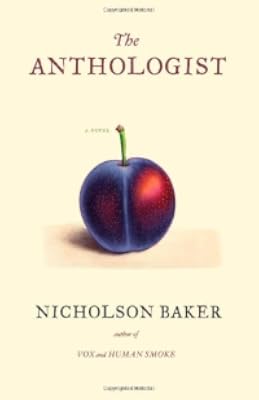
this book crept up on me. crept up on me and then hit me over the head. i didn't like it at first. i wondered at around chapter 6 or 7 if i oughtn't stick it in the "didn't finish" pile and move on. for some reason, though, i didn't. perhaps because i was almost halfway through and it seemed a waste to give up now. and that's when it got me. i suddenly found that i wasn't bored, but charmed. thoroughly charmed by paul chowder and his voice, which is a lot like my own voice in my head, except his knows a lot more about poetry. and mine is less fond of rhyme. this book is a love story and a love letter about language and poetry and human connection. there is a wonderful abundance of odd and exquisite metaphor. there are made up words. show more there are little humming snippets of tune. it's a lovely, trickling, marvellously enthusiastic and tender book. if only the cover weren't so ugly. a green shuttlecock, simon & schuster? really? show less
Paul Chowder, the narrator, is a poet trying to write the introduction to an anthology of rhyming poems he's put together. Paul's writers block is the stuff that 12-step programs are made for. His girlfriend has moved out, he keeps injuring himself and he's obsessed with cleaning his office instead of writing.
In between his dryly hilarious musings on his sad sack life, Paul holds forth on poetry, explaining in a clear, entertaining manner why rhyme is often reviled, and why pentameter is just plain wrong. He quotes many poets, including Mary Oliver, who I read and enjoyed last year. Chowder made me like poetry, which I generally don't, and made me want to read more, which is unusual for me. There's not much by way of plot here, but show more there's plenty of Paul, who's a great character. And the ending is not only charming, but a clever way of reframing the book. This was a smart, quick, funny read that I thoroughly enjoyed. show less
In between his dryly hilarious musings on his sad sack life, Paul holds forth on poetry, explaining in a clear, entertaining manner why rhyme is often reviled, and why pentameter is just plain wrong. He quotes many poets, including Mary Oliver, who I read and enjoyed last year. Chowder made me like poetry, which I generally don't, and made me want to read more, which is unusual for me. There's not much by way of plot here, but show more there's plenty of Paul, who's a great character. And the ending is not only charming, but a clever way of reframing the book. This was a smart, quick, funny read that I thoroughly enjoyed. show less
My response to The Anthologist is a mixed one. Baker effectively replicates through his protagonist, Paul Chowder, the way the mind--or at least my mind--tends to work, fixating on one subject--poetry here--for long stretches of time, but fairly easily distracted by other, more personal, less philosophical, and more mundane things, like 'what is the meaning behind the fact that I now have three Band-aids on the same finger? there must be a meaning in this.' As a scholar and poet myself, one who tends to put off deadlines by finding infinite distractions, I recognized my own process of "head writing": letting things circulate until they seem to fall into place.
Well, it's rather charming for awhile, but I'm afraid that eventually I found show more all this a bit affected and tedious. And I found myself arguing back against many of Paul Chowder's claims about poetry, even as I agreed with others. It's true that the character's passion for poetry--preferably rhymed poetry with four beats per line--shines through; but I also felt that his views were rather narrow. There's some real junk being published as poetry today--but also some very fine unrhymed free verse. The kind that irks me most is poetry that just plays with sound for its own sake and to show off the poet's cleverness, poetry that has no meaning behind it and creates no images to stir the imagination or the senses. And, oddly, that is the same way that Baker's prose began to affect me. By page 160, I started to skim because I just wanted to be done with it.
So I'm giving The Anthologist 3.5 stars for its originality and some moments of brilliance, as well as for making me laugh a bit, but I can't recommend it more highly than that. show less
Well, it's rather charming for awhile, but I'm afraid that eventually I found show more all this a bit affected and tedious. And I found myself arguing back against many of Paul Chowder's claims about poetry, even as I agreed with others. It's true that the character's passion for poetry--preferably rhymed poetry with four beats per line--shines through; but I also felt that his views were rather narrow. There's some real junk being published as poetry today--but also some very fine unrhymed free verse. The kind that irks me most is poetry that just plays with sound for its own sake and to show off the poet's cleverness, poetry that has no meaning behind it and creates no images to stir the imagination or the senses. And, oddly, that is the same way that Baker's prose began to affect me. By page 160, I started to skim because I just wanted to be done with it.
So I'm giving The Anthologist 3.5 stars for its originality and some moments of brilliance, as well as for making me laugh a bit, but I can't recommend it more highly than that. show less
I've read Nicholson Baker's essays—they're great—but never before read his fiction. It seems that this particular bit of fiction, which is entertaining all the way through, is in essence a vehicle for non-fiction: Baker has written an introduction to poetry in the shape of a novel. And it's marvelous. If, like me, you've dipped your mental toes into the uncomfortable water of poetry a few times, only to wonder if you really like water at all, this may be the book for you. Iambic pentameter? Bah, says protagonist Paul Chowder, it's been misused and overhyped. "The four-beat line"—not the five beats of pentameter—"is the soul of English poetry."
Chowder is trying to write the introduction to a poetry anthology called Only Rhyme, show more which is ironic, because he's a poet who writes free verse (poetry without beats—meter—or rhyme). Here's what Chowder says about free verse:
----
Free verse is, as we know, merely a heartfelt arrangement of plummy words requesting to be read slowly. So you can break the line anywhere you want. In fact you want to
break against any
moments of natural
pause, not with
them, to keep
everyone on their toes and off balance. So at the end of a line, you might find a word like "the" that requires another word to go along with it.
---
Elsewhere, Baker riffs on the mixed joys of coming across a poem in a magazine like The New Yorker:
You either like this kind of voice or you don't. I do. I think it's super smart, playful, and enjoyably provocative. This book is delightful because it tells me that my reaction to poetry is perfectly valid, and if I don't like some poems it's not because I'm stupid—they may very well be bad, or at least problematic enough to be justifiably disappointing to as many people as appreciate them.
There is a novel in here, too, about Paul's struggle to complete his introduction and come to terms with the loss of his lover, Roz. These characters are well drawn, but they're not as interesting as the others we meet, namely Poe, Kipling, Hardy, Roethke, Bogan, Lindsay, Oliver, Swinburne... Baker drops some musical recommendations as well. There's a lot to learn, in the easiest and most enjoyable way. This is the funnest textbook you'll ever read. show less
Chowder is trying to write the introduction to a poetry anthology called Only Rhyme, show more which is ironic, because he's a poet who writes free verse (poetry without beats—meter—or rhyme). Here's what Chowder says about free verse:
----
Free verse is, as we know, merely a heartfelt arrangement of plummy words requesting to be read slowly. So you can break the line anywhere you want. In fact you want to
break against any
moments of natural
pause, not with
them, to keep
everyone on their toes and off balance. So at the end of a line, you might find a word like "the" that requires another word to go along with it.
---
Elsewhere, Baker riffs on the mixed joys of coming across a poem in a magazine like The New Yorker:
"Let's have a look at this poem. Here it is, going down. You can tell it's a poem because it's swimming in a little gel pack of white space. That shows that it's a poem. All the typography on all sides has drawn back. The words are making room, they're saying, Rumble, rumble, stand back now, this is going to be good. Here the magician will do his thing. Here's the guy who's going to eat razor blades. Or pour gasoline in his mouth and spit it out. Or lie on a bed of broken glass. So, stand back, you crowded onlookers of prose. This is not prose. This is the blank white playing field of Eton."
You either like this kind of voice or you don't. I do. I think it's super smart, playful, and enjoyably provocative. This book is delightful because it tells me that my reaction to poetry is perfectly valid, and if I don't like some poems it's not because I'm stupid—they may very well be bad, or at least problematic enough to be justifiably disappointing to as many people as appreciate them.
There is a novel in here, too, about Paul's struggle to complete his introduction and come to terms with the loss of his lover, Roz. These characters are well drawn, but they're not as interesting as the others we meet, namely Poe, Kipling, Hardy, Roethke, Bogan, Lindsay, Oliver, Swinburne... Baker drops some musical recommendations as well. There's a lot to learn, in the easiest and most enjoyable way. This is the funnest textbook you'll ever read. show less
About poetry anthologies: "You have to read the unchosen ones to understand the chosen."
I am seriously considering writing down the poets' names and going after all the wonderful poems out there. One forgets to read poems. Prose is so much more available and digestable, and one tends to think: I have to be in a special mood for poems. Strong enough to take the life in this concentrated form, while still vulnerable and open enough to allow yourself to feel the intensity.
I loved the book. It was quirky and funny and sad and had great yet undramatic things in it and my favourite were the endings of a section, where Baker suddenly changes the subject in a very "poetic" kind of way. It was a very enjoyable read, and it gave me lots and lots show more of new ideas which I would like to start exploring.
"And that's what poetry gives me. Many, many beginnings." show less
I am seriously considering writing down the poets' names and going after all the wonderful poems out there. One forgets to read poems. Prose is so much more available and digestable, and one tends to think: I have to be in a special mood for poems. Strong enough to take the life in this concentrated form, while still vulnerable and open enough to allow yourself to feel the intensity.
I loved the book. It was quirky and funny and sad and had great yet undramatic things in it and my favourite were the endings of a section, where Baker suddenly changes the subject in a very "poetic" kind of way. It was a very enjoyable read, and it gave me lots and lots show more of new ideas which I would like to start exploring.
"And that's what poetry gives me. Many, many beginnings." show less
My husband has been teaching two sections of poetry this semester, and he marvels at how wary his students are of the stuff. Even after they understand the technical underpinnings – form, meter, rhyme, metaphor – many of them still don’t take to it, don’t delight in the striking language that can ravish the soul.
Me, all I need to do is think, “I shall rise now and go, and go to Innisfree,” from Yeats’s “The Lake Isle of Innisfree,” and I feel myself grow calm, my muscles go limp (“And I shall have peace there, for peace comes dropping slow”). Or I recall “Come slowly, Eden,” the Emily Dickinson poem my husband sent me by email after our first meeting, by which I knew that he and I were going to have a future. show more Poetry surrounds and sustains and informs us, makes us happy, makes us think.
I want to give The Anthologist to all of my husband’s students and tell them: “This, this is why you should love poetry. Paul Chowder will tell you exactly why it’s so wonderful, and you’ll finally understand.” The novel, narrated by Chowder, is an extended love letter to poetry. Chowder is a poet of some minor repute himself, and he has just finished putting together an anthology called “Just Rhyme.” All he needs to do to finish it and get the royalties rolling in is write an introduction. But Chowder has a case of writer’s block that just won’t give. As a result, we’re treated to his ruminations on poetry, a sort of talking rough draft as he carefully avoids doing any serious writing. “Hello, this is Paul Chowder, and I’m going to try to tell you everything I know,” he begins.
"Well, not everything I know, because a lot of what I know, you know. But everything I know about poetry. All my tips and tricks and woes and worries are going to come tumbling out before you. I’m going to divulge them. What a juicy word that is, 'divulge.' Truth opening its petals. Truth smells like Chinese food and sweat."
And everything does come tumbling out, in ways funny and profound, silly and sensible, thoughtful and thoughtless. How else to explain a passage like this:
"My life is a lie. My career is a joke. I’m a study in failure. Obviously I’m up in the barn again – which sounds like a country song, except for the word 'obviously.' I wonder how often the word 'obviously' has been used in a country song. Probably not much, but I don’t know because I hardly listen to country, although some of the folk music I like has a strong country tincture. Check out Slaid Cleaves, who lives in Texas now but grew up right near where I live."
Yes, it does seem like Chowder is a failure, but it’s apparent that we’re dealing with an unreliable narrator. It doesn’t make sense that he’s a failure when he’s able to not work at anything – he isn’t a professor/poet, has only taught a bit and hated it, and he doesn’t seem to have inherited money, so one is almost forced to conclude that he has made enough from his writing to sustain himself. The occasional job of manual labor can’t possibly be enough to sustain him. Roz, the woman he loves and who lived with him for eight years until she couldn’t deal with his writer’s block any longer, doesn’t seem to have supported him. And he’s been asked to be a featured guest at a seminar in Switzerland, so he must be a poet of some repute. Just who is this guy?
We never really find out – but we do find out a lot about poetry. Meter is Chowder’s particular bête noir. He believes that most poems rely upon a “rest” to fill out their meter, so that poetry that seems to have three beats usually has four. He doesn’t think much of iambic pentameter, either, Shakespeare or no Shakespeare. He’ll often spell out the meter, with little numbers in circles about lines of poetry to give us the beat, until we seem to be able to hear that rest, too.
He’s also big on rhyme, as you might expect from an anthologist who has just completed assembling a volume called Only Rhyme. He isn’t exactly opposed to free verse, and believes some fine poems have been written in free verse, but really, “I always secretly want it to rhyme. Don’t you, some of you?” He believes that a poem that doesn’t rhyme shouldn’t even be called a poem:
"It’s a plum, not a poem. That’s what I call a poem that doesn’t rhyme – it’s a plum. We who write and publish our nonrhyming plums aren’t poets, we’re plummets. Or plummers. And some plums can be very good – better than anything else you might happen to read ever, anywhere. James Wright’s poem about lying on his hammock on Duffy’s farm is a plum, and it’s genius. So is Elizabeth Bishop’s poem, 'The Fish,' of course. 'I caught a tremendous fish' – genius."
A paragraph like that makes you want to run for your own anthologies, doesn’t it? I pulled my copy of Bishop’s poems from the shelf because I hadn’t read “The Fish” before. Chowder’s right about it; it truly is wonderful. You haven’t really looked a fish in the eye until you’ve read this poem, and you certainly haven’t understood how much we share with our piscine prey.
Chowder walks us through his days of thinking about poetry, and I started to understand what he was doing, because it’s familiar to me from my own writing. He’s writing his introduction to his anthology in his head, working it out, figuring out what he wants to say, sorting out what matters and what doesn’t. This is a vision of how a poet and scholar works. It’s brilliant. And it’s peculiar. I loved it for both characteristics.
The temptation to quote passage after passage is strong, but I will resist and simply tell you that you must read this book. Whether you like poetry or not, you really should read this book. Rarely have I seen an author take such joy in words and how they are arranged on the page, and it is definitely contagious. Baker is always doing something new and strange; sometimes it works and sometimes it doesn’t. This time, it most definitely does. show less
Me, all I need to do is think, “I shall rise now and go, and go to Innisfree,” from Yeats’s “The Lake Isle of Innisfree,” and I feel myself grow calm, my muscles go limp (“And I shall have peace there, for peace comes dropping slow”). Or I recall “Come slowly, Eden,” the Emily Dickinson poem my husband sent me by email after our first meeting, by which I knew that he and I were going to have a future. show more Poetry surrounds and sustains and informs us, makes us happy, makes us think.
I want to give The Anthologist to all of my husband’s students and tell them: “This, this is why you should love poetry. Paul Chowder will tell you exactly why it’s so wonderful, and you’ll finally understand.” The novel, narrated by Chowder, is an extended love letter to poetry. Chowder is a poet of some minor repute himself, and he has just finished putting together an anthology called “Just Rhyme.” All he needs to do to finish it and get the royalties rolling in is write an introduction. But Chowder has a case of writer’s block that just won’t give. As a result, we’re treated to his ruminations on poetry, a sort of talking rough draft as he carefully avoids doing any serious writing. “Hello, this is Paul Chowder, and I’m going to try to tell you everything I know,” he begins.
"Well, not everything I know, because a lot of what I know, you know. But everything I know about poetry. All my tips and tricks and woes and worries are going to come tumbling out before you. I’m going to divulge them. What a juicy word that is, 'divulge.' Truth opening its petals. Truth smells like Chinese food and sweat."
And everything does come tumbling out, in ways funny and profound, silly and sensible, thoughtful and thoughtless. How else to explain a passage like this:
"My life is a lie. My career is a joke. I’m a study in failure. Obviously I’m up in the barn again – which sounds like a country song, except for the word 'obviously.' I wonder how often the word 'obviously' has been used in a country song. Probably not much, but I don’t know because I hardly listen to country, although some of the folk music I like has a strong country tincture. Check out Slaid Cleaves, who lives in Texas now but grew up right near where I live."
Yes, it does seem like Chowder is a failure, but it’s apparent that we’re dealing with an unreliable narrator. It doesn’t make sense that he’s a failure when he’s able to not work at anything – he isn’t a professor/poet, has only taught a bit and hated it, and he doesn’t seem to have inherited money, so one is almost forced to conclude that he has made enough from his writing to sustain himself. The occasional job of manual labor can’t possibly be enough to sustain him. Roz, the woman he loves and who lived with him for eight years until she couldn’t deal with his writer’s block any longer, doesn’t seem to have supported him. And he’s been asked to be a featured guest at a seminar in Switzerland, so he must be a poet of some repute. Just who is this guy?
We never really find out – but we do find out a lot about poetry. Meter is Chowder’s particular bête noir. He believes that most poems rely upon a “rest” to fill out their meter, so that poetry that seems to have three beats usually has four. He doesn’t think much of iambic pentameter, either, Shakespeare or no Shakespeare. He’ll often spell out the meter, with little numbers in circles about lines of poetry to give us the beat, until we seem to be able to hear that rest, too.
He’s also big on rhyme, as you might expect from an anthologist who has just completed assembling a volume called Only Rhyme. He isn’t exactly opposed to free verse, and believes some fine poems have been written in free verse, but really, “I always secretly want it to rhyme. Don’t you, some of you?” He believes that a poem that doesn’t rhyme shouldn’t even be called a poem:
"It’s a plum, not a poem. That’s what I call a poem that doesn’t rhyme – it’s a plum. We who write and publish our nonrhyming plums aren’t poets, we’re plummets. Or plummers. And some plums can be very good – better than anything else you might happen to read ever, anywhere. James Wright’s poem about lying on his hammock on Duffy’s farm is a plum, and it’s genius. So is Elizabeth Bishop’s poem, 'The Fish,' of course. 'I caught a tremendous fish' – genius."
A paragraph like that makes you want to run for your own anthologies, doesn’t it? I pulled my copy of Bishop’s poems from the shelf because I hadn’t read “The Fish” before. Chowder’s right about it; it truly is wonderful. You haven’t really looked a fish in the eye until you’ve read this poem, and you certainly haven’t understood how much we share with our piscine prey.
Chowder walks us through his days of thinking about poetry, and I started to understand what he was doing, because it’s familiar to me from my own writing. He’s writing his introduction to his anthology in his head, working it out, figuring out what he wants to say, sorting out what matters and what doesn’t. This is a vision of how a poet and scholar works. It’s brilliant. And it’s peculiar. I loved it for both characteristics.
The temptation to quote passage after passage is strong, but I will resist and simply tell you that you must read this book. Whether you like poetry or not, you really should read this book. Rarely have I seen an author take such joy in words and how they are arranged on the page, and it is definitely contagious. Baker is always doing something new and strange; sometimes it works and sometimes it doesn’t. This time, it most definitely does. show less
A delight. I read this when it came out a couple years ago, and it recalled the melding of the humorous and the literary I experienced in reading Vikram Seth's Golden Gate and its fore-runner Pushkin. Poetry is a pretty serious subject in modern America--to its own detriment, and to the fracture of the Chaucerian-Shakespearean-Molierian-Byronic tradition. I cannot recall another novel that dares to take as its subject a literary professional who talks prosody in his sleep. Nicholson Baker's amusing take on the Po Biz makes this a keeper--though at the moment mine is loaned out, has been for months.
Members
- Recently Added By
Published Reviews
ThingScore 88
The Anthologist is an enjoyable novel with many shrewd and hilarious observations on poets and poetry that regretfully leaves out the most important thing about the hero.
added by jburlinson
The romance is a thing of sweetness and delicacy, but the events are small, as they so often are in Baker's books. In his hands, remember, even World War II, the Greatest Generation's greatest epic, turned into a string of anecdotal pearls, most of them no longer than a paragraph. Like watching paint dry, is the dismissive phrase some might apply to his micro-narratives, which is exactly the show more wrong one, since I'm sure Baker could write a charming, brilliant book about paint drying if he felt like it. show less
added by Shortride
Mr. Baker has written “The Anthologist” (a mild-mannered effort that could not be less like his previous book, “Human Smoke”) as if it were a rambling... monologue, a long chat emanating from the sock level of the poetry world. He slips effortlessly into the eager, friendless voice of a man who is every bit as glamorous and dynamic as his name suggests.
added by Shortride
Lists

Tonikat reading completed on Librarything journals
329 works; 2 members

Books tagged "feel good"
129 works; 20 members

2008-2012 Notable Books for Adults
127 works; 10 members

Best 21st Century Books (So Far)
670 works; 85 members
Author Information

30+ Works 14,346 Members
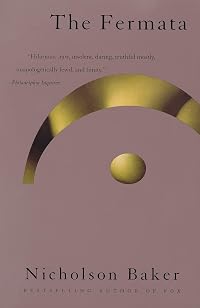
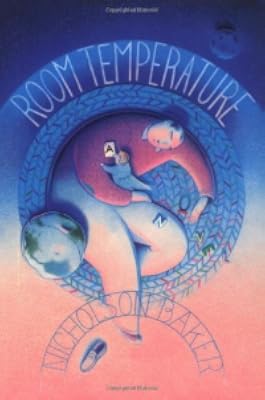
Nicholson Baker lives in Maine. Nicholson Baker was born in New York City on January 7, 1957. He briefly attended the Eastman School of Music before receiving a B.A. in philosophy from Haverford College. He is the author of both fiction and nonfiction works including The Mezzanine (1988); Room Temperature (1990); Vox (1992); The Fermata (1994); show more The Everlasting Story of Nory (1998); Checkpoint (2004); and The Anthologist (2009). His nonfiction work, Double Fold: Libraries and the Assault on Paper, won a National Book Critics Circle Award in 2001. (Bowker Author Biography) show less
Some Editions
Awards and Honors
Awards
Distinctions
Series

Work Relationships
Common Knowledge
- Original publication date
- 2009
- People/Characters
- Paul Chowder; Roz
- Dedication
- To M.
- First words
- Hello, this is Paul Chowder, and I'm going to try to tell you everything I know.
- Quotations
- What did she mean by "It doesn't have to rhyme?" Did she mean it could rhyme but it didn't have to? No. She meant _don't rhyme_. She meant: I am going to manacle your poor pliable brains with freedom. I'm going to insist... (show all) that you must be free. She wrote "FREE VERSE" on the board.
- Last words
- (Click to show. Warning: May contain spoilers.)Rest.
- Blurbers
- Gates, David; Eder, Richard; See, Carolyn; Kirn, Walter
Classifications
Statistics
- Members
- 1,091
- Popularity
- 23,376
- Reviews
- 63
- Rating
- (3.82)
- Languages
- English, German, Spanish
- Media
- Paper, Audiobook, Ebook
- ISBNs
- 14
- ASINs
- 5