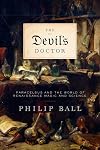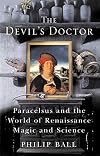
The Devil's Doctor: Paracelsus and the World of Renaissance Magic and Science
by Philip Ball
On This Page
Description
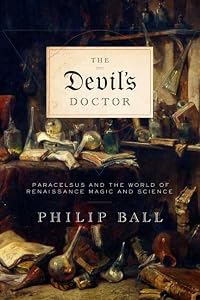
Philippus Aureolus Theophrastus Bombast von Hohenheim, who called himself Paracelsus, stands at the cusp of medieval and modern times. A contemporary of Luther, an enemy of the medical establishment, a scourge of the universities, an alchemist, an army surgeon, and a radical theologian, he attracted myths even before he died. His fantastic journeys across Europe and beyond were said to be made on a magical white horse, and he was rumored to carry the elixir of life in the pommel of his great show more broadsword. His name was linked with Faust, who bargained with the devil.Who was the man behind these stories? Some have accused him of being a charlatan, a windbag who filled his books with wild speculations and invented words. Others claim him as the father of modern medicine. Philip Ball exposes a more complex truth in The Devil's Doctor one that emerges only by entering into Paracelsus's time. He explores the intellectual, political, and religious undercurrents of the sixteenth century and looks at how doctors really practiced, at how people traveled, and at how wars were fought. For Paracelsus was a product of an age of change and strife, of renaissance and reformation. And yet by uniting the diverse disciplines of medicine, biology, and alchemy, he assisted, almost in spite of himself, in the birth of science and the emergence of the age of rationalism." show lessTags
Recommendations


Member Recommendations
Member Reviews
My local hospital, in the little Swiss village where I now live, is called the Paracelsus Spital. He must be from round here, I thought – no one would name a hospital after a mad alchemist unless there was some local connection, surely. Would you want to be treated at a place associated with someone whose preferred remedy for the plague was
pills of rolled bread tainted with infected faeces
…? And sure enough, ‘Paracelsus’ – Theophrastus Bombast Von Hohenheim, 1493–1541 – turns out to have been born in the next village inland from me, Einsiedeln, which is also notable for being the place where Zwingli first worked as a parish priest. The two men were contemporaries; Paracelsus stomped furiously across the whole of show more Reformation Europe and beyond, from Scotland to Algiers, from Moscow to Jerusalem, and seemingly everywhere in between. He was the archetypal Renaissance magus figure, always on the road, fascinated by all knowledge, seeing no distinction between chemistry and theology, by turns modern and medieval, and blending occultism with rationalism in a way that made no sense to anyone, including himself.
One of the things I like best about this book is that it does not try to present Paracelsus – as so many of his contemporaries are presented – as a forerunner of the modern scientist. A lot of energy is expended making the point that ‘magic’ and ‘science’ were not, in this period, distinguishable, and the fact that we remember some people (Newton, Copernicus) as scientists and others (Paracelsus, Agrippa) as magicians/charlatans is an anachronism that has to do with which theories have been shown, over time, to be true. Gravity really does follow an inverse square law, and the earth really does revolve around the sun; but De revolutionibus was couched in terms of astrological significance and Newton devised his theory of gravity while working on a book about the mysteries of the Cabbala. We remember the bits that are part of modern science and forget that they came from a complex early-modern mixture of feverish theories and arcane suppositions. ‘Science resulted not from efforts to get rid of [magical ideas], but from attempts to make sense of them.’
Paracelsus produced no real lasting contributions to modern scientific knowledge, but his work was not qualitatively different from those that did, and for a long time after his death it seemed as though Paracelsianism would determine the shape of modern science. What did the term mean exactly? Well, in part it meant modernity. He was the first major figure to break with the Galenic tradition in Europe, and suggest that modern medical treatments had the potential to be much better than the received wisdom and humoral theory of the Greeks and Romans. He set more store by experimentation and practice than by books, and made a point of consulting just as much with local wise women and folk healers as with learned doctors – indeed probably rather more of the former than of the latter. He was inconsistent, fell out with everyone he met, bore long grudges, and was fiercely independent – as suggested by his family motto:
Eins andern knecht soll niemand seyn, der für sich bleyben kann alleyn.
‘Let no man belong to another, who can belong to himself.’
When you read statements like, ‘practice should not be based on speculative theory; theory should be derived from practice’, it is easy to believe that you are dealing with a proto-modern rationalist. But Paracelsus rarely followed his own advice, and many of his own theories were not just misguided but, frankly, batshit insane.
He maintained a fierce belief in alchemy at a time when it looked like the discipline might be going out of fashion. For Paracelsus, alchemy was less about transmuting base metal into gold (though popular stories about his chrysopoeian abilities abounded) and more about the principle of refining every substance into its purest, most elemental components. He discovered, for instance, that repeated distillation and separation of wine would produce a colourless, fiery ‘quintessence’ – now known as alcohol.
What was done by the alchemist in his laboratory was no more than what was done by nature all the time – not least within the human body. Paracelsus has been called the first biochemist for his insightful realization that some kind of transmutation must be taking place within our own bodies every time we eat. He attributed this to a sort of internal alchemist called the archeus, but it is not such a very long way from passages like the following to the discovery of enzymes:
all our nourishment becomes ourselves; we eat ourselves into being…. For every bite we take contains in itself all our organs, all that is included in the whole man, all of which he is constituted…. We do not eat bone, blood vessels, ligaments, and seldom brain, heart, and entrails, nor fat, therefore bone does not make bone, nor brain make brain, but every bite contains all these. Bread is blood, but who sees it? It is fat, who sees it? …for the master craftsman in the stomach is good. He can make iron out of brimstone: he is there daily and shapes the man according to his form.
Spare a thought for the fact that the transformation of bread into flesh in sixteenth-century Europe was, to put it mildly, a live issue. Paracelsus tried not to take sides in religious debates – he memorably described Luther and the Pope as ‘two whores debating chastity’ – but none of this was merely an intellectual exercise for him. It was all about the meaning of life. His theories are ‘best described not as proto-science but as chemical theology’. Chemistry and medicine were ways of understanding the hand of god, of deciphering the secrets that underpinned the universe.
And once you knew these secrets, astonishing mysteries became available to you. Paracelsus believed that he could create life in his laboratory, in the form of a homunculus, a little humanoid grown from natural alchemy. If you want to try it at home, here's the recipe:
Let the semen of a man putrefy by itself in a sealed cucurbite with the highest putrefaction of the venter equinus [horse manure] for forty days, or until it begins at last to live, move, and be agitated, which can easily be seen. After this time it will be in some degree like a human being, but, nevertheless, transparent and without body. If now, after this, it be every day nourished and fed cautiously and prudently with the arcanum of human blood, and kept for forty weeks in the perpetual and equal heat of a venter equinus, it becomes, thenceforth, a true and living infant, having all the members of a child that is born from a woman, but much smaller. This we call a homunculus; and it should be afterwards educated with the greatest care and zeal, until it grows up and begins to display intelligence. Now, this is one of the greatest secrets which God has revealed to mortal and fallible man. It is a miracle and marvel of God, an arcanum above all arcana, and deserves to be kept secret until the last times, when there shall be nothing hidden, but all things shall be made manifest.
Heady stuff. No surprise that Paracelsus was a major source for the Faust legend, and indeed was a contemporary of the likely original Doctor Faust, with whose biography his own was often conflated.
Philip Ball tells the story well, drawing links to modern scientific ideas where necessary, but never letting you forget the profound mysticism of the time. The outstanding introductory chapter, which sets the scene of Renaissance science brilliantly, is worth the cover price alone.
Ball is a science writer, not a biographer, and there are parts of the book where the narrative drive seems to flag a little; the absence of biographical detail about Paracelsus's life also means he has to pad the book out with long diversions on contemporary mining, banking, venereal disease etc., which different readers may find fascinating or distracting. Paracelsus is worth sticking around for, a good reminder of the potential futures that were contained in the early-modern present. Ball's assessment of one of Paracelsus's theories will stand for a good summary of the man's work, and indeed of the whole fascinating period:
This is all wrong, of course, but it is not unreasonable. show less
pills of rolled bread tainted with infected faeces
…? And sure enough, ‘Paracelsus’ – Theophrastus Bombast Von Hohenheim, 1493–1541 – turns out to have been born in the next village inland from me, Einsiedeln, which is also notable for being the place where Zwingli first worked as a parish priest. The two men were contemporaries; Paracelsus stomped furiously across the whole of show more Reformation Europe and beyond, from Scotland to Algiers, from Moscow to Jerusalem, and seemingly everywhere in between. He was the archetypal Renaissance magus figure, always on the road, fascinated by all knowledge, seeing no distinction between chemistry and theology, by turns modern and medieval, and blending occultism with rationalism in a way that made no sense to anyone, including himself.
One of the things I like best about this book is that it does not try to present Paracelsus – as so many of his contemporaries are presented – as a forerunner of the modern scientist. A lot of energy is expended making the point that ‘magic’ and ‘science’ were not, in this period, distinguishable, and the fact that we remember some people (Newton, Copernicus) as scientists and others (Paracelsus, Agrippa) as magicians/charlatans is an anachronism that has to do with which theories have been shown, over time, to be true. Gravity really does follow an inverse square law, and the earth really does revolve around the sun; but De revolutionibus was couched in terms of astrological significance and Newton devised his theory of gravity while working on a book about the mysteries of the Cabbala. We remember the bits that are part of modern science and forget that they came from a complex early-modern mixture of feverish theories and arcane suppositions. ‘Science resulted not from efforts to get rid of [magical ideas], but from attempts to make sense of them.’
Paracelsus produced no real lasting contributions to modern scientific knowledge, but his work was not qualitatively different from those that did, and for a long time after his death it seemed as though Paracelsianism would determine the shape of modern science. What did the term mean exactly? Well, in part it meant modernity. He was the first major figure to break with the Galenic tradition in Europe, and suggest that modern medical treatments had the potential to be much better than the received wisdom and humoral theory of the Greeks and Romans. He set more store by experimentation and practice than by books, and made a point of consulting just as much with local wise women and folk healers as with learned doctors – indeed probably rather more of the former than of the latter. He was inconsistent, fell out with everyone he met, bore long grudges, and was fiercely independent – as suggested by his family motto:
Eins andern knecht soll niemand seyn, der für sich bleyben kann alleyn.
‘Let no man belong to another, who can belong to himself.’
When you read statements like, ‘practice should not be based on speculative theory; theory should be derived from practice’, it is easy to believe that you are dealing with a proto-modern rationalist. But Paracelsus rarely followed his own advice, and many of his own theories were not just misguided but, frankly, batshit insane.
He maintained a fierce belief in alchemy at a time when it looked like the discipline might be going out of fashion. For Paracelsus, alchemy was less about transmuting base metal into gold (though popular stories about his chrysopoeian abilities abounded) and more about the principle of refining every substance into its purest, most elemental components. He discovered, for instance, that repeated distillation and separation of wine would produce a colourless, fiery ‘quintessence’ – now known as alcohol.
What was done by the alchemist in his laboratory was no more than what was done by nature all the time – not least within the human body. Paracelsus has been called the first biochemist for his insightful realization that some kind of transmutation must be taking place within our own bodies every time we eat. He attributed this to a sort of internal alchemist called the archeus, but it is not such a very long way from passages like the following to the discovery of enzymes:
all our nourishment becomes ourselves; we eat ourselves into being…. For every bite we take contains in itself all our organs, all that is included in the whole man, all of which he is constituted…. We do not eat bone, blood vessels, ligaments, and seldom brain, heart, and entrails, nor fat, therefore bone does not make bone, nor brain make brain, but every bite contains all these. Bread is blood, but who sees it? It is fat, who sees it? …for the master craftsman in the stomach is good. He can make iron out of brimstone: he is there daily and shapes the man according to his form.
Spare a thought for the fact that the transformation of bread into flesh in sixteenth-century Europe was, to put it mildly, a live issue. Paracelsus tried not to take sides in religious debates – he memorably described Luther and the Pope as ‘two whores debating chastity’ – but none of this was merely an intellectual exercise for him. It was all about the meaning of life. His theories are ‘best described not as proto-science but as chemical theology’. Chemistry and medicine were ways of understanding the hand of god, of deciphering the secrets that underpinned the universe.
And once you knew these secrets, astonishing mysteries became available to you. Paracelsus believed that he could create life in his laboratory, in the form of a homunculus, a little humanoid grown from natural alchemy. If you want to try it at home, here's the recipe:
Let the semen of a man putrefy by itself in a sealed cucurbite with the highest putrefaction of the venter equinus [horse manure] for forty days, or until it begins at last to live, move, and be agitated, which can easily be seen. After this time it will be in some degree like a human being, but, nevertheless, transparent and without body. If now, after this, it be every day nourished and fed cautiously and prudently with the arcanum of human blood, and kept for forty weeks in the perpetual and equal heat of a venter equinus, it becomes, thenceforth, a true and living infant, having all the members of a child that is born from a woman, but much smaller. This we call a homunculus; and it should be afterwards educated with the greatest care and zeal, until it grows up and begins to display intelligence. Now, this is one of the greatest secrets which God has revealed to mortal and fallible man. It is a miracle and marvel of God, an arcanum above all arcana, and deserves to be kept secret until the last times, when there shall be nothing hidden, but all things shall be made manifest.
Heady stuff. No surprise that Paracelsus was a major source for the Faust legend, and indeed was a contemporary of the likely original Doctor Faust, with whose biography his own was often conflated.
Philip Ball tells the story well, drawing links to modern scientific ideas where necessary, but never letting you forget the profound mysticism of the time. The outstanding introductory chapter, which sets the scene of Renaissance science brilliantly, is worth the cover price alone.
Ball is a science writer, not a biographer, and there are parts of the book where the narrative drive seems to flag a little; the absence of biographical detail about Paracelsus's life also means he has to pad the book out with long diversions on contemporary mining, banking, venereal disease etc., which different readers may find fascinating or distracting. Paracelsus is worth sticking around for, a good reminder of the potential futures that were contained in the early-modern present. Ball's assessment of one of Paracelsus's theories will stand for a good summary of the man's work, and indeed of the whole fascinating period:
This is all wrong, of course, but it is not unreasonable. show less
A story as much about alchemy, urine sniffing and renaissance politics as about Paracelsus, this one was interesting in its own way. A bit disappointing, however, for someone interested in actually reading a biography about Paracelsus, as one gets the impression that this was an after thought to this book, in a way. Still, an interesting glimpse at the period, and not a complete waste of time.
bio of Paracelsus, not very illuminating about his thought, details of travels and history of reception of his ideas and possible influence on history of chemistry
I'm going to make this suggested reading for people who want to play in my 'Mage: the Sorcerors Crusade' game.
high hopes for this one. I
Per rimpolpare un po' le scarne notizie su Paracelso, molte disgressioni su altri personaggi dell'epoca. Faticoso da leggere proprio per le disgressioni.
Italian
Teophrastus Bombast von Hehenheim, noto come Paracelso, è stato un alchimista, un mago, ma anche un sedicente dottore in medicina e teologia. In questa biografia ripercorreremo la vita di questo scienziato errante, il cui nome è legato, in particolare, alla legenda della Pietra filosofale.
Italian
Members
- Recently Added By
Author Information

41+ Works 6,145 Members
Philip Ball is a freelance writer who lives in London. He worked for over twenty years as an editor for Nature, writes regularly in the scientific and popular media, and has authored many books on the interactions of the sciences, the arts, and the wider culture, including, most recently, Serving the Reich: The Struggle for the Soul of Physics show more under Hitler, also published by the University of Chicago Press. show less
Common Knowledge
- Canonical title*
- Paracelso: l'ultimo alchimista
- Original title
- The Devil's Doctor: Paracelsus and the World of Renaissance Magic and Science
- Original publication date
- 2006
- People/Characters
- Theophrastus Paracelsus (ne Theophrastus von Hohenheim, 1493? to 1541)
- First words
- "I am different" he wrote"let this not upset you"
But people did get upset by Paracelsus. He upset doctors and priests, he upset town authorities, Renaissance kings and princes, Lutherans, humanists, merchants, apothecari... (show all)es, and theologians. He upset his friends and assistants. He upset generations of chemists and physicians who lived under the grotesque, distorted shadow that he cast.
*Some information comes from Common Knowledge in other languages. Click "Edit" for more information.
Classifications
- Genres
- Nonfiction, Science & Nature, History, Biography & Memoir, General Nonfiction, Religion & Spirituality
- DDC/MDS
- 610.92 — Technology Medicine & health Medicine and health History, geographic treatment, biography Biography
- LCC
- R147 .P2 .B35 — Medicine Medicine (General) History of medicine. Medical expeditions
- BISAC
Statistics
- Members
- 315
- Popularity
- 100,790
- Reviews
- 7
- Rating
- (3.62)
- Languages
- Czech, English, Italian, Portuguese (Portugal)
- Media
- Paper, Ebook
- ISBNs
- 7
- ASINs
- 3