

Invisible
by Paul Auster
On This Page
Description
"One of America's greatest novelists" dazzlingly reinvents the coming-of-age story in his most passionate and surprising book to dateSinuously constructed in four interlocking parts, Paul Auster's fifteenth novel opens in New York City in the spring of 1967, when twenty-year-old Adam Walker, an aspiring poet and student at Columbia University, meets the enigmatic Frenchman Rudolf Born and his silent and seductive girfriend, Margot. Before long, Walker finds himself caught in a perverse show more triangle that leads to a sudden, shocking act of violence that will alter the course of his life.Three different narrators tell the story of Invisible, a novel that travels in time from 1967 to 2007 and moves from Morningside Heights, to the Left Bank of Paris, to a remote island in the Caribbean. It is a book of youthful rage, unbridled sexual hunger, and a relentless quest for justice. With uncompromising insight, Auster takes us into the shadowy borderland between truth and memory, between authorship and identity, to produce a work of unforgettable power that confirms his reputation as "one of America's most spectacularly inventive writers." show lessTags
Recommendations
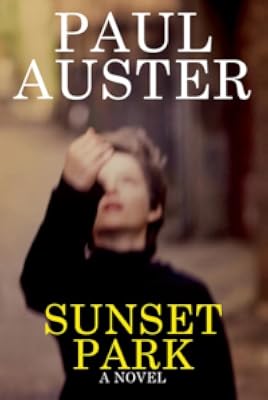
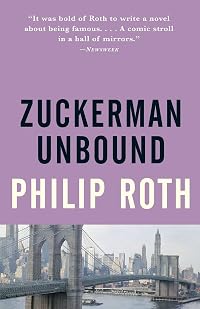
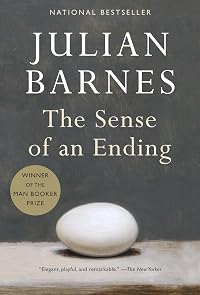
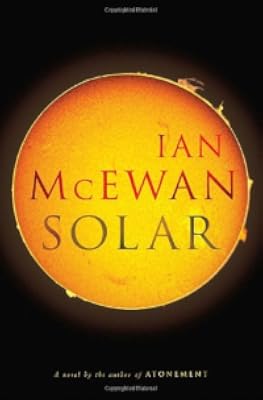
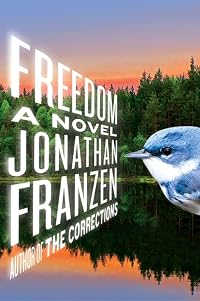

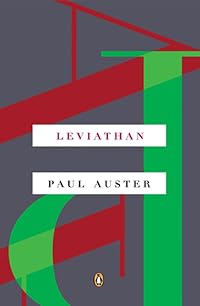
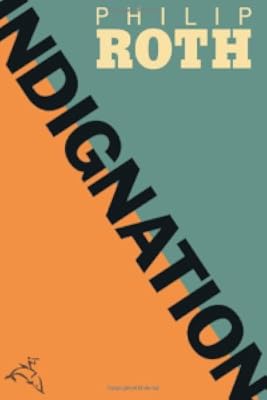
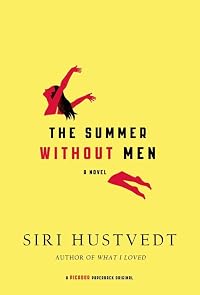

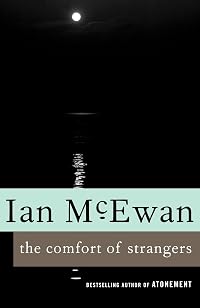


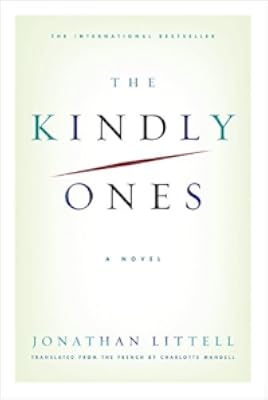
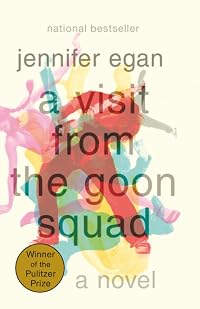
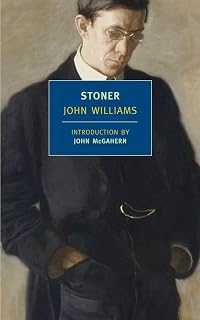
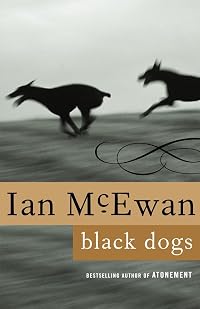
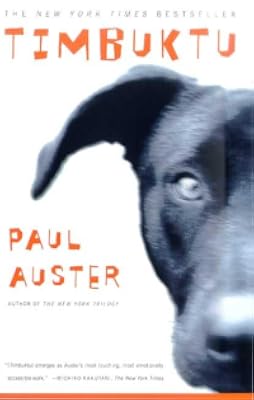
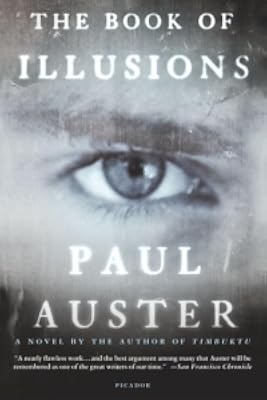
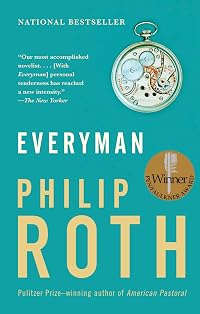
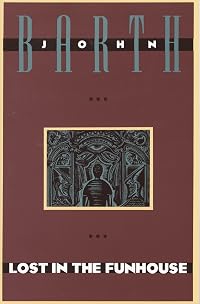

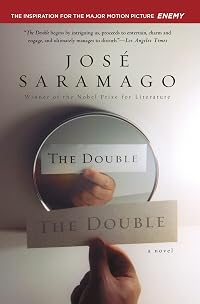
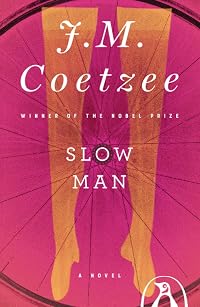
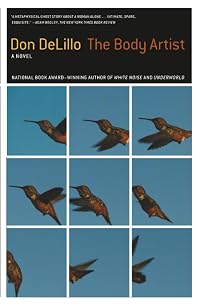
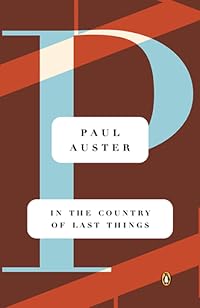
Member Recommendations
by bookmomo
Member Reviews
3.5 stars
For the first half or so, I wondered if this was a test: how reprehensible does a person have to be before one abandons him as such? Adam Walker just drags the reader deeper into a moral abyss. You can forgive one thing, excuse another as his age, the era, see another through the lens of insufferable grief. But then he goes a step too far, and there's no telling where else this will go.
But then... we get another perspective, calling into doubt Walker's distasteful confession. And if that part is untrue, is any of it real? Why would he confess to some transgressions, but then make some up? If he is too ill for his memory to be trusted, is any of it real?
The lure proves too much, and Walker's college friend tries to track down show more some truth. He seems to get some... but it only leads to more confusion about the truth of another character.
So... we're left with a bunch of characters we can't really know. If you like beautiful prose and a compelling, if convoluted, storyline, then you'll like this. If you need clear answers to all your questions, walk away from this book. It's not for you. show less
For the first half or so, I wondered if this was a test: how reprehensible does a person have to be before one abandons him as such? Adam Walker just drags the reader deeper into a moral abyss. You can forgive one thing, excuse another as his age, the era, see another through the lens of insufferable grief. But then he goes a step too far, and there's no telling where else this will go.
But then... we get another perspective, calling into doubt Walker's distasteful confession. And if that part is untrue, is any of it real? Why would he confess to some transgressions, but then make some up? If he is too ill for his memory to be trusted, is any of it real?
The lure proves too much, and Walker's college friend tries to track down show more some truth. He seems to get some... but it only leads to more confusion about the truth of another character.
So... we're left with a bunch of characters we can't really know. If you like beautiful prose and a compelling, if convoluted, storyline, then you'll like this. If you need clear answers to all your questions, walk away from this book. It's not for you. show less
Absolutely brilliant, the best Auster for me. I'm making my way through all his fiction and when I finished this book I thought: I don't want it to finish! I will seriously consider essays, maybe screenplays. And well, after all I still have three more to go.
I picked up this book after two I didn't really enjoy. I needed some good literature to remove this bad aftertaste. And he did it, man, he did it again. Complex characters, jumps in time, the usual story within a story, metaliterature... I loved it.
I picked up this book after two I didn't really enjoy. I needed some good literature to remove this bad aftertaste. And he did it, man, he did it again. Complex characters, jumps in time, the usual story within a story, metaliterature... I loved it.
Este es el Auster que me gusta, el que sabe contar una historia de manera tan fluida que devoras las páginas. Está claro que no llega al nivel de sus primeros trabajos, pero por lo menos no es 'Viajes por el Scriptorium' o 'La vida interior de Martin Frost', que no estaban mal siendo como eran obras menores.
En 'Invisible', Paul Auster va más allá de encajar historias dentro de historias y se mete en una trama que va en un sentido más en espiral, donde te va hundiendo más y más en la historia encajando todos los elementos intrigantes como si se tratase del mecanismo de un reloj.
Estamos en el año 1967. Adam Walker, de 20 años y estudiante de Literatura en Columbia, aspira a convertirse en escritor, poeta para más señas. show more Entonces, durante una fiesta conoce a quien cambiará por completo su vida, Rudolf Born, profesor invitado, y a su insunuante novia, Margot. Todo comienza con una oferta del tal Born, en la que propone a Adam la fundación de una revista literaria en la que él sería el director, todas las decisiones serían suyas... Querría contar más, pero ello no contribuiría al suspense que crea Auster.
Sin ser un trabajo redondo, me ha alegrado mucho el volver a encontrarme al "viejo" Auster. show less
En 'Invisible', Paul Auster va más allá de encajar historias dentro de historias y se mete en una trama que va en un sentido más en espiral, donde te va hundiendo más y más en la historia encajando todos los elementos intrigantes como si se tratase del mecanismo de un reloj.
Estamos en el año 1967. Adam Walker, de 20 años y estudiante de Literatura en Columbia, aspira a convertirse en escritor, poeta para más señas. show more Entonces, durante una fiesta conoce a quien cambiará por completo su vida, Rudolf Born, profesor invitado, y a su insunuante novia, Margot. Todo comienza con una oferta del tal Born, en la que propone a Adam la fundación de una revista literaria en la que él sería el director, todas las decisiones serían suyas... Querría contar más, pero ello no contribuiría al suspense que crea Auster.
Sin ser un trabajo redondo, me ha alegrado mucho el volver a encontrarme al "viejo" Auster. show less
Although I haven't enjoyed much his latest novels (felt like he was getting too repetitive and self-involved), I really liked this one. In a way it brought em back to The New York Trilogy with its meta feel and accomplished story switching between voices and unreliable narrators. I feel like I just finished a puzzle or came out of a labyrinth but I'm not sure I got it all right. Who was telling the truth? Whose memories are reliable after so many years? At the end there are no definitive answers but, for me, it was fun to play.
Auster is one of the most unpredictable contemporary artists, it is virtually impossible to pinpoint a literary style that is truly his. He is also one of the most prolific writers; I keep reading new books by him and I am not halfway through his authorship. Invisible took me by complete surprise. It is a thriller, a meta story of sorts. Reality is clearly in the eyes of the beholder, so is truth. The main character is Adam Walker, a student in New York City who runs into a French professor in 1967 who changes his life and not for the better. We are being told the story in all ways possible: first person singular, second person singular (sic), third person singular, and through an author (Auster?) and the diary notes of another show more character. It all works incredibly well, making Invisible one of the most intriguing books I have read for a long time, a true page turner. It left me with questions more than answers, but it still left me satisfied. show less
This is an odd book. I wasn't sure about it at first. Some of the subject matter makes uncomfortable reading, but it is compellingly written and ends ambiguously. It put me in mind of Heart of Darkness and A Handful of Dust. Not the subject matter so much, but the style. The reportage of the lives of others through the filter of memoirs, perhaps. The truth is not clear cut and the world is a strange place. By the time I reached the end, I had decided that I loved it. And one of the more despicable characters reminded me of a man I once regrettably knew.
I read a somewhat sniffy review of this in the TLS, which suggested this was a meditation on literary form, and obsessed with writing and the pen. On the basis of which I was expecting the worst; of Auster's recent books; "Man In The Dark" was interesting but "Travels in the Scriptorium" was woefully self indulgent. But in fact this book has some of Auster's most powerful and memorable writing. Yes, it plays with form. There are 3 narrators here, and its not often you read a book written in first, second and third person. It is self referential - early in the book the narrator (a writer of course) discusses the problems of finding the right voice, and concludes that sometimes its possible for the author to inject himself into the work show more as a fictional character (just as Auster himself did, memorably, in The New York Trilogy). But this shouldn't take away from a tremendously powerful narrative of loss, the untrustworthiness of memory and the nature of truth.
The dying Adam Walker entusts a manuscript to an old college friend, the skeleton of a book he had hoped to write about 1967, an important year in his life. He presents it as biography, rather than fiction, yet is it? The perspectives of others, from the slippery, shadowy Rudolf Born to his beautiful sister, to the stereotypically free loving, attachment rejecting Margot, to the young and impressionable Cecile, are rather different. At such distance, what is fact, what is fantasy and what is self serving? Trying to pin down "what happened" in this book is like trying to nail jelly to the wall - never the less, the descriptive power of the writing is intense; the chapter "Summer" will stay with you for a long time show less
The dying Adam Walker entusts a manuscript to an old college friend, the skeleton of a book he had hoped to write about 1967, an important year in his life. He presents it as biography, rather than fiction, yet is it? The perspectives of others, from the slippery, shadowy Rudolf Born to his beautiful sister, to the stereotypically free loving, attachment rejecting Margot, to the young and impressionable Cecile, are rather different. At such distance, what is fact, what is fantasy and what is self serving? Trying to pin down "what happened" in this book is like trying to nail jelly to the wall - never the less, the descriptive power of the writing is intense; the chapter "Summer" will stay with you for a long time show less
Members
- Recently Added By
Published Reviews
ThingScore 81
In dem Dutzend Romane, die Auster seit der berühmten "New York-Trilogie" (1987) veröffentlicht hat, treten alle Naselang Rivalen des Erzählers auf den Plan und schildern zentrale Passagen ganz anders. Figuren, die mit Vorliebe "Paul Auster" heißen, drehen undurchsichtige Dinger, versprechen viel und halten wenig. Zu allem Überfluss umtosen - mit der Härte und Regelmäßigkeit eines show more Monsuns - den ohnehin betröppelten Leser theoretische Tiraden über das Gleißnerische von Sprache und Identität. Austers neuester Streich "Unsichtbar" ist da keine Ausnahme. Und eben doch. show less
added by lophuels
Dette er ganske enkelt genial romankunst
Paul Auster har laget et fullkomment mysterium.
Med «Usynlig» har han kvesset skriveklørne; boka er fiks, leken, uhyggelig og så fullstendig gjennomtenkt at en gisper etter luft underveis.
Auster vet nøyaktig hva han driver med — ikke ett ord virker overflødig i hans univers, hvor mord, mysterier og incestuøse forhold kreerer kriblinger og ubehag show more i sofakroken. show less
Paul Auster har laget et fullkomment mysterium.
Med «Usynlig» har han kvesset skriveklørne; boka er fiks, leken, uhyggelig og så fullstendig gjennomtenkt at en gisper etter luft underveis.
Auster vet nøyaktig hva han driver med — ikke ett ord virker overflødig i hans univers, hvor mord, mysterier og incestuøse forhold kreerer kriblinger og ubehag show more i sofakroken. show less
added by annek49
Verglichen mit dem große Joseph Conrad kann Paul Auster relativ wenig. Aber vielleicht sollten wir Paul Auster einfach als Autor gehobener Unterhaltungsliteratur betrachten. Und da schneidet er dann plötzlich ziemlich gut ab. Seine Prosa ist wenig inspiriert, aber sie rutscht selten ins ganz Dumme, Klischeehafte ab. Seine Romanfiguren sind aus Pappmaché gemacht, aber die Konstruktion des show more Plots ist clever. Es gibt genug Sex und genug Crime, um den Leser bei Laune zu halten. Man verbringt einen angenehmen Nachmittag mit dem Zeug und hat hinterher nichts davon im Herzen zurückbehalten. show less
added by lophuels
Lists

Books Read in 2017
4,249 works; 129 members

Books Featured on Readers' Review of the Diane Rehm Show
161 works; 8 members
Author Information

101+ Works 64,827 Members
Paul Auster was born on February 3, 1947, in Newark, New Jersey. He received a B.A. and a M.A. in English and Comparative Literature from Columbia University. In addition to his career as a writer, Auster has been a census taker, tutor, merchant seaman, little-league baseball coach, and a telephone operator. He started his writing career as a show more translator. He soon gained popularity for the detective novels that make up his New York Trilogy. His other works include The Invention of Solitude; Leviathan; Moon Palace; Facing the Music; In the Country of Last Things; The Music of Chance; Mr. Vertigo; and The Brooklyn Follies. His latest novels are entitled, Invisible and Sunset Park. In addition to his novels, Auster has written screenplays and directed several films. He is the recipient of a fellowship from the National Endowment for the Arts and a French Prix Medicis for Foreign Literature. (Bowker Author Biography) show less
Some Editions
Awards and Honors
Series
Belongs to Publisher Series
Common Knowledge
- Canonical title*
- Onzichtbaar
- Original title
- Invisible
- Original publication date
- 2009
- People/Characters
- Adam Walker; Margot Jouffroy; Rudolf Born; Gwyn Walker Tedesco; Hélène Juin; Cécile Juin (show all 7); James Freeman
- Important places
- New York, New York, USA; Paris, France; Columbia University, New York, New York, USA
- First words
- I shook his hand for the first time in the spring of 1967.
- Quotations
- "For the sad fact remains: there is far more poetry in the world than justice."
- Last words
- (Click to show. Warning: May contain spoilers.)For the rest of my life, no matter where I am, no matter what I am doing, it will always be with me.
- Original language
- English
*Some information comes from Common Knowledge in other languages. Click "Edit" for more information.
Classifications
Statistics
- Members
- 2,427
- Popularity
- 8,019
- Reviews
- 111
- Rating
- (3.64)
- Languages
- 18 — Catalan, Danish, Dutch, English, Finnish, French, German, Galician, Greek, Hebrew, Hungarian, Italian, Norwegian (Bokmål), Polish, Portuguese, Spanish, Swedish, Turkish
- Media
- Paper, Audiobook, Ebook
- ISBNs
- 66
- ASINs
- 20
