The Forgotten Door
by Alexander Key
On This Page
Description
"Well written fantasy with strong character emphasis and empathy" from the author of the sci-fi classic Escape to Witch Mountain (Kirkus Reviews).At night, Little Jon's people go out to watch the stars. Mesmerized by a meteor shower, he forgets to watch his step and falls through a moss-covered door to another land: America. He awakes hurt, his memory gone, sure only that he does not belong here. Captured by a hunter, Jon escapes by leaping six feet over a barbed-wire fence. Hungry and show more alone, he staggers through the darkness and is about to be caught when he is rescued by a kind family known as the Beans. They shelter him, feed him, and teach him about his new home. In return, he will change their lives forever.
Although the Beans are kind to Little Jon, the townspeople mistrust the mysterious visitor. But Jon has untold powers, and as he learns to harness them, he will show his newfound friends that they have no reason to be afraid. show less
Tags
Recommendations











Member Recommendations


Member Reviews
Little Jon tried to think. Everything was so unbelievably tangled in this world, with their laws and their money and their hates and their fighting for power. He could see only one solution that might help . . .
While gazing at the night-time sky with his people, a boy falls through a hole in the hillside, ending up in another world. What surprises the reader is that the world “Little John” falls into is the human one. Impaired by amnesia from the impact of crashing down among the rocks in a cave, Jon tries to navigate the mountainous new landscape he finds himself in. Initially he relies on the guidance of animals with whom he can communicate telepathically. However, even they cannot save him from a nasty first encounter with a show more gun-toting malevolent human, Gilby Pitts (and his equally repugnant wife, Emma), after he unwittingly walks onto their land.
Shortly after this, Jon, who has the ability to sense the emotions and thoughts of others, makes contact with benevolent humans. The Beans—Mary, Thomas, and their children, Brooks and Sally—stop their pick-up truck on a nearby country road and take the boy home with them. However, Jon’s unfortunate confrontation with the unsavoury Mr. and Mrs. Pitts has already set him on the wrong track. The couple quickly spread the rumour that a “wild boy” is on the loose, a foreign-looking, “unnatural,” and strangely dressed being. Soon the hateful pair will report him for breaking, entering, and robbing a summer home that Mr. Pitts is responsible for minding when its owner is away. Gilby, it turns out, is intimately acquainted with stealing, having done so much of it himself. Lying and blaming come just as easily to him. He’s a classic vindictive and ignorant local yokel.
The Beans quickly figure out that Jon is not of this world. While some objects (books and radios) and concepts (kindness) are familiar to him, others (like automobiles) are not. That laws (and a government to make them) should really be necessary to keep people in line and that humans should actually use animals for food and clothing are ideas both foreign and troubling to Jon. The Beans marvel at the boy’s ability to read minds, know others’ intentions, and effortlessly learn an entirely new language, English.
Thomas and his family willingly take on the job of protecting Jon from wrongful criminal charges. They recognize that they must help the boy recover his memory and get him back to the world he came from. Their mission becomes urgent when Jon’s ability to read minds is widely publicized by the media, ultimately coming to the attention of government agencies which recognize just how useful the boy could be for intelligence purposes.
Although it was originally published in 1965, only recently did I became aware of this novel for children. When I was a kid, readers’ advisory was not a service commonly offered by children’s and school librarians. They mainly ordered and shelved books and reminded you to keep quiet. If any adults knew of this novel back then, they unfortunately didn’t share that information with me. I’m glad to report that the novel has withstood the test of time. Yes, there are a few mentions of Jon’s “Indian” or “gypsy” appearance, wich might get some present-day, zealous, politically correct library-book-purgers worked up—I’m well aware of Ontario teacher-librarians weeding excellent children’s literature, even classics, for even slighter reasons—but I see nothing in the book to warrant its removal from shelves. Considering a book within its historical context strikes me as a better approach than the removal or outright banning of it. Why throw a lovely baby (with a birthmark) or two out with the bath water?
This is a delightful and insightful book that illuminates and critiques some of the very big problems with human beings. Some might argue that the good characters are too thoroughly good and the bad, too entirely bad, but that’s the case with fairytales, which have also endured over time. This is an enjoyable, fast-paced, accessible little novel for kids and, in my opinion, it’s well worth reading. show less
While gazing at the night-time sky with his people, a boy falls through a hole in the hillside, ending up in another world. What surprises the reader is that the world “Little John” falls into is the human one. Impaired by amnesia from the impact of crashing down among the rocks in a cave, Jon tries to navigate the mountainous new landscape he finds himself in. Initially he relies on the guidance of animals with whom he can communicate telepathically. However, even they cannot save him from a nasty first encounter with a show more gun-toting malevolent human, Gilby Pitts (and his equally repugnant wife, Emma), after he unwittingly walks onto their land.
Shortly after this, Jon, who has the ability to sense the emotions and thoughts of others, makes contact with benevolent humans. The Beans—Mary, Thomas, and their children, Brooks and Sally—stop their pick-up truck on a nearby country road and take the boy home with them. However, Jon’s unfortunate confrontation with the unsavoury Mr. and Mrs. Pitts has already set him on the wrong track. The couple quickly spread the rumour that a “wild boy” is on the loose, a foreign-looking, “unnatural,” and strangely dressed being. Soon the hateful pair will report him for breaking, entering, and robbing a summer home that Mr. Pitts is responsible for minding when its owner is away. Gilby, it turns out, is intimately acquainted with stealing, having done so much of it himself. Lying and blaming come just as easily to him. He’s a classic vindictive and ignorant local yokel.
The Beans quickly figure out that Jon is not of this world. While some objects (books and radios) and concepts (kindness) are familiar to him, others (like automobiles) are not. That laws (and a government to make them) should really be necessary to keep people in line and that humans should actually use animals for food and clothing are ideas both foreign and troubling to Jon. The Beans marvel at the boy’s ability to read minds, know others’ intentions, and effortlessly learn an entirely new language, English.
Thomas and his family willingly take on the job of protecting Jon from wrongful criminal charges. They recognize that they must help the boy recover his memory and get him back to the world he came from. Their mission becomes urgent when Jon’s ability to read minds is widely publicized by the media, ultimately coming to the attention of government agencies which recognize just how useful the boy could be for intelligence purposes.
Although it was originally published in 1965, only recently did I became aware of this novel for children. When I was a kid, readers’ advisory was not a service commonly offered by children’s and school librarians. They mainly ordered and shelved books and reminded you to keep quiet. If any adults knew of this novel back then, they unfortunately didn’t share that information with me. I’m glad to report that the novel has withstood the test of time. Yes, there are a few mentions of Jon’s “Indian” or “gypsy” appearance, wich might get some present-day, zealous, politically correct library-book-purgers worked up—I’m well aware of Ontario teacher-librarians weeding excellent children’s literature, even classics, for even slighter reasons—but I see nothing in the book to warrant its removal from shelves. Considering a book within its historical context strikes me as a better approach than the removal or outright banning of it. Why throw a lovely baby (with a birthmark) or two out with the bath water?
This is a delightful and insightful book that illuminates and critiques some of the very big problems with human beings. Some might argue that the good characters are too thoroughly good and the bad, too entirely bad, but that’s the case with fairytales, which have also endured over time. This is an enjoyable, fast-paced, accessible little novel for kids and, in my opinion, it’s well worth reading. show less
Little Jon has fallen through a forgotten door and lands on earth. He is injured, frightened and alone until a kind family finds him and befriends him. As the family learns more about this strange boy with amazing abilities, so do some of the local neighbors, and things take an ugly turn as sensational stories start popping up in the local papers. It's just a matter of time before the government comes in to take over the situation. Will Jon make it home before he's forced into government service?
I absolutely loved this story as a kid. I read the book maybe half a dozen times and re-reading it now to write this review, just validated my impressions of it from childhood. It's intelligent and very suspenseful, and most of all leaves you show more with a feeling of wonder about the possibility of other worlds just waiting behind a forgotten door. show less
I absolutely loved this story as a kid. I read the book maybe half a dozen times and re-reading it now to write this review, just validated my impressions of it from childhood. It's intelligent and very suspenseful, and most of all leaves you show more with a feeling of wonder about the possibility of other worlds just waiting behind a forgotten door. show less
Little Jon has fallen through a door in space to land in the southern Appalachian mountains, injured and without his memory. He meets a number of people who are very interested in his unusual skills--incredible agility, swift healing, and a shocking ability to read minds. Most of these people want to use him for their own purposes, but the Bean family only wants to protect him. However, keeping Jon out of harm's way may prove very dangerous for everyone involved.
Another Nostalgia Read that I picked up to see if it was as good as I remember it--and it really is. There are a few problematic elements, like negative references to Cherokees and half-breeds by an antagonist. These mostly stem from the fact that the novel was originally show more published in 1965. (Notably, the judge who plays a pivotal role in the story is a woman.) The Bean family is almost TOO good, but their behavior reflects the way that we hope we would act, if presented with a lost and frightened alien boy. The ending was the part that I remembered most clearly, and while it's almost too "neat," it remains very satisfying.
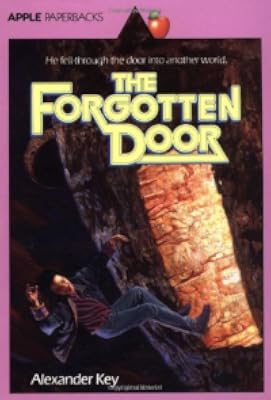
Recommended for science fiction fans and people who won't judge a book by its cover--because honestly, the "updated" cover art is much more dated than the actual text. (At least the original artwork here could pass for retro...) show less
Another Nostalgia Read that I picked up to see if it was as good as I remember it--and it really is. There are a few problematic elements, like negative references to Cherokees and half-breeds by an antagonist. These mostly stem from the fact that the novel was originally show more published in 1965. (Notably, the judge who plays a pivotal role in the story is a woman.) The Bean family is almost TOO good, but their behavior reflects the way that we hope we would act, if presented with a lost and frightened alien boy. The ending was the part that I remembered most clearly, and while it's almost too "neat," it remains very satisfying.
Recommended for science fiction fans and people who won't judge a book by its cover--because honestly, the "updated" cover art is much more dated than the actual text. (At least the original artwork here could pass for retro...) show less
This book may be one of the very first I read by myself and loved. Sometimes it is possible to feel very alone as a kid, and in this book, there is a main character who feels very alone. Jon is special; he is from a different world, but he has fallen through into ours, and having hit his head, he does not remember who he is or where he is from. The first people he meets are not the kind who make him feel at home, and he is lucky to meet some others who are kind and understanding. But the real question is: will he be able to find his way home? This gets more and more urgent as the chapters go by. The book is exciting and fun. It is also, in some hard-to-define way, a little bit sad. Even though it ends well, it makes you wish the world show more was different, and wonder why so many people can be unkind. But it also leaves you grateful for the possibility of being kind, friendly, and full of awe. After I read this book I used to look up at the stars in the night sky and wonder a lot. I bet you will too. show less
The Forgotten Door by Alexander Key
The Forgotten Door is a middle grade science fiction novel, published in 1965. The author is Alexander Key, who also wrote the more famous Escape to Witch Mountain.
The Forgotten Door is the story of a young boy who accidentally falls through a hidden interdimensional portal and finds himself in a cave in a mountainous region on Earth.
Jon finds a kind family, the Beans, who take him in and gradually come to realize that he originates from a society very unlike our own. The Beans are eager to assist Jon, but others in the community are suspicious, prejudiced, selfish, and greedy, and conflict inevitably ensues.
Jon incurs amnesia during his fall into the cave. He only remembers his name, and while he show more can recognize certain things like books, he is totally unfamiliar with other items commonly used by the society of the 1960s. At first, he speaks no English, but learns astonishingly quickly, and possesses other abilities which the local people begin to fear.
As the Beans work to help Jon recover his memory, they find themselves surrounded by enemies and in great danger.
The Forgotten Door is relatively short and fast-paced, with tension mounting continuously up to its climax.
Is the book perfect? By no means. The characters, while well drawn, are either good or bad, with no gray areas in between. Jon's thoughts on matters and his observations could also be considered somewhat moralizing. However, I only realized this when I had finished the book and was thinking about it analytically. While I was reading it, these criticisms did not occur to me.
I think what is special about The Forgotten Door is the underlying concept - that there could be civilizations so advanced that its members would be genuinely bewildered on encountering anyone who wished to do them harm.
Judging by the online comments and reviews, many people who were teens in the 1960s have very favorable memories of this book, and some have read it over and over again in order to savor the atmosphere and sense of wonder it evokes.
Since it can be read on different levels, young people and adults can enjoy it, and I consider it an excellent example of thought-provoking middle grade science fiction literature. show less
The Forgotten Door is a middle grade science fiction novel, published in 1965. The author is Alexander Key, who also wrote the more famous Escape to Witch Mountain.
The Forgotten Door is the story of a young boy who accidentally falls through a hidden interdimensional portal and finds himself in a cave in a mountainous region on Earth.
Jon finds a kind family, the Beans, who take him in and gradually come to realize that he originates from a society very unlike our own. The Beans are eager to assist Jon, but others in the community are suspicious, prejudiced, selfish, and greedy, and conflict inevitably ensues.
Jon incurs amnesia during his fall into the cave. He only remembers his name, and while he show more can recognize certain things like books, he is totally unfamiliar with other items commonly used by the society of the 1960s. At first, he speaks no English, but learns astonishingly quickly, and possesses other abilities which the local people begin to fear.
As the Beans work to help Jon recover his memory, they find themselves surrounded by enemies and in great danger.
The Forgotten Door is relatively short and fast-paced, with tension mounting continuously up to its climax.
Is the book perfect? By no means. The characters, while well drawn, are either good or bad, with no gray areas in between. Jon's thoughts on matters and his observations could also be considered somewhat moralizing. However, I only realized this when I had finished the book and was thinking about it analytically. While I was reading it, these criticisms did not occur to me.
I think what is special about The Forgotten Door is the underlying concept - that there could be civilizations so advanced that its members would be genuinely bewildered on encountering anyone who wished to do them harm.
Judging by the online comments and reviews, many people who were teens in the 1960s have very favorable memories of this book, and some have read it over and over again in order to savor the atmosphere and sense of wonder it evokes.
Since it can be read on different levels, young people and adults can enjoy it, and I consider it an excellent example of thought-provoking middle grade science fiction literature. show less
A wonderful story of a lost boy. Jon finds himself bruised and bloody in unfamiliar mountains. After a frightening encounter with some humans, he finds some deer who lead him to safety and he is found by a kind family. Jon's loss of memory complicates the situation, and he possesses abilities that scare the more reactionary members of the mountain community. Jon finds himself charged with burglary, threatened with reform school, and menaced by a secret government organization that wants to use him and his special abilities.
As bits of his memory return, he and his foster family piece together who and what he must be, and how to return him to where he belongs. This is complicated by the community's extreme reactions to his presence in show more their midst.
An excellent story that appeals to adults as well as middle-schoolers. A great introduction to science fiction for those who object to stories with too much technology or bug-eyed monsters (BEMs). show less
As bits of his memory return, he and his foster family piece together who and what he must be, and how to return him to where he belongs. This is complicated by the community's extreme reactions to his presence in show more their midst.
An excellent story that appeals to adults as well as middle-schoolers. A great introduction to science fiction for those who object to stories with too much technology or bug-eyed monsters (BEMs). show less
Part C/scientific fiction
The story is about a young boy from a far distant and higly evolved planet who accidentally falls through a hidden doorway and lands in a cave in the mountains on Earth. Little Jon has amnesia and cannot recall where he comes from. He befriends the kind Beans's family who welcomes Little Jon into their home. Jon is extremely intelligent and learns to speak English in two days. In addition, he has capability to read people's minds. While they treat Little Jon with love, the people in their rural community are skeptical of this boy's arrival. As Jon tries to overcome his amnesia and offers clues to where he comes from, he and the Beans family are in immense danger. Everybody, especially the government, wants to show more kidnap Little Jon because of his special power of reading people's minds. As these conflicts unfold, Little Jon is appalled at the concepts of money, war, and greed, because in his advanced world, they are non-existent. The ending is deeply profound and moves me to tears.
The book is flawlessly written. The plot and characters are very real. Little Jon is a very plausible character. As he desperately tries to recover his memory to provide clues to the Beans' family of his home, readers want to know, too. I see the kindness in Little Jon and was distraught that others would think of hurting this innocent child. It also makes me think of how troubled our world really is: full of greed and hate. Key leaves me pondering the world I am living in.
The target audience is ages 9-12. I am surprised how much I enjoyed reading this book. I have never been into sci fi books before. Maybe I will give other sci fi books a chance. I am glad I selected The Forgotten Door. show less
The story is about a young boy from a far distant and higly evolved planet who accidentally falls through a hidden doorway and lands in a cave in the mountains on Earth. Little Jon has amnesia and cannot recall where he comes from. He befriends the kind Beans's family who welcomes Little Jon into their home. Jon is extremely intelligent and learns to speak English in two days. In addition, he has capability to read people's minds. While they treat Little Jon with love, the people in their rural community are skeptical of this boy's arrival. As Jon tries to overcome his amnesia and offers clues to where he comes from, he and the Beans family are in immense danger. Everybody, especially the government, wants to show more kidnap Little Jon because of his special power of reading people's minds. As these conflicts unfold, Little Jon is appalled at the concepts of money, war, and greed, because in his advanced world, they are non-existent. The ending is deeply profound and moves me to tears.
The book is flawlessly written. The plot and characters are very real. Little Jon is a very plausible character. As he desperately tries to recover his memory to provide clues to the Beans' family of his home, readers want to know, too. I see the kindness in Little Jon and was distraught that others would think of hurting this innocent child. It also makes me think of how troubled our world really is: full of greed and hate. Key leaves me pondering the world I am living in.
The target audience is ages 9-12. I am surprised how much I enjoyed reading this book. I have never been into sci fi books before. Maybe I will give other sci fi books a chance. I am glad I selected The Forgotten Door. show less
Members
- Recently Added By
Lists

Gateway Book: Science Fiction
21 works; 26 members

ESP, psychic powers -- children's/young adult fiction
230 works; 8 members

Favorite Childhood Books
1,651 works; 519 members

Frequently sought stories - Name that Book group
149 works; 11 members

Books Read in 2014
2,344 works; 89 members

Childhood Favorites
427 works; 24 members

Children's Science Fiction
33 works; 3 members
1960s
281 works; 16 members

Books Read in 2015
3,299 works; 129 members

Main Character is aged 10-19
363 works; 6 members

1970s
657 works; 23 members

EGBERTINA'S List of childhood books worthy of merit or unspeakable delight
155 works; 7 members

Stories Featuring Passages, Gateways and Doors
39 works; 11 members

Books We Loved As Children
610 works; 254 members
Talk Discussions
Past Discussions
Mysterious visitor/alien? boy jumps like a deer - rural setting pre-1998 in Name that Book (December 2018)
Sci Fi Boy from a peaceful planet Stuck on Earth in Name that Book (December 2018)
middles sci-fi: boy falls out of hole, learns English by reading minds in Name that Book (January 2018)
YA-Boy travels to earth accidentally via a cave; he is protected by a family until he can return to in Name that Book (October 2009)
Author Information

Some Editions
Awards and Honors
Series
Belongs to Publisher Series
Common Knowledge
- Canonical title
- The Forgotten Door
- Original title
- The Forgotten Door
- Original publication date
- 1965
- People/Characters
- Jon; Thomas Bean; Mary Bean; Brooks Bean; Sally Bean; Gilby Pitts (show all 9); Angus Macklin; Anderson Bush; Miss Josie Cunningham
- Important places
- hill; hidden doorway
- Dedication
- To all those who like the starlight, and wonder about other places and other people.
- First words
- It happened so quickly, so unexpectedly, that little Jon's cry was almost instantly cut short as the blackness closed over him.
- Last words
- (Click to show. Warning: May contain spoilers.)Even the deer come out to watch, unafraid.
- Original language
- English
Classifications
Statistics
- Members
- 1,234
- Popularity
- 20,096
- Reviews
- 23
- Rating
- (4.13)
- Languages
- English, German
- Media
- Paper, Audiobook, Ebook
- ISBNs
- 15
- ASINs
- 16