
February
by Lisa Moore
On This Page
Description
"...Propelled by a local tragedy, in which an oil rig sinks in a violent storm off the coast of Newfoundland, 'February' follows the life of Helen O'Mara, widowed by the accident, as she continuously spirals from the present day back to that devastating and transformative winter that persists in her mind and heart..."--Front flap.Tags
Recommendations




















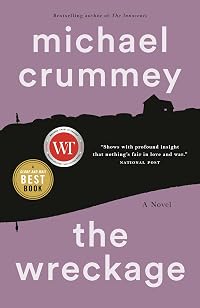
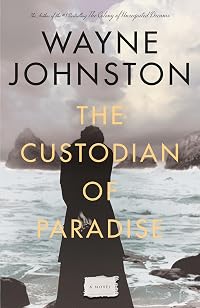









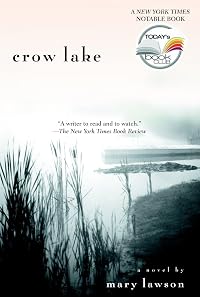












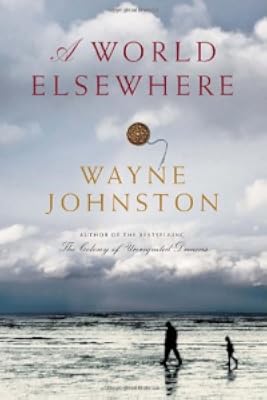
Member Recommendations



Member Reviews
“And all that remains is the faces and the names/of the wives and the sons and the daughters.” (The Wreck of the Edmund Fitzgerald, Gordon Lightfoot)
Lisa Moore’s February is a novel about a family—the wife, the son, and the daughters—of Cal, their husband and father, who perishes one stormy February night off the coast of Newfoundland. He is a fictional crew member on the real life Ocean Ranger, an oil rig that sank on Valentine’s Day 1982, killing all 84 men aboard. Helen is left to raise her three young children, and soon finds out that there is a fourth on the way.
Moore’s writing is astonishing in both her word play and the structure she chose for the book. All together, her take on the excruciating suffering of grief show more and loss was achingly beautiful. Sounds depressing and maudlin, doesn’t it? Some readers think so—the Quill & Quire even said the book was “tedious” and “overly sentimental.” Well, I didn’t find it depressing, sentimental or tedious—I found it haunting and stirring. There are several three-star “meh” reviews here at LT, and when I first started reading I thought I’d be in that crowd too. But by page twenty I had changed my mind and was loving it. Others have found it wonderful too—after all, it was nominated for last year’s Booker Prize.
Recommended for: readers who appreciate gorgeous writing and don’t mind a contemplative novel that jumps back and forth through time. show less
Lisa Moore’s February is a novel about a family—the wife, the son, and the daughters—of Cal, their husband and father, who perishes one stormy February night off the coast of Newfoundland. He is a fictional crew member on the real life Ocean Ranger, an oil rig that sank on Valentine’s Day 1982, killing all 84 men aboard. Helen is left to raise her three young children, and soon finds out that there is a fourth on the way.
Moore’s writing is astonishing in both her word play and the structure she chose for the book. All together, her take on the excruciating suffering of grief show more and loss was achingly beautiful. Sounds depressing and maudlin, doesn’t it? Some readers think so—the Quill & Quire even said the book was “tedious” and “overly sentimental.” Well, I didn’t find it depressing, sentimental or tedious—I found it haunting and stirring. There are several three-star “meh” reviews here at LT, and when I first started reading I thought I’d be in that crowd too. But by page twenty I had changed my mind and was loving it. Others have found it wonderful too—after all, it was nominated for last year’s Booker Prize.
Recommended for: readers who appreciate gorgeous writing and don’t mind a contemplative novel that jumps back and forth through time. show less
Lisa Moore's February is a fictional work based on a real-life tragedy: On the evening of Valentine's Day 1982, the Ocean Ranger, an oil rig off the Newfoundland coast, sustained catastrophic damage in a winter storm and throughout the night and into the next day, slowly sank, killing all 84 men aboard. Moore has taken this event as the starting point in the tale of Helen, the widow of one of the men who died that night; at the time, she had three children ranging in age from 10 to 8, and she was pregnant with another child, so that in the following years, she had four children to raise on her own. The story ranges between the time of her marriage to Cal in 1972 up through 2009, and essentially tells the story of her life and how she show more does, and does not, come to terms with her husband's death and her grief.... The story is very specific to this one individual, but in such a way that the reader finds global resonance with the characters and what they go through. Anybody who has ever lost a loved one will relate to this book, and Moore's ability to describe complex and difficult emotions with both clarity and poetry is terrific. The story is not told in linear form, but jumps back and forth between various years, and that technique also works well in terms of drawing the reader into Helen's life; by the time the disaster itself is described, one is fully invested in Helen's reactions to it. This book won the 2013 Canada Reads challenge, an annual project from CBC that aims to have all of English-speaking Canada read one specific book; highly recommended. show less
And at first you think you will not be alone forever. You think the future is infinite. Childhood seems to have been infinite. Downstairs the saw revs and Helen hears a stick of wood fall to the floor. And so will the future be infinite, and it cannot be spent alone.
But, she has learned, it is possible: not to meet someone. The past yields, it gives way, it goes on forever. The future is unyielding. It is possible that the past has cracked off, the past has clattered to the floor, and what remains is the future and there is not very much of that. The future is the short end of the stick.
February, by Lisa Moore is about grief. Helen is a mother of three, pregnant with the fourth, when the Ocean Ranger, the oil rig her husband is working show more on, goes under off the coast of Newfoundland in 1982. [February] chronicles Helen's story, from meeting her husband to the life she manages to carve for herself from the wreckage of her earlier plans and expectations. Grief is ever present, and something that can't be shed after a suitable length of time, like an unfashionable coat. Her husband Cal is always somewhere in her mind and she is haunted by her imaginings of his final moments. But life goes on and she has four children, also marked by the loss of Cal, to care for. She doesn't get to give up or give in. The book jumps forwards and back in time to different parts of Helen's life; a good thing, because focusing too long on the intense period of sadness just after the rig went down would be unreadable.
There were long stretches in that phone call where neither of them said anything. Dave O'Mara wasn't speaking because he didn't know he wasn't speaking. He could see before him whatever he'd seen when he looked at his dead son, and he thought he was telling her all of that. But he was in his own kitchen staring silently at the floor.
Looking at his dead son must have been like watching a movie where nothing moved. It was not a photograph because it had duration. It had to be lived through. A photograph has none of that. This was a story without an ending. It would go on forever. And Helen was trying not to faint because it would scare the living daylights out of the children, and besides, she had known. She'd known the minute the bastard rig sank. show less
But, she has learned, it is possible: not to meet someone. The past yields, it gives way, it goes on forever. The future is unyielding. It is possible that the past has cracked off, the past has clattered to the floor, and what remains is the future and there is not very much of that. The future is the short end of the stick.
February, by Lisa Moore is about grief. Helen is a mother of three, pregnant with the fourth, when the Ocean Ranger, the oil rig her husband is working show more on, goes under off the coast of Newfoundland in 1982. [February] chronicles Helen's story, from meeting her husband to the life she manages to carve for herself from the wreckage of her earlier plans and expectations. Grief is ever present, and something that can't be shed after a suitable length of time, like an unfashionable coat. Her husband Cal is always somewhere in her mind and she is haunted by her imaginings of his final moments. But life goes on and she has four children, also marked by the loss of Cal, to care for. She doesn't get to give up or give in. The book jumps forwards and back in time to different parts of Helen's life; a good thing, because focusing too long on the intense period of sadness just after the rig went down would be unreadable.
There were long stretches in that phone call where neither of them said anything. Dave O'Mara wasn't speaking because he didn't know he wasn't speaking. He could see before him whatever he'd seen when he looked at his dead son, and he thought he was telling her all of that. But he was in his own kitchen staring silently at the floor.
Looking at his dead son must have been like watching a movie where nothing moved. It was not a photograph because it had duration. It had to be lived through. A photograph has none of that. This was a story without an ending. It would go on forever. And Helen was trying not to faint because it would scare the living daylights out of the children, and besides, she had known. She'd known the minute the bastard rig sank. show less
Grief changes everything. For Helen, whose husband, Cal, died in the Ocean Ranger oilrig disaster in 1982, grief suffuses her life. Everything she does, her children, including the one on the way at the time of Cal’s death, her work, her connections (or lack thereof) with others, all of it is enveloped in grief. But it’s more than that, because grief changes even what has gone before. It tinges the memory of her time together with Cal with foreboding and a previously unrealized sadness. It gets in all the cracks; it is in the very air Helen breathes. And it isn’t just Helen. The loss of their father affects each of her children, though perhaps her son, John, is most palpably affected. At one point, a seer grips his arm and states show more ominously, “You’ve lost someone in the past,” continuing a moment later to complete the vision, “Or you are going to lose someone in the future.” Well, yes, that about covers it.
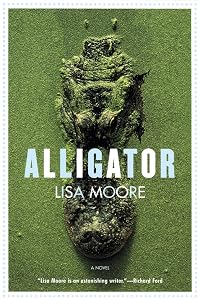
Lisa Moore’s style is distinctive and well practiced. Those familiar with her short story collections, Open or Degrees of Nakedness, will find the same fractured and faceted narrative structure here. There the glimpses she provides, mirrored by her fragmented and suggestive sentences, work brilliantly to create a mood and imply a whole life, a whole story. Whether such a style is as suitable for a novel is debatable, though it certainly works well enough for her first novel, Alligator. Here, however, everything seems muted, monotone, a bit depressed. That works well, of course, with the overall presentation of grief. But it does tend towards a single note. Sections with different characters as leads all sound the same and the characters begin to bleed into one another.
If grief changes everything and everything is grief, then sooner or later the reader, and one suspects also the characters, will start discounting. We start looking past the grief just as we look through the air to see the things that stand out. And what stands out here are the ties of family, the bonds of love, the blunders we make and how we rectify them, and the in-built drive to create new life and new love. Grief may be everywhere, but we get through it. Recommended. show less
Lisa Moore’s style is distinctive and well practiced. Those familiar with her short story collections, Open or Degrees of Nakedness, will find the same fractured and faceted narrative structure here. There the glimpses she provides, mirrored by her fragmented and suggestive sentences, work brilliantly to create a mood and imply a whole life, a whole story. Whether such a style is as suitable for a novel is debatable, though it certainly works well enough for her first novel, Alligator. Here, however, everything seems muted, monotone, a bit depressed. That works well, of course, with the overall presentation of grief. But it does tend towards a single note. Sections with different characters as leads all sound the same and the characters begin to bleed into one another.
If grief changes everything and everything is grief, then sooner or later the reader, and one suspects also the characters, will start discounting. We start looking past the grief just as we look through the air to see the things that stand out. And what stands out here are the ties of family, the bonds of love, the blunders we make and how we rectify them, and the in-built drive to create new life and new love. Grief may be everywhere, but we get through it. Recommended. show less
Widowhood is a painful thing. Left alone to raise four children, Helen stays the course and goes through the motions of daily life even though the deadness inside her is unrelenting. Twenty-six years later, she is still suffering from the "injustice of being robbed" of her (fictional) husband Cal in a (real life) freak accident at sea in 1982. Her grief pours out in a deluge of terse sentences. Some incomplete.
At an age somewhere in her late 50s - she frequently forgets her exact age - she is lonely. So lonely she lives in her memories and fantasies about the man remodeling her house:
..."She made him a sandwich because she was making one for herself, but she found herself peeling carrots, too. Garnish. She was making a garnish for the show more plates, and when you live alone you are a stranger to the idea of garnish. You are a stranger to any flourishes at all. Because you do not exist. There is the TV...the grandchildren...the worry of John. There is Christmas. But Helen does not put a garnish on a plate."
Some readers may not like the skipping back and forth in time; however, the dates are clearly marked so there is no question about when the events occur. The rambling nature mimics the emotional nature of bereavement and gives testament to Helen's deep pain. This is not a happy book yet it has moments of joy and hope about the resilience of the human spirit. show less
At an age somewhere in her late 50s - she frequently forgets her exact age - she is lonely. So lonely she lives in her memories and fantasies about the man remodeling her house:
..."She made him a sandwich because she was making one for herself, but she found herself peeling carrots, too. Garnish. She was making a garnish for the show more plates, and when you live alone you are a stranger to the idea of garnish. You are a stranger to any flourishes at all. Because you do not exist. There is the TV...the grandchildren...the worry of John. There is Christmas. But Helen does not put a garnish on a plate."
Some readers may not like the skipping back and forth in time; however, the dates are clearly marked so there is no question about when the events occur. The rambling nature mimics the emotional nature of bereavement and gives testament to Helen's deep pain. This is not a happy book yet it has moments of joy and hope about the resilience of the human spirit. show less
February is Lisa Moore’s second novel and one that has garnered a lot of attention in 2009 as a Globe and Mail Best Book and Quill and Quire Book of the Year, in 2011 as a 2010 Booker Prize Longlist and as a Commonwealth Writers Prize Shortlist and more recently in 2013 February won CBC’s annual book debate Canada Reads. High time I found out what this book is all about for myself.
Using the Ocean Ranger disaster – the mobile offshore drilling unit that sank in Canadian waters on February 15, 1982, killing all 84 crew members on board at the time – as a focal point, Moore has written a slow, reflective novel that grew on me as I read it. Character perspective books, and in particular ones that employ multiple time, place and show more narration shifts, can take some time to warm up to. February was no exception to this rule as I found I had to pay close attention to the section headings to ensure I knew where in the timeline the narration was as I was reading. Thankfully, Moore restricted her shifts in narration to Helen, her son John and his female acquaintance Jane. If you prefer plot-driven books, this one will drive you to some level of frustration as the focus is on fleshing out the emotional landscape of our main character, Helen and the impact that fateful night when her husband Cal dies and her life suddenly becomes that of a single mom raising four kids in Newfoundland. It is a poignant portrayal of aching loss and overpowering loneliness spanning some 25 years, all shrouded in a brave front to persevere and care for her family as best she can.
What I really liked about this one is Moore’s ability to create real characters.... characters you may recognize from your own community or would not be surprised to encounter on the street. Characters that reach an emotional cliff and wonder if they should just jump off or turn back towards land and continue on with life. The writing is stunning - fluid, evocative, and yet plainly written in a manner that speaks to the masses as its intended audience. She has also captured a Canadian perspective/point of view that is hard to explain but one that I can recognize and relate to. Grief is an anchor that can drag us down and change lives irreparably, if we let it. Some favorite quotes:
"The act of being dead, if you could call it an act, made them very hard to love. They'd lost the capacity to surprise. You needed a strong memory to love the dead, and it was not her fault that she was failing. She was trying. But no memory was that strong. This was what she knew: no memory was that strong."
"We are alone in death. Of course we are alone. It is a solitude so refined we cannot experience it while we are alive; it is too rarefied, too potent. It is a drug, that solitude, an immediate addiction. A profound selfishness, so full of self it is an immolation of all that came before. Cal was alone in that cold. Utterly alone, and that was death. That, finally, was death."
A book I am very glad I have finally made the time to pick up and read! show less
Using the Ocean Ranger disaster – the mobile offshore drilling unit that sank in Canadian waters on February 15, 1982, killing all 84 crew members on board at the time – as a focal point, Moore has written a slow, reflective novel that grew on me as I read it. Character perspective books, and in particular ones that employ multiple time, place and show more narration shifts, can take some time to warm up to. February was no exception to this rule as I found I had to pay close attention to the section headings to ensure I knew where in the timeline the narration was as I was reading. Thankfully, Moore restricted her shifts in narration to Helen, her son John and his female acquaintance Jane. If you prefer plot-driven books, this one will drive you to some level of frustration as the focus is on fleshing out the emotional landscape of our main character, Helen and the impact that fateful night when her husband Cal dies and her life suddenly becomes that of a single mom raising four kids in Newfoundland. It is a poignant portrayal of aching loss and overpowering loneliness spanning some 25 years, all shrouded in a brave front to persevere and care for her family as best she can.
What I really liked about this one is Moore’s ability to create real characters.... characters you may recognize from your own community or would not be surprised to encounter on the street. Characters that reach an emotional cliff and wonder if they should just jump off or turn back towards land and continue on with life. The writing is stunning - fluid, evocative, and yet plainly written in a manner that speaks to the masses as its intended audience. She has also captured a Canadian perspective/point of view that is hard to explain but one that I can recognize and relate to. Grief is an anchor that can drag us down and change lives irreparably, if we let it. Some favorite quotes:
"The act of being dead, if you could call it an act, made them very hard to love. They'd lost the capacity to surprise. You needed a strong memory to love the dead, and it was not her fault that she was failing. She was trying. But no memory was that strong. This was what she knew: no memory was that strong."
"We are alone in death. Of course we are alone. It is a solitude so refined we cannot experience it while we are alive; it is too rarefied, too potent. It is a drug, that solitude, an immediate addiction. A profound selfishness, so full of self it is an immolation of all that came before. Cal was alone in that cold. Utterly alone, and that was death. That, finally, was death."
A book I am very glad I have finally made the time to pick up and read! show less
First line:
~ Helen watches as the man touches the skate blade to the sharpener ~
I just finished Lisa Moore's February. This is not a book that I would have ever chosen on my own and, yet, it is one that am I so glad that I have not missed. It is well written and I enjoyed it a lot. I am Canadian, divorced and in my 50's with two grown children so I could relate to the main character. I was actually unaware of the tragedy of the Ocean Ranger and was quite saddened and amazed when I realized that this month was the 30th anniversary of it's sinking. This paragraph is an example of Lisa Moore's powers of description. "Then the wave withdrew with a roar, and there he was. He stood and he was dark against the sun except for a gleam down his show more arm and in his hair, and he flicked his head and the drops flew out like a handful of silver, and he dipped under the water again and waded against its pull towards shore and came back up the beach to her." Powerful, I can see it now. show less
~ Helen watches as the man touches the skate blade to the sharpener ~
I just finished Lisa Moore's February. This is not a book that I would have ever chosen on my own and, yet, it is one that am I so glad that I have not missed. It is well written and I enjoyed it a lot. I am Canadian, divorced and in my 50's with two grown children so I could relate to the main character. I was actually unaware of the tragedy of the Ocean Ranger and was quite saddened and amazed when I realized that this month was the 30th anniversary of it's sinking. This paragraph is an example of Lisa Moore's powers of description. "Then the wave withdrew with a roar, and there he was. He stood and he was dark against the sun except for a gleam down his show more arm and in his hair, and he flicked his head and the drops flew out like a handful of silver, and he dipped under the water again and waded against its pull towards shore and came back up the beach to her." Powerful, I can see it now. show less
Members
- Recently Added By
Published Reviews
ThingScore 58
Ik denk dat we de wereld zo ervaren. De hele dag door worden we overvallen door beelden, door herinneringen. Mijn eigen geheugen is niet gekoppeld aan tijd. Ik heb geen idee wanneer iets gebeurd is, maar ik weet nog wel precies hoe een stof voelde en welke kleuren die had. Ik denk op die manier, ik ervaar het zo, dus ik zou het moeilijk vinden niet op die manier te schrijven. In een show more opschrijfboekje schrijf ik de hele dag door hoe mensen bewegen, hoe het licht binnenvalt. Die observaties kunnen doorsijpelen in mijn romans. Soms kan ik euforisch beschrijven hoe iemand een vork opraapt, een andere keer beschrijf ik zeven keer dezelfde fruitschaal omdat ik het gevoel het dat ik het nog niet goed heb. Zoals iemand anders tekent of schildert. Ik wil in zo weinig mogelijk woorden iets beschrijven dat de lezer onmiddellijk herkent. Dat is voor mij de essentie van schrijven.’ show less
added by PGCM
The novel's only real weakness is that this symbolic richness doesn't extend into the lives of its second-tier characters; Helen's three daughters, in particular, are only lightly sketched...The novel's ending, too, in which Helen finally slips the knot of her grief, seems suspiciously neat from afar. But these faults can be forgiven in the context of what Moore manages to pull off: a novel show more which takes a moment of catastrophe and focuses not on the moment itself but on all the moments that surround it; that are altered, subtly or dramatically, by it. show less
added by vancouverdeb
February is not plot-driven: the back-and-forth chronology is meant to flesh out emotional landscapes and fill in historical details. Although Moore writes with an almost brash economy, she cannot prevent February from coming off as an overly sentimental love story....Cal was the great and only love of Helen’s life, and she spends the 25 years after his death rather tediously reliving their show more time together and speculating about his final moments....would have worked as a short story – a genre at which Moore excels – but its impact is ultimately diluted by the novel’s amplitude. show less
added by vancouverdeb
Lists

CBC Books - Canada's 100 (+ bonus 10): Which have you read?
110 works; 23 members

Top Five Books of 2013
1,562 works; 721 members
Booker Prize
491 works; 62 members

Canada Reads Winners and Nominees
129 works; 9 members

CBC's Great Canadian Reading List
149 works; 5 members

Man Booker Prize Longlist 2010
12 works; 2 members

Evergreen Award™ Winners and Nominees 2005–2024
200 works; 3 members

Canadian Historical Fiction 🇨🇦
157 works; 8 members
Author Information

11+ Works 1,451 Members
Some Editions
Awards and Honors
Awards
Distinctions
Common Knowledge
- Original publication date
- 2010
- People/Characters
- Helen O'Mara; Cal O'Mara; John O'Mara
- Important places
- Newfoundland, Canada; Atlantic Ocean; Canada
- Important events
- Sinking of the Ocean Ranger (1982)
- Dedication
- For my parents, Elizabeth and Leo Moore.
- First words
- Helen watches as the man touches the skate blade to the sharpener.
- Quotations
- Helen had something they did not have, something they aspired to but could not name. They would have been mortified to learn it was experience. They did not want experience. Helen was sad and the young women didn’t unders... (show all)tand the sadness but they respected it. A blow had been struck, bull’s-eye, without warning, and it had scarred Helen.
Helen did not take tranquilizers. Her children would never know it, but this was her approach to parenting: she was there for them. Her doctor had said pills, and she had said no. Helen was there, morning, noon, and night.... (show all) That was her approach. She had wanted to die. She did not die.
Life barrels through; it is gone. Something rushes through. The front door slams and then a door slams in the back; something burns on the stove; birthdays, brides and caskets, babies, bankruptcy, huge strokes of luck, the t... (show all)rees full of ice; gone.
They sang and the reedy sound was resignation. It takes seventy or eighty years of practice to master resignation, but the old women know it is a necessary skill. (p. 12)
People who want to know about the settlement seem to think a life has a figure attached to it. A leg is worth what? An arm? A torso? What if you lose the whole husband? ... People who want to know about the money don't know w... (show all)hat it's like on the outside. They are still on the inside. (p. 20)
Somehow Helen had picked up the idea that there was such a thing as love, and she had invested fully in it. She had summoned everything she was, every little tiny scrap of herself, and she'd handed it over to Cal and said: Th... (show all)is is yours. (p. 49)
Why did you love each other so very much? It destroyed you. Don't give that much, he wants to say. People don't have to give that much. How foolish to keep going. (p. 107)
Maybe, John thinks, he doesn't want to know what's in the future. He has given a lot of thought to the nature of time and how a life can be over much too quickly, if you're not careful. The present is always dissolving into t... (show all)he past, he realized long ago. The present dissolves. It gets used up. The past is virulent and ravenous and everything can be devoured in a matter of seconds.
That's the enigma of the present. The past has already infiltrated it; the past has set up camp, deployed soldiers with toothbrushes to scrub away all of the now, and the more you think about it, the faster everything dissolves. There is no present. There is not present. Or, another way to think about it: your life could go on without you. (pp. 238-239)
The past yields, it gives way, it goes on forever. The future is unyielding. It is possible that the past has cracked off, the past has clattered to the floor, and what remains is the future and there is not very much of that... (show all). The future is the short end of the stick. (p. 263)
As long as she lives Helen will never forget how beautiful the snow way, and the sky, and how it flooded her and she couldn't tell the beauty apart from the panic. She decided then, and still believes that beauty and panic ar... (show all)e one and the same. (p. 271)
What Helen cannot fathom or forgive: We are alone in death. Of course we are alone. It is a solitude so refined we cannot experience it while we are alive; it is too rarefied, too potent. It is a drug, that solitude, an immed... (show all)iate addiction. A profound selfishness so full of self it is immolation of all that came before. Cal was alone in that cold. Utterly alone and that was death. That, finally, was death. (p. 292) - Last words
- (Click to show. Warning: May contain spoilers.)He stood and he was dark against the sun except for a gleam down his arm and in his hair, and he flicked his head and the drops flew out like a handful of silver, and he dipped under the water again and waded against its pull towards shore and came back up the beach to her.
Classifications
Statistics
- Members
- 628
- Popularity
- 46,333
- Reviews
- 48
- Rating
- (3.76)
- Languages
- Dutch, English, French, German
- Media
- Paper, Audiobook, Ebook
- ISBNs
- 18
- ASINs
- 5