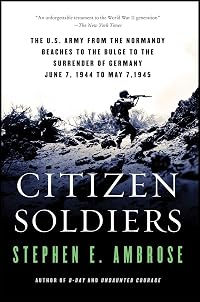
Citizen Soldiers: The U.S. Army from the Normandy Beaches to the Bulge to the Surrender of Germany
by Stephen E. Ambrose
On This Page
Description
Citizen Soldiers opens on June 7, 1944, on the Normandy beaches, and ends on May 7, 1945. From the high command on down to the enlisted men, Stephen E. Ambrose draws on hundreds of interviews and oral histories from men on both sides who were there. He recreates the experiences of the individuals who fought the battles, the women who served, and the Germans who fought against us. Ambrose reveals the learning process of a great army -- how to cross rivers, how to fight in snow or hedgerows, show more how to fight in cities, how to coordinate air and ground campaigns, how to fight in winter and on the defensive, how citizens become soldiers in the best army in the world. A masterful biography of the U.S. Army in the European Theater of Operations, Citizen Soldiers provides a compelling account of the extraordinary stories of ordinary men in their fight for democracy. show lessTags
Recommendations
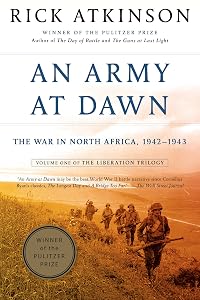
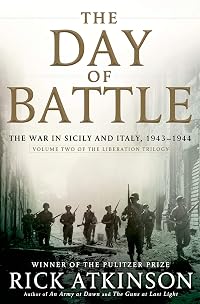

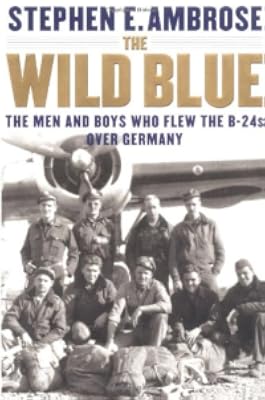


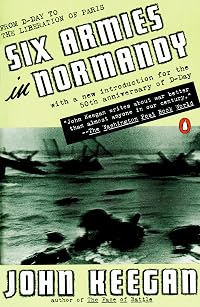
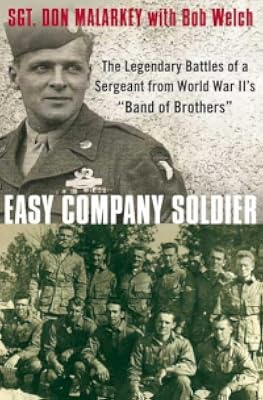


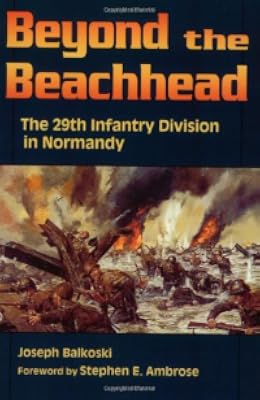
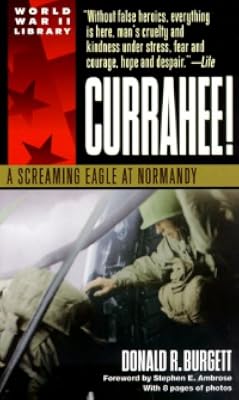
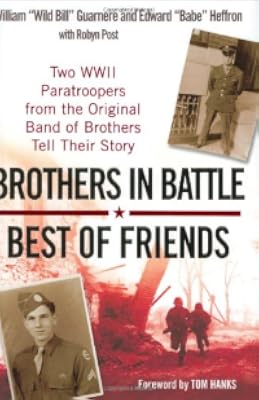


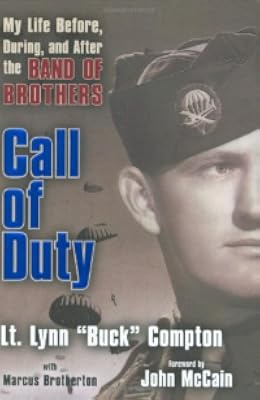
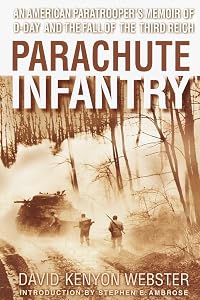
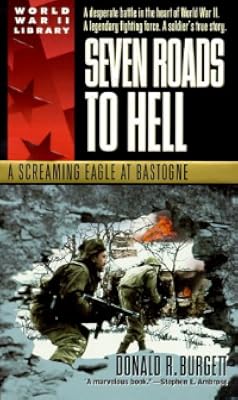
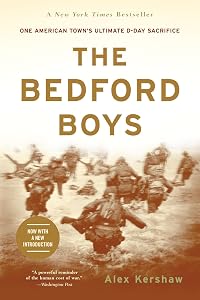

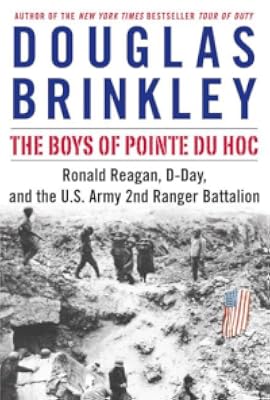

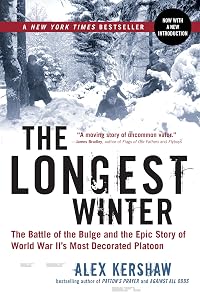


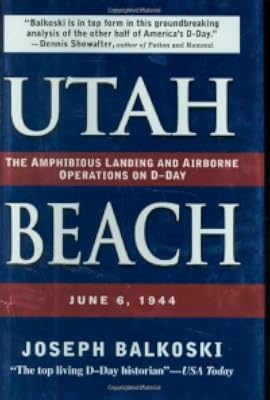

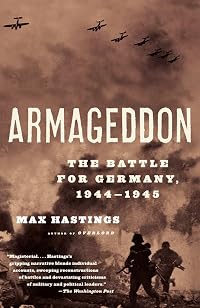
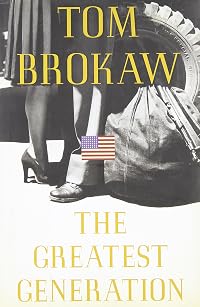
Member Recommendations

The Monuments Men: Allied Heroes, Nazi Thieves and the Greatest Treasure Hunt in History by Robert M. Edsel
cbl_tn Both books cover events in Western Europe during the same time frame in World War II.
13
Member Reviews
Ambrose, an incredibly prolific and readable historian, focuses in this book on the soldiers who made up the ETO (European Theater of Operations). It’s at first somewhat difficult to categorize. His analysis of the men who made up the army could almost be called cheer-leading of the most nauseating kind. But after he settles in, the reality becomes more apparent. They weren’t all great guys and upstanding citizens. He points out that some thirty percent of supplies coming into ports after the invasion of Europe were stolen for resale on the black market. The picture of Milo in Catch-22 is not the grossest exaggeration. Racial problems were endemic at all levels, but Ambrose reserves his harshest judgment for the upper echelon show more commanders who remained clean, dry, and well-fed in the rear while front-line troops were asked to take objectives that often made little sense at great cost. Thousands of GI’s were lost to trench foot and frostbite during the winter because the boots they were issued were inadequate. Those in the rear got the good rubber-covered boots. The response of the brass was to insist that soldiers change their socks regularly, and threatened to court-martial anyone diagnosed with trench foot. The replacement system designed by Eisenhower’s staff sent inadequately trained men to the front where they often died needlessly. Had they been trained as units, with experienced sergeants and sent into battle as units fewer would have died, suggests Ambrose. British general Montgomery was clearly more interested in self-promotion than in becoming part of the team,, and Ambrose cites one example where Montgomery’s demands for more overall command had to be personally put down by Eisenhower. George Patton was obsessed with spit-and-polish. In one instance some officers just coming from the muddy front had been ordered to Third Army headquarters to get some badly needed maps. They were held up at the entrance to Third Army territory because Patton had issued orders to his MP’s that anyone entering had to maintain proper uniform standards of cleanliness, etc. It took the officers hours to get cleared and cleaned-up before they could get what they needed, holding up the offensive.
Soldiers soon learned that war was not all they expected. As others, like Paul Fussell and Gerald Lindeman (who explored the role of the American fighting man) have noted, war has been seriously overglamorized. Soldiers were psychologically unprepared for battle and the stress broke many of them down. Often they refused to take prisoners, shooting all Germans in the way whether under white flag or not. The war fundamentally altered the lives of those who survived the front lines. Americans, having never been bombed, cannot appreciate the horror of interminable artillery shelling and constant fear and deprivation.
Ambrose clearly admires what these soldiers for what they endured. In the end, the reason for fighting the war is exemplified by the tragic comments of a severely wounded German lieutenant who desperately needed a blood transfusion. Just as it was to be administered, the German insisted the medic certify there was no Jewish blood mixed in with the blood he was about to receive. The medic obviously could not, but pointed out that without the plasma he would die. The German died refusing to be transfused. They should have given it to him anyway. show less
Soldiers soon learned that war was not all they expected. As others, like Paul Fussell and Gerald Lindeman (who explored the role of the American fighting man) have noted, war has been seriously overglamorized. Soldiers were psychologically unprepared for battle and the stress broke many of them down. Often they refused to take prisoners, shooting all Germans in the way whether under white flag or not. The war fundamentally altered the lives of those who survived the front lines. Americans, having never been bombed, cannot appreciate the horror of interminable artillery shelling and constant fear and deprivation.
Ambrose clearly admires what these soldiers for what they endured. In the end, the reason for fighting the war is exemplified by the tragic comments of a severely wounded German lieutenant who desperately needed a blood transfusion. Just as it was to be administered, the German insisted the medic certify there was no Jewish blood mixed in with the blood he was about to receive. The medic obviously could not, but pointed out that without the plasma he would die. The German died refusing to be transfused. They should have given it to him anyway. show less
Really a sequel to "D Day", this books starts on June 7 1944 and covers the history of the European theater of WW II until the German surrender. It's told, though, from the perspective of the soldiers themselves more than from the command level. Ambrose's thesis is pretty clear from early on: the heroism and initiative of regular GIs was a huge factor in the victory over Germany. And wow, he really does leave the reader feeling what it's like buried in a foxhole in the winter of 1944-45, which sounds all different kinds of awful.
Ambrose covers the commanders too, and we get a little feel for Eisenhower, Bradley, Patton, and Montgomery and some of their petty (and not so petty) differences. But the real focus is on the guys on the front show more lines.
As with D Day, my biggest problem is that the maps are inadequate and it's really hard to follow the overall strategic situation unless you have an extensive knowledge in your head of European geography, which I don't. Then again, the point is that these strategic details are less important than the stories told by the junior officers and enlisted men on the lines. Fair enough.
Truly the "Greatest Generation". show less
Ambrose covers the commanders too, and we get a little feel for Eisenhower, Bradley, Patton, and Montgomery and some of their petty (and not so petty) differences. But the real focus is on the guys on the front show more lines.
As with D Day, my biggest problem is that the maps are inadequate and it's really hard to follow the overall strategic situation unless you have an extensive knowledge in your head of European geography, which I don't. Then again, the point is that these strategic details are less important than the stories told by the junior officers and enlisted men on the lines. Fair enough.
Truly the "Greatest Generation". show less
Stephen Ambrose has the uncanny ability to take you back in time. His words pick you up and carry you hook, line and sinker, back to June 7, 1944 and forward through the great and terrible World War II. However, Citizen Soldiers is not a dry account of strategic war manuevers. It is not a blah blah blah play by play of how Germany's armies moved along the western/eastern slope while the Allies pushed further north or south. Those things did happen but Citizen Solders is more than that. It's as if you have been dropped in the middle of hand to hand skirmishes or have the ability to eavesdrop on Hitler's frequent phone arguments with a subordinate. You get to know people, places and events as if you are talking to the soldiers themselves, show more dodging bullets in the snow-covered country side, and witnesses skirmishes first hand. For once, the photographs and maps included do not make the storytelling vivid, they only enhance the words. show less
I have read a great many war narratives, old and new, long and short, and this one was possibly the best, most personal war book I've ever read. Better than Black Hawk Down. Better than Band of Brothers. Better than The Coldest Winter. . .
I especially liked the way the book treated the approach to the borders of the Reich. The story of the stall of the advance, the long winter, the pointless, fruitless loss and death in the Hurtgen--the period between Normandy and the Bulge--didn't so much change the way I thought about the course of the war as it just expanded it in depth. Particularly, Citizen Soldiers was unmatched in presenting how this long autumn and winter 1944-1945 affected the individual soldiers not so much just then, but in show more the final push into Germany.
This book was a fast read, and engaging, but really gave the reader the sense of the slowness of time in miserable conditions.
I'll just stop, because I could continue for a while, but one final note. I've been in the airborne infantry, and I've been in the Army Reserve as a CS troop.
As such, the term, "Citizen Soldier" has been tainted by my experience of the term used today to describe the reserve soldier. They are people to be admired, but cannot compare to the discipline and training of the professional soldiery. For this reason, I avoided this book for a long time because I let my prejudices of the term in the title influence my expectations. Make no mistake, it is aptly named, but its title is its title, not the borrowed phrase.
The citizen soldiers of this title are not those of the modern army propaganda team, but rather those of whom Tyrtaeus spoke:
"For no man ever proves himself a good man in war
unless he can endure to face the blood and the slaughter,
go close against the enemy and fight with his hands.
Here is courage, mankind's finest possession, here is
the noblest prize that a young man can endeavor to win,
and it is a good thing his polis and all the people share with him
when a man plants his feet and stands in the foremost spears
relentlessly, all thought of foul flight completely forgotten,
and has trained his heart to be steadfast and to endure,
and with words encourages the man who is stationed beside him.
Here is a man who proves himself to be valiant in war.
With a sudden rush he turns to fight the rugged battalions
of the enemy, and sustains the beating waves of assault.
And he who so falls among the champions and loses his sweet life,
so blessing with honor his polis, his father, and all his people,
with wounds in his chest, where the spear that he was facing has transfixed
that massive guard of his shield, and gone through his breastplate as well,
why, such a man is lamented alike by the young and the elders,
and all his polis goes into mourning and grieves for his loss.
His tomb is pointed out with pride, and so are his children,
and his children's children, and afterward all the race that is his.
His shining glory is never forgotten, his name is remembered,
and he bcomes an immortal, though he lies under the ground,
when one who was a brave man has been killed by the furious War God
standing his ground and fighting hard for his children and land." show less
I especially liked the way the book treated the approach to the borders of the Reich. The story of the stall of the advance, the long winter, the pointless, fruitless loss and death in the Hurtgen--the period between Normandy and the Bulge--didn't so much change the way I thought about the course of the war as it just expanded it in depth. Particularly, Citizen Soldiers was unmatched in presenting how this long autumn and winter 1944-1945 affected the individual soldiers not so much just then, but in show more the final push into Germany.
This book was a fast read, and engaging, but really gave the reader the sense of the slowness of time in miserable conditions.
I'll just stop, because I could continue for a while, but one final note. I've been in the airborne infantry, and I've been in the Army Reserve as a CS troop.
As such, the term, "Citizen Soldier" has been tainted by my experience of the term used today to describe the reserve soldier. They are people to be admired, but cannot compare to the discipline and training of the professional soldiery. For this reason, I avoided this book for a long time because I let my prejudices of the term in the title influence my expectations. Make no mistake, it is aptly named, but its title is its title, not the borrowed phrase.
The citizen soldiers of this title are not those of the modern army propaganda team, but rather those of whom Tyrtaeus spoke:
"For no man ever proves himself a good man in war
unless he can endure to face the blood and the slaughter,
go close against the enemy and fight with his hands.
Here is courage, mankind's finest possession, here is
the noblest prize that a young man can endeavor to win,
and it is a good thing his polis and all the people share with him
when a man plants his feet and stands in the foremost spears
relentlessly, all thought of foul flight completely forgotten,
and has trained his heart to be steadfast and to endure,
and with words encourages the man who is stationed beside him.
Here is a man who proves himself to be valiant in war.
With a sudden rush he turns to fight the rugged battalions
of the enemy, and sustains the beating waves of assault.
And he who so falls among the champions and loses his sweet life,
so blessing with honor his polis, his father, and all his people,
with wounds in his chest, where the spear that he was facing has transfixed
that massive guard of his shield, and gone through his breastplate as well,
why, such a man is lamented alike by the young and the elders,
and all his polis goes into mourning and grieves for his loss.
His tomb is pointed out with pride, and so are his children,
and his children's children, and afterward all the race that is his.
His shining glory is never forgotten, his name is remembered,
and he bcomes an immortal, though he lies under the ground,
when one who was a brave man has been killed by the furious War God
standing his ground and fighting hard for his children and land." show less
Ambrose takes military detail and making it readable. It was fascinating hearing the stories of 17, 18 and 19-year old kids with little training winning the war in the European Theatre in WWII. As the son-in-law of a WWII veteran, some of the war stories seemed familiar: the hedge row fighting, the snow and cold, camping in cellars, beating those damn Germans. The book is all about the soldiers. By necessity, Ambrose has to take the reader through the chronology of the battles and explain the difference between a Sherman and an 88. But it always come back to the men - the boys who became men - and their journeys.
Citizen Soldiers is a wonderful book. Ambrose is a master of combining the epic with the minuscule, offering a broad description of the US march from Normandy to Germany as well as a multitude of personal stories of heroism throughout the battles. A gripping book that's tough to put down.
This book covers some very well covered territory - the US Army in Europe from D-Day to the end of the war in Europe. It appears to be very well researched and quite thorough. However, having recently read David Atkinson, Jeff Shaara and Cornelius Ryan books that cover the same period, I felt it suffered by comparison. The Atkinson book is more thorough, better written and just as well researched. The Shaara book is much better getting across the personalities of both the leaders and the individual troops. For what its worth, while I thought this was good, you'd better off reading one of the others if you are already somewhat familiar with the material. At times I felt Ambrose veers off into personal opinion in areas where it wasn't show more warranted. Still, as a history of the US Army in 1944-1945, this is a worthy history. It brings up some subjects that aren't covered as well by the others, particularly some supply issues and equipment issues. This may be an unfair comparison as the Rick Atkinson book just came out in 2014, but I preferred Atkinson. show less
Members
- Recently Added By
Lists

Books That Changed Our Perspective
423 works; 168 members
Author Information

72+ Works 43,890 Members
Historian Stephen E. Ambrose grew up in Wisconsin and attended the University of Wisconsin and the University of Louisiana. Ambrose is considered to be one of the foremost historical scholars of recent times and has been a professor for over three decades. He is also the founder and president of the National D-Day Museum in New Orleans. His works show more include D-Day: June 6, 1944: The Climactic Battle of World War II, Citizen Soldiers: The U. S. Army from Normandy Beaches to the Bulge to the Surrender of Germany, June 7, 1944-May 7, 1945, Band of Brothers: E Company, 506th Regiment, 101st Airborne from Normandy to Hitler's Eagle's Nest and Undaunted Courage: Meriwether Lewis, Thomas Jefferson and the Opening of the American West. Abrose served historical consultant on the motion picture Saving Private Ryan. (Bowker Author Biography) show less
Awards and Honors
Distinctions
Notable Lists
Work Relationships
Common Knowledge
- Canonical title
- Citizen Soldiers: The U.S. Army from the Normandy Beaches to the Bulge to the Surrender of Germany
- Original title
- Citizen Soldiers
- Original publication date
- 1997
- People/Characters
- Dwight D. Eisenhower; Omar N. Bradley; George S. Patton; John Colby; Belton Cooper; Courtney Hodges (show all 11); Bernard Law Montgomery; Jochen Peiper; Arthur "Dutch" Schultz; Ben Vandervoort; George Wilson
- Important places
- Ardennes, Belgium; Belgium; France; Gelderland, Netherlands; Germany; The Netherlands (show all 11); Normandy, France; Omaha Beach, Normandy, France; Utah Beach, Normandy, France; Bastogne, Luxembourg, Belgium; Siegfried Line
- Important events
- World War II (1939 | 1945); Operation Overlord (1944-06-06 | 1944-08-30); D-Day (1944-06-06); Operation Market Garden (1944-09-17 | 1944-09-25); Battle of the Bulge (1944 | 1945)
- Dedication
- To Moira
- First words
- First light came to Ste. Mere Eglise around 0510. Twenty four hours earlier, it had been just another Norman village, with more than a millennium behind it. By nightfall of June 6, it was a name known around the world, th... (show all)e village where the invasion began and now headquarters for the 82nd Airborne Division.
- Last words
- (Click to show. Warning: May contain spoilers.)At the core, the American citizen soldiers knew the difference between right and wrong, and they didn't want to live in a world in which wrong prevailed. So they fought, and won, and we all of us, living and yet to be born, must be forever profoundly grateful.
- Original language*
- Inglese
*Some information comes from Common Knowledge in other languages. Click "Edit" for more information.
Classifications
- Genres
- History, Nonfiction, General Nonfiction
- DDC/MDS
- 940.5421 — History & geography History of Europe History of Europe 1918- Military history of World War II Campaigns and battles by theatre European theatre
- LCC
- D756 .A52 — History of Europe, Asia, Africa and Oceania History (General) World War II (1939-1945)
- BISAC
Statistics
- Members
- 4,069
- Popularity
- 3,820
- Reviews
- 39
- Rating
- (4.04)
- Languages
- 7 — Danish, Dutch, English, Hungarian, Italian, Polish, Portuguese
- Media
- Paper, Audiobook, Ebook
- ISBNs
- 40
- ASINs
- 18