On This Page
Description
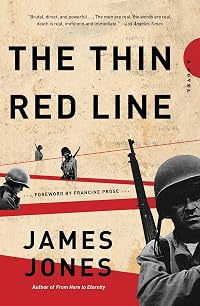
Jones's classic novel of the battle of Guadalcanal: a portrait of American soldiers facing the horror of war in intense jungle combat In August of 1942 the first American marines charged Guadalcanal, igniting a six-month battle for two thousand square miles of jungle and sand. In that gruesome stretch sixty thousand Americans made the jump from boat to beach, and one in nine did not return. James Jones fought in that battle, and The Thin Red Line is his haunting portrait of men and war. The show more soldiers of C-for-Charlie Company are not cast from the heroic mold. The unit's captain is too intelligent and sensitive for the job, his first sergeant is half mad, and the enlisted men begin the campaign gripped by cowardice. Jones's moving portrayal of the Pacific combat experience stands among the great literature of World War II. This ebook features an illustrated biography of James Jones including rare photos from the author's estate. show lessTags
Recommendations

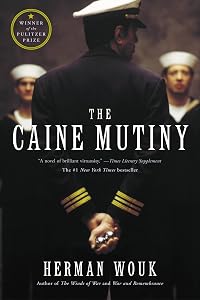

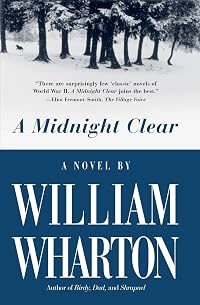
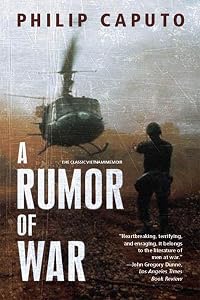


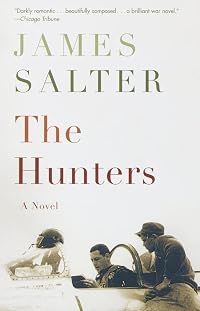

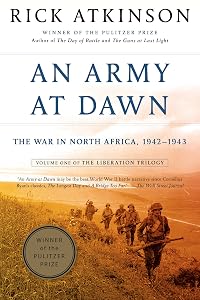
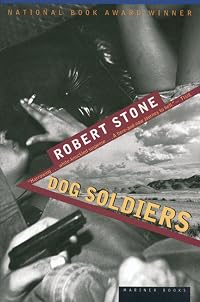

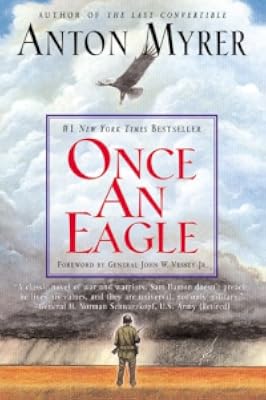
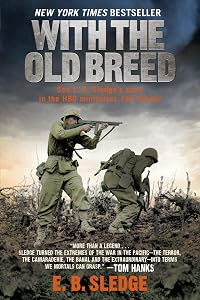













Member Recommendations
Member Reviews
Jones deploys a narrative tone crucial to his presentation of modern warfare in The Thin Red Line. Casual and familiar, the reader is immediately welcomed among characters like family, some friendly and some not, a communal perspective that Jones uses to peer into various experiences unfolding in two or three weeks of ground combat. At times the fear of what the soldiers face is sobering and all-encompassing, but not always. There are personality conflicts and squabbles, valorous intent and careless greed. The narration typically employs a knowing sarcasm: that criticism only plausible coming from an insider, never flippant or light-hearted, and comic only to describe the absurdity of the circumstance.
Events don't cover the entirety of show more WWII, instead describing a complete circuit of infantry actions, from bivouac to support maneuver, coordinated attack to chaotic retreat, sudden break in hostilities to scheduled R-and-R. In an author's note, Jones clarifies that Guadalcanal is his inspirational reference, but he imagines an entirely new set of terrain and combat movements, overlapping with no actual battles or historical combatants. The novel opens in media res and closes on the cusp of another deployment, the clear implication that what unfolded will repeat several times over the course of the war.
The novel's peculiar achievement lies in focusing not on a particular character, or even small group of soldiers, but in telling the story of an infantry outfit. Jones provides a (partial) Regimental Table as Dramatis Personae, useful not only in clarifying the various ranks and assignments, but also as reminder it is C Company's biography (specifically) that is told here. The resulting drama is achieved as a sort of mass effect, layering the individual personalities, skills, shortcomings, and prejudices into collective history. (One subtheme concerns the relative unimportance of individuals, that war is about "not individuals but numbers", about "mathematics"; another, an abiding preoccupation for avoiding responsibility for any harm befalling a fellow soldier. So: not so much a refusal to be accountable, as concession that tragedy is unavoidable, and the best hope is to not personally contribute to that dismal outcome.) In the end, very few individuals remain, but their places have been taken up by others, and we know the next campaign will look very similar to what came before.
One day one of their number would write a book about all this, but none of them would believe it, because none of them would remember it that way. [510]
//
I recall the film & television adaptations of Jones's From Here To Eternity broadcast several times over the major networks, leaving the vague impression of a wartime soap opera. Having read The Thin Red Line, I've revised my expectations of that book. In particular, I will keep an eye out for Whistle, Jones's novel of (some of) these characters after returning home.
A Table of Organization; and, sheet music for "Don't Monkey Around With Death". The lack of any maps typically would be egregious in such a closely-described sequence of military encounters and mobilizations; here, it's thematically appropriate. show less
Events don't cover the entirety of show more WWII, instead describing a complete circuit of infantry actions, from bivouac to support maneuver, coordinated attack to chaotic retreat, sudden break in hostilities to scheduled R-and-R. In an author's note, Jones clarifies that Guadalcanal is his inspirational reference, but he imagines an entirely new set of terrain and combat movements, overlapping with no actual battles or historical combatants. The novel opens in media res and closes on the cusp of another deployment, the clear implication that what unfolded will repeat several times over the course of the war.
The novel's peculiar achievement lies in focusing not on a particular character, or even small group of soldiers, but in telling the story of an infantry outfit. Jones provides a (partial) Regimental Table as Dramatis Personae, useful not only in clarifying the various ranks and assignments, but also as reminder it is C Company's biography (specifically) that is told here. The resulting drama is achieved as a sort of mass effect, layering the individual personalities, skills, shortcomings, and prejudices into collective history. (One subtheme concerns the relative unimportance of individuals, that war is about "not individuals but numbers", about "mathematics"; another, an abiding preoccupation for avoiding responsibility for any harm befalling a fellow soldier. So: not so much a refusal to be accountable, as concession that tragedy is unavoidable, and the best hope is to not personally contribute to that dismal outcome.) In the end, very few individuals remain, but their places have been taken up by others, and we know the next campaign will look very similar to what came before.
One day one of their number would write a book about all this, but none of them would believe it, because none of them would remember it that way. [510]
//
I recall the film & television adaptations of Jones's From Here To Eternity broadcast several times over the major networks, leaving the vague impression of a wartime soap opera. Having read The Thin Red Line, I've revised my expectations of that book. In particular, I will keep an eye out for Whistle, Jones's novel of (some of) these characters after returning home.
A Table of Organization; and, sheet music for "Don't Monkey Around With Death". The lack of any maps typically would be egregious in such a closely-described sequence of military encounters and mobilizations; here, it's thematically appropriate. show less
This is on my to-read list for a while, because I have long been a fan of the Terrence Malick film and wanted to see how the novel compared.
The film is a typical Malickian meditation on man's desecration of nature (and himself). Witt is the moral voice of the film, asking a series of questions that are basically Zen koans: what is this war in the heart of man? What is this war in nature? It came out the same year as Saving Private Ryan, a more jingoistic film that went on to win Best Picture while TTRL was relegated to the dustheap.
The blurbs compare TTRL to All Quiet on the Western Front and Red Badge of Courage. All three consider the meaning of courage in the face of the absurdity of war. Jones presents courage as an act: everyone show more in C-for-Charlie Company is terrified of their first attack up the Elephant's Head, but the social pressure to not seem like a coward in front of peers is too strong to cause men to turn in free in the face of likely, and pointless, death.
It is this social pressure that is the fulcrum on which the war turns. I think Jones is playing with an existentialist metaphor: there are a few soldiers who seem to accept death, and volunteer for the most dangerous missions. They are the few making a moral choice outside of the battle numbness and the fog of war. A clerk named Fife is presented as a coward who eventually must conquer his fear, only to be evacuated for a bum ankle at the end of the novel. He also makes a moral choice to flee the theater of war, leaving the comrades who pushed him to face death in battle. He resists the social pressure to stay with the group.
This is a profound novel that gives real insight into the culture of an Army company during WWII. show less
The film is a typical Malickian meditation on man's desecration of nature (and himself). Witt is the moral voice of the film, asking a series of questions that are basically Zen koans: what is this war in the heart of man? What is this war in nature? It came out the same year as Saving Private Ryan, a more jingoistic film that went on to win Best Picture while TTRL was relegated to the dustheap.
The blurbs compare TTRL to All Quiet on the Western Front and Red Badge of Courage. All three consider the meaning of courage in the face of the absurdity of war. Jones presents courage as an act: everyone show more in C-for-Charlie Company is terrified of their first attack up the Elephant's Head, but the social pressure to not seem like a coward in front of peers is too strong to cause men to turn in free in the face of likely, and pointless, death.
It is this social pressure that is the fulcrum on which the war turns. I think Jones is playing with an existentialist metaphor: there are a few soldiers who seem to accept death, and volunteer for the most dangerous missions. They are the few making a moral choice outside of the battle numbness and the fog of war. A clerk named Fife is presented as a coward who eventually must conquer his fear, only to be evacuated for a bum ankle at the end of the novel. He also makes a moral choice to flee the theater of war, leaving the comrades who pushed him to face death in battle. He resists the social pressure to stay with the group.
This is a profound novel that gives real insight into the culture of an Army company during WWII. show less
I saw the 1998 movie version of this book in theaters when it came out. I remember that I was completely mesmerized and transported by it. It was a movie about war unlike any I'd ever seen before - it was mostly quiet and internal. Walking out of the theater, I found out I was pretty much alone in my enjoyment of it - people all around me said it was slow, boring, pointless. I mention this because I think the movie version prepared me for the book, which is probably just as divisive.
The story floats among a wide cast of characters as they arrive on Guadalcanal. (A special note at the beginning of the book points out that the terrain and battles contained in the book are fictitious, but that Jones placed the imaginary battles on show more Guadalcanal because of the emotion the island evoked.) You meet Pfc Doll, Cpl Fife, Sgt Welsh ... just about everyone has a simple, one-syllable name which is also a word: Band, Queen, Tall, Bell, Dale, Witt, Field, Cash, Beck. At the beginning, they're green recruits who miss the relative comforts of army life in a non-combat zone (and one where it's not constantly raining), apprehensive about what lies ahead. Shortly, as they're thrust into the thick of fighting, they become battle-tested veterans. How they react to their experiences is varied, and we are privy to each man's thoughts, reactions and self-assessments. The inability to ever really know what's going on in someone else's head is a theme visited frequently. You often see things from more than one point of view - what caused someone to act like they did, or what they were trying to convey, and how it was viewed by someone else.
I think that you have to just surrender yourself to the experience of the book. Jones' terrain may be fictional, but he is absolutely certain about how it looks and feels. He transports you to the humid, muddy island, its jungles and rocky hills. The progress made toward the next target is often slow, then suddenly shots are fired and you're thrown into confusion. People act heroically for the wrong reasons, cowardly for the right ones, and the reverse of both of those as well. The soldiers are frustratingly human, and occasionally disturbingly inhuman.
If you're looking for Band of Brothers, this isn't the war experience you want to read about. The men of C-for-Charlie company aren't members of Tom Brokaw's "Greatest Generation," they're just scared young men wondering how they can keep their fear from showing. They fight because there's no way to get out of it. The book explores the idea that a war is fought by an army, but the army is made up of individuals who are each fighting their own war. They all have go through the same things, and yet no one experiences them the same way. Through a number of different characters, Jones repeats the idea that "many more people were going to live through this war than got killed in it," and you realize its value as a mantra when you're in a life-and-death situation that often seems to be a lottery.
Recommended for: fans of Catch-22 and/or The Things They Carried, anyone looking for an antidote to the romanticizing of war, people who know better than to get too attached to characters in a war zone.
Quote: "It was easy to see, when you looked at it from one point of view, that all prisoners were not locked up behind bars in a stone quadrangle. Your government could just as easily imprison you on, say, a jungled island in the South Seas until you had done to its satisfaction what your government had sent you there to do." show less
The story floats among a wide cast of characters as they arrive on Guadalcanal. (A special note at the beginning of the book points out that the terrain and battles contained in the book are fictitious, but that Jones placed the imaginary battles on show more Guadalcanal because of the emotion the island evoked.) You meet Pfc Doll, Cpl Fife, Sgt Welsh ... just about everyone has a simple, one-syllable name which is also a word: Band, Queen, Tall, Bell, Dale, Witt, Field, Cash, Beck. At the beginning, they're green recruits who miss the relative comforts of army life in a non-combat zone (and one where it's not constantly raining), apprehensive about what lies ahead. Shortly, as they're thrust into the thick of fighting, they become battle-tested veterans. How they react to their experiences is varied, and we are privy to each man's thoughts, reactions and self-assessments. The inability to ever really know what's going on in someone else's head is a theme visited frequently. You often see things from more than one point of view - what caused someone to act like they did, or what they were trying to convey, and how it was viewed by someone else.
I think that you have to just surrender yourself to the experience of the book. Jones' terrain may be fictional, but he is absolutely certain about how it looks and feels. He transports you to the humid, muddy island, its jungles and rocky hills. The progress made toward the next target is often slow, then suddenly shots are fired and you're thrown into confusion. People act heroically for the wrong reasons, cowardly for the right ones, and the reverse of both of those as well. The soldiers are frustratingly human, and occasionally disturbingly inhuman.
If you're looking for Band of Brothers, this isn't the war experience you want to read about. The men of C-for-Charlie company aren't members of Tom Brokaw's "Greatest Generation," they're just scared young men wondering how they can keep their fear from showing. They fight because there's no way to get out of it. The book explores the idea that a war is fought by an army, but the army is made up of individuals who are each fighting their own war. They all have go through the same things, and yet no one experiences them the same way. Through a number of different characters, Jones repeats the idea that "many more people were going to live through this war than got killed in it," and you realize its value as a mantra when you're in a life-and-death situation that often seems to be a lottery.
Recommended for: fans of Catch-22 and/or The Things They Carried, anyone looking for an antidote to the romanticizing of war, people who know better than to get too attached to characters in a war zone.
Quote: "It was easy to see, when you looked at it from one point of view, that all prisoners were not locked up behind bars in a stone quadrangle. Your government could just as easily imprison you on, say, a jungled island in the South Seas until you had done to its satisfaction what your government had sent you there to do." show less
An incredible book, a few minor issues here and there, but for the most part a great read. James Jones, as Norman Mailer did in his The Naked and the Dead, paints an unflattering but very real portrait of american soldiers at war in the pacific campaign of world war 2. Specifically the taking of Guadalcanal. But where Mailer's work hold its own as a vision of almost unfathomable power and bravado, Jones' work beats it out as a more nuanced and varied look at the psyches of those americans lost in the tumult of war, both within and outside their thoughts. How does it compare to the movie? (Which I love as one of the most deeply profound sentiments concerning humanity ever put to film)? It definitely stands with it. Not quite as self show more observant, but more stirring in its action and balancing of the men on the cusp of life and death. If i can fault Jones anything it's maybe his sentence structure and word choice. Nothing technically wrong but a few passages here and there seem to lack the flow that a story as dense as his would definitely benefit by. All in all a fantastic book that you should pick up. show less
Set in Guadacanal with the US fighting the Japanese.
Reminded me very much of The Naked And The Dead by Norman Mailer, it is definitely contemporary with that in terms of style and sentiment. From there it is not a great leap to Catch 22 except this isn't a funny book. I guess you'd call it gritty.
The author was in this fight and place and that comes through so clearly. As one of the older generation that has never had to go to war, the horrors are truly animated in this book. I'd be terrified, as were most of the characters in this book. There's no glory here, futility and luck come to the fore.
Although this was based on his experience, it reads like fiction, by that I mean that it flows and is coherent. All up a brilliant book.
Reminded me very much of The Naked And The Dead by Norman Mailer, it is definitely contemporary with that in terms of style and sentiment. From there it is not a great leap to Catch 22 except this isn't a funny book. I guess you'd call it gritty.
The author was in this fight and place and that comes through so clearly. As one of the older generation that has never had to go to war, the horrors are truly animated in this book. I'd be terrified, as were most of the characters in this book. There's no glory here, futility and luck come to the fore.
Although this was based on his experience, it reads like fiction, by that I mean that it flows and is coherent. All up a brilliant book.
I picked up this novel soon after completing the author’s From Here to Eternity. The Thin Red Line was intended to be the second book of a planned trilogy, picking up with the amphibious landing and fight for Guadalcanal.
As with From Here to Eternity, which focused on a military base in Hawaii immediately preceding the attack on Pearl Harbor, the writing in The Thin Red Line is historically authentic, having been written soon after the events depicted in the novel. The characters in the book, members of Charlie Company, are vivid and sharply drawn. The culture of the army unit, especially having to do with sexual issues, was educational for me. I had seen the movie depiction of the novel and my disappointment in the film actually show more caused me to delay reading the book. Suffice it to say, the book is far better than the movie.
My only quibble, and one that I also found in From Here to Eternity is the author’s assumption that the reader is familiar with army ranks and the various subdivisions in an army (i.e. squad, company, battalion, regiment, etc.). This becomes somewhat confusing at times, though not insurmountable. Slightly more troublesome is the absence of maps. The book is rife with topographical and geographic description, which would have been far more useful had it been accompanied by maps detailing the areas of operation.
All in all, an outstanding period piece covering one of the seminal military campaigns of our age. One of the best war novels I’ve read. show less
As with From Here to Eternity, which focused on a military base in Hawaii immediately preceding the attack on Pearl Harbor, the writing in The Thin Red Line is historically authentic, having been written soon after the events depicted in the novel. The characters in the book, members of Charlie Company, are vivid and sharply drawn. The culture of the army unit, especially having to do with sexual issues, was educational for me. I had seen the movie depiction of the novel and my disappointment in the film actually show more caused me to delay reading the book. Suffice it to say, the book is far better than the movie.
My only quibble, and one that I also found in From Here to Eternity is the author’s assumption that the reader is familiar with army ranks and the various subdivisions in an army (i.e. squad, company, battalion, regiment, etc.). This becomes somewhat confusing at times, though not insurmountable. Slightly more troublesome is the absence of maps. The book is rife with topographical and geographic description, which would have been far more useful had it been accompanied by maps detailing the areas of operation.
All in all, an outstanding period piece covering one of the seminal military campaigns of our age. One of the best war novels I’ve read. show less
James Jones found that he had done an awful thing. At the end of writing "From Here To Eternity" he had killed off his main character, Robert E. Lee Pruitt. having done that, he had to create a different set of characters in order to do his Combat, as opposed to peace-time army novel. I believe he always felt that hampered the efforts he put into the other three novels. However, his combat novel, "The Thin Red Line" is still a very good piece of writing. It follows in good detail, an outflanking movement that was crucial in the real Guadalcanal campaign. The writing is four star, and so are the characters. Their motivations are not quite so good as the ones in "From Here to Eternity" but.....
Members
- Recently Added By
Lists

Novels from The Guardian's Great American Novelist Tournament
148 works; 24 members

1960s, Best books published therein
254 works; 22 members

Books about World War II
241 works; 22 members

War Literature
101 works; 19 members

1960s
281 works; 16 members
Best of American Literature
146 works; 9 members

Best Military History Books
125 works; 21 members

The Art of Manliness' 100+ Books Every Man Should Read
108 works; 2 members

THE WAR ROOM
813 works; 24 members
Author Information

21+ Works 5,056 Members
James Jones was born in Robinson, Illinois on November 6, 1921. He was unable to afford college, so he enlisted in the Army in 1939. His experiences during World War II inspired his best-known works: From Here to Eternity, which won the National Book Award in 1952, The Thin Red Line, and Whistle. His other works include The Pistol, Go to the show more Widow-Maker, The Ice-Cream Headache and Other Stories, and The Merry Month of May. Many of his books were adapted into movies including From Here to Eternity, Some Came Running, and The Thin Red Line. He died of congestive heart failure on May 9, 1977. (Bowker Author Biography) show less
Awards and Honors
Series

Work Relationships
Has the adaptation
Common Knowledge
- Canonical title
- The Thin Red Line
- Original title
- The thin red line
- Alternate titles*
- Mourir ou crever
- Original publication date
- 1962
- Important places
- Guadalcanal, Solomon Islands; Solomon Islands
- Important events
- World War II (1939 | 1945); World War II, Pacific Theater (1941-12-07 | 1945-09-02); Guadalcanal Campaign (1942-08-07 | 1943-02-09)
- Related movies
- The Thin Red Line (1964 | IMDb); The Thin Red Line (1998 | IMDb)
- Dedication
- This book is cheerfully dedicated to those greatest and most heroic of all human endeavors, WAR and WARFARE; may they never cease to give us the pleasure, excitement and adrenal stimulation that we need, or provide us with th... (show all)e heroes, the presidents and leaders, the monuments and museums which we erect to them in the name of PEACE.
- First words
- The two transports had sneaked up from the south in the first graying flush of dawn, their cumbersome mass cutting smoothly through the water whose still greater mass bore them silently, themselves as gray as the dawn which c... (show all)amouflaged them.
- Last words
- (Click to show. Warning: May contain spoilers.)One day one of their number would write a book about all this, but none of them would believe it, because none of them would remember it that way.
*Some information comes from Common Knowledge in other languages. Click "Edit" for more information.
Classifications
- Genres
- General Fiction, Fiction and Literature, Historical Fiction
- DDC/MDS
- 813.54 — Literature & rhetoric American literature in English American fiction in English 1900-1999 1945-1999
- LCC
- PZ4 .J77 — Language and Literature Fiction and juvenile belles lettres Fiction and juvenile belles lettres Fiction in English
- BISAC
Statistics
- Members
- 1,527
- Popularity
- 15,163
- Reviews
- 22
- Rating
- (3.85)
- Languages
- 15 — Czech, Danish, Dutch, English, Finnish, French, German, Greek, Hungarian, Italian, Polish, Portuguese, Russian, Spanish, Swedish
- Media
- Paper, Audiobook, Ebook
- ISBNs
- 53
- UPCs
- 1
- ASINs
- 28