
On This Page
Description
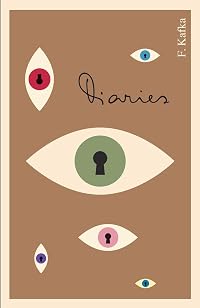
"An essential new translation of the author's complete, uncensored diaries-a revelation of the idiosyncrasies and rough edges of one of the twentieth century's most influential writers. Dating from 1909 to 1923, the handwritten diaries contain various kinds of writing: accounts of daily events, reflections, observations, literary sketches, drafts of letters, accounts of dreams, as well as finished stories. This volume makes available for the first time in English a comprehensive show more reconstruction of the diary entries and provides substantial new content, including details, names, literary works, and passages of a sexual nature that were omitted from previous publications. By faithfully reproducing the diaries' distinctive-and often surprisingly unpolished-writing in Kafka's notebooks, translator Ross Benjamin brings to light not only the author's use of the diaries for literary experimentation and private self-expression, but also their value as a work of art in themselves"-- show lessTags
Recommendations

















Member Reviews
I started reading the Kafka diaries with motive of a trip that took me to the Czech Republic and gave me a chance to spend a few days in Prague by myself. Having been enough times in Prague to want to play the tourist again and feeling a uncontainable need to dig further into Kafka's mind --perhaps motivated by the reading of many works by Enrique Vila-Matas where the Diaries are quoted over and over-- I decided to fetch this book from the public library in Helsinki and let myself get lost in the Prague where Kafka spent most of his life. The heat was unbearable during most of these August days, and I walked and sweated more than I managed to read, but the trip and the diaries, both, have turned my understanding of Kafka's genius in a show more fascinating direction.
A man suffering from a weak phyisical condition that kept him ill more often than not, depriving him from strength for anything that he would deem important; a man who spent restless nights tormented by what he himself considered an unability to actually properly write or to write at all; a man frustrated by his relationship with his family; a man haunted by such a vivid imagination that even his dreams and nightmares would not let him in peace; a man whose relationship with women and sex was so full of contradictions and yet was beyond the intensity that his own body and minde were able to bear: all of this combined in a brief but fruitful span of perhaps 15 years at most is what makes for the violent mix that fueled Kafka's creative genius. How else could, back in the days when Realism predominated literature, turning oneself into a gigant insect-like creature would have been even a possibility, if it wasn't for the uncountable nightmares and dreams of Kafka's nights?
But not only an insight into Kafka's mind is to be found in these diaries. Not only an understanding of his suffering. There are also plenty of wonderful observations of his everyday life. Descriptions so vivid and intense of the most mundane situations that one can only admire: Kafka was not only a genius in his creativity but also in his written accounting of the world. If this was not enough, there are plenty of sketches of what later became full-literary works and many other sketches that, unfinished, unpolished, and all, sometimes even in single paragraphs still account for more literary genius than one can find in entire novels.
The diaries are not easy to read, that must be cleared out. They demand fierce strength and above all, patience with the tormented writer. The many depressing paragraphs can wear one down at times. Yet these diaries deserve careful reading by anyone seriously interested in literature, the mind of a genius, and the origin of anything Kafkaesque. show less
A man suffering from a weak phyisical condition that kept him ill more often than not, depriving him from strength for anything that he would deem important; a man who spent restless nights tormented by what he himself considered an unability to actually properly write or to write at all; a man frustrated by his relationship with his family; a man haunted by such a vivid imagination that even his dreams and nightmares would not let him in peace; a man whose relationship with women and sex was so full of contradictions and yet was beyond the intensity that his own body and minde were able to bear: all of this combined in a brief but fruitful span of perhaps 15 years at most is what makes for the violent mix that fueled Kafka's creative genius. How else could, back in the days when Realism predominated literature, turning oneself into a gigant insect-like creature would have been even a possibility, if it wasn't for the uncountable nightmares and dreams of Kafka's nights?
But not only an insight into Kafka's mind is to be found in these diaries. Not only an understanding of his suffering. There are also plenty of wonderful observations of his everyday life. Descriptions so vivid and intense of the most mundane situations that one can only admire: Kafka was not only a genius in his creativity but also in his written accounting of the world. If this was not enough, there are plenty of sketches of what later became full-literary works and many other sketches that, unfinished, unpolished, and all, sometimes even in single paragraphs still account for more literary genius than one can find in entire novels.
The diaries are not easy to read, that must be cleared out. They demand fierce strength and above all, patience with the tormented writer. The many depressing paragraphs can wear one down at times. Yet these diaries deserve careful reading by anyone seriously interested in literature, the mind of a genius, and the origin of anything Kafkaesque. show less
Anais Nin once wrote that a personal world lived deep enough transcends the truth in all universes. Those words have never been more applicable to any writer other than Franz Kafka. And in this book you can see why.
I remember reading it throughout a whole couple of nights, unable to force myself to stop, absolutely fascinated by a world constructed so delicately, yet unabatedly-sentence by sublime sentence into a marvellous prose edifice.
I can still recall one entire setting where he just describes a billowing shawl of a woman waiting in winter for a train. This is not art but is simply beyond art.
We can never be grateful enough to Max Brod for preserving the manuscript against Kafka’s wishes, which I regard as one of the two most show more significant events in twentieth century literature. The other of course being Sylvia Beach deciding to publish The Ulysses. show less
I remember reading it throughout a whole couple of nights, unable to force myself to stop, absolutely fascinated by a world constructed so delicately, yet unabatedly-sentence by sublime sentence into a marvellous prose edifice.
I can still recall one entire setting where he just describes a billowing shawl of a woman waiting in winter for a train. This is not art but is simply beyond art.
We can never be grateful enough to Max Brod for preserving the manuscript against Kafka’s wishes, which I regard as one of the two most show more significant events in twentieth century literature. The other of course being Sylvia Beach deciding to publish The Ulysses. show less
Kafka writing that he can't write is better writing than most writers out there.
Kafka writing that he can't write is better writing than most writers out there.
Mission: Impenetrable. I reached Page 25 then decided enough was enough. Good luck, reader.
still the purest writer i know.
Ratings
Members
- Recently Added By
Lists

501 Must-Read Books
529 works; 71 members

Read These Too
458 works; 9 members

Modernism
140 works; 8 members

German Literature
518 works; 55 members

sotiris' favourites circa january 2023
43 works; 2 members
Reading LIst
648 works; 1 member

Books Cited in Wasteland by W. Scott Poole
120 works; 1 member
Author Information

1,500+ Works 103,503 Members
Franz Kafka -- July 3, 1883 - June 3, 1924 Franz Kafka was born to middle-class Jewish parents in Prague, Czechoslovakia on July 3, 1883. He received a law degree at the University of Prague. After performing an obligatory year of unpaid service as law clerk for the civil and criminal courts, he obtained a position in the workman's compensation show more division of the Austrian government. Always neurotic, insecure, and filled with a sense of inadequacy, his writing is a search for personal fulfillment and understanding. He wrote very slowly and deliberately, publishing very little in his lifetime. At his death he asked a close friend to burn his remaining manuscripts, but the friend refused the request. Instead the friend arranged for publication Kafka's longer stories, which have since brought him worldwide fame and have influenced many contemporary writers. His works include The Metamorphosis, The Castle, The Trial, and Amerika. Kafka was diagnosed with tuberculosis (TB) in August 1917. As his disease progressed, his throat became affected by the TB and he could not eat regularly because it was painful. He died from starvation in a sanatorium in Kierling, near Vienna, after admitting himself for treatment there on April 10, 1924. He died on June 3 at the age of 40. (Bowker Author Biography) show less

Franz Kafka has a Legacy Library. Legacy libraries are the personal libraries of famous readers, entered by LibraryThing members from the Legacy Libraries group.
Some Editions
Awards and Honors
Distinctions
The Guardian Book of the Day (2024-04-24)
Observer Book of the Week (2024-05-12)
Notable Lists
Series

Belongs to Publisher Series
Work Relationships
Common Knowledge
- Canonical title
- Diaries 1910 - 1923
- Original title
- Tagebücher 1910 - 1923
- Original publication date
- 1935
- People/Characters
- Franz Kafka
- First words
- The onlookers go rigid when the train goes past.
- Quotations
- When I say something it immediately and finally loses its importance, when I write it down it loses it too, but sometimes gains a new one.
- Last words
- (Click to show. Warning: May contain spoilers.)Her father died in a madhouse.
- Original language
- German
Classifications
- Genre
- Biography & Memoir
- DDC/MDS
- 838.91203 — Literature & rhetoric German & related literatures German miscellaneous writings 1900- 1900-1990 1900-1945 Diaries, journals, notebooks, reminiscences
- LCC
- PT2621 .A26 .Z47613 — Language and Literature German, Dutch and Scandinavian literatures German literature Individual authors or works 1860/70-1960
- BISAC
Statistics
- Members
- 1,538
- Popularity
- 14,884
- Reviews
- 6
- Rating
- (4.09)
- Languages
- 11 — Catalan, Danish, English, Estonian, French, German, Italian, Polish, Spanish, Swedish, Portuguese (Portugal)
- Media
- Paper, Ebook
- ISBNs
- 50
- ASINs
- 27