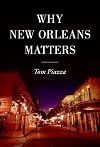
Why New Orleans Matters
by Tom Piazza
On This Page
Description
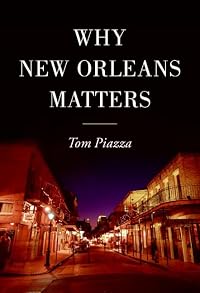
Every place has its history. But what is it about New Orleans that makes it more than just the sum of the events that have happened there? What is it about the spirit of the people who live there that could produce a music, a cuisine, an architecture, a total environment, the mere mention of which can bring a smile to the face of someone who has never even set foot there? What is the meaning of a place like that, and what is lost if it is lost? The winds of Hurricane Katrina, and the show more national disaster that followed, brought with them a moment of shared cultural awareness: Thousands were killed and many more displaced; promises were made, forgotten, and renewed; the city of New Orleans was engulfed by floodwaters of biblical proportions--all in a wrenching drama that captured international attention. Yet the passing of that moment has left too many questions. What will become of New Orleans in the months and years to come? What of its people, who fled the city on a rising tide of panic, trading all they knew and loved for a dim hope of shelter and rest? And, ultimately, what do those people and their city mean to America and the world? In Why New Orleans Matters, award-winning author and New Orleans resident Tom Piazza illuminates the storied culture and uncertain future of this great and most neglected of American cities. With wisdom and affection, he explores the hidden contours of familiar traditions like Mardi Gras and Jazz Fest, and evokes the sensory rapture of the city that gave us jazz music and Creole cooking. He writes, too, of the city's deep undercurrents of corruption, racism, and injustice, and of how its people endure and transcend those conditions. And, perhaps most important, he asks us all to consider the spirit of this place and all the things it has shared with the world--grace and beauty, resilience and soul. "That spirit is in terrible jeopardy right now," he writes. "If it dies, something precious and profound will go out of the world forever." Why New Orleans Matters is a gift from one of our most talented writers to the beloved and important city he calls home--and to a nation to whom that city's survival has been entrusted. show lessTags
Recommendations



Member Reviews
I picked this book up at the airport on my way out of New Orleans and finished it before I got home seven hours later. Funny, passionate, heartbreaking and absolutely gripping. It's beautifully evocative prose captured and helped me understand much of what I found so powerful about being in this city even for a few days.
Piazza wrote the book in the month following hurricane Katrina, unsure of what, if anything, would be left of it, as an effort to "cast a kind of magic spell, to summon up for myself all the things that I found most potent about New Orleans and somehow make them live." The book is also an impassioned for rebuilding New Orleans (recall that in the weeks after the storm there were prominent public officials wondering that show more "made sense") from the bottom up in way that respects the diverse, vibrant cultures of the people rather than top-down profit models of corporate interests. And it is remarkably successful at both.
Ultimately though, this book is the story of the twenty year love affair between the author and his adopted city. Piazza acknowledges the city's tragic flaws - the grinding poverty, the lingering racism, and the criminal and sometimes brutal political corruption -- as only a lover can. "Sooner or later," he writes, "New Orleans will test any love you bring to it." But he argues that the great things about New Orleans -- the food, the music, the joyful insouciance are hard-won, culturally deep reactions to those problems. "In the black gospel tradition which is so central to New Orleans culture, there is a saying: `No Cross, no crown'....You can't have triumph without triumphing over something." show less
Piazza wrote the book in the month following hurricane Katrina, unsure of what, if anything, would be left of it, as an effort to "cast a kind of magic spell, to summon up for myself all the things that I found most potent about New Orleans and somehow make them live." The book is also an impassioned for rebuilding New Orleans (recall that in the weeks after the storm there were prominent public officials wondering that show more "made sense") from the bottom up in way that respects the diverse, vibrant cultures of the people rather than top-down profit models of corporate interests. And it is remarkably successful at both.
Ultimately though, this book is the story of the twenty year love affair between the author and his adopted city. Piazza acknowledges the city's tragic flaws - the grinding poverty, the lingering racism, and the criminal and sometimes brutal political corruption -- as only a lover can. "Sooner or later," he writes, "New Orleans will test any love you bring to it." But he argues that the great things about New Orleans -- the food, the music, the joyful insouciance are hard-won, culturally deep reactions to those problems. "In the black gospel tradition which is so central to New Orleans culture, there is a saying: `No Cross, no crown'....You can't have triumph without triumphing over something." show less
3.5 stars
This book was written a very short time after Hurricane Katrina. Katrina hit at the end of August in 2005, and this book was copyrighted the same year. In Part I, the author describes the culture of New Orleans: the food, the music, the parades, Jazz Fest, Mardi Gras… He also talks about the bad side: the crime, the poverty. In Part II, he looks at the devastation caused by Katrina and contemplates the rebuilding.
I liked it. I’ve been there once, and I already wanted to go back… and the book made me want to go back even more! I was there in 2011, and most of the places I visited hadn’t been affected by the flooding. I did get to one of the affected areas that still, in 2011, mostly hadn’t been fixed up. Reading the show more book certainly brought back some good memories of my visit, though! show less
This book was written a very short time after Hurricane Katrina. Katrina hit at the end of August in 2005, and this book was copyrighted the same year. In Part I, the author describes the culture of New Orleans: the food, the music, the parades, Jazz Fest, Mardi Gras… He also talks about the bad side: the crime, the poverty. In Part II, he looks at the devastation caused by Katrina and contemplates the rebuilding.
I liked it. I’ve been there once, and I already wanted to go back… and the book made me want to go back even more! I was there in 2011, and most of the places I visited hadn’t been affected by the flooding. I did get to one of the affected areas that still, in 2011, mostly hadn’t been fixed up. Reading the show more book certainly brought back some good memories of my visit, though! show less
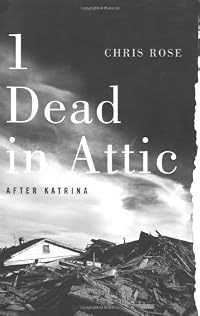
Rushed into print three weeks after Hurricane Katrina devastated New Orleans on August 29, 2005, Why New Orleans Matters purported to explain to Americans unfamiliar with the city what was unique about it and why it merited rebuilding. As a New Orleanian, I agreed wholeheartedly that the city was unique and must be rebuilt, but I thought then--and, almost 15 years later, still believe--that Tom Piazza lacked depth in his understanding of the Crescent City and did a dismal job of explaining its importance. For a real picture of New Orleans after the storm, read Chris Rose's 1 Dead in Attic (either edition).
A short book, written shortly after Hurricane Katrina by a long-time resident of the City, who expresses his love for the food, culture and music, as well as his fear that the unique character of the Crescent City may be lost in the rebuilding process due to a get-rich quick mentality, lack of foresight and lack of consideration for the needs and necessity of what Barbara Bush patronizingly referred to as the "underprivileged" displaced residents.
I think it would have been more powerful if I had read it closer to the event. By now, I've absorbed most of what the author was talking about, as I would assume most people with any interest in the future of New Orleans have as well. Much of the first two thirds reads almost like a laundry show more list of famous musicians, terrific places to eat, etc. If you want to read about the marvel that was the City of New Orleans, I would pass on this book and turn to New Orleans, Mon Amour by Andrei Codrescu for better writing and fuller treatment of the subject matter. show less
I think it would have been more powerful if I had read it closer to the event. By now, I've absorbed most of what the author was talking about, as I would assume most people with any interest in the future of New Orleans have as well. Much of the first two thirds reads almost like a laundry show more list of famous musicians, terrific places to eat, etc. If you want to read about the marvel that was the City of New Orleans, I would pass on this book and turn to New Orleans, Mon Amour by Andrei Codrescu for better writing and fuller treatment of the subject matter. show less
The author's passion for his adopted hometown is clearly evident, although Piazza's lists of the restaurants and musicians he loves is unlikely to inspire the uninitiated. To his credit, Piazza doesn't romanticize New Orleans, exploring, if briefly, the complicated city's dysfunctions as well as its appeal. The book is a little uneven and repetitive (did we really need *two* anecdotes about how a stranger fixed his glasses as evidence of the city's humanity?) but there is genuine emotion here. The book ends shortly after Hurricane Katrina, so I'm curious to see what Piazza has since written about New Orleans and its recovery. A quick but important read.
I came to this book via a recommendation on the New Orleans Times-Picayune's excellent blog about the HBO series "Treme." I suspect one's appreciation of the book will be directly proportional to one's appreciation of the city. The author's passion for his adopted hometown is clearly evident, although Piazza's lists of the restaurants and musicians he loves is unlikely to inspire the uninitiated. To his credit, Piazza doesn't romanticize New Orleans, exploring, if briefly, the complicated city's dysfunctions as well as its appeal. The book is a little uneven and repetitive (did we really need two anecdotes about how a stranger fixed the author's glasses as evidence of the city's humanity?) but there is genuine emotion here. The book show more ends shortly after Hurricane Katrina, so I'm curious to see what Piazza has since written about New Orleans and its recovery. A quick but important read. show less
At first, I didn't think I was going to like this book. I thought the author was pretty arrogant and annoying. But then the book grew on me and I really started to get the feel for the New Orleans that he felt. It must be a great joy to love a city so much. In the end, I thought it was a very well written love story.
I thought the book would focus more on Katrina, but it didn't really unil the last 60 pages or so. I thought I would be disappointed by this, but I wasn't. I thought, in the end, the book was laid out beautifully.
I thought the book would focus more on Katrina, but it didn't really unil the last 60 pages or so. I thought I would be disappointed by this, but I wasn't. I thought, in the end, the book was laid out beautifully.
Members
- Recently Added By
Author Information

13+ Works 907 Members
Tom Piazza is the author of The Guide to Classic Recorded Jazz, for which he won the ASCAP-Deems Taylor Award. His writing about American music has appeared in The New York Times Magazine, The Village Voice, The Atlantic Monthly, The Oxford American, and elsewhere. A noted fiction writer as well, Piazza won a James Michener Award for his show more short-story collection, Blues And Trouble. He lives in New Orleans and is at work on a novel. show less
Awards and Honors
Common Knowledge
- Important places
- New Orleans, Louisiana, USA
- Important events
- Hurricane Katrina
Classifications
Statistics
- Members
- 251
- Popularity
- 128,178
- Reviews
- 10
- Rating
- (3.95)
- Languages
- English
- Media
- Paper, Ebook
- ISBNs
- 6
- UPCs
- 1
- ASINs
- 5