
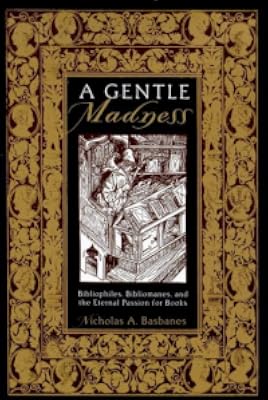
A Gentle Madness: Bibliophiles, Bibliomanes, and the Eternal Passion for Books
by Nicholas A. Basbanes
On This Page
Description
The passion to possess books has never been more widespread than it is today; indeed, obsessive book collecting remains the only hobby to have a disease named after it. A Gentle Madness is an adventure among the afflicted. Author Nicholas Basbanes, a dedicated bibliophile himself, begins his book 2,200 years ago in Alexandria, when a commitment was made to gather all the world's knowledge beneath one roof. In a series of lively chapters, the continuum then passes through the Middle Ages and show more the Renaissance to the twentieth century with a special emphasis on book lore and book culture in Great Britain and North America. In the second half of A Gentle Madness, Basbanes offers a gallery of revealing profiles of living collectors and presents exclusive examinations of the great contemporary stories. The book also includes the most comprehensive bibliography on book collecting compiled in more than a quarter century. show lessTags
Recommendations

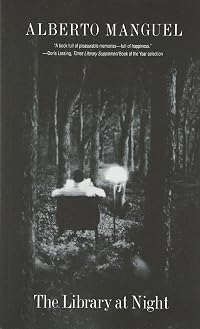
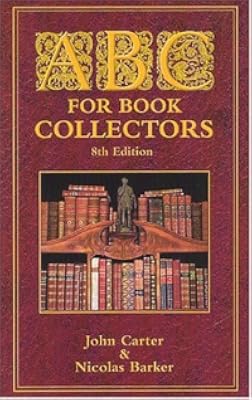
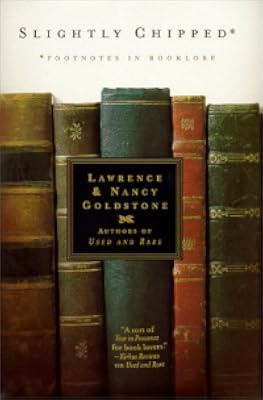
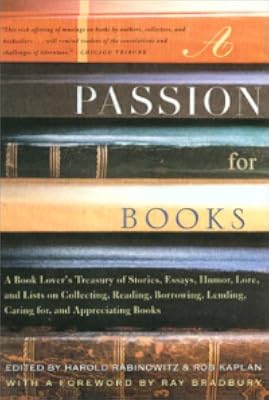
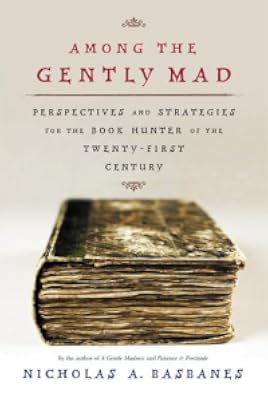
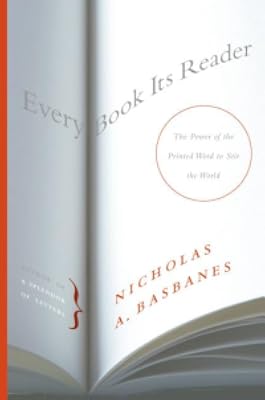

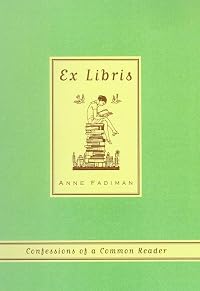
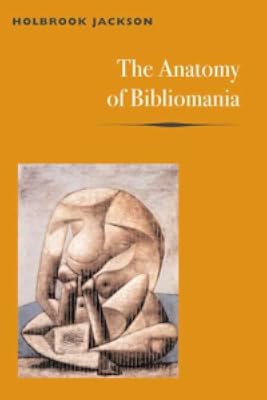


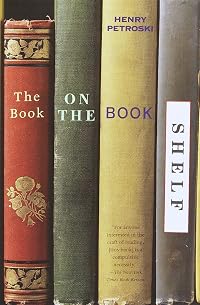
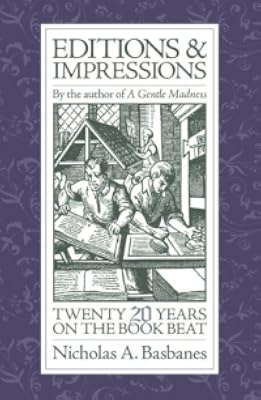
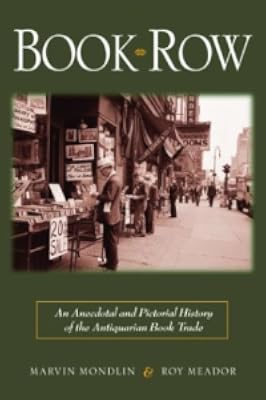
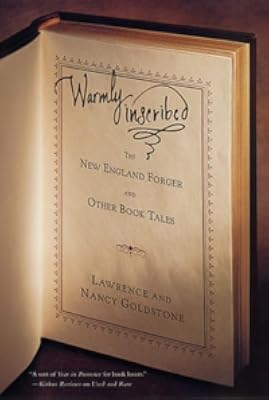
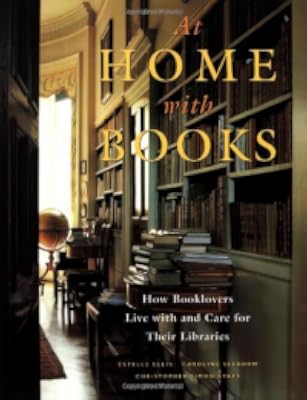
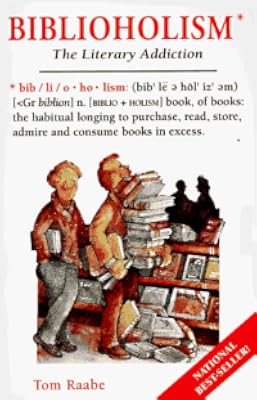
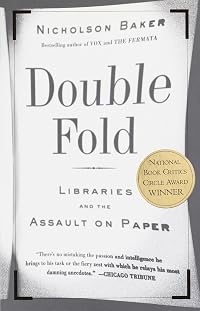
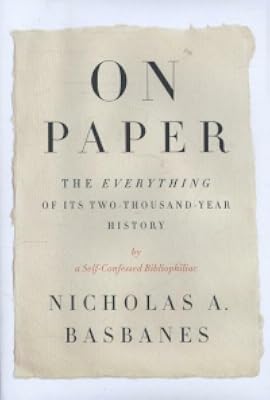










Member Recommendations
divinenanny A book about libraries, historical, current, private and public. Also about the power of a book and reading.
120
ALinNY458 This was a wonderful, entertaining book that I recommend highly to anyone interested in books and the people who collect them.
51

Biblioaprenent Un gran llibre per aprendre bibliofília.
Member Reviews
Summary: An entertaining journey through the history and contemporary world of book collecting, and the “bibliomanes” whose passion for books formed amazing collections.
I think it is obvious that I love books. More precisely, I love reading books and talking about them. I do have a number of books in my home (and have donated or sold large numbers). I am a bibliophile, but not a bibliomane. This is the “gentle madness” Nicholas Basbanes writes about in this thick, delightful book you just don’t want to end because of the interesting stories of bibliomanes. The title comes from a description of Isaiah Thomas as being stricken with “the gentlest of infirmities, bibliomania.”
The most interesting difference between show more bibliophiles and bibliomanes, is that the former love reading books, while the latter collect them. The collectors usually have some focus in their collecting, from first editions of great books, to everything coming from the hand of a particular author or set of authors. I love finding books at the lowest price. Collectors pay attention to price but will spare no expense for something they want. At the very beginning, we meet a chef and restaurateur, Louis Szathmary, whose collection of cookbooks and artifacts filled sixteen semi-trailers and went to half a dozen institutions. And this is the fascinating part of the story. So often the collecting efforts of individuals accomplished what great libraries could not–forming distinctive collections that eventually enhanced these libraries’ holdings, whether Samuel Pepys, whose holdings went to Cambridge, John Harvard’s library that formed the core of the university named after him or the Huntington Library formed out of the personal collection of Henry Huntington. For that matter, Thomas Jefferson’s substantial library became the core of the Library of Congress.
Basbanes takes us through the fascinating world of booksellers, agents of buyers, and auctions of rare books. We are introduced to the high priced world of incunabula, early printed books, usually those printed before 1501. He describes a sale of Shakespeare’s First Folio, a collection of 36 plays for $2.1 million in 1989 (recently Christie’s auctioned a copy for $10 million). We learn of Ruth Baldwin who collected children’s books, eventually installing this collection at the University of Florida. Then there is Harry Hunt Ransom, who became the driving force behind the Humanities Research Center at the University of Texas. Ransom cozied up to Texas politicos awash in funds from the Texas oil industry.
One of the unavoidable realities of collecting was the death (or sometimes the insolvency) of the collector. The efforts and funds to build up a collection then required the organizing, curating, and protecting of these rare resources. Inevitably, the question arises of the disposition of the collection. We learn both about auctions that form the inheritance of future generations, and the intentional donation or sale of libraries to other institutions. In some cases, the donor came along with the library during their life as did Ruth Baldwin who oversaw the installation of her children’s books and continued to curate the collection until shortly before her death.
Perhaps the strangest story is that of the collector who stole rather than bought his collection. Stephen Carrie Blumberg amassed a collection of Americana in his home in Ottumwa, Iowa valued at roughly $20 million. It consisted of stolen materials from libraries from all over the country. His thefts involved everything from stolen or duplicated keys to crawling through ventilation systems. Eventually he was caught. Basbanes interviewed him during his trial, during which he recounted his drive to build “his” collection and how he obtained it.
This book has become something of a “classic” among book lovers. If nothing else, it is comfort to most of us who may be berated for how many books we have. If nothing else, we can point to people even more eccentric than we are. They are each uniquely eccentric, yet also incredibly focused to assemble their collections. We learn about this gentle madness that has existed as long as there were books, and even become acquainted with some through the author’s travels and discussions with them. And since this book is out of print (though listed on Amazon and other sites), you can have a taste of the fun of collecting in finding a copy. If you love books about books and those who collect them, this is a treasure trove for your own collection. show less
I think it is obvious that I love books. More precisely, I love reading books and talking about them. I do have a number of books in my home (and have donated or sold large numbers). I am a bibliophile, but not a bibliomane. This is the “gentle madness” Nicholas Basbanes writes about in this thick, delightful book you just don’t want to end because of the interesting stories of bibliomanes. The title comes from a description of Isaiah Thomas as being stricken with “the gentlest of infirmities, bibliomania.”
The most interesting difference between show more bibliophiles and bibliomanes, is that the former love reading books, while the latter collect them. The collectors usually have some focus in their collecting, from first editions of great books, to everything coming from the hand of a particular author or set of authors. I love finding books at the lowest price. Collectors pay attention to price but will spare no expense for something they want. At the very beginning, we meet a chef and restaurateur, Louis Szathmary, whose collection of cookbooks and artifacts filled sixteen semi-trailers and went to half a dozen institutions. And this is the fascinating part of the story. So often the collecting efforts of individuals accomplished what great libraries could not–forming distinctive collections that eventually enhanced these libraries’ holdings, whether Samuel Pepys, whose holdings went to Cambridge, John Harvard’s library that formed the core of the university named after him or the Huntington Library formed out of the personal collection of Henry Huntington. For that matter, Thomas Jefferson’s substantial library became the core of the Library of Congress.
Basbanes takes us through the fascinating world of booksellers, agents of buyers, and auctions of rare books. We are introduced to the high priced world of incunabula, early printed books, usually those printed before 1501. He describes a sale of Shakespeare’s First Folio, a collection of 36 plays for $2.1 million in 1989 (recently Christie’s auctioned a copy for $10 million). We learn of Ruth Baldwin who collected children’s books, eventually installing this collection at the University of Florida. Then there is Harry Hunt Ransom, who became the driving force behind the Humanities Research Center at the University of Texas. Ransom cozied up to Texas politicos awash in funds from the Texas oil industry.
One of the unavoidable realities of collecting was the death (or sometimes the insolvency) of the collector. The efforts and funds to build up a collection then required the organizing, curating, and protecting of these rare resources. Inevitably, the question arises of the disposition of the collection. We learn both about auctions that form the inheritance of future generations, and the intentional donation or sale of libraries to other institutions. In some cases, the donor came along with the library during their life as did Ruth Baldwin who oversaw the installation of her children’s books and continued to curate the collection until shortly before her death.
Perhaps the strangest story is that of the collector who stole rather than bought his collection. Stephen Carrie Blumberg amassed a collection of Americana in his home in Ottumwa, Iowa valued at roughly $20 million. It consisted of stolen materials from libraries from all over the country. His thefts involved everything from stolen or duplicated keys to crawling through ventilation systems. Eventually he was caught. Basbanes interviewed him during his trial, during which he recounted his drive to build “his” collection and how he obtained it.
This book has become something of a “classic” among book lovers. If nothing else, it is comfort to most of us who may be berated for how many books we have. If nothing else, we can point to people even more eccentric than we are. They are each uniquely eccentric, yet also incredibly focused to assemble their collections. We learn about this gentle madness that has existed as long as there were books, and even become acquainted with some through the author’s travels and discussions with them. And since this book is out of print (though listed on Amazon and other sites), you can have a taste of the fun of collecting in finding a copy. If you love books about books and those who collect them, this is a treasure trove for your own collection. show less
Hi - my name is Dawg, and I'm a biblioholic. I added over 500 books to my library last year; I have rotating orders coming from ThriftBooks so often I can't keep track of them; I'm in a bookstore or thrift store or antique store more times during the week than I am the grocery store; I shift and shove and rotate books onto every horizontal space in the house. Phew, I feel better.
This is a cool book, mostly because I see my own mania in the mania of others in it. Thankfully, I haven't started high-wire burglaries of university libraries like one of the main people documented here. Nor have I had to start sneaking books into the house through the window so my wife won't see them, like another document bibliomaniac. There's some dry show more stretches in the book talking about incunabula and auctions. But there's wonderful stories here, too. Like Charles Blockson - he started collecting books on African American history as a teen because his teacher told him that black people had no history, and ended up with one of the biggest and best such libraries ever assembled.
If you're here for the meeting, get the book.
5 bones!!!!!
Highly Recommended!!!!! show less
This is a cool book, mostly because I see my own mania in the mania of others in it. Thankfully, I haven't started high-wire burglaries of university libraries like one of the main people documented here. Nor have I had to start sneaking books into the house through the window so my wife won't see them, like another document bibliomaniac. There's some dry show more stretches in the book talking about incunabula and auctions. But there's wonderful stories here, too. Like Charles Blockson - he started collecting books on African American history as a teen because his teacher told him that black people had no history, and ended up with one of the biggest and best such libraries ever assembled.
If you're here for the meeting, get the book.
5 bones!!!!!
Highly Recommended!!!!! show less
Oh my God! There are people crazier than me out there!
This is one long book, about people who love books to the point of madness, and the world they've created for themselves to play in. It's a delight to go there with a cicerone as astute and witty as Basbanes.
Dozens and dozens of modern-day biblioholics are here, and squads and fleets of same from the past. All of them, without exception, sound like they would have been fascinating to know, if not always easy or pleasant. One postal worker who flourished in LA was particularly interesting...now we know how our own Mark-a-doodle-do does it, it's all here in the book!
Basbanes clearly enjoyed writing this book, and I suspect had a small case of biblioholism himself. He's just too able to show more present the upside of the addiction not to be a fellow "sufferer."
Yes, it's a doorstop of a thing, but it's fun and it's funny and it's inspiring (probably shouldn't have said that publicly, who knows WHAT The Divine Miss sees); and it should be yours. It's a worthwhile investment!
Thank you, Stasia, for my copy, which I will *not* be releasing in the catch-and-release program. show less
This is one long book, about people who love books to the point of madness, and the world they've created for themselves to play in. It's a delight to go there with a cicerone as astute and witty as Basbanes.
Dozens and dozens of modern-day biblioholics are here, and squads and fleets of same from the past. All of them, without exception, sound like they would have been fascinating to know, if not always easy or pleasant. One postal worker who flourished in LA was particularly interesting...now we know how our own Mark-a-doodle-do does it, it's all here in the book!
Basbanes clearly enjoyed writing this book, and I suspect had a small case of biblioholism himself. He's just too able to show more present the upside of the addiction not to be a fellow "sufferer."
Yes, it's a doorstop of a thing, but it's fun and it's funny and it's inspiring (probably shouldn't have said that publicly, who knows WHAT The Divine Miss sees); and it should be yours. It's a worthwhile investment!
Thank you, Stasia, for my copy, which I will *not* be releasing in the catch-and-release program. show less
Anything can be taken to the extreme, and book collecting is no exception. From rummaging through dusty bookshops to multi-million dollar auctions to outright theft of nearly priceless works, bibliomania has been the driving force of the assemblage of the greatest caches of literature in the world. Investigative reporter Nicholas Basbanes delves into both the past and the present to provide the most thorough examination of what it is to be a bibliophile.
It is evident in A Gentle Madness that Nicholas Basbanes has a true love of books. Even so, this testament to the highest levels show more of book collecting – going all the way back to the days of The Great Library of Alexandria – isn’t always a flattering portrait. In fact, it is apparent that most of these collecting extremists have virtually no interest in actually reading the books that they travel the globe paying astronomical sums of money to possess. So why write a book about what at its core appears to be a rather narcissistic pursuit? Mostly because our understanding of history is built from the collections of books and papers that collectors gather up.
Basbanes does a fine job of chronicling the evolution of book collecting, especially the 19th and early 20th centuries when some of the great institutional libraries were born of the collecting efforts of the wealthiest individuals on both sides of the Atlantic. While A Gentle Madness is interesting and historically relevant, at times the stories become repetitive as the efforts to obtain the choicest works look pretty much the same. The books themselves may be different, but reading about one auction after another…well, book collecting isn’t really a spectator sport.
Probably the most disheartening facet of A Gentle Madness is finding out that most of these bibliophiles don’t have any interest in actually reading the books they spend so much effort and money collecting. One woman who amassed one of the largest collections of children’s books in America not only didn’t read them, she didn’t even like children and didn’t want anyone else to touch them. And that was the one theme that I couldn’t quite grasp as a lover of literature – why do it if not for what’s inside those beautiful books?
A Gentle Madness shines a light into the rarified air of extreme book collecting. As a documentary piece, Basbanes does a thorough job. Unfortunately, it is a world that is very difficult to relate to, especially for those of us who value the ideas inside the books more than the object itself. Still, A Gentle Madness does provide some insight into how some of the great libraries of our time were founded and how they continue to grow to this very day. show less
“A strong and bitter book-sickness floods one's soul. How ignominious to be strapped to this ponderous mass of paper, print, and dead men's sentiments! ”
It is evident in A Gentle Madness that Nicholas Basbanes has a true love of books. Even so, this testament to the highest levels show more of book collecting – going all the way back to the days of The Great Library of Alexandria – isn’t always a flattering portrait. In fact, it is apparent that most of these collecting extremists have virtually no interest in actually reading the books that they travel the globe paying astronomical sums of money to possess. So why write a book about what at its core appears to be a rather narcissistic pursuit? Mostly because our understanding of history is built from the collections of books and papers that collectors gather up.
Basbanes does a fine job of chronicling the evolution of book collecting, especially the 19th and early 20th centuries when some of the great institutional libraries were born of the collecting efforts of the wealthiest individuals on both sides of the Atlantic. While A Gentle Madness is interesting and historically relevant, at times the stories become repetitive as the efforts to obtain the choicest works look pretty much the same. The books themselves may be different, but reading about one auction after another…well, book collecting isn’t really a spectator sport.
Probably the most disheartening facet of A Gentle Madness is finding out that most of these bibliophiles don’t have any interest in actually reading the books they spend so much effort and money collecting. One woman who amassed one of the largest collections of children’s books in America not only didn’t read them, she didn’t even like children and didn’t want anyone else to touch them. And that was the one theme that I couldn’t quite grasp as a lover of literature – why do it if not for what’s inside those beautiful books?
A Gentle Madness shines a light into the rarified air of extreme book collecting. As a documentary piece, Basbanes does a thorough job. Unfortunately, it is a world that is very difficult to relate to, especially for those of us who value the ideas inside the books more than the object itself. Still, A Gentle Madness does provide some insight into how some of the great libraries of our time were founded and how they continue to grow to this very day. show less
Nicholas Basbanes' first "book about books", A Gentle Madness, has been on my "to read" list for ages and I've finally tackled it (finishing the last third or so sitting on the roof of my apartment enjoying a wonderfully cool August afternoon). With a journalist's knack for a good story and a bibliophile's recognition of and respect for good books, Basbanes has created a massive yet fascinating compilation of book collectors through the centuries, accurately describing the important role private collectors have played in the transmission and preservation of cultural treasures.
From Samuel Pepys to Thomas Phillipps to John Larroquette and uber-thief Stephen Blumberg (and far beyond), Basbanes captures the essence of book collecting, show more whether done legitimately through the auction house (ah, to have been a fly on the wall at some of the great sales he documents!) or dealers ... or illegitimately through deceit and thievery (see Blumberg).
This is a must-read for any book-lover who has not yet had the pleasure - and Basbanes' excellent twenty-page bibliography is an excellent starting point for the "books on books" shelf you've been meaning to put together.
http://philobiblos.blogspot.com/2006/08/book-review-gentle-madness.html show less
From Samuel Pepys to Thomas Phillipps to John Larroquette and uber-thief Stephen Blumberg (and far beyond), Basbanes captures the essence of book collecting, show more whether done legitimately through the auction house (ah, to have been a fly on the wall at some of the great sales he documents!) or dealers ... or illegitimately through deceit and thievery (see Blumberg).
This is a must-read for any book-lover who has not yet had the pleasure - and Basbanes' excellent twenty-page bibliography is an excellent starting point for the "books on books" shelf you've been meaning to put together.
http://philobiblos.blogspot.com/2006/08/book-review-gentle-madness.html show less
A minor classic since its release in 1995 - just as the digital book revolution was getting underway and undermining the long realm of the printed book. Personally, I do not share the madness of bibliophiles, who as Basbanes notes so often display indifference to reading and the ideas of the books they hoard in favor of the obsession of collecting for its own sake. Bibliophiles must absolutely hate the Kindle and other e-reading devices. I love the Kindle, because it's the ideas, language and content of books that's key, and who cares in what format the content is delivered? This does not mean that I don't also enjoy a printed book in my hands; I've spent most of my life with printed books and still read them, still have them on my show more shelves. Brisbane is a fine writer and it is a great story, though, the history of bibliophilia, one that ironically can be fully enjoyed on a Kindle. show less
What a stupendous work of research and scholarship! A Gentle Madness is a dizzyingly erudite romp through the history of books and, most of all, book collecting. There is so much ground to cover that author Basbanes makes you breathless, and occasionally frustrated, at how quickly the ages and collectors parade across the page.
The second half of the book, which focuses on collectors of our day, can drag a bit despite the breakneck pace. Basbanes has gathered so much information he is sometimes seduced into providing a bit too much detail. But these are quibbles. A Gentle Madness is a masterful overview of bibliomania in all its incarnations and will be irresistible to anyone who loves books.
The second half of the book, which focuses on collectors of our day, can drag a bit despite the breakneck pace. Basbanes has gathered so much information he is sometimes seduced into providing a bit too much detail. But these are quibbles. A Gentle Madness is a masterful overview of bibliomania in all its incarnations and will be irresistible to anyone who loves books.
Members
- Recently Added By
Published Reviews
ThingScore 75
Nicholas A. Basbanes has compiled a wonderful gallery of modern eccentrics, isolates, charmers and visionaries.
added by jburlinson
Reading this prodigiously researched, often absorbing tome, one can almost hear the cries of dozens of smaller books begging to be let out...[Basbanes'] constant theme, effectively hammered home, is that collectors, whatever their vanity or skulduggery, have been responsible for the preservation of knowledge that might otherwise have been lost.
added by jburlinson
Lists

Books about Books
149 works; 24 members

Best books about books
209 works; 106 members

Non-Fiction Worth Reading
1,015 works; 261 members

Books We Want To Read Again For The First Time
384 works; 160 members

el
1,139 works; 1 member
Talk Discussions
Past Discussions
A Gentle Madness: Bibliophiles, Bibliomanes, and the Eternal Love of Books in Books on Books (July 2013)
Author Information

20+ Works 9,025 Members
Nicholas A. Basbanes was literary editor of the Worcester Sunday Telegram from 1978 to 1991, and is a former president of the Friends of the Robert H. Goddard Library of Clark University.
Some Editions
Awards and Honors
Awards
Common Knowledge
- Canonical title
- A Gentle Madness: Bibliophiles, Bibliomanes, and the Eternal Passion for Books
- Alternate titles
- A Gentle Madness
- Original publication date
- 1995
- Epigraph
- O blessed Letters, that combine in one
All ages past, and make one live with all:
By you we doe conferre with who are gone,
And the dead-living unto councell call:
By you th' unborne shall have a communion
Of w... (show all)hat we feel, and what doth us befall.
—SAMUEL DANIEL,
Musophilus, 1599
I cannot live without books.
—THOMAS JEFFERSON,
Letter to John Adams, 1815
In nature the bird who gets up earlier catches the most worms, but in book-collecting the prizes fall to birds who know worms when they see them.
—MICHAEL SADLIER,
The Colophon, Number 3, 1930
Anything can be anywhere.
—ZACK JENKS,
Cadillac Jack, by Larry McMurtry - Dedication
- For Constance V. Basbanes
- First words
- A brisk wind Midwestern farmers call the Alberta Clipper swept through the frozen cornfields of Iowa one January morning, creating a windchill factor many degrees below zero.
- Last words
- (Click to show. Warning: May contain spoilers.)Well, today she finally got her wish.
- Publisher's editor
- Dolan, Jenna; Scott, Katherine L.; Unter, Jennifer; Peacock, Allen H.
- Blurbers
- Cahill, Thomas; Turow, Scott
- Canonical DDC/MDS
- 002.075
- Canonical LCC
- Z992
Classifications
- Genres
- Nonfiction, General Nonfiction, History
- DDC/MDS
- 002.075 — Computer science, information & general works Computer science, knowledge & systems Books (Science and history of the book) Standard subdivisions Bibliophilia bibliomania
- LCC
- Z992 — Bibliography, Library Science and Information Resources Libraries Book collecting
- BISAC
Statistics
- Members
- 3,558
- Popularity
- 4,602
- Reviews
- 42
- Rating
- (4.13)
- Languages
- 5 — English, French, German, Korean, Spanish
- Media
- Paper, Ebook
- ISBNs
- 10
- ASINs
- 10