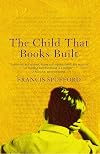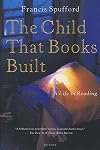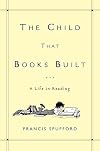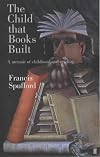
The Child That Books Built: A Life in Reading
by Francis Spufford
On This Page
Description
In this extended love letter to children's books, and the wonders they perform, Spufford goes back to his earliest encounters with books, exploring such beloved classics as "The Wind in the Willows, The Little House on the Prairie," and the Narnia chronicles.Tags
Recommendations

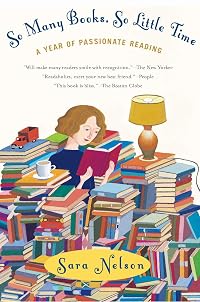
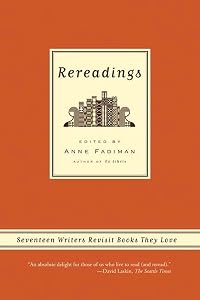
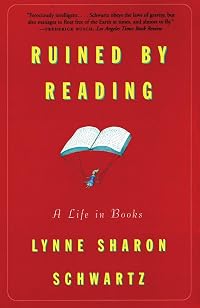

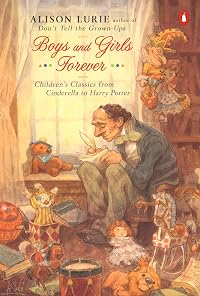








Member Recommendations

Member Reviews
This is a personal memoir of the books which shaped the author's life as a child, growing up with a seriously ill sister. Before writing this book the author set out to re-read as many of those books as he could, and try to recall how he first responded to them. It is also an essay that draws on theories of child development, and uses psychoanalytical and philosophical concepts to reflect on the kind of reading children do at different stages in their developing relationship with the people and the world around them.
If this sounds a little dry, in fact it is far from it, in my view. Francis Spufford writes beautifully and thought-provokingly. He is more interested in depth than breadth. This is definitely not (and not intended to be) a show more comprehensive introduction to or survey of all the books of his childhood; rather he picks a few key books or authors and delves into what it meant to immerse himself in their different worlds. There are memorable passages describing the process of learning to read, or the excitement of delving into the varied treasures of the children's shelves in the public library.
I happen to share the same birth-year as the author and grew up with many of the same books and publishers (this was the era when Puffins reigned supreme), so I could readily identify with the particular examples he used. I was also interested in what he had to say about the difficult transition from being a child to an adult reader - especially for those who unlike me did not find in the classics a bridge to other adult fiction.
His own solution to the problem came through his discovery of the genre of science fiction, and he has some interesting things to say about the role of genre fiction in general. I am writing this without the book to hand, but this is my memory of his argument: Genre fiction represents one of two (equally valid) ways that adult readers seek something more than the world of children's stories. Genre fiction tends to offer us the same familiar structures and story-telling conventions as children's fiction, but expands our horizons by applying these to an wide range of subject matters and settings which satisfy our desire for novelty and variety. The other approach, literary fiction, expands our horizons in different ways by approaching often familiar subject matter in new, unconventional or ambiguous ways which do justice to our more adult awareness of the complexities of life.
I know he put it much better than that, and I wish I had to book to hand to quote some passages, as he does write very well. The whole book made me reflect a lot about my own childhood reading, and I'm still thinking about it several weeks later. I will want to read this again at some point. show less
If this sounds a little dry, in fact it is far from it, in my view. Francis Spufford writes beautifully and thought-provokingly. He is more interested in depth than breadth. This is definitely not (and not intended to be) a show more comprehensive introduction to or survey of all the books of his childhood; rather he picks a few key books or authors and delves into what it meant to immerse himself in their different worlds. There are memorable passages describing the process of learning to read, or the excitement of delving into the varied treasures of the children's shelves in the public library.
I happen to share the same birth-year as the author and grew up with many of the same books and publishers (this was the era when Puffins reigned supreme), so I could readily identify with the particular examples he used. I was also interested in what he had to say about the difficult transition from being a child to an adult reader - especially for those who unlike me did not find in the classics a bridge to other adult fiction.
His own solution to the problem came through his discovery of the genre of science fiction, and he has some interesting things to say about the role of genre fiction in general. I am writing this without the book to hand, but this is my memory of his argument: Genre fiction represents one of two (equally valid) ways that adult readers seek something more than the world of children's stories. Genre fiction tends to offer us the same familiar structures and story-telling conventions as children's fiction, but expands our horizons by applying these to an wide range of subject matters and settings which satisfy our desire for novelty and variety. The other approach, literary fiction, expands our horizons in different ways by approaching often familiar subject matter in new, unconventional or ambiguous ways which do justice to our more adult awareness of the complexities of life.
I know he put it much better than that, and I wish I had to book to hand to quote some passages, as he does write very well. The whole book made me reflect a lot about my own childhood reading, and I'm still thinking about it several weeks later. I will want to read this again at some point. show less
I want to quote practically all of this wonderful book. The only other time I’ve felt such kinship with an author writing about reading was Alberto Manguel, notably in [b:The Library at Night|2452483|The Library at Night|Alberto Manguel|https://images.gr-assets.com/books/1328826506s/2452483.jpg|2459677]. Although I was an only child rather than having a chronically ill younger sister, my childhood experience of books was very similar to Spufford’s. Of course he is able to articulate it much more elegantly than I ever could. On the very first page, he describes reading just as I experience it:
Spufford talks of his childhood reading in terms of an addiction. It was similar for me. I read constantly, voraciously. All other hobbies were fleeting. What’s more, I read many of the same books as he did. Since I’m about fifteen years younger, the Puffin editions I read were from the library and charity shops. His chapter on the [b:Little House on the Prairie|77767|Little House on the Prairie (Little House, #2)|Laura Ingalls Wilder|https://images.gr-assets.com/books/1441903581s/77767.jpg|2884161] series took me back to the age of eight, perhaps nine. I had a paperback copy that I once re-read from cover to cover while sitting cross-legged on my wooden desk under the velux window. When I got to the end and re-entered the world, I realised dusk had fallen. Possibly not unrelated to this kind of behaviour, I shortly afterwards started wearing glasses.
In a similarly adroit vein to Alberto Manguel, Spuffold combines his reading memoir with wider reflections on history, linguistics, philosophy, and psychology. I love it when books draw linkages like this, as such tapestry-weaving allegorises the most satisfying type of synoptic reading. It's wonderful when novels or non-fiction fill gaps in my mind that I didn’t even realise existed and seed new ideas by catalysing links between concepts that were previously separate. Added to descriptions of the exact experiences I’ve had too, how could I fail to adore ‘The Child that Books Built’? Here is another experience I’ve had, of building my vocabulary through inference from context. This still happens whenever I read French.
And another thought plucked straight out of my ten year old head:
Predictably, I had the same delirious response to [b:The Chronicles of Narnia|11127|The Chronicles of Narnia (Chronicles of Narnia, #1-7)|C.S. Lewis|https://images.gr-assets.com/books/1449868701s/11127.jpg|781271] that Spufford describes, ditto [b:The Lord of the Rings|33|The Lord of the Rings (The Lord of the Rings, #1-3)|J.R.R. Tolkien|https://images.gr-assets.com/books/1411114164s/33.jpg|3462456] and [b:His Dark Materials|18116|His Dark Materials (His Dark Materials #1-3)|Philip Pullman|https://images.gr-assets.com/books/1442329494s/18116.jpg|1943518]. However, I’ve also always loved non-fiction that transported me elsewhere: history, astronomy, and geology were all primary school fascinations. My transition to ‘grown-up’ books also parallels Spufford’s: unlike most of my friends, I didn’t start with the classics, instead becoming obsessed with science fiction. As a result, I only read my first Jane Austen last year, whereas sci-fi has been my favourite fiction genre since I turned thirteen. I recall a period of Hercule Poirot mysteries at the age of eleven and a fixation with P.G. Wodehouse shortly after, however my High School years were dominated by mid-to-late 20th century sci-fi. This was accompanied by non-fiction about the French Revolution, once I'd discovered it at the age of 16. My version of Spufford’s utopian interest in anarchism was a fascination with Robespierre and the principles of liberté, égalité, et fraternité (ou la mort).
Needless to say, this book provoked intense nostalgia. Not the sad kind of nostalgia that yearns for the past, rather the kind that vividly transports you back to joyfully appreciate the moments that made you who you are now. What is really conveyed by ‘The Child that Books Built’, better than practically anything else, is the sheer importance of reading. I am another child that books built and my childhood would have been dull and empty without reading. I simply cannot imagine having spent it otherwise, without having become someone fundamentally different. In theory I know that there are people who during childhood played outside in big groups, presumably sports of some kind. That was always alien to me. I was a largely antisocial girl who liked to curl up in a little corner then travel through time and space via books. If you were of similar inclination, you will find in Francis Spufford a kindred spirit. The memoir ends abruptly, but I didn’t mind, because wherever it halted would have been arbitrary. My childhood reading shaded imperceptibly into my teenage then adult reading, which I have every expectation will continue until I’m dead. For Spufford I imagine it’s similar; I think any true reading memoir will always be incomplete. show less
As my concentration on the story in my hands took hold, all sounds faded away. My ears closed. I didn’t imagine the process of the cut-offshow more
like a shutter dropping, or as a narrowing of the pink canals inside, each waxy cartilaginous passage irising tight like some deft alien doorway in Star Trek. It seemed more hydraulic than that. Deep in the mysterious ductwork an adjustment had taken place with the least possible actual movement, an adjustment chiefly of pressure. There was an airlock in there. It sealed to the outside so it could open to the inside.
Spufford talks of his childhood reading in terms of an addiction. It was similar for me. I read constantly, voraciously. All other hobbies were fleeting. What’s more, I read many of the same books as he did. Since I’m about fifteen years younger, the Puffin editions I read were from the library and charity shops. His chapter on the [b:Little House on the Prairie|77767|Little House on the Prairie (Little House, #2)|Laura Ingalls Wilder|https://images.gr-assets.com/books/1441903581s/77767.jpg|2884161] series took me back to the age of eight, perhaps nine. I had a paperback copy that I once re-read from cover to cover while sitting cross-legged on my wooden desk under the velux window. When I got to the end and re-entered the world, I realised dusk had fallen. Possibly not unrelated to this kind of behaviour, I shortly afterwards started wearing glasses.
In a similarly adroit vein to Alberto Manguel, Spuffold combines his reading memoir with wider reflections on history, linguistics, philosophy, and psychology. I love it when books draw linkages like this, as such tapestry-weaving allegorises the most satisfying type of synoptic reading. It's wonderful when novels or non-fiction fill gaps in my mind that I didn’t even realise existed and seed new ideas by catalysing links between concepts that were previously separate. Added to descriptions of the exact experiences I’ve had too, how could I fail to adore ‘The Child that Books Built’? Here is another experience I’ve had, of building my vocabulary through inference from context. This still happens whenever I read French.
I remember there was an intermediate stage when strange words did not quite yet have a meaning of their own, but possessed a kind of atmosphere of meaning, which was a compromise between the meanings of all the other words which seemed to come up in conjunction with the unknown one, and which I had decided had a bearing on it. The holes in the text grew over, like this. The empty spaces thickened, took on qualities which at first were not their own, then became known in their own right.
And another thought plucked straight out of my ten year old head:
My favourite books were the ones that took books’ implicit status as other worlds, and acted on it literally, making the window of writing a window into imaginary countries. I didn’t just want to see in books what I saw anyway in the world around me, even if it was perceived and understood and articulated from angles I could never have achieved; I wanted to see things I never saw in life. More than I wanted books to do anything else, I wanted them to take me away.
Predictably, I had the same delirious response to [b:The Chronicles of Narnia|11127|The Chronicles of Narnia (Chronicles of Narnia, #1-7)|C.S. Lewis|https://images.gr-assets.com/books/1449868701s/11127.jpg|781271] that Spufford describes, ditto [b:The Lord of the Rings|33|The Lord of the Rings (The Lord of the Rings, #1-3)|J.R.R. Tolkien|https://images.gr-assets.com/books/1411114164s/33.jpg|3462456] and [b:His Dark Materials|18116|His Dark Materials (His Dark Materials #1-3)|Philip Pullman|https://images.gr-assets.com/books/1442329494s/18116.jpg|1943518]. However, I’ve also always loved non-fiction that transported me elsewhere: history, astronomy, and geology were all primary school fascinations. My transition to ‘grown-up’ books also parallels Spufford’s: unlike most of my friends, I didn’t start with the classics, instead becoming obsessed with science fiction. As a result, I only read my first Jane Austen last year, whereas sci-fi has been my favourite fiction genre since I turned thirteen. I recall a period of Hercule Poirot mysteries at the age of eleven and a fixation with P.G. Wodehouse shortly after, however my High School years were dominated by mid-to-late 20th century sci-fi. This was accompanied by non-fiction about the French Revolution, once I'd discovered it at the age of 16. My version of Spufford’s utopian interest in anarchism was a fascination with Robespierre and the principles of liberté, égalité, et fraternité (ou la mort).
Needless to say, this book provoked intense nostalgia. Not the sad kind of nostalgia that yearns for the past, rather the kind that vividly transports you back to joyfully appreciate the moments that made you who you are now. What is really conveyed by ‘The Child that Books Built’, better than practically anything else, is the sheer importance of reading. I am another child that books built and my childhood would have been dull and empty without reading. I simply cannot imagine having spent it otherwise, without having become someone fundamentally different. In theory I know that there are people who during childhood played outside in big groups, presumably sports of some kind. That was always alien to me. I was a largely antisocial girl who liked to curl up in a little corner then travel through time and space via books. If you were of similar inclination, you will find in Francis Spufford a kindred spirit. The memoir ends abruptly, but I didn’t mind, because wherever it halted would have been arbitrary. My childhood reading shaded imperceptibly into my teenage then adult reading, which I have every expectation will continue until I’m dead. For Spufford I imagine it’s similar; I think any true reading memoir will always be incomplete. show less
I can't understand why some readers found this book heavy going or, even, impossible to get through. I was charmed and enlightened by turns. Perhaps I am more narcissistic than I thought - I too am a child built by books who dived into the calm yet enlivening waters of the mind to escape the unwelcome squalor outside - but I was much moved by the heroic world constructed inside the pages of many (shared) books by a child fearful of the outside of those pages. I loved it.
"When I caught the mumps, I couldn't read; when I went back to school again, I could. The first page of The Hobbit was a thicket of symbols, to be decoded one at a time and joined hesitantly together...
I. N. In. A. In a. h, o, l, e. In a hole. I,n,t,h,e,g,r,o,u,n,d. In a hole in the ground. L-i-v-e-d-a-h-o-b-b-i-t. In a hole in the ground lived a hobbit...And then I never stopped again."
Author Francis Spufford takes you on a journey back through the stories and books that made him and may have also made you. From The Forest of fairy tales where the fear is being on your own, the books where you stepped through and landed into another world like Narnia, the towns like those in the Little House series and To Kill A Mockingbird that show more teaches you about the lives of others and societal expectations. You may find many favorites you share with Spufford from Pooh to Tolkien and authors like Bradbury, King, to Le Guin.
I recently read his first novel, Golden Hill, and then picked this book up. I enjoyed Spufford's insights and I found an author who feels like as Anne Shirley would say, "a kindred spirit." show less
I. N. In. A. In a. h, o, l, e. In a hole. I,n,t,h,e,g,r,o,u,n,d. In a hole in the ground. L-i-v-e-d-a-h-o-b-b-i-t. In a hole in the ground lived a hobbit...And then I never stopped again."
Author Francis Spufford takes you on a journey back through the stories and books that made him and may have also made you. From The Forest of fairy tales where the fear is being on your own, the books where you stepped through and landed into another world like Narnia, the towns like those in the Little House series and To Kill A Mockingbird that show more teaches you about the lives of others and societal expectations. You may find many favorites you share with Spufford from Pooh to Tolkien and authors like Bradbury, King, to Le Guin.
I recently read his first novel, Golden Hill, and then picked this book up. I enjoyed Spufford's insights and I found an author who feels like as Anne Shirley would say, "a kindred spirit." show less
I wanted to like this book. As I progressed, I wondered if this was a book about books that impacted him, or a psychological walk through books of thoughts regarding child development theories in text books of years gone by.
The author gets credit for listing some books that impacted on him, but I gave up reading at page 50. It felt more of a professor teaching learning theories, and not his own love of books.
The author gets credit for listing some books that impacted on him, but I gave up reading at page 50. It felt more of a professor teaching learning theories, and not his own love of books.
A book about books and reading. How could I go wrong? I thought. But somehow I did, or maybe Spufford did. Because this is not really much of a memoir. And, to be fair, the author does say early on, "What follows is more about books than it is about me, but nonetheless it is my inward autobiography ..." An honest assessment, I must admit, much to my disappointment.
Because THE CHILD THAT BOOKS BUILT: A LIFE IN READING is a rather odd and uneven mix of the personal and the scholarly, with the emphasis on the latter. Indeed I nearly put the book aside after nearly sixty pages that seemed to deal more with Piaget, Bettelheim, Freud and Spock, and their theories and comments on early childhood development and language acquistition, than it show more did with kids' books. Even Kant and Wittgenstein entered the equation later on. And that can be some pretty heavy sledding, when what one really wants to know is What did this guy read as a kid?
But even when he begins to dwell on his own reading, Spufford's story remained largely foreign territory to me. For one thing, he is a sci-fi/fantasy afficianado. I am not. He tells us that the first real book he read all on his own was THE HOBBIT, when he was six, and quarantined with the mumps. A few years later he read more of Tolkien. Later he gets into C.S. Lewis and the Narnia books, T.H. White's THE SWORD IN THE STONE, and Ray Bradbury (SOMETHING WICKED THIS WAY COMES). With the exception of White, most of these books leave me cold. I have never been able to get into Tolkien, despite the recommendations by students back when I was teaching college English in the 70s. And Lewis? All I've read of him is THE SCREWTAPE LETTERS, which I rather enjoyed many years ago. He also mentions Carroll's ALICE, E. Nesbit and Sendak, who were a bit more recognizable than other writers I did not know at all, many of them British.
When he talked of the LITTLE HOUSE books and a trip he made to DeSmet, South Dakota, I became briefly interested, especially when he told of a critic who insisted that the books were really a collaboration - Wilder's stories and memories, enhanced and edited by her daughter, Rose Wilder Lane, a professional writer. He also told the popularity of Ian Fleming's James Bond books when he was a pre-teen and the books were passed around at his boarding school. And I have read a few Fleming books, but I was already in the Army, stationed overseas, when that happened.
And that may be part of the disconnect. I am twenty years older than Spufford. My life experiences were vastly different. Which doesn't have to be a problem, but there is very little here about Spufford's life. His parents were academics, and his sister was very sickly. He grew up on the grounds of a college, in institutional housing on the edge of an overgrown forest. (One thinks of Milne's hundred-acre wood. And he does speak of Pooh and Piglet in here.)
I also found his comments on TO KILL A MOCKINGBIRD very interesting, maybe because he found it so difficult to picture, the story and setting being so foreign to his own life. He also talks of his preadolescent interest in "dirty books," telling of his disappointment in the book version of EMMANUELLE, reminding me of my own disappointment at reading LOLITA at thirteen, and wondering what all the fuss was about.
In the final analysis, however, I have to say I found the book only mildly and sporadically interesting, and found myself skimming long-ish sections of it. I consider myself an ardent book lover, but I did not really love this one. As I said earlier, heavy on 'scholarly.' I would recommend it, however, for librarians and students of children's lit and child psychology.
- Tim Bazzett, author of the memoir, BOOKLOVER show less
Because THE CHILD THAT BOOKS BUILT: A LIFE IN READING is a rather odd and uneven mix of the personal and the scholarly, with the emphasis on the latter. Indeed I nearly put the book aside after nearly sixty pages that seemed to deal more with Piaget, Bettelheim, Freud and Spock, and their theories and comments on early childhood development and language acquistition, than it show more did with kids' books. Even Kant and Wittgenstein entered the equation later on. And that can be some pretty heavy sledding, when what one really wants to know is What did this guy read as a kid?
But even when he begins to dwell on his own reading, Spufford's story remained largely foreign territory to me. For one thing, he is a sci-fi/fantasy afficianado. I am not. He tells us that the first real book he read all on his own was THE HOBBIT, when he was six, and quarantined with the mumps. A few years later he read more of Tolkien. Later he gets into C.S. Lewis and the Narnia books, T.H. White's THE SWORD IN THE STONE, and Ray Bradbury (SOMETHING WICKED THIS WAY COMES). With the exception of White, most of these books leave me cold. I have never been able to get into Tolkien, despite the recommendations by students back when I was teaching college English in the 70s. And Lewis? All I've read of him is THE SCREWTAPE LETTERS, which I rather enjoyed many years ago. He also mentions Carroll's ALICE, E. Nesbit and Sendak, who were a bit more recognizable than other writers I did not know at all, many of them British.
When he talked of the LITTLE HOUSE books and a trip he made to DeSmet, South Dakota, I became briefly interested, especially when he told of a critic who insisted that the books were really a collaboration - Wilder's stories and memories, enhanced and edited by her daughter, Rose Wilder Lane, a professional writer. He also told the popularity of Ian Fleming's James Bond books when he was a pre-teen and the books were passed around at his boarding school. And I have read a few Fleming books, but I was already in the Army, stationed overseas, when that happened.
And that may be part of the disconnect. I am twenty years older than Spufford. My life experiences were vastly different. Which doesn't have to be a problem, but there is very little here about Spufford's life. His parents were academics, and his sister was very sickly. He grew up on the grounds of a college, in institutional housing on the edge of an overgrown forest. (One thinks of Milne's hundred-acre wood. And he does speak of Pooh and Piglet in here.)
I also found his comments on TO KILL A MOCKINGBIRD very interesting, maybe because he found it so difficult to picture, the story and setting being so foreign to his own life. He also talks of his preadolescent interest in "dirty books," telling of his disappointment in the book version of EMMANUELLE, reminding me of my own disappointment at reading LOLITA at thirteen, and wondering what all the fuss was about.
In the final analysis, however, I have to say I found the book only mildly and sporadically interesting, and found myself skimming long-ish sections of it. I consider myself an ardent book lover, but I did not really love this one. As I said earlier, heavy on 'scholarly.' I would recommend it, however, for librarians and students of children's lit and child psychology.
- Tim Bazzett, author of the memoir, BOOKLOVER show less
The Child That Books Built is an explanation for an addiction. Francis Spufford's addiction. Right up front Spufford admits to his insatiable need to read, starting when he was a young child. He would explain his relationships with books as such, "Reading catatonically wasn't something I chose to do...the stopping my ears with fiction was non-negotiable" (p 2). Once he gets his explanations out of the way he goes on to explain how all the reading he had done as a child shaped his world as an adult. Drawing on psychology and philosophy to make his points Spufford connects the world of Narnia to that of religious adoration; the Little House on the Prairie to that of family and community.
Members
- Recently Added By
Published Reviews
ThingScore 75
The Child That Books Built is a daring autobiographical book that, having initially confessed an addiction to reading, teases and then hooks the reader with the non-literary explanation for that observation. 'I know,' writes Spufford, 'that I have to look elsewhere in my life... to find the origins of my reading habit.'
added by melmore
Lists

Best books about books
209 works; 106 members

Books about Books
149 works; 24 members

Bibliomemoirs
46 works; 8 members

Books Read in 2019
4,052 works; 108 members

Books Read in 2006
421 works; 8 members

Read in 2006
140 works; 1 member
Author Information

16+ Works 5,812 Members
Francis Spufford is also the author of I May Be Some Time. He was named Sunday Times (London) Young Writer of the Year and received the 1997 Somerset Maugham and Writers' Guild awards. He lives in London
Some Editions
Awards and Honors
Common Knowledge
- Canonical title
- The Child That Books Built: A Life in Reading
- Original title
- The Child That Books Built
- Alternate titles
- The Child That Books Built: A Memoir of Childhood and Reading
- Original publication date
- 2002
- People/Characters
- C. S. Lewis; Laura Ingalls Wilder
- Important places
- Bag End, Hobbiton, The Shire
- Epigraph
- [None]
- Dedication
- [None]
- First words
- "I can always tell when you're reading somewhere in the house," my mother used to say.
- Quotations
- The passion aroused by fiction can be for any of the things that are absent at the time of reading; any greedy wish will do.
Tolkein believed that providing an alternative to reality was one of the primary properties of language. - Last words
- (Click to show. Warning: May contain spoilers.)Among these drifting pillars, the true stories, and after I have been reading for a while, I can hardly tell anymore which is my own.
- Blurbers
- Ashworth, Andrea
- Original language
- English
Classifications
- Genres
- Nonfiction, Biography & Memoir, Literature Studies and Criticism
- DDC/MDS
- 920 — History & geography Biographies, Genealogy, Healdry Biographies
- LCC
- Z1037 .A1 .S74 — Bibliography, Library Science and Information Resources General bibliography Books for special classes of persons, institutions, etc.
- BISAC
Statistics
- Members
- 979
- Popularity
- 26,865
- Reviews
- 23
- Rating
- (3.58)
- Languages
- English, Swedish
- Media
- Paper, Ebook
- ISBNs
- 7
- ASINs
- 3