On This Page
Description
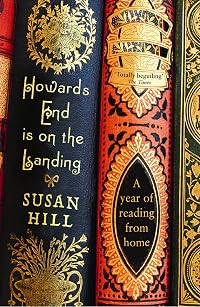
In pursuit of an elusive book on her shelves, Hill encountered dozens of others that she had never read, or forgotten she owned, or wanted to read for a second time. The discovery inspired her to embark on a year-long voyage through her books, in order to get to know her own collection again.Tags
Recommendations


Member Recommendations
Member Reviews
A simply wonderful book by an author about reading. But Susan Hill doesn't simply read, she has a reading life, and this slim volume chronicles her relationship with books -- and sometimes with their authors -- as she prowls from one bookcase to the next in her Gloucestershire home in search of books to read in her self-enforced 'year of reading from home'. I'd disagree with some of Hill's favorites (she picks Macbeth, I'd go for The Tempest; but we agree on Patrick Leigh Fermor) as well as her approach to reading (she loathes sites like LT or Goodreads; cataloging is anathema, as are e-book readers), but we share a love for the printed word. But she's a peerless prose stylist and her thoughtful look at why she likes what she does and show more shuns other stuff is fascinating, sometimes laugh-out-loud funny, and always offers great food for thought. Highly recommended. show less
Long before “working from home” was a phrase people bandied about, Susan Hill decided to spend a year just reading books she already had lying around the house. “Attacking the TBR pile”, as we would put it. Except that she was mixing in a fair proportion of re-reads: the main principle seemed to be to follow her nose and the quasi-random patterns in which books had settled in different parts of her home. And of course this isn’t just a collection of book reviews, she drifts off engagingly into memories from her long career as an author, broadcaster and publisher. Her first novel was published when she was still in her teens, and she’s been in the literary scene long enough to have baby-sat Arnold Wesker’s children and have show more E M Forster drop a book on her toe in the London Library, so she knew a lot of the writers she is talking about here, and many of them were evidently friends. But she seems to be quite capable of separating the books from the people: V S Naipaul, for example, seems to have been rude to her the one time they met, but she still praises him as one of the best prose-writers of his generation.
A fun little book, which comes with a serious risk of encouraging you to buy more books, even if it doesn’t make you disarrange your home library to increase the serendipity factor… show less
A fun little book, which comes with a serious risk of encouraging you to buy more books, even if it doesn’t make you disarrange your home library to increase the serendipity factor… show less
This book was not at all what I thought it was going to be --- but it turned out to be a touching and thoughtful read that I know I'll be thinking about for a long time to come. Plus, it helped me add A LOT of books to my wishlist!
I started off really liking this author. In my notes, I wrote how great it was to read something like this from an older reader, a British reader, an educated reader, and one who understands quality. A big shift happened somewhere around half way through and I really struggled with my thoughts about her. Then, weirdly and providentially, she actually addressed the very thing close to the end of the book. I feel like I've been on a very long journey with author Susan Hill, even though it took me only two days show more to read through this short work.
I loved quotes like:
"A book which is left on a shelf is a dead thing but it is also a chrysalis, an inanimate object packed with the potential to burst into new life."
and
"But if the books I have read have helped to form me, then probably nobody else who ever lived has read exactly the same books, all the same books, and only the same books, as me. So just as my genes and the soul within me make me uniquely me, so I am the unique sum of the books I have read. I am my literary DNA."
I loved some of her phraseology: "bumptious", "purple passages", and anthologies that are "puddings full of plums".
I got annoyed when she would make faulty assumptions (prideful remarks?) that one who organizes their books must not be a real reader or that collectors are somehow lesser than whatever she considers herself to be. Like I said, I started out really liking her...then I got to know her.
I started to realize she was a bit over-obsessed with Virginia Woolf. About that same time, I took a little time to research her bio information so when I got to the part in the book about her wanting to "emulate" Woolf in publishing, I was kind of sickened. This book was written before she wrecked her family and knowing what was coming made me wonder how much of her obsession with emulating Woolf played a part in her leaving her 40 year marriage to move in with a female lover. I think it's a heartbreaking poetic justice that her "lover" soon left her and I'm so sad for her poor husband and daughters. I think I've learned my lesson about looking up bios, though. I was enjoying her so much before that.
Weirdly, (prophetically?) she addresses this very issue in an unrelated chapter. She says, "Knowing about a writer's life is rarely necessary to an appreciation of their work. But occasionally it is." And later, speaking of a friend who also read a book by an author who did something he found to be morally wrong: "He was not being judgmental, simply stating a truth. -- that the book which had meant so much to him had been fatally diminished for him when he discovered what had happened." She seems to come to the conclusion later that an author's past, current, and future life should not have any influence on the artistic work they produce. I think this is true, for the most part, but also virtually impossible in reality.
The book ended as it began---fun and informative. I thought her "Bad Bed-Fellows" chapter was pretty creative and thoughtful and I loved this thought she had when seeing related books sitting serendipitously together on a shelf: "Can books learn from one another? Can they change as a result of sitting on a shelf beside another for years? If not, might they regret being forever trapped, as it were, within their own content, doomed never to grow old, never to return to a state before they were created?"
All in all, I didn't love this book, and I have anger issues toward the author, but I'm very glad I read it. It's given me some really worthwhile things to ruminate on. show less
I started off really liking this author. In my notes, I wrote how great it was to read something like this from an older reader, a British reader, an educated reader, and one who understands quality. A big shift happened somewhere around half way through and I really struggled with my thoughts about her. Then, weirdly and providentially, she actually addressed the very thing close to the end of the book. I feel like I've been on a very long journey with author Susan Hill, even though it took me only two days show more to read through this short work.
I loved quotes like:
"A book which is left on a shelf is a dead thing but it is also a chrysalis, an inanimate object packed with the potential to burst into new life."
and
"But if the books I have read have helped to form me, then probably nobody else who ever lived has read exactly the same books, all the same books, and only the same books, as me. So just as my genes and the soul within me make me uniquely me, so I am the unique sum of the books I have read. I am my literary DNA."
I loved some of her phraseology: "bumptious", "purple passages", and anthologies that are "puddings full of plums".
I got annoyed when she would make faulty assumptions (prideful remarks?) that one who organizes their books must not be a real reader or that collectors are somehow lesser than whatever she considers herself to be. Like I said, I started out really liking her...then I got to know her.
I started to realize she was a bit over-obsessed with Virginia Woolf. About that same time, I took a little time to research her bio information so when I got to the part in the book about her wanting to "emulate" Woolf in publishing, I was kind of sickened. This book was written before she wrecked her family and knowing what was coming made me wonder how much of her obsession with emulating Woolf played a part in her leaving her 40 year marriage to move in with a female lover. I think it's a heartbreaking poetic justice that her "lover" soon left her and I'm so sad for her poor husband and daughters. I think I've learned my lesson about looking up bios, though. I was enjoying her so much before that.
Weirdly, (prophetically?) she addresses this very issue in an unrelated chapter. She says, "Knowing about a writer's life is rarely necessary to an appreciation of their work. But occasionally it is." And later, speaking of a friend who also read a book by an author who did something he found to be morally wrong: "He was not being judgmental, simply stating a truth. -- that the book which had meant so much to him had been fatally diminished for him when he discovered what had happened." She seems to come to the conclusion later that an author's past, current, and future life should not have any influence on the artistic work they produce. I think this is true, for the most part, but also virtually impossible in reality.
The book ended as it began---fun and informative. I thought her "Bad Bed-Fellows" chapter was pretty creative and thoughtful and I loved this thought she had when seeing related books sitting serendipitously together on a shelf: "Can books learn from one another? Can they change as a result of sitting on a shelf beside another for years? If not, might they regret being forever trapped, as it were, within their own content, doomed never to grow old, never to return to a state before they were created?"
All in all, I didn't love this book, and I have anger issues toward the author, but I'm very glad I read it. It's given me some really worthwhile things to ruminate on. show less
The publisher's classification on the back of Susan Hill's book is 'memoir', which I wish I had noted beforehand! 'Howards End is on the Landing' is about reading and collecting books, but written from the personal viewpoint of an author with a cache of famous friends and acquaintances in her address book! Most of the 'choice' names selected here have at the very least signed an autograph for Hill - Kingsley Amis, Elizabeth Bowen, WH Auden, Roald Dahl, Edith and 'Sachie' Sitwell, and 'a postcard from Dirk Bogarde'. She comments on James Lees-Milne as writing 'the diaries of a name dropper and they irritate', and after mistaking a collection of author's anecdotes as a fond study of reading habits, I can understand. Personal taste is one show more thing, but every other enthusiastic promotion by Susan Hill of a writer's works is followed by, 'whom I first met ...' or even 'when babysitting for ...'! Nor are these references followed by intimate or insightful descriptions of the author, just a long line of adjectives.
Still. When the subject does stray around to reading, and a lifetime of acquiring, shelving and re-reading books, everyone can relate to the author's memories and observations. Faced with a houseful of bookshelves stacked high and deep with fiction, reference, poetry and plays, Susan Hill decides to stop buying in and instead focus on the extensive library she has been acquiring for over fifty years. As an Amazon addict, I was inspired by her stamina!
Looking through her own books (originally in search of one elusive title, Forster's 'Howards End'), Hill is reminded of the favourites from her own childhood, such as Blyton, and the picture books she read to her children. She also fondly recalls authors read and not read, met and 'not met' (few and far between), inspiring and important. I agree with her opinion of Dickens (mighty and flawed) and Austen (boring - yes, I think so, too!), and the 'embarrassing' Wimsey-Vane romance in Sayers' books. I agree that 'style wins, every time', and that my 'TBR' books are 'waiting for their time to come', but that if I don't like a book or an author, the problem is 'always us, never the book'. And yes, 'if it ain't broke, don't fix it' - holding the satisfying bulk of paper and print will never be replaced by an electronic gadget.
However, I do like Australian fiction, hate Times New Roman, do not believe in annotating, folding or mutilating books (especially library books, being a librarian, but also my own collection) because I respect books. Hill's theory that people who maintain an orderly library of neat (or 'unloved', as she would no doubt see it) books are not booklovers is rubbish - I can read without breaking the spine so that all the pages fall out, and memorise favourite passages without defacing or dogearing the page.
In a nutshell, this is the real joy of Susan Hill's reading reminiscence - the shared tastes and idiosyncrasies of readers everywhere, and the opposing but equally passionate approach to collecting and appreciating a library of your own. The author's literary connections do not interest me, but who can resist browsing through another person's bookshelf? Now I must compile my own list of forty books that I cannot live without, and add Naipaul and Brookner to my ever-increasing list of future reading material! show less
Still. When the subject does stray around to reading, and a lifetime of acquiring, shelving and re-reading books, everyone can relate to the author's memories and observations. Faced with a houseful of bookshelves stacked high and deep with fiction, reference, poetry and plays, Susan Hill decides to stop buying in and instead focus on the extensive library she has been acquiring for over fifty years. As an Amazon addict, I was inspired by her stamina!
Looking through her own books (originally in search of one elusive title, Forster's 'Howards End'), Hill is reminded of the favourites from her own childhood, such as Blyton, and the picture books she read to her children. She also fondly recalls authors read and not read, met and 'not met' (few and far between), inspiring and important. I agree with her opinion of Dickens (mighty and flawed) and Austen (boring - yes, I think so, too!), and the 'embarrassing' Wimsey-Vane romance in Sayers' books. I agree that 'style wins, every time', and that my 'TBR' books are 'waiting for their time to come', but that if I don't like a book or an author, the problem is 'always us, never the book'. And yes, 'if it ain't broke, don't fix it' - holding the satisfying bulk of paper and print will never be replaced by an electronic gadget.
However, I do like Australian fiction, hate Times New Roman, do not believe in annotating, folding or mutilating books (especially library books, being a librarian, but also my own collection) because I respect books. Hill's theory that people who maintain an orderly library of neat (or 'unloved', as she would no doubt see it) books are not booklovers is rubbish - I can read without breaking the spine so that all the pages fall out, and memorise favourite passages without defacing or dogearing the page.
In a nutshell, this is the real joy of Susan Hill's reading reminiscence - the shared tastes and idiosyncrasies of readers everywhere, and the opposing but equally passionate approach to collecting and appreciating a library of your own. The author's literary connections do not interest me, but who can resist browsing through another person's bookshelf? Now I must compile my own list of forty books that I cannot live without, and add Naipaul and Brookner to my ever-increasing list of future reading material! show less
Rating: 3.5* of five
The Book Description: Early one autumn afternoon in pursuit of an elusive book on her shelves, Susan Hill encountered dozens of others that she had never read, or forgotten she owned, or wanted to read for a second time. The discovery inspired her to embark on a year-long voyage through her books, forsaking new purchases in order to get to know her own collection again.
A book which is left on a shelf for a decade is a dead thing, but it is also a chrysalis, packed with the potential to burst into new life. Wandering through her house that day, Hill's eyes were opened to how much of that life was stored in her home, neglected for years. Howard's End is on the Landing charts the journey of one of the nation's most show more accomplished authors as she revisits the conversations, libraries and bookshelves of the past that have informed a lifetime of reading and writing.
My Review: Haven't all of us who possess a lot of books done this? “I will not buy a new book until I have read x from my shelves!” Uh huh. “No seriously THIS year I mean it, I'm not buying a book! Not one! No!” Mmm hmmm “Really!! I WILL NOT!” Yes dear.
I have no idea how Ms. Hill fared in her commitment not to buy any new books for a year (I suspect poorly, but I'm a suspicious old bugger, I am). I read this lovely memoir of her her reading life with pleasure, because she told me enough about the books that sparked the memories she shares for me to capture my own memories of the books, or to latch on to her sense of them, their place in her life, and the overall effect is to offer her own context as well as the book's.
I like that idea. I like to read what other readers think about when they're reading or after they've finished or even before they've decided what to read next. (Makes sense, doesn't it, here on this site?) And when that reader has written some very, very popular books, published some very good books, and talked about books on radio, television, and stage, I mean! Go fight those odds. I had to read this book. And then re-read it. I loved the experience of both, and would never ask for those eyeblinks back.
There are two passages I've come to and come back to multiple times. One is from author David Cecil's book Library Looking Glass: A Personal Anthology, a tome and a writer absolutely unknown to my poorly educated little ol' Texan self; while Ms. Hill does a wee bit of Internet bashing at the beginning of this book, I found Mother Internet most helpful in digging up a potted biography on Wikipedia of this fourth child of a marquess and father of an actor, an historian, and a literary agent. He was a very old-school gent, and deeply deeply steeped in a bygone literary tradition, author of books on Tennyson and Max Beerbohm and Dorothy Osborne...ye gods how grisly it all sounds to my ear. But then Hill quotes this from his 1975 “Personal Anthology:”
Oh yes indeed, Lord David. Oh yes indeed, and so well said. Hardly a surprise, I suppose, this gift he shows there with the gab, given the amount and the quality of the poetry he spent his life reading, analyzing, delving into, parsing, disassembling and reassembling and explicating to generations of young scholars. But how surprising, how very satisfying to find, in a book about someone else's readerly DNA, a hitherto uncatalogued strand of my own.
Hill meditates on the subject of what forms a person, on readerly DNA, later in the book. The passage is one I found calling out to me while I was reading other books, and I marked it for easy access. It has helped me understand the reasons that I read, and the reasons that I decide not to read, certain books or genres or authors.
It is the reason I am so interested in what others who, like me, crave the written story and the printed book, have to say about their reading, and their lives. We're all made of a unique set of genes, and a unique formula of books. It makes us deeply flawed, and deeply interesting.
Even as I turned the pages of the book again and sometimes two or three times, to re-read and re-savor some lovely or lively moment of memory or of sensory pleasure, even as I contemplated my own version of this book, I was aware of a sense of want, a lack of something I was expecting and not getting. It feels churlish to bring it up, but it's the reason I've given the book a half-star less than I would have otherwise. Please forgive the nosy American, Ms. Hill, but...so? And you are...? I'm asking for a wee little bit more of your CV, your activities in some...not a great deal, just some...more detail than you give. The small bits of personal information that are here are those that a very congenial acquaintance would provide, and I have the sense that is exactly and precisely what was intended to be offered.
But we're all readers here, ma'am. We're all in the club. A tell-all dishfest on le monde litteraire? No, not this book (though one of those would be lovely)...but a few more lines of whys and hows and whos would not have come amiss, nor would a sense of your place in life as the discoveries you limn for us have weighed down the narrative unduly.
A minor cavil. A delight of a book. My warmest personal thanks from England's 1644 colonial foundation on Long Island to the Long Barn. show less
The Book Description: Early one autumn afternoon in pursuit of an elusive book on her shelves, Susan Hill encountered dozens of others that she had never read, or forgotten she owned, or wanted to read for a second time. The discovery inspired her to embark on a year-long voyage through her books, forsaking new purchases in order to get to know her own collection again.
A book which is left on a shelf for a decade is a dead thing, but it is also a chrysalis, packed with the potential to burst into new life. Wandering through her house that day, Hill's eyes were opened to how much of that life was stored in her home, neglected for years. Howard's End is on the Landing charts the journey of one of the nation's most show more accomplished authors as she revisits the conversations, libraries and bookshelves of the past that have informed a lifetime of reading and writing.
My Review: Haven't all of us who possess a lot of books done this? “I will not buy a new book until I have read x from my shelves!” Uh huh. “No seriously THIS year I mean it, I'm not buying a book! Not one! No!” Mmm hmmm “Really!! I WILL NOT!” Yes dear.
I have no idea how Ms. Hill fared in her commitment not to buy any new books for a year (I suspect poorly, but I'm a suspicious old bugger, I am). I read this lovely memoir of her her reading life with pleasure, because she told me enough about the books that sparked the memories she shares for me to capture my own memories of the books, or to latch on to her sense of them, their place in her life, and the overall effect is to offer her own context as well as the book's.
I like that idea. I like to read what other readers think about when they're reading or after they've finished or even before they've decided what to read next. (Makes sense, doesn't it, here on this site?) And when that reader has written some very, very popular books, published some very good books, and talked about books on radio, television, and stage, I mean! Go fight those odds. I had to read this book. And then re-read it. I loved the experience of both, and would never ask for those eyeblinks back.
There are two passages I've come to and come back to multiple times. One is from author David Cecil's book Library Looking Glass: A Personal Anthology, a tome and a writer absolutely unknown to my poorly educated little ol' Texan self; while Ms. Hill does a wee bit of Internet bashing at the beginning of this book, I found Mother Internet most helpful in digging up a potted biography on Wikipedia of this fourth child of a marquess and father of an actor, an historian, and a literary agent. He was a very old-school gent, and deeply deeply steeped in a bygone literary tradition, author of books on Tennyson and Max Beerbohm and Dorothy Osborne...ye gods how grisly it all sounds to my ear. But then Hill quotes this from his 1975 “Personal Anthology:”
It is often said that mankind needs a faith if the world is to be improved. In fact, unless the faith is vigilantly and regularly checked by a sense of man's fallibility, it is likely to make the world worse. From Torquemada to Robespierre and Hitler the men who have made mankind suffer the most have been inspired to do so have been inspired to do so by a strong faith; so strong that it led them to think their crimes were acts of virtue necessary to help them achieve their aim, which was to build some sort of an ideal kingdom on earth.(pp156-157, English softcover edition)
Oh yes indeed, Lord David. Oh yes indeed, and so well said. Hardly a surprise, I suppose, this gift he shows there with the gab, given the amount and the quality of the poetry he spent his life reading, analyzing, delving into, parsing, disassembling and reassembling and explicating to generations of young scholars. But how surprising, how very satisfying to find, in a book about someone else's readerly DNA, a hitherto uncatalogued strand of my own.
Hill meditates on the subject of what forms a person, on readerly DNA, later in the book. The passage is one I found calling out to me while I was reading other books, and I marked it for easy access. It has helped me understand the reasons that I read, and the reasons that I decide not to read, certain books or genres or authors.
Books help to form us. If you cut me open, will you find volume after volume, page after page, the contents of every one I have ever read, somehow transmuted and transformed into me? … But if the books I have read have helped to form me, then probably nobody else who ever lived has read exactly the same books, all the same books and only the same books, as me. So just as my genes and the soul within me make me uniquely me, so I am the unique sum of the books I have read. I am my literary DNA.(pp201-202, English softcover edition)
It is the reason I am so interested in what others who, like me, crave the written story and the printed book, have to say about their reading, and their lives. We're all made of a unique set of genes, and a unique formula of books. It makes us deeply flawed, and deeply interesting.
Even as I turned the pages of the book again and sometimes two or three times, to re-read and re-savor some lovely or lively moment of memory or of sensory pleasure, even as I contemplated my own version of this book, I was aware of a sense of want, a lack of something I was expecting and not getting. It feels churlish to bring it up, but it's the reason I've given the book a half-star less than I would have otherwise. Please forgive the nosy American, Ms. Hill, but...so? And you are...? I'm asking for a wee little bit more of your CV, your activities in some...not a great deal, just some...more detail than you give. The small bits of personal information that are here are those that a very congenial acquaintance would provide, and I have the sense that is exactly and precisely what was intended to be offered.
But we're all readers here, ma'am. We're all in the club. A tell-all dishfest on le monde litteraire? No, not this book (though one of those would be lovely)...but a few more lines of whys and hows and whos would not have come amiss, nor would a sense of your place in life as the discoveries you limn for us have weighed down the narrative unduly.
A minor cavil. A delight of a book. My warmest personal thanks from England's 1644 colonial foundation on Long Island to the Long Barn. show less
Hill, the British author of The Woman in Black and so many others, goes looking for a certain book in her book-filled house. She discovers so many forgotten or unread treasures that she decides to spend a full year reading from the books she already owns. The result is this book of essays on book topics, such as her collection of published diaries, her opinion of short story collections, how books should be arranged, if at all, and books about people she has known personally.
Wonderful! I love books on books, and this one is written by a fascinating author who not only discusses her favorite book themes, but has met so many of the authors or subjects of the books she's discussing. It was published in 2010, so of course I wish I'd found show more it sooner, yet I would have gotten as much out of it if I had read it ten years from now. It sent me digging through my own shelves to see if I had the titles, or at least the authors, she's writing about. Yes, I have The Unpleasantness at the Belladonna Club! I have Nicholas Blake on the shelf, and Bleak House, Kingsley Amis and The House in Paris! No, I don't have a single book by Virginia Woolf, Hill's favorite, nor Bruce Chatwin, and I'd never heard of poet Charles Causley. I stuck first one, then two Post-Its to the back of the book to write down all the names I wanted to remember, and now I have a stack of books that I'll be working into my reads. The only thing that kept this from being a 5 star read for me was her little bits of religion here and there that finally led to an essay of Christian books, which doesn't interest me. Still, a book that I enjoyed so much. show less
Wonderful! I love books on books, and this one is written by a fascinating author who not only discusses her favorite book themes, but has met so many of the authors or subjects of the books she's discussing. It was published in 2010, so of course I wish I'd found show more it sooner, yet I would have gotten as much out of it if I had read it ten years from now. It sent me digging through my own shelves to see if I had the titles, or at least the authors, she's writing about. Yes, I have The Unpleasantness at the Belladonna Club! I have Nicholas Blake on the shelf, and Bleak House, Kingsley Amis and The House in Paris! No, I don't have a single book by Virginia Woolf, Hill's favorite, nor Bruce Chatwin, and I'd never heard of poet Charles Causley. I stuck first one, then two Post-Its to the back of the book to write down all the names I wanted to remember, and now I have a stack of books that I'll be working into my reads. The only thing that kept this from being a 5 star read for me was her little bits of religion here and there that finally led to an essay of Christian books, which doesn't interest me. Still, a book that I enjoyed so much. show less
Reading Howards End is on the Landing is a little bit like visiting an eccentric, slightly doddering aunt in her slightly shabby old house. One of those typically English cottages, with an overgrown, slightly messy--yet beautiful--garden, and inside, low ceilings, worn furniture, a fire blazing in the hearth, and a pot of tea waiting. And of course, stuffed bookshelves at every turn.
After searching for a book, Hill decides she has too many unread books and old books that need rereading, and so she sets herself the goal to stop buying books for a year and read only what she already has. (I'm sure this sounds familiar to no one here! You know who you are.) Although Howards End is on the Landing is set up to be a memoir of a year of show more reading, it reads like that eccentric aunt telling you not only all about the books she's read and her opinions of them, but also some of her experiences in the literary world, and some of the characters she's met there. Each of the many short chapters reads like a tangent she's gone off on--often rambling, not always on point, but mostly entertaining.
And like any eccentric aunt worth her salt, she's opinionated. We both worship Virginia Woolf, but Hill says she could read A Writer's Dairy every day, while I think it was a bore. She also says she just doesn't get the appeal of Jane Austen, which I think is an interesting comment from someone so entrenched in the literary world.
Recommended for: people who like to read books about books. show less
After searching for a book, Hill decides she has too many unread books and old books that need rereading, and so she sets herself the goal to stop buying books for a year and read only what she already has. (I'm sure this sounds familiar to no one here! You know who you are.) Although Howards End is on the Landing is set up to be a memoir of a year of show more reading, it reads like that eccentric aunt telling you not only all about the books she's read and her opinions of them, but also some of her experiences in the literary world, and some of the characters she's met there. Each of the many short chapters reads like a tangent she's gone off on--often rambling, not always on point, but mostly entertaining.
And like any eccentric aunt worth her salt, she's opinionated. We both worship Virginia Woolf, but Hill says she could read A Writer's Dairy every day, while I think it was a bore. She also says she just doesn't get the appeal of Jane Austen, which I think is an interesting comment from someone so entrenched in the literary world.
Recommended for: people who like to read books about books. show less
Members
- Recently Added By
Lists

Books about Books
149 works; 24 members

Best books about books
209 works; 106 members

Bibliomemoirs
46 works; 8 members

Best of World Literature
434 works; 51 members

Books Read in 2016
4,666 works; 199 members

My Year Spent Doing Something Stupid so I Could Write This Book
31 works; 5 members

Books Read in 2023
5,547 works; 145 members

Club Read's Recommended Nonfiction Written by Women
618 works; 30 members

Books Read in 2025
4,091 works; 97 members
Author Information

125+ Works 18,936 Members
Susan Hill was born in Scarborough, United Kingdom on February 5, 1942. She received a degree in English from King's College in London in 1963. Her first book, The Enclosure, was published during her first year at university. She worked as a freelance journalist between 1963 and 1968 and has been a monthly columnist for the Daily Telegraph since show more 1977. She founded her own publishing company, Long Barn Books, in 1996 and publishes a literary magazine called Books and Company. She has written works of fiction and non-fiction as well as children's books. She also edits short story compilations. Her works include Gentleman and Ladies, A Change for the Better, The Woman in Black, The Mist in the Mirror, and the Simon Serrailler Crime Novel series. She has won numerous awards including a Somerset Maugham Award for I'm the King of the Castle, the Whitbread Novel Award for The Bird of Night, the John Llewellyn Rhys Prize for The Albatross, and the Smarties Prize for Can It Be True? (Bowker Author Biography) show less
Series

Common Knowledge
- Canonical title
- Howards End is on the Landing
- Original publication date
- 2009-10-08
- Dedication
- 'To my friends pictured within.'
- First words
- It began like this.
- Quotations
- Wain has written an utterly convicing, honest and sensitive account of the deep, inarticulate, agonised love of a father for his brave, confused and lonely child.
Fast reading of a great novel will give us the plot. It will get us names, a shadowy idea of characters, a sketch of settings. It will not get us subtleties, small differentiations, depth of emotion and observation, multilaye... (show all)red human experience, the appreciation of simile and metaphor, any sense of context, any comparison with other novels, other writers. Fast reading will not get us cadence and complexities of style and language. It will not get us anything that enters not just the conscious mind but the unconscious. - Last words
- (Click to show. Warning: May contain spoilers.)I read until the sun moves round and I am in shadow again.
Classifications
Statistics
- Members
- 1,202
- Popularity
- 20,699
- Reviews
- 83
- Rating
- (3.71)
- Languages
- English, French, German
- Media
- Paper, Audiobook, Ebook
- ISBNs
- 4
- ASINs
- 8