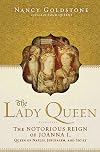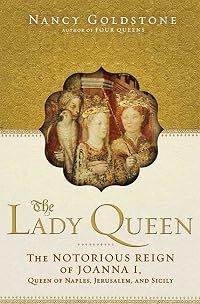
The Lady Queen : The Notorious Reign of Joanna I, Queen of Naples, Jerusalem, and Sicily
by Nancy Goldstone
On This Page
Description
The riveting history of a beautiful queen, a shocking murder, a papal trial--and a reign as triumphant as any in the Middle Ages. As courageous as Eleanor of Aquitaine, as astute and determined as Elizabeth I of England, Joanna, Queen of Naples, was the only female monarch in her time to rule in her own name.Tags
Recommendations


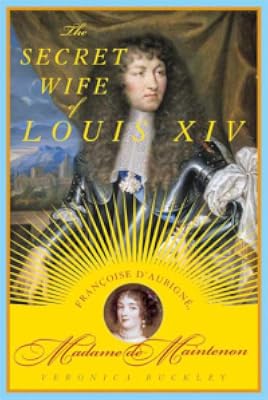
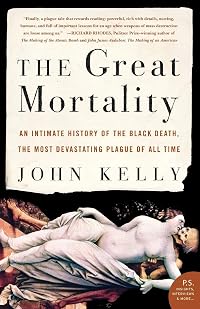
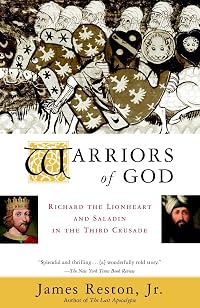
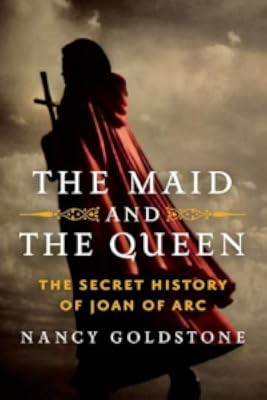
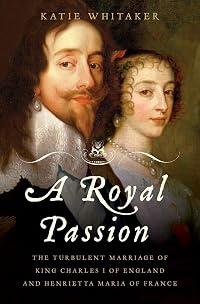

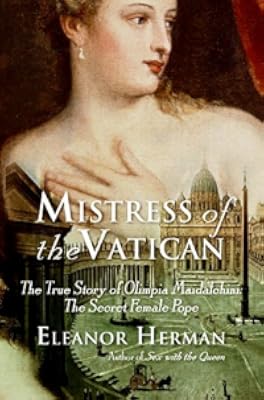
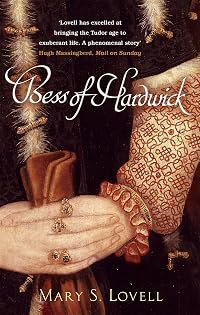
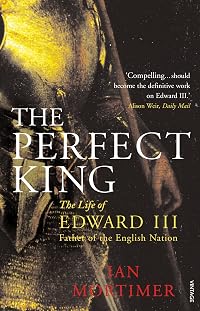

Member Recommendations
Member Reviews
Reading this account of the medieval queen of Naples, Joanna I, you get the impression that she must have been one of the most unlucky rulers of her time. She had little to no peace during her reign, and ended up being murdered, all through the greed and ambition of forces outside her control. In particular, the Hungarian branch of her family comes across as a pack of rich bullies -- at one point, Louis the Great has three daughters but only two kingdoms to give as dowries, so he decides Naples, to which he has an extremely thin claim, will do. Had Joanna been given half a chance, she might have been a successful ruler. A good account, which necessarily suffers from the fact that numerous people share the same name and it's tough to show more keep the cast apart. show less
This was a very colourful and dramatic slice of Medieval European history focusing on a little known and fascinating ruler, one of the most powerful female rulers of the Medieval age. "During her long, eventful reign, Joanna held together a large and far-flung dominion, which included Provence and all of southern Italy, and even expanded her rule, however briefly, into Sicily and Piedmont.....For more than thirty years, this queen fed the poor and cared for the sick; built churches and hospitals; reduced crime and promoted peace; protected trade and introduced new industry within her borders. She guided her subjects to recovery from the many instances of plague, war, famine, and depression endemic to the second half of the fourteenth show more century." So, why is she called the "notorious" Queen? This is because of the accusation that she murdered her first husband Andrew of Hungary, though she was cleared of this in a trial in 1348. However, this set off a very turbulent period of threatened and actual invasion, negotiating with 5 or 6 successive popes, marital turmoil with the first three of her four husbands, and seeing the deaths of her young children by Andrew and by her second husband Louis of Taranto. Joanna's final fall came at the hands of another Hungarian invasion, after she fell foul of the battles of rival Popes at the time of the Great Schism of the Papacy, an event "which would bitterly divide the church for the next forty years and be as damaging to Europe, and especially to the kingdom of Naples, as any war". Her murder as a wretched prisoner in a remote castle I found particularly sad and bathetic, an ignominious end to a great ruler. In conclusion, the author rues the fact that Joanna's story "when it is recounted at all, focuses entirely on her notoriety, as the queen who murdered her husband, and not on the many impressive accomplishments of her reign." A great read. show less
This is a cracking read about a woman who weathered the intrigues and the political games at both the local level and on the international stage.
This is like Game of Thrones with out the magic. You have women being forcibly married, children aged 6 and 7 married to each other, religious interference on a grand scale and then you can add in murder, rape and every other dastardly deed you can think of.
The book is well written by Goldstone, is not a dry historical recounting but keeps you engaged as you follow Queen Joanna's tale.
Highly recommend.
This is like Game of Thrones with out the magic. You have women being forcibly married, children aged 6 and 7 married to each other, religious interference on a grand scale and then you can add in murder, rape and every other dastardly deed you can think of.
The book is well written by Goldstone, is not a dry historical recounting but keeps you engaged as you follow Queen Joanna's tale.
Highly recommend.
If you didn't know that it was all true, the life story of Joanna I, Queen of Naples, would read like something from a terrible daytime soap: heir to the throne of Naples, she inherits the throne from her grandfather at the age of 17. She marries first her younger cousin, Andrew, who lacked both intelligence and charm; Andrew was murdered by some of her partisans, and accusations that Joanna had been involved led to Andrew's family taking away Joanna's toddler son by Andrew, who died shortly afterwards. Joanna then married another cousin, who was a total bastard, and had two more daughters by him (who both died young); then a Spanish king-without-a-kingdom who turned out to be insane; and finally to an older German duke who was show more attractive because of his military savvy. Are you boggling yet? This is all before I tell you that this took place against a backdrop of plague, Papal schism, economic collapse, the writings of Boccaccio, and general political intrigue.
Goldstone does a pretty good job at piecing together Joanna's life from the surviving sources--the medieval sources for the kingdom were largely deliberately destroyed by the Nazis in '43. Where the book is weak is in some of its treatment of the chronicle sources, and in how consistently it tries to place Joanna in her wider context, or in using some of what we do know about Joanna to plausibly extrapolate more about her role. Goldstone has also a tendency to go off on tangents which I suspect she felt necessary in order to pad out the word count—did we really need a blow-by-blow account of the battle of Crécy when our focus in on Sicily? All that said, I think it wouldn't be a bad text to use in an undergraduate history course, especially as Goldstone's conscious aim is to show how a woman could successfully govern a medieval kingdom, despite the ways in which Joanna was largely dismissed by later historians. There's a lot here which undergrads could usefully tackle in terms of both the pros and the cons of historical writing.
(As an aside, I can't believe the number of reviews on this site about The Lady Queen which dismiss it for 'not being a very good novel'. Are there really so many people out there who don't grasp the difference between a novel and a biography? Between fiction and non-fiction? 'Novel' is not a straight synonym for 'book'.) show less
Goldstone does a pretty good job at piecing together Joanna's life from the surviving sources--the medieval sources for the kingdom were largely deliberately destroyed by the Nazis in '43. Where the book is weak is in some of its treatment of the chronicle sources, and in how consistently it tries to place Joanna in her wider context, or in using some of what we do know about Joanna to plausibly extrapolate more about her role. Goldstone has also a tendency to go off on tangents which I suspect she felt necessary in order to pad out the word count—did we really need a blow-by-blow account of the battle of Crécy when our focus in on Sicily? All that said, I think it wouldn't be a bad text to use in an undergraduate history course, especially as Goldstone's conscious aim is to show how a woman could successfully govern a medieval kingdom, despite the ways in which Joanna was largely dismissed by later historians. There's a lot here which undergrads could usefully tackle in terms of both the pros and the cons of historical writing.
(As an aside, I can't believe the number of reviews on this site about The Lady Queen which dismiss it for 'not being a very good novel'. Are there really so many people out there who don't grasp the difference between a novel and a biography? Between fiction and non-fiction? 'Novel' is not a straight synonym for 'book'.) show less
I'm amazed at how many readers both here on LibraryThing and on Goodreads thought this book was "dry". Good grief it is as veritable a tidal wave of diabolical political and religious chicanery and intrigue as I have ever read! It does require a bit of work to keep track of the family relationships of the actors in the story and the ever-changing alliances amongst them. But it's worth the effort. Goldstone makes a very good fist of taking us through this medieval minefield and I found her narrative riveting.
A very enjoyable read: in fact, so enjoyable I became a little paranoid. Well-written revisionist history that purports to overturn or substantially add to our understanding of a period often turns out to have remarkably shaky foundations, with the author so keen to spin out a brand ne way of looking at a figure or era that it turns out there's more wish-fullfilment than anything else.
Happily, it appears that Goldstone has done her research: there is meticulous detail around her sources, sadly limited by an act of Nazi barbarism in destroying a huge cache containing much of the extant records of this period, and has consulted expert translators for primary sources she herself is unable to read. She appears to have familiarised herself show more with both the primary and secondary sources available on Joanna herself, and also on the other figures who touch on her life, and the period in general.
Joanna's story is fascinating: her father having obtained papal recognition that she be able to rule Naples and Avignon in her own right before he died the story of her life are the decades of battles to retain her kingdom; in that regard she is perhaps no different to many other monarchs of the era, but she faced the special challenge that every marriage, bar her last, would see a husband determined to overturn her primacy by one means or another; her relationships with a sucession of Popes, the good governance of her kingdom, personal capability (she represented herself, in Latin, at a Church trial against a claim of murdering her husband), and her sheer determination to retain her birthright make for compelling reading.
I would highly recommend it to anyone with more than a passing inerest in medieval or feminist history. show less
Happily, it appears that Goldstone has done her research: there is meticulous detail around her sources, sadly limited by an act of Nazi barbarism in destroying a huge cache containing much of the extant records of this period, and has consulted expert translators for primary sources she herself is unable to read. She appears to have familiarised herself show more with both the primary and secondary sources available on Joanna herself, and also on the other figures who touch on her life, and the period in general.
Joanna's story is fascinating: her father having obtained papal recognition that she be able to rule Naples and Avignon in her own right before he died the story of her life are the decades of battles to retain her kingdom; in that regard she is perhaps no different to many other monarchs of the era, but she faced the special challenge that every marriage, bar her last, would see a husband determined to overturn her primacy by one means or another; her relationships with a sucession of Popes, the good governance of her kingdom, personal capability (she represented herself, in Latin, at a Church trial against a claim of murdering her husband), and her sheer determination to retain her birthright make for compelling reading.
I would highly recommend it to anyone with more than a passing inerest in medieval or feminist history. show less
Destined from birth for greatness, Joanna I begins her early life with her younger sister Maria as an orphan raised in the opulent court of her grandfather, Robert the Wise. When her grandfather dies in her early teens, Joanna is crowned queen of Naples and begins a reign fraught with treachery and difficulty. Not only does Joanna deal with the political upheavals that were so common during the middle ages, she must also contend with the meddling papacy, financial disasters and challenges to the legitimacy of her reign by the King of Hungary. To make matters worse, Joanna is wed to Andrew of Hungary, a union that is strained and unpopular with her subjects from the very start. When Andrew is viciously murdered, Joanna's reign takes a a show more frightening trajectory into the realm of revenge and savagery. But as the Queen fights for her life and her kingdom, she maintains an attitude of nobility and graciousness showing the world that she is truly fit to lead her nation and leaving a lasting legacy for future generations.
I am not usually a reader of history or historical biography, so when I received this book I was a little concerned that it wouldn't be engaging enough to hold my attention. As I cracked the spine on the book and sat down to read, I found that it did take a little bit of time to orient myself into the medieval world that the author was documenting and for the first few chapters I struggled a bit. I think this was due to the fact that there was a huge section of exposition on the history of the area that was necessary to set the stage for the main story to be told. As I waded in further, I found that the tale of Joanna's reign was not only very engrossing, but exciting to read about and ponder over. I think that Goldstone has an incredible gift for bringing history to life and a way of telling her tale that absorbs the reader and places them squarely into the grist of the drama. The writing was not showy or flashy but it managed to capture me and keep me involved until the very last page.
I marveled at the strength of Joanna, for it seemed that her reign was plagued with every sort of trial that could possibly come along. During her time as Queen, not only was there the regular pressure of running the kingdom but also challenges to her sovereignty coming from every side and faction. It was incredible to me that she was able to withstand so much disaster and never even think of abdicating her throne. It was also amazing to me how many threats came from her immediate family. Some of the most grievous situations came from her sister Maria, but other relatives didn't bat an eye at creating dangerous situations for her or committing treason as well. It is said in many instances in the book that Joanna had the demeanor and staunchness that the ruler of a nation needs, and that her tenacity to hold on to her kingdom, and even add to it, was extremely impressive, not only for her time, but for ours as well.
On of the things that surprised me about this time in history was how many schemes and machinations were going on within the realm. It seemed that most of the troubles started over attempts to increase domains and kingdoms, or the possibility of generating revenue. It was almost comic the way people switched alliances at that time. One minute they were the Queen's trusted advisors and the next moment they had switched sides and were attempting to overthrow her. These schemes were most obvious from courtiers and family members, but I was flabbergasted to see that many of the Popes played this game as well. It was almost as if everyone was operating for themselves and their fortunes alone and that loyalty was a foreign concept to them. It must have been devastating for Joanna to have everyone turn on her at one time or another, and I can imagine it made it very hard for her to truly trust anyone.
There were some really exceptional qualities about Joanna's rule that are worth mentioning in this review. First of all, during Joanna's tenure as Queen, there were more women matriculated to become doctors in her kingdom than in any other place during that period of time. It is not clear if this was because there was just more opportunity for the schooling of women or if this situation existed because there was a female in power during this time, but I find the fact amazing. Also amazing was the fact that not only did Joanna hold onto her kingdom, but she was able to increase the size of her domain through several military campaigns during her reign. This is doubly impressive when you consider that she had to rely on those whose loyalties were suspect to accomplish this goal. She also managed to keep in her subjects' good graces throughout her reign and made sure that all of them received aid and alms as long as she was in power.
Reading about Joanna was very enlightening for me and I found that I was very invested in this particular woman's story. I think that there were two factors that made this so. The first was the quality of the writing. The clarity and crisp style of the narrative was definitely something that made the book exceptionally entertaining to me, and the second was the story itself. There was simply too much going on to be bored by this tale. Although it was sometimes work to keep the players in the drama straight, there was so much intrigue and scandal scattered throughout the book as to make it a very rollicking read. I think that this would be a great read for those who like historical biography. I also think that this book would have wide appeal to those who are interested in this time and place in history and it would be a great read to cut your teeth on if you are not usually a reader of this genre. A highly entertaining read. Recommended. show less
I am not usually a reader of history or historical biography, so when I received this book I was a little concerned that it wouldn't be engaging enough to hold my attention. As I cracked the spine on the book and sat down to read, I found that it did take a little bit of time to orient myself into the medieval world that the author was documenting and for the first few chapters I struggled a bit. I think this was due to the fact that there was a huge section of exposition on the history of the area that was necessary to set the stage for the main story to be told. As I waded in further, I found that the tale of Joanna's reign was not only very engrossing, but exciting to read about and ponder over. I think that Goldstone has an incredible gift for bringing history to life and a way of telling her tale that absorbs the reader and places them squarely into the grist of the drama. The writing was not showy or flashy but it managed to capture me and keep me involved until the very last page.
I marveled at the strength of Joanna, for it seemed that her reign was plagued with every sort of trial that could possibly come along. During her time as Queen, not only was there the regular pressure of running the kingdom but also challenges to her sovereignty coming from every side and faction. It was incredible to me that she was able to withstand so much disaster and never even think of abdicating her throne. It was also amazing to me how many threats came from her immediate family. Some of the most grievous situations came from her sister Maria, but other relatives didn't bat an eye at creating dangerous situations for her or committing treason as well. It is said in many instances in the book that Joanna had the demeanor and staunchness that the ruler of a nation needs, and that her tenacity to hold on to her kingdom, and even add to it, was extremely impressive, not only for her time, but for ours as well.
On of the things that surprised me about this time in history was how many schemes and machinations were going on within the realm. It seemed that most of the troubles started over attempts to increase domains and kingdoms, or the possibility of generating revenue. It was almost comic the way people switched alliances at that time. One minute they were the Queen's trusted advisors and the next moment they had switched sides and were attempting to overthrow her. These schemes were most obvious from courtiers and family members, but I was flabbergasted to see that many of the Popes played this game as well. It was almost as if everyone was operating for themselves and their fortunes alone and that loyalty was a foreign concept to them. It must have been devastating for Joanna to have everyone turn on her at one time or another, and I can imagine it made it very hard for her to truly trust anyone.
There were some really exceptional qualities about Joanna's rule that are worth mentioning in this review. First of all, during Joanna's tenure as Queen, there were more women matriculated to become doctors in her kingdom than in any other place during that period of time. It is not clear if this was because there was just more opportunity for the schooling of women or if this situation existed because there was a female in power during this time, but I find the fact amazing. Also amazing was the fact that not only did Joanna hold onto her kingdom, but she was able to increase the size of her domain through several military campaigns during her reign. This is doubly impressive when you consider that she had to rely on those whose loyalties were suspect to accomplish this goal. She also managed to keep in her subjects' good graces throughout her reign and made sure that all of them received aid and alms as long as she was in power.
Reading about Joanna was very enlightening for me and I found that I was very invested in this particular woman's story. I think that there were two factors that made this so. The first was the quality of the writing. The clarity and crisp style of the narrative was definitely something that made the book exceptionally entertaining to me, and the second was the story itself. There was simply too much going on to be bored by this tale. Although it was sometimes work to keep the players in the drama straight, there was so much intrigue and scandal scattered throughout the book as to make it a very rollicking read. I think that this would be a great read for those who like historical biography. I also think that this book would have wide appeal to those who are interested in this time and place in history and it would be a great read to cut your teeth on if you are not usually a reader of this genre. A highly entertaining read. Recommended. show less
 This review was written for LibraryThing Early Reviewers.
Members
- Recently Added By
Lists

al.vick-wishlist-history
70 works; 2 members

Western & Northern Europe
60 works; 1 member
Author Information

16 Works 6,763 Members
Nancy Goldstone's previous books include The Rival Queens: Catherine de' Medici, Her Daughter, Marguerite de Valois, and the Betrayal That Ignited a Kingdom and The Lady Queen: The Notorious Reign of Joanna I, Queen of Naples, Jerusalem, and Sicily. She lives in Sagaponack New York. Nancygoldstone.com
Some Editions
Common Knowledge
- Canonical title
- The Lady Queen : The Notorious Reign of Joanna I, Queen of Naples, Jerusalem, and Sicily
- Alternate titles
- Joanna: The Notorious Queen of Naples, Jerusalem, and Sicily
- Original publication date
- 2009-11-03
- People/Characters
- Joanna I, Queen of Naples; Robert I, King of Naples; Sancia, Queen of Naples; Andrew of Hungary, Duke of Calabria; Catherine of Valois, Empress of Constantinople; Maria of Naples, Duchess of Durazzo (show all 87); Charles, Duke of Durazzo; Louis I of Naples; Philip II, Prince of Taranto; Louis of Durazzo; Clement or Clemens VI, Pope (Pierre Roger, 1291-1352); Innocent I, Pope (Saint, 401-417); Louis I "The Great", King of Hungary; Niccolò Acciaioli; James IV, King of Majorca; Otto of Brunswick; Charles III of Durazzo, King of Naples; Guy de Chauliac; Louis Sanctus of Beringen; Giovanni Colonna; Matteo Giovannetti; Louis Maimbourg; Charles I of Anjou, King of Sicily and Naples; Louis IX, King of France; Beatrice of Provence; Giovanni Boccaccio; Petrarch; Yolande of Aragon, Duchess of Calabria (as Violante); Marie of Valois, Duchess of Calabria; Charles III of Valois; Louis of Toulouse; Elizabeth of Hungary; Elzéar of Sabran; Louis IV, Holy Roman Emperor; Boniface VIII, Pope (Benedetto Caetani, c. 1230 -1303); Constantine the Great; Castruccio Castracani; Matteo Camera; Niccolò Machiavelli; Giovanni Villani; Donato Acciaioli; Louise (firstborn child of Charles of Calabria and Marie de Valois); Charles Martel, Duke of Calabria (Name and title of two figures); John XXII, Pope (Jacques Duèze or d'Euse, 1244 -1334); Frederick III of Sicily; Charles II, King of Naples; Raymond Berengar; Charles Martel of Anjou; Philip I, Prince of Taranto; Francis le Brun; James II of Aragon; Blanche of Anjou, Queen of Aragon; Clemence of Austria; Charles I of Hungary (Carobert); Mary of Hungary, Queen of Naples; St. Clare of Assisi; James of Majorca (Franciscan friar); Nicetas Choniates; Baldwin II, Emperor of Constantinople; Philip IV, King of France; Robert II, Prince of Taranto; Filippo Viillani; John, Duke of Durazzo; Agnes of Périgord; Philippa of Catania; Raymond of Capania; Wenceslaus III, King of Bohemia; Otto III, Duke of Bavaria; Elizabeth of Poland, Queen of Hungary; Władysław I Łokietek; Stephen of Anjou; Casimir III the Great; Claire Záh; Felician Záh; John (Franciscan minister and chronicler); Charles, Duke of Calabria; Angelo di Costanzo; Isabella (Andrew's nurse); Friar Robert; Charles d'Artois; Peter IV of Aragon; Benedict XII, Pope (Jacques Fournier, 1285-1342); Giovanni Pipini; Paolo da Perugia; Edward III, King of England; Philip VI, King of France; Domenico da Gravina
- Important places
- Naples, Campania, Italy; Rome, Italy (Papal States); Avignon, Vaucluse, Provence-Alpes-Côte d'Azur, France; Sicily, Italy; Castel Nuovo, Naples, Campania, Italy; Basilica di Santa Chiara, Naples, Campania, Italy (show all 7); Hungary
- Important events
- Black Death; Hundred Years' War
- Dedication
- For my parents
- First words
- The Papal Court at Avignon, March 15, 1348--more than six hundred and fifty years ago, Joanna I, Queen of Naples, Sicily, and Jerusalem and countess of Provence, stood trial for her life.
- Last words
- (Click to show. Warning: May contain spoilers.)To this day, there is still no monument or funeral statuary commemorating Joanna I at the church of Santa Chiara, and the ban of excommunication is still in force.
- Publisher's editor
- Gibson, George
- Blurbers
- King, Ross; Moore, Wendy; du Plessix Gray, Francine
Classifications
Statistics
- Members
- 462
- Popularity
- 66,064
- Reviews
- 31
- Rating
- (3.53)
- Languages
- English, German, Portuguese
- Media
- Paper, Audiobook, Ebook
- ISBNs
- 18
- ASINs
- 9