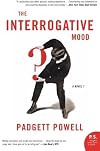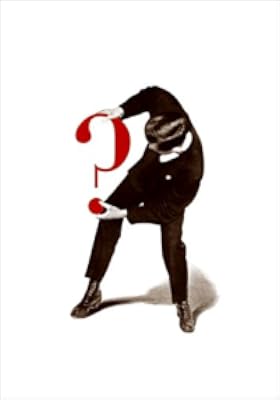
The Interrogative Mood: A Novel?
by Padgett Powell
On This Page
Description
“If Duchamp or maybe Magritte wrote a novel (and maybe they did. Did they?) it might look something like this remarkable little book of Padgett Powell’s.”—Richard Ford The Interrogative Mood is a wildly inventive, jazzy meditation on life and language by the novelist that Ian Frazier hails as “one of the best writers in America, and one of the funniest, too.” A novel composed entirely of questions, it is perhaps the most audacious literary high-wire act since Nicholson Baker’s show more The Mezzanine or David Foster Wallace’s stories; a playful and profound book that, as Jonathan Safran Foer says, “will sear the unlucky volumes shelved on either side of it. How it doesn’t, itself, combust in flames is a mystery to me.”. show lessTags
Recommendations






Member Reviews
Well, I can answer the question in the subtitle: No. This is not a novel. I'm not sure what the hell this is, other than that it's an endless series of questions. Mundane questions. Bizarre questions. Philosophical questions. Personal questions. Random questions. Repetitive questions. Thought-provoking questions. Nonsense questions. Trivia questions. Questions that give odd, incomplete little glances into the asker's mind. Question after question, on and on and on, with no obvious rhyme or reason to any of it.
It's a stupid idea for a book. It should be almost unreadable. And yet, it's weirdly compelling. I mean, really, really compelling. Something about it just captured my attention and dragged me along with half-formed answers show more tumbling over themselves in my mind in a breathless internal dialog: "Yes. No. Yes, but it was years ago. Somewhere in-between. Does that even mean anything? I dunno, I'm more of a cat person than a dog person. Why are you so interested in furniture polish? Eww, no! Hey, that's a really good question; I think you're on to something worth pondering here. You already asked me that before. Maybe. Wait-- what?"
This goes on for 164 pages. Admittedly, they're small pages. But by the end of it I felt tired, and rather like my brain had just been mugged. I'm still not sure quite what happened, but it was certainly one of the most interesting reading experiences I've ever had. show less
It's a stupid idea for a book. It should be almost unreadable. And yet, it's weirdly compelling. I mean, really, really compelling. Something about it just captured my attention and dragged me along with half-formed answers show more tumbling over themselves in my mind in a breathless internal dialog: "Yes. No. Yes, but it was years ago. Somewhere in-between. Does that even mean anything? I dunno, I'm more of a cat person than a dog person. Why are you so interested in furniture polish? Eww, no! Hey, that's a really good question; I think you're on to something worth pondering here. You already asked me that before. Maybe. Wait-- what?"
This goes on for 164 pages. Admittedly, they're small pages. But by the end of it I felt tired, and rather like my brain had just been mugged. I'm still not sure quite what happened, but it was certainly one of the most interesting reading experiences I've ever had. show less
The concept of weaving a novel out of questions is luminous, full to bursting with possibilities that Powell disappointed soundly in this book. The execution is scattered, each question interesting on its own but rarely staying on topic to a second or third question in a row. The reader is assaulted with these disconnected ideas and given nothing to round them into a plot. A few scattered threads gave me hope for discovery of the narrator, particularly the recurrence of certain questions (e.g. do you remember when I asked you...?) and questions that involved himself in third person (a rarity, e.g. do you think that the birds flitting around the crown of the tree in my yard...?). Without exponential extrapolation, however, nothing could show more be knitted together of these. The other logical way to construct an interrogative story, to create some sort of plot or theme for the reader through use of second person, was not used at all. For this interrogative style to work, I think the later questions need to answer in some way the older questions, so that information can accumulate.
As it was, the conceit of this method could have carried on enjoyably for maybe the length of a ten-page "short story," but it seems I have dragged myself through the rest of it to no narrative purpose. show less
As it was, the conceit of this method could have carried on enjoyably for maybe the length of a ten-page "short story," but it seems I have dragged myself through the rest of it to no narrative purpose. show less
In this book, every sentence was a question. This sounds like it could be gimmicky, but I found it delightful. At first I wanted to only read a page or so a day as some of the questions really made you think. But I quickly decided I had to read them all because I didn't want to put it down.
Makes you examine yourself, the author, the world and your beliefs on some level. A book filled with endless conversations and ideas. Thoughtful, hilarious, preposterous and fascinating. Even when/(especially when?) there are repeat questions. Some of the questions were my favorites due to a lyrical turn of phrase rather than merely the question itself.
Definitely not a book for everyone, but I LOVED it!!!
Makes you examine yourself, the author, the world and your beliefs on some level. A book filled with endless conversations and ideas. Thoughtful, hilarious, preposterous and fascinating. Even when/(especially when?) there are repeat questions. Some of the questions were my favorites due to a lyrical turn of phrase rather than merely the question itself.
Definitely not a book for everyone, but I LOVED it!!!
This book is written entirely in questions. Yes, it does sound a little gimmicky, but I absolutely loved it. I can't really explain why I loved it so much, and I can't exactly figure out who to recommend it to, because I think a lot of people would hate it. The questions often made me smile or laugh, think of people or events I'd forgotten about, or just have a moment of genuine reflection.
Like the question, "Do you miss Tab and do you fully understand its disappearance?" takes me right back to my second grade classroom sitting on the floor listening to Mrs. Snyder read a story while drinking Tab. What did happen to Tab?
Or the question, "Do you know the difference on sight between a rimfire cartridge and a centerfire?" I do not know show more the difference, I really have no idea what it refers to, but somebody does. I just imagined that person being so excited to read the question, and think to themselves, "I do know the difference!"
And the question, "If you saw on a T-shirt the slogan, "Blood is Like a Parachute," what would you think that slogan was intended to mean?" Questions like that just made me laugh.
I was wondering if this book would actually be a novel and tell a story through questions. Several reviews I read about the book say that in an unconventional way, it tells a lot of stories. Every question gives the reader the ability to become the main character in the story, and tell the stories themselves. show less
Like the question, "Do you miss Tab and do you fully understand its disappearance?" takes me right back to my second grade classroom sitting on the floor listening to Mrs. Snyder read a story while drinking Tab. What did happen to Tab?
Or the question, "Do you know the difference on sight between a rimfire cartridge and a centerfire?" I do not know show more the difference, I really have no idea what it refers to, but somebody does. I just imagined that person being so excited to read the question, and think to themselves, "I do know the difference!"
And the question, "If you saw on a T-shirt the slogan, "Blood is Like a Parachute," what would you think that slogan was intended to mean?" Questions like that just made me laugh.
I was wondering if this book would actually be a novel and tell a story through questions. Several reviews I read about the book say that in an unconventional way, it tells a lot of stories. Every question gives the reader the ability to become the main character in the story, and tell the stories themselves. show less
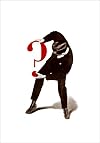
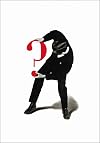
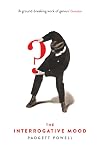
Is this a book? Yes, it has a bunch of pages and they are bound together and there is a front and back cover with a very catchy illustration on the front. So it must be a book.
Well, that's one question answered.
As for the thousands of questions posed in this book, they don't all cry out for answers. This is a book that means to make the reader think, even if sometimes it makes him or her think about the author. Several of the questions are actually small stories about the author's experience with question marks at the end.
Some are serendipitous ("What is your favorite fabric?" "Is the blue jay justly maligned?") and they seem to be strung together randomly. But wait: the subject of fabrics returns several pages later as do blue jays and show more other birds ...... It takes a while, but as you race through these questions, eventually the eye snags on something that resonates and the mind spins away into some memory that leads to creating a story of your own.
I finally had to stop at page 113 (of 164 pages) after reading in short spurts over five days. But while it held my attention, it led me to thinking of the sound and feel of old fashioned roller skates, the maniacal music of ice cream trucks and the grown-up thrill of hailing a cab in NYC when I was ten, all pleasant memories. And bigger things than that, like bravery and friendship and choices.
So it wasn't a waste of time. But would I actually recommend it? show less
Well, that's one question answered.
As for the thousands of questions posed in this book, they don't all cry out for answers. This is a book that means to make the reader think, even if sometimes it makes him or her think about the author. Several of the questions are actually small stories about the author's experience with question marks at the end.
Some are serendipitous ("What is your favorite fabric?" "Is the blue jay justly maligned?") and they seem to be strung together randomly. But wait: the subject of fabrics returns several pages later as do blue jays and show more other birds ...... It takes a while, but as you race through these questions, eventually the eye snags on something that resonates and the mind spins away into some memory that leads to creating a story of your own.
I finally had to stop at page 113 (of 164 pages) after reading in short spurts over five days. But while it held my attention, it led me to thinking of the sound and feel of old fashioned roller skates, the maniacal music of ice cream trucks and the grown-up thrill of hailing a cab in NYC when I was ten, all pleasant memories. And bigger things than that, like bravery and friendship and choices.
So it wasn't a waste of time. But would I actually recommend it? show less
A bizarre book that's formed completely from questions. Most reviews comment on how touching some of the more existential enquiries are, but I was struck instead by the book's off-the-wall humour, full of non-sequiters (well, the whole thing's basically one after another), that reminded me a lot of the videogame Portal. I loved reading this, with the author deftly pulling of the trick of seeming original rather than reliant on a gimmick.
Have you ever read a book composed entirely of questions? Would you consider reading such a book? If I told you that there is indeed such a book called The Interrogative Mood : a novel? by Padgett Powell and that is contains nothing but 164 pages of questions, would that further entice you to read it? What if I quoted the opening paragraph?
“Are your emotions pure? Are your nerves adjustable? How do you stand in relation to the potato? Should it still be Constantinople? Does a nameless horse make you more nervous or less nervous than a named horse? In your view, do children smell good? If before you know, would you eat animal crackers? Could you lie down and take a rest on the sidewalk? Did you love your mother and father, and do show more Psalms do it for you? If you are relegated to last place in every category, are you bothered enough to struggle up? Does your doorbell ever ring? Is there sand in your craw? Could Mendeleyev place you correctly in a square on a chart of periodic identities, or would you resonate all over the board? How many push-ups can you do?” (p.1)
Still not convinced that this is a book worth your time? What if said that, given most good literature is mostly about an author asking questions of his or her reader, then a book full of questions for the reader to ponder is surely this uncontroversial idea taken to its logical extreme?
If I employ nothing questions to review a book that is nothing but questions, is that tribute, plagiarism or just annoying? Am I doing the author a disservice? Are you now convinced to read The Interrogative Mood? Can I quote another passage; one that I feel better shows the surprising depth of the book?
“Do you like to listen to weather broadcasts or do you just like to see, in uncoached anticipation, weather happen? Will you be saddened that you life has been minor if in fact it has been minor? Is there anything you might do today that would distinguish you from being just a vessel of consumption and pollution with a proper presence in the herd? Have you ever spent time in the house of a recently deceased old woman and seen her Siamese-cat needlepoints and her baking supplies and her shoes and her inspirational sayings on the wall? Do you realize that people move on steadily, even arguably bravely, unto the end, stunned and more stunned, and numbed and more numbed, by what has happened to them and not happened to them? Have you ever heard the saying, Life is a sandwich of activity between two periods of bed-wetting” (p. 28)
Does a book composed of questions, and nothing but questions, end up saying more about the author or the reader? Wouldn’t you like to find out? show less
“Are your emotions pure? Are your nerves adjustable? How do you stand in relation to the potato? Should it still be Constantinople? Does a nameless horse make you more nervous or less nervous than a named horse? In your view, do children smell good? If before you know, would you eat animal crackers? Could you lie down and take a rest on the sidewalk? Did you love your mother and father, and do show more Psalms do it for you? If you are relegated to last place in every category, are you bothered enough to struggle up? Does your doorbell ever ring? Is there sand in your craw? Could Mendeleyev place you correctly in a square on a chart of periodic identities, or would you resonate all over the board? How many push-ups can you do?” (p.1)
Still not convinced that this is a book worth your time? What if said that, given most good literature is mostly about an author asking questions of his or her reader, then a book full of questions for the reader to ponder is surely this uncontroversial idea taken to its logical extreme?
If I employ nothing questions to review a book that is nothing but questions, is that tribute, plagiarism or just annoying? Am I doing the author a disservice? Are you now convinced to read The Interrogative Mood? Can I quote another passage; one that I feel better shows the surprising depth of the book?
“Do you like to listen to weather broadcasts or do you just like to see, in uncoached anticipation, weather happen? Will you be saddened that you life has been minor if in fact it has been minor? Is there anything you might do today that would distinguish you from being just a vessel of consumption and pollution with a proper presence in the herd? Have you ever spent time in the house of a recently deceased old woman and seen her Siamese-cat needlepoints and her baking supplies and her shoes and her inspirational sayings on the wall? Do you realize that people move on steadily, even arguably bravely, unto the end, stunned and more stunned, and numbed and more numbed, by what has happened to them and not happened to them? Have you ever heard the saying, Life is a sandwich of activity between two periods of bed-wetting” (p. 28)
Does a book composed of questions, and nothing but questions, end up saying more about the author or the reader? Wouldn’t you like to find out? show less
Members
- Recently Added By
Published Reviews
ThingScore 100
"Sind ihre Gefühle rein?" - Der US-Schriftsteller Padgett Powell hat ein Buch geschrieben, das nur aus Fragen besteht, ohne Handlung, ohne Zusammenhang und ohne Erzähler. Was wie eine Zumutung erscheint, ist ein tolles Leseabenteuer, das offenbar sogar Beziehungen verändern kann. Darüber wiederum ist der Autor selbst ein wenig erschrocken.
added by private library
Lists

Books as Objects & Metatextual Works
32 works; 3 members

Gimmicks
56 works; 12 members

Research/Inquiry - questions and wondering
43 works; 3 members
Author Information

18+ Works 1,580 Members
Padgett Powell has received the Prix de Rome of the American Academy of Arts & Letters, a Whiting Writer's Award, & a nomination for the National Book Award for his first novel, "Edisto." He resides in Gainesville, Florida. (Bowker Author Biography)
Some Editions
Awards and Honors
Awards
Distinctions
Common Knowledge
- Original publication date
- 2010; 2012
- People/Characters
- Godzilla; Dmitri Mendeleev; Norman Bates; R. Crumb; Leon Trotsky; Jean Baker (show all 8); Debbie Marsden; Jimi Hendrix
Classifications
Statistics
- Members
- 442
- Popularity
- 69,412
- Reviews
- 15
- Rating
- (3.36)
- Languages
- 5 — Dutch, English, French, German, Italian
- Media
- Paper, Ebook
- ISBNs
- 12
- ASINs
- 6