On This Page
Description
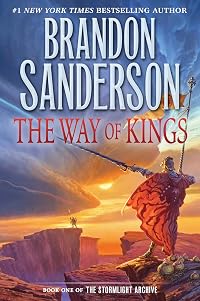
From #1 New York Times bestselling author Brandon Sanderson, The Way of Kings, Book One of the Stormlight Archive begins an incredible new saga of epic proportion.Roshar is a world of stone and storms. Uncanny tempests of incredible power sweep across the rocky terrain so frequently that they have shaped ecology and civilization alike. Animals hide in shells, trees pull in branches, and grass retracts into the soilless ground. Cities are built only where the topography offers shelter.
It show more has been centuries since the fall of the ten consecrated orders known as the Knights Radiant, but their Shardblades and Shardplate remain: mystical swords and suits of armor that transform ordinary men into near-invincible warriors. Men trade kingdoms for Shardblades. Wars were fought for them, and won by them.
One such war rages on a ruined landscape called the Shattered Plains. There, Kaladin, who traded his medical apprenticeship for a spear to protect his little brother, has been reduced to slavery. In a war that makes no sense, where ten armies fight separately against a single foe, he struggles to save his men and to fathom the leaders who consider them expendable.
Brightlord Dalinar Kholin commands one of those other armies. Like his brother, the late king, he is fascinated by an ancient text called The Way of Kings. Troubled by over-powering visions of ancient times and the Knights Radiant, he has begun to doubt his own sanity.
Across the ocean, an untried young woman named Shallan seeks to train under an eminent scholar and notorious heretic, Dalinar's niece, Jasnah. Though she genuinely loves learning, Shallan's motives are less than pure. As she plans a daring theft, her research for Jasnah hints at secrets of the Knights Radiant and the true cause of the war.
The result of over ten years of planning, writing, and world-building, The Way of Kings is but the opening movement of the Stormlight Archive, a bold masterpiece in the making.
Speak again the ancient oaths:
Life before death.
Strength before weakness.
Journey before Destination.
and return to men the Shards they once bore.
The Knights Radiant must stand again.
Other Tor books by Brandon Sanderson
The Cosmere
The Stormlight Archive
The Way of Kings
Words of Radiance
Edgedancer (Novella)
Oathbringer
The Mistborn trilogy
Mistborn: The Final Empire
The Well of Ascension
The Hero of Ages
Mistborn: The Wax and Wayne series
Alloy of Law
Shadows of Self
Bands of Mourning
Collection
Arcanum Unbounded
Other Cosmere novels
Elantris
Warbreaker
The Alcatraz vs. the Evil Librarians series
Alcatraz vs. the Evil Librarians
The Scrivener's Bones
The Knights of Crystallia
The Shattered Lens
The Dark Talent
The Rithmatist series
The Rithmatist
Other books by Brandon Sanderson
The Reckoners
Steelheart
Firefight
Calamity
. show less
Tags
Recommendations









Member Recommendations
Cecrow Another beginning to a ten volume fantasy work featuring almost overwhelming scale.
10
Member Reviews
4.5/5
this book is the definition of exposition. i’m not saying there isn’t a lot of action - oh baby, there’s action to sPARE! but everything that happens in this book (and i mean EVERYTHING) feels like it’s leading up to something bigger. given that this is a series, that makes sense, but in a book as long as this one it makes it feel like the action is dragging. i almost wish we had a more cohesive plot arc here in the first act. the interlude chapters were a bold decision, and honestly they were so hit or miss. but all of this makes it sound like i’m writing a negative review, which I AM CERTAINLY NOT!
THE WAY OF KINGS is gargantuan. in word count, page count, and scope. this book literally crafts a brand new world right in show more front of your eyes. it doesn’t hold your hand, but leads you through the basics carefully and evenly - there’s no endless info-dumping, and all the countries and political allegiances start to make more sense as the book goes on. the magic system makes sense (because SANDERSON is an absolute heavyweight champion of magic systems) and is not only believable, but actually cool.
i have this gripe about a lot of books … but *pounds table with credit card* pLEEEEAAASe give me more women. WOMEN?! HELLO?! can we PLEASE have moRE WOMEN! when women are forgotten in fantasy, or not centered the way they should be, then it makes the story less believable! you’re telling me the ladies wear a long ass sleeve over their left hand? and read and write when the men can’t? that’s SO much more interesting than war … had this been a different novel, i would have loved to see more female perspectives of the culture, caste system, etc. i guess this is just the first installment but. y’all gotta give me more women.
okay: i want to talk about the slavery parts for a bit. and, to preface this: comparing racism in castes through light and dark eyes isss… an incomplete metaphor to say the least. HOWEVER - as far as stakes go, this book has some pretty high ones. kaladin’s journey as a slave is the most compelling part of the story, and i’m glad that we spend the most time with him. i think what really drives fantasy is reality - oppression, faith, love, and loss. kaladin bears such a HUMAN attitude throughout his chapters. one of my favorite quotes: “to be human is to want that which we cannot have.” of course this quote came from a dalinar chapter, but i think it applies most beautifully to kaladin. maybe it’s because i have such an affinity with kaladin that i actually couldn’t stand some of the other characters (who all mean well). dalinar’s and adolin’s chapters strung me up bro. i could not stay AWAKE! shallan’s chapters were better, but the shining star is kaladin and his journey through slavery, apathy, depression, hatred, and leadership.
as for the actual heart of the story, the actual, real plot: the knights radiant, the heralds, the stormfather! listen i needed a character map to keep it all straight. i appreciated the nuance between old wives tales and superstition and genuine, world shaping religion, but i could definitely use a cheat sheet for vorinism, that’s for sure. it all smacks of something cyclical, something cosmic and fated, which i love in a fantasy book.
the way the epithets at the beginning of every chapter become relevant towards the end… INCREDIBLE?! this book was a masterpiece of planning, and must have taken years upon years of thought and execution. BRANDON SANDERSON is a revelation of a writer - my favorite by far.
the changes that we see in kaladin as the story progresses are amazing - he develops, he loves, he hurts, and he falls apart in such human ways. every time he runs a bridge, we see it wear him down: every time he gains the loyalty of a new bridgeman, we see him stand back up stronger.
i won’t even talk about the end, because spoilers, but WOW. this was an incredibly well crafted story, one thousand pages of BUILDUP leading to the second installment. did it need to be as long as it was? hmmmm probably not, but the length leads you to care more and more as the pages turn. reading THE WAY OF KINGS is kind of like exiting the world you know and entering an entirely new continent - one made of stone, blood, and faith. show less
this book is the definition of exposition. i’m not saying there isn’t a lot of action - oh baby, there’s action to sPARE! but everything that happens in this book (and i mean EVERYTHING) feels like it’s leading up to something bigger. given that this is a series, that makes sense, but in a book as long as this one it makes it feel like the action is dragging. i almost wish we had a more cohesive plot arc here in the first act. the interlude chapters were a bold decision, and honestly they were so hit or miss. but all of this makes it sound like i’m writing a negative review, which I AM CERTAINLY NOT!
THE WAY OF KINGS is gargantuan. in word count, page count, and scope. this book literally crafts a brand new world right in show more front of your eyes. it doesn’t hold your hand, but leads you through the basics carefully and evenly - there’s no endless info-dumping, and all the countries and political allegiances start to make more sense as the book goes on. the magic system makes sense (because SANDERSON is an absolute heavyweight champion of magic systems) and is not only believable, but actually cool.
i have this gripe about a lot of books … but *pounds table with credit card* pLEEEEAAASe give me more women. WOMEN?! HELLO?! can we PLEASE have moRE WOMEN! when women are forgotten in fantasy, or not centered the way they should be, then it makes the story less believable! you’re telling me the ladies wear a long ass sleeve over their left hand? and read and write when the men can’t? that’s SO much more interesting than war … had this been a different novel, i would have loved to see more female perspectives of the culture, caste system, etc. i guess this is just the first installment but. y’all gotta give me more women.
okay: i want to talk about the slavery parts for a bit. and, to preface this: comparing racism in castes through light and dark eyes isss… an incomplete metaphor to say the least. HOWEVER - as far as stakes go, this book has some pretty high ones. kaladin’s journey as a slave is the most compelling part of the story, and i’m glad that we spend the most time with him. i think what really drives fantasy is reality - oppression, faith, love, and loss. kaladin bears such a HUMAN attitude throughout his chapters. one of my favorite quotes: “to be human is to want that which we cannot have.” of course this quote came from a dalinar chapter, but i think it applies most beautifully to kaladin. maybe it’s because i have such an affinity with kaladin that i actually couldn’t stand some of the other characters (who all mean well). dalinar’s and adolin’s chapters strung me up bro. i could not stay AWAKE! shallan’s chapters were better, but the shining star is kaladin and his journey through slavery, apathy, depression, hatred, and leadership.
as for the actual heart of the story, the actual, real plot: the knights radiant, the heralds, the stormfather! listen i needed a character map to keep it all straight. i appreciated the nuance between old wives tales and superstition and genuine, world shaping religion, but i could definitely use a cheat sheet for vorinism, that’s for sure. it all smacks of something cyclical, something cosmic and fated, which i love in a fantasy book.
the way the epithets at the beginning of every chapter become relevant towards the end… INCREDIBLE?! this book was a masterpiece of planning, and must have taken years upon years of thought and execution. BRANDON SANDERSON is a revelation of a writer - my favorite by far.
the changes that we see in kaladin as the story progresses are amazing - he develops, he loves, he hurts, and he falls apart in such human ways. every time he runs a bridge, we see it wear him down: every time he gains the loyalty of a new bridgeman, we see him stand back up stronger.
i won’t even talk about the end, because spoilers, but WOW. this was an incredibly well crafted story, one thousand pages of BUILDUP leading to the second installment. did it need to be as long as it was? hmmmm probably not, but the length leads you to care more and more as the pages turn. reading THE WAY OF KINGS is kind of like exiting the world you know and entering an entirely new continent - one made of stone, blood, and faith. show less
An absolute mountain of a book. Climb it.
Let me be direct: The Way of Kings is not a book you casually read on a weekend. It is 1,007 pages of dense worldbuilding, multiple POVs, footnotes, illustrations, epigraphs, and a magic system that involves souls, storms, and broken people. It is also, without question, one of the most rewarding fantasy novels I have ever experienced.
What is it?: The world is Roshar. A planet lashed by hurricane-force storms that rage from one side of the continent to the other every few days. Everything—flora, fauna, architecture—has evolved to survive these "highstorms." The people live in the shadow of ancient magic, lost technology, and a war that has lasted six years.
The story follows three primary show more characters:
1. Kaladin, a former surgeon's apprentice turned soldier turned slave. He is sold to a bridge crew—a unit so suicidal that their only purpose is to run into enemy arrows to serve as mobile cover. Kaladin is broken, bitter, and brilliant. Watching him fail, learn, and slowly rise is the emotional spine of the book.
2. Shallan, a young woman from a ruined noble house. She travels to the court of the legendary warrior-priestess Jasnah Kholin to steal from her. Shallan's arc is quieter, more intellectual, and absolutely necessary. Her chapters explore philosophy, history, and the hidden nature of Roshar's past.
3. Dalinar Kholin, the king's uncle, a legendary general haunted by visions he cannot explain. He begins to question the very code of war that made him famous. His struggle between honor and practicality, between ancient oaths and modern cynicism, is gripping.
What makes it brilliant:
1. The worldbuilding is next-level. Sanderson doesn't just name a few cities and call it a day. He builds an entire ecosystem. The animals are crustacean-like, with shells and claws. The plants retreat into the ground when storms hit. The magic (Surgebinding) is tied to specific "spren" – little spirit manifestations of emotion, natural phenomena, or abstract concepts. It's alien, coherent, and endlessly fascinating.
2. The characters suffer and grow. Kaladin's depression is handled with genuine weight. He fails. He loses. He gives up. And then he finds a reason to keep going. That journey—not to triumph, but to survival—is profoundly moving. Shallan's trauma is revealed slowly, painfully. Dalinar's doubt is existential. These are not cardboard heroes.
3. The structure is audacious. Sanderson trusts you to follow along. The book opens with a prologue that seems unrelated. Then a prelude that takes place thousands of years ago. Then you meet Kaladin, then Shallan, then Dalinar. The plot threads do not converge until the final third. But when they do? When they do. The last 200 pages (the famous "Sanderlanche") deliver revelations, confrontations, and emotional payoffs that left me breathless.
4. The prose is functional but powerful. Sanderson is not a lyrical stylist like Rothfuss or García Márquez. He is a workman. But his clarity, his pacing, and his ability to write a moment of heroism without making it cheesy are unmatched. There are scenes—"Honor is dead. But I'll see what I can do."—that will live in my head forever.
5. The themes. This is a book about leadership, about the weight of oaths, about what it means to protect. It is also, quietly, a book about mental health. Kaladin's depression, Shallan's dissociation, Dalinar's PTSD—they are not decoration. They are the point.
Where it might lose you (be honest):
1. It's long. Very long. 400,000 words long. You will spend the first 300 pages feeling lost, confused, and unsure why you should care. That is intentional, but it's also a barrier.
2. The pacing is uneven. There are entire chapters of Kaladin hauling bridges. Entire chapters of Shallan in a library. Entire chapters of Dalinar having the same argument with his nephew. The middle third sags. Push through.
3. Sanderson explains everything. If you dislike being told exactly how a magic system works, you may find the exposition heavy. Personally, I love it. But some readers want mystery.
4. The humor misses sometimes. Shallan's wit is supposed to be sharp. Occasionally it's just annoying. Kaladin's bridge crew banter is better.
5. It's book one of ten. Sanderson writes fast, but The Stormlight Archive will not be finished for another decade or two. Manage your expectations.
Who should read this:
Fantasy readers who love massive, immersive worldbuilding (think Wheel of Time, Malazan, ASOIAF).
Anyone who wants a hero who genuinely struggles with despair.
Fans of hard magic systems with rules, limits, and clever applications.
People who enjoy a slow burn with a nuclear explosion at the end.
Who should skip it:
If you need a tight, fast-paced plot.
If you are intimidated by 1,000+ page books.
If you dislike multiple POVs and nonlinear openings.
Final verdict: The Way of Kings is not a perfect book. It is too long, too slow in places, and its prose will never win a literary prize. But it is a great book. It is ambitious, heartfelt, and genuinely inspiring. I finished it feeling like I had climbed a mountain—exhausted, sore, and looking out at a vast new horizon.
Five stars. For Kaladin jumping the chasm. For "The most important step a man can take." For a world that feels real enough to live in.
Bottom line: Read it. But clear your calendar first. show less
Let me be direct: The Way of Kings is not a book you casually read on a weekend. It is 1,007 pages of dense worldbuilding, multiple POVs, footnotes, illustrations, epigraphs, and a magic system that involves souls, storms, and broken people. It is also, without question, one of the most rewarding fantasy novels I have ever experienced.
What is it?: The world is Roshar. A planet lashed by hurricane-force storms that rage from one side of the continent to the other every few days. Everything—flora, fauna, architecture—has evolved to survive these "highstorms." The people live in the shadow of ancient magic, lost technology, and a war that has lasted six years.
The story follows three primary show more characters:
1. Kaladin, a former surgeon's apprentice turned soldier turned slave. He is sold to a bridge crew—a unit so suicidal that their only purpose is to run into enemy arrows to serve as mobile cover. Kaladin is broken, bitter, and brilliant. Watching him fail, learn, and slowly rise is the emotional spine of the book.
2. Shallan, a young woman from a ruined noble house. She travels to the court of the legendary warrior-priestess Jasnah Kholin to steal from her. Shallan's arc is quieter, more intellectual, and absolutely necessary. Her chapters explore philosophy, history, and the hidden nature of Roshar's past.
3. Dalinar Kholin, the king's uncle, a legendary general haunted by visions he cannot explain. He begins to question the very code of war that made him famous. His struggle between honor and practicality, between ancient oaths and modern cynicism, is gripping.
What makes it brilliant:
1. The worldbuilding is next-level. Sanderson doesn't just name a few cities and call it a day. He builds an entire ecosystem. The animals are crustacean-like, with shells and claws. The plants retreat into the ground when storms hit. The magic (Surgebinding) is tied to specific "spren" – little spirit manifestations of emotion, natural phenomena, or abstract concepts. It's alien, coherent, and endlessly fascinating.
2. The characters suffer and grow. Kaladin's depression is handled with genuine weight. He fails. He loses. He gives up. And then he finds a reason to keep going. That journey—not to triumph, but to survival—is profoundly moving. Shallan's trauma is revealed slowly, painfully. Dalinar's doubt is existential. These are not cardboard heroes.
3. The structure is audacious. Sanderson trusts you to follow along. The book opens with a prologue that seems unrelated. Then a prelude that takes place thousands of years ago. Then you meet Kaladin, then Shallan, then Dalinar. The plot threads do not converge until the final third. But when they do? When they do. The last 200 pages (the famous "Sanderlanche") deliver revelations, confrontations, and emotional payoffs that left me breathless.
4. The prose is functional but powerful. Sanderson is not a lyrical stylist like Rothfuss or García Márquez. He is a workman. But his clarity, his pacing, and his ability to write a moment of heroism without making it cheesy are unmatched. There are scenes—"Honor is dead. But I'll see what I can do."—that will live in my head forever.
5. The themes. This is a book about leadership, about the weight of oaths, about what it means to protect. It is also, quietly, a book about mental health. Kaladin's depression, Shallan's dissociation, Dalinar's PTSD—they are not decoration. They are the point.
Where it might lose you (be honest):
1. It's long. Very long. 400,000 words long. You will spend the first 300 pages feeling lost, confused, and unsure why you should care. That is intentional, but it's also a barrier.
2. The pacing is uneven. There are entire chapters of Kaladin hauling bridges. Entire chapters of Shallan in a library. Entire chapters of Dalinar having the same argument with his nephew. The middle third sags. Push through.
3. Sanderson explains everything. If you dislike being told exactly how a magic system works, you may find the exposition heavy. Personally, I love it. But some readers want mystery.
4. The humor misses sometimes. Shallan's wit is supposed to be sharp. Occasionally it's just annoying. Kaladin's bridge crew banter is better.
5. It's book one of ten. Sanderson writes fast, but The Stormlight Archive will not be finished for another decade or two. Manage your expectations.
Who should read this:
Fantasy readers who love massive, immersive worldbuilding (think Wheel of Time, Malazan, ASOIAF).
Anyone who wants a hero who genuinely struggles with despair.
Fans of hard magic systems with rules, limits, and clever applications.
People who enjoy a slow burn with a nuclear explosion at the end.
Who should skip it:
If you need a tight, fast-paced plot.
If you are intimidated by 1,000+ page books.
If you dislike multiple POVs and nonlinear openings.
Final verdict: The Way of Kings is not a perfect book. It is too long, too slow in places, and its prose will never win a literary prize. But it is a great book. It is ambitious, heartfelt, and genuinely inspiring. I finished it feeling like I had climbed a mountain—exhausted, sore, and looking out at a vast new horizon.
Five stars. For Kaladin jumping the chasm. For "The most important step a man can take." For a world that feels real enough to live in.
Bottom line: Read it. But clear your calendar first. show less
I'm not typically a fantasy reader, but I was persuaded to give this mammoth tome a chance, and I'm glad I did. While the pacing often felt slow (which explains the sheer size of the book), the writing itself was surprisingly easy to follow, and I found myself invested in several of the character arcs and the larger sense of purpose driving the story.
I especially enjoyed the glimpses into the world’s mythology through Jasnah and Shallan’s storyline, as well as Dalinar’s growing struggle to understand his visions and sense of duty. Those parts added a layer of mystery and hidden meaning amongst all the drama and action that met my more intellectual craving. I would love to see those threads explored even further in the following show more books.
On the other hand, the casual way the story often treated death in battle was jarring to me. It touched a little too close to home as a reminder of how easily human life can be dismissed during war. It contrasted so oddly with the deal and discussion of the value of the bridgemen's lives near the end.
I also have some conflicting feelings about how the Parshendi and Parshmen are depicted. I may be reading too much into it but I picked up on some racial undertones that made me a little uncomfortable. Maybe that was intentional and will be explored or redeemed in later books, but right now it's hard to stomach how almost everyone in this world dehumanizes, enslaves, and hates an entire people (besides a few of the main characters who expressed some desire to understand them).
I really appreciated the book’s moral undercurrents, particularly the idea of standing up for what is right, even when it’s difficult or unpopular. Those themes of honor, duty, and responsibility felt woven into the fabric of the story and bring up a lot of complex questions of morality.
Going in, I wasn’t sure if I’d have the motivation to continue with the series, but this first book did just enough to pique my interest to move forward with book two. show less
I especially enjoyed the glimpses into the world’s mythology through Jasnah and Shallan’s storyline, as well as Dalinar’s growing struggle to understand his visions and sense of duty. Those parts added a layer of mystery and hidden meaning amongst all the drama and action that met my more intellectual craving. I would love to see those threads explored even further in the following show more books.
On the other hand, the casual way the story often treated death in battle was jarring to me. It touched a little too close to home as a reminder of how easily human life can be dismissed during war. It contrasted so oddly with the deal and discussion of the value of the bridgemen's lives near the end.
I also have some conflicting feelings about how the Parshendi and Parshmen are depicted. I may be reading too much into it but I picked up on some racial undertones that made me a little uncomfortable. Maybe that was intentional and will be explored or redeemed in later books, but right now it's hard to stomach how almost everyone in this world dehumanizes, enslaves, and hates an entire people (besides a few of the main characters who expressed some desire to understand them).
I really appreciated the book’s moral undercurrents, particularly the idea of standing up for what is right, even when it’s difficult or unpopular. Those themes of honor, duty, and responsibility felt woven into the fabric of the story and bring up a lot of complex questions of morality.
Going in, I wasn’t sure if I’d have the motivation to continue with the series, but this first book did just enough to pique my interest to move forward with book two. show less
This book is a masterpiece. Brandon Sanderson's world building is some of the most skillful I've seen; he does it gracefully and thoroughly, without resorting to pages of long exposition to explain how things work. The characters (Kaladin's my favorite)are memorable, and the story, on many occasions, made me want to run around the room with excitement. What a great tome that was! Can't wait for the next!
SUMMARY:
"Philosophy is an important field of study,” Jasnah said sternly. “Particularly if you’re going to be involved in court politics. The nature of morality must be considered, and preferably before one is exposed to situations where a moral decision is required.” “Yes, Brightness. Though I fail to see how philosophy is more ‘hands-on’ than history.” “History, by definition, cannot be experienced directly. As it is happening, it is the present, and that is philosophy’s realm." Ch. 36, Pg. 635
Taking place on the world of Roshar, where a massive hurricane-like storm ravages the landscape every few days, creating a reactive ecology similar to that of James Cameron's Avatar. A story told with three perspectives, show more Kaladin, Dalinar, and Shallan. King Gavilar Kholin of the nation of Alethkar is killed by an assassin with strange and mysterious powers. This happened on the night of a monumental trade treaty between Alethkar, a warmongering nation, and a native peoples called the Parshendi, for hunting privileges of a region called 'The Shattered Plains' for great beasts that live there, to harvest their hearts made of valuable gems. Gavilar's recent political project was to unite Alethkar, but not through violence and force, as is tradition, but to unite the nation through honor and peaceful actions, which made him unpopular with his own allies. Gavilar's assassination fueled his nations bloodlust, and launched Alethkar into a brutal war with the Parshendi. Dalinar, the kings brother, a brutal military warlord with the title of 'the Blackthorn' tries to take up his brother's legacy, despite his previous military successes. Dalinar starts having mysterious visions from God to unite Alethkar in preparation for an impending doom, making his efforts not simply a way to honor his brother's vision for the kingdom, but an existential crisis, bordering religious devotion. Kaladin Stormblessed is a slave of Alethkar's army too stubborn to die, but hopeless to escape his slavery. He takes it upon himself to inspire his fellow slaves to stay alive as long as possible as they are forced to be meat shields for Alethkar's war with the Parshendi. Kaladin regularly survives the impossible, and begins to question why he is still alive, despite his efforts he takes to die, and the suicidal sacrifices he makes to give hope to his men. Shallan Davar begins studying under Jasnah Kholin, a great scholar of her time, and King Gavilar's daughter. Shallan falls in love with scholarship and academic study, but is also thrown into the thick of politics, as she sees first hand through Jasnah and the death of her father, how deep research, philosophy and politics interact. She comes to see that scholarship is not just an abstract concept that does not produce anything meaningful, but actually impacts the real world.
ANALYSIS
Most fiction is disguised philosophy. This one seems to be dripping with inspiration from from real world philosophy. The two strongest philosophical elements I am sensing is an exploration of a moral system derived from virtue ethics, or deontology, and the second theme is that of the philosopher king. I am not well versed in virtue ethics or deontology yet, other than simply being introduced enough to recognize it. But I do not know either moral theory well enough to be able to distinguish which of the two moral theories are being explored. As far as I understand virtue ethics is a moral system that determines morality through having a good character, where deontology determines morality through responsibility.
The second philosophical theme is the philosopher king. This seems to be a common element of a lot of Brandon's work in the Cosmere, where he seems to make the argument over and over again that a government should be directed by that of a wise individual or a group of wise counselors. Where I could be wrong is that this 'philosopher king' archetype could just be a common exploration of fantasy in general, but I have not read enough of fantasy to know for sure. I am reading through Plato's works, and have yet to get to The Republic, where I understand that this idea is layed out in more detail.
Another theme I am now noticing in Brandon's work in the Cosmere is in exploring the incredible resiliance of the most broken people. He seems to want to find what drives someone to continue one's journey in life despite great suffering.
Finally there is a brief explanation of 'atheism 101' in this book, and is paired with an very good exploration of the life of a philosopher and academic. The portion on atheism is very good as an introduction to an atheist's views, but by no means, is a complete understanding of an atheists views. The exploration of philosophical/academic life though, is something very special, that takes this book to a higher level of quality, and yet still remains very accessible for those who are not philosophically trained or academically minded. "
RESPONSE
This is a very special book. I would even go on to say that is is a classic. This is a work of great ambition, but its prose does not signal itself as high art. It's language is very accessible to the modern reader. It has a writing style that focuses on clarity at the expense of beauty, but I think that there is more than enough other things going in this book that are masterfully executed, and a few moments where Brandon does focus on his prose over clarity, demonstrating that he can write in a beautiful way. Because of all this, I am quite comfortable calling The Way of Kings a Masterpiece.
QUOTES
"Expectations were like fine pottery. The harder you held them, the more likely they were to crack." Ch. 3, Pg. 71
"Ignorance is hardly unusual, Miss Davar. The longer I live, the more I come to realize that it is the natural state of the human mind. There are many who will strive to defend its sanctity and then expect you to be impressed with their efforts" Ch. 5, Pg. 105
"I have learned what I could through reading, filling in the gaps by taking advantage of my own curious nature. But I will not be capable of matching knowledge with someone who has been given the benefit of a formal—and expensive—education. Why is this an argument that you should accept me? Because everything I have learned has come by way of great personal struggle. What others were handed, I had to hunt. I believe that because of this, my education—limited though it is—has extra worth and merit. I respect your decisions, but I do ask you to reconsider. Which would you rather have? A ward who is able to repeat the correct answers because an overpriced tutor drilled them into her, or a ward who had to struggle and fight for everything she has learned? I assure you that one of those two will prize your teachings far more than the other." Ch. 7, Pg. 146
"The body needs many different foods to remain healthy. And the mind needs many different ideas to remain sharp." Ch. 8, Pg. 164
"The hallmark of insecurity is bravado." Ch. 12, Pg. 232
"I once saw a spindly man carrying a stone larger than his head upon his back, the passage went. He stumbled beneath the weight, shirtless under the sun, wearing only a loincloth. He tottered down a busy thoroughfare. People made way for him. Not because they sympathized with him, but because they feared the momentum of his steps. You dare not impede one such as this. The monarch is like this man, stumbling along, the weight of a kingdom on his shoulders. Many give way before him, but so few are willing to step in and help carry the stone. They do not wish to attach themselves to the work, lest they condemn themselves to a life full of extra burdens. I left my carriage that day and took up the stone, lifting it for the man. I believe my guards were embarrassed. One can ignore a poor shirtless wretch doing such labor, but none ignore a king sharing the load. Perhaps we should switch places more often. If a king is seen to assume the burden of the poorest of men, perhaps there will be those who will help him with his own load, so invisible, yet so daunting." Ch. 15, Pg. 288
"To lack feeling is to be dead, but to act on every feeling is to be a child." Ch. 26, Pg. 454
"Don’t try to stop yourself from feeling. You’ll hate who you become." Ch. 27, Pg. 479
"Too many scholars think of research as purely a cerebral pursuit. If we do nothing with the knowledge we gain, then we have wasted our study. Books can store information better than we can—what we do that books cannot is interpret. So if one is not going to draw conclusions, then one might as well just leave the information in the texts." Ch. 29, Pg. 555
"Is it hard for you, Jasnah? Painful, I mean?" “Atheism is not a disease, Your Majesty,” Jasnah said dryly. “It’s not as if I’ve caught a foot rash.” “Of course not, of course not. But…er, isn’t it difficult, having nothing in which to believe?” Shallan leaned forward, still sketching, but keeping her attention on the conversation. Shallan had assumed that training under a heretic would be a little more exciting. She and Kabsal—the witty ardent whom she’d met on her first day in Kharbranth—had chatted several times now about Jasnah’s faith. However, around Jasnah herself, the topic almost never came up. When it did, Jasnah usually changed it. Today, however, she did not. Perhaps she sensed the sincerity in the king’s question. “I wouldn’t say that I have nothing to believe in, Your Majesty. Actually, I have much to believe in. My brother and my uncle, my own abilities. The things I was taught by my parents.” “But, what is right and wrong, you’ve…Well, you’ve discarded that.” “Just because I do not accept the teachings of the devotaries does not mean I’ve discarded a belief in right and wrong.” “But the Almighty determines what is right!” “Must someone, some unseen thing, declare what is right for it to be right? I believe that my own morality—which answers only to my heart—is more sure and true than the morality of those who do right only because they fear retribution.” “But that is the soul of law,” the king said, sounding confused. “If there is no punishment, there can be only chaos.” “If there were no law, some men would do as they wish, yes,” Jasnah said. “But isn’t it remarkable that, given the chance for personal gain at the cost of others, so many people choose what is right?” “Because they fear the Almighty.” “No,” Jasnah said. “I think something innate in us understands that seeking the good of society is usually best for the individual as well. Humankind is noble, when we give it the chance to be. That nobility is something that exists independent of any god’s decree.” “I just don’t see how anything could be outside God’s decrees.” The king shook his head, bemused. “Brightness Jasnah, I don’t mean to argue, but isn’t the very definition of the Almighty that all things exist because of him?” “If you add one and one, that makes two, does it not?” “Well, yes.” “No god needs declare it so for it to be true,” Jasnah said. “So, could we not say that mathematics exists outside the Almighty, independent of him?” “Perhaps.” “Well,” Jasnah said, “I simply claim that morality and human will are independent of him too.” “If you say that,” the king said, chuckling, “then you’ve removed all purpose for the Almighty’s existence!” “Indeed.” The balcony fell silent. Jasnah’s sphere lamps cast a cool, even white light across them. For an uncomfortable moment, the only sound was the scratching of Shallan’s charcoal on her drawing pad. She worked with quick, scraping motions, disturbed by the things that Jasnah had said. They made her feel hollow inside. That was partly because the king, for all his affability, was not good at arguing. He was a dear man, but no match for Jasnah in a conversation. “Well,” Taravangian said, “I must say that you make your points quite effectively. I don’t accept them, though.” “My intention is not to convert, Your Majesty,” Jasnah said. “I am content keeping my beliefs to myself, something most of my colleagues in the devotaries have difficulty doing. Shallan, have you finished yet?" Ch. 29, Pg. 560
"Philosophy is an important field of study,” Jasnah said sternly. “Particularly if you’re going to be involved in court politics. The nature of morality must be considered, and preferably before one is exposed to situations where a moral decision is required.” “Yes, Brightness. Though I fail to see how philosophy is more ‘hands-on’ than history.” “History, by definition, cannot be experienced directly. As it is happening, it is the present, and that is philosophy’s realm." Ch. 36, Pg. 635
"You say you can’t give me answers,” Shallan said. “But can’t I ask for the advice of someone wise? Someone who’s gone before? Why write our philosophies, draw our conclusions, if not to influence others? You yourself told me that information is worthless unless we use it to make judgments.” Jasnah smiled, dunking her arms and washing off the soap. Shallan caught a victorious glimmer in her eye. She wasn’t necessarily advocating ideas because she believed them; she just wanted to push Shallan. It was infuriating. How was Shallan to know what Jasnah really thought if she adopted conflicting points of view like this? “You act as if there were one answer,” Jasnah said, gesturing to Shallan to fetch a towel and climbing from the pool. “A single, eternally perfect response.” Shallan hastily complied, bearing a large, fluffy towel. “Isn’t that what philosophy is about? Finding the answers? Seeking the truth, the real meaning of things?" Ch. 36, Pg. 636
"When we are young,” Jasnah said, “we want simple answers. There is no greater indication of youth, perhaps, than the desire for everything to be as it should. As it has ever been.” Shallan frowned, still watching the men by the tavern over her shoulder. “The older we grow,” Jasnah said, “the more we question. We begin to ask why. And yet, we still want the answers to be simple. We assume that the people around us—adults, leaders—will have those answers. Whatever they give often satisfies us.” “I was never satisfied,” Shallan said softly. “I wanted more.” “You were mature,” Jasnah said. “What you describe happens to most of us, as we age. Indeed, it seems to me that aging, wisdom, and wondering are synonymous. The older we grow, the more likely we are to reject the simple answers. Unless someone gets in our way and demands they be accepted regardless.” Jasnah’s eyes narrowed. “You wonder why I reject the devotaries.” “I do.” “Most of them seek to stop the questions." Ch. 36, Pg. 638
“You’re at an interesting place in your life, Shallan,” Jasnah said, flexing her hand. “You are old enough to wonder, to ask, to reject what is presented to you simply because it was presented to you. But you also cling to the idealism of youth. You feel there must be some single, all-defining Truth—and you think that once you find it, all that once confused you will suddenly make sense." Ch. 36, Pg. 639
"Does one deserve to have evil done to her by consequence of putting herself where evil can reach her?" Ch. 36, Pg. 643
"Kill or be killed. That was the Philosophy of Starkness. It exonerated Jasnah. Actions are not evil. Intent is evil, and Jasnah’s intent had been to stop men from harming others. That was the Philosophy of Purpose. It lauded Jasnah. Morality is separate from the ideals of men. It exists whole somewhere, to be approached—but never truly understood—by the mortal. The Philosophy of Ideals. It claimed that removing evil was ultimately moral, and so in destroying evil men, Jasnah was justified. Objective must be weighed against methods. If the goal is worthy, then the steps taken are worthwhile, even if some of them—on their own—are reprehensible. The Philosophy of Aspiration. It, more than any, called Jasnah’s actions ethical" Ch. 39, Pg. 671
"If the intentions were more important than the action, then she had to condemn herself. Perhaps the Philosophy of Aspiration—which stated that objectives were more important than the steps taken to achieve them—would agree with what she’d done, but that was the philosophy she found most reprehensible." Ch. 39, Pg. 672
"Somebody has to start. Somebody has to step forward and do what is right, because it is right. If nobody starts, then others cannot follow." Ch. 41, Pg. 702
"Life before death. Strength before weakness. Journey before destination." Ch. 43, Pg. 732
"Life before death. Life before death. Live before you die." Ch. 43, Pg. 732
"he’d dealt with these periods of sadness more awkwardly. He’d become the wretch, not caring—but also not despairing. It had seemed better not to feel at all, as opposed to feeling pain. I’m going to fail them, Kaladin thought, squeezing his eyes shut. Why try? Wasn’t he a fool to keep grasping as he did? If only he could win once. That would be enough. As long as he could believe that he could help someone, as long as he believed that some paths led to places other than darkness, he could hope. You promised yourself you would try one last time, he thought. They aren’t dead yet. Still alive. For now. There was one thing he hadn’t tried. Something he’d been too frightened of. Every time he’d tried it in the past, he’d lost everything. The wretch seemed to be standing before him. He meant release. Apathy. Did Kaladin really want to go back to that? It was a false refuge. Being that man hadn’t protected him. It had only led him deeper and deeper until taking his own life had seemed the better way. Life before death. Kaladin stood up, opening his eyes, dropping the small rock. He walked slowly back toward the torchlight." Ch. 43, 733
"Why would a man with no prior interest in scholarship suddenly become so obsessed?" Ch. 45, Pg. 754
"The classics do have their place, and I will send you to classical works on occasion, as I did with your study of morality. But I intend such tangents to be adjuncts to your current projects. Those must be the focus, not long-lost historical conundrums." Ch. 45, Pg. 754
“I thought you were a believer.” “I am. But just because I honor the Almighty doesn’t mean I’m going to accept any explanation, Kabsal. It might be religion, but it still has to make sense.” Ch. 45, Pg 761
"Those who truly seek wisdom are those who will acknowledge the virtue in their adversaries and who will learn from those who disabuse them of error." Ch. 48, Pg. 817
“Winds are changing,” Wit whispered. Dalinar glanced at him. Wit’s eyes narrowed, and he scanned the night sky. “It’s been happening for months now. A whirlwind. Shifting and churning, blowing us round and around. Like a world spinning, but we can’t see it because we’re too much a part of it.” “World spinning. What foolishness is this?” “The foolishness of men who care, Dalinar,” Ch. 54, Pg. 894.
“What you saw belongs to you. A story doesn’t live until it is imagined in someone’s mind.” “What does the story mean, then?”“It means what you want it to mean,” Hoid said. “The purpose of a storyteller is not to tell you how to think, but to give you questions to think upon. Too often, we forget that.” Ch. 57, Pg. 964
"What responsibility are you avoiding?…He wasn’t avoiding responsibility. He took too much responsibility!...Though there was one thing he clung to. An excuse, perhaps, like the dead emperor. It was the soul of the wretch. Apathy. The belief that nothing was his fault, the belief that he couldn’t change anything. If a man was cursed, or if he believed he didn’t have to care, then he didn’t need to hurt when he failed. Those failures couldn’t have been prevented. Someone or something else had ordained them." Ch. 57, Pg. 966
"Strength does not make one capable of rule; it makes one capable of service." Ch. 59, Pg. 993
"To be human is to want that which we cannot have. For some, this is power. For me, it is peace." Ch. 60, Pg. 1019
"Overcome your guilt, Kaladin. Care, but not too much. Take responsibility, but don’t blame yourself.’ Protect, save, help—but know when to give up. They’re such precarious ledges to walk." Ch. 62, Pg. 1045
"Weakness can imitate strength if bound properly, just as cowardice can imitate heroism if given nowhere to flee." Ch. 64, Pg. 1061
"We follow the Codes not because they bring gain, but because we loathe the people we would otherwise become." Ch. 66, Pg. 1085
"What was a prayer, if not creation? Making something where nothing existed. Creating a wish out of despair, a plea out of anguish. Bowing one’s back before the Almighty, and forming humility from the empty pride of a human life.Something from nothing. True creation." Ch. 69, Pg. 1133
"The end was peace, but living… that is a tempest." Ch. 69, Pg. 1138
"Before any of this can work, our people need to have a minimum level of honor and dignity. Adolin said something to me a few weeks back, something profound. He asked me why I forced my sons to live up to such high expectations, but let others go about their errant ways without condemnation.“I have been treating the other highprinces and their lighteyes like adults. An adult can take a principle and adapt it to his needs. But we’re not ready for that yet. We’re children. And when you’re teaching a child, you require him to do what is right until he grows old enough to make his own choices." Ch. 69, Pg 1150
"You convinced me that truth was not as simple as I thought it. You’ve opened a box full of storms in me." Ch. 70, Pg. 1160
"It strikes me that religion—in its essence—seeks to take natural events and ascribe supernatural causes to them. I, however, seek to take supernatural events and find the natural meanings behind them. Perhaps that is the final dividing line between science and religion. Opposite sides of a card." Ch. 72, Pg. 1170
"Others have looked just as noble, Kaladin thought. But would any man trade a Shardblade just to keep up appearances? And if they would, at what point did the appearance become reality?" Ch. 73, Pg. 1173.
(WHAT) TITLE: The Way of Kings
(WHAT) SERIES: Stormlight Archive
(WHAT) Order: 1
(WHO) AUTHOR/EDITOR: Brandon Sanderson
RECORDS OF NOTE:
(WHAT) GENRE / SUBJECT: Fantasy
(HOW) METHODS OF COMPREHENSION: Listened to the graphic audio version of this with a full cast with music and sound effects, while going through on a digital version of the book for further analysis.
PAGES: 1203
(WHERE) OWNED / PLATFORM: Graphic Audio, EPUB
EXCITEMENT: 8
RATING: 10
(WHY) HOW DID I HEAR ABOUT IT?: This was simply the next book in the cosmere for the reading list I am following.
FINISHED: Yes
(WHEN) READ OVER THE COURSE OF?: A week
(WHEN) DATE FINISHED: Sun, Nov 16, 2025
(WHY) REASON FINISHED: It was very good
(WHY) REASON DROPPED:
EXPECTATIONS: Exceeded
PACING FEEL: Just Right
STYLE: Prose
WORTH MY TIME: Yes show less
"Philosophy is an important field of study,” Jasnah said sternly. “Particularly if you’re going to be involved in court politics. The nature of morality must be considered, and preferably before one is exposed to situations where a moral decision is required.” “Yes, Brightness. Though I fail to see how philosophy is more ‘hands-on’ than history.” “History, by definition, cannot be experienced directly. As it is happening, it is the present, and that is philosophy’s realm." Ch. 36, Pg. 635
Taking place on the world of Roshar, where a massive hurricane-like storm ravages the landscape every few days, creating a reactive ecology similar to that of James Cameron's Avatar. A story told with three perspectives, show more Kaladin, Dalinar, and Shallan. King Gavilar Kholin of the nation of Alethkar is killed by an assassin with strange and mysterious powers. This happened on the night of a monumental trade treaty between Alethkar, a warmongering nation, and a native peoples called the Parshendi, for hunting privileges of a region called 'The Shattered Plains' for great beasts that live there, to harvest their hearts made of valuable gems. Gavilar's recent political project was to unite Alethkar, but not through violence and force, as is tradition, but to unite the nation through honor and peaceful actions, which made him unpopular with his own allies. Gavilar's assassination fueled his nations bloodlust, and launched Alethkar into a brutal war with the Parshendi. Dalinar, the kings brother, a brutal military warlord with the title of 'the Blackthorn' tries to take up his brother's legacy, despite his previous military successes. Dalinar starts having mysterious visions from God to unite Alethkar in preparation for an impending doom, making his efforts not simply a way to honor his brother's vision for the kingdom, but an existential crisis, bordering religious devotion. Kaladin Stormblessed is a slave of Alethkar's army too stubborn to die, but hopeless to escape his slavery. He takes it upon himself to inspire his fellow slaves to stay alive as long as possible as they are forced to be meat shields for Alethkar's war with the Parshendi. Kaladin regularly survives the impossible, and begins to question why he is still alive, despite his efforts he takes to die, and the suicidal sacrifices he makes to give hope to his men. Shallan Davar begins studying under Jasnah Kholin, a great scholar of her time, and King Gavilar's daughter. Shallan falls in love with scholarship and academic study, but is also thrown into the thick of politics, as she sees first hand through Jasnah and the death of her father, how deep research, philosophy and politics interact. She comes to see that scholarship is not just an abstract concept that does not produce anything meaningful, but actually impacts the real world.
ANALYSIS
Most fiction is disguised philosophy. This one seems to be dripping with inspiration from from real world philosophy. The two strongest philosophical elements I am sensing is an exploration of a moral system derived from virtue ethics, or deontology, and the second theme is that of the philosopher king. I am not well versed in virtue ethics or deontology yet, other than simply being introduced enough to recognize it. But I do not know either moral theory well enough to be able to distinguish which of the two moral theories are being explored. As far as I understand virtue ethics is a moral system that determines morality through having a good character, where deontology determines morality through responsibility.
The second philosophical theme is the philosopher king. This seems to be a common element of a lot of Brandon's work in the Cosmere, where he seems to make the argument over and over again that a government should be directed by that of a wise individual or a group of wise counselors. Where I could be wrong is that this 'philosopher king' archetype could just be a common exploration of fantasy in general, but I have not read enough of fantasy to know for sure. I am reading through Plato's works, and have yet to get to The Republic, where I understand that this idea is layed out in more detail.
Another theme I am now noticing in Brandon's work in the Cosmere is in exploring the incredible resiliance of the most broken people. He seems to want to find what drives someone to continue one's journey in life despite great suffering.
Finally there is a brief explanation of 'atheism 101' in this book, and is paired with an very good exploration of the life of a philosopher and academic. The portion on atheism is very good as an introduction to an atheist's views, but by no means, is a complete understanding of an atheists views. The exploration of philosophical/academic life though, is something very special, that takes this book to a higher level of quality, and yet still remains very accessible for those who are not philosophically trained or academically minded. "
RESPONSE
This is a very special book. I would even go on to say that is is a classic. This is a work of great ambition, but its prose does not signal itself as high art. It's language is very accessible to the modern reader. It has a writing style that focuses on clarity at the expense of beauty, but I think that there is more than enough other things going in this book that are masterfully executed, and a few moments where Brandon does focus on his prose over clarity, demonstrating that he can write in a beautiful way. Because of all this, I am quite comfortable calling The Way of Kings a Masterpiece.
QUOTES
"Expectations were like fine pottery. The harder you held them, the more likely they were to crack." Ch. 3, Pg. 71
"Ignorance is hardly unusual, Miss Davar. The longer I live, the more I come to realize that it is the natural state of the human mind. There are many who will strive to defend its sanctity and then expect you to be impressed with their efforts" Ch. 5, Pg. 105
"I have learned what I could through reading, filling in the gaps by taking advantage of my own curious nature. But I will not be capable of matching knowledge with someone who has been given the benefit of a formal—and expensive—education. Why is this an argument that you should accept me? Because everything I have learned has come by way of great personal struggle. What others were handed, I had to hunt. I believe that because of this, my education—limited though it is—has extra worth and merit. I respect your decisions, but I do ask you to reconsider. Which would you rather have? A ward who is able to repeat the correct answers because an overpriced tutor drilled them into her, or a ward who had to struggle and fight for everything she has learned? I assure you that one of those two will prize your teachings far more than the other." Ch. 7, Pg. 146
"The body needs many different foods to remain healthy. And the mind needs many different ideas to remain sharp." Ch. 8, Pg. 164
"The hallmark of insecurity is bravado." Ch. 12, Pg. 232
"I once saw a spindly man carrying a stone larger than his head upon his back, the passage went. He stumbled beneath the weight, shirtless under the sun, wearing only a loincloth. He tottered down a busy thoroughfare. People made way for him. Not because they sympathized with him, but because they feared the momentum of his steps. You dare not impede one such as this. The monarch is like this man, stumbling along, the weight of a kingdom on his shoulders. Many give way before him, but so few are willing to step in and help carry the stone. They do not wish to attach themselves to the work, lest they condemn themselves to a life full of extra burdens. I left my carriage that day and took up the stone, lifting it for the man. I believe my guards were embarrassed. One can ignore a poor shirtless wretch doing such labor, but none ignore a king sharing the load. Perhaps we should switch places more often. If a king is seen to assume the burden of the poorest of men, perhaps there will be those who will help him with his own load, so invisible, yet so daunting." Ch. 15, Pg. 288
"To lack feeling is to be dead, but to act on every feeling is to be a child." Ch. 26, Pg. 454
"Don’t try to stop yourself from feeling. You’ll hate who you become." Ch. 27, Pg. 479
"Too many scholars think of research as purely a cerebral pursuit. If we do nothing with the knowledge we gain, then we have wasted our study. Books can store information better than we can—what we do that books cannot is interpret. So if one is not going to draw conclusions, then one might as well just leave the information in the texts." Ch. 29, Pg. 555
"Is it hard for you, Jasnah? Painful, I mean?" “Atheism is not a disease, Your Majesty,” Jasnah said dryly. “It’s not as if I’ve caught a foot rash.” “Of course not, of course not. But…er, isn’t it difficult, having nothing in which to believe?” Shallan leaned forward, still sketching, but keeping her attention on the conversation. Shallan had assumed that training under a heretic would be a little more exciting. She and Kabsal—the witty ardent whom she’d met on her first day in Kharbranth—had chatted several times now about Jasnah’s faith. However, around Jasnah herself, the topic almost never came up. When it did, Jasnah usually changed it. Today, however, she did not. Perhaps she sensed the sincerity in the king’s question. “I wouldn’t say that I have nothing to believe in, Your Majesty. Actually, I have much to believe in. My brother and my uncle, my own abilities. The things I was taught by my parents.” “But, what is right and wrong, you’ve…Well, you’ve discarded that.” “Just because I do not accept the teachings of the devotaries does not mean I’ve discarded a belief in right and wrong.” “But the Almighty determines what is right!” “Must someone, some unseen thing, declare what is right for it to be right? I believe that my own morality—which answers only to my heart—is more sure and true than the morality of those who do right only because they fear retribution.” “But that is the soul of law,” the king said, sounding confused. “If there is no punishment, there can be only chaos.” “If there were no law, some men would do as they wish, yes,” Jasnah said. “But isn’t it remarkable that, given the chance for personal gain at the cost of others, so many people choose what is right?” “Because they fear the Almighty.” “No,” Jasnah said. “I think something innate in us understands that seeking the good of society is usually best for the individual as well. Humankind is noble, when we give it the chance to be. That nobility is something that exists independent of any god’s decree.” “I just don’t see how anything could be outside God’s decrees.” The king shook his head, bemused. “Brightness Jasnah, I don’t mean to argue, but isn’t the very definition of the Almighty that all things exist because of him?” “If you add one and one, that makes two, does it not?” “Well, yes.” “No god needs declare it so for it to be true,” Jasnah said. “So, could we not say that mathematics exists outside the Almighty, independent of him?” “Perhaps.” “Well,” Jasnah said, “I simply claim that morality and human will are independent of him too.” “If you say that,” the king said, chuckling, “then you’ve removed all purpose for the Almighty’s existence!” “Indeed.” The balcony fell silent. Jasnah’s sphere lamps cast a cool, even white light across them. For an uncomfortable moment, the only sound was the scratching of Shallan’s charcoal on her drawing pad. She worked with quick, scraping motions, disturbed by the things that Jasnah had said. They made her feel hollow inside. That was partly because the king, for all his affability, was not good at arguing. He was a dear man, but no match for Jasnah in a conversation. “Well,” Taravangian said, “I must say that you make your points quite effectively. I don’t accept them, though.” “My intention is not to convert, Your Majesty,” Jasnah said. “I am content keeping my beliefs to myself, something most of my colleagues in the devotaries have difficulty doing. Shallan, have you finished yet?" Ch. 29, Pg. 560
"Philosophy is an important field of study,” Jasnah said sternly. “Particularly if you’re going to be involved in court politics. The nature of morality must be considered, and preferably before one is exposed to situations where a moral decision is required.” “Yes, Brightness. Though I fail to see how philosophy is more ‘hands-on’ than history.” “History, by definition, cannot be experienced directly. As it is happening, it is the present, and that is philosophy’s realm." Ch. 36, Pg. 635
"You say you can’t give me answers,” Shallan said. “But can’t I ask for the advice of someone wise? Someone who’s gone before? Why write our philosophies, draw our conclusions, if not to influence others? You yourself told me that information is worthless unless we use it to make judgments.” Jasnah smiled, dunking her arms and washing off the soap. Shallan caught a victorious glimmer in her eye. She wasn’t necessarily advocating ideas because she believed them; she just wanted to push Shallan. It was infuriating. How was Shallan to know what Jasnah really thought if she adopted conflicting points of view like this? “You act as if there were one answer,” Jasnah said, gesturing to Shallan to fetch a towel and climbing from the pool. “A single, eternally perfect response.” Shallan hastily complied, bearing a large, fluffy towel. “Isn’t that what philosophy is about? Finding the answers? Seeking the truth, the real meaning of things?" Ch. 36, Pg. 636
"When we are young,” Jasnah said, “we want simple answers. There is no greater indication of youth, perhaps, than the desire for everything to be as it should. As it has ever been.” Shallan frowned, still watching the men by the tavern over her shoulder. “The older we grow,” Jasnah said, “the more we question. We begin to ask why. And yet, we still want the answers to be simple. We assume that the people around us—adults, leaders—will have those answers. Whatever they give often satisfies us.” “I was never satisfied,” Shallan said softly. “I wanted more.” “You were mature,” Jasnah said. “What you describe happens to most of us, as we age. Indeed, it seems to me that aging, wisdom, and wondering are synonymous. The older we grow, the more likely we are to reject the simple answers. Unless someone gets in our way and demands they be accepted regardless.” Jasnah’s eyes narrowed. “You wonder why I reject the devotaries.” “I do.” “Most of them seek to stop the questions." Ch. 36, Pg. 638
“You’re at an interesting place in your life, Shallan,” Jasnah said, flexing her hand. “You are old enough to wonder, to ask, to reject what is presented to you simply because it was presented to you. But you also cling to the idealism of youth. You feel there must be some single, all-defining Truth—and you think that once you find it, all that once confused you will suddenly make sense." Ch. 36, Pg. 639
"Does one deserve to have evil done to her by consequence of putting herself where evil can reach her?" Ch. 36, Pg. 643
"Kill or be killed. That was the Philosophy of Starkness. It exonerated Jasnah. Actions are not evil. Intent is evil, and Jasnah’s intent had been to stop men from harming others. That was the Philosophy of Purpose. It lauded Jasnah. Morality is separate from the ideals of men. It exists whole somewhere, to be approached—but never truly understood—by the mortal. The Philosophy of Ideals. It claimed that removing evil was ultimately moral, and so in destroying evil men, Jasnah was justified. Objective must be weighed against methods. If the goal is worthy, then the steps taken are worthwhile, even if some of them—on their own—are reprehensible. The Philosophy of Aspiration. It, more than any, called Jasnah’s actions ethical" Ch. 39, Pg. 671
"If the intentions were more important than the action, then she had to condemn herself. Perhaps the Philosophy of Aspiration—which stated that objectives were more important than the steps taken to achieve them—would agree with what she’d done, but that was the philosophy she found most reprehensible." Ch. 39, Pg. 672
"Somebody has to start. Somebody has to step forward and do what is right, because it is right. If nobody starts, then others cannot follow." Ch. 41, Pg. 702
"Life before death. Strength before weakness. Journey before destination." Ch. 43, Pg. 732
"Life before death. Life before death. Live before you die." Ch. 43, Pg. 732
"he’d dealt with these periods of sadness more awkwardly. He’d become the wretch, not caring—but also not despairing. It had seemed better not to feel at all, as opposed to feeling pain. I’m going to fail them, Kaladin thought, squeezing his eyes shut. Why try? Wasn’t he a fool to keep grasping as he did? If only he could win once. That would be enough. As long as he could believe that he could help someone, as long as he believed that some paths led to places other than darkness, he could hope. You promised yourself you would try one last time, he thought. They aren’t dead yet. Still alive. For now. There was one thing he hadn’t tried. Something he’d been too frightened of. Every time he’d tried it in the past, he’d lost everything. The wretch seemed to be standing before him. He meant release. Apathy. Did Kaladin really want to go back to that? It was a false refuge. Being that man hadn’t protected him. It had only led him deeper and deeper until taking his own life had seemed the better way. Life before death. Kaladin stood up, opening his eyes, dropping the small rock. He walked slowly back toward the torchlight." Ch. 43, 733
"Why would a man with no prior interest in scholarship suddenly become so obsessed?" Ch. 45, Pg. 754
"The classics do have their place, and I will send you to classical works on occasion, as I did with your study of morality. But I intend such tangents to be adjuncts to your current projects. Those must be the focus, not long-lost historical conundrums." Ch. 45, Pg. 754
“I thought you were a believer.” “I am. But just because I honor the Almighty doesn’t mean I’m going to accept any explanation, Kabsal. It might be religion, but it still has to make sense.” Ch. 45, Pg 761
"Those who truly seek wisdom are those who will acknowledge the virtue in their adversaries and who will learn from those who disabuse them of error." Ch. 48, Pg. 817
“Winds are changing,” Wit whispered. Dalinar glanced at him. Wit’s eyes narrowed, and he scanned the night sky. “It’s been happening for months now. A whirlwind. Shifting and churning, blowing us round and around. Like a world spinning, but we can’t see it because we’re too much a part of it.” “World spinning. What foolishness is this?” “The foolishness of men who care, Dalinar,” Ch. 54, Pg. 894.
“What you saw belongs to you. A story doesn’t live until it is imagined in someone’s mind.” “What does the story mean, then?”“It means what you want it to mean,” Hoid said. “The purpose of a storyteller is not to tell you how to think, but to give you questions to think upon. Too often, we forget that.” Ch. 57, Pg. 964
"What responsibility are you avoiding?…He wasn’t avoiding responsibility. He took too much responsibility!...Though there was one thing he clung to. An excuse, perhaps, like the dead emperor. It was the soul of the wretch. Apathy. The belief that nothing was his fault, the belief that he couldn’t change anything. If a man was cursed, or if he believed he didn’t have to care, then he didn’t need to hurt when he failed. Those failures couldn’t have been prevented. Someone or something else had ordained them." Ch. 57, Pg. 966
"Strength does not make one capable of rule; it makes one capable of service." Ch. 59, Pg. 993
"To be human is to want that which we cannot have. For some, this is power. For me, it is peace." Ch. 60, Pg. 1019
"Overcome your guilt, Kaladin. Care, but not too much. Take responsibility, but don’t blame yourself.’ Protect, save, help—but know when to give up. They’re such precarious ledges to walk." Ch. 62, Pg. 1045
"Weakness can imitate strength if bound properly, just as cowardice can imitate heroism if given nowhere to flee." Ch. 64, Pg. 1061
"We follow the Codes not because they bring gain, but because we loathe the people we would otherwise become." Ch. 66, Pg. 1085
"What was a prayer, if not creation? Making something where nothing existed. Creating a wish out of despair, a plea out of anguish. Bowing one’s back before the Almighty, and forming humility from the empty pride of a human life.Something from nothing. True creation." Ch. 69, Pg. 1133
"The end was peace, but living… that is a tempest." Ch. 69, Pg. 1138
"Before any of this can work, our people need to have a minimum level of honor and dignity. Adolin said something to me a few weeks back, something profound. He asked me why I forced my sons to live up to such high expectations, but let others go about their errant ways without condemnation.“I have been treating the other highprinces and their lighteyes like adults. An adult can take a principle and adapt it to his needs. But we’re not ready for that yet. We’re children. And when you’re teaching a child, you require him to do what is right until he grows old enough to make his own choices." Ch. 69, Pg 1150
"You convinced me that truth was not as simple as I thought it. You’ve opened a box full of storms in me." Ch. 70, Pg. 1160
"It strikes me that religion—in its essence—seeks to take natural events and ascribe supernatural causes to them. I, however, seek to take supernatural events and find the natural meanings behind them. Perhaps that is the final dividing line between science and religion. Opposite sides of a card." Ch. 72, Pg. 1170
"Others have looked just as noble, Kaladin thought. But would any man trade a Shardblade just to keep up appearances? And if they would, at what point did the appearance become reality?" Ch. 73, Pg. 1173.
(WHAT) TITLE: The Way of Kings
(WHAT) SERIES: Stormlight Archive
(WHAT) Order: 1
(WHO) AUTHOR/EDITOR: Brandon Sanderson
RECORDS OF NOTE:
(WHAT) GENRE / SUBJECT: Fantasy
(HOW) METHODS OF COMPREHENSION: Listened to the graphic audio version of this with a full cast with music and sound effects, while going through on a digital version of the book for further analysis.
PAGES: 1203
(WHERE) OWNED / PLATFORM: Graphic Audio, EPUB
EXCITEMENT: 8
RATING: 10
(WHY) HOW DID I HEAR ABOUT IT?: This was simply the next book in the cosmere for the reading list I am following.
FINISHED: Yes
(WHEN) READ OVER THE COURSE OF?: A week
(WHEN) DATE FINISHED: Sun, Nov 16, 2025
(WHY) REASON FINISHED: It was very good
(WHY) REASON DROPPED:
EXPECTATIONS: Exceeded
PACING FEEL: Just Right
STYLE: Prose
WORTH MY TIME: Yes show less
This book could surpass “Sabriel” to take the title as my favorite work of fiction.
Despite the enjoyment I found in the story, there is much about the paradigm from which it comes that I find repulsive.
And yet why do I find it so compelling then? For that we’ll need to revisit my childhood.
On winter break in seventh grade, my mom gave my a copy of “The Eye of the World,” the first book in Robert Jordan’s epic fantasy series, The Wheel of Time. In not too long, my friends and I caught up to Robert Jordan, and couldn’t wait for when the next book would come out. As you may know, Jordan died before he could finish the series, and Sanderson seamlessly took over the reigns.
This group of friends and I enjoyed these books so much show more that we took to reading each new title together. This continued for a number of years, through the last book, which was published in 2013.
Needless to say, we became not only familiar with Sanderson’s writing during this period, but wanting for more. That is when we came across the Stormlight Archive. For whatever reason (I read non-fiction the vast majority of the time), I’ve been slow to pick it up. Coming into winter, it seemed the right time to give it a try (as I know it would be an investment of countless hours, as I’m a relatively slow reader and these books are massive).
What is to love? The creativity, the heroism, the romanticism, the magic, the intensity, the surprise, and the prestige.
All that said, the subtext of the book is very regressive. It is set in a world of slavery, sexism, and extreme wealth inequality—all of which are normalized. This is a work of fiction; why couldn’t Sanderson have envisioned a world that is more equitable and just than our own, rather than less? To romanticize such eras, however tempting, is inexcusable. My identity as a privileged white male allows me to look the other way without personal discomfort, but by no means is such oppression justifiable.
There are a few artifacts across works of fantasy that I find intriguing:
* The belief in an “Age of Legends” (ancient complex civilizations)
* The belief that we stand on a precipice—the turning between ages where a future is not only unknowable, but seemingly impossible
Although I would warn hazard against giving too much credence to such artifacts, I do think they say a lot about our collective unconscious, and merit further inquiry. Between climate change and the rise of fascist dictatorships wielding nuclear warheads, the second belief is easy to explain. The workings behind the former belief is are a little more elusive.
If you’re a privileged white male, or an apologist for such groups, you’ll likely love this book. If you’re an aspiring author, please don’t perpetuate the mistakes than Sanderson has committed. show less
Despite the enjoyment I found in the story, there is much about the paradigm from which it comes that I find repulsive.
And yet why do I find it so compelling then? For that we’ll need to revisit my childhood.
On winter break in seventh grade, my mom gave my a copy of “The Eye of the World,” the first book in Robert Jordan’s epic fantasy series, The Wheel of Time. In not too long, my friends and I caught up to Robert Jordan, and couldn’t wait for when the next book would come out. As you may know, Jordan died before he could finish the series, and Sanderson seamlessly took over the reigns.
This group of friends and I enjoyed these books so much show more that we took to reading each new title together. This continued for a number of years, through the last book, which was published in 2013.
Needless to say, we became not only familiar with Sanderson’s writing during this period, but wanting for more. That is when we came across the Stormlight Archive. For whatever reason (I read non-fiction the vast majority of the time), I’ve been slow to pick it up. Coming into winter, it seemed the right time to give it a try (as I know it would be an investment of countless hours, as I’m a relatively slow reader and these books are massive).
What is to love? The creativity, the heroism, the romanticism, the magic, the intensity, the surprise, and the prestige.
All that said, the subtext of the book is very regressive. It is set in a world of slavery, sexism, and extreme wealth inequality—all of which are normalized. This is a work of fiction; why couldn’t Sanderson have envisioned a world that is more equitable and just than our own, rather than less? To romanticize such eras, however tempting, is inexcusable. My identity as a privileged white male allows me to look the other way without personal discomfort, but by no means is such oppression justifiable.
There are a few artifacts across works of fantasy that I find intriguing:
* The belief in an “Age of Legends” (ancient complex civilizations)
* The belief that we stand on a precipice—the turning between ages where a future is not only unknowable, but seemingly impossible
Although I would warn hazard against giving too much credence to such artifacts, I do think they say a lot about our collective unconscious, and merit further inquiry. Between climate change and the rise of fascist dictatorships wielding nuclear warheads, the second belief is easy to explain. The workings behind the former belief is are a little more elusive.
If you’re a privileged white male, or an apologist for such groups, you’ll likely love this book. If you’re an aspiring author, please don’t perpetuate the mistakes than Sanderson has committed. show less
Okay, so.
This book has sat at the top of my to-read list for several years. Seriously. My friends love it, the reviews screamed that it was insanely good. It really sat at the #1 position no matter how I ordered the stupid list. For years.
Maybe that's why I didn't read it. The expectations were too high. The book was too epic. I didn't want to get into another Game of Thrones where I'm waiting for the latest tome for years, and end up having to read several thousand pages to catch up on the story lines before the latest book comes out. I wonder if the whole series will hold up to the first book. I have to worry that the author will die before the dang series finishes.
Those last worries really don't apply to Sanderson, though; he's show more young, he's a writing machine, I can't imagine how he puts out the number of books he does a year without wearing his fingers down to nubs, most everything he writes is fantastic.
And so I finally embarked upon The Way of Kings.
It mostly held up to the hype. It definitely reads like Sanderson -- if you like him, you'll love this; if you don't, you won't. Simple as that. It's easily accessible language, great characterization, NO DANG CLIFFHANGERS AT THE END OF EVERY CHAPTER .. ahem. Actually, that last part is important. This book is good -- there's a good hook at the end of it, but not something that I'll be foaming at the mouth to read the next one about. And I can take a break before I jump into the next novel without freaking out that I'm going to lose the line of plot.
Either way, at the end of the book, I was repeatedly recommending it to my husband, who probably won't pick it up until the series is closer to completion. The journey was worth it -- just wishing I hadn't started it until it was finished either. ;) show less
This book has sat at the top of my to-read list for several years. Seriously. My friends love it, the reviews screamed that it was insanely good. It really sat at the #1 position no matter how I ordered the stupid list. For years.
Maybe that's why I didn't read it. The expectations were too high. The book was too epic. I didn't want to get into another Game of Thrones where I'm waiting for the latest tome for years, and end up having to read several thousand pages to catch up on the story lines before the latest book comes out. I wonder if the whole series will hold up to the first book. I have to worry that the author will die before the dang series finishes.
Those last worries really don't apply to Sanderson, though; he's show more young, he's a writing machine, I can't imagine how he puts out the number of books he does a year without wearing his fingers down to nubs, most everything he writes is fantastic.
And so I finally embarked upon The Way of Kings.
It mostly held up to the hype. It definitely reads like Sanderson -- if you like him, you'll love this; if you don't, you won't. Simple as that. It's easily accessible language, great characterization, NO DANG CLIFFHANGERS AT THE END OF EVERY CHAPTER .. ahem. Actually, that last part is important. This book is good -- there's a good hook at the end of it, but not something that I'll be foaming at the mouth to read the next one about. And I can take a break before I jump into the next novel without freaking out that I'm going to lose the line of plot.
Either way, at the end of the book, I was repeatedly recommending it to my husband, who probably won't pick it up until the series is closer to completion. The journey was worth it -- just wishing I hadn't started it until it was finished either. ;) show less
Members
- Recently Added By
Lists

Best Fantasy Novels
821 works; 357 members

Top-Rated Books on LibraryThing
272 works; 116 members

NPRs your picks: top 100 Sci-Fi/Fantasy books
297 works; 80 members

Jean's Sci Fi/Fantasy Reading list
189 works; 12 members

Recommend the 20 best books you've read in the last five years
2,168 works; 601 members

Stories About Other Worlds
145 works; 12 members

Favourite Fantasy Books of the 21st Century
51 works; 6 members

Amazon's 100 Science Fiction & Fantasy Books to Read in a Lifetime
87 works; 23 members
Favourite Books
1,817 works; 308 members

Top Five Books of 2014
1,064 works; 398 members
Books with Noble Titles
179 works; 11 members

PASTE magazine The 50 Best Fantasy Books of the 21st Century (So Far)
15 works; 1 member

Favorite Books from the 2010s
75 works; 3 members
Teen Sci-Fi Fantasy Male Lead
47 works; 1 member

LIBROS DE CIENCIA FICCIÓN Y FANTASIA
60 works; 1 member

Best-selling Books by Latter-day Saints
58 works; 2 members

The Five Books That Represent Us
391 works; 148 members

Recommended Fantasy Books
77 works; 5 members

Five star books
1,755 works; 108 members

Books - Sanderson, Brandon: The Stormlight Archive
7 works; 1 member
Books With Our Favorite First Lines
168 works; 104 members

Books Read in 2024
4,623 works; 126 members

Top Five Books of 2024
795 works; 264 members

Books Read in 2025
4,091 works; 97 members
Books We Love to Reread
688 works; 296 members

Books Read in 2010
631 works; 11 members

Books discovered on LibraryThing
256 works; 36 members

Recommend Fantasy Books
100 works; 1 member

BookTok Adult
115 works; 2 members

Books Read in 2021
5,361 works; 114 members

Books Read in 2013
1,630 works; 51 members

2010s
241 works; 3 members

Books Read in 2018
4,360 works; 110 members

infjsarah's wishlist
408 works; 2 members

Books Read in 2017
4,249 works; 130 members

KayStJ's to-read list
1,616 works; 11 members

Books Read in 2014
2,343 works; 86 members
Read in 2014
334 works; 11 members

Books Read in 2026
1,891 works; 66 members
Talk Discussions
Past Discussions
The Way of Kings in Brandon Sanderson Fans (December 2015)
Just read Way of Kings. in FantasyFans (March 2011)
Author Information

Brandon Sanderson was born on December 19, 1975 in Lincoln, Nebraska. He received a bachelor's degree in English and a master's degree in creative writing from Brigham Young University. His first book, Elantris, was published in 2005. His other works include the Mistborn series, the Stormlight Archive series, Alcatraz Versus the Evil Librarians show more series, and the Reckoners series. In 2007, he was chosen by Harriet Rigney to complete A Memory of Light, book twelve in Robert Jordan's Wheel of Time series. He has continued the series with Towers of Midnight and A Memory of Light. In 2018 his title, White Sand Volume 2, made the Best Seller List. (Bowker Author Biography) show less

Brandon Sanderson is a LibraryThing Author, an author who lists their personal library on LibraryThing.
All Editions
Some Editions
Awards and Honors
Awards
Distinctions
Series


Belongs to Publisher Series
Science Fiction Book Club (1314410)
Work Relationships
Common Knowledge
- Canonical title
- The Way of Kings
- Original title
- The Way of Kings
- Original publication date
- 2010-08-31
- People/Characters
- Kaladin Stormblessed; Shallan Davar; Dalinar Kholin; Adolin Kholin; Szeth; Odium (show all 28); Sadeas; Jasnah Kholin; Sylphrena; Kabsal; Rock; Teft; Elhokar Kholin; Renarin Kholin; Lirin; Moash; Skar; Wit; Navani Kholin; Nan Balat; Kalak (Kelek); Tien; Hesina; Brightlord Amaram; Brightlord Roshone; Gaz; Coreb; Laral
- Important places
- The Shattered Plains; Kharbranth; Jah Keved; Alethkar; Sela Tales; Purelake (show all 7); Kholinar
- Dedication
- For Emily,
Who is too patient
Too kindly
And too wonderful
For words
But I try anyway. - First words
- (Prelude) Kalak rounded a rocky stone ridge and stumbled to a stop before the body of a dying thunderclast.
(Prologue) Szeth-son-son-Vallano, Truthless of Shinovar, wore white on the day he was to kill a king.
(Chapter one) “I'm going to die, aren't I?” - Quotations
- “We chose this burden willingly. Well, we can choose to drop it if we wish.”
As for his praise of her supposed beauty, she took that for what it was.
“Too many of us take great pains with what we ingest through our mouths, and far less with what we partake of through our ears and eyes.”
Bitterness is repaid more often than kindness.
He'd met this kind of man before, a lesser sergeant with no hope of advancement. His only pleasure in life came from his authority over those even sorrier than himself.
“You win when you need it most, you see.” - Last words
- (Click to show. Warning: May contain spoilers.)The figure closed his eyes. “And now I am dead. Odium has killed me. I am sorry.”
(Click to show. Warning: May contain spoilers.)(Epilogue) “What is it we value?” Wit whispered. “Innovation. Originality. Novelty. But most importantly... timeliness. I fear you may be to late, my confused, unfortunate friend.” - Publisher's editor
- McDougal, Harriet
- Blurbers
- Card, Orson Scott; Rothfuss, Patrick
- Original language
- English
- Canonical DDC/MDS
- 813.6
- Canonical LCC
- PS3619.A533
- Disambiguation notice
- Editions with ISBN 0575097361 are the first part only of this book and should not be combined with the full work.
GraphicAudio productions of these books are more akin to Radio Plays and should not be merged to standard audiobook editions. Additionally, this is part 1 of 5 of the Way of Kings not the entire book.
The Way of Kings ... (show all)Prime is an earlier version of the canonically published version and the "events of this book are far, far different from the published version", as declared in the Introduction. Thus, they should not be combined.
Classifications
Statistics
- Members
- 12,970
- Popularity
- 612
- Reviews
- 365
- Rating
- (4.45)
- Languages
- 12 — Czech, English, French, German, Hungarian, Italian, Polish, Portuguese, Romanian, Russian, Spanish, Turkish
- Media
- Paper, Audiobook, Ebook
- ISBNs
- 65
- ASINs
- 30