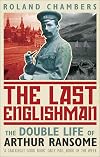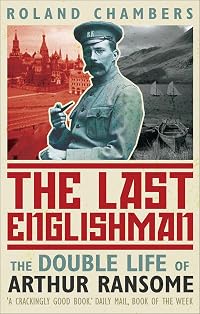
The Last Englishman
by Roland Chambers
On This Page
Description
A revelatory, absorbing and often chilling examination of an English icon and his controversial Soviet double life.Tags
Recommendations

















Member Reviews
This is not so much a biography of Ransome the man as a history of Ransome the journalist and spy. Fully three quarters of the book covers the decade of the Russian Revolution and Ransome's relationships with Lenin, Trotsky, and their circle. It is a fascinating story but it was not I expected when I ordered a biography of a grandson of the Ipswich lawnmower Ransomes and the writer of Swallows and Amazons. Ransome's early life before he became a national treasure is almost incredibly eventful and it is clear that Chambers understands his subject without liking him. Ransome comes across as a selfish self-pitying liar who lived amidst remarkable changes.
This book is not a full biography of the famous author of Swallows and Amazons, but focuses on his, on the face of it very unlikely, association with the Bolshevik leaders of the Russian Revolution, including Lenin and Trotsky, whose secretary Evgeniya Shelepina became Ransome's second wife. While it seems clear that Ransome was not politically a Bolshevik, nor indeed even really left wing in the substance of his politics, he was what a later generation would have called a fellow traveller. His ability to relate to both those early Soviet leaders and to the British establishment probably helped to ease relationships during those early years after the end of the Civil War and foreign intervention before Britain first recognised the show more Soviet government in 1924. Yet Ransome always denied his political influence and was clearly, from a personal point of view, much happier messing around in boats, fishing and living in peaceful and remote areas - thus his personal temperament clashed with his political associations. I got the impression the author didn't really understand Ransome and didn't really like him, either as an author or as a person - and indeed, some of Ransome's behaviour, especially towards his first wife Ivy and daughter Tabitha, seems very shabby. I didn't really understand Ransome from reading this biography either, so feel ambivalent towards this book. show less
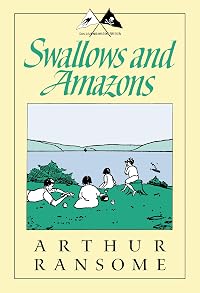
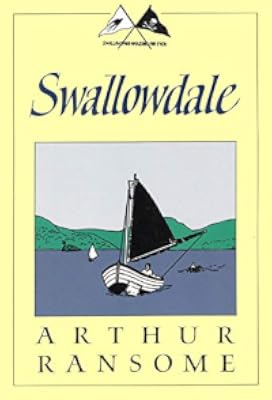
Arthur Ransome (1884 - 1967) is perhaps best known today for his once wildly popular Swallows and Amazons books, detailing the adventures of the four Walker children. Some may know of him as a writer on sailing and fishing, others as a collector of fairy tales. Ransome was an incredibly prolific writer, but like so much else in his life, writing seems to be something he sort of stumbled into.
An indifferent student at Rugby, he didn't attempt the open scholarship exams for Oxford, going instead to Yorkshire College. He dropped out after only two terms, and headed for London. Even in the matter of marriage, he sort of stumbled into it. By 1908, virtually every woman of Ransome's acquaintance had either laughed or sighed as he protested show more his devotion. Some were gratifyingly flustered; others offered him tea. No serious offence was taken. But it was inevitable that at some point someone would take him seriously, and when it happened, no one was more astonished than Ransome himself.
By 1913, now a husband and father, Ransome wanted out. He went to Russia on holiday, ostensibly to work on a biography of [[Robert Louis Stevenson]] This too was abandoned. He did however learn Russian, and committed to becoming an expert on Russia.
He returned there in 1914 to work on a guidebook. The outbreak of WWI a few months later sent him back to England looking for a position that would allow him to work in Russia. Nothing came of it, and he returned to Petrograd on his own to work on Old Peter's Russian Tales. In September, he started writing reports from Russia for the left leaning Daily News.
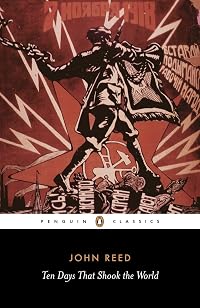
Although Russia was an ally of Britain, as the war churned on it didn't mean it was trusted. Revolutions in March and November 1917 did nothing to dispel this lack of trust. These events also heightened Whitehall's interest in Ransome. What exactly was he doing there? His newspaper reports played down revolutionary activity and initially failed to mention Lenin's return to Russia. While [[John Reed]]'s coverage of the November revolution became an instant classic (Ten Days that Shook the World), Ransome's reports were positively lowkey, although both The Manchester Guardian and The New York Times picked him up as a writer. However, to those in charge back in London, Ransome's behaviour was questionable. By 1918 he was great friends with Tolstoy's lieutenant Karl Radek, and was having an affair with Evgenia Shelepina, Trotsky's secretary.
These were indeed reasons to suspect Ransome's loyalty to England. Here, in what should have been the most interesting part of the book, it starts to fall apart. Chambers was able to present the basic facts. but seemed unable to put them together into a theory or argument that Ransome was a spy for England, or a spy for Russia, or a double agent. Whatever he was, it is highly unlikely he was just a bumbling reporter. Chambers concludes Ransome had ... a facility for compromise and adroit self-transformation that made him useful to both sides. But whether he was a double agent, a peace broker, or merely a ...'useful idiot' is much harder to say.
After discussion of the Anglo Soviet Accord, Chambers rushes to end the book. There is a chapter on Ransome's beloved schooner Racundra and his time in Estonia. The books then races through the rest of Ransome's life in a mere 36 pages, from 1924 until his death in 1967. Ransome continued to write for The Manchester Guardian, this time as a weekly columnist on fishing. He wrote a wide variety of other articles and books, including the twelve books in the [Swallows and Amazons] category.
Evgenia had moved to England with Ransome, and married him after his divorce. She left Russia with thirty-five diamonds and three strings of pearls om the Cheka for Soviet agents in Reval to help fund the Comintern. After this, her life in England was fairly conventional.
Finally, in his 'Notes on Sources', Chambers reveals In 2005, a bundle of papers was declassified by MI5 which proved beyond doubt that he had worked for the British Secret Intelligence Service and that he was suspected at the highest level of working for the Bolsheviks.
The book would have been much better served had Chambers announced this much earlier in his narrative instead of floundering around, lurching from one episode to another back and forth in time. Ransome deserves much better. show less
An indifferent student at Rugby, he didn't attempt the open scholarship exams for Oxford, going instead to Yorkshire College. He dropped out after only two terms, and headed for London. Even in the matter of marriage, he sort of stumbled into it. By 1908, virtually every woman of Ransome's acquaintance had either laughed or sighed as he protested show more his devotion. Some were gratifyingly flustered; others offered him tea. No serious offence was taken. But it was inevitable that at some point someone would take him seriously, and when it happened, no one was more astonished than Ransome himself.
By 1913, now a husband and father, Ransome wanted out. He went to Russia on holiday, ostensibly to work on a biography of [[Robert Louis Stevenson]] This too was abandoned. He did however learn Russian, and committed to becoming an expert on Russia.
He returned there in 1914 to work on a guidebook. The outbreak of WWI a few months later sent him back to England looking for a position that would allow him to work in Russia. Nothing came of it, and he returned to Petrograd on his own to work on Old Peter's Russian Tales. In September, he started writing reports from Russia for the left leaning Daily News.
Although Russia was an ally of Britain, as the war churned on it didn't mean it was trusted. Revolutions in March and November 1917 did nothing to dispel this lack of trust. These events also heightened Whitehall's interest in Ransome. What exactly was he doing there? His newspaper reports played down revolutionary activity and initially failed to mention Lenin's return to Russia. While [[John Reed]]'s coverage of the November revolution became an instant classic (Ten Days that Shook the World), Ransome's reports were positively lowkey, although both The Manchester Guardian and The New York Times picked him up as a writer. However, to those in charge back in London, Ransome's behaviour was questionable. By 1918 he was great friends with Tolstoy's lieutenant Karl Radek, and was having an affair with Evgenia Shelepina, Trotsky's secretary.
These were indeed reasons to suspect Ransome's loyalty to England. Here, in what should have been the most interesting part of the book, it starts to fall apart. Chambers was able to present the basic facts. but seemed unable to put them together into a theory or argument that Ransome was a spy for England, or a spy for Russia, or a double agent. Whatever he was, it is highly unlikely he was just a bumbling reporter. Chambers concludes Ransome had ... a facility for compromise and adroit self-transformation that made him useful to both sides. But whether he was a double agent, a peace broker, or merely a ...'useful idiot' is much harder to say.
After discussion of the Anglo Soviet Accord, Chambers rushes to end the book. There is a chapter on Ransome's beloved schooner Racundra and his time in Estonia. The books then races through the rest of Ransome's life in a mere 36 pages, from 1924 until his death in 1967. Ransome continued to write for The Manchester Guardian, this time as a weekly columnist on fishing. He wrote a wide variety of other articles and books, including the twelve books in the [Swallows and Amazons] category.
Evgenia had moved to England with Ransome, and married him after his divorce. She left Russia with thirty-five diamonds and three strings of pearls om the Cheka for Soviet agents in Reval to help fund the Comintern. After this, her life in England was fairly conventional.
Finally, in his 'Notes on Sources', Chambers reveals In 2005, a bundle of papers was declassified by MI5 which proved beyond doubt that he had worked for the British Secret Intelligence Service and that he was suspected at the highest level of working for the Bolsheviks.
The book would have been much better served had Chambers announced this much earlier in his narrative instead of floundering around, lurching from one episode to another back and forth in time. Ransome deserves much better. show less
I should have enjoyed this much more than I did, combining as it does Arthur Ransome and Russian history. And I was interested in the detail of ARs life in Russia, and Genia's family background (although I gather Chambers has found little new). In the end though it feels like a failed hatchet job, and a search for sensation that isn't there. Was AR a spy, and who for? Well, as it turns out, he wasn't, although MI6 used him as an informant, neither they nor the Bolsheviks ever entrusted him with anything significant, and he never indulged in any sort of espionage. Big whoop.
Like most people, I only really knew Arthur Ransome as the author of the Swallows & Amazons series. However, those books do not feature very prominently in this biography; they were written relatively late in the life of Ransome, who spent a long time working as a journalist in Russia during the First World War and the Russian Revolution. This isn't a period of history I know much about, so it was very interesting to read about it from the perspective of a single journalist (who was apparently very well-connected and ended up marrying Trotsky's secretary), but in places the book seemed to assume more knowledge of Russia's involvement in WWI than I actually have - although I suppose that's my own failing rather than the book's.
Like most people, I only really knew Arthur Ransome as the author of the Swallows & Amazons series. However, those books do not feature very prominently in this biography; they were written relatively late in the life of Ransome, who spent a long time working as a journalist in Russia during the First World War and the Russian Revolution. This isn't a period of history I know much about, so it was very interesting to read about it from the perspective of a single journalist (who was apparently very well-connected and ended up marrying Trotsky's secretary), but in places the book seemed to assume more knowledge of Russia's involvement in WWI than I actually have - although I suppose that's my own failing rather than the book's.
A workmanlike biography of Arthur Ransome focusing on his time as a journalist in Russia at the time of the revolution. It produces a clear but strangely distant picture of Ransome. Lots of detail but somehow it doesn't come to life. Fascinating that Ransome had so much access to key figures in the revolution and that he remained largely apolitical. Understandable that he became a Russophile and also that he later tired of the country - it's a difficult place to like. One minor error I spotted - a British Foreign Office official, Rex Leeper, is identified as the future founder of the British Arts Council when in fact it was the British Council an entirely different organisation.
Members
- Recently Added By
Lists

John Carey's Sunday Best
82 works; 3 members
Author Information

6+ Works 190 Members
Awards and Honors
Common Knowledge
- Canonical title
- The Last Englishman
- Original publication date
- 2009
- People/Characters
- Arthur Ransome; Vladimir Lenin; Leon Trotsky
- Important places
- Lake District, Cumbria, England, UK; Russia
- Important events
- Russian Revolution (1917)
Classifications
Statistics
- Members
- 139
- Popularity
- 235,479
- Reviews
- 7
- Rating
- (3.41)
- Languages
- English
- Media
- Paper
- ISBNs
- 3
- ASINs
- 2