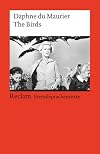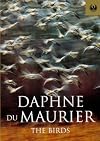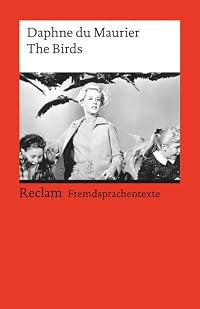
The Birds [short story]
by Daphne Du Maurier
On This Page
Description
Here is a BBC Radio 4 full-cast dramatisation of Daphne du Maurier's classic tale of horror. The idea for this famous story came to du Maurier one day when she was walking across to a farm from her house. She saw a farmer busily ploughing a field while above him the seagulls were diving and wheeling. She developed an idea about the birds becoming hostile and attacking him.In her story, the birds become hostile after a harsh winter with little food. First the seagulls, then birds of prey, and show more finally even small birds all turn against mankind. The nightmarish vision appealed to Alfred Hitchcock, who turned it into the celebrated film.©2014 Audible, Inc. (P)2014 Audible, Inc.
. show less
Tags
Recommendations
















Member Reviews
The short story Hitchcock's classic film is based on.
A well written totally gripping story, atmospheric descriptive intelligent and tense. Very different from the excellent film, set in rural England, no classy well to do couple for Tippi Hedren and Rod Taylor see a army pensioned part time farm hand, and his wife and kids battling against the crazed Birds. The only disappointment is the poor NONE ending.
A well written totally gripping story, atmospheric descriptive intelligent and tense. Very different from the excellent film, set in rural England, no classy well to do couple for Tippi Hedren and Rod Taylor see a army pensioned part time farm hand, and his wife and kids battling against the crazed Birds. The only disappointment is the poor NONE ending.
A farmhand in a village along the English coast notices the sudden, huge flocks of birds that have gathered in the fields, trees, and even riding the sea, and he knows that all the different varieties don't usually flock together. His sense of unease leads him to board over the windows of his house and warn his neighbors, who laugh at him. Under a relentless attack by the birds, this man and his family grow increasingly certain that nobody is coming to help.
I'd wanted to read this story for years. It's pretty far removed from what Hitchcock would do with the story for his movie, really, just the title and basic premise of unexplained homicidal birds. In this story, the family's world keeps getting smaller as they retreat to their show more cottage and the birds find ways to get in. show less
I'd wanted to read this story for years. It's pretty far removed from what Hitchcock would do with the story for his movie, really, just the title and basic premise of unexplained homicidal birds. In this story, the family's world keeps getting smaller as they retreat to their show more cottage and the birds find ways to get in. show less
"In the distance he could see the clay hills, white and clean against the heavy pallor of the sky. Something black rose from behind them, like a smudge at first, then widening, becoming deeper. The smudge became a cloud; and the cloud divided again into five other clouds, spreading north, east, south, and west; and then they were not clouds at all but birds."
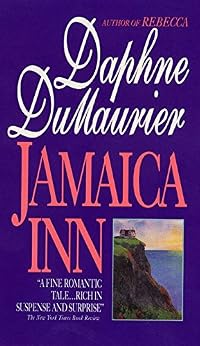
Today, du Maurier’s novella is more well-known for the iconic Hitchcock adaptation it fueled. In 1963, Hitchcock brought the shocking premise to the big screen in visceral fashion; an obvious departure for a director who you probably would not have expected to tackle something that typically counted as B-movie material after a string of classic successes (Rear Window, To Catch a show more Thief, The Man Who Knew Too Much, The Wrong Man, Vertigo, North by Northwest, Psycho). After directing Jamaica Inn and Rebecca to strongly varying degrees of success, Hitchcock was already well-versed in adapting du Maurier, but The Birds might have proven his strongest deviation from the source material in how basically only the premise was taken. As we all know, The Birds turned into a massive success, one that frightened millions of people since.
However, that does not mean that du Maurier’s 1952 novella is not worth checking out on its own. If anything, Hitchcock’s decision to alter the source material significantly, introduce different characters and relocating the setting turns both into fundamentally independent works that share nothing but their premise.
What both works have in common, however, is the eerie atmosphere and the achievement of turning birds into some of the creepiest creatures in existence. If Hitchcock did not succeed to make you see birds with different eyes, then du Maurier definitely will. At least I will now definitely be more hesitant to ride past the flock of ravens in the park during my bicycle ride to work each morning.
This novella is a very short read; depending on your speed of reading, you will probably need to set aside between thirty minutes and an hour. It's worth it! Preferably to be read at night, or while a flock of crows is sitting in the trees across your window. show less
Today, du Maurier’s novella is more well-known for the iconic Hitchcock adaptation it fueled. In 1963, Hitchcock brought the shocking premise to the big screen in visceral fashion; an obvious departure for a director who you probably would not have expected to tackle something that typically counted as B-movie material after a string of classic successes (Rear Window, To Catch a show more Thief, The Man Who Knew Too Much, The Wrong Man, Vertigo, North by Northwest, Psycho). After directing Jamaica Inn and Rebecca to strongly varying degrees of success, Hitchcock was already well-versed in adapting du Maurier, but The Birds might have proven his strongest deviation from the source material in how basically only the premise was taken. As we all know, The Birds turned into a massive success, one that frightened millions of people since.
However, that does not mean that du Maurier’s 1952 novella is not worth checking out on its own. If anything, Hitchcock’s decision to alter the source material significantly, introduce different characters and relocating the setting turns both into fundamentally independent works that share nothing but their premise.
What both works have in common, however, is the eerie atmosphere and the achievement of turning birds into some of the creepiest creatures in existence. If Hitchcock did not succeed to make you see birds with different eyes, then du Maurier definitely will. At least I will now definitely be more hesitant to ride past the flock of ravens in the park during my bicycle ride to work each morning.
This novella is a very short read; depending on your speed of reading, you will probably need to set aside between thirty minutes and an hour. It's worth it! Preferably to be read at night, or while a flock of crows is sitting in the trees across your window. show less
I listened to the BBC audio dramatization of du Maurier’s The Birds (the same one Hitchcock based his movie on). It follows a family of three who have moved from London to the country. It takes place in England, it seems to be just after the war (WWII, I am assuming, as it was written in 1952). They notice birds congregating outside their home and becoming more and more aggressive.
I really liked this. Boy, that ending was creepy!!! I did see the movie years ago, and now I’d be interested in seeing it again. As I look at other reviews, it seems the movie is quite different. I’m not sure how close the dramatization is, but I thought this BBC version was done very well!
I really liked this. Boy, that ending was creepy!!! I did see the movie years ago, and now I’d be interested in seeing it again. As I look at other reviews, it seems the movie is quite different. I’m not sure how close the dramatization is, but I thought this BBC version was done very well!
I'm a little behind on my reading goal for this year, (4 books!) and so I was counting on Audible to help me out with some short horror that I could listen to and multitask and feel productive. I found this, which comes bundled with "Don't Look Now", on sale, so I snagged it. So what if they are technically novellas? Counts as a book in my... book.
Anyway, so I listened to it last night, and there were things I liked, and things I wanted more of, like story resolution.
I've only read one other du Maurier story, the one named after me *cough*, and I'm coming to realize, based on the two I've read, that du Maurier really enjoys leaving her stories with an air of mystery. Nothing is ever really explained or fully resolved by the end, and show more the reader is given the chance to play god (so to speak) and fix things up in their mind regarding the way the story wraps up. She just sets the stage and gets the thing rolling along.
In this case though... hmm. It feels like the story ends just when things are starting to get crazy. I'm OK with leaving the story open ended so that the reader can resolve things in the way that they are most hoping to see. Sometimes I think authors can give too much resolution and take away some of the enjoyment of the story. Seems like a fine line to walk - too much? too little? just right? and according to whom? Everyone will feel differently.
So, I'm kind of undecided. On the one hand, I really liked the story right up until the abrupt ending. It's suspenseful and there's that air of mystery I mentioned. The characters were pretty well fleshed out, and there was real, palpable danger. There were plausible theories provided for why the birds were acting this way, and what was driving them, and enough detail given to let the reader continue on with the story on their own. But at the same time, I really wanted to SEE how Nat would handle the crisis and protect his family. I wanted to see him fight and try to win.
I wanted just a bit more from this, but what was there was good. I also really, really liked the reader. I loved his voice and the low urgency he gave the reading when not doing the character dialogue. It really set the tone of the book quite nicely.
Horror October #13 show less
Anyway, so I listened to it last night, and there were things I liked, and things I wanted more of, like story resolution.
I've only read one other du Maurier story, the one named after me *cough*, and I'm coming to realize, based on the two I've read, that du Maurier really enjoys leaving her stories with an air of mystery. Nothing is ever really explained or fully resolved by the end, and show more the reader is given the chance to play god (so to speak) and fix things up in their mind regarding the way the story wraps up. She just sets the stage and gets the thing rolling along.
In this case though... hmm. It feels like the story ends just when things are starting to get crazy. I'm OK with leaving the story open ended so that the reader can resolve things in the way that they are most hoping to see. Sometimes I think authors can give too much resolution and take away some of the enjoyment of the story. Seems like a fine line to walk - too much? too little? just right? and according to whom? Everyone will feel differently.
So, I'm kind of undecided. On the one hand, I really liked the story right up until the abrupt ending. It's suspenseful and there's that air of mystery I mentioned. The characters were pretty well fleshed out, and there was real, palpable danger. There were plausible theories provided for why the birds were acting this way, and what was driving them, and enough detail given to let the reader continue on with the story on their own. But at the same time, I really wanted to SEE how Nat would handle the crisis and protect his family. I wanted to see him fight and try to win.
I wanted just a bit more from this, but what was there was good. I also really, really liked the reader. I loved his voice and the low urgency he gave the reading when not doing the character dialogue. It really set the tone of the book quite nicely.
Horror October #13 show less
3.5 stars
This is a very eerie story. It's very what-would-you-do-to-protect-your-family. I can see how it probably influenced many authors of survival and apocalyptic tales.
This is a very eerie story. It's very what-would-you-do-to-protect-your-family. I can see how it probably influenced many authors of survival and apocalyptic tales.
3.5 stars
This is a very eerie story. It's very what-would-you-do-to-protect-your-family. I can see how it probably influenced many authors of survival and apocalyptic tales.
This is a very eerie story. It's very what-would-you-do-to-protect-your-family. I can see how it probably influenced many authors of survival and apocalyptic tales.
Members
- Recently Added By
Lists

Favorite Animal Fiction
359 works; 156 members

Books Read in 2022
5,164 works; 113 members

Watched the Movie, Probably Won't Read the Book
185 works; 34 members
Author Information

203+ Works 57,282 Members
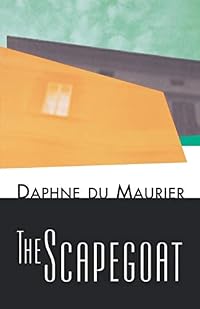
Daphne Du Maurier was born in London on May 13, 1907 and educated in Paris. In 1932, she married Lieutenant-General Sir Frederick Browning. She began writing short stories of mystery and suspense for magazines in 1928, a collection of which appeared as The Apple Tree in 1952. Her first novel, The Loving Spirit, was published in 1931. Her tightly show more woven, highly suspenseful plots and her strong characters make her stories perfect for adaptation to film or television. Among her many novels that were made into successful films are Jamaica Inn (1936), Rebecca (1938), Frenchman's Creek (1941), Hungry Hill (1943), My Cousin Rachel (1952), and The Scapegoat (1957). Her short story, The Birds (1953), was brought to the screen by director Alfred Hitchcock in a treatment that has become a classic horror-suspense film. She died on April 19, 1989 at the age of 81. (Bowker Author Biography) show less
Series
Belongs to Publisher Series
Work Relationships
Is contained in
Has the adaptation
Has as a student's study guide
Common Knowledge
- Canonical title
- The Birds [short story]
- Original title
- The Birds [novelette]
- Original publication date
- 1952-10
- People/Characters
- Nat Hoboken; Jill Hoboken
- Related movies
- The Birds (1955 | IMDb); The Birds (1963 | IMDb)
- First words
- On December 3rd, the wind changed overnight, and it was winter
- Quotations
- "Funny thing" said Mrs.Trigg, "no explaining it really. You ought to write up and ask the Guardian. They'd have some answer for it"
- Last words
- (Click to show. Warning: May contain spoilers.)He reached for it {the last cigarette}, switched on the silent wireless. He threw the empty packet on the fire, and watched it burn.
- Original language*
- Englisch
*Some information comes from Common Knowledge in other languages. Click "Edit" for more information.
Classifications
Statistics
- Members
- 249
- Popularity
- 129,683
- Reviews
- 14
- Rating
- (3.64)
- Languages
- 10 — Danish, Dutch, English, Estonian, French, German, Italian, Lithuanian, Polish, Spanish
- Media
- Paper, Audiobook, Ebook
- ISBNs
- 21
- ASINs
- 8