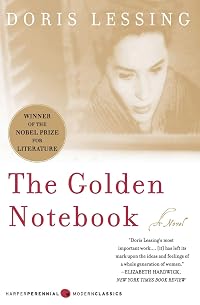
The Golden Notebook
by Doris Lessing
On This Page
Description
Anna is a writer, author of one very successful novel, who now keeps four notebooks. In one, with a black cover, she reviews the African experience of her earlier years. In a red one she records her political life, her disillusionment with communism. In a yellow one she writes a novel in which the heroine relives part of her own experience. And in a blue one she keeps a personal diary. Finally, in love with an American writer and threatened with insanity, Anna resolves to bring the threads show more of all four books together in a golden notebook. Doris Lessing's best-known and most influential novel, The Golden Notebook retains its extraordinary power and relevance decades after its initial publication. show lessTags
Recommendations





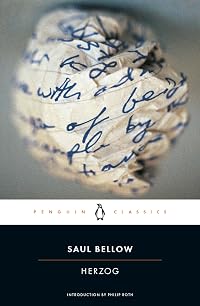
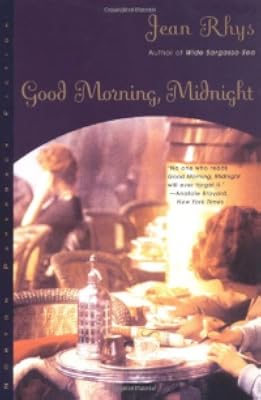
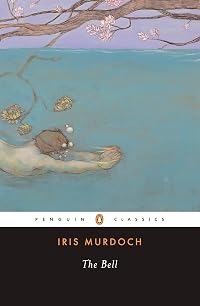
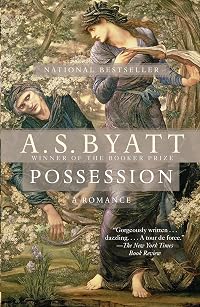

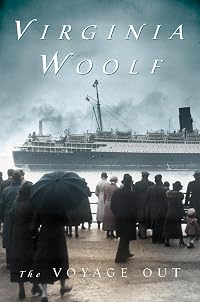
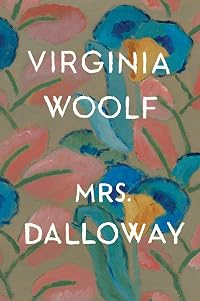
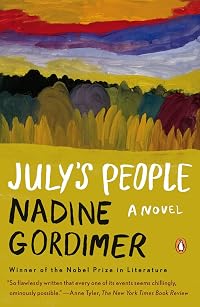


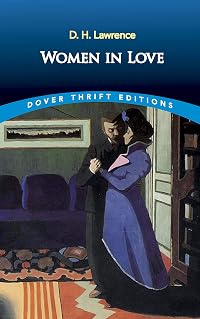


Member Recommendations

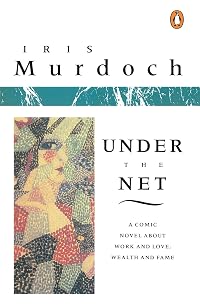
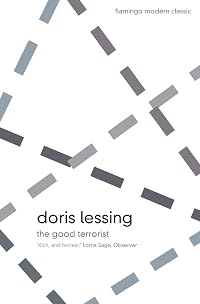
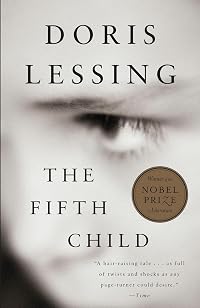
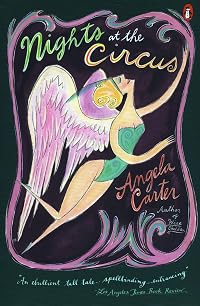
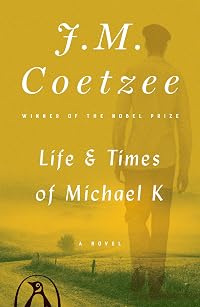
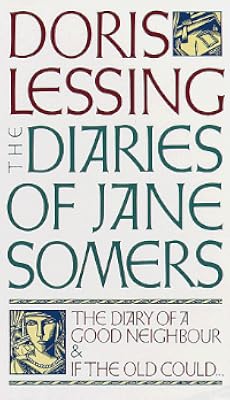
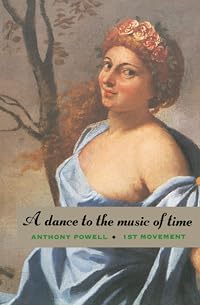
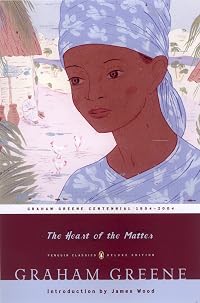
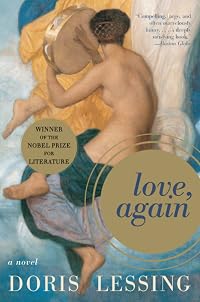
lquilter While reading The Two of Them by Joanna Russ, I was persistently reminded of Doris Lessing's The Golden Notebook. The female protagonist's articulated rage, the psychoanalytic approach, the insurmountability of the patriarchy. For readers across genres who liked either of these novels, I would suggest trying the other.
31

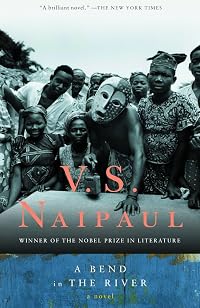
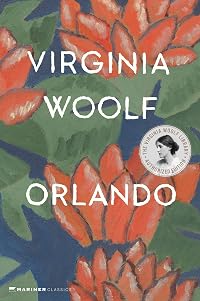
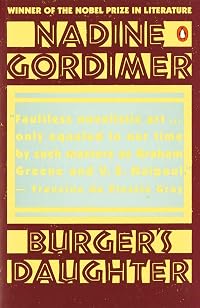
geneven This five-book series is great, though depressing in spots. (I haven't read The Golden Notebook.)
12
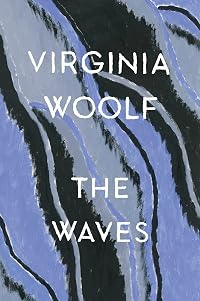
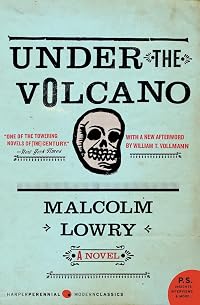
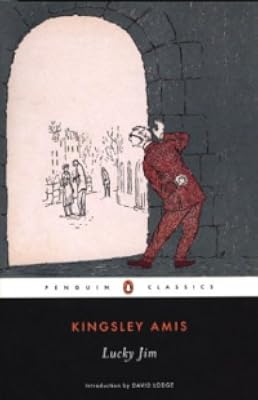
DLSmithies Alright, this one's tenuous, but bear with me! Orwell has lots of interesting things to say about the socialist movement of the 30s and 40s in Britain and elsewhere, especially in Stalin's Russia. Similarly, the Communist Party in 1950s Britain looms large in the background of The Golden Notebook, and the main character is deeply troubled by the situation in Russia under Stalin (along with everything else that's happening on the world stage at the time). So, you see, there's a link!...
...or maybe it's just me.
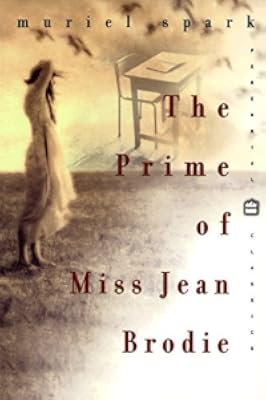
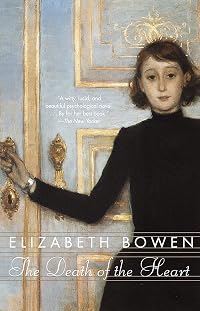
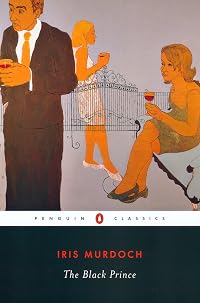
Cecrow Another novel in which a woman passes through madness enroute to self insight.
Member Reviews
In life I might have asked Anna what she was thinking and she would dodge the question. In this narrative she answers in full, and that answer is as illuminating as it is satisfying in scene after scene. The downside was the mounting frustration I had with her poor choice in men, like a male friend watching his close female friend make all the wrong moves. Why must they all be married??
I was half in love with Anna myself, and also a sympathizer with her predicament. Writing 'seriously' or feeling the need to do so, inhibits simply writing for market. To pour yourself, a part of your soul, onto the page requires feeling a passion for the subject and often going against the grain of what society wants or expects to read. There's little show more welcome for that sort of thing in today's market, and only a modicum of appreciation. The only salve is to observe what lasts and what falls away, for those lucky writers who get into print at all.
But Anna has a deeper problem. She doesn't like the emotions she thrives on in order to produce her writing. Having experienced the process once when writing her first novel, she is loathe to confront her own hypocricies and contradictions. To keep herself writing, she produces four diaries: four, in order to sufficiently separate the selves that are in conflict and contradicting one another. She writes about herself as a writer, about her politics, about stories created from her experience, and a kind of diary. Interspersed with these entries are the scenes Lessing allows us from Anna's life, a life which she struggles to control as events slip away from her, as she is faced with her own limitations, fears, phobias and guilts. Somewhere on the other side of her internal desert is the solution she instinctively knows she needs.
The edition I read includes an introduction by Lessing in which she describes letters sent her in which her readers described that part of the novel which stood out to them as being the whole, and yet none (or very few) did perceive the actual whole, which ironically is the unity towards which Anna strives, the importance of that golden notebook which brings everything together. show less
I was half in love with Anna myself, and also a sympathizer with her predicament. Writing 'seriously' or feeling the need to do so, inhibits simply writing for market. To pour yourself, a part of your soul, onto the page requires feeling a passion for the subject and often going against the grain of what society wants or expects to read. There's little show more welcome for that sort of thing in today's market, and only a modicum of appreciation. The only salve is to observe what lasts and what falls away, for those lucky writers who get into print at all.
But Anna has a deeper problem. She doesn't like the emotions she thrives on in order to produce her writing. Having experienced the process once when writing her first novel, she is loathe to confront her own hypocricies and contradictions. To keep herself writing, she produces four diaries: four, in order to sufficiently separate the selves that are in conflict and contradicting one another. She writes about herself as a writer, about her politics, about stories created from her experience, and a kind of diary. Interspersed with these entries are the scenes Lessing allows us from Anna's life, a life which she struggles to control as events slip away from her, as she is faced with her own limitations, fears, phobias and guilts. Somewhere on the other side of her internal desert is the solution she instinctively knows she needs.
The edition I read includes an introduction by Lessing in which she describes letters sent her in which her readers described that part of the novel which stood out to them as being the whole, and yet none (or very few) did perceive the actual whole, which ironically is the unity towards which Anna strives, the importance of that golden notebook which brings everything together. show less
There are two things that struck me about this book: 1) how difficult it is to read despite fascinating topics written with a crisp and clear style; 2) how incredibly modern it is: it hasn't aged one bit.
Lessing is part intellectual, rational, logical and part raw emotion tapping into the depth of the soul. While it is not always evident, it comes in waves through different notebooks, the different perspectives weaving in and out of each other.
My favourite parts were definitely the nostalgic scenes of Mashopi which hold the foundation of the book: relationships between men and women, social inequality - notably racism and feminism - and capitalism, the very themes that we still struggle with today.
A tough read but a masterful novel.
Lessing is part intellectual, rational, logical and part raw emotion tapping into the depth of the soul. While it is not always evident, it comes in waves through different notebooks, the different perspectives weaving in and out of each other.
My favourite parts were definitely the nostalgic scenes of Mashopi which hold the foundation of the book: relationships between men and women, social inequality - notably racism and feminism - and capitalism, the very themes that we still struggle with today.
A tough read but a masterful novel.
The Golden Notebook is the final book on this iteration of my reading list and–unfortunately–was not a case of saving the best for last. It landed on my list as part of TIME magazine's All-TIME 100 as A Book With A Color In Its Title; in hindsight, I would reclassify it as A Book At The Bottom Of Your To-Read List.
Doris Lessing's novel is structurally complex, consisting of six parts, each of which (save one) begins with the continuing story of Anna Wulf, a divorced novelist raising her pre-teen daughter in London, and her friend Molly Jacobs, a divorced actress raising her twenty-year-old son. Within these parts are the contents of four colored notebooks (black, red, yellow, blue), Anna's memoir, political ramblings, fictional show more musings and diary, respectively. Further complicating the reader's comprehension is the backward revelation of much of Anna's story, where the notebooks reveal fictionalized events in her life prior to Anna as narrator disclosing their "real" counterparts. Add to this the climax of the novel—the simultaneous mental breakdowns of fictional-Anna and her Sybil-like male flat mate, and you have a confused collection of stories about a promiscuous former communist living an intellectually vacuous life off the royalties of her one and only novel.
While this schizophrenic structure is probably intended to give the reader the feeling of sharing Anna's breakdown, I found it numbingly over-complicated. Tellingly, Lessing often felt her first-person narrator needed to identify herself by name (e.g. "I, Anna...") so the reader could distinguish between Anna's "real" and fictive narration. The scenes at the beginning of each part are mostly dialogue paired with intrusive adverbs ("he said angrily") using an anonymous narration, no character point-of-view that often doesn't provide sufficient information to understand why particular statements are made. While the novel also suffers repetitive dream sequences and abstruse conversations between Anna and her psychoanalyst, my main objection is that Anna is simply an unlikeable character whose convictions vacillate in reaction to every sentence spoken to her. Compounding my dislike is her annoying role as analytical observer, criticizing others with a false sophistication when she herself is so flawed.
My copy of The Golden Notebook is 623 pages long; on page 565, Anna finally admits she's had writer's block since her highly successful debut novel. To me, this novel reads like Lessing suffered the same problem and has just stitched together several discordant attempts at a novel similar to Anna's efforts in the fictive story. show less
Doris Lessing's novel is structurally complex, consisting of six parts, each of which (save one) begins with the continuing story of Anna Wulf, a divorced novelist raising her pre-teen daughter in London, and her friend Molly Jacobs, a divorced actress raising her twenty-year-old son. Within these parts are the contents of four colored notebooks (black, red, yellow, blue), Anna's memoir, political ramblings, fictional show more musings and diary, respectively. Further complicating the reader's comprehension is the backward revelation of much of Anna's story, where the notebooks reveal fictionalized events in her life prior to Anna as narrator disclosing their "real" counterparts. Add to this the climax of the novel—the simultaneous mental breakdowns of fictional-Anna and her Sybil-like male flat mate, and you have a confused collection of stories about a promiscuous former communist living an intellectually vacuous life off the royalties of her one and only novel.
While this schizophrenic structure is probably intended to give the reader the feeling of sharing Anna's breakdown, I found it numbingly over-complicated. Tellingly, Lessing often felt her first-person narrator needed to identify herself by name (e.g. "I, Anna...") so the reader could distinguish between Anna's "real" and fictive narration. The scenes at the beginning of each part are mostly dialogue paired with intrusive adverbs ("he said angrily") using an anonymous narration, no character point-of-view that often doesn't provide sufficient information to understand why particular statements are made. While the novel also suffers repetitive dream sequences and abstruse conversations between Anna and her psychoanalyst, my main objection is that Anna is simply an unlikeable character whose convictions vacillate in reaction to every sentence spoken to her. Compounding my dislike is her annoying role as analytical observer, criticizing others with a false sophistication when she herself is so flawed.
My copy of The Golden Notebook is 623 pages long; on page 565, Anna finally admits she's had writer's block since her highly successful debut novel. To me, this novel reads like Lessing suffered the same problem and has just stitched together several discordant attempts at a novel similar to Anna's efforts in the fictive story. show less
I admit it, I had thought this would be extremely hard-going. I’d read a couple of Lessing’s other novels and not been taken with them – and even if the first book of her sf quintet, Canopus in Argos Archives, Shikasta, felt to me like being beaten about the head by Ursula K Le Guin. The Golden Notebook, Lessing’s most celebrated novel, I expected to be a bit of a chore – especially given its 576 pages… So I was pleasantly surprised to discover it was an engrossing read. I’m only glad I read it after writing All That Outer Space Allows, as some structural elements of my novel might well have changed and in hindsight I’m not convinced they’d have been improvements. The Golden Notebook is a novel titled ‘Free Women’, show more about Anna Wulf, writer of a single successful novel based on her years in Africa during WWII, who is now living in London. She is also a communist. Between Sections of ‘Free Women’ are Wulf’s notebooks – black, red, yellow and blue. In the black notebook, she describes her time in Africa – on which her one published novel, ‘Frontiers of War’ (and which I kept on mis-thinking as Olivia Manning’s Fortunes of War) was based – and later, her life in London. The red notebook details Wulf’s politics and her interactions with the Communist Party. The yellow notebook is a fictionalisation of Wulf’s own life, title ‘The Shadow of the Third’, in which Wulf’s part is played by a woman called Ella. And the blue notebook starts out as a diary, but at times is more of a scrapbook, filled with newspaper cuttings. The five narratives, despite covering similar ground, don’t actually confuse The Golden Notebook‘s story, they actually deepen it and successfully show different aspects of Wulf’s character – as a writer, as a communist, her sex life (especially her affairs, none of which last) and her relations with her friends. The more observant among you will have noticed that the title of Lessing’s novel refers to a notebook not yet mentioned. This only appears near the end, opens by describing Anna breaking free of her then-boyfriend, before becoming that boyfriend’s own novel (a précis is given only), since writing is the catalyst the two use to part amicably. I really liked The Golden Notebook, and I honestly hadn’t expected to. I can see how it might have shocked in 1962 – Lessing is very forthright about Wulf’s sex life – and the sharp criticism of the lives women were expected to live can’t have gone down too well. I expect the communism would be more of a turn-off to twenty-first century readers than the sexual politics. But The Golden Notebook does read like a book ahead of its time. Recommended. show less
Brilliant, complicated, original, occasionally hard going, but always worth it. This is one of the books that made women of my mother's generation see the world in a new way: fifty years on, it isn't quite as shocking and subversive any more — we're slowly getting used to seeing discussions of menstruation and female orgasms in print, and we're not quite as excited about Khrushchev and the Twentieth Congress of the CPSU as our parents were. But most of what Lessing has to say about those things still matters, nonetheless.
I was much more engaged than I expected to be by the theme of mental breakdown that runs through the book: from the high praise the book always gets from my mental-health-professional friends, I was resigned to being show more confronted with a lot of unintelligible Freud/Jung/Lacan jargon, but it isn't like that at all. The description of Anna's tottering on the edge of sanity is alarmingly easy to identify with. I was very struck by the way that is woven in with the different levels of fiction in the novel, and by the implied relations of fiction to real life.
Definitely not just an historical document, but a book it's still worth reading half a century later. show less
I was much more engaged than I expected to be by the theme of mental breakdown that runs through the book: from the high praise the book always gets from my mental-health-professional friends, I was resigned to being show more confronted with a lot of unintelligible Freud/Jung/Lacan jargon, but it isn't like that at all. The description of Anna's tottering on the edge of sanity is alarmingly easy to identify with. I was very struck by the way that is woven in with the different levels of fiction in the novel, and by the implied relations of fiction to real life.
Definitely not just an historical document, but a book it's still worth reading half a century later. show less
It's difficult to capture the complexity of a 568-page elaborately structured novel in a few paragraphs. Nobel Prize-winning Doris Lessing's fifth novel was a departure from the realism common in 1962 when it was published. Anna and Molly were best friends sharing the common bonds of divorce and single parenthood. Both flirted with Communism and became disillusioned. The core of the book, "Free Women," is presented in five segments interspersed with lengthy entries from Anna's four journals. The 'free' in the title is ironic because the women are failed feminists who are still controlled by the need of men in their lives. Free women are not so free after all!
This is a soul-searching book. Anna is obsessed with self-analysis in order to show more create calm out of the chaos of her life. She spends much time undergoing psychoanalysis by the perceptive "Dr. Sugar" who tries to make sense of the dreams that are replacing the words that have begun to fail her. Bad news for an author, even one with writer's block. It seems that compartmentalizing her life experiences in separate notebooks is part of the problem, not the solution.The four notebooks of different colors represent the disintegration leading Anna towards the mental breakdown that just might give her "a new kind of strength". One of the strengths of the book is the sense of hope lurking in the background of darkness and depression, although the reader has to dig deeply to find it.
The Golden Notebook is not an easy book to read because of its fragmented style. The fragmentation of narrative reflected both the crises in Anna's life and the changes in society during the mid-1950s. There is much to ponder in this book for the careful reader who wants to learn more about the effects of communism in England and the awakening of women's struggles to be equal with men. Anna may be complex but she's not unique. She is an intelligent, creative person with self-destructive tendencies, which might describe many of us. Whether or not you relate to Anna, you will find that Lessing has created a deep and memorable character to represent the postwar upheaval that led up to the craziness of the 1960s. show less
This is a soul-searching book. Anna is obsessed with self-analysis in order to show more create calm out of the chaos of her life. She spends much time undergoing psychoanalysis by the perceptive "Dr. Sugar" who tries to make sense of the dreams that are replacing the words that have begun to fail her. Bad news for an author, even one with writer's block. It seems that compartmentalizing her life experiences in separate notebooks is part of the problem, not the solution.The four notebooks of different colors represent the disintegration leading Anna towards the mental breakdown that just might give her "a new kind of strength". One of the strengths of the book is the sense of hope lurking in the background of darkness and depression, although the reader has to dig deeply to find it.
The Golden Notebook is not an easy book to read because of its fragmented style. The fragmentation of narrative reflected both the crises in Anna's life and the changes in society during the mid-1950s. There is much to ponder in this book for the careful reader who wants to learn more about the effects of communism in England and the awakening of women's struggles to be equal with men. Anna may be complex but she's not unique. She is an intelligent, creative person with self-destructive tendencies, which might describe many of us. Whether or not you relate to Anna, you will find that Lessing has created a deep and memorable character to represent the postwar upheaval that led up to the craziness of the 1960s. show less
"The things that are important in life creep up on one unawares, one doesn't expect them, one hasn't given them shape in one's mind. One recognizes them when they have appeared, that's all."
There are certain books we come across we wish we could have read years before we did, this for me is definitely one of them. Regardless whether you read to inform yourself, educate yourself, for entertainment, for a cause etc, this book has so much in its 600 pages that someone can't miss to find something they identify with.
Anna Wulf née Anna Freeman, the protagonist, is a free woman in the sense that she dictates her life and hates dependence on the male figures that she comes across. Somewhat autobiographical, the book gives a picture of the show more worldwide tension brought in the 1950s as a result of the cold war that had begun by then. Terrors of war, both existent and threatening, strife and unnecessary competition and general restlessness affects everyone in a way as Anna Wulf is forced to balance artistry, parenthood, communism and friendship with frustrations and of course, heartbreaks.
An incredible book with such well developed characters. show less
There are certain books we come across we wish we could have read years before we did, this for me is definitely one of them. Regardless whether you read to inform yourself, educate yourself, for entertainment, for a cause etc, this book has so much in its 600 pages that someone can't miss to find something they identify with.
Anna Wulf née Anna Freeman, the protagonist, is a free woman in the sense that she dictates her life and hates dependence on the male figures that she comes across. Somewhat autobiographical, the book gives a picture of the show more worldwide tension brought in the 1950s as a result of the cold war that had begun by then. Terrors of war, both existent and threatening, strife and unnecessary competition and general restlessness affects everyone in a way as Anna Wulf is forced to balance artistry, parenthood, communism and friendship with frustrations and of course, heartbreaks.
An incredible book with such well developed characters. show less
Members
- Recently Added By
Lists

1001 Books You Must Read Before You Die
1,448 works; 1,134 members

The Guardian's 1000 Novels Everyone Must Read
1,005 works; 548 members
501 Must-Read Books
529 works; 72 members

Unread books
1,063 works; 87 members

Newsweek's Top 100 Books: The Meta-List
100 works; 18 members

Female Author
1,234 works; 67 members

New York Public Library's Books of the Century
120 works; 20 members

Favorite Long Books
330 works; 42 members

The 100 Best Books of All Time by Norwegian Book Club (World Library)
104 works; 23 members

Best Feminist Literature
188 works; 26 members

Recommend the 20 best books you've read in the last five years
2,168 works; 606 members
20th Century Literature
1,161 works; 55 members

Metafiction
86 works; 23 members
Larry McCaffery's 20th Century Greatest Hits: 100 English-Language Books
103 works; 12 members

Best Psychological Fiction
81 works; 16 members
1960s, Best books published therein
254 works; 22 members
Female Protagonist
1,056 works; 57 members

Nobel Price Winners
222 works; 20 members
Canon de la narrativa universal del siglo XX
254 works; 6 members

Books recommended by Barack Obama
295 works; 28 members

Women's Stories
88 works; 13 members

Experimental Literature
141 works; 19 members

New York Public Library's Books of the Century - All
170 works; 14 members
LibraryThingers' 1001 Books You Must Read Before You Die
442 works; 30 members
Time's All-Time 100 Novels
100 works; 27 members
Time Magazine's "All-Time 100"
113 works; 15 members

Top Five Books of 2017
757 works; 231 members

Anthony Burgess 99 Post War Novels
99 works; 7 members
Literature About Women and Girls
394 works; 39 members
Harold Bloom - The Western Canon: D. The Chaotic Age
833 works; 24 members
1,001 BYMRBYD Concensus
723 works; 27 members
TML 200 Best Books 1950-1999
202 works; 10 members

Books With Characters I'd Like to Date
18 works; 9 members

The Greatest Books
99 works; 5 members

The Guardian's 100 Best Novels Written in English
105 works; 13 members
Elegant Prose
80 works; 4 members

madness prompts and reason writes, says Gide
26 works; 3 members

Top Five Books of 2017
5 works; 1 member

SHOULD Read Books!
354 works; 9 members

Obama Reads
181 works; 3 members

Read This Next
120 works; 3 members

el
1,139 works; 1 member

A Rainbow of Books: Colors in the Title
570 works; 24 members

DigitalDreamDoor top 300
300 works; 4 members
.
396 works; 1 member

The Five Books That Represent Us
391 works; 149 members

GREAT 1960s BOOKS
37 works; 1 member

Books Read in 2021
5,361 works; 114 members
Canon de la narrativa universal del s. XX (cicutadry)
499 works; 3 members

Classics Book Club 2024
9 works; 1 member

Mustich's 1000 Books to Read Before You Die: A Life Changing List
1,001 works; 20 members

Rebel Women Reading List
25 works; 2 members

Literature About Mental Illness
37 works; 5 members

Unmarried women
66 works; 6 members

The Modern Library (The Two Hundred Best Novels....
202 works; 1 member
Talk Discussions
Past Discussions
1001 Group Read-July, 2012: The Golden Notebook in 1001 Books to read before you die (February 2013)
Author Information

262+ Works 37,178 Members
Doris Lessing was born in Kermanshah, Persia (later Iran) on October 22, 1919 and grew up in Rhodesia (the present-day Zimbabwe). During her two marriages, she submitted short fiction and poetry for publication. After moving to London in 1949, she published her first novel, The Grass Is Singing, in 1950. She is best known for her 1954 Somerset show more Maugham Award-winning experimental novel The Golden Notebook. Her other works include This Was the Old Chief's Country, the Children of Violence series, the Canopus in Argos - Archives series, and Alfred and Emily. She has received numerous awards for her work including the 2001 Prince of Asturias Prize in Literature, the David Cohen British Literature Prize, and the 2007 Nobel Prize for Literature. She died on November 17, 2013 at the age of 94. (Bowker Author Biography) show less
Some Editions
Awards and Honors
Awards
Notable Lists
Daniel S. Burt's Novel 100 (048 – 48)
Series
Belongs to Publisher Series
Work Relationships
Is contained in
Contains
Has as a study
Has as a student's study guide
Common Knowledge
- Canonical title
- The Golden Notebook
- Original title
- The Golden Notebook
- Alternate titles*
- Het gouden boek = The golden notebook
- Original publication date
- 1962; 1978 (Germany) (Germany)
- People/Characters
- Anna Wulf; Janet Wulf; Molly Jacobs; Tommy; Richard Portmain; Marion (show all 34); Mrs. Marks / Mother Sugar; Willi Rodde; Paul Blackenhurst; Jimmy McGrath; Ted Brown; Maryrose; George Hounslow; Michael; Saul Green; Nelson; Ella; Julia; Max Wulf; George; Dr. West; Patricia Brent; Paul Tanner; Robert Brun; Cy Maitland; Jack; Ivor; Ronnie; James Schafter; Tom Mathlong; Charlie Themba; Mrs. Boothby; Jackson / the Cook; Marie
- Important places
- London, England, UK
- First words
- The two women were alone in the London flat.
- Quotations
- Ella decides to write again, searches herself for the book which is already written inside her, and waiting to be written down. She spends a great deal of time alone, waiting to discern the outlines of this book inside her.
Having a child means being conscious of the clock, never being free of something that has to be done at a certain moment ahead. I was sitting on the floor this afternoon, watching the sky darken, an inhabitant of a world wher... (show all)e one can say, the quality of light means it must be evening, instead of: in exactly an hour I must put on the vegetables.
The essence of the book, the organisation of it, everything in it, says implicitly and explicitly, that we must not divide things off, must not compartmentalise. - Last words
- (Click to show. Warning: May contain spoilers.)The two women kissed and separated.
- Blurbers
- Walter, Natasha; Bradbury, Malcolm
- Original language*
- Engels
*Some information comes from Common Knowledge in other languages. Click "Edit" for more information.
Classifications
Statistics
- Members
- 6,010
- Popularity
- 2,132
- Reviews
- 99
- Rating
- (3.65)
- Languages
- 23 — Catalan, Chinese, Danish, Dutch, English, Estonian, Finnish, French, German, Galician, Greek, Hebrew, Hungarian, Italian, Norwegian (Bokmål), Polish, Portuguese, Serbian, Croatian, Slovenian, Spanish, Swedish, Turkish
- Media
- Paper, Audiobook, Ebook
- ISBNs
- 104
- UPCs
- 2
- ASINs
- 63