
On This Page
Description
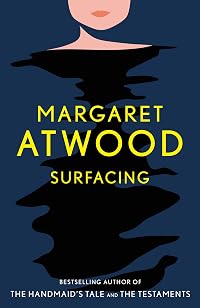
Part detective novel, part psychological thriller, Surfacing is the story of a talented artist who goes in search of her missing father on a remote island in northern Quebec. Setting out with her lover and another young couple, she soon finds herself captivated by the isolated setting, where a marriage begins to fall apart, violence and death lurk just beneath the surface and sex becomes a catalyst for conflict and dangerous choices. Surfacing is a work permeated with an aura of suspense, show more complex with layered meanings and written in brilliant, diamond-sharp prose. Here is a rich mine of ideas from an extraordinary writer - about contemporary life, nature, families, marriage and about women fragmented ... and becoming whole. show lessTags
Recommendations








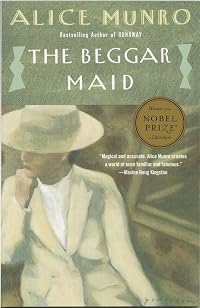
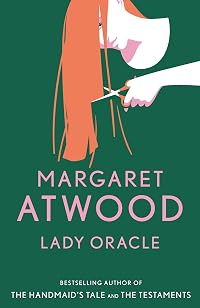

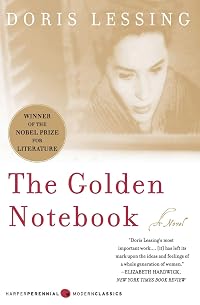
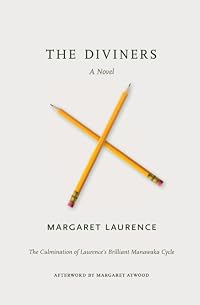












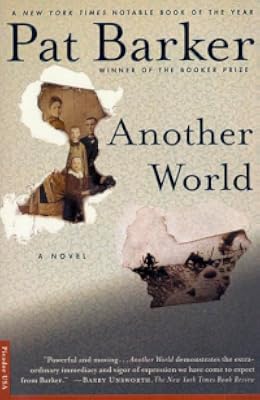

Member Recommendations
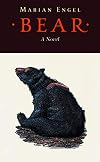
Bear by Marian Engel
by Cecrow
Cecrow Another novel in which a woman passes through madness enroute to self insight.
Member Reviews
"We both wait for my answer."
Atwood's second novel opens with a powerful 1st person voice, an unnamed unreliable narrator walking into ominous isolation. She is on her way from Toronto to a fishing trip in Quebec with her quiet bearded boyfriend and a married couple, David and Anna. David has a Woodie-Woodpecker laugh.
We slowly learn her oddities, and her relationship to the island home they are staying on. Her father owns the island. He's not wealthy, but it's small island and he's an obsessed naturalist searching for something. And he recently disappeared. So, the two couples are staying in her own childhood home, with reminders of her deceased mother and childhood, while knowing her father may be around somewhere, living or as a show more corpse.
Relationship strains, sex, and isolation warp the background texture of her response and relationship to this place and to her missing father. She is searching for him, but discretely and in more convoluted ways. Meanwhile she becomes emotionally isolated, and flat. All the while David, clearly aware of feminist trends but emotionally abusive to his wife, gets wilder. Is she suffering grief? Is she sane?
I liked the voice, read well enough in my audio edition, but I’m mixed on the book. It's interesting in light of who Atwood was then, and how she was developing as a writer. It has a lot of autobiographical references, the father like her father, the narrator a lot like Atwood herself, cosmopolitan but comfortable in nature, soon to get divorced, and also who didn't drive. But the book felt undercooked to me. I thought the narrator's "voice" was strained by doing other book-practical things, like building the book's setting, which just needed information. The odd logic in the narrator's mind, an illogic, albeit given she had a loosening tie to normal sanity, was still very hard for me. I think Atwood was doing at least four things at once: making social commentary, searching an inner life when in a kind of state of grief, and getting the reader in touch with nature, and creating an unreliable narrator.
I'm going too long, but I want to add that I couldn't help thinking of different ways how Atwood could have used this voice. It's striking but loses something in needing to convey everything. I like to think that if Atwood had written the book as a standard 3rd person narrative, and then inserted narrator's voice in places, the same voice would have lit up page, heightened by the contrast. This is just me thinking out loud.
Recommended for Atwood completists and those who can't resist an unreliable narrator. show less
A jagged work entered into awkwardly. Thankfully it gracefully unfurls into a masterful mysticism, allowing those strained moments of trauma that suddenly erupt within the prose to be steadily calmed and reintegrated into the spirit.
I was introduced to this work in Mark Fisher’s essay Inside Out: Outside In: which is a piece of writing I couldn’t recommend highly enough, he situates this book nicely in the fin-de-Sixties tradition of wishing to push outside the Symbolic Order to where only the dead belong. The father is lost in the woods, the tree cancer is approaching, and the man talking about American Pigs and free love is nothing but a mere husk who would rather treat sex as two detached appendages flying spasmodically into one show more another. Order is created by knives, Hitler can no longer be the measure of Evil, and the metallic American neoliberal ideal is slashing the psyche with its self-righteous, pedagogic claws. Where to go but to these leering woods that promise a language without words? To a primordial state of being that endows one with an immediate identity that multiplies yet sticks? To the bottom of the lake where essential truths lay concealed under jellyfish and refuse? Toward a personal god that proffers an indifferent absence one can subsist within?
Just do yourself a favour and read it. You won’t like it at first but you’ll soon be hooked, like a frog in a jar. show less
I was introduced to this work in Mark Fisher’s essay Inside Out: Outside In: which is a piece of writing I couldn’t recommend highly enough, he situates this book nicely in the fin-de-Sixties tradition of wishing to push outside the Symbolic Order to where only the dead belong. The father is lost in the woods, the tree cancer is approaching, and the man talking about American Pigs and free love is nothing but a mere husk who would rather treat sex as two detached appendages flying spasmodically into one show more another. Order is created by knives, Hitler can no longer be the measure of Evil, and the metallic American neoliberal ideal is slashing the psyche with its self-righteous, pedagogic claws. Where to go but to these leering woods that promise a language without words? To a primordial state of being that endows one with an immediate identity that multiplies yet sticks? To the bottom of the lake where essential truths lay concealed under jellyfish and refuse? Toward a personal god that proffers an indifferent absence one can subsist within?
Just do yourself a favour and read it. You won’t like it at first but you’ll soon be hooked, like a frog in a jar. show less
Atwood’s first published novel sees her get off to a good start with this eerie tale of a woman returning to her childhood home in the Canadian wilderness in search of her lost father.
There’s a foreboding right from the very start of the novel as the prose keeps you very much captive inside the thoughts of the protagonist. And she’s a broody sort who becomes increasingly paranoid as the novel progresses. It does not end well for her. Or, perhaps it does. Hard to say.
What you can be sure of is that there’s an awful lot going on here in so short a book. As an experienced Atwood reader, I can see how all the elements that would make her later novels shine are there, buried in the dust of her early years as a novelist.
The novel’s show more central theme is identity, particularly identity formed by places and experiences in them as a child. The landscape itself is detached from the people who enter it at the start of the story. By the end, it has taken over. I couldn’t help thinking that this would make a good film. I think Meryl Streep or, if she’s busy, perhaps Kate Winslet could pull off the main character.
Well worth a read and a good, short introduction to Atwood. show less
There’s a foreboding right from the very start of the novel as the prose keeps you very much captive inside the thoughts of the protagonist. And she’s a broody sort who becomes increasingly paranoid as the novel progresses. It does not end well for her. Or, perhaps it does. Hard to say.
What you can be sure of is that there’s an awful lot going on here in so short a book. As an experienced Atwood reader, I can see how all the elements that would make her later novels shine are there, buried in the dust of her early years as a novelist.
The novel’s show more central theme is identity, particularly identity formed by places and experiences in them as a child. The landscape itself is detached from the people who enter it at the start of the story. By the end, it has taken over. I couldn’t help thinking that this would make a good film. I think Meryl Streep or, if she’s busy, perhaps Kate Winslet could pull off the main character.
Well worth a read and a good, short introduction to Atwood. show less
The first person narrator, who never tells us her name, leaves "the city" to return to the isolated French Canadian countryside where she grew up to see if she can find her father, who has disappeared into the bush. With her are friends David and Anna, who she hasn't known very long, but who have a car and agreed to take her where she needs to go; and Joe, her current lover (apparently one of a fairly long string--she refers to him as "this one"), a hirsute man of very few words. As you might expect, this is a journey of discovery for the narrator as she revisits old haunts, seeks out places her father might have gone searching for ancient native paintings, learns unpleasant things about the couple she had viewed as happily married, and show more wrestles with her own past. Early on it's clear she had been hiding things from her parents; soon we wonder what she's hiding from us, and even from herself. As time passes, she pushes civilization further and further from herself, along with rational thought, until we glimpse an almost feral creature desperate to dissolve into the natural world. There are some brutal images and abundant symbolism in this powerful work. Atwood's characters are brilliantly drawn; David, a self-absorbed jackass who punctuates his conversation with cartoon character laughs, simply made my skin crawl; Anna, a woman terrified of losing her husband, obnoxious as he is, who contrives never to let him see her without make-up, made me want to introduce her to some real people, male and female; Joe, a cipher, really, who is not up to understanding his lover, but tries his best, might be the most sympathetic of the lot. My one quibble with this novel is that I found the ending a bit unsatisfactory. I thought we were going to end up in one place, and apparently we did not, although I feel we should have. (Yes, I know that's clear as mud...sorry, but I can't do better without being terribly spoilerish.)
Review written in April 2016 show less
Review written in April 2016 show less
I was prepared to dash through this short novel but quickly realized I ought to slow down, then slower still, one chapter per day. It is tightly woven like a short story, without the extraneous bits, full of great descriptions ('cow-sprinkled hills ... cuttings dynamited in pink and grey granite'). I'm more familiar with Ontario than Quebec, but I know this backcountry with its lakes and mist, its quiet woods and islands. Atwood fully convinces me that she knows it too.
There are two mysteries in play, the surface action and also a deeper psychological story. A woman's father who lives alone in his island cottage goes mysteriously missing. After being notified, she rounds up her boyfriend and some friends to transport her, so she can show more look for clues. At the same time, the reader is left to wonder why she's bothering. She displays no particular attachment to her father in her first-person narrative - nor to her boyfriend, or to her shallow friends, nor is she triggered by nostalgia during this trip back to her childhood stomping grounds (it was never her home, she keeps telling us.) She isn't attached to anything, or anyone. References to drowning creep in, to being underwater.
I'm of two minds about stories that delve into different realms of logic where I can't follow, but there's something satisfying in how it's managed here. Before you can surface you must first submerge, to the only place where you can find the answers you seek. show less
There are two mysteries in play, the surface action and also a deeper psychological story. A woman's father who lives alone in his island cottage goes mysteriously missing. After being notified, she rounds up her boyfriend and some friends to transport her, so she can show more look for clues. At the same time, the reader is left to wonder why she's bothering. She displays no particular attachment to her father in her first-person narrative - nor to her boyfriend, or to her shallow friends, nor is she triggered by nostalgia during this trip back to her childhood stomping grounds (it was never her home, she keeps telling us.) She isn't attached to anything, or anyone. References to drowning creep in, to being underwater.
I'm of two minds about stories that delve into different realms of logic where I can't follow, but there's something satisfying in how it's managed here. Before you can surface you must first submerge, to the only place where you can find the answers you seek. show less
Atwood wrote this book in 1971 probably (since it was first published in 1972) at which time I was slogging my way through first year university. And I have to confess that it was quite some time before I started reading her writing. The first book that made an impact on me was The Handmaid's Tale which was published in 1985. I've read almost everything she has written since then and read quite a few of the earlier novels. Somehow this one always escaped my attention. When I ran out of reading material on a camping trip and had to find something else to read from the fabulous USB Poor Michael's in Onanole MB, this seemed like the time to remedy that void. Turns out to be quite appropriate to read it while communing with nature right show more before Canada Day.
A woman (who remains unnamed throughout the book) makes a trip from the city to the remote Quebec lake where she spent her youth. With her is her boyfriend Joe and a married couple, David and Anna. She is back to search for her father, a naturalist who has been living in a cabin on an island. Paul, a friend of his, found the cabin uninhabited and unlocked and wrote to the daughter. While she searches for her father she also undergoes a psychological journey. Her companions are not very helpful in either quest. David is more concerned with the American encroachment on Canada; Anna is desperately trying to retain a youthful appearance so David will continue to stay with her; Joe, well Joe is a man of few words so it is hard to say what he is thinking but he does ask our heroine to marry him so probably he is thinking about that. When the news comes that the father's body has been found in the lake by some American fisherman our heroine has a psychological meltdown. After a few days of wandering in the woods with only a blanket for covering and no food she vanquishes the demons (which she calls gods) and prepares to return to civilization.
This latter period seems so much like a vision quest on which native peoples engage. There are other references to native spirituality and lifestyle. We hear about these things often now but, as far as I can remember, in the early 1970s these would have been extremely uncommon. That's just one example of how long Atwood has been exploring themes she has developed over the years. Concern for the environment and animal welfare are also referenced; again, these were not high in the public consciousness.
This will never be my favourite Atwood but it is interesting in terms of seeing how early she was writing about themes which she has continued to explore throughout her long writing career. show less
A woman (who remains unnamed throughout the book) makes a trip from the city to the remote Quebec lake where she spent her youth. With her is her boyfriend Joe and a married couple, David and Anna. She is back to search for her father, a naturalist who has been living in a cabin on an island. Paul, a friend of his, found the cabin uninhabited and unlocked and wrote to the daughter. While she searches for her father she also undergoes a psychological journey. Her companions are not very helpful in either quest. David is more concerned with the American encroachment on Canada; Anna is desperately trying to retain a youthful appearance so David will continue to stay with her; Joe, well Joe is a man of few words so it is hard to say what he is thinking but he does ask our heroine to marry him so probably he is thinking about that. When the news comes that the father's body has been found in the lake by some American fisherman our heroine has a psychological meltdown. After a few days of wandering in the woods with only a blanket for covering and no food she vanquishes the demons (which she calls gods) and prepares to return to civilization.
This latter period seems so much like a vision quest on which native peoples engage. There are other references to native spirituality and lifestyle. We hear about these things often now but, as far as I can remember, in the early 1970s these would have been extremely uncommon. That's just one example of how long Atwood has been exploring themes she has developed over the years. Concern for the environment and animal welfare are also referenced; again, these were not high in the public consciousness.
This will never be my favourite Atwood but it is interesting in terms of seeing how early she was writing about themes which she has continued to explore throughout her long writing career. show less
I can see why people find this book challenging but I loved it. It felt authentic and was so compelling even as the narrator devolves into an animal state. I felt a visceral disgust for the men she is around in the book which made me ready for the ending that others found unexpected. A challenging, unusual read, but well worth the time. Another great Atwood.
Members
- Recently Added By
Lists

1001 Books You Must Read Before You Die
1,448 works; 1,130 members
501 Must-Read Books
529 works; 72 members

The Best of Canadian Literature
235 works; 32 members

Unread books
1,063 works; 87 members

20th Century Literature
1,161 works; 54 members

Books Set in Canada
80 works; 16 members

Harold Bloom - The Western Canon: D. The Chaotic Age
833 works; 24 members

New Canadian Library
191 works; 7 members

1970s
657 works; 23 members

A Novel Cure
742 works; 23 members
1,001 BYMRBYD Concensus
723 works; 27 members

Literature About Women and Girls
394 works; 39 members

Most Popular Books Tagged Canada
34 works; 1 member

University literature
145 works; 5 members

Literary Works Read in College
316 works; 15 members

Swinging Seventies
255 works; 17 members

Canada
42 works; 3 members

My TBR
371 works; 3 members

Literature About Mental Illness
37 works; 5 members

AP Lit
363 works; 6 members

Books You Read For University
184 works; 3 members
Great Short Books: A Year of Reading-Briefly
59 works; 4 members

Books We Love to Reread
688 works; 296 members
Author Information

Margaret Atwood was born on November 18, 1939 in Ottawa, Canada. She received a B.A. from Victoria College, University of Toronto in 1961 and an M.A. from Radcliff College in 1962. Her first book of verse, Double Persephone, was published in 1961 and was awarded the E. J. Pratt Medal. She has published numerous books of poetry, novels, story show more collections, critical work, juvenile work, and radio and teleplays. Her works include The Journals of Susanna Moodie, Power Politics, Cat's Eye, The Robber Bride, Morning in the Buried House, the MaddAdam trilogy, and The Heart Goes Last. She has won numerous awards including the Prince of Asturias Award for Literature, the Booker Prize in 2000 for The Blind Assassin, the Giller Prize and the Premio Mondello for Alias Grace, and the Governor General's Award in 1966 for The Circle Game and in 1986 for The Handmaid's Tale, which also won the very first Arthur C. Clarke Award in 1987. She won the PEN Pinter prize in 2016 for her political activism. She was awarded the 2016 PEN Pinter Prize for the outstanding literary merit of her body of work. (Bowker Author Biography) show less
Some Editions
Awards and Honors
Series

Belongs to Publisher Series
Work Relationships
Is contained in
Has as a supplement
Has as a student's study guide
Common Knowledge
- Canonical title*
- Boven water
- Original title
- Surfacing
- Original publication date
- 1972
- People/Characters
- Joe; David; Anna; Paul; Madame
- Important places
- Québec, Canada
- Related movies
- Surfacing (1981 | IMDb)
- First words
- I can't believe I'm on this road again, twisting along past the lake where the white birches are dying, the disease is spreading up from the south, and I notice they now have sea-planes for hire.
- Quotations
- His drowning never seemed to affect him as much as I thought it should, he couldn't even remember it. If it had happened to me I would have felt there was something special about me, to be raised from the dead like that; I wo... (show all)uld have returned with secrets, I would have known things most people didn't.
- Last words
- (Click to show. Warning: May contain spoilers.)The lake is quiet, the trees surround me, asking and giving nothing.
- Blurbers*
- Vries, Joost de
- Original language
- English
*Some information comes from Common Knowledge in other languages. Click "Edit" for more information.
Classifications
Statistics
- Members
- 4,654
- Popularity
- 3,092
- Reviews
- 118
- Rating
- (3.39)
- Languages
- 17 — Czech, Danish, Dutch, English, Estonian, Finnish, French, German, Italian, Latvian, Norwegian (Bokmål), Polish, Portuguese, Croatian, Slovenian, Spanish, Swedish
- Media
- Paper, Audiobook, Ebook
- ISBNs
- 85
- ASINs
- 22