
Francine du Plessix Gray (1930–2019)
Author of At Home with the Marquis de Sade: A Life
About the Author
Francine du Plessix was born in Warsaw, Poland on September 25, 1930. She received a bachelor's degree in philosophy from Barnard College in 1952. For two summers she studied at the Black Mountain College in North Carolina. After writing radio reports at the United Press for two years, she moved to show more Paris to report on fashion for the French magazine Réalités. She returned to the United States and married the painter Cleve Gray in 1957. She wrote both fiction and nonfiction. Her novels included Lovers and Tyrants, World Without End, October Blood, and The Queen's Lover. Her nonfiction works included Divine Disobedience: Profiles in Catholic Radicalism, Hawaii: The Sugar-Coated Fortress, Soviet Women: Walking the Tightrope, and biographies of the poet Louise Colet, the Marquis de Sade, Simone Weil, and Madame de Staël. Them: A Memoir of Parents won the National Book Critics Circle Award in 2006. She died from complications of congestive heart failure on January 13, 2018 at the age of 88. (Bowker Author Biography) show less
Works by Francine du Plessix Gray
Rage and Fire: A Life of Louise Colet : Pioneer Feminist, Literary Star, Flaubert's Muse (1994) 93 copies
Goldengrove 1 copy
Lumières d'octobre 1 copy
Associated Works
Philosophy in the Boudoir: Or, The Immoral Mentors (1795) — Introduction, some editions — 1,186 copies, 16 reviews
Reporting Vietnam: American Journalism 1969-1975, Volume 2 (1998) — Contributor — 298 copies, 2 reviews
Mother love : myth and reality : motherhood in modern history (1980) — Foreword — 165 copies, 5 reviews
Going Hungry: Writers on Desire, Self-Denial, and Overcoming Anorexia (2008) — Contributor — 87 copies, 1 review
Tagged
Common Knowledge
- Canonical name
- Gray, Francine du Plessix
- Legal name
- Gray, Francine du Plessix
- Other names
- du Plessix, Francine (birth name)
- Birthdate
- 1930-09-25
- Date of death
- 2019-01-13
- Gender
- female
- Education
- Barnard College (BA|1952)
Bryn Mawr College
Spence School - Occupations
- biographer
literary critic
novelist
essayist
journalist - Organizations
- The New Yorker
Art in America
Réalités
United Press International
Authors Guild - Awards and honors
- American Academy of Arts and Letters (Literature ∙ 1992)
National Book Critics Circle Award (2006)
Front Page Award (1972)
National Catholic Book Award (1971) - Relationships
- Liberman, Alexander (step-father)
Gray, Cleve (husband) - Short biography
- Francine du Plessix grew up in New York City with glamorous parents, the power couple Alexander Liberman (her stepfather), editorial director of Condé Nast, and the aristocratic Tatiana du Plessix, milliner to high society. They were both Russian émigrés who entertained grandly at their Manhattan townhouse. Francine won a scholarship to the Spence School and studied philosophy and religion at Bryn Mawr and Barnard Colleges. In 1957, after a brief career in fashion publishing, she married Cleve Gray, a painter. The couple had two sons and lived in a Connecticut farm house. Francine du Plessix Gray worked as a reporter and wrote numerous books, including the Pulitzer Prize-nominated At Home With the Marquis de Sade: A Life (1998) and a memoir, Them (2005), that chronicled "the chimeric world of couture" her parents inhabited.
- Cause of death
- congestive heart failure
- Nationality
- USA (naturalized 1952)
France (birth) - Birthplace
- Warsaw, Poland
- Places of residence
- Paris, Île-de-France, France
Rochester, New York, USA
Warren, Conneticut, USA
New York, New York, USA - Place of death
- Manhattan, New York, New York, USA
- Associated Place (for map)
- USA
Members
Reviews
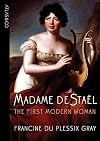
I believe my first encounter with Madame de Staël was in Dorothy Parker’s “Song of One of the Girls”, where she appears as one of “the glamorous ladies at whose beckoning history shook”. As Francine du Plessix Gray’s biography describes her, she wouldn’t meet modern definitions of “glamorous”; her kinder contemporaries described her as “leonine” or “sturdy” and she had no physical grace, being famous for falling flat on her face while attempting to curtsey to Marie show more Antoinette. Daughter of the millionaire financier Jaques Necker, she had the 18th century equivalent of a “Tiger Mom”; she was tutored in mathematics, geography, science, and languages starting at age three, wasn’t allowed contact with other children, and couldn’t leave the house alone until she was 12. This regimen did produce considerable intellectual attainment – even her enemies agreed she was a brilliant conversationalist – and, perhaps surprisingly, a kindly and generous temperament. If there was any moral education included – and there probably was, since the Neckers were strict Calvinists – it didn’t take; after her marriage to the accommodating Swedish diplomat Erik Magnus Staël, she became notorious for seducing just about every famous Frenchman of her time (describing her attempts as a political peacemaker, a critic commented “She entertains the Royalists at breakfast, the Girondins at lunch, the Jacobins at supper, and everybody at night”). Intellectual and independent women have always been subject to accusations of sexual excess; but in her case they seem to be justified – none of her four children who reached adulthood was of certain paternity.
Mentally she seems to have been at least a quarter bubble off level; Gray speculates a modern diagnosis might be bipolar disorder with emphasis on the manic part. Both she and several of her lovers developed the habit of staging “suicide attempts” with not-quite-overdoses of laudanum every time the relationship progressed poorly, to the extent that a “Coppet dose” of opium (her home in Switzerland was at Coppet) actually became a slang term for the action.
Despite all this she became a popular and successful author, and also somehow retained her seductiveness even into her 50s – though her always ample figure now ballooned, she still managed one last lover, a handsome (but stupid) war hero twenty years her junior.
Gray’s biography is straightforward and readable – she engages in a little speculation on de Staël’s psychological problems and the possible fathers of her children, but resists the temptation to go overboard. It helps to know a little about the French revolutionary and Napoleonic periods. Madame de Staël is buried with her mother and father in the family crypt in Switzerland. I’ll have to track down her books. show less
Mentally she seems to have been at least a quarter bubble off level; Gray speculates a modern diagnosis might be bipolar disorder with emphasis on the manic part. Both she and several of her lovers developed the habit of staging “suicide attempts” with not-quite-overdoses of laudanum every time the relationship progressed poorly, to the extent that a “Coppet dose” of opium (her home in Switzerland was at Coppet) actually became a slang term for the action.
Despite all this she became a popular and successful author, and also somehow retained her seductiveness even into her 50s – though her always ample figure now ballooned, she still managed one last lover, a handsome (but stupid) war hero twenty years her junior.
Gray’s biography is straightforward and readable – she engages in a little speculation on de Staël’s psychological problems and the possible fathers of her children, but resists the temptation to go overboard. It helps to know a little about the French revolutionary and Napoleonic periods. Madame de Staël is buried with her mother and father in the family crypt in Switzerland. I’ll have to track down her books. show less

Parents: the bane and the love of our lives. For everyone there comes a time when you realize with disgust that your parents are not as honest, wise or all-powerful as you once upon a time thought, and then a time when you realize with forgiveness and understanding that your parents are entirely human, fallible, careless, like all of us. Francine du Plessix Gray does an exceptional job of telling the story of her parents (and her own story) without being overly bitter or glossing over the show more less admirable aspects of this interesting, self-centered pair of New York's glitterati from the 1940s to the 80s.
Like many books I've come upon by chance, this one had a Russian literature connection that I found enthralling. Her mother, nee Tatiana Iacovleva, was Vladimir Mayakovsky's love, maybe even his only true love. She, an exile living in Paris, was not the PC muse expected for the Soviet poet. He wrote love poems explicitly addressed to her and used lines from one of these poems in his suicide note. Her relationship to him, in itself, was fascinating and unexpected. Most biographies I have read of Mayakovsky rarely go beyond implying that she was a dalliance, a bourgeoise, not worthy of the great poet, but here Tatiana Iacovleva is center stage. She came from a distinguished and artistic family and that history is intriguing as well. In New York she became "Tatiana of Saks", a hat designer with well-heeled, famous clients. Her second marriage (following the heroic death of du Plessix Gray's French father during WWII) to another Russian exile, Alex Liberman, the art director for Conde Nast publications, put Francine du Plessix in the orbit of New York's fashion and art world for most of her life.
Francine masters the art of being both an astute spectator and a naive participant in the events and lives she describes. I am amazed by how little rancor she lets come out in the retelling of the sometimes horrendous neglect or thoughtlessness of her parents, though she does admit her outrage after the fact. Yet, she has the grace to see that these people, despite all their faults (and there were many) were damaged people as well, who, nevertheless, managed to create a world of beauty and yes, love. show less
Like many books I've come upon by chance, this one had a Russian literature connection that I found enthralling. Her mother, nee Tatiana Iacovleva, was Vladimir Mayakovsky's love, maybe even his only true love. She, an exile living in Paris, was not the PC muse expected for the Soviet poet. He wrote love poems explicitly addressed to her and used lines from one of these poems in his suicide note. Her relationship to him, in itself, was fascinating and unexpected. Most biographies I have read of Mayakovsky rarely go beyond implying that she was a dalliance, a bourgeoise, not worthy of the great poet, but here Tatiana Iacovleva is center stage. She came from a distinguished and artistic family and that history is intriguing as well. In New York she became "Tatiana of Saks", a hat designer with well-heeled, famous clients. Her second marriage (following the heroic death of du Plessix Gray's French father during WWII) to another Russian exile, Alex Liberman, the art director for Conde Nast publications, put Francine du Plessix in the orbit of New York's fashion and art world for most of her life.
Francine masters the art of being both an astute spectator and a naive participant in the events and lives she describes. I am amazed by how little rancor she lets come out in the retelling of the sometimes horrendous neglect or thoughtlessness of her parents, though she does admit her outrage after the fact. Yet, she has the grace to see that these people, despite all their faults (and there were many) were damaged people as well, who, nevertheless, managed to create a world of beauty and yes, love. show less
Lots of people can, and do, claim an interesting ancestor or two, but I don't know if anyone can claim as many notable forebears as Francine du Plessix Gray, whose family tree contains a dancing master, an intrepid, continent-crossing traveler, a fighter in the French resistance, a notable fashion designer, and a famous, wealthy magazine editor. Throw in a few dissolute Russian aristocrats, an artist or two, and a love affair with a famous Russian poet and a lot of famous friends and you've show more got one heck of a family reunion. This book describes itself as "A Memoir of Parents," and, while du Plessix Gray is an accomplished writer in her own right, you can certainly see why she'd feel a bit overwhelmed by her own personal history.
"Them" isn't particularly preoccupied with drama or revelation, indeed, sometimes it seems that the author barely participated in the family dynamic that she describes. It's not that du Plessix Gray didn't have enough material for a tell-all: the author's parents' lives were defined by emotional restraint the desire to impress others. "Them" is a much more difficult endeavor than a straight tell-all account of a messy family life, it's a meticulous description and dissection of her parents drives, neuroses and personalities. In the book's opening pages, the author suggests that she'd been waiting her entire life – until after her mother and stepfather had passed away – to start writing "Them," but even with a few decades to prepare, composing it must have taken considerable bravery. While her mother and her stepfather were, in some respects, ill-equipped to raise her, the account that du Plessix Gray gives of her parents contains a minimum of regret, recrimination, or bitterness, even forgiving, more or less, her stepfather's too-hasty remarriage to her mother's nurse. She readily admits that both her mother and stepfather were immensely talented and passionate, but also portrays them as calculating, money-hungry and egocentric. "Them" provides a remarkably detailed, well-rounded, and perceptive portrait of both her parents as individuals, spouses, and, finally, as parents. How many of us, authors or not, will ever see our own parents with such remarkable clarity and remove?
One of the blurbs on the back of my copy of "Them" commends it for succeeding both as a personal narrative and as a cultural history. This is an apt description, as "Them" describes a wealthy, educated, refined and, above all, exclusive slice of postwar New York life that fetishized European art and culture. Alex Liberman's Continental manners seems to have charmed just about everyone he came in contact with, even those who considered him a manipulative social climber, and du Plessix Gray's mother's refusal to improve her heavily-accented English probably helped her succeed as an upscale fashion retailer. The United States seems to be a more confident and unabashedly nationalistic place now; I'm not sure if I can name any part of American society that aspires to Frenchness the same way the Libermans and their confederates did. Times have changed, but, in a way, I'm glad that du Plessix Gray's memoir has preserved her parents fleeting, but admirably stylish, cultural moment for us. Recommended. show less
"Them" isn't particularly preoccupied with drama or revelation, indeed, sometimes it seems that the author barely participated in the family dynamic that she describes. It's not that du Plessix Gray didn't have enough material for a tell-all: the author's parents' lives were defined by emotional restraint the desire to impress others. "Them" is a much more difficult endeavor than a straight tell-all account of a messy family life, it's a meticulous description and dissection of her parents drives, neuroses and personalities. In the book's opening pages, the author suggests that she'd been waiting her entire life – until after her mother and stepfather had passed away – to start writing "Them," but even with a few decades to prepare, composing it must have taken considerable bravery. While her mother and her stepfather were, in some respects, ill-equipped to raise her, the account that du Plessix Gray gives of her parents contains a minimum of regret, recrimination, or bitterness, even forgiving, more or less, her stepfather's too-hasty remarriage to her mother's nurse. She readily admits that both her mother and stepfather were immensely talented and passionate, but also portrays them as calculating, money-hungry and egocentric. "Them" provides a remarkably detailed, well-rounded, and perceptive portrait of both her parents as individuals, spouses, and, finally, as parents. How many of us, authors or not, will ever see our own parents with such remarkable clarity and remove?
One of the blurbs on the back of my copy of "Them" commends it for succeeding both as a personal narrative and as a cultural history. This is an apt description, as "Them" describes a wealthy, educated, refined and, above all, exclusive slice of postwar New York life that fetishized European art and culture. Alex Liberman's Continental manners seems to have charmed just about everyone he came in contact with, even those who considered him a manipulative social climber, and du Plessix Gray's mother's refusal to improve her heavily-accented English probably helped her succeed as an upscale fashion retailer. The United States seems to be a more confident and unabashedly nationalistic place now; I'm not sure if I can name any part of American society that aspires to Frenchness the same way the Libermans and their confederates did. Times have changed, but, in a way, I'm glad that du Plessix Gray's memoir has preserved her parents fleeting, but admirably stylish, cultural moment for us. Recommended. show less
Madame de Stael may indeed have been, as the subtitle to this biography claims, The First Modern Woman. She wasn't quite beautiful, but she was intelligent and masterful in conversation, which in the salons of 18th century France was equally important. (Of course, her chattiness was probably well-tolerated in part because she inherited one of the largest fortunes in Europe...)
To me, Madame de Stael seems like a female Voltaire: less-than-handsome, full of restless intellectual energy, author show more of many books on diverse subjects, forever entangled in ridiculous amours, always in trouble with the authorities. In the lady's case, the main authority was Napoleon, an authoritarian boor who found it doubly maddening to be opposed by not only a rich person, but a rich person with breasts. He was forever banishing her and trying to shut her up, but Madame de Stael actually had the last laugh, using her social connections to help forge the alliances that eventually brought the emperor down.
Francine du Plessix Gray (author of the excellent memoir Them) writes fluidly and concisely, cramming the plentiful action of Madame de Stael's life into a compulsively readable little book. She does not gloss over the lady's faults -- Gray diagnoses de Stael as a manic-depressive and sighs in relief while relating the tale of her last doomed romance -- but the author clearly admires her subject, and makes a good case that the reader should, as well. show less
To me, Madame de Stael seems like a female Voltaire: less-than-handsome, full of restless intellectual energy, author show more of many books on diverse subjects, forever entangled in ridiculous amours, always in trouble with the authorities. In the lady's case, the main authority was Napoleon, an authoritarian boor who found it doubly maddening to be opposed by not only a rich person, but a rich person with breasts. He was forever banishing her and trying to shut her up, but Madame de Stael actually had the last laugh, using her social connections to help forge the alliances that eventually brought the emperor down.
Francine du Plessix Gray (author of the excellent memoir Them) writes fluidly and concisely, cramming the plentiful action of Madame de Stael's life into a compulsively readable little book. She does not gloss over the lady's faults -- Gray diagnoses de Stael as a manic-depressive and sighs in relief while relating the tale of her last doomed romance -- but the author clearly admires her subject, and makes a good case that the reader should, as well. show less
Lists
Awards


You May Also Like


Associated Authors
Statistics
- Works
- 18
- Also by
- 14
- Members
- 1,696
- Popularity
- #15,137
- Rating
- 3.6
- Reviews
- 32
- ISBNs
- 67
- Languages
- 6
- Favorited
- 1


