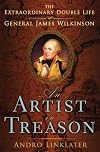
An Artist in Treason: The Extraordinary Double Life of General James Wilkinson
by Andro Linklater
On This Page
Description
Patriot, traitor, general, spy: James Wilkinson was a consummate contradiction. Brilliant and precocious, at age twenty he was both the youngest general in the revolutionary Continental Army, and privy to the Conway cabal to oust Washington from command. He was Benedict Arnold's aide, but the first to reveal Arnold's treachery. By 38, he was the senior general in the United States army--and had turned traitor himself. Wilkinson's audacious career in the Spanish secret service while in show more command of American forces is all the more remarkable because it was anything but hidden. Though he betrayed America's strategic secrets and sought to keep the new country from expanding beyond the Mississippi, four presidents turned a blind eye to his treachery--gambling that Wilkinson would never use the army to overthrow our nascent democracy. The crucial test came in 1806, when Wilkinson turned the army against Aaron Burr and foiled his conspiracy to break up the Union.--From publisher description. show lessTags
Recommendations








Member Recommendations
Member Reviews
The name of one of the greatest traitors in American history is probably unknown to most people. His story is told in Andro Linklater's An Artist in Treason: The Extraordinary Double Life of General James Wilkinson (Walker, 2009). The most famous conspiracy with which Wilkinson was involved may be vaguely familiar to students of American history (this is the semi-nebulous plot spearheaded by Aaron Burr to invade Mexico and detach the western territories from the United States). As Linklater's book makes clear, though, this was just one episode among many in the fascinating, complicated and shocking career of James Wilkinson.
From his earliest days in the army during the Revolutionary War, Wilkinson used his position as an aide to show more generals (Gates, Greene, Arnold) to curry favor, but made a habit of turning on his patrons as soon as it suited him. After getting caught out in this during the Conway Cabal fiasco Wilkinson found his future prospects for command and advancement in the Continental Army looking bleak, so he slunk away. A sly political operator, though, Wilkinson worked his contacts and got himself appointed clothier general, a position at which he proved uninterested and ineffective. This led George Washington to repeatedly call for his ouster, which was finally accomplished in 1781 (when Congress voted to cut his salary in half, prompting Wilkinson to resign).
Decamping to the Kentucky frontier, Wilkinson became involved in an effort first to create an independent Kentucky government, and then with attempts to open the Mississippi River to trade by negotiating with the Spanish in New Orleans. Courting the Spanish imperial authorities with promises, Wilkinson in effect pledged to bring Kentucky into the orbit of Spain in exchange for trading rights, and arranged to receive payments from the Spanish in return for information and efforts on Spain's behalf in Kentucky (this became known as the Spanish Conspiracy). By December 1792, Linklater writes, Wilkinson was undoubtedly committing treason (he was drawing payments from Spain and providing them with vital information, while at the same time commanding an American army regiment).
Linklater carefully documents the ways in which Wilkinson managed to undercut his personal, political and military foes, while flattering and courting those who could advance his career (most notably a whole string of secretaries of war and presidents from Washington to Jefferson). Notwithstanding a body of evidence and rumors regarding Wilkinson's treason (it was remarkably well known), those in power continued to reward him with duties, positions, and responsibilities. Jefferson in particular was surprisingly indulgent of Wilkinson, particularly after Wilkinson opted to betray Burr's plans to Jefferson even though he had been deeply involved in the plot from the very start.
The number of times Wilkinson was almost brought down, and managed to right his ship by ruining the credibility of his accusers and telling well-crafted, outright lies about the nature of his relationship with the Spanish authorities, is astounding. That he was finally brought down at all ends up being something of a surprise: even after a disastrous loss of troops to illness during the early days of War of 1812 Wilkinson was granted command of the operations to take Canada; when this effort failed spectacularly he survived yet another court-martial (Linklater writes that contemporary jibes had it that Wilkinson "never won a battle, but never lost an inquiry") and was only cashiered during the wholesale downsizing of the military at the end of the war. Even this embittered Wilkinson, who fired off angry letters in every direction and published a three-volume memoir in defense of himself. He ended his days in semi-exile in Mexico, dying there in 1825.
Some of the most breathtaking elements of Wilkinson's treason include his simultaneous memoranda to Jefferson and to his Spanish handlers instructing them (in practically opposite terms) how to deal with the American takeover of the Louisiana Purchase territory. Knowing of the Lewis and Clark expedition, for example, Wilkinson suggested to the Spanish that they might want to intercept the explorers (an attempt was made, but the effort failed). And Wilkinson's careful (and occasionally hysterical) efforts to protect his treason were of great interest: his payments were sent upriver hidden in barrels of foodstuffs, and he and his handlers used ciphers and codes to communicate with each other (an appendix documents some of the codes).
Linklater's book contains a few more than usual errors of the typographic variety, and he missteps (p. 188) in calling Burr the Federalist candidate for president in 1800 (John Adams was running for reelection, of course; Burr was ostensibly the Republican candidate for vice-president, but ended up being Jefferson's strongest competitor when the electoral college vote resulted in a tie and threw the election to the House). These aside, this is a good survey of Wilkinson's life and treasons. Vile he may have been (this is by no means a hagiography), Wilkinson's abilities to dissimulate and keep himself in the good graces of those who mattered were prodigious.
http://philobiblos.blogspot.com/2009/11/book-review-artist-in-treason.html show less
From his earliest days in the army during the Revolutionary War, Wilkinson used his position as an aide to show more generals (Gates, Greene, Arnold) to curry favor, but made a habit of turning on his patrons as soon as it suited him. After getting caught out in this during the Conway Cabal fiasco Wilkinson found his future prospects for command and advancement in the Continental Army looking bleak, so he slunk away. A sly political operator, though, Wilkinson worked his contacts and got himself appointed clothier general, a position at which he proved uninterested and ineffective. This led George Washington to repeatedly call for his ouster, which was finally accomplished in 1781 (when Congress voted to cut his salary in half, prompting Wilkinson to resign).
Decamping to the Kentucky frontier, Wilkinson became involved in an effort first to create an independent Kentucky government, and then with attempts to open the Mississippi River to trade by negotiating with the Spanish in New Orleans. Courting the Spanish imperial authorities with promises, Wilkinson in effect pledged to bring Kentucky into the orbit of Spain in exchange for trading rights, and arranged to receive payments from the Spanish in return for information and efforts on Spain's behalf in Kentucky (this became known as the Spanish Conspiracy). By December 1792, Linklater writes, Wilkinson was undoubtedly committing treason (he was drawing payments from Spain and providing them with vital information, while at the same time commanding an American army regiment).
Linklater carefully documents the ways in which Wilkinson managed to undercut his personal, political and military foes, while flattering and courting those who could advance his career (most notably a whole string of secretaries of war and presidents from Washington to Jefferson). Notwithstanding a body of evidence and rumors regarding Wilkinson's treason (it was remarkably well known), those in power continued to reward him with duties, positions, and responsibilities. Jefferson in particular was surprisingly indulgent of Wilkinson, particularly after Wilkinson opted to betray Burr's plans to Jefferson even though he had been deeply involved in the plot from the very start.
The number of times Wilkinson was almost brought down, and managed to right his ship by ruining the credibility of his accusers and telling well-crafted, outright lies about the nature of his relationship with the Spanish authorities, is astounding. That he was finally brought down at all ends up being something of a surprise: even after a disastrous loss of troops to illness during the early days of War of 1812 Wilkinson was granted command of the operations to take Canada; when this effort failed spectacularly he survived yet another court-martial (Linklater writes that contemporary jibes had it that Wilkinson "never won a battle, but never lost an inquiry") and was only cashiered during the wholesale downsizing of the military at the end of the war. Even this embittered Wilkinson, who fired off angry letters in every direction and published a three-volume memoir in defense of himself. He ended his days in semi-exile in Mexico, dying there in 1825.
Some of the most breathtaking elements of Wilkinson's treason include his simultaneous memoranda to Jefferson and to his Spanish handlers instructing them (in practically opposite terms) how to deal with the American takeover of the Louisiana Purchase territory. Knowing of the Lewis and Clark expedition, for example, Wilkinson suggested to the Spanish that they might want to intercept the explorers (an attempt was made, but the effort failed). And Wilkinson's careful (and occasionally hysterical) efforts to protect his treason were of great interest: his payments were sent upriver hidden in barrels of foodstuffs, and he and his handlers used ciphers and codes to communicate with each other (an appendix documents some of the codes).
Linklater's book contains a few more than usual errors of the typographic variety, and he missteps (p. 188) in calling Burr the Federalist candidate for president in 1800 (John Adams was running for reelection, of course; Burr was ostensibly the Republican candidate for vice-president, but ended up being Jefferson's strongest competitor when the electoral college vote resulted in a tie and threw the election to the House). These aside, this is a good survey of Wilkinson's life and treasons. Vile he may have been (this is by no means a hagiography), Wilkinson's abilities to dissimulate and keep himself in the good graces of those who mattered were prodigious.
http://philobiblos.blogspot.com/2009/11/book-review-artist-in-treason.html show less
 This review was written for LibraryThing Early Reviewers.
“His actions were the most treasonous and dangerous of any in American history”
If, like 99.9% of your contemporaries, you assume that the above quote refers to Revolutionary War traitor Benedict Arnold, you would be incorrect. The subject of the above reference is General James Wilkinson, Revolutionary War soldier and subsequent Commanding General of the United States Army under the first four Presidents of the Republic.
I have read dozens of histories from the founding of our country and the early years of the Republic, but can not recall every seeing his name in print. That he has become such an obscure figure, in light of his position and actions is something of a surprise. As a mere 17 year old volunteer, Wilkinson advanced show more quickly in the Colonial Army, attaching himself to the staffs of such rising stars as Nathanial Greene, Benedict Arnold and Horatio Gates. He was present at the Battle of Trenton, where he caught the attention of George Washington.
Despite rising rapidly in the ranks, Wilkinson was always on the lookout for opportunities in which to enrich himself, and retired from the Army at age 20. Through marriage, he inherited an estate in Maryland which he was subsequently unable to support. He moved to the frontier and became something of a success in Kentucky, speculating in land and goods while becoming politically active.
At the time, Kentucky was isolated, not only by virtue of its location west of the Appalachians, but also by the fact that the Mississippi River was completely controlled by Spain, which disallowed all commercial traffic. Through a combination of bravado, flattery and access to credit, Wilkinson was able to break this embargo and make key contacts with Spanish administrators in St. Louis, Natchez and New Orleans.
Kentucky’s status at the time was up for grabs. Deemed a part of Virginia, settlers were split as to whether to pursue statehood, independence or even annexation to Spanish America (the borders of the various territories were somewhat liquid). Wilkinson sold himself to his Spanish handlers as someone who could bring the territory of Kentucky under their control. That he was able to parley this virtual monopoly in Mississippi commercial traffic and political connection to near bankruptcy speaks volumes to his poor business skills.
Finally, Wilkinson returned to service in the United States Army, quickly becoming commanding General of a largely scaled down domestic force. Wilkinson’s connections among the Spanish were not terminated however. For the next 20 years, Wilkinson continued to feed information and intelligence to his Spanish contacts in a stunning display of treachery (actually exposing the Lewis and Clark expedition to extermination). Most surprisingly, Wilkinson’s actions were largely known to his superiors, who nevertheless continued to entrust him with command of the military, despite rapidly rising tensions along the U.S.-Mexican border.
Finally, Wilkinson faced the ultimate choice. In the face of Aaron Burr’s plan to carve an independent nation from Mexican holdings in the area of what is now Texas, Wilkinson had the means (command of American forces in the region) to bring Burr’s plans to fruition. Instead, Wilkinson mobilized his forces in defense of New Orleans and, according to many historians, saved the Republic. His nefarious activities and close relations with Burr resulted in a swirl of controversies and recriminations which consumed the balance of his life.
While this is undoubtedly a tale worth telling, not the least reason of which is its surprising originality, the story drags at times and falls just short of what could have been an outstanding history. show less
If, like 99.9% of your contemporaries, you assume that the above quote refers to Revolutionary War traitor Benedict Arnold, you would be incorrect. The subject of the above reference is General James Wilkinson, Revolutionary War soldier and subsequent Commanding General of the United States Army under the first four Presidents of the Republic.
I have read dozens of histories from the founding of our country and the early years of the Republic, but can not recall every seeing his name in print. That he has become such an obscure figure, in light of his position and actions is something of a surprise. As a mere 17 year old volunteer, Wilkinson advanced show more quickly in the Colonial Army, attaching himself to the staffs of such rising stars as Nathanial Greene, Benedict Arnold and Horatio Gates. He was present at the Battle of Trenton, where he caught the attention of George Washington.
Despite rising rapidly in the ranks, Wilkinson was always on the lookout for opportunities in which to enrich himself, and retired from the Army at age 20. Through marriage, he inherited an estate in Maryland which he was subsequently unable to support. He moved to the frontier and became something of a success in Kentucky, speculating in land and goods while becoming politically active.
At the time, Kentucky was isolated, not only by virtue of its location west of the Appalachians, but also by the fact that the Mississippi River was completely controlled by Spain, which disallowed all commercial traffic. Through a combination of bravado, flattery and access to credit, Wilkinson was able to break this embargo and make key contacts with Spanish administrators in St. Louis, Natchez and New Orleans.
Kentucky’s status at the time was up for grabs. Deemed a part of Virginia, settlers were split as to whether to pursue statehood, independence or even annexation to Spanish America (the borders of the various territories were somewhat liquid). Wilkinson sold himself to his Spanish handlers as someone who could bring the territory of Kentucky under their control. That he was able to parley this virtual monopoly in Mississippi commercial traffic and political connection to near bankruptcy speaks volumes to his poor business skills.
Finally, Wilkinson returned to service in the United States Army, quickly becoming commanding General of a largely scaled down domestic force. Wilkinson’s connections among the Spanish were not terminated however. For the next 20 years, Wilkinson continued to feed information and intelligence to his Spanish contacts in a stunning display of treachery (actually exposing the Lewis and Clark expedition to extermination). Most surprisingly, Wilkinson’s actions were largely known to his superiors, who nevertheless continued to entrust him with command of the military, despite rapidly rising tensions along the U.S.-Mexican border.
Finally, Wilkinson faced the ultimate choice. In the face of Aaron Burr’s plan to carve an independent nation from Mexican holdings in the area of what is now Texas, Wilkinson had the means (command of American forces in the region) to bring Burr’s plans to fruition. Instead, Wilkinson mobilized his forces in defense of New Orleans and, according to many historians, saved the Republic. His nefarious activities and close relations with Burr resulted in a swirl of controversies and recriminations which consumed the balance of his life.
While this is undoubtedly a tale worth telling, not the least reason of which is its surprising originality, the story drags at times and falls just short of what could have been an outstanding history. show less
This review was written for LibraryThing Early Reviewers.If you like your history of the American founding which exalts only virtue, General James Wilkinson will not be to your liking. Heroes are by definition virtuous and exceptional. But history is not made only by heroes. In Wilkinson’s case it was made by one who was conniving and deceitful. He committed treason, but was never held to task for it, despite many knowing about it. He was an O.J. Simpson of his day who used his popularity and celebrity and glad-hand manner to charm people, and was able to use the legal process to dodge the bullet of being held to task for his misdeeds. All this despite widespread belief in his guilt.
Wilkinson’s star first rose when he played a role at the Battle of Saratoga as the deputy adjutant general show more of the continental army’s field commander, General Horatio Gates. Wilkinson, then a 20 year old lieutenant colonel, was a gregarious fellow who easily ingratiated himself with his superiors, and rose in standing and office accordingly. It was perhaps a sign of his future life as a traitor that he worked closely with Benedict Arnold at Saratoga. Both men were insecure and ambitious for recognition as they tried to claw their way to the top rungs of military command in the continental army. The difference between them was that Arnold was a brilliant and courageous leader of men in battle. Wilkinson on the other hand, both at Saratoga and for all of his military life, was a military bureaucrat who engaged in networking and organization. He knew little of military tactics or strategy, or if he did, he never exhibited them on the field of battle. He spent much of the war as the “clothier general,” organizing supplies for the continental army, a job which he performed poorly.
After the Revolutionary War he tried his hand at commercial ventures. He was not very successful there either, and always spent more money than he made. After the Revolution enterprising men saw promise in the lands west of that spine of mountains which divided the new American states from the western lands. Wilkinson was one of them, and went to Kentucky where he bought land for speculation and sold goods consigned by Kentucky farmers to the merchants of New Orleans. This required him to navigate the Mississippi River past the Spanish fort at St. Louis and to deal with the Spanish. And deal he did. The Spanish empire controlled commerce on the Mississippi in the late 1780s. He did what he thought prudent to advance his commercial interests. As Wilkinson wrote in a formal document to the Spanish on August 22, 1787, he was “transferring my allegiance from the United States to his Catholic Majesty.” So began his life as a spy for pay.
Wilkinson’s relationship with the Spanish as “Agent 13" yielded payoffs from the Spanish for information about what the new American government was doing. He plotted to cause Kentucky and the other western lands to secede from the United States and align with Spain. Later in the 1800s he conspired with Aaron Burr (another scoundrel and traitor) to make the western states a sovereign county independent of the United States. But Wilkinson, true to his life as a deceiver and turncoat, always stabbed these fellow schemers in the back when he saw possible failure in these plots. He ultimately backed the right horse by switching his allegiance back to the United States and betrayed his co-conspirators. He did all of this while an officer, general, and ultimately the “commander in chief” of the army of the United States.
When rumors of his payoffs from the Spanish circulated, and these rumors plagued him his whole life, he claimed that this was money for goods sold. When rumors of his foreign allegiances and his plotting with Burr surfaced, Wilkinson snowed people with more deceptions. He survived three trials by court marshal using good lawyers, his effusive personality, and good connections to beat the rap for his betrayals.
It is easier to read the biography of a hero than one of a scoundrel. Linklater’s well researched and very readable book on General James Wilkinson reminds us that the founders of our nation were not all good guys. The author’s meticulous research uncovers documents from Spanish archives unread for 200 years which prove Wilkinson to have been a traitor to his country. Lots of people believed this in the late 18th and early 19th centuries, but Linklater proves it. The author even includes an interesting appendix in this biography to explain the complex code which Wilkinson used to write his messages to the Spanish, as well as an appendix which records the records of payoffs.
Linklater’s biography of Wilkinson reminds us that the figures of history were not all patriots who exuded virtue. Some served the newborn nation with grievous flaws. Wilkinson was one such man. He was faithful to his wife and good to his children, and he made friends with many. But he lied and stabbed many former friends in the back, and came perilously close to destroying the new United States in its infancy. Only his self interest and his fear of failure brought him back from the edge of full-blown treason like his old friend Benedict Arnold. show less
Wilkinson’s star first rose when he played a role at the Battle of Saratoga as the deputy adjutant general show more of the continental army’s field commander, General Horatio Gates. Wilkinson, then a 20 year old lieutenant colonel, was a gregarious fellow who easily ingratiated himself with his superiors, and rose in standing and office accordingly. It was perhaps a sign of his future life as a traitor that he worked closely with Benedict Arnold at Saratoga. Both men were insecure and ambitious for recognition as they tried to claw their way to the top rungs of military command in the continental army. The difference between them was that Arnold was a brilliant and courageous leader of men in battle. Wilkinson on the other hand, both at Saratoga and for all of his military life, was a military bureaucrat who engaged in networking and organization. He knew little of military tactics or strategy, or if he did, he never exhibited them on the field of battle. He spent much of the war as the “clothier general,” organizing supplies for the continental army, a job which he performed poorly.
After the Revolutionary War he tried his hand at commercial ventures. He was not very successful there either, and always spent more money than he made. After the Revolution enterprising men saw promise in the lands west of that spine of mountains which divided the new American states from the western lands. Wilkinson was one of them, and went to Kentucky where he bought land for speculation and sold goods consigned by Kentucky farmers to the merchants of New Orleans. This required him to navigate the Mississippi River past the Spanish fort at St. Louis and to deal with the Spanish. And deal he did. The Spanish empire controlled commerce on the Mississippi in the late 1780s. He did what he thought prudent to advance his commercial interests. As Wilkinson wrote in a formal document to the Spanish on August 22, 1787, he was “transferring my allegiance from the United States to his Catholic Majesty.” So began his life as a spy for pay.
Wilkinson’s relationship with the Spanish as “Agent 13" yielded payoffs from the Spanish for information about what the new American government was doing. He plotted to cause Kentucky and the other western lands to secede from the United States and align with Spain. Later in the 1800s he conspired with Aaron Burr (another scoundrel and traitor) to make the western states a sovereign county independent of the United States. But Wilkinson, true to his life as a deceiver and turncoat, always stabbed these fellow schemers in the back when he saw possible failure in these plots. He ultimately backed the right horse by switching his allegiance back to the United States and betrayed his co-conspirators. He did all of this while an officer, general, and ultimately the “commander in chief” of the army of the United States.
When rumors of his payoffs from the Spanish circulated, and these rumors plagued him his whole life, he claimed that this was money for goods sold. When rumors of his foreign allegiances and his plotting with Burr surfaced, Wilkinson snowed people with more deceptions. He survived three trials by court marshal using good lawyers, his effusive personality, and good connections to beat the rap for his betrayals.
It is easier to read the biography of a hero than one of a scoundrel. Linklater’s well researched and very readable book on General James Wilkinson reminds us that the founders of our nation were not all good guys. The author’s meticulous research uncovers documents from Spanish archives unread for 200 years which prove Wilkinson to have been a traitor to his country. Lots of people believed this in the late 18th and early 19th centuries, but Linklater proves it. The author even includes an interesting appendix in this biography to explain the complex code which Wilkinson used to write his messages to the Spanish, as well as an appendix which records the records of payoffs.
Linklater’s biography of Wilkinson reminds us that the figures of history were not all patriots who exuded virtue. Some served the newborn nation with grievous flaws. Wilkinson was one such man. He was faithful to his wife and good to his children, and he made friends with many. But he lied and stabbed many former friends in the back, and came perilously close to destroying the new United States in its infancy. Only his self interest and his fear of failure brought him back from the edge of full-blown treason like his old friend Benedict Arnold. show less
This review was written for LibraryThing Early Reviewers.I came across this while on vacation and looking for a book as I read all I brought, and this book did not disappoint. A fairly fast read, it had me hooked on a subject and era I enjoy, but I never knew this character existed. The book tied into about 7 books I have also read, which made it that much more interesting. A great part of American History I didn't know much about until now, glad I found this.
Andro Linklater has written an exhaustive study of a truly interesting and, given his position in America's early military history, remarkably obscure character. It becomes clear early on that Major General James Wilkinson's meteoric rise thru the ranks of America's Revolutionary War army, his negotiating the tumultous machinations surrounding the founding of America's modern military establishment, and his questionable affiliations with foreign powers was driven almost exclusively by money--or his lack of it.
Wilkinson's life touches just about every familiar name of Revolutionary and post-Revolutionary War America. He served every president from Washington to Madison, had a celebratted rivalry with Horatio Gates, earned the fleeting show more respect of John Adams, turned Jefferson's grudging admiration to ambivalence, and associated with the likes of Benedict Arnold and Aaron Burr.
Linklater's research would have us believe that Wilkinson's incompetence (some would say cowardice) in leading men into battle cost America the territory then known as "Northern Canada" and the loss of hundreds of men just outside New Orleans due to neglect and "appaling" physical conditions at American camps. For these and other offenses, Wilkinson was court martialed three times but acquitted every time.
It was said, not without rancor, that Wilkinson "never won a battle but never lost a court martial."
Wilkinson's most grevious offense, though one never comletely proven during his lifetime, was his "association" with the goverment of Spain at a time when that country was trying to secure its vast holdings in Florida, New Orleans, Louisiana, Kentucky and westward.
Linklater sets down a fairly convincing case that, while head of all the armies in America, Wilkinson was working direclty against the interests of his country in exchange for money. That he was, in fact, a spy in the employ of the Spanish government complete with the handle Agent 13.
Linklater moves the story right along and his narrative is well-paced and clear. His chief accomplishment is to place into perspective Wilkinson's ties with Aaron Burr and further clarifies Burr's ultimate objectives.
In the end, we find Wilkinson to be a manifestly flawed individual, almost completely self-delusional but not one who would earn from the modern reader even one morsel of respect or sympathy.
This is a fine book, vastly entertaining, completley readable, and successfully opens up a "room" in our Revolutionary War history hitherto little understood if not comletely unknown to students of that time and place. show less
Wilkinson's life touches just about every familiar name of Revolutionary and post-Revolutionary War America. He served every president from Washington to Madison, had a celebratted rivalry with Horatio Gates, earned the fleeting show more respect of John Adams, turned Jefferson's grudging admiration to ambivalence, and associated with the likes of Benedict Arnold and Aaron Burr.
Linklater's research would have us believe that Wilkinson's incompetence (some would say cowardice) in leading men into battle cost America the territory then known as "Northern Canada" and the loss of hundreds of men just outside New Orleans due to neglect and "appaling" physical conditions at American camps. For these and other offenses, Wilkinson was court martialed three times but acquitted every time.
It was said, not without rancor, that Wilkinson "never won a battle but never lost a court martial."
Wilkinson's most grevious offense, though one never comletely proven during his lifetime, was his "association" with the goverment of Spain at a time when that country was trying to secure its vast holdings in Florida, New Orleans, Louisiana, Kentucky and westward.
Linklater sets down a fairly convincing case that, while head of all the armies in America, Wilkinson was working direclty against the interests of his country in exchange for money. That he was, in fact, a spy in the employ of the Spanish government complete with the handle Agent 13.
Linklater moves the story right along and his narrative is well-paced and clear. His chief accomplishment is to place into perspective Wilkinson's ties with Aaron Burr and further clarifies Burr's ultimate objectives.
In the end, we find Wilkinson to be a manifestly flawed individual, almost completely self-delusional but not one who would earn from the modern reader even one morsel of respect or sympathy.
This is a fine book, vastly entertaining, completley readable, and successfully opens up a "room" in our Revolutionary War history hitherto little understood if not comletely unknown to students of that time and place. show less
This review was written for LibraryThing Early Reviewers.I've wondered for years how nearby Wilkinson County, MS came to be named. Now, I know. James Wilkinson has to be one of the most interesting unknowns of the Revolutionary War - Westward Expansion era. Linklater's book presents a fascinating portrait of this man -- intriguing, vain, revolting -- with the benefit of hindsight and unearthed documentation. It is also a interesting study in the fragility of the infant United States and its "patriots." My only disappointment is what seemed a rather quick roundup of Wilkinson's final years.
In studying the founding fathers we are often amazed at how they were able to put the country above themselves and desire something that was much bigger than they were. But what if some of them were not like that. What if some were more out for themselves. This is a biography of such a man whose interest was more for "What's in it for me?" I was completely unfamiliar with General James Wilkinson and that may not be all that big of a surprise since many of his records were "accidentally set on fire" and he was relegated to obscurity after much of the Burr trial. On top of that he died in Mexico and his bones were mixed in with a number of unknowns. Here was a man who betrayed Benedict Arnold, who turned on Aaron Burr who was constantly show more convincing Spain that Kentucky was ready to secede from the union and that they should pay him for this information. This work also implicates Andrew Jackson in the Burr conspiracy, which maybe one of the reasons that Jackson defended Burr. One of the complaints that I do have is that while the Author does give us his source material, he doesn't really document much of his information. If someone wanted to do a defense of Wilkinson, I think there would be a wide open door to do so. I will be interested in going back to some of my other history books and seeing if Wilkinson is listed anywhere Overall, I wuod recommend this bookto get a differen view on many subjects. show less
This review was written for LibraryThing Early Reviewers.Members
- Recently Added By
Author Information

13 Works 1,417 Members
Andro Linklate was born in Edinburgh, Scotland on December 10, 1944. He was the youngest child of the novelist Eric Linklater. He attended Belhaven Hill school in Dunbar, East Lothian, and then Winchester College, before studying modern history at New College, Oxford. He taught at a London comprehensive school until he was asked to complete the show more history of the Black Watch regiment that his father had been writing at the time of his death in 1974. It was published three years later and was well received. His other works include Amazing Maisie and the Cold Porridge Brigade, Wild People, The Code of Love, Measuring America, The Fabric of America, An Artist in Treason, Why Spencer Perceval Had to Die, and Owning the Earth. He died from a heart attack on November 3, 2013 at the age of 68. (Bowker Author Biography) show less
Awards and Honors
Common Knowledge
- People/Characters
- James Wilkinson; Benedict Arnold; George Washington; Aaron Burr; Alexander Hamilton
- Important places
- Louisiana, USA; New Orleans, Louisiana, USA
Classifications
- Genres
- History, Nonfiction, Biography & Memoir, General Nonfiction
- DDC/MDS
- 355.0092 — Society, government, & culture Public administration & military science The Military - Land, Air & Sea / Warfare Biography And History Biography
- LCC
- E353.1 .W6 .L56 — History of the United States United States Revolution to the Civil War, 1775/1783-1861 By period Early nineteenth century, 1801/1809-1845 Madison's administrations, 1809-1817
- BISAC
Statistics
- Members
- 214
- Popularity
- 152,726
- Reviews
- 29
- Rating
- (3.76)
- Languages
- English
- Media
- Paper, Ebook
- ISBNs
- 3
- ASINs
- 3