
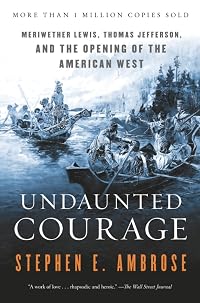
Undaunted Courage
by Stephen E. Ambrose
On This Page
Description
From the New York Times bestselling author of Band of Brothers and D-Day, the definitive book on Lewis and Clark's exploration of the Louisiana Purchase, the most momentous expedition in American history and one of the great adventure stories of all time.In 1803 President Thomas Jefferson selected his personal secretary, Captain Meriwether Lewis, to lead a voyage up the Missouri River to the Rockies, over the mountains, down the Columbia River to the Pacific Ocean, and back. Lewis and his show more partner, Captain William Clark, made the first map of the trans-Mississippi West, provided invaluable scientific data on the flora and fauna of the Louisiana Purchase territory, and established the American claim to Oregon, Washington, and Idaho.
Ambrose has pieced together previously unknown information about weather, terrain, and medical knowledge at the time to provide a vivid backdrop for the expedition. Lewis is supported by a rich variety of colorful characters, first of all Jefferson himself, whose interest in exploring and acquiring the American West went back thirty years. Next comes Clark, a rugged frontiersman whose love for Lewis matched Jefferson's. There are numerous Indian chiefs, and Sacagawea, the Indian girl who accompanied the expedition, along with the French-Indian hunter Drouillard, the great naturalists of Philadelphia, the French and Spanish fur traders of St. Louis, John Quincy Adams, and many more leading political, scientific, and military figures of the turn of the century.
High adventure, high politics, suspense, drama, and diplomacy combine with high romance and personal tragedy to make this outstanding work of scholarship as readable as a novel. show less
Tags
Recommendations

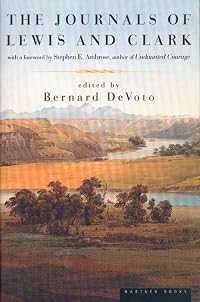
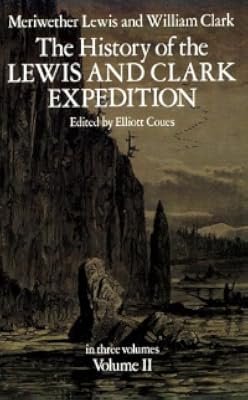
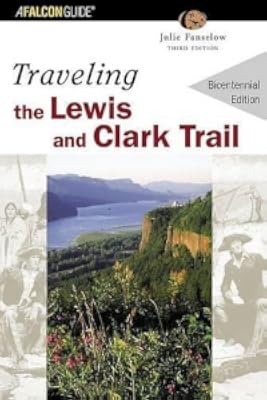









Member Recommendations
47degreesnorth Detailed tale of courage and determination on par with the explorations of Lewis and Clark many years before they ventured into the great unknown


Member Reviews
Having lived in Clatsop County, Oregon, very near where L&C built their fort and spent the winter, I have some general knowledge of the expedition. But I learned a lot by reading this book. It did take me a while...it's not a page-turner, but it was consistently interesting. We sort of learned about the 'heroic' version in school, so the realities of Indians, syphilis, and Sacajawea being practically a child herself were eye-opening, as was Lewis's eventual death and possible mental illness (or was it substance abuse?). In any case, I think Ambrose made the most of his material, and wasn't too starry-eyed about his subject.
I do wonder why Lewis wasn't ever able to attract a wife. He certainly tried hard enough, and had plenty of looks show more and glory to recommend him, and a seemingly bright future, being a particular friend of President Jefferson. Maybe his behavior around women wasn't exemplary. Maybe there were clues to his later afflictions which put them off. But I do wonder.
I also wonder why he never published his journals. It seemed as if he had some sort of a mental block around them, for no discernible reason. I suppose we'll never know.
Five stars for this work, even though I don't expect to re-read it. Lots of interesting detail and history, a chapter of Americana that is justly celebrated but not without its flaws. Ambrose kept his commentary to a minimum, although he does have opinions about slavery and Clark's treatment of York, the only enslaved man on the expedition. He also calls Lewis out on his treatment of the Indians at various points, although it seems that Lewis was perhaps more enlightened than many of his countrymen at the time. show less
I do wonder why Lewis wasn't ever able to attract a wife. He certainly tried hard enough, and had plenty of looks show more and glory to recommend him, and a seemingly bright future, being a particular friend of President Jefferson. Maybe his behavior around women wasn't exemplary. Maybe there were clues to his later afflictions which put them off. But I do wonder.
I also wonder why he never published his journals. It seemed as if he had some sort of a mental block around them, for no discernible reason. I suppose we'll never know.
Five stars for this work, even though I don't expect to re-read it. Lots of interesting detail and history, a chapter of Americana that is justly celebrated but not without its flaws. Ambrose kept his commentary to a minimum, although he does have opinions about slavery and Clark's treatment of York, the only enslaved man on the expedition. He also calls Lewis out on his treatment of the Indians at various points, although it seems that Lewis was perhaps more enlightened than many of his countrymen at the time. show less
I thoroughly enjoyed reading this book and all the complexities for what it meant for the those on the journey, those encountered on the journey and our conflicted modern sensibilities. At the time I finished it, I would have given it a 5-star rating. However, I have subsequently read some of his cited (or loosely cited) sources. It is common knowledge of that Ambrose has been accused and possibly admitted to plagiarism. While some of that can be debated from the academic nature on proper citation, etc., I still wanted to give a shout-out to James Ronda and his bringing the Native American perspective to forefront. Without him, this book wouldn't have been written.
The Lewis and Clark expedition certainly wasn't the first of its kind for white settlers venturing out into the American West even though its significance in the telling of America's story makes it seem that way. Undaunted Courage by Stephen Ambrose certainly helps cement the idea. And here you get the whole story so get comfortable. This is a long tale.
There's a reason you don't see too many Lewis and Clark Hollywood movies. Their journey lacks the requisite number of dramatic highs and lows that one expects from a "based on true events" story. And to be fair, there were many life and death moments going up the Missouri, over the Bitterroot Range, and down the Columbia, but overall, I would say it was stubborn persistence that carried show more the day. Their successful return came down to being a close-knit team, enforced military discipline and luck. Lots of luck. Though I'm sure during one of their long bouts of near starvation, especially while wintering on the Columbia, they wouldn't have thought themselves all that lucky. And one could speculate that they might not have made it at all without the lucky addition of the Lemhi Shoshone scout Sacagawea counted among their group. Her contributions were often the key to their continued survival even though at the time her presence was massively underappreciated.
The expedition is undoubtedly the legacy highlight of everyone involved, except for maybe Thomas Jefferson, but there's a dark coda to Lewis' part of the story, one that I wasn't familiar with at all. I won't go into the details but it colors the Americanized version of Lewis and Clark in a way that, in my opinion, makes the whole journey more real. More human. show less
There's a reason you don't see too many Lewis and Clark Hollywood movies. Their journey lacks the requisite number of dramatic highs and lows that one expects from a "based on true events" story. And to be fair, there were many life and death moments going up the Missouri, over the Bitterroot Range, and down the Columbia, but overall, I would say it was stubborn persistence that carried show more the day. Their successful return came down to being a close-knit team, enforced military discipline and luck. Lots of luck. Though I'm sure during one of their long bouts of near starvation, especially while wintering on the Columbia, they wouldn't have thought themselves all that lucky. And one could speculate that they might not have made it at all without the lucky addition of the Lemhi Shoshone scout Sacagawea counted among their group. Her contributions were often the key to their continued survival even though at the time her presence was massively underappreciated.
The expedition is undoubtedly the legacy highlight of everyone involved, except for maybe Thomas Jefferson, but there's a dark coda to Lewis' part of the story, one that I wasn't familiar with at all. I won't go into the details but it colors the Americanized version of Lewis and Clark in a way that, in my opinion, makes the whole journey more real. More human. show less
I am a huge reader of history, especially my American history, and one of my favorite writers of it was Stephen Ambrose, whom I discovered decades ago through his multi-part biographies of Dwight Eisenhower and Richard Nixon, and then his excellent account of the Korean War, THE COLDEST WINTER. His account of the Lewis and Clark expedition, UNDAUNTED COURAGE: Merriweather Lewis, Thomas Jefferson, and the Opening of the American West, sat on my shelf longer than it should have, but I finally took it down and read it, and discovered I had been missing out on what might have been Ambrose’s best book. If you think you know the story of the Lewis and Clark expedition, and haven’t read this book, then think again for you have a lot to show more learn.
Everyone who has ever sat in an American history class has heard the short version of the story: how President Thomas Jefferson bought the vast territory of Louisiana from the French Emperor, Napoleon, in 1803, doubling the size of the United States with a pen stroke, then sent a pair of intrepid adventurers, Merriweather Lewis and William Clark, to explore this new country far to the west all the way to the Pacific Ocean, helped along the way and guided by the Shoshone Indian maiden, Sacagawea. That account doesn’t begin to cover the half of it, but Ambrose’s book does so and then some, giving the reader a fascinating deep dive into a time and place that existed for such a short time, before politics, ambition, and the onrush of technological change swept America and the world full on into the 19th Century and beyond.
Using a vast number of historical records, Ambrose tells us why Louisiana and the city of New Orleans was so important to the future of the United States, and why Jefferson was so determined to obtain it. We learn of the competing interests of not only the French and the Americans, but of the Spanish and the British, both of whom had also made investments in the territory, the latter through a very lucrative fur trade out of Canada. In between all these great powers were the tribes of the great plains: the Blackfeet, Mandans, Sioux, Nez Pearce, and Shoshone. Commerce was the driving force behind all these common interests, and if a route by water could be found between the Mississippi and the Pacific Ocean, tying east and west together very neatly, then fortunes unimaginable could be made. That was the hope of Jefferson and many others in the east, and it was one of the primary reasons why an armed expedition from St. Louis to the Pacific was commissioned and outfitted by the American government even before the ink was dry on the bottom line.
The bulk of Ambrose’s book (my paperback copy runs to nearly 500 pages), tells of the expedition itself, frequently drawing on the journals of Merriweather Lewis, who wrote down a detailed account of the journey, telling of the new species of plants and trees discovered, along with vivid pictures of the wild life encountered, including some harrowing collisions with Grizzley bears, and the sight of great herds of buffalo and bison, the latter soon to be gone within a few generations. The land and the elements prove challenging as these men make a trail up the Missouri River into the Rocky Mountains (which must have been incredibly intimidating on first sight), cross the Continental divide, and then down the Columbia River to the Pacific. All the way there are the Indians, some of whom are most friendly, others not so much, and always there is the possibility that a misunderstanding on someone’s part could have resulted in bloodshed, which could have led to the entire expedition being wiped out. The sheer courage of Lewis and Clark and the men they led so successfully into such an immense country cannot be overstated, many would follow them and truly stand on the shoulders of giants. Such is the talent of Ambrose the writer, who had a novelist’s flair for narrative and pacing, that we are right there with these men, fighting the arctic cold in the winter, sharing their sense of wonder at what is lying around the next bend in the river, or over the ridge in the distance.
The primary focus of Ambrose’s book is on the two men mentioned in the title, Lewis and Jefferson. He paints a vivid picture of Lewis, a Virginia gentleman, like his benefactor Jefferson, as an intrepid leader of men, courageous and with an insightful mind, a man who thrived on challenge and did not fear adversity. Cool under pressure, decisive under fire, and when he made an error in judgement in the wilds of North America, he was able to correct it, while still holding the confidence of those he led. But Lewis was a hero with demons that seemed to surface once he was back in civilization, and his ultimate fate, described at the end of the book, is heartbreaking. This book makes an excellent case for why Thomas Jefferson is one of the most truly essential American leaders. With his keen engineer’s mind, Jefferson, unlike so many of his contemporaries, could see over the horizon of the future, and act upon it. It is not just that he purchased Louisiana, but that he wanted to make it truly and equally a part of the nation, not a colony to be administered and plundered. Because of him, we became an America from sea to shining sea.
There are some great insights in Ambrose’s book, especially his comment that how everything in the world in 1800 moved at the speed of a horse, the same it had done since before the ancient Greeks and Romans. It was soon to change. He notes that members of the expedition heard what sounded like booming cannon fire out on the plains in the far distance on a sunny day, an unexplained occurrence that still happens to this very day. William Clark gets somewhat shortchanged in the narrative, but he comes off as one of the best friends and traveling companions that any leader could have wanted, where Lewis was weak, Clark compensated. Sacagawea, who was married to a French fur trader, and who gave birth to a son during the journey, must have been one tough woman, the sole female to make the trip.
Ambrose’s book, which was published in 1996, does deal with the unavoidable subjects of slavery and the treatment of the Indians, well before those issues become so incendiary in the far more sensitive 21st Century. Ambrose does not white wash or sugar coat, he lets facts speak for themselves, and makes clear that the men and women in his book were products of their times. But unlike some recent historians, does not moralize and virtue signal, something that feels refreshing now.
The book ends with a very long single sentence, written by Jefferson a few years after Lewis’s untimely death, in which he praises the young man he picked to lead a great adventure into the unknown and then return to tell his fellow countrymen what they’d found. This piece of writing is also a pertinent reminder of the kind of extraordinary talent that once occupied the highest office in the land, but has been seldom seen there since. show less
Everyone who has ever sat in an American history class has heard the short version of the story: how President Thomas Jefferson bought the vast territory of Louisiana from the French Emperor, Napoleon, in 1803, doubling the size of the United States with a pen stroke, then sent a pair of intrepid adventurers, Merriweather Lewis and William Clark, to explore this new country far to the west all the way to the Pacific Ocean, helped along the way and guided by the Shoshone Indian maiden, Sacagawea. That account doesn’t begin to cover the half of it, but Ambrose’s book does so and then some, giving the reader a fascinating deep dive into a time and place that existed for such a short time, before politics, ambition, and the onrush of technological change swept America and the world full on into the 19th Century and beyond.
Using a vast number of historical records, Ambrose tells us why Louisiana and the city of New Orleans was so important to the future of the United States, and why Jefferson was so determined to obtain it. We learn of the competing interests of not only the French and the Americans, but of the Spanish and the British, both of whom had also made investments in the territory, the latter through a very lucrative fur trade out of Canada. In between all these great powers were the tribes of the great plains: the Blackfeet, Mandans, Sioux, Nez Pearce, and Shoshone. Commerce was the driving force behind all these common interests, and if a route by water could be found between the Mississippi and the Pacific Ocean, tying east and west together very neatly, then fortunes unimaginable could be made. That was the hope of Jefferson and many others in the east, and it was one of the primary reasons why an armed expedition from St. Louis to the Pacific was commissioned and outfitted by the American government even before the ink was dry on the bottom line.
The bulk of Ambrose’s book (my paperback copy runs to nearly 500 pages), tells of the expedition itself, frequently drawing on the journals of Merriweather Lewis, who wrote down a detailed account of the journey, telling of the new species of plants and trees discovered, along with vivid pictures of the wild life encountered, including some harrowing collisions with Grizzley bears, and the sight of great herds of buffalo and bison, the latter soon to be gone within a few generations. The land and the elements prove challenging as these men make a trail up the Missouri River into the Rocky Mountains (which must have been incredibly intimidating on first sight), cross the Continental divide, and then down the Columbia River to the Pacific. All the way there are the Indians, some of whom are most friendly, others not so much, and always there is the possibility that a misunderstanding on someone’s part could have resulted in bloodshed, which could have led to the entire expedition being wiped out. The sheer courage of Lewis and Clark and the men they led so successfully into such an immense country cannot be overstated, many would follow them and truly stand on the shoulders of giants. Such is the talent of Ambrose the writer, who had a novelist’s flair for narrative and pacing, that we are right there with these men, fighting the arctic cold in the winter, sharing their sense of wonder at what is lying around the next bend in the river, or over the ridge in the distance.
The primary focus of Ambrose’s book is on the two men mentioned in the title, Lewis and Jefferson. He paints a vivid picture of Lewis, a Virginia gentleman, like his benefactor Jefferson, as an intrepid leader of men, courageous and with an insightful mind, a man who thrived on challenge and did not fear adversity. Cool under pressure, decisive under fire, and when he made an error in judgement in the wilds of North America, he was able to correct it, while still holding the confidence of those he led. But Lewis was a hero with demons that seemed to surface once he was back in civilization, and his ultimate fate, described at the end of the book, is heartbreaking. This book makes an excellent case for why Thomas Jefferson is one of the most truly essential American leaders. With his keen engineer’s mind, Jefferson, unlike so many of his contemporaries, could see over the horizon of the future, and act upon it. It is not just that he purchased Louisiana, but that he wanted to make it truly and equally a part of the nation, not a colony to be administered and plundered. Because of him, we became an America from sea to shining sea.
There are some great insights in Ambrose’s book, especially his comment that how everything in the world in 1800 moved at the speed of a horse, the same it had done since before the ancient Greeks and Romans. It was soon to change. He notes that members of the expedition heard what sounded like booming cannon fire out on the plains in the far distance on a sunny day, an unexplained occurrence that still happens to this very day. William Clark gets somewhat shortchanged in the narrative, but he comes off as one of the best friends and traveling companions that any leader could have wanted, where Lewis was weak, Clark compensated. Sacagawea, who was married to a French fur trader, and who gave birth to a son during the journey, must have been one tough woman, the sole female to make the trip.
Ambrose’s book, which was published in 1996, does deal with the unavoidable subjects of slavery and the treatment of the Indians, well before those issues become so incendiary in the far more sensitive 21st Century. Ambrose does not white wash or sugar coat, he lets facts speak for themselves, and makes clear that the men and women in his book were products of their times. But unlike some recent historians, does not moralize and virtue signal, something that feels refreshing now.
The book ends with a very long single sentence, written by Jefferson a few years after Lewis’s untimely death, in which he praises the young man he picked to lead a great adventure into the unknown and then return to tell his fellow countrymen what they’d found. This piece of writing is also a pertinent reminder of the kind of extraordinary talent that once occupied the highest office in the land, but has been seldom seen there since. show less
It has been over a decade since I’ve read Ambrose’s Band of Brothers, which still resides in my “Top 5 Books Ever Read” list. This book has been on my to-read list for almost as long, partly because I hail from Nebraska, home of the Oregon and Mormon Trails west, and partly because I now live in St. Louis, home of the Gateway Arch, a monument to America’s westward journey and the fierce spirit which engendered it.
There is no figure who encapsulates so much of the distinctive American spirit as the “pioneer.” Independent. Self-reliant. Adventurous. However, before there was ever a massive westward migration…before the “prairie schooners” sailed the endless grasses of the Great Plains…before there ever was such a show more thing as a “pioneer family”…there was Meriweather Lewis and William Clark.
Though Ambrose sets out the book as a biography of Lewis, it really is the story of both men and the Corps of Discovery they led from St. Louis to the mouth of the Columbia River. You simply cannot write about Lewis without Clark, nor about Lewis and Clark without their defining adventure. As Ambrose relates it, this becomes a story of remarkable friendship and remarkable leadership. What still astounds me, even after finishing the book, is that, prior to their expedition, Lewis had only known Clark for six months. Six. Months.
Ambrose’s telling is rich with personal details from their journals (complete with their, shall we say, “winsome” spellings). He is able to recapture something of that original energy (part enthusiasm, part anxiety) so that the reader feels like they are traveling WITH the adventurers rather than simply reading ABOUT them. That is not to say Ambrose simply “reports” the events; he consistently and quietly guides the reader’s attention to the overlooked detail or the curious turn of phrase that may contain the necessary clue to a mystery of long standing. He even takes stands of his own, particularly in his diagnosis of Lewis as suffering from manic depression. (To be clear: I was not convinced when Ambrose first made his claim but, by the end of the book, he had me persuaded.)
Ambrose also avoids the pitfall of hagiography without critique. He makes plenty of judgments…about the men and about the journey (especially the ill-planned exploration of the Marias River). He does so without losing his genuine admiration for Lewis and for his accomplishments. In this, I feel that perhaps Ambrose’s greatest gift is that he has incarnated the spirit of Jefferson’s relationship to his erstwhile personal secretary and protégé.
Without going into too much detail and robbing the story of its poignancy, the ending of Meriweather Lewis’s story is unexpected and, to be frank, heartbreaking. Ambrose goes to great lengths to explain without excusing, which I deeply appreciated. Greatness often comes at a cost, and men of great achievement can still founder.
Perhaps that’s the real beauty of the story that Ambrose tells, like the stories of Easy Company. He has this ability to find the human stories that both inspire and warn us. He draws for us (in the most enlivened way imaginable) historical figures that simultaneously call us to be like them and better than them. In other words, Ambrose gives us stories not of heroes but of men and women who show us our own capacity for greatness. show less
There is no figure who encapsulates so much of the distinctive American spirit as the “pioneer.” Independent. Self-reliant. Adventurous. However, before there was ever a massive westward migration…before the “prairie schooners” sailed the endless grasses of the Great Plains…before there ever was such a show more thing as a “pioneer family”…there was Meriweather Lewis and William Clark.
Though Ambrose sets out the book as a biography of Lewis, it really is the story of both men and the Corps of Discovery they led from St. Louis to the mouth of the Columbia River. You simply cannot write about Lewis without Clark, nor about Lewis and Clark without their defining adventure. As Ambrose relates it, this becomes a story of remarkable friendship and remarkable leadership. What still astounds me, even after finishing the book, is that, prior to their expedition, Lewis had only known Clark for six months. Six. Months.
Ambrose’s telling is rich with personal details from their journals (complete with their, shall we say, “winsome” spellings). He is able to recapture something of that original energy (part enthusiasm, part anxiety) so that the reader feels like they are traveling WITH the adventurers rather than simply reading ABOUT them. That is not to say Ambrose simply “reports” the events; he consistently and quietly guides the reader’s attention to the overlooked detail or the curious turn of phrase that may contain the necessary clue to a mystery of long standing. He even takes stands of his own, particularly in his diagnosis of Lewis as suffering from manic depression. (To be clear: I was not convinced when Ambrose first made his claim but, by the end of the book, he had me persuaded.)
Ambrose also avoids the pitfall of hagiography without critique. He makes plenty of judgments…about the men and about the journey (especially the ill-planned exploration of the Marias River). He does so without losing his genuine admiration for Lewis and for his accomplishments. In this, I feel that perhaps Ambrose’s greatest gift is that he has incarnated the spirit of Jefferson’s relationship to his erstwhile personal secretary and protégé.
Without going into too much detail and robbing the story of its poignancy, the ending of Meriweather Lewis’s story is unexpected and, to be frank, heartbreaking. Ambrose goes to great lengths to explain without excusing, which I deeply appreciated. Greatness often comes at a cost, and men of great achievement can still founder.
Perhaps that’s the real beauty of the story that Ambrose tells, like the stories of Easy Company. He has this ability to find the human stories that both inspire and warn us. He draws for us (in the most enlivened way imaginable) historical figures that simultaneously call us to be like them and better than them. In other words, Ambrose gives us stories not of heroes but of men and women who show us our own capacity for greatness. show less
In 1803 President Jefferson tasked Meriwether Lewis with the planning and execution of an expedition to explore the newly-purchased "Louisiana" territory with the goal of discovering an all-water route from the Missouri River to the Pacific Ocean. Lewis brought aboard his good friend William Clark as co-Captain, and the two led the Corps of Discovery on a 2-year journey across harsh and unfamiliar terrain and through tribal lands that no person of European ancestry had ever before encountered.
Possibly the most comprehensively researched and accessible narrative of the expedition, this book is chock full from start to finish of fascinating insights into the expedition, geography, native cultures, logistics, flora & fauna, politics of the show more time, members' personalities, and expectations; as well as challenges related to all of the above. That said, some terminology used and comments by the author haven't exactly aged well, beginning with the statement, "Every American everywhere has benefitted from Jefferson's purchase of Louisiana and his setting in motion the Lewis and Clark Expedition," which reads at best tone-deaf today. Ambrose also comments with doubt about whether Jefferson had relations with his enslaved workforce, which has since been proven genetically. If you can turn a blind eye to these details, as well as get past just how starry-eyed the author is regarding Lewis, this is a very enjoyable and educational read. show less
Possibly the most comprehensively researched and accessible narrative of the expedition, this book is chock full from start to finish of fascinating insights into the expedition, geography, native cultures, logistics, flora & fauna, politics of the show more time, members' personalities, and expectations; as well as challenges related to all of the above. That said, some terminology used and comments by the author haven't exactly aged well, beginning with the statement, "Every American everywhere has benefitted from Jefferson's purchase of Louisiana and his setting in motion the Lewis and Clark Expedition," which reads at best tone-deaf today. Ambrose also comments with doubt about whether Jefferson had relations with his enslaved workforce, which has since been proven genetically. If you can turn a blind eye to these details, as well as get past just how starry-eyed the author is regarding Lewis, this is a very enjoyable and educational read. show less
I’ve been reading a lot of Stephen Ambrose recently. There is, of course, something of a controversy over Ambrose’s plagiarism, which he didn’t quite deny and didn’t quite admit.
Undaunted Courage is a biography of Meriwether Lewis, with the Lewis and Clark Expedition as the centerpiece and occupying perhaps 2/3 of the text. Lewis was a Virginia planter who joined the military and eventually became secretary to fellow Virginian Thomas Jefferson, leading Jefferson to pick him to lead the expedition to the newly acquired Louisiana Purchase. Lewis put a lot of effort into preparation, learning what he could of botany, zoology, cartography and zoology before setting off. He selected William Clark as co-leader; Ambrose notes that show more Clark was supposed to be promoted to captain, the same rank as Lewis, but the War Department never got around to commissioning him and he remained a lieutenant (although he received back pay as if he had been a captain). There never seems to have been any conflict between the two despite the apparently divided command.
Ambrose notes the purpose of the expedition was a little different from what I had learned in high school American history. Jefferson was under the impression that the Rockies were similar in height and ruggedness to the Appalachians, and expected there would be a relatively short portage between the headwaters of the Missouri and the Columbia; he also thought that the Missouri might swing across the 49th parallel and give the US a claim on part of Canada (which wasn’t called Canada yet; at least not out there). Thus a major part of Lewis and Clark’s mission was to thwart British/Canadian/Northwest Company influence in the area by persuading Indians to trade with Americans rather than the NWC. This was sometimes problematic; for example when negotiating with the Nez Perce, Lewis explained his purpose to trapper Toussaint Charbonneau in French. Charbonneau relayed this to his wife Sacajawea in Hidatsa, which she had picked up when captive. Sacajawea then talked to one of the Nez Perce who knew Shoshone, who then explained to the rest of his tribe in Salish. One expects that it came out a little distorted at the end.
Sacajawea gets quite a bit of acknowledgement, and it isn’t all political correctness; for a 16-year-old who was one of two wives of a disreputable voyageur she did remarkably well; one wonders what she thought about the whole thing. A lot of the expedition’s experience with the Indians didn’t come across in American History class either; Lewis and Clark and their men would have starved to death without the generosity of the natives (as it was, they ate a lot of roast dog). Incidentally, Indian hospitality also resulted in the entire party – with the possible exception of Lewis and Clark themselves – coming down with syphilis.
There is no denying that Lewis accomplished a lot; he discovered, described and named numerous animals and plants previously unknown (including, for example, prairie dogs; he sent one back to Jefferson and it made it to Monticello alive). He kept his troops in reasonably good morale and when presented with route finding problems almost always made the right choice; Ambrose argues that his only bad decision on the entire expedition was to split the party to explore the Marais River in northern Montana, where he got in a gun battle with a hunting party of Blackfoot Indians.
But all was not cloudless glory when he got back. Ambrose finds symptoms of depression or bipolar disorder through Lewis’ entire life. None of this really came out on the expedition itself, except for a puzzling gap in Lewis’ journals where he didn’t record anything for weeks. Ambrose notes there’s no hint of anything amiss for the dates on either side of the gap and expresses the hope that the missing pages remain to be found somewhere. However, after his return Lewis seemingly fell apart. Jefferson appointed him Governor of Louisiana (which took in the entire area; his headquarters were at St. Louis.
Lewis began to behave self-destructively, taking to drink and laudanum, and getting into debt. His attitude toward his journals was especially puzzling – he arranged (and paid for) engravers to illustrate, astronomers to reduce observations, botanists to go over the plant descriptions, but somehow, despite repeated requests by Jefferson and other interested parties and their value for settling his accounts, he never submitted them to a publisher. On the way to Washington to explain some of his financial dealings to the War Department he attempted suicide twice, and finally did succeed in an isolated cabin in Tennessee. Although maybe not; there are persistent theories that it was murder instead. His journals finally did get published but only in an abridged form; full publication didn’t come for many years (meaning Lewis didn’t get credit for a lot of his zoological and botanical discoveries).
Well written, as usual for Ambrose – even if some came from somebody else. Excellent maps; contemporary engravings; well referenced. It’s been commented that the book reads like a novel; I didn’t see that but obviously Ambrose did have to speculate about motives and actions for parts the expedition that weren’t covered by the journals. show less
Undaunted Courage is a biography of Meriwether Lewis, with the Lewis and Clark Expedition as the centerpiece and occupying perhaps 2/3 of the text. Lewis was a Virginia planter who joined the military and eventually became secretary to fellow Virginian Thomas Jefferson, leading Jefferson to pick him to lead the expedition to the newly acquired Louisiana Purchase. Lewis put a lot of effort into preparation, learning what he could of botany, zoology, cartography and zoology before setting off. He selected William Clark as co-leader; Ambrose notes that show more Clark was supposed to be promoted to captain, the same rank as Lewis, but the War Department never got around to commissioning him and he remained a lieutenant (although he received back pay as if he had been a captain). There never seems to have been any conflict between the two despite the apparently divided command.
Ambrose notes the purpose of the expedition was a little different from what I had learned in high school American history. Jefferson was under the impression that the Rockies were similar in height and ruggedness to the Appalachians, and expected there would be a relatively short portage between the headwaters of the Missouri and the Columbia; he also thought that the Missouri might swing across the 49th parallel and give the US a claim on part of Canada (which wasn’t called Canada yet; at least not out there). Thus a major part of Lewis and Clark’s mission was to thwart British/Canadian/Northwest Company influence in the area by persuading Indians to trade with Americans rather than the NWC. This was sometimes problematic; for example when negotiating with the Nez Perce, Lewis explained his purpose to trapper Toussaint Charbonneau in French. Charbonneau relayed this to his wife Sacajawea in Hidatsa, which she had picked up when captive. Sacajawea then talked to one of the Nez Perce who knew Shoshone, who then explained to the rest of his tribe in Salish. One expects that it came out a little distorted at the end.
Sacajawea gets quite a bit of acknowledgement, and it isn’t all political correctness; for a 16-year-old who was one of two wives of a disreputable voyageur she did remarkably well; one wonders what she thought about the whole thing. A lot of the expedition’s experience with the Indians didn’t come across in American History class either; Lewis and Clark and their men would have starved to death without the generosity of the natives (as it was, they ate a lot of roast dog). Incidentally, Indian hospitality also resulted in the entire party – with the possible exception of Lewis and Clark themselves – coming down with syphilis.
There is no denying that Lewis accomplished a lot; he discovered, described and named numerous animals and plants previously unknown (including, for example, prairie dogs; he sent one back to Jefferson and it made it to Monticello alive). He kept his troops in reasonably good morale and when presented with route finding problems almost always made the right choice; Ambrose argues that his only bad decision on the entire expedition was to split the party to explore the Marais River in northern Montana, where he got in a gun battle with a hunting party of Blackfoot Indians.
But all was not cloudless glory when he got back. Ambrose finds symptoms of depression or bipolar disorder through Lewis’ entire life. None of this really came out on the expedition itself, except for a puzzling gap in Lewis’ journals where he didn’t record anything for weeks. Ambrose notes there’s no hint of anything amiss for the dates on either side of the gap and expresses the hope that the missing pages remain to be found somewhere. However, after his return Lewis seemingly fell apart. Jefferson appointed him Governor of Louisiana (which took in the entire area; his headquarters were at St. Louis.
Lewis began to behave self-destructively, taking to drink and laudanum, and getting into debt. His attitude toward his journals was especially puzzling – he arranged (and paid for) engravers to illustrate, astronomers to reduce observations, botanists to go over the plant descriptions, but somehow, despite repeated requests by Jefferson and other interested parties and their value for settling his accounts, he never submitted them to a publisher. On the way to Washington to explain some of his financial dealings to the War Department he attempted suicide twice, and finally did succeed in an isolated cabin in Tennessee. Although maybe not; there are persistent theories that it was murder instead. His journals finally did get published but only in an abridged form; full publication didn’t come for many years (meaning Lewis didn’t get credit for a lot of his zoological and botanical discoveries).
Well written, as usual for Ambrose – even if some came from somebody else. Excellent maps; contemporary engravings; well referenced. It’s been commented that the book reads like a novel; I didn’t see that but obviously Ambrose did have to speculate about motives and actions for parts the expedition that weren’t covered by the journals. show less
Members
- Recently Added By
Published Reviews
ThingScore 100
- conveyed with passionate enthusiasm by Mr. Ambrose and sprinkled liberally with some of the most famous and vivid passages from the travelers' journals.
added by readysetgo
Lists

Best General History Books
50 works; 22 members

Best U.S. History Books (1754-1828)
363 works; 17 members

Best of Travel Narratives
142 works; 28 members
Non-Fiction Worth Reading
1,015 works; 254 members

History and Biography Read in 2016
20 works; 3 members

Top Five Books of 2016
795 works; 229 members

Set in the Pacific Northwest
136 works; 7 members

Tagged by Tim or Meh!
91 works; 9 members

Books Read in 2016
4,666 works; 197 members

Carole's List
445 works; 13 members

Page Turners
185 works; 11 members

al.vick-parents books
301 works; 1 member

Books Read in 2004
200 works; 7 members

r/History Recommended Reading List
603 works; 12 members

Beautiful Feet Books
304 works; 7 members

Native American / Indigenous Literature
172 works; 100 members
Author Information

72+ Works 43,824 Members
Historian Stephen E. Ambrose grew up in Wisconsin and attended the University of Wisconsin and the University of Louisiana. Ambrose is considered to be one of the foremost historical scholars of recent times and has been a professor for over three decades. He is also the founder and president of the National D-Day Museum in New Orleans. His works show more include D-Day: June 6, 1944: The Climactic Battle of World War II, Citizen Soldiers: The U. S. Army from Normandy Beaches to the Bulge to the Surrender of Germany, June 7, 1944-May 7, 1945, Band of Brothers: E Company, 506th Regiment, 101st Airborne from Normandy to Hitler's Eagle's Nest and Undaunted Courage: Meriwether Lewis, Thomas Jefferson and the Opening of the American West. Abrose served historical consultant on the motion picture Saving Private Ryan. (Bowker Author Biography) show less
Some Editions
Awards and Honors
Awards
Distinctions
Notable Lists
Work Relationships
Is contained in
Contains
Is abridged in
Has as a student's study guide
Common Knowledge
- Canonical title
- Undaunted Courage
- Original publication date
- 1996
- People/Characters
- William Clark; Thomas Jefferson; Meriwether Lewis; Sacajawea
- Important events
- Lewis and Clark Expedition (1804 | 1806)
- Epigraph
- "Of courage undaunted, possessing a firmness & perseverance of purpose which nothing but impossibilities could divert from it's [sic] direction, careful as a father of those committed to his charge, yet steady in the main... (show all)tenance of order & discipline, intimate with the Indian character, customs & principles, habituated to the hunting life, guarded by exact observation of the vegetables & animals of his own country, against losing tine in the description of objects already possessed, honest, disinterested, liberal, of sound understanding and a fidelity to truth so scrupulous that whatever he should report would be as certain as if seen by ourselves, with all these qualifications as if selected and implanted by nature in one body, for this express purpose, I could have no hesitation in confiding the enterprise to him."
—Thomas Jefferson
on Meriwether Lewis - Dedication
- For Bob Tubbs
- First words
- From the west-facing window of the room in which Meriwether Lewis was born on August 8, 1774, one could look out at Rockfish Gap, in the Blue Ridge Mountains, an opening to the West that invited exploration.
- Last words
- (Click to show. Warning: May contain spoilers.)"Of courage undaunted, possessing a firmness & perseverence of purpose which nothing but impossibilities could divert from it's direction, careful as a father of those committed to his charge, yet steady in the maintenance of order & discipline, intimate with the Indian character, customs & principles, habituated to the hunting life, guarded by exact observation of the vegetables & animals of his own country, against losing time in the description of objects already possessed, honest, disinterested, liberal, of sound understanding and a fidelity to truth so scrupulous that whatever he should report would be as certain as if seen by ourselves, with all these qualifications as if selected and implanted by nature in one body, for this express purpose, I could have no hesitation in confiding the enterprize to him."
- Publisher's editor
- Mayhew, Alice
- Blurbers
- Josephy, Alvin M., Jr.
- Original language
- English
- Disambiguation notice
- ISBNs 0671574434 and 0743508084: abridged audiobook read by Cotter Smith. Do not combine the abridged audiobook with the book since they are not the same work.
Classifications
- Genres
- History, General Nonfiction, Nonfiction, Travel, Biography & Memoir
- DDC/MDS
- 917.8042 — History & geography Geography & travel Geography of and travel in North America Western U.S. Travel 19th Century
- LCC
- F592.7 .A49 — Local History of the United States, Canada and Latin America United States local history
- BISAC
Statistics
- Members
- 8,584
- Popularity
- 1,275
- Reviews
- 89
- Rating
- (4.11)
- Languages
- English, French
- Media
- Paper, Audiobook, Ebook
- ISBNs
- 24
- ASINs
- 45