On This Page
Description
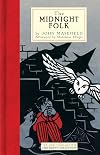
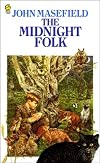
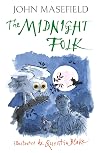
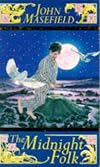
Talking paintings and animals help Kay in his attempt to outwit the witches and locate his great-grandfather's buried treasure.Tags
Recommendations


















Member Recommendations
Member Reviews
An amazing dream of a book that unfolds with surreal logic as cats talk, witches fly, foxes plot against gamekeepers, model ships sail away with a water-rat captains and a hundred other odd and wonderful things, while Kay tries to discover the fate of his great-grandfather's lost treasure. The voices and the language are as magical as the various miraculous and mysterious occurrences. It utterly refuses to make any sense of things or offer explanations or justifications. It's pretty much its own justification, that's what.
I'm being a little silly in characterizing this book as interstitial or magical realism, but it does seem to fit it best. Like Alice in Wonderland, it depicts fluid physical laws. Unlike Alice, it draws no really meaningful lines between the world where the rules apply and that where they do not. The magical happenings that befall Kay Harker partake both of the logic of the dream world and the concerns of the waking one.
Kay is a young boy living in his familial country house, but overseen by unrelated and seemingly uncaring adults. He begins to find out the world is stranger than he had thought when he begins to dig into the mystery surrounding his great-grandfather, a sea captain who lost or stole a great treasure. The other show more characters include cats Blackmalkin and Graymalkin, otters, foxes, witches.... show less
Kay is a young boy living in his familial country house, but overseen by unrelated and seemingly uncaring adults. He begins to find out the world is stranger than he had thought when he begins to dig into the mystery surrounding his great-grandfather, a sea captain who lost or stole a great treasure. The other show more characters include cats Blackmalkin and Graymalkin, otters, foxes, witches.... show less
A disappointment (so why 3 stars rather than 2? Bumped up for historical importance and author's literary qualities ... but for sheer pleasure it gave me, it's really a 2). Even Madeleine L'Engle, who wrote an afterword for it, damned it with faint praise (paraphrasing, but basically "it's over-complicated and confusing but kids out to be able to figure it out nonetheless).
Too many characters, too many shifts in time and place, too many dreams, or dreams which turn out not to be dreams, and despite almost constant movement from our protagonist, no sense that any of it is really directed or intentional, the plot seemed to happen all around him, despite him. Lots of scenes of people telling other people what other people had done, were show more doing, or were going to do.
I thought it was interesting, but as a historical artifact, "fancy, that used to be the sort of book one would give a child and expect them to enjoy it!"
Will still try the next book (Box of Delights) which is apparently more of a classic and perhaps the author learned lessons from book one and applied them to book two. Fingers crossed!
(Note: 5 stars = amazing, wonderful, 4 = very good book, 3 = decent read, 2 = disappointing, 1 = awful, just awful. I'm fairly good at picking for myself so end up with a lot of 4s). show less
Too many characters, too many shifts in time and place, too many dreams, or dreams which turn out not to be dreams, and despite almost constant movement from our protagonist, no sense that any of it is really directed or intentional, the plot seemed to happen all around him, despite him. Lots of scenes of people telling other people what other people had done, were show more doing, or were going to do.
I thought it was interesting, but as a historical artifact, "fancy, that used to be the sort of book one would give a child and expect them to enjoy it!"
Will still try the next book (Box of Delights) which is apparently more of a classic and perhaps the author learned lessons from book one and applied them to book two. Fingers crossed!
(Note: 5 stars = amazing, wonderful, 4 = very good book, 3 = decent read, 2 = disappointing, 1 = awful, just awful. I'm fairly good at picking for myself so end up with a lot of 4s). show less
This is the story of Kay Harker, a lonely child living in the family home of Seekings House with his governess and the servants.
Taken at face value, it is a rollicking story of lost treasures, which Kay must attempt to find faster than a gang of witches. He is helped in this by the creatures of the English countryside, his black cat, a fox, an owl, a bat and an otter amongst others, and also the lost toys of his childhood.
Reading it as a grown-up, it is so very bitter-sweet. The book ends with the treasure found, the witches arrested, and Kay acquiring a loving guardian. And the happenings are definitely real in book space, Kay's pyjamas get covered in mud and the treasure really does come home. But it reads exactly like the story you show more would write if you were a lonely child who didn't like your governess, and had only the natural world and a few scraps of family history to cheer you. How then you would imagine you could fly like a bat, or swim like an otter! How you would find the smugglers brandy, and the watch stolen by the highway man, and the lost church treasures! Clearly the governess would be an Evil Witch, and you would be revenged on her!
Poor Kay, you spend a lot of the book just wanting to give him a hug. There are some lovely little snippets of the other families living nearby trying to do what they can for him, like letting him come for breakfast when they find him trespassing, and teaching him to ride. But it is a sad and lonely book show less
Taken at face value, it is a rollicking story of lost treasures, which Kay must attempt to find faster than a gang of witches. He is helped in this by the creatures of the English countryside, his black cat, a fox, an owl, a bat and an otter amongst others, and also the lost toys of his childhood.
Reading it as a grown-up, it is so very bitter-sweet. The book ends with the treasure found, the witches arrested, and Kay acquiring a loving guardian. And the happenings are definitely real in book space, Kay's pyjamas get covered in mud and the treasure really does come home. But it reads exactly like the story you show more would write if you were a lonely child who didn't like your governess, and had only the natural world and a few scraps of family history to cheer you. How then you would imagine you could fly like a bat, or swim like an otter! How you would find the smugglers brandy, and the watch stolen by the highway man, and the lost church treasures! Clearly the governess would be an Evil Witch, and you would be revenged on her!
Poor Kay, you spend a lot of the book just wanting to give him a hug. There are some lovely little snippets of the other families living nearby trying to do what they can for him, like letting him come for breakfast when they find him trespassing, and teaching him to ride. But it is a sad and lonely book show less
I first read this magical adventure story at the age of eight. I fell into it, and it has been my favourite children's book ever since. Many of the references to seafaring and poaching and Latin lessons went over my head. But it didn't matter! The fact that Masefield was a poet probably explains why his language had such a deep effect on me. He created a magical pastoral world full of vivid animal and human characters, and I joined Kay Harker in his struggle against the evil that had come upon his home. I knew even then that this was a Victorian world that had gone forever, (like orphaned Kay's own early childhood) and I felt that poignancy even as a child (it's very strong in the description of the deserted ruined stables, where Kay show more can just remember "the warmth and glitter of use"). The casual tales of local horror, of murders and highwaymen, told to Kay by the garrulous maid Ellen, add an extra frisson to the main story of buried treasure, witches, pirates and betrayal. Rowland Hilder's scratchy, slightly sinister pictures added to the atmosphere. The sequel, the Box of Delights, is wonderful too, but the Midnight Folk will always be my favourite. Ho, says Rollicum Bitem. show less
The Midnight Folk is said to be John Masefield's favorite book. That surprises me because I think The Box of Delights is more popular and may be the better book as the plot is more cohesive. It's a rollicking adventure, though, with lots of magic and gorgeously detailed descriptions of mermaid cities under water and so on. There are some realistic details, though, that I didn't care for -- like Bitem's dietary choices and the poisoning of the otter hounds. I know these things happen, but not in my fantasy books, please.
This abridged book, by a Poet Laureate of England, is about a boy's make-believe adventures: talking animals and paintings, time travel, flying, a governess who is really a witch, a long-lost treasure, mermaids, King Arthur's Court and more. He turns into various animals and talks with others, uses magic objects, and helps save his imaginary friends. The story is very much a boy's imaginings described realistically (as all imaginings should be described), but there is no character development or real conflict beyond the fact that seeing his governess as a witch probably means he doesn't like her. Although the book seems to take place in the present (of the 1920's) it is meant to be timeless.
Members
- Recently Added By
Lists

Favorite Childhood Books
1,651 works; 515 members

Best Children's Books You've Read
197 works; 74 members

Folio Society
831 works; 53 members

al.vick-wishlist-YA
127 works; 3 members

Children's Literature 1900 - 1950 in order
413 works; 8 members

Witchy Fiction
253 works; 126 members

Books Read in 2025
4,128 works; 98 members

Top Five Books of 2025
954 works; 303 members
Author Information

181+ Works 4,024 Members
Once one of the most popular English poets of the century, Masefield has fallen into undeserved neglect since his death. He was born in a Victorian house with rural vistas, which he later recalled as "living in Paradise." In childhood, he had a series of intense, visionary experiences inspired by both nature and literature, which gave him a show more habitual sense of participation in a greater life. These had weakened by 1891, when he entered training for the merchant naval service. An officer on the White Star Line's Adriatic, he jumped ship in New York in 1895 and roamed across America. He returned to England two years later when a recovery of his intense childhood visions convinced him he could succeed as a writer. Masefield excelled more at narrative than at symbolism. His first book, "Salt Water Poems and Ballads" (1902), displayed the allegiance to outcasts and wanderers that marks his subject matter. The musicality of that volume derives partly from the strong early influence of W. B. Yeats. Increasingly, Masefield experimented with colloquial diction, particularly from the lower classes. His "The Everlasting Mercy" (1911) recounted the conversion of a rural scoundrel in language that astonished many readers. Highly prolific, he produced more than 20 volumes of fiction, 17 plays, and other prose work besides his major volumes of poetry. Masefield still appeals particularly to the common reader. He was appointed poet laureate in 1930. (Bowker Author Biography) show less
Some Editions
Series

Belongs to Publisher Series
Work Relationships
Is contained in
Common Knowledge
- Canonical title
- The Midnight Folk
- Original title
- The midnight folk
- Original publication date
- 1927; 1984 abridgement by Patricia Crampton
- People/Characters
- Kay Harker; Sir Theopompous; Sylvia Daisy Pouncer; Abner Brown
- Dedication
- For J. & L.
- First words
- It had been an unhappy day for little Kay Harker.
- Quotations*
- Ich finde jedenfalls, daß eine Menge dieser zimperlichen, heuchlerischen Leute in der heutigen verweichlichten Zeit, die von Gefasel und Gequatsche leben, immer bereit sind, jeden zu verdammen, der auf eine Weise lebt, die n... (show all)icht die ihre ist. Nichts zeigt einen beschränkten Geist deutlicher als das. (S. 111)
- Last words
- (Click to show. Warning: May contain spoilers.)You may be sure that there is no more witchcraft in the house, nothing but peace and mirth all day and at night peace, the owls crying, the crickets chirping and all sort of fun going on among.
- Original language
- English
*Some information comes from Common Knowledge in other languages. Click "Edit" for more information.
Classifications
- Genres
- Fiction and Literature, Children's Books, Kids, Fantasy
- DDC/MDS
- 823.912 — Literature & rhetoric English & Old English literatures English fiction 1900- 1901-1999 1901-1945
- LCC
- PZ7 .M373 .M — Language and Literature Fiction and juvenile belles lettres Fiction and juvenile belles lettres Juvenile belles lettres
- BISAC
Statistics
- Members
- 839
- Popularity
- 32,769
- Reviews
- 23
- Rating
- (3.81)
- Languages
- 5 — English, Finnish, German, Italian, Swedish
- Media
- Paper, Audiobook, Ebook
- ISBNs
- 23
- ASINs
- 23