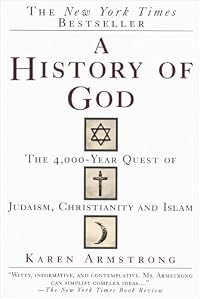
A History of God
by Karen Armstrong
On This Page
Description
Explores the ways in which the "idea" and "experience" of God evolved among monotheists--Jews, Christians and Muslims.Tags
Recommendations



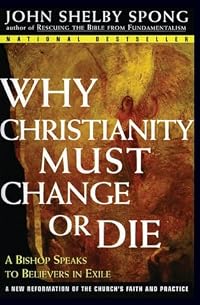
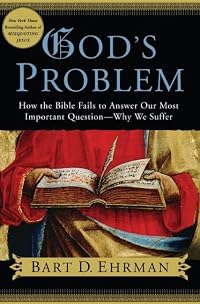
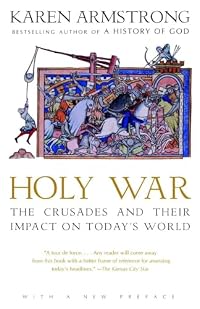

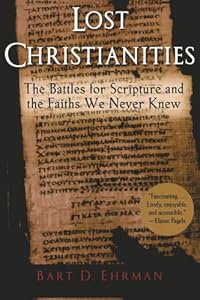



Member Recommendations
The Bible Unearthed: Archaeology's New Vision of Ancient Israel and the Origin of Its Sacred Texts by Israel Finkelstein
zangasta Archaeological background.
12
Member Reviews
Questo libro è il frutto di una ricerca approfondita della storia comparata delle tre principali fedi monoteiste e di come le idee religiose possano mettere radici, sbocciare, mutare ed anche morire. Karen Armstrong è una ex suora cattolica romana, nel suo libro sostiene che il giudaismo, il cristianesimo e l'Islam hanno sviluppato l'idea di un Dio personale, che ha aiutato i credenti a maturare come esseri umani a pieno titolo. Armstrong dice però anche che l'idea di un Dio personale può essere pericolosa, perchè ci spinge a giudicare, a condannare ed emarginare gli altri. Detto questo, ciascuno dei tre monoteismi, nei loro modi diversi, ha sviluppato una tradizione mistica fondata sulla consapevolezza che la nostra idea umana di show more Dio è semplicemente un simbolo di una realtà ineffabile ed incomprensibile. Per Armstrong i moderni fondamentalisti delle tre fedi non sono altro che ``un allontanamento da Dio''. Lei sostiene che le tre fedi, se non si decidono ad escludere dal loro pensiero l'idea di un Dio personale ed esclusivo, saranno destinate ad essere sempre conflittuali e i loro fedeli schiavi di un pensiero dogmatico. show less
Brilliant Thinking and Brilliant Writing
"A History of God" is a synthesis of where and how Jews, Christians, and Muslims acquired their faiths and theologies. It is an overwhelming book in its breadth and requires the reader to focus and contemplate on each section of the book.
Author Karen Armstrong has three shining talents: 1) the ability to synthesis a tremendous amount of history, 2) the ability to interpret that history and place it in the context of regional and world events, and 3) the ability to use language effectively in her conclusions. These, in my opinion, make her such a good historian.
She not only connects the three religions (as well as a few more in passing), but places them in a historical context and continues that show more historical context as all three religions change over the centuries.
"A History of God" is a book that I will reread. There are so many details that readers will find fascinating, but it is hard to keep track of all of them given the tremendous scope of Armstrong's task. show less
"A History of God" is a synthesis of where and how Jews, Christians, and Muslims acquired their faiths and theologies. It is an overwhelming book in its breadth and requires the reader to focus and contemplate on each section of the book.
Author Karen Armstrong has three shining talents: 1) the ability to synthesis a tremendous amount of history, 2) the ability to interpret that history and place it in the context of regional and world events, and 3) the ability to use language effectively in her conclusions. These, in my opinion, make her such a good historian.
She not only connects the three religions (as well as a few more in passing), but places them in a historical context and continues that show more historical context as all three religions change over the centuries.
"A History of God" is a book that I will reread. There are so many details that readers will find fascinating, but it is hard to keep track of all of them given the tremendous scope of Armstrong's task. show less
Karen Armstrong's astute overview of monotheism is an excellent read for anyone looking for a broad conception of theology. She gives insightful oversight into histories and byways of Christianity, Judaism, and Islam. For me, it gets a bit muddled through the "God of the Philosophers" chapter, but in total she has a coherent vision for the text and wraps up the discourse with grace and elegance.
Karen Armstrong's "A History of God" is an expansive and exciting work. In it, she attempts a broad sketch of the evolution of the concept of God in three major monotheistic faiths: Christianity, Islam, and Judiasm. I enjoyed this book a great deal, both for its introduction (to me) of new conceptions of God, and more importantly, in its demonstration that God, as conceived of by man, has never been a static or unchanging entity. Indeed, the main strength of "A History of God" is its illustration of how dynamic and mutable conceptions of God really are.
For this book, it is important to focus on what it is not, as much as what it is. It is not an effort to justify or to prove the existence, or to demonstrate the correctness of any one show more religious view. While Armstrong does question the development of certain religious practices, in particular those of Christianity, her questions are important ones, and do not seem malicious or destructive in intent. Instead, her goal is one of the mapmaker. She does not say what the land is or whether it is good or evil; she merely charts it as she goes, and primarily leaves the duty of determining the value of the land surveyed to the reader.
In doing so, she provides the reader with a chance to examine the cultural evolution of so many of the ideas that we currently hold as universal and immutable. While her challenge is not a direct one, any serious reader must question their own beliefs in the face of a clear demonstration that God is in many ways a man-made entity, and that God, as a concept, has developed as man has developed, to fill his needs and desires.
I did have some complaints about this book. As others have said, the book feels heavily weighted towards Islam, at times to the exclusion of the other two faiths it aims to cover. However, it is important to recognize that a topic of this magnitude is going to have to make ommissions, and for western readers, a greater focus on Islam is at times sorely needed. Additionally, she also at times seems somewhat hostile towards Christianity. Again though, her complaints are most often valid ones that should be addressed or at least considered.
At times a difficult book to get through, due to its depth, but in all an excellent and enlightening read. I highly recommend it. show less
For this book, it is important to focus on what it is not, as much as what it is. It is not an effort to justify or to prove the existence, or to demonstrate the correctness of any one show more religious view. While Armstrong does question the development of certain religious practices, in particular those of Christianity, her questions are important ones, and do not seem malicious or destructive in intent. Instead, her goal is one of the mapmaker. She does not say what the land is or whether it is good or evil; she merely charts it as she goes, and primarily leaves the duty of determining the value of the land surveyed to the reader.
In doing so, she provides the reader with a chance to examine the cultural evolution of so many of the ideas that we currently hold as universal and immutable. While her challenge is not a direct one, any serious reader must question their own beliefs in the face of a clear demonstration that God is in many ways a man-made entity, and that God, as a concept, has developed as man has developed, to fill his needs and desires.
I did have some complaints about this book. As others have said, the book feels heavily weighted towards Islam, at times to the exclusion of the other two faiths it aims to cover. However, it is important to recognize that a topic of this magnitude is going to have to make ommissions, and for western readers, a greater focus on Islam is at times sorely needed. Additionally, she also at times seems somewhat hostile towards Christianity. Again though, her complaints are most often valid ones that should be addressed or at least considered.
At times a difficult book to get through, due to its depth, but in all an excellent and enlightening read. I highly recommend it. show less
Armstrong excels in the art of story telling. In this book, she weaves the threads of Jewish, Christian, and Islamic history into a coherent story.
I learned from this book that all three of these faiths influenced each other throughout their development, and all three have constantly changing ideas of God. Each tradition struggles with the idea of a single, ultimate God. Certain questions come up again and again, changing the way that God and the tenants of the faith are understood.
Is God universal or linked to a particular group? Is God only good or does he also encompass evil? Is God a subjective concept or an external reality? Each religious tradition has periodically struggled with these questions. As the world changed, new issues show more became important and the answers to those questions changed. Not surprisingly, this makes for a lot of information, but Armstrong handles it nicely.
This book is not completely without bias. She does not manipulate history to conform to her beliefs (well, as far as I know), but she does make it clear which positions she has greater sympathy for. Partially because of her deep knowledge of many different religious traditions, she tends to be sympathetic towards ideas which point to a universal, transcendent deity and less sympathetic towards ideas which encourage division and exclusivity.
I highly recommend this book for anyone interested in the history of Judaism, Christianity, and Islam. show less
I learned from this book that all three of these faiths influenced each other throughout their development, and all three have constantly changing ideas of God. Each tradition struggles with the idea of a single, ultimate God. Certain questions come up again and again, changing the way that God and the tenants of the faith are understood.
Is God universal or linked to a particular group? Is God only good or does he also encompass evil? Is God a subjective concept or an external reality? Each religious tradition has periodically struggled with these questions. As the world changed, new issues show more became important and the answers to those questions changed. Not surprisingly, this makes for a lot of information, but Armstrong handles it nicely.
This book is not completely without bias. She does not manipulate history to conform to her beliefs (well, as far as I know), but she does make it clear which positions she has greater sympathy for. Partially because of her deep knowledge of many different religious traditions, she tends to be sympathetic towards ideas which point to a universal, transcendent deity and less sympathetic towards ideas which encourage division and exclusivity.
I highly recommend this book for anyone interested in the history of Judaism, Christianity, and Islam. show less
I know I'm an atheist and all, but I still enjoy Armstrong. Wrote this review several years ago:
Rarely does one come across a book that is recognized as erudite, essential, and readable simultaneously. Karen Armstrong's The History of God has brilliantly analyzed the rise of fundamentalism as a reaction to the emphasis on logos of the Enlightenment as opposed to mythos that had been essential to one's view of the world. "The economic changes over the last four hundred years have been accompanied by immense social, political, and intellectual revolutions, with the development of an entirely different, scientific and rational, concept of the nature of truth; and once again, a radical religious change has become necessary." As science and show more technology began to become associated with such visible successes in overcoming disease and social ills, the tendency was to believe that logos (rational, scientific thinking related exactly to facts and external realities) was the only “means to truth and began to discount mythos [that which is timeless and constant, “looking back to the origins of life . . to the deepest levels of the human mind . . . unconcerned with practical matters” and rooted in the unconscious, that which helps us through the day, mythological stories not intended to be literal, but conveying truth:] as false and superstitious.” The temptation is to think of mythos as meaning myth. Inj this context that would be incorrect. Armstrong uses this word as it relates to mystery and mysticism, rooted ultimately in traditional biblical and Islamic history “which gives meaning to life, but cannot be explained in rational terms.”Logos, however, was unable to assuage pain and suffering leading to a vacuum the fundamentalists sought to revive. The danger unseen by modern fundamentalists is that they have tried to imbue mythos with an element of literalism essential to logos. The difference between these two concepts forms the basis for the battle between modernism and fundamentalism.
She traces the beginning of the fundamentalist movement back to the time of Columbus when a crisis occurred in Spain. Ferdinand and Isabella expelled both Muslims and Jews from Spain. The three religious groups had actually coexisted quite happily and profitably together for several centuries, but the prospect of modernity and threats from a new world view, science, threatened age-old traditions and myths. The fundamentalist movement was an attempt by traditionalists to retain a sectarian view of the world.
For many of these people the world can be divided into two camps: good and evil and those forces that are not allied with their own narrow view of the world are labeled as evil. That these believes are rooted in fear does not lessen their impact or importance to the faithful. Often an arrogance and condescension – I plead guilty here – make secularists insensitive to those who feel their religious beliefs have been undermined and challenged. The seemingly irreconcilable difference between rationalism and mysticism perhaps make militant fundamentalism inevitable. The danger for fundamentalist lies in their attempts to turn mythos into logos, e.g., have sacred texts be read literally and inerrantly as one would read a scientific text. That may lead to inevitable discrepancies between observation and belief that may hasten the defeat of religion.
Of great benefit, is Armstrong's clear explanation of the differences and conflicts that exist in Islam. Shiite and Sunni branches represent very different interpretations of a major faith.
The eventual outcome of the dichotomy of secular versus sectarian remains unknown. What is apparent is that fundamentalism cannot tolerate pluralism or democracy and compromise seems unlikely. The author identifies two major threads in the development of fundamentalism: (a) fear of the modern world and (b) that the response to fear is to try to create an alternative society by preaching "an ideology of exclusion, hatred, and even violence." She warns at the end of the book, "If fundamentalists must evolve a more compassionate assessment of their enemies in order to be true to their religious traditions, secularists must also be more faithful to the benevolence, tolerance, and respect for humanity which characterizes modern culture at its best, and address themselves more emphatically to the fears, anxieties, and needs which so many of their fundamentalist neighbors experience but which no society can safely ignore." show less
Rarely does one come across a book that is recognized as erudite, essential, and readable simultaneously. Karen Armstrong's The History of God has brilliantly analyzed the rise of fundamentalism as a reaction to the emphasis on logos of the Enlightenment as opposed to mythos that had been essential to one's view of the world. "The economic changes over the last four hundred years have been accompanied by immense social, political, and intellectual revolutions, with the development of an entirely different, scientific and rational, concept of the nature of truth; and once again, a radical religious change has become necessary." As science and show more technology began to become associated with such visible successes in overcoming disease and social ills, the tendency was to believe that logos (rational, scientific thinking related exactly to facts and external realities) was the only “means to truth and began to discount mythos [that which is timeless and constant, “looking back to the origins of life . . to the deepest levels of the human mind . . . unconcerned with practical matters” and rooted in the unconscious, that which helps us through the day, mythological stories not intended to be literal, but conveying truth:] as false and superstitious.” The temptation is to think of mythos as meaning myth. Inj this context that would be incorrect. Armstrong uses this word as it relates to mystery and mysticism, rooted ultimately in traditional biblical and Islamic history “which gives meaning to life, but cannot be explained in rational terms.”Logos, however, was unable to assuage pain and suffering leading to a vacuum the fundamentalists sought to revive. The danger unseen by modern fundamentalists is that they have tried to imbue mythos with an element of literalism essential to logos. The difference between these two concepts forms the basis for the battle between modernism and fundamentalism.
She traces the beginning of the fundamentalist movement back to the time of Columbus when a crisis occurred in Spain. Ferdinand and Isabella expelled both Muslims and Jews from Spain. The three religious groups had actually coexisted quite happily and profitably together for several centuries, but the prospect of modernity and threats from a new world view, science, threatened age-old traditions and myths. The fundamentalist movement was an attempt by traditionalists to retain a sectarian view of the world.
For many of these people the world can be divided into two camps: good and evil and those forces that are not allied with their own narrow view of the world are labeled as evil. That these believes are rooted in fear does not lessen their impact or importance to the faithful. Often an arrogance and condescension – I plead guilty here – make secularists insensitive to those who feel their religious beliefs have been undermined and challenged. The seemingly irreconcilable difference between rationalism and mysticism perhaps make militant fundamentalism inevitable. The danger for fundamentalist lies in their attempts to turn mythos into logos, e.g., have sacred texts be read literally and inerrantly as one would read a scientific text. That may lead to inevitable discrepancies between observation and belief that may hasten the defeat of religion.
Of great benefit, is Armstrong's clear explanation of the differences and conflicts that exist in Islam. Shiite and Sunni branches represent very different interpretations of a major faith.
The eventual outcome of the dichotomy of secular versus sectarian remains unknown. What is apparent is that fundamentalism cannot tolerate pluralism or democracy and compromise seems unlikely. The author identifies two major threads in the development of fundamentalism: (a) fear of the modern world and (b) that the response to fear is to try to create an alternative society by preaching "an ideology of exclusion, hatred, and even violence." She warns at the end of the book, "If fundamentalists must evolve a more compassionate assessment of their enemies in order to be true to their religious traditions, secularists must also be more faithful to the benevolence, tolerance, and respect for humanity which characterizes modern culture at its best, and address themselves more emphatically to the fears, anxieties, and needs which so many of their fundamentalist neighbors experience but which no society can safely ignore." show less
My review of Karen Armstrong's A History of God: The 4000-Year Quest of Judaism, Christianity and Islam is brief compared with some of my other book reviews for the simple reason that I would have to re-read the book in its entirety, probably more than once, to do it justice. This is a history of human inquiry into the nature of the idea of an indefinable concept created by humans in the first place. If that sentence requires one to stop and parse it carefully to determine its sense, then one has an idea of how most of Armstrong's history must be approached. The book requires concentration and study; it is by no means a casual read.
I am not at all sure that the topic could be dealt with in a clearer, more straight-forward presentation. show more After all, if one is addressing a philosophy which holds that “God” is not a thing that can be described in human terms because it transcends everything known by or available to humankind, i.e., it is literally “no-thing” or Nothing, then one must accept the fact that language is incapable of making the idea comprehensible. This is, of course, only one of many philosophical concepts of “God” that has arisen during the 4,000 year evolution of the idea.
Armstrong's book examines the thoughts of Diogenes, Plato, Aristotle, Schopenhauer, Nietzsche, and many other philosophers and theologians from all three religions in tracing the development of the idea of a monotheistic deity as professed by Judaism, Christianity and Islam. Even John Keats, William Blake, Thomas Hardy, and Fyodor Dostoyevsky make brief appearances. The concept of a “god” has ranged from an omnipotent creature at the top of the chain of existence to the no-thing addressed in the previous paragraph. Its concept has varied from the rational definitions developed by the philosophers' application of logic and reason to the undefined mystery put forth by the mystics.
The immense varieties of concepts about “God” are indicative of Armstrong's observation that religions meet the needs of the societies professing them and that, when a religion no longer “works,” it dies an unremarked death and is replaced by something that does work until that one, too, is replaced by yet another concept.
A History of God strikes me as well researched and has formidable bibliography and notes sections at the back. There is also a glossary defining most of the Greek, Hebrew, and Arabic terms that are copiously sprinkled throughout the entire book. While providing authenticity and accuracy to the meaning of the text, the prevalence of these terms does materially slow one's reading and requires continual reference to the glossary. Placing the definitions as traditional footnotes on the same pages as the terms themselves would have been a far more usable technique than lumping them together after the final chapter.
In brief then, I found Armstrong's A History of God to provide a comprehensive survey of thought throughout history as to the nature of the human-imagined deity that evolved into today's monotheistic religions, with a touch of contrasting Buddhism and Hinduism thrown in for good measure. The level of detail, however, made for very slow reading at times. To reiterate my earlier observation, I found the book to require careful, slow, detailed study. I cannot recommend it as a casual read or as a topic that would be of significant interest to a general reader, and it is based on this belief that I have rated it at a three-star interest level. For a reader who finds fascination in the human-created cultural artifact of religion, the book may well be a five-star read. show less
I am not at all sure that the topic could be dealt with in a clearer, more straight-forward presentation. show more After all, if one is addressing a philosophy which holds that “God” is not a thing that can be described in human terms because it transcends everything known by or available to humankind, i.e., it is literally “no-thing” or Nothing, then one must accept the fact that language is incapable of making the idea comprehensible. This is, of course, only one of many philosophical concepts of “God” that has arisen during the 4,000 year evolution of the idea.
Armstrong's book examines the thoughts of Diogenes, Plato, Aristotle, Schopenhauer, Nietzsche, and many other philosophers and theologians from all three religions in tracing the development of the idea of a monotheistic deity as professed by Judaism, Christianity and Islam. Even John Keats, William Blake, Thomas Hardy, and Fyodor Dostoyevsky make brief appearances. The concept of a “god” has ranged from an omnipotent creature at the top of the chain of existence to the no-thing addressed in the previous paragraph. Its concept has varied from the rational definitions developed by the philosophers' application of logic and reason to the undefined mystery put forth by the mystics.
The immense varieties of concepts about “God” are indicative of Armstrong's observation that religions meet the needs of the societies professing them and that, when a religion no longer “works,” it dies an unremarked death and is replaced by something that does work until that one, too, is replaced by yet another concept.
A History of God strikes me as well researched and has formidable bibliography and notes sections at the back. There is also a glossary defining most of the Greek, Hebrew, and Arabic terms that are copiously sprinkled throughout the entire book. While providing authenticity and accuracy to the meaning of the text, the prevalence of these terms does materially slow one's reading and requires continual reference to the glossary. Placing the definitions as traditional footnotes on the same pages as the terms themselves would have been a far more usable technique than lumping them together after the final chapter.
In brief then, I found Armstrong's A History of God to provide a comprehensive survey of thought throughout history as to the nature of the human-imagined deity that evolved into today's monotheistic religions, with a touch of contrasting Buddhism and Hinduism thrown in for good measure. The level of detail, however, made for very slow reading at times. To reiterate my earlier observation, I found the book to require careful, slow, detailed study. I cannot recommend it as a casual read or as a topic that would be of significant interest to a general reader, and it is based on this belief that I have rated it at a three-star interest level. For a reader who finds fascination in the human-created cultural artifact of religion, the book may well be a five-star read. show less
Members
- Recently Added By
Lists

2021 TBR Countdown
1 work; 1 member

Unread books
1,063 works; 87 members

Non-Fiction Worth Reading
1,015 works; 255 members

Mike's Theology Books
74 works; 2 members

Books Read in 2010
631 works; 10 members

Books You Couldn't Finish
202 works; 29 members

I Can't Finish This Book
189 works; 22 members

It Just Wasn't Worth the Effort
21 works; 8 members

Club Read's Recommended Nonfiction Written by Women
618 works; 30 members

In Our Time books
4,934 works; 2 members
Author Information

57+ Works 36,352 Members
Karen Armstrong is one of the foremost commentators on religious affairs in both Britain and the United States. She spent seven years as a Roman Catholic nun and received a degree at Oxford University. (Publisher Provided)
Some Editions
Awards and Honors
Distinctions
Work Relationships
Is contained in
Common Knowledge
- Canonical title
- A History of God
- Original title
- A History of God: The 4,000-Year Quest of Judaism, Christianity and Islam
- Original publication date
- 1993
- People/Characters
- God
- First words
- Intro:
As a child, I had a number of strong religious beliefs but little faith in God.
In the beginning, human beings created a God who was the First Cause of all things and Ruler of heaven and earth. - Last words
- (Click to show. Warning: May contain spoilers.)The idols of fundamentalism are not good substitutes for God; if we are to create a vibrant new faith for the twenty-first century, we should, perhaps, ponder the history of God for some lessons and warnings.
- Blurbers
- Wilson, A.N.; Burgess, Anthony; Runcie, Robert; Neuberger, Rabbi Julia
- Original language
- English
- Canonical DDC/MDS
- 291.211 ARM
- Canonical LCC
- BT98
- Disambiguation notice
- Originally published in Great Britain by William Heinemann Ltd., London
Classifications
- Genres
- Religion & Spirituality, History, Nonfiction, General Nonfiction, Philosophy
- DDC/MDS
- 291.211 — Religion Other religions [Formerly: General Religious Topics] [formerly: Doctrines. Relocated to 202] Various Objects of Worship Gods & Goddesses
- LCC
- BT98 — Philosophy, Psychology and Religion Doctrinal Theology Doctrinal Theology God
- BISAC
Statistics
- Members
- 8,654
- Popularity
- 1,260
- Reviews
- 95
- Rating
- (3.85)
- Languages
- 17 — Chinese, Danish, Dutch, English, Estonian, Finnish, French, German, Hungarian, Indonesian, Italian, Norwegian (Bokmål), Polish, Portuguese, Spanish, Swedish, Turkish
- Media
- Paper, Audiobook, Ebook
- ISBNs
- 69
- UPCs
- 1
- ASINs
- 30