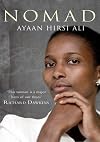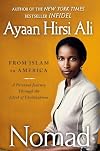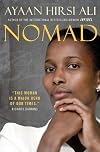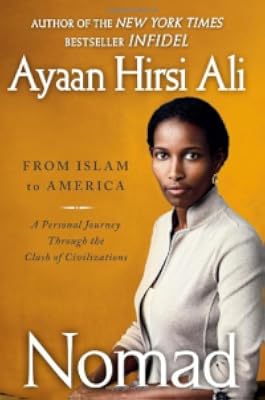
Nomad: From Islam to America: A Personal Journey Through the Clash of Civilizations
by Ayaan Hirsi Ali
On This Page
Description
Hirsi Ali tells of coming to America to build a new life, an ocean away from the death threats made to her by European Islamists, the strife she witnessed, and the inner conflict she suffered. She calls on key institutions of the West--including universities, the feminist movement, and the Christian churches--to enact specific, innovative remedies that would help other Muslim immigrants to overcome the challenges she has experienced and to resist the fatal allure of fundamentalism and terrorism.Tags
Recommendations


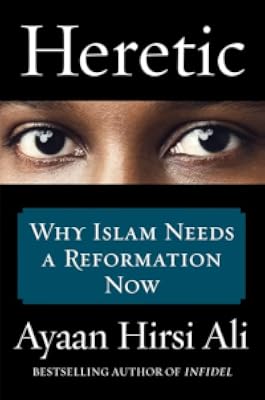
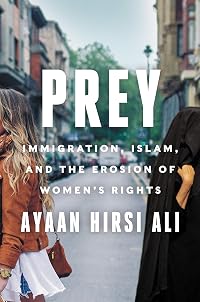
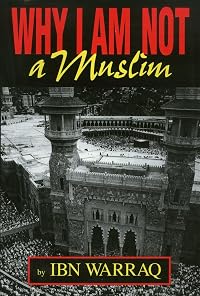


Member Recommendations
Member Reviews
This is not just a straight linear story of Ayaan's life, or volume 3 thereof. She follows several of her family members, giving their story and showing their problems, quite simply how Islam messed with their heads, all of them and prevented them leading a 'normal' life. All this is interweaved with her own history but much more reflective than her previous volumes as to the how and why. For that reason it's slightly less accessible than Infidel. She identifies the three key problems facing Muslim refugees as 'sex, violence and money' due to the completely different attitudes towards them in the West'. Her experiences in the Netherlands working with refugees give weight to what she says.
Ayaan is uncompromising in her description of the show more violence and subjugation of women that Islam produces. She is also uncompromising in her denunciation of Western tolerance towards Islam, its welcoming of all things multicultural and the West's refusal to criticise Islam lest it upset people.
As an atheist I find her suggestion that Christians ought to proselytise more in order that Muslims can transfer their religious beliefs from Allah to God unpleasant but understandable. It strengthens the need for atheism to be seen as a positive force rather than a vacuum.
She writes clearly and concisely in a very calm manner considering the tale that she is telling. This strengthens her voice and makes it louder. She is impassioned and yet reasoned. This is a book that everyone ought to read, not just women, not just westerners. show less
Ayaan is uncompromising in her description of the show more violence and subjugation of women that Islam produces. She is also uncompromising in her denunciation of Western tolerance towards Islam, its welcoming of all things multicultural and the West's refusal to criticise Islam lest it upset people.
As an atheist I find her suggestion that Christians ought to proselytise more in order that Muslims can transfer their religious beliefs from Allah to God unpleasant but understandable. It strengthens the need for atheism to be seen as a positive force rather than a vacuum.
She writes clearly and concisely in a very calm manner considering the tale that she is telling. This strengthens her voice and makes it louder. She is impassioned and yet reasoned. This is a book that everyone ought to read, not just women, not just westerners. show less
This memoir is probably the most intelligent, thoughtful, articulate and sane book I have read in a long time. Listening to her read it (the unabridged audio version) in her own voice made it come alive with an authenticity that would have been impossible by reading a hard copy, I think. It really made an impression on me.
And did I mention brave? For a woman who is only 42 years old to have lived through, and done, what she has, and to be able to rise above it all and come out the other end, intact, strong and to use her experiences to try to do good and help others, is nothing short of remarkable.
I don't have very positive feelings or opinions about any religion that uses its dogma to repress women or any minority group, or show more brainwash children. And I absolutely detest violence for any reason, but most especially when it is *condoned* as acceptable (or *honourable*, a misnomer if ever there was one). But the more I read, in general about humanity, from all time periods, in all regions of the globe, the more I realize just how fortunate I am to live right now, and right here, where democracy is at least the law of the land (if not always working 100% properly). What I know for sure is that I could never be as brave as Ayaan Hirsi Ali. How many other potentially strong, vibrant, intelligent and determined women are lost to such repression? Ali has created an organization to try to reach out to such women and give them the chances she had - and took - to make something of their lives in a most positive way. To live as independent and autonomous humans, something we who are born in *the west* think of as our natural basic human rights. We would do well to remember that this is a priviledge, and for so many, not a right at all.
The world needs more people like Ali to stand up and speak out. Unfortunately, the men of her religion (Islam) will most certainly make sure that never happens. I just hope with all my heart that she is not cut down for speaking the truth. Most heroes like her, often are.
http://theahafoundation.org/ show less
And did I mention brave? For a woman who is only 42 years old to have lived through, and done, what she has, and to be able to rise above it all and come out the other end, intact, strong and to use her experiences to try to do good and help others, is nothing short of remarkable.
I don't have very positive feelings or opinions about any religion that uses its dogma to repress women or any minority group, or show more brainwash children. And I absolutely detest violence for any reason, but most especially when it is *condoned* as acceptable (or *honourable*, a misnomer if ever there was one). But the more I read, in general about humanity, from all time periods, in all regions of the globe, the more I realize just how fortunate I am to live right now, and right here, where democracy is at least the law of the land (if not always working 100% properly). What I know for sure is that I could never be as brave as Ayaan Hirsi Ali. How many other potentially strong, vibrant, intelligent and determined women are lost to such repression? Ali has created an organization to try to reach out to such women and give them the chances she had - and took - to make something of their lives in a most positive way. To live as independent and autonomous humans, something we who are born in *the west* think of as our natural basic human rights. We would do well to remember that this is a priviledge, and for so many, not a right at all.
The world needs more people like Ali to stand up and speak out. Unfortunately, the men of her religion (Islam) will most certainly make sure that never happens. I just hope with all my heart that she is not cut down for speaking the truth. Most heroes like her, often are.
http://theahafoundation.org/ show less
I just adore Ayaan Hirsi Ali. I admit that I kind of have a crush on her. She's outspoken and incredibly brave. She's an enduring target for abuse and threats from both sides of the political aisle, yet she carries on with remarkable consistency and a calm demeanor. She's not afraid to open herself up to that abuse and stand up to it.
Her writing wanders a bit, but there's always a point to it, so I don't mind. Plus, her stories are fascinating.
Her relationship with her grandmother tugs at my heart in ways that her relationships with the rest of her family doesn't. Rightly, she has a great deal of sadness about her siblings and parents. But her grandmother is presented as a strong woman with deeper ties to a tribal Africa without the show more colonial religions of the Middle East. Ali understands her grandmother's need for kinship.
This book goes over a lot of the same ground as Infidel and reinforces the ideas she put forth in her earlier work. It also adds depth and dimension to her decisions after her expulsion from Holland. Her decision to work for The American Enterprise Institute was refreshing. She made the decision because they left her studies and opinion up to her. It blows me away when people misrepresent her social positions based on the Institute's positions.
There was one part of the book that I was uncomfortable with. I wish that she had spent more time talking about the radicalization process and what happens in the mosques and churches that are similar. Because they are. The difference is only in the outcome. I think that there would be a far greater understanding from her critics if she'd done this instead of praising Christianity in such effusive terms. It's unfortunate, but her audiences is firmly in the Anglosphere and is far more familiar with Christianity than Islam and would make the jump much more readily. show less
Her writing wanders a bit, but there's always a point to it, so I don't mind. Plus, her stories are fascinating.
Her relationship with her grandmother tugs at my heart in ways that her relationships with the rest of her family doesn't. Rightly, she has a great deal of sadness about her siblings and parents. But her grandmother is presented as a strong woman with deeper ties to a tribal Africa without the show more colonial religions of the Middle East. Ali understands her grandmother's need for kinship.
This book goes over a lot of the same ground as Infidel and reinforces the ideas she put forth in her earlier work. It also adds depth and dimension to her decisions after her expulsion from Holland. Her decision to work for The American Enterprise Institute was refreshing. She made the decision because they left her studies and opinion up to her. It blows me away when people misrepresent her social positions based on the Institute's positions.
There was one part of the book that I was uncomfortable with. I wish that she had spent more time talking about the radicalization process and what happens in the mosques and churches that are similar. Because they are. The difference is only in the outcome. I think that there would be a far greater understanding from her critics if she'd done this instead of praising Christianity in such effusive terms. It's unfortunate, but her audiences is firmly in the Anglosphere and is far more familiar with Christianity than Islam and would make the jump much more readily. show less
In this follow up to her earlier memoir, Infidel, Hirsi Ali gives a brief update on her life since moving to the US, and updates on her intellectual work fighting global injustice done in the name of tradition (both Islamic and tribal).
In the first section of the book, she examines various members of her highly dysfunctional family and their individual struggles. At first I wasn't particularly interested in these stories, until I saw how she was doing this to illustrate her main points. Each person was pushed, kicking and screaming, out of their extremely malfunctional society and toward a modern one, and each member, in his or her own way, failed miserably. As she goes on to expound on the problems of Islamic societies, she illustrates show more her points through her own experiences and those of her family.
Hirsi Ali is a remarkable human who is incredibly brave and brilliantly intelligent. She is gifted at presenting her argument calmly, clearly and with great eloquence. Although she is controversial and has a vast number of detractors, I've yet to see anyone take her on who doesn't walk away looking foolish. One of her main goals is to end needless suffering--how can you argue with that?
Recommended for: Anyone interested in the art of presenting an argument clearly and succinctly, whether you share her concerns or not. Also anyone who is interested in human rights, justice, women, and Islamic issues. If you haven't read Infidel yet, I'd recommend that one first, as it gives a fuller picture of her amazing life--Nomad is written for an audience who already knows her background. show less
In the first section of the book, she examines various members of her highly dysfunctional family and their individual struggles. At first I wasn't particularly interested in these stories, until I saw how she was doing this to illustrate her main points. Each person was pushed, kicking and screaming, out of their extremely malfunctional society and toward a modern one, and each member, in his or her own way, failed miserably. As she goes on to expound on the problems of Islamic societies, she illustrates show more her points through her own experiences and those of her family.
Hirsi Ali is a remarkable human who is incredibly brave and brilliantly intelligent. She is gifted at presenting her argument calmly, clearly and with great eloquence. Although she is controversial and has a vast number of detractors, I've yet to see anyone take her on who doesn't walk away looking foolish. One of her main goals is to end needless suffering--how can you argue with that?
Recommended for: Anyone interested in the art of presenting an argument clearly and succinctly, whether you share her concerns or not. Also anyone who is interested in human rights, justice, women, and Islamic issues. If you haven't read Infidel yet, I'd recommend that one first, as it gives a fuller picture of her amazing life--Nomad is written for an audience who already knows her background. show less
I have recommended this book be required reading for all future students taking the course on Islam. I also will be purchasing my own copy and re-reading it, taking notes, and thinking through the numerous issues that Ali challenged my thinking on... I honestly cannot recommend this book enough, to everyone EVERYWHERE, but particularly to Christians who may find themselves more ignorant than they think when it comes to Islam and world issues. Ali is a former Muslim who is now an atheist, and as a refugee who has gone through unspeakable horrors in her lifetime, she provides a unique perspective on Islam, its treatment of women, and how the Western world often harms refugees with its 'openness' and 'tolerance' of other religions and show more cultures.
I found myself very forcefully challenged by many of her ideas and perspectives, and I am still struggling to figure out where I stand on many of the issues she raised. A lot of things I thought I knew -- or believed firmly -- about refugees, tolerance, and cultural awareness have been torn to shreds after reading this book, and I'm still trying to fit the pieces back together. Ali's life experiences (including FGM) will shatter you, rip your heart out, and force you to confront the way Western society approaches Islam and hidden social injustices right within our cities. You think female circumcision is something that happens "over there" across the ocean? Think again. You think giving money to refugees is always a good idea? Consider that it's a cultural norm to send all that money back home to help support their relatives, and because they have no understanding of finances whatsoever, they remain in poverty here in our rich nations. And we wonder why there are immigrant ghettos.
I could talk for hours about this book and why everyone in the West needs to read a copy, but hopefully I've given you enough here to entice you to pick up a copy and give it a shot. Be prepared to have your mind opened and your perspectives challenged. And that's a good thing. show less
I found myself very forcefully challenged by many of her ideas and perspectives, and I am still struggling to figure out where I stand on many of the issues she raised. A lot of things I thought I knew -- or believed firmly -- about refugees, tolerance, and cultural awareness have been torn to shreds after reading this book, and I'm still trying to fit the pieces back together. Ali's life experiences (including FGM) will shatter you, rip your heart out, and force you to confront the way Western society approaches Islam and hidden social injustices right within our cities. You think female circumcision is something that happens "over there" across the ocean? Think again. You think giving money to refugees is always a good idea? Consider that it's a cultural norm to send all that money back home to help support their relatives, and because they have no understanding of finances whatsoever, they remain in poverty here in our rich nations. And we wonder why there are immigrant ghettos.
I could talk for hours about this book and why everyone in the West needs to read a copy, but hopefully I've given you enough here to entice you to pick up a copy and give it a shot. Be prepared to have your mind opened and your perspectives challenged. And that's a good thing. show less
This book was a real eye opener for me. As a left wing liberal I was totally opposed to Bush's invasion of Iraq. And I'm still opposed to the reason U.S. troops were sent in. Lets face it the U.S. didn't invade Iraq to spread democracy, we went in for the oil.
But what I learned from reading Nomad is that perhaps offensive actions against Islam do need to be taken. Liberals believe in acceptance of foreign cultures. That it's wrong to force our beliefs and ideas on cultures universally. But what if the beliefs of a culture or a religion are just plain wrong ? Hirsi Ali, telling her story of escaping the abuses she experienced first hand, makes it painfully clear that the systematic abuse of hundreds of millions of Islamic women is just show more plain wrong. And while she by no means suggests that the West wage an all out military war against Islam, she discusses a number of ways in which The West does have to wage a full scale offensive war of propaganda against Islam, not only to protect ourselves from the terrorists threats, but to put and end to the modern day enslavement of countless Islamic women. Why should we allow this to occur ? show less
But what I learned from reading Nomad is that perhaps offensive actions against Islam do need to be taken. Liberals believe in acceptance of foreign cultures. That it's wrong to force our beliefs and ideas on cultures universally. But what if the beliefs of a culture or a religion are just plain wrong ? Hirsi Ali, telling her story of escaping the abuses she experienced first hand, makes it painfully clear that the systematic abuse of hundreds of millions of Islamic women is just show more plain wrong. And while she by no means suggests that the West wage an all out military war against Islam, she discusses a number of ways in which The West does have to wage a full scale offensive war of propaganda against Islam, not only to protect ourselves from the terrorists threats, but to put and end to the modern day enslavement of countless Islamic women. Why should we allow this to occur ? show less
I didn't like this book as much as Infidel, but I admire this strong woman's courage and adaptability. This memoir goes more into her life in Holland, including finding her feet missteps included, after going AWOL in her family's attempts to force her into an arranged marriage. She proclaims her atheism and decries the female circumcision, female subjugation, and honor killings of East Africa Islamic cultures.
She is articulate and, when writing her future daughter, poignant. This audiobook is very well narrated by the author.
She is articulate and, when writing her future daughter, poignant. This audiobook is very well narrated by the author.
Members
- Recently Added By
Published Reviews
ThingScore 75
As a work of impassioned zealotry, Nomad is an excellent read. It is a book that never hesitates to stand up for the Enlightenment and to proclaim that “West is Best.” As a manifesto for individual freedom it is powerfully subversive, appealing to wives, daughters, and sisters to abandon the tyranny of custom, to throw off the patriarchal yoke. But it offers no plausible avenues for show more religious reform within Islam. show less
added by Shortride
Lists

Atheism, humanism, freethought, &c. — Best nonfiction books in favour of
167 works; 14 members
Author Information

20+ Works 7,057 Members
Ayaan Hirsi Ali was born in Somalia and raised a Muslim. She grew up in Africa and Saudi Arabia before seeking asylum in 1992 in the Netherlands, where she went from cleaning factories to winning a seat in the Dutch Parliament. She is a speaker, journalist, and founder of the AHA Foundation. She has written several books including Infidel, Nomad, show more The Caged Virgin, and Heretic: Why Islam Needs a Reformation Now. (Bowker Author Biography) show less
Awards and Honors
Awards
Common Knowledge
- Canonical title*
- Nomad : en personlig resa genom civilisationerna
- Original publication date
- 2010
- Important places
- Somalia; The Netherlands
*Some information comes from Common Knowledge in other languages. Click "Edit" for more information.
Classifications
- Genres
- Biography & Memoir, Religion & Spirituality, Nonfiction, General Nonfiction
- DDC/MDS
- 305.89354073 — Society, government, & culture Social sciences, sociology & anthropology Social group - Age, Gender, Ethnicity Ethnic and national groups Other ethnic and national groups Non-Semitic Afro-Asiatic peoples Cushitic and Omotic peoples Somali
- LCC
- E184 .S67 .H57 — History of the United States United States Elements in the population Afro-Americans
- BISAC
Statistics
- Members
- 774
- Popularity
- 36,103
- Reviews
- 31
- Rating
- (3.84)
- Languages
- 10 — Danish, Dutch, English, French, German, Italian, Norwegian (Bokmål), Portuguese, Spanish, Swedish
- Media
- Paper, Audiobook, Ebook
- ISBNs
- 31
- ASINs
- 7