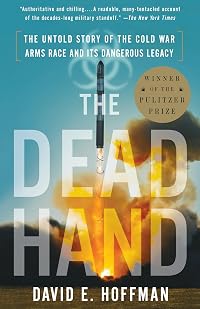
The Dead Hand: The Untold Story of the Cold War Arms Race and its Dangerous Legacy
by David E. Hoffman
On This Page
Description
During the Cold War, superpowers amassed nuclear arsenals containing the explosive power of one million Hiroshimas. The Soviet Union secretly plotted to create the "Dead Hand," a system designed to launch an automatic retaliatory nuclear strike on the United States, and developed a fearsome biological warfare machine. President Ronald Reagan, hoping to awe the Soviets into submission, pushed hard for the creation of space-based missile defenses. This, the first full account of how the arms show more race finally ended, provides an unprecedented look at the inner motives and secret decisions of each side. Drawing on top-secret documents from deep inside the Kremlin, memoirs, and interviews in both Russia and the United States, David Hoffman introduces the scientists, soldiers, diplomats, and spies who saw the world sliding toward disaster and tells the gripping story of how Reagan, Gorbachev, and many others struggled to bring the madness to an end.--From publisher description. show lessTags
Recommendations
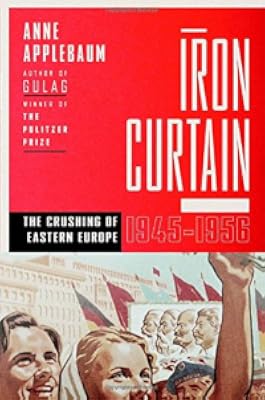
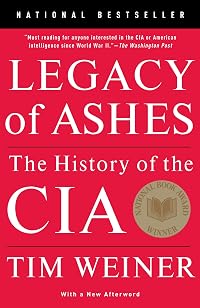
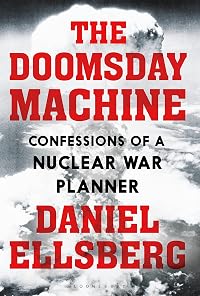

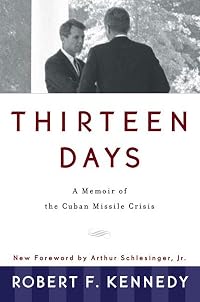





Member Recommendations
Member Reviews
The Dead Hand is an account of Soviet biological, chemical, and nuclear weapons through the end of the Cold War, and how these weapons drove superpower politics, that manages to be sprawling without being comprehensive. The many interesting moments add up to less than the sum of their parts.
One chain is Biopreparat, the Soviet agency in charge of biological warfare. Biopreparat spent billions of rubles weaponizing anthrax, plague, smallpox, and a host of other diseases. There was infrastructure to produce plagues to kill nations. Accidental discharges from weapons labs sickened and killed Soviet citizens. And since biological weapons were banned by a treaty the Soviet's were party to, the whole thing was officially denied for decades. show more Most of what we know comes from defectors, including the memoirs of scientist Ken Alibek.
Another front was the dream of Reagan and Gorbachev to reduce nuclear arsenals. Mutually Assured Destruction kept the fragile peace of the Cold War, with the risk that the slightest accident could end the world. Some classes of weapons were worse than others. The Pershing II intermediate range missile could hit Moscow in less than five minutes, opening the possibility of a decapitation strike against Soviet leadership. Against this, the Soviet's deployed a system called Dead Hand, a semi-automatic response, which in a grim parody of Dr. Strangelove, which centered on a similar automatic response, was kept secret.
Hoffman doesn't get into the grimy details of the technology, preferring instead a diplomatic history of negotiations between the superpowers. At several points, efforts which might have eliminated nuclear weapons foundered because Reagan wanted to keep the Strategic Defense Initiative. In Reagan's mind, this was a shield to protect the world from missiles. Pragmatically, it was a way to spend billions trying to prove Edward Teller's thesis that the H-bomb was good for something.
The Dead Hand is frustrating, because it brushes up against some key issues in the technology and logic of nuclear weapons which are being forgotten as the Cold War fades from memory. MAD relies on the assumption that both parties are capable and willing to respond to a nuclear attack with one of their own. This requires a chain of command which will always drop the bomb when properly ordered to, from the supreme commander down to a junior officer carrying out the actual mechanism of delivery, and will never do so under any other circumstances. Orchestrating this always/never duality is a terrifying problem in safety, and one discussed in the American context in Schlosser's Command and Control. Hoffman doesn't really get at the Soviet solutions to the same problems, or lack thereof, instead focusing on an artificial line of 'semi-automated retaliation'. The basic problem, that a relatively junior and underinformed person in charge of a mobile rocket system, ballistic missile submarine, or alert bomber can trigger nuclear apocalypse, is present in both systems.
The book is redeemed by a terrifying coda about the 90s. The Soviet WMD system was sustained by the full force of the police state, and when the USSR fell, there were thousands of sites and scientists now without support. Iran and North Korea tried to hire specialists in rockets and biological warfare. Plutonium weapon cores and enriched uranium ingots were stored in shoddily maintained facilities guarded by starving soldiers. It is a wonder that proliferation in the 90s did not end with some kind of horrific incident.
The Dead Hand tries to straddle two world: a technical focus on the actual Evil Empire of an autonomous military industrial complex procuring tremendously expensive weapons that will never be used; and the collapses of the Soviet Union as a social and political entity, and manages to do neither full justice. But the partial history is still engaging, and worth reading. show less
One chain is Biopreparat, the Soviet agency in charge of biological warfare. Biopreparat spent billions of rubles weaponizing anthrax, plague, smallpox, and a host of other diseases. There was infrastructure to produce plagues to kill nations. Accidental discharges from weapons labs sickened and killed Soviet citizens. And since biological weapons were banned by a treaty the Soviet's were party to, the whole thing was officially denied for decades. show more Most of what we know comes from defectors, including the memoirs of scientist Ken Alibek.
Another front was the dream of Reagan and Gorbachev to reduce nuclear arsenals. Mutually Assured Destruction kept the fragile peace of the Cold War, with the risk that the slightest accident could end the world. Some classes of weapons were worse than others. The Pershing II intermediate range missile could hit Moscow in less than five minutes, opening the possibility of a decapitation strike against Soviet leadership. Against this, the Soviet's deployed a system called Dead Hand, a semi-automatic response, which in a grim parody of Dr. Strangelove, which centered on a similar automatic response, was kept secret.
Hoffman doesn't get into the grimy details of the technology, preferring instead a diplomatic history of negotiations between the superpowers. At several points, efforts which might have eliminated nuclear weapons foundered because Reagan wanted to keep the Strategic Defense Initiative. In Reagan's mind, this was a shield to protect the world from missiles. Pragmatically, it was a way to spend billions trying to prove Edward Teller's thesis that the H-bomb was good for something.
The Dead Hand is frustrating, because it brushes up against some key issues in the technology and logic of nuclear weapons which are being forgotten as the Cold War fades from memory. MAD relies on the assumption that both parties are capable and willing to respond to a nuclear attack with one of their own. This requires a chain of command which will always drop the bomb when properly ordered to, from the supreme commander down to a junior officer carrying out the actual mechanism of delivery, and will never do so under any other circumstances. Orchestrating this always/never duality is a terrifying problem in safety, and one discussed in the American context in Schlosser's Command and Control. Hoffman doesn't really get at the Soviet solutions to the same problems, or lack thereof, instead focusing on an artificial line of 'semi-automated retaliation'. The basic problem, that a relatively junior and underinformed person in charge of a mobile rocket system, ballistic missile submarine, or alert bomber can trigger nuclear apocalypse, is present in both systems.
The book is redeemed by a terrifying coda about the 90s. The Soviet WMD system was sustained by the full force of the police state, and when the USSR fell, there were thousands of sites and scientists now without support. Iran and North Korea tried to hire specialists in rockets and biological warfare. Plutonium weapon cores and enriched uranium ingots were stored in shoddily maintained facilities guarded by starving soldiers. It is a wonder that proliferation in the 90s did not end with some kind of horrific incident.
The Dead Hand tries to straddle two world: a technical focus on the actual Evil Empire of an autonomous military industrial complex procuring tremendously expensive weapons that will never be used; and the collapses of the Soviet Union as a social and political entity, and manages to do neither full justice. But the partial history is still engaging, and worth reading. show less
Fascinating look at Soviet WMD programs, people and institutions, as well as Cold War events, espionage and politics in the 1980s. Coming of age in the 1980s, I'd heard of many of these things in the news, but herein we have retrospection and new information. Who needs unreliable and speculative news if you can wait a few years for the book to tell what really happened. At times it felt like science fiction because it's so difficult to comprehend a Holocaust that could kill billions of people, but that is what we are asked to imagine as the purpose of these weapons, which are quite real.
Hoffman does a particularly good job with the Soviet chemical and biological weapons programs, how they came about, developed and later uncovered. The show more pathogens created were diabolical enough to kill every human in the world with no anecdote. The Soviet chemical weapons are now loose in Syria, thanks to one rouge individual. As one pundit said, the Soviet weapons problem will be with us for many generations. I was also impressed by the depiction of Reagan who is usually seen as a warmonger but seemingly was just the opposite, he wanted to eliminate all nuclear weapons; however it also revealed the myth that Reagan "won" the Cold War, the Soviets would have failed anyway. 1985 seems to be the beginning of the end when the Old Breed WWII vets lost control and a new generation headed by Gorbachev took over. The book ends on a chilling note that the Cold War had a balance of power, neither side wanted to die, thus WMD's were kept in check. However the present era of terrorism, in which the belligerents want to die, and asynchronous warfare, in which a single person can cause untold damage, changes everything.
There are many great stories in this book, if it drags in a few place that is OK because all told its well worth it. This review is based on the audiobook, it translates well to narrative form. show less
Hoffman does a particularly good job with the Soviet chemical and biological weapons programs, how they came about, developed and later uncovered. The show more pathogens created were diabolical enough to kill every human in the world with no anecdote. The Soviet chemical weapons are now loose in Syria, thanks to one rouge individual. As one pundit said, the Soviet weapons problem will be with us for many generations. I was also impressed by the depiction of Reagan who is usually seen as a warmonger but seemingly was just the opposite, he wanted to eliminate all nuclear weapons; however it also revealed the myth that Reagan "won" the Cold War, the Soviets would have failed anyway. 1985 seems to be the beginning of the end when the Old Breed WWII vets lost control and a new generation headed by Gorbachev took over. The book ends on a chilling note that the Cold War had a balance of power, neither side wanted to die, thus WMD's were kept in check. However the present era of terrorism, in which the belligerents want to die, and asynchronous warfare, in which a single person can cause untold damage, changes everything.
There are many great stories in this book, if it drags in a few place that is OK because all told its well worth it. This review is based on the audiobook, it translates well to narrative form. show less
This amazing and, in many respects, chilling book is an account of the winding down of the nuclear arms race between the United States and the Soviet Union. It is amazing because of the interplay on nuclear arms control between the US leadership, principally Ronald Reagan, and the Soviet leaders following Brezhnev. Reagan was sincerely repulsed by the philosophy and practices of communism and his tough talk was an honest expression of his views on the so-called “Evil Empire”. At the same time, and this isn’t so widely known, he was genuinely driven by the idea that the world could be rid of nuclear weapons. His disarmament overtures to the Soviets were bold, usually counter to the advice of his civilian and military advisors, and show more came remarkably close to succeeding.
Against this intention, however, were his constant provocative anti-Soviet public statements that could be legitimately received as antagonistic, even threatening. The story is chilling because of circumstances in the early 1980’s where misperceptions and the response to those brought us to the brink of an actual nuclear exchange. Reagan’s openly hostile demeanor toward the Soviets brought their leaders (a succession of old guard hacks – Andropov and Chernenko) to believe that the United States was planning a first-strike nuclear attack on the Soviet Union. Their level of obsession reached a state of paranoia. They surmised that the US would first take out the leadership through an all-out attack with its nuclear arsenal. This led to devising a command and control protocol that would allow a launch command to be sent without the real-time authorization of the top leaders – a semi-automatic launch command to the missile officers at the silos, hence the “dead hand” that would in effect pull the nuclear trigger. One thing is clear: the Soviets felt genuinely, if erroneously, threatened about the West’s intentions. While they were not reckless about their own use of nuclear weapons, a series of missteps or technical breakdowns stemming from their fears could have resulted in a nuclear exchange. The book recounts incidents where, due to errors in early warning systems, the Soviets thought they were being attacked. The decision time to launch a counter attack is just minutes, the so-called “hair trigger” danger of nuclear strategy.
Reagan’s effort to eliminate nuclear weapons was thwarted by his obsession with the Strategic Defense Initiative (SDI or the so-called Star Wars program). It is puzzling why he held so tightly to this new aspect that would inevitably upset the balance between the super powers. It seems clear that this was not just a bargaining chip he played against the Soviets. He apparently truly believed that this anti-ballistic missile “shield” would protect against nuclear attacks (although the science and technology were/are highly suspect) and could bring about the reduction or elimination of offensive weapons. The Soviets, whose economy could not bear another expensive weapons venture, logically viewed SDI as destabilizing the MAD (Mutually Assured Destruction) balance between the two countries. SDI would create greater threat to them since, after all, if the US could destroy the Soviet’s nuclear missiles then its own could be used without fear of retaliation.
Another chilling aspect of this story, told at great length and in remarkable detail, is the Soviet’s development of biological weapons. After an international treaty banning the production and possession of biological weapon agents was signed by most countries, the Soviet Union completely violated the treaty by continuing with a full-scale, highly secret program of manufacturing the most heinous weapons imaginable. The Soviets believed wrongly that the US was also ignoring the treaty and they continued on a massive scale to find and weaponize diseases that would create the most horrific consequences if used. The Soviet leaders were aware of this, but couldn’t exercise complete control as there was a powerful military-industrial combine that worked to perpetuate it. Indeed, the influence of the defense/warfare sector of the Russian economy (and surely our own) was a strongly contributing factor to the arms race in all dimensions. (One must remember that the Soviet economy had a huge defense industry, a much larger component of the country’s economy than in the US.)
The Soviet Union collapsed during Gorbachev’s rule. Gorbachev was not the radical reformer that he is often portrayed to be, but his moves to open up Soviet society unleashed forces that took matters far beyond what he intended. Gorbachev and Reagan develop a true rapport, but institutional impediments (including the military/industrial combines in both countries and the SDI) prevented making substantial progress on arms control. It was after the Soviet economy collapsed (and, yes, the constant pressure of keeping up with the Americans had something to do with this) that the unsustainability of the levels of nuclear weapons compelled change.
However, as the Soviet’s economy and authority structure collapsed the already poor controls over nuclear weapons and weapons materials have become clear and very worrisome. The book conveys the laxity of security over weapons and weapons materials and the ability of rogue actors to spread these elsewhere. Even if, thankfully, the chances of full-scale nuclear war have greatly lessened, the possibilities that weapons or weapons components could fall into maleficent hands has greatly increased. In the “MAD” era of the cold war (and one would not wish to return to this) the opposing powers had compelling institutional rationales for not attacking each other. Our new enemies have no such inhibiting pressure on them. There are international programs aimed at destroying stockpiles, or at least accounting for them under strict security, but the chances that these materials could fall under the control of terrorists seems very great. One remembers the fear and revulsion created by two homemade “pressure cooker” bombs in Boston; just think of what could happen if even a small amount of nuclear/radioactive elements were unleashed anywhere in the country. The efforts to gain (regain?) control over the security of the products of the Cold War deserve the highest attention possible. show less
Against this intention, however, were his constant provocative anti-Soviet public statements that could be legitimately received as antagonistic, even threatening. The story is chilling because of circumstances in the early 1980’s where misperceptions and the response to those brought us to the brink of an actual nuclear exchange. Reagan’s openly hostile demeanor toward the Soviets brought their leaders (a succession of old guard hacks – Andropov and Chernenko) to believe that the United States was planning a first-strike nuclear attack on the Soviet Union. Their level of obsession reached a state of paranoia. They surmised that the US would first take out the leadership through an all-out attack with its nuclear arsenal. This led to devising a command and control protocol that would allow a launch command to be sent without the real-time authorization of the top leaders – a semi-automatic launch command to the missile officers at the silos, hence the “dead hand” that would in effect pull the nuclear trigger. One thing is clear: the Soviets felt genuinely, if erroneously, threatened about the West’s intentions. While they were not reckless about their own use of nuclear weapons, a series of missteps or technical breakdowns stemming from their fears could have resulted in a nuclear exchange. The book recounts incidents where, due to errors in early warning systems, the Soviets thought they were being attacked. The decision time to launch a counter attack is just minutes, the so-called “hair trigger” danger of nuclear strategy.
Reagan’s effort to eliminate nuclear weapons was thwarted by his obsession with the Strategic Defense Initiative (SDI or the so-called Star Wars program). It is puzzling why he held so tightly to this new aspect that would inevitably upset the balance between the super powers. It seems clear that this was not just a bargaining chip he played against the Soviets. He apparently truly believed that this anti-ballistic missile “shield” would protect against nuclear attacks (although the science and technology were/are highly suspect) and could bring about the reduction or elimination of offensive weapons. The Soviets, whose economy could not bear another expensive weapons venture, logically viewed SDI as destabilizing the MAD (Mutually Assured Destruction) balance between the two countries. SDI would create greater threat to them since, after all, if the US could destroy the Soviet’s nuclear missiles then its own could be used without fear of retaliation.
Another chilling aspect of this story, told at great length and in remarkable detail, is the Soviet’s development of biological weapons. After an international treaty banning the production and possession of biological weapon agents was signed by most countries, the Soviet Union completely violated the treaty by continuing with a full-scale, highly secret program of manufacturing the most heinous weapons imaginable. The Soviets believed wrongly that the US was also ignoring the treaty and they continued on a massive scale to find and weaponize diseases that would create the most horrific consequences if used. The Soviet leaders were aware of this, but couldn’t exercise complete control as there was a powerful military-industrial combine that worked to perpetuate it. Indeed, the influence of the defense/warfare sector of the Russian economy (and surely our own) was a strongly contributing factor to the arms race in all dimensions. (One must remember that the Soviet economy had a huge defense industry, a much larger component of the country’s economy than in the US.)
The Soviet Union collapsed during Gorbachev’s rule. Gorbachev was not the radical reformer that he is often portrayed to be, but his moves to open up Soviet society unleashed forces that took matters far beyond what he intended. Gorbachev and Reagan develop a true rapport, but institutional impediments (including the military/industrial combines in both countries and the SDI) prevented making substantial progress on arms control. It was after the Soviet economy collapsed (and, yes, the constant pressure of keeping up with the Americans had something to do with this) that the unsustainability of the levels of nuclear weapons compelled change.
However, as the Soviet’s economy and authority structure collapsed the already poor controls over nuclear weapons and weapons materials have become clear and very worrisome. The book conveys the laxity of security over weapons and weapons materials and the ability of rogue actors to spread these elsewhere. Even if, thankfully, the chances of full-scale nuclear war have greatly lessened, the possibilities that weapons or weapons components could fall into maleficent hands has greatly increased. In the “MAD” era of the cold war (and one would not wish to return to this) the opposing powers had compelling institutional rationales for not attacking each other. Our new enemies have no such inhibiting pressure on them. There are international programs aimed at destroying stockpiles, or at least accounting for them under strict security, but the chances that these materials could fall under the control of terrorists seems very great. One remembers the fear and revulsion created by two homemade “pressure cooker” bombs in Boston; just think of what could happen if even a small amount of nuclear/radioactive elements were unleashed anywhere in the country. The efforts to gain (regain?) control over the security of the products of the Cold War deserve the highest attention possible. show less
The second half of the twentieth century will always be defined by what became known as The Cold War. Born out of the distrust between the major allied powers in the Second World War, the standoff between the Soviet Union and the United States not only gave shape to the modern world, it also created two weapons building programs unrivaled in history. Ultra secret programs that produced weapons that are too horrifying to imagine and created consequences for those who chose to create them. And while those weapons were never actually employed in the war that luckily never happened, it wasn’t for lack of trying. And even now, the shadow of those military programs lives on in spite of the end of the Soviet Union. In fact, things might be show more more dangerous now than they were at the height of the Cold War.
David Hoffman’s inside look at the Cold War arms race and its consequences is in a word…frightening! Those of us who grew up in that time remember the fear that pervaded us – that one day we would wake up to cities being incinerated by nuclear warheads and that would be the end of that. However, until I read. The Dead Hand, I didn’t really appreciate just how close to the brink of World War III we came. Forget the Cuban Missile Crisis. We never came closer to calamity than during a few weeks in 1983 – and few knew anything about it until decades later.
The Dead Hand goes far beyond simply documenting how weapons of mass destruction (nuclear, chemical and biological) shaped policy between the superpowers. It describes just how perilously close we came at several points to all out Armageddon. Hoffman provides a wealth of information from sources on all sides of the Cold War. Even more chilling is how even today we are haunted by the legacy of destructive arsenals even though the two primary combatants no longer have a beef with each other. The industry of the two superpowers are now the deadly tools that rough states and terrorists would love to grab a hold of…and just one would alter our world forever.
That is not to say The Dead Hand is perfect. At times, Hoffman’s writing becomes a bit repetitive, at other times he drones on about minor things. However, the overall portrait he paints is both thoughtful and chilling. Hoffman doesn’t end with a litany of conclusions or things that need to be done. Ultimately, there are no easy answers to the world we have built other than a need to be vigilant about allowing paranoia and fear to push into acting in a devastating way. The tools of our protection can become the instruments of our destruction.
The Dead Hand is a must read for anyone who lived through the anxiety of the Cold War or wants to know what threatens our way of life today. The Cold War might be over, but the threats to humanity still remain. Well written…and frankly unnerving. show less
David Hoffman’s inside look at the Cold War arms race and its consequences is in a word…frightening! Those of us who grew up in that time remember the fear that pervaded us – that one day we would wake up to cities being incinerated by nuclear warheads and that would be the end of that. However, until I read. The Dead Hand, I didn’t really appreciate just how close to the brink of World War III we came. Forget the Cuban Missile Crisis. We never came closer to calamity than during a few weeks in 1983 – and few knew anything about it until decades later.
The Dead Hand goes far beyond simply documenting how weapons of mass destruction (nuclear, chemical and biological) shaped policy between the superpowers. It describes just how perilously close we came at several points to all out Armageddon. Hoffman provides a wealth of information from sources on all sides of the Cold War. Even more chilling is how even today we are haunted by the legacy of destructive arsenals even though the two primary combatants no longer have a beef with each other. The industry of the two superpowers are now the deadly tools that rough states and terrorists would love to grab a hold of…and just one would alter our world forever.
That is not to say The Dead Hand is perfect. At times, Hoffman’s writing becomes a bit repetitive, at other times he drones on about minor things. However, the overall portrait he paints is both thoughtful and chilling. Hoffman doesn’t end with a litany of conclusions or things that need to be done. Ultimately, there are no easy answers to the world we have built other than a need to be vigilant about allowing paranoia and fear to push into acting in a devastating way. The tools of our protection can become the instruments of our destruction.
The Dead Hand is a must read for anyone who lived through the anxiety of the Cold War or wants to know what threatens our way of life today. The Cold War might be over, but the threats to humanity still remain. Well written…and frankly unnerving. show less
Journalist David E. Hoffman presents a detailed, full account of how the Cold War arms race ramped up, had a denouement and finally came to a close. This is an exciting narrative told like military history, treating spy actions and diplomatic maneuvers like special ops and battles. He casts a nuanced light on many key people in charting the role and dangers of the nuclear, chemical, and biological weapons that remain a threat even now.
Drawing on memoirs, interviews on both sides, and classified documents, this is an exegesis over decades of motives and private decisions that led to varied, massive, and deadly stockpiles that became dangerously unsecured in the wake of the Soviet Union collapse. As is quoted by a source in the book, it show more is not a concern that terrorists will become microbiologists, but that a microbiologist, driven by privation and/or ideology, may become a terrorist. That seems very prescient of the 2010 book, but the pre-Putin work seems off base suggesting Russia should not longer be deemed a threat.
The most fascinating parts of the story, are two for me: First, the eponymous Cold War nuclear control system called in Russian "Perimetr” that is a fail-deadly deterrence that can automatically trigger the launch of the Russian intercontinental ballistic missiles (ICBMs) if a nuclear strike is detected by seismic, light, radioactivity and overpressure sensors. By this work, it was never really realized, but instead became a set of operators hermetically sealed in a buried sphere. Some speculation exists that the system remains in use in post-Soviet Russia. Second for me is how the nuclear arms race under Reagan and Gorbachev, took dramatic and unprecedented terms. With Reagan, his mixture of idealism, hope, and science fiction dreams led him to cling to SDI “Star Wars” despite the threat it made the Russians feel. With Gorbachev, that threat made him unable to embrace nuclear disarmament that Regan wanted. The upshot of all this was thousands of weapons, down to the portable and tactical scale around the globe, despite their radiological enriched source materials, and a disintegrated CCCP awash in germ warfare techniques, technology, and product as an asymmetric response when they couldn’t short lasers from space. show less
Drawing on memoirs, interviews on both sides, and classified documents, this is an exegesis over decades of motives and private decisions that led to varied, massive, and deadly stockpiles that became dangerously unsecured in the wake of the Soviet Union collapse. As is quoted by a source in the book, it show more is not a concern that terrorists will become microbiologists, but that a microbiologist, driven by privation and/or ideology, may become a terrorist. That seems very prescient of the 2010 book, but the pre-Putin work seems off base suggesting Russia should not longer be deemed a threat.
The most fascinating parts of the story, are two for me: First, the eponymous Cold War nuclear control system called in Russian "Perimetr” that is a fail-deadly deterrence that can automatically trigger the launch of the Russian intercontinental ballistic missiles (ICBMs) if a nuclear strike is detected by seismic, light, radioactivity and overpressure sensors. By this work, it was never really realized, but instead became a set of operators hermetically sealed in a buried sphere. Some speculation exists that the system remains in use in post-Soviet Russia. Second for me is how the nuclear arms race under Reagan and Gorbachev, took dramatic and unprecedented terms. With Reagan, his mixture of idealism, hope, and science fiction dreams led him to cling to SDI “Star Wars” despite the threat it made the Russians feel. With Gorbachev, that threat made him unable to embrace nuclear disarmament that Regan wanted. The upshot of all this was thousands of weapons, down to the portable and tactical scale around the globe, despite their radiological enriched source materials, and a disintegrated CCCP awash in germ warfare techniques, technology, and product as an asymmetric response when they couldn’t short lasers from space. show less
Useful survey, easily read. Weak on Gorbachev, under the spell. And now we are back again: Russia secretive, aggressive, using nuclear weapons for startegic messaging in a deeply irresponsible manner,
Wow, what a book. Great history, very well told. Reminded me of a David McCullough book where history is told in a series of inter-related stories across a wide time arc. Incredible. I had taken a break from reading history and this was a pleasant welcome back surprise. Schultz was interesting, Reagan was impressive but remains an enigma, Gorbachev was tragic and heroic, Gates and Bush (1) were disappointing (surprisingly and repeatedly), Nunn and Luger were pros and unsung statesman of the world. VERY scary stuff and I can't help but think we can't stay this lucky forever.
Members
- Recently Added By
Published Reviews
ThingScore 75
A readable, many-tentacled account of the decades-long military standoff between the United States and the Soviet Union... What’s particularly valuable about Mr. Hoffman’s book, is the skill with which he narrows his focus (and his indefatigable reporting) down to a few essential areas.
added by Shortride
Lists

Pulitzer Prize for General Non-Fiction
16 works; 3 members
Author Information

4 Works 1,773 Members
David E. Hoffman is a contributing editor at The Washington Post and a correspondent for PBS's investigative series, Frontline. He is the author of The Oligarchs: Wealth and Power in the New Russia, The Billion Dollar Spy: A True Story of Cold War Espionage and Betrayal, and The Dead Hand: The Untold Story of the Cold War Arms Race and its show more Dangerous Legacy, which won the Pulitzer Prize for General Non-Fiction in 2010. (Bowker Author Biography) show less
Some Editions
Awards and Honors
Awards
Common Knowledge
- Canonical title
- The Dead Hand: The Untold Story of the Cold War Arms Race and its Dangerous Legacy
- Original title
- The Dead Hand: The Untold Story of the Cold War Arms Race and Its Dangerous Legacy
- Original publication date
- 2009
- People/Characters
- Ronald Reagan; Mikhail Gorbachev; Leonid Brezhnev; Konstantin Chernenko; George H. W. Bush
- Important places
- USSR; USA
- Important events
- Cold War
Classifications
Statistics
- Members
- 720
- Popularity
- 39,505
- Reviews
- 23
- Rating
- (3.95)
- Languages
- English, Russian
- Media
- Paper, Audiobook, Ebook
- ISBNs
- 12
- ASINs
- 8