On This Page
Description
A Scotland Yard detective probes a high-society house party for someone rotten when a government official is murdered in this classic British mystery. Preparations are underway for a grand party at Scamnum Court, the sweeping English country estate of the fabulously wealthy Duke of Horton. Some of the nation's elite are invited for dinner, and some are even set to star in a semi-amateur production of Hamlet on an authentic Elizabethan stage in the banqueting hall. No expense is spared, but show more one guest soon pays with his life. Before the play ends, a shot is fired, and the actor playing Polonius-Lord Auldearn, the Lord Chancellor of England-is dead. With war looming on the horizon, suspicions arise over the possibility of espionage. Therefore, the prime minister sends Insp. John Appleby not only to investigate, but to also find a confidential government document. Appleby is lucky there's a mystery novelist eager to lend a hand with the extensive guest list at Scamnum Court. He will need all the help he can get if he hopes to prevent the killer from making an encore performance . . . "Hamlet, Revenge! confirms the fact that became clear in his first book, that Mr. Michael Innes is in a class by himself among writers of detective fiction." -The Times Literary Supplement "A brilliant novel of manners. The writing is assured and lively with wit. Add to this a flawlessly constructed murder and an admirable and quite breathlessly thrilling dénouement, and we have fresh blood in the field of crime fiction with a vengeance." -The Times (London) "A first-rate piece of work, intelligent, well-written, elaborate and exciting. . . . Highly recommended." -The Spectator. show lessTags
Recommendations















Member Recommendations

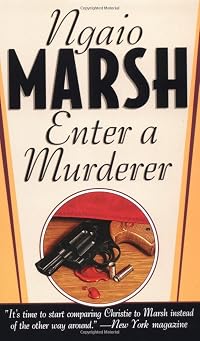
shaunie Both whodunits set in around a performance (a pageant in Death of Jezebel, a production of the play in Hamlet, Revenge! Brand's book is far more enjoyable and satisfying as a whodunit.
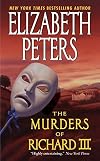
themulhern A lot of Shakespeare and misdirection in both. Innes's book is way more enjoyable, though.
Member Reviews
Full of fun, yet melancholy. In this second entry in the Appleby series, WWII is at the door. There are some nicely turned commentaries on the disintegration of society. Yet, the brief appearance of the Prime Minister, every part about the Scots gardener, and the excuses of the late arriving guests are hilarious. As in the previous book, the architecture and the setting play an important part and are expertly evoked and hyperbolically described. As before, Appleby is physically perfect, but unobtrusively so; in this book, he's an exceptionally fast runner and a crack shot.
This is the kind of book you can read multiple times; it matters not that you remember the murderer, the motive, and the denouement, it's still so much fun.
I wonder if show more the character of Mr. Bose was suggested by Ramanujan.
Some of the devices used by the bad guys and by the good ones are absolutely preposterous, of course. But this is part of the fun.
Noel Gylby appears in the next book, "Lament for a Maker" and then disappears forever, and this book is the second and last appearance of Giles Gott. But the Duke of Horton reappears in several more books, in minor roles. show less
This is the kind of book you can read multiple times; it matters not that you remember the murderer, the motive, and the denouement, it's still so much fun.
I wonder if show more the character of Mr. Bose was suggested by Ramanujan.
Some of the devices used by the bad guys and by the good ones are absolutely preposterous, of course. But this is part of the fun.
Noel Gylby appears in the next book, "Lament for a Maker" and then disappears forever, and this book is the second and last appearance of Giles Gott. But the Duke of Horton reappears in several more books, in minor roles. show less
Six-word review: Cerebral whodunit explores violence as theatre.
Extended review:
This is a fine and exceedingly British murder mystery set at an enormous stately home in the country, with a goodly array of stock characters and several singularly notable individuals. An ample supply of red herrings and other fish contrive to throw us off the scent of the guilty party or parties while still playing fair with the clues. Inspector Appleby ultimately delivers the solution with appropriate acknowledgment of the several sharp-witted bystanders who furnish key revelations at crucial junctures.
Because of the large number of characters and the complexity of the puzzle, I found the story slow to start and also a bit too busy to follow easily as it show more wound toward its final unmasking of villains. However, I enjoyed the chase and am still interested enough to go along with Inspector Appleby on further adventures.
Many works of fiction, almost irrespective of genre, have ideologies to promote, social evils to expose, or other axes to grind, whether central to the narrative or as issues raised incidentally along the way. So there's nothing inherently unusual in this speech of one of the characters on the subject of violence:
=====(Excerpt begins)
Gott hesitated, as if seeking some brief expression of what lay in his mind. 'All over the world today are we not facing a rising tide of ideological intolerance, and are not violence and terrorism more and more in men's thoughts? And this dressing-up of the lawless and the primitive as a ruthless-because-right philosophy or world-picture or ideology that must and will prevail--is this not something to haunt and hold naturally unstable men, whatever their particular belief may be? The modern world is full of unwholesome armies of martyrs and inquisitors. We bind ourselves together by the million and sixty million to hate and kill--kill, as we persuade ourselves, for an idea. Are we to be surprised if here and there an individual kills simply because he hates--and simply because he hates an idea?' (1961 edition, p. 249)
=====(Excerpt ends)
What's striking about it is that this novel saw print in 1937--before World War II--and yet it could have been written today. A very modern sentiment, but for the fact that we no longer express ourselves so elegantly.
Not so modern are the social attitudes of various characters and indeed of the narrative voice itself, especially as seen in the language used to refer to the man from India, Mr. Bose. This will bother readers who expect present-day habits of speech and thought to be reflected not only in writings of the early twentieth century but even in Shakespeare. I regret that it took Western culture so long to broaden its view of race and ethnicity, but I can't condemn older writers for failing to see past the ingrained attitudes of their time and place.
Much less commonplace is the perception of another one of the characters, a psychologist named Nave. In fact, I have not seen this understanding of the act of murder expressed before, and I have no idea if it is or ever was considered valid by knowledgeable authorities. I record it here because I found it thought-provoking and worth coming back to for further reflection:
=====(Excerpt begins)
'...nearly every murder is a manifesto--and nearly always a manifesto--so to speak--of self, a piece of exhibitionism. The criminal looks forward to his appearance in the dock as the martyr to his martyrdom--and for exactly the same reason: it is limelight, it is a supreme manifesto of self--nothing more.' (ibid., p. 188)
=====(Excerpt ends)
These rather philosophical ruminations on the part of various characters and, one presumes, of the author as well add dimensions to a traditional country-house murder mystery that, in my opinion, increase interest even as they slow the pace.
A reader whose latest viewing or reading of Hamlet is fairly fresh in mind will probably also find that familiarity with the play enhances enjoyment. show less
Extended review:
This is a fine and exceedingly British murder mystery set at an enormous stately home in the country, with a goodly array of stock characters and several singularly notable individuals. An ample supply of red herrings and other fish contrive to throw us off the scent of the guilty party or parties while still playing fair with the clues. Inspector Appleby ultimately delivers the solution with appropriate acknowledgment of the several sharp-witted bystanders who furnish key revelations at crucial junctures.
Because of the large number of characters and the complexity of the puzzle, I found the story slow to start and also a bit too busy to follow easily as it show more wound toward its final unmasking of villains. However, I enjoyed the chase and am still interested enough to go along with Inspector Appleby on further adventures.
Many works of fiction, almost irrespective of genre, have ideologies to promote, social evils to expose, or other axes to grind, whether central to the narrative or as issues raised incidentally along the way. So there's nothing inherently unusual in this speech of one of the characters on the subject of violence:
=====(Excerpt begins)
Gott hesitated, as if seeking some brief expression of what lay in his mind. 'All over the world today are we not facing a rising tide of ideological intolerance, and are not violence and terrorism more and more in men's thoughts? And this dressing-up of the lawless and the primitive as a ruthless-because-right philosophy or world-picture or ideology that must and will prevail--is this not something to haunt and hold naturally unstable men, whatever their particular belief may be? The modern world is full of unwholesome armies of martyrs and inquisitors. We bind ourselves together by the million and sixty million to hate and kill--kill, as we persuade ourselves, for an idea. Are we to be surprised if here and there an individual kills simply because he hates--and simply because he hates an idea?' (1961 edition, p. 249)
=====(Excerpt ends)
What's striking about it is that this novel saw print in 1937--before World War II--and yet it could have been written today. A very modern sentiment, but for the fact that we no longer express ourselves so elegantly.
Not so modern are the social attitudes of various characters and indeed of the narrative voice itself, especially as seen in the language used to refer to the man from India, Mr. Bose. This will bother readers who expect present-day habits of speech and thought to be reflected not only in writings of the early twentieth century but even in Shakespeare. I regret that it took Western culture so long to broaden its view of race and ethnicity, but I can't condemn older writers for failing to see past the ingrained attitudes of their time and place.
Much less commonplace is the perception of another one of the characters, a psychologist named Nave. In fact, I have not seen this understanding of the act of murder expressed before, and I have no idea if it is or ever was considered valid by knowledgeable authorities. I record it here because I found it thought-provoking and worth coming back to for further reflection:
=====(Excerpt begins)
'...nearly every murder is a manifesto--and nearly always a manifesto--so to speak--of self, a piece of exhibitionism. The criminal looks forward to his appearance in the dock as the martyr to his martyrdom--and for exactly the same reason: it is limelight, it is a supreme manifesto of self--nothing more.' (ibid., p. 188)
=====(Excerpt ends)
These rather philosophical ruminations on the part of various characters and, one presumes, of the author as well add dimensions to a traditional country-house murder mystery that, in my opinion, increase interest even as they slow the pace.
A reader whose latest viewing or reading of Hamlet is fairly fresh in mind will probably also find that familiarity with the play enhances enjoyment. show less
Innes takes his time setting the stage, introducing us to (most of) the cast of characters in what is essentially an English country house murder mystery with a twist, as Scamnum Court is closer to a castle than a house and the Duke and Duchess of Horton have over 200 house guests (with associated servants). The pace picks up considerably once the murder occurs (during an amateur performance of Hamlet), and Inspector Appleby is sent to investigate by none other than the Prime Minister himself as there is the possibility of espionage. Only hours after arriving, Appleby is confronted with a second corpse...
Innes' writing style is a bit dry with a hidden wit - it might not be to everyone's taste but I like it; an author who can refer to show more Conrad's Lord Jim and P.G. Wodehouse's Lord Emsworth on the same page and make sly references to Agatha Christie's Hercule Poirot is my kind of guy! As Appleby says at one point in the investigation: "Order, method: the little grey cells!" and later, one of the house guests suggests the Duke send for "...a real detective. There is a very good man whose name I forget; a foreigner and very conceited -- but, they say, thoroughly reliable."
This is a greater tribute than it might appear at first sight; Hamlet, Revenge! first was released in 1937 so Poirot was not nearly as well-known as he is today. My biggest complaint is that things got pretty convoluted towards the end, although the ultimate solution was satisfying and unexpected (at least by me). show less
Innes' writing style is a bit dry with a hidden wit - it might not be to everyone's taste but I like it; an author who can refer to show more Conrad's Lord Jim and P.G. Wodehouse's Lord Emsworth on the same page and make sly references to Agatha Christie's Hercule Poirot is my kind of guy! As Appleby says at one point in the investigation: "Order, method: the little grey cells!" and later, one of the house guests suggests the Duke send for "...a real detective. There is a very good man whose name I forget; a foreigner and very conceited -- but, they say, thoroughly reliable."
This is a greater tribute than it might appear at first sight; Hamlet, Revenge! first was released in 1937 so Poirot was not nearly as well-known as he is today. My biggest complaint is that things got pretty convoluted towards the end, although the ultimate solution was satisfying and unexpected (at least by me). show less
Something is rotten at Scamnum Court. The noble English estate is hosting a large house party in order to produce an amateur performance of Hamlet, but things go wrong almost immediately when cryptic threats — some of them taken from the text of Hamlet itself — are delivered to various houseguests. Then Lord Auldearn, a guest who also happens to be the Lord Chancellor of England, is murdered onstage during opening night. The sheer audacity of the murder makes it particularly hard to solve; although the scene of the crime was packed with actors and spectators, it appears that no one saw a thing. Also, there is no shortage of suspects or possible reasons for the crime. Was Lord Auldearn murdered for the confidential state papers in show more his possession, or was the motive more personal? Inspector Appleby of Scotland Yard must unravel this complex case and discover a diabolically clever murderer.
I have to confess that I spent most of this book being completely bewildered. There were so many characters to keep track of, and I wasn’t sure who would turn out to be important to the plot, so I exhausted myself trying to keep tabs on everyone! This is also a very cerebral mystery; most of the “action” is conversations between Inspector Appleby and his friend Giles Gott. However, I definitely enjoyed the book more as I got further into it, and the ultimate solution was both ingenious and unexpected. I would definitely recommend having read Hamlet, or at least being familiar with the plot, before reading this book; otherwise many of the allusions and plot twists will be very obscure. Overall, I’m not sure this is quite “my kind” of book, but I did enjoy it and would consider reading more by Innes. There’s a whole series featuring Inspector Appleby, and this book is #2, but I was able to follow everything without having read the first book. show less
I have to confess that I spent most of this book being completely bewildered. There were so many characters to keep track of, and I wasn’t sure who would turn out to be important to the plot, so I exhausted myself trying to keep tabs on everyone! This is also a very cerebral mystery; most of the “action” is conversations between Inspector Appleby and his friend Giles Gott. However, I definitely enjoyed the book more as I got further into it, and the ultimate solution was both ingenious and unexpected. I would definitely recommend having read Hamlet, or at least being familiar with the plot, before reading this book; otherwise many of the allusions and plot twists will be very obscure. Overall, I’m not sure this is quite “my kind” of book, but I did enjoy it and would consider reading more by Innes. There’s a whole series featuring Inspector Appleby, and this book is #2, but I was able to follow everything without having read the first book. show less
Murder at a country home during an elaborate amateur production of Hamlet, with possible involvement of spies, and nearly 30 suspects. Warning: because one of the characters is a dark-skinned Indian, there's a disturbing amount of dated racist language. Fortunately this is a pretty skippable mystery. Overstuffed and overwritten. Dogmatic about Shakespeare where the author makes sure that everyone has the same single viewpoint of what Hamlet is all about. Intent on making the mystery as complicated as possible, which leads to interminable rundowns on the status of each of the 10 most likely suspects.
Not recommended.
Not recommended.
Originally published in 1937, Hamlet, Revenge! is the second novel to feature Inspector John Appleby as he investigates the murder of Lord Auldearn, the Lord Chancellor of England during an amateur production of Hamlet at the country house of the Duke of Horton. Appleby works closely with Giles Gott, who appeared in the first book of the series and keeps Appleby informed on the guests and family at the large country estate of Scamnum Court. Along with the murder, there is espionage and a mysterious puzzle to unravel.
I won’t be counting this book as one of my favorites of Innes as I found it rather too clever. Chock full of Shakespearan quotes, the actual plot was intricate but dense and moved very slowly. There was a large cast of show more characters to keep track of and they all seemed to have motive and opportunity. Overall I found the story rather pretentious, slightly amusing but not a book that I believe I will long remember. show less
I won’t be counting this book as one of my favorites of Innes as I found it rather too clever. Chock full of Shakespearan quotes, the actual plot was intricate but dense and moved very slowly. There was a large cast of show more characters to keep track of and they all seemed to have motive and opportunity. Overall I found the story rather pretentious, slightly amusing but not a book that I believe I will long remember. show less
Innes takes his time setting the stage, introducing us to (most of) the cast of characters in what is essentially an English country house murder mystery with a twist, as Scamnum Court is closer to a castle than a house and the Duke and Duchess of Horton have over 200 house guests (with associated servants). The pace picks up considerably once the murder occurs (during an amateur performance of Hamlet), and Inspector Appleby is sent to investigate by none other than the Prime Minister himself as there is the possibility of espionage. Only hours after arriving, Appleby is confronted with a second corpse...
Innes' writing style is a bit dry with a hidden wit - it might not be to everyone's taste but I like it; an author who can refer to show more Conrad's Lord Jim and P.G. Wodehouse's Lord Emsworth on the same page and make sly references to Agatha Christie's Hercule Poirot is my kind of guy! As Appleby says at one point in the investigation: "Order, method: the little grey cells!" and later, one of the house guests suggests the Duke send for "...a real detective. There is a very good man whose name I forget; a foreigner and very conceited -- but, they say, thoroughly reliable."
This is a greater tribute than it might appear at first sight; Hamlet, Revenge! first was released in 1937 so Poirot was not nearly as well-known as he is today. My biggest complaint is that things got pretty convoluted towards the end, although the ultimate solution was satisfying and unexpected (at least by me). show less
Innes' writing style is a bit dry with a hidden wit - it might not be to everyone's taste but I like it; an author who can refer to show more Conrad's Lord Jim and P.G. Wodehouse's Lord Emsworth on the same page and make sly references to Agatha Christie's Hercule Poirot is my kind of guy! As Appleby says at one point in the investigation: "Order, method: the little grey cells!" and later, one of the house guests suggests the Duke send for "...a real detective. There is a very good man whose name I forget; a foreigner and very conceited -- but, they say, thoroughly reliable."
This is a greater tribute than it might appear at first sight; Hamlet, Revenge! first was released in 1937 so Poirot was not nearly as well-known as he is today. My biggest complaint is that things got pretty convoluted towards the end, although the ultimate solution was satisfying and unexpected (at least by me). show less
Members
- Recently Added By
Lists

Cerebral Mysteries
34 works; 23 members

The Top 100 Crime Novels of All Time
100 works; 15 members

Books mentioned in Julian Symons’ Bloody Murder
438 works; 6 members

Fiction with Men's Given Names in the Title
302 works; 11 members

Must Read Detective Stories (Nick Fuller)
278 works; 2 members
Art Bourgeau's Favorites [Mystery Lovers Companion, 1986]
124 works; 2 members
Author Information

102+ Works 10,664 Members
John Innes Mackintosh Stewart was born in Edinburgh. He attended Oxford where he studied English. He taught English in universities at the University of Adelaide, in South Australia. Stewart published novels, short stories, studies in literature, biographies, and plays. Under his name, he wrote scholarly works such as Character and Motive in show more Shakespeare, Rudyard Kipling, and Thomas Hardy. As Michael Innes, he wrote over fifty detective novels with Inspector John Appleby of Scotland Yard in London as the main character. These titles include Death at the President's Lodging, The Journeying Boy, Lament for a Maker, Operation Pax, the Crabtree Affair and Silence Observed. Stewart died on November 12, 1994. (Bowker Author Biography) show less
Some Editions
Awards and Honors
Series

Belongs to Publisher Series
Work Relationships
Is contained in
Common Knowledge
- Canonical title
- Hamlet, Revenge!
- Original title
- Hamlet, Revenge!
- Original publication date
- 1937
- People/Characters
- John Appleby; Giles Gott; Duke of Horton; Melville Clay; Lord Auldearn; Charles Piper (show all 38); Noel Gylby; Thomas Potts; Timothy Tucker; Gervase Crispin; Lord Traherne; Dr. Crump; Sir Richard Nave; Dr. Bunney; Peter Marryat; Murdo Macdonald; Professor Malloch; Vanessa Terborg; Duchess of Horton; Lady Elizabeth Crispin; Anna Merkalova; Diana Sandys; Stella Terborg; Dr. Biddle; Mrs. Terborg; Mr. Bose; Max Cope; Pamela Hogg; Mrs. Platt-Hunter-Platt; Lady Treherne; Mrs. Marryat; Dowager Duchess of Horton; Captain Hilfers; Colonel Sandford; Sergeant Mason; Bagot; Rauth; Spandrel
- Important places
- Scamnum Court
- Epigraph
- The actors come hither my Lord ...
We'll hear a play tomorrow. - First words
- When you spend a summer holiday in the Horton country you must not fail to make the ascent of Horton Hill.
- Last words
- (Click to show. Warning: May contain spoilers.)'Nymph, in thy orisons,' he said, 'be all my sins remembered.'
- Original language*
- englanti
*Some information comes from Common Knowledge in other languages. Click "Edit" for more information.
Classifications
Statistics
- Members
- 557
- Popularity
- 52,970
- Reviews
- 22
- Rating
- (3.61)
- Languages
- 6 — English, Finnish, French, German, Portuguese, Spanish
- Media
- Paper, Audiobook, Ebook
- ISBNs
- 23
- ASINs
- 20