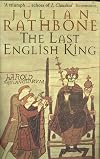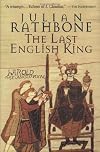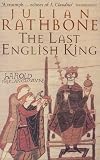
The Last English King
by Julian Rathbone
On This Page
Description
On the Sussex Downs in 1066, the psychotic William and his gang of European mercenaries began the process which fragmented a civilisation. Walt, the last of King Harold's bodyguard, the one who survived Hastings, wanders across Asia Minor in the company of Quint, an intellectual renegade monk. On the way he unfolds the events that led up to the battle which affected the destinies of every English man and woman. With rare skill, Rathbone vividly recreates a civilisation that stubbornly show more remains alive in the collective memory to this day, and so identifies the roots of the still-held belief that every English person is born free and should stay free. Tender romance, savage war, courtly intrigue and some wry humour combine to make THE LAST ENGLISH KING an exhilarating roller-coaster ride into our past. show lessTags
Recommendations
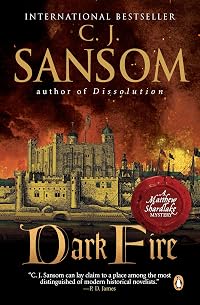
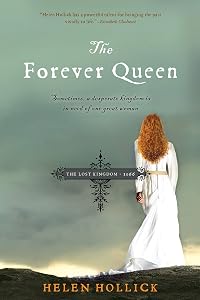
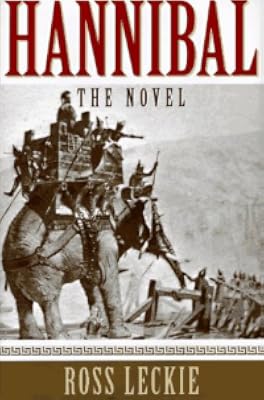
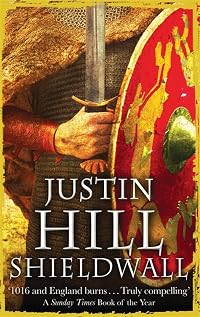











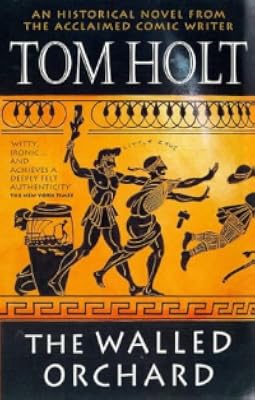
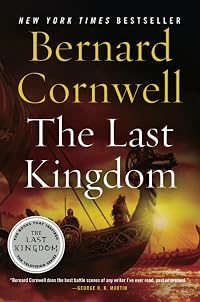

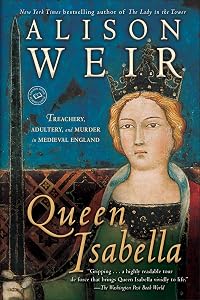
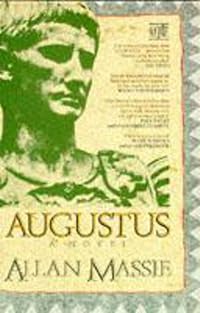



Member Recommendations

isabelx Charcoal burners living and working the same way in mediaeval and post-apocalyptic settings.
Member Reviews
Review: Julian Rathbone The Last English King (1997)
Probably the most memorable historical fiction I’ve ever read. ‘The last English King’ is Harold Godwinson, of course, but Rathbone tells the story of the Norman Conquest of England (in 1066AD, for our foreign readers) from the point of view of Walt, a simple member of King Harold’s personal bodyguard. Traumatised – as much by his failure to die protecting his king as by the loss of the battle and half an arm – Walt nevertheless manages to escape to Europe. There he falls in with a motley crew of outcasts and vagrants, and embarks upon a confused and unconsummated journey, more odyssey than pilgrimage, towards the Holy Land.
Walt’s story is brutal, tender, oddly erotic, show more often funny, slightly surreal and, ultimately, very angry. The brutality begins before the Norman invasion with the Godwinsons’ bored, pointless ‘harrowing’ of disobedient villagers, and continues with the battles of Stamford Bridge and Hastings. This violence is interleaved with Walt’s tender recollections of the wooing of his wife and now, on his journey, with the strange erotic healing of the damaged stump of his arm (p.193). But the brutality resurfaces when Walt returns to England, to his home village, to discover the charred bodies of his wife and son in his burnt-out hut. Rathbone is very angry that William the Bastard and a bunch of mercenary psychopaths should have been dignified by history as ‘William the Conqueror’ and ‘the Norman Invasion’.
Nonetheless, the story remains warm and wry and witty overall. One of the particular delights (for me, anyhow) is Rathbone’s deployment of the occasional ‘proleptic’ anachronism. That is to say, as he admits in a prefatory note on ‘Anachronisms and Historical Accuracy’, ‘Occasionally characters, and even the narrator, let slip quotations or near quotations of later writers or make oblique references to later times . . .. For reasons I find difficult to explain, it amuses me, and may amuse others . . .. But it also serves a more serious purpose . . . to remind readers, especially English readers, that it was out of all this that we came’ (p.viii).
In my favourite example, two of his companions discuss poor Walt (p.190):
‘He’s a mess. Traumatised –’
‘Eh?’
‘Word I made up. From the Germanic word for “wound” – applied here to wounds in the mind. Even before the battle . . . I doubt he was up to much. He fears the female orgasm . . .. Anglo-Saxon, you see. Attitudes. Attitudes to the female sex. See the conquering hero comes.’
Bliss. Actually, Julian, it’s from the Greek or late Latin . In German ‘Traum’ means ‘dream’. Are you teasing us? Even so, bliss. show less
Probably the most memorable historical fiction I’ve ever read. ‘The last English King’ is Harold Godwinson, of course, but Rathbone tells the story of the Norman Conquest of England (in 1066AD, for our foreign readers) from the point of view of Walt, a simple member of King Harold’s personal bodyguard. Traumatised – as much by his failure to die protecting his king as by the loss of the battle and half an arm – Walt nevertheless manages to escape to Europe. There he falls in with a motley crew of outcasts and vagrants, and embarks upon a confused and unconsummated journey, more odyssey than pilgrimage, towards the Holy Land.
Walt’s story is brutal, tender, oddly erotic, show more often funny, slightly surreal and, ultimately, very angry. The brutality begins before the Norman invasion with the Godwinsons’ bored, pointless ‘harrowing’ of disobedient villagers, and continues with the battles of Stamford Bridge and Hastings. This violence is interleaved with Walt’s tender recollections of the wooing of his wife and now, on his journey, with the strange erotic healing of the damaged stump of his arm (p.193). But the brutality resurfaces when Walt returns to England, to his home village, to discover the charred bodies of his wife and son in his burnt-out hut. Rathbone is very angry that William the Bastard and a bunch of mercenary psychopaths should have been dignified by history as ‘William the Conqueror’ and ‘the Norman Invasion’.
Nonetheless, the story remains warm and wry and witty overall. One of the particular delights (for me, anyhow) is Rathbone’s deployment of the occasional ‘proleptic’ anachronism. That is to say, as he admits in a prefatory note on ‘Anachronisms and Historical Accuracy’, ‘Occasionally characters, and even the narrator, let slip quotations or near quotations of later writers or make oblique references to later times . . .. For reasons I find difficult to explain, it amuses me, and may amuse others . . .. But it also serves a more serious purpose . . . to remind readers, especially English readers, that it was out of all this that we came’ (p.viii).
In my favourite example, two of his companions discuss poor Walt (p.190):
‘He’s a mess. Traumatised –’
‘Eh?’
‘Word I made up. From the Germanic word for “wound” – applied here to wounds in the mind. Even before the battle . . . I doubt he was up to much. He fears the female orgasm . . .. Anglo-Saxon, you see. Attitudes. Attitudes to the female sex. See the conquering hero comes.’
Bliss. Actually, Julian, it’s from the Greek or late Latin . In German ‘Traum’ means ‘dream’. Are you teasing us? Even so, bliss. show less
Rathbone's novel is a galloping case of where a novel wanted to go one way, but the author, having done his research, having lived and dreamed King Harold's downfall, being determined to show William the Conquering Bastard from a very different angle, was determined to Stick With the Plan. The problem is that Walt, Harold's devoted housecarl (personal bodyguard, elite warrior) from childhood, is a totally engaging character and the way the book is begun, leads the reader to expect that the story is very much about Walt. But it isn't, it is really about Harold, with Walt as a witness of what really happened at Hastings, and there are contrivances too, to have a person who can tell the story from William's "side". The contrivance, sadly, show more falls flat and makes the narrative about Harold just become a bit of a bore, especially in the last third of the book as events grind on to the conclusion we all know will come. Fiction can be treacherous this way, and it behooves a writer to listen to where his or her narrative really wants to go. I think he could have fulfilled his agenda, curbing it, but also giving us more of Walt, especially his future once home again. He has the aura of a true survivor. Another issue is the perennial one with historical fiction, and I'll have to read more about William and the Godwins to know how much Rathbone is making up, how much was hard research. I am guessing mostly it is hard research. Rathbone opts to have the men speak to each other informally, in our own vernacular, and also has a character with whom Walt travels for awhile, who perhaps is a bit too much, inventing words like 'psychopath' (to describe William!) and the like. But enjoyable all the same. Imperfect but worth reading for anyone interested in the feeling and basic facts of that time. The what-if is huge too -- how would England have developed if William had not won. Rathbone paints a rather idyllic society, perhaps a bit too idyllic but very appealing! ***1/2 show less
First: vividly written, feelingly, very high on ‘reality-sense’, atmosphere and peoplehood. With that, creative, unusual, and determined not to be your ordinary histfic. Also, fantastic writing. I didn’t skip once, through boredom with a description or thinking I know what the author’s going to tell me {or not until the idyll near the end. Right, I skipped once}. He knows how to craft a place-description so that even I, a poor visualiser, see. His description of people – and there I’m an aficionado – is super. He’s a student of gesture, an expert in body-language.
The early part is soaked in mood and the humanhood of Walt and Quint, whose journey together was the heart for me and knits the narrative: two odd travellers, show more cast out of life, in a way, in different ways. Their accidental friendship, very gently stated, is a joy. From there we look back on Walt’s past as a companion-in-arms to Harold, loser of the Battle of Hastings; while we travel to Constantinople and on through the Near East, see the world, the state of the world and discuss the future, too.
Walt’s nostalgia for Old (Anglo-Saxon) England is critiqued by Quint, and that nostalgia/critique goes on throughout the novel. I gave up English history years ago and had to brush up for this – not on the history so much as on perceptions of that history. Because I know he’s in a game with perceptions. The lines, I learn, are drawn thus: either England needed that vigorous Norman injection, or else England was an ideal place once, before the Normans came. I imagine that Julian Rathbone, being the sort of writer he is, addresses the historiography, the way history has been written, in ways that go over my head. If he deconstructs the characters of Edward the Confessor and William the Conqueror, I wouldn’t know – I don’t know what the image of them is. I can sense he’s engaging with interpretations of history but I’m not his audience there. I hear he upset people with his portrayals, and I’ll egg him on with that. In his author’s note he says William ‘saw to it that history was written the way he wanted it written’, and in the histories I know more about, I am only too aware that happens – and that propaganda then lasts down to the present day. Propaganda seems ineradicable, once in the record. I like his conscious tackling of our records of history. It’s a job historical fiction ought to do more often.
To this end he uses his anachronisms. He talks about them, too, in his author’s note: aside from the amusement, anachronism ‘serves a more serious purpose – to place the few years spanned by the book in a continuum which leads forward as well as back, to remind readers, especially English readers, that it was out of all this that we came.’ At commencement I thought that lame and wished he’d gone ahead and not tried to excuse himself. Later I started to see what he meant. After I’d read, for background, about 19thC heavyweight historians who have influenced our view of the Anglo-Saxons and the Normans. Because of that he’s not just writing about the 11th century. The anachronisms are often called arch, and I do laugh but if they were only for amusement I’d slam him. Quint quotes Yeats on Byzantium and what does that mean? That Yeats hit the nail on the head about Byzantium? I don’t know, but I enjoy the challenge to me, the ‘what does that mean?’
Edward the Confessor is a sad old soul. We first meet him as he faces the news he has six months to live, which helps our sympathy. He’s no hero and he’s no saint... they promise him sainthood, for political ends, and his kingship ends as his kingship began, used and abused. In the beginning, the thug of England Godwin set his ‘cock-quean’ son Tostig onto him, to entrammel him; after the Godwins change their policy and mangle that affair, he’s celibate for the rest of his life. As a king, even as a Norman-influenced king, he believes in non-interference: he sees that Anglo-Saxon England works. He is exhorted to make things more continental but he resists that pressure – even if he must enlist the Normans against the thuggish Godwins. I felt for Edward and he wasn’t such a bad old king. England blossoms under him.
Nostalgia seems to have won the argument by now and Anglo-Saxon England is/was a fairer, kinder, quieter place – even though its own politics has led to the crisis that lets the Normans in. The Witan is great, except the families in power determine what happens there. Harold knows he doesn’t need to be king – he runs England, like his father before him.
Nevertheless, after Harold visits the Normans, when he tries to tell the English what they have to lose – what Englishness is and won’t be – you believe in the urgency of his fight. When Walt tells the charcoal-burners, relicts of ancient inhabitants, who aren’t English, what their lives will be under the Normans. Will be, since we know the Normans win. What’s given as Norman is the later medieval system with its order, its suppression of disorder. Fair enough. Always thought I’d rather live in the 8th century than the 13th. A novelist takes sides, but – see beneath, for what the author has to say on that.
I like that he cares about societies before and after, that he cares what happened in history, even in 1066. If that’s writing with a political commitment, then – go ahead. Ancient fights for freedom, that lost and lost freedoms for us... there were others, and we need to care. If you care about your liberties now, let’s study the history.
William the Conqueror is Hitleresque. At first you think he’s a lampoon, but then Hitler looks like a lampoon. Soon the description is that of a serious psychopath. The word is used. Invented for him by Quint, who invents words, and Freudian psychology, such as I used to read about Hitler. So he was the Hitler of the day: how to get that across to us? Invoke Him, our equivalent. But Quint wants to talk about psychopathy, to us, across the distance, and he claims the right. He’s seen it. It’s just a matter of words. Perhaps Quint is a time-traveller. I’ll stop here as I’m rambling. I welcome his experiments.
Harold is decent but underdrawn. More might have been made of how he fits or doesn’t in his gangster family. Conveniently, the two brothers left to fight Hastings with him are also decent, much unlike the other brothers gone.
I read an interview with Julian Rathbone on the web – http://www.twbooks.co.uk/crimescene/Rathboneinterv.html – where he argues for a self-conscious historical fiction that knows it has an ideology or an agenda. Because every historical fiction does. Better – more honest – for that not to be unconscious in the writer. Perfectly true. show less
The early part is soaked in mood and the humanhood of Walt and Quint, whose journey together was the heart for me and knits the narrative: two odd travellers, show more cast out of life, in a way, in different ways. Their accidental friendship, very gently stated, is a joy. From there we look back on Walt’s past as a companion-in-arms to Harold, loser of the Battle of Hastings; while we travel to Constantinople and on through the Near East, see the world, the state of the world and discuss the future, too.
Walt’s nostalgia for Old (Anglo-Saxon) England is critiqued by Quint, and that nostalgia/critique goes on throughout the novel. I gave up English history years ago and had to brush up for this – not on the history so much as on perceptions of that history. Because I know he’s in a game with perceptions. The lines, I learn, are drawn thus: either England needed that vigorous Norman injection, or else England was an ideal place once, before the Normans came. I imagine that Julian Rathbone, being the sort of writer he is, addresses the historiography, the way history has been written, in ways that go over my head. If he deconstructs the characters of Edward the Confessor and William the Conqueror, I wouldn’t know – I don’t know what the image of them is. I can sense he’s engaging with interpretations of history but I’m not his audience there. I hear he upset people with his portrayals, and I’ll egg him on with that. In his author’s note he says William ‘saw to it that history was written the way he wanted it written’, and in the histories I know more about, I am only too aware that happens – and that propaganda then lasts down to the present day. Propaganda seems ineradicable, once in the record. I like his conscious tackling of our records of history. It’s a job historical fiction ought to do more often.
To this end he uses his anachronisms. He talks about them, too, in his author’s note: aside from the amusement, anachronism ‘serves a more serious purpose – to place the few years spanned by the book in a continuum which leads forward as well as back, to remind readers, especially English readers, that it was out of all this that we came.’ At commencement I thought that lame and wished he’d gone ahead and not tried to excuse himself. Later I started to see what he meant. After I’d read, for background, about 19thC heavyweight historians who have influenced our view of the Anglo-Saxons and the Normans. Because of that he’s not just writing about the 11th century. The anachronisms are often called arch, and I do laugh but if they were only for amusement I’d slam him. Quint quotes Yeats on Byzantium and what does that mean? That Yeats hit the nail on the head about Byzantium? I don’t know, but I enjoy the challenge to me, the ‘what does that mean?’
Edward the Confessor is a sad old soul. We first meet him as he faces the news he has six months to live, which helps our sympathy. He’s no hero and he’s no saint... they promise him sainthood, for political ends, and his kingship ends as his kingship began, used and abused. In the beginning, the thug of England Godwin set his ‘cock-quean’ son Tostig onto him, to entrammel him; after the Godwins change their policy and mangle that affair, he’s celibate for the rest of his life. As a king, even as a Norman-influenced king, he believes in non-interference: he sees that Anglo-Saxon England works. He is exhorted to make things more continental but he resists that pressure – even if he must enlist the Normans against the thuggish Godwins. I felt for Edward and he wasn’t such a bad old king. England blossoms under him.
Nostalgia seems to have won the argument by now and Anglo-Saxon England is/was a fairer, kinder, quieter place – even though its own politics has led to the crisis that lets the Normans in. The Witan is great, except the families in power determine what happens there. Harold knows he doesn’t need to be king – he runs England, like his father before him.
Nevertheless, after Harold visits the Normans, when he tries to tell the English what they have to lose – what Englishness is and won’t be – you believe in the urgency of his fight. When Walt tells the charcoal-burners, relicts of ancient inhabitants, who aren’t English, what their lives will be under the Normans. Will be, since we know the Normans win. What’s given as Norman is the later medieval system with its order, its suppression of disorder. Fair enough. Always thought I’d rather live in the 8th century than the 13th. A novelist takes sides, but – see beneath, for what the author has to say on that.
I like that he cares about societies before and after, that he cares what happened in history, even in 1066. If that’s writing with a political commitment, then – go ahead. Ancient fights for freedom, that lost and lost freedoms for us... there were others, and we need to care. If you care about your liberties now, let’s study the history.
William the Conqueror is Hitleresque. At first you think he’s a lampoon, but then Hitler looks like a lampoon. Soon the description is that of a serious psychopath. The word is used. Invented for him by Quint, who invents words, and Freudian psychology, such as I used to read about Hitler. So he was the Hitler of the day: how to get that across to us? Invoke Him, our equivalent. But Quint wants to talk about psychopathy, to us, across the distance, and he claims the right. He’s seen it. It’s just a matter of words. Perhaps Quint is a time-traveller. I’ll stop here as I’m rambling. I welcome his experiments.
Harold is decent but underdrawn. More might have been made of how he fits or doesn’t in his gangster family. Conveniently, the two brothers left to fight Hastings with him are also decent, much unlike the other brothers gone.
I read an interview with Julian Rathbone on the web – http://www.twbooks.co.uk/crimescene/Rathboneinterv.html – where he argues for a self-conscious historical fiction that knows it has an ideology or an agenda. Because every historical fiction does. Better – more honest – for that not to be unconscious in the writer. Perfectly true. show less
In The Last English King we get a close, graphic portrait of the Battle of Hastings and its devastating aftermath on the Saxon royalty and gentry in England. It's told through the eyes of Walt, a member of King Harold's vanquished bodyguard. Walt loses a hand in the battle, and after it's over he leaves on a pilgrimage for the Holy Land.
Perhaps he's looking for redemption of some sort; he meets up with a sleight-of-hand artist and a lapsed monk, among other questors. The various conversations he has with this wise-to-the-world monk begin to erode his faith. A young girl, just coming into womanhood, restores his dead and stunted arm to life and feeling again, simply by caressing it. Along the way we get a lovely passage on the Hagia show more Sophia - its awe-inspiring architecture and its interior spaces, colors, and icons. Walt gets as far as the south coast of Asia Minor, when his land and its newly-defeated people compel him to turn around and return home. What we are to make of this failure to complete the pilgrimage to Jerusalem, I'm not at all sure.
Rathbone has fashioned a vivid picture of a critical moment in Anglophone history. This book works rather well on several levels, not the least of which is an allegory of devastating change. The Norman Conquest wreaked upon English speakers wrenching alterations - the only result possible of broken promises and a doomed determination to survive as a culture and a nation. Even if you don't take an interest in the Norman conquest, this book is well worth your time for its vivid portraiture of a long-ago time and the timeless human cadence of hope, aspiration, and conflict.
http://bassoprofundo1.blogspot.com/2010/06/last-english-king-by-julian-rathbone.... show less
Perhaps he's looking for redemption of some sort; he meets up with a sleight-of-hand artist and a lapsed monk, among other questors. The various conversations he has with this wise-to-the-world monk begin to erode his faith. A young girl, just coming into womanhood, restores his dead and stunted arm to life and feeling again, simply by caressing it. Along the way we get a lovely passage on the Hagia show more Sophia - its awe-inspiring architecture and its interior spaces, colors, and icons. Walt gets as far as the south coast of Asia Minor, when his land and its newly-defeated people compel him to turn around and return home. What we are to make of this failure to complete the pilgrimage to Jerusalem, I'm not at all sure.
Rathbone has fashioned a vivid picture of a critical moment in Anglophone history. This book works rather well on several levels, not the least of which is an allegory of devastating change. The Norman Conquest wreaked upon English speakers wrenching alterations - the only result possible of broken promises and a doomed determination to survive as a culture and a nation. Even if you don't take an interest in the Norman conquest, this book is well worth your time for its vivid portraiture of a long-ago time and the timeless human cadence of hope, aspiration, and conflict.
http://bassoprofundo1.blogspot.com/2010/06/last-english-king-by-julian-rathbone.... show less
Walt was one of King Harold's housecarls who survived the death of his King. Bitterly ashamed, he wanders in search of redemption. He meets up with a Frisian in Constantinople and as they move on through Anatolia, Walt tells Quint his story of the events leading up to the Battle of Hastings and its grisly aftermath.
A great read, though it does go a bit overboard with its portrayal of Anglo-Saxon as an idyllic pastoral heaven and Normandy as a well organised hell.
A great read, though it does go a bit overboard with its portrayal of Anglo-Saxon as an idyllic pastoral heaven and Normandy as a well organised hell.
The story of the end of the Anglo-Saxon era in England as told to his companions by Walt, one of King Harold's housecarls, while travelling through Byzantium. Not as much facetious anachronism as in the same author's "Kings of Albion", but there was a point where the Norman trickster Taillefer recites some verses about Jesus that I would be willing to bet come from either Godspell or Jesus Christ Superstar, and when Harold decided to march north to face Harald Hardrada he said that if the Normans invaded before he reached Watford Gap*, he would turn back to meet them. An interesting historical novel, with a pervasive feeling of doom about it, as the end of an era approached. I kept hoping that the Saxons would win, even though I knew show more that was impossible.
* For the benefit of non-UK folk, this is amusing because Watford Gap is a motorway service station in Northants, as mentioned in the northerners' scornful description of an insular southerner, ''he's never been north of Watford Gap in his life". show less
* For the benefit of non-UK folk, this is amusing because Watford Gap is a motorway service station in Northants, as mentioned in the northerners' scornful description of an insular southerner, ''he's never been north of Watford Gap in his life". show less
The story of the norman invasion of England is told by a bodyguard of king Harold who survived the battle of hastings. Characters are very well drawn and at times the atmosphere of the story telling is mystical. Excellent feel for the period comes across and an imaginative description of the battle of Hastings is the high point of the book.
Members
- Recently Added By
Author Information

42+ Works 1,697 Members
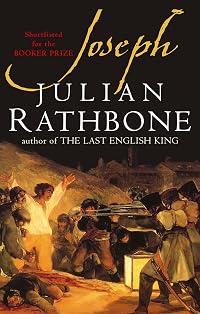
Writer Julian Rathbone was born in London, England on February 10, 1935. He graduated from Magdaline College, Cambridge, England, in 1958. He taught from 1959 until 1973, first in Turkey, then in England. He has written thrillers, historical novels, screenplays, short stories and poetry. King Fisher Lives (1976) and Joseph: The Life of Joseph show more Bosham, Self-Styled Third Viscount of Bosham, Covering the Years from 1970 to 1813 (1979) were both nominated for the Booker Prize. He has also received the Crime Writers of America Silver Dagger for Best Short Story for 'Some Sunny Day" (1993). He died on February 28, 2008. (Bowker Author Biography) show less
Some Editions
Series
Belongs to Publisher Series
Work Relationships
Common Knowledge
- Canonical title
- The Last English King
- Original title
- The Last English King
- Original publication date
- 1997
- People/Characters
- Harold II Godwinson; William the Conqueror; Walt; Quint [The Last English King]
- Important places
- England, UK (as England); Sussex, England, UK; Mercia; Wessex; Battle, East Sussex, England, UK
- Important events
- Battle of Hastings (1066); Norman Conquest of England
- Epigraph
- On the field of battle it is a disgrace to the chief to be surpassed in valour by his companions, a disgrace to the companions not to come up to the valour of their chief. As for leaving a battle alive after your chief has fa... (show all)llen, that means lifelong infamy and shame. To defend and protect him, to put down one's acts of heroism to his credit - that is really what they mean by allegiance. The chiefs fight for victory, the companions for their chief. - Tacitus, Germania
- Blurbers
- Miller, Andrew
Classifications
Statistics
- Members
- 475
- Popularity
- 64,050
- Reviews
- 14
- Rating
- (3.65)
- Languages
- 5 — Czech, English, German, Hungarian, Spanish
- Media
- Paper, Audiobook, Ebook
- ISBNs
- 15
- ASINs
- 8