
Riddley Walker
by Russell Hoban
On This Page
Description
Walker is my name and I am the same. Riddley Walker. Walking my riddels where ever they've took me and walking them now on this paper the same. There aint that many sir prizes in life if you take noatis of every thing. Every time will have its happenings out and every place the same. Thats why I finely come to writing all this. This book describes Riddley Walker's attempt to understand the past and present of a world which continues to exist two thousand years after the ultimate catastrophe.Tags
Recommendations













Member Recommendations
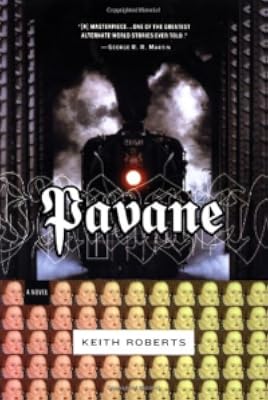
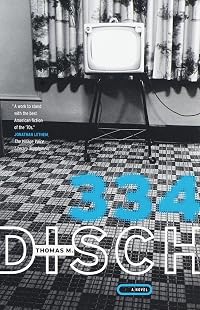
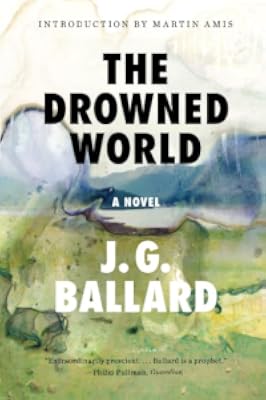
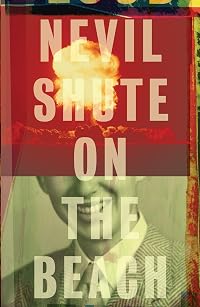
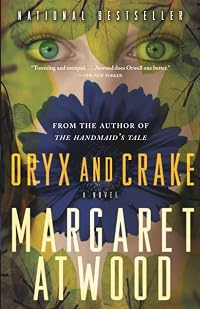
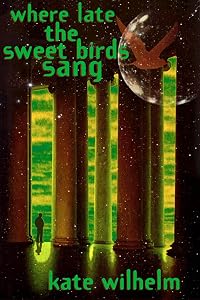
browner56 Highly imaginative works, particularly the phonetic recreations of the English language
50
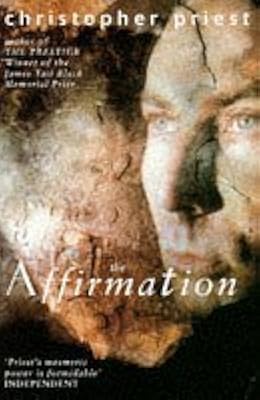
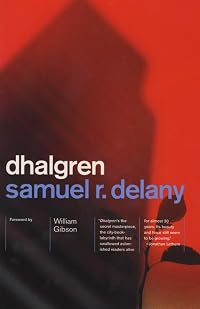
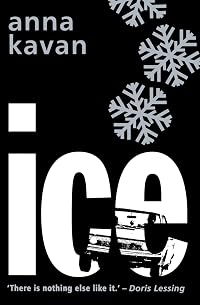
reading_fox Although the language is very different the themes are similar
20
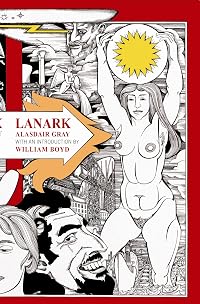
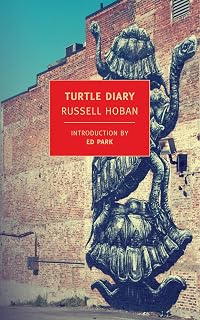
tootstorm Graphic novel centered around the immortal rapscallion Mr. Punch, and his friends, Pooty, their pig babby, and Drop John the Foller Man (or Mr On The Levvil, if you will).
20
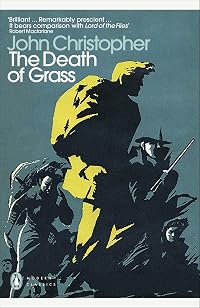
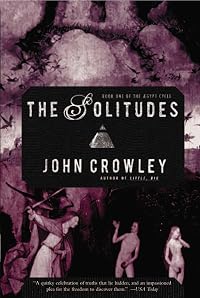
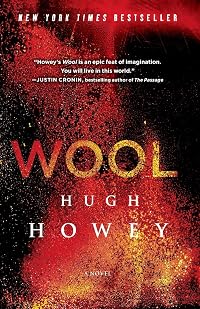
fugitive The protagonist uses a fractured, and manufactured language which takes some getting used to.
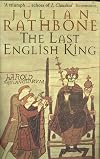
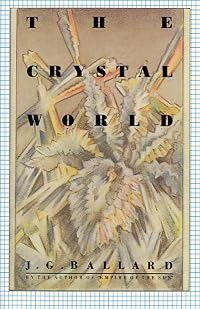
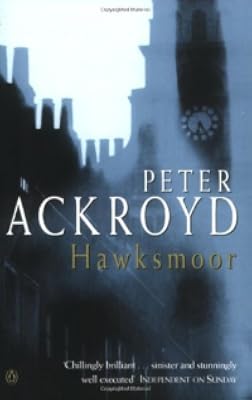
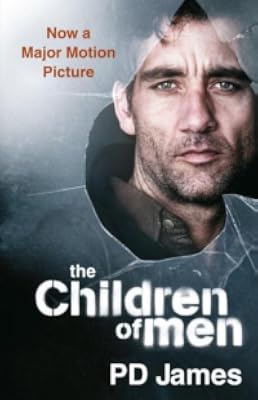
isabelx Charcoal burners living and working the same way in mediaeval and post-apocalyptic settings.
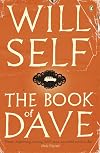
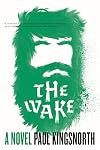
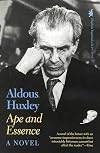
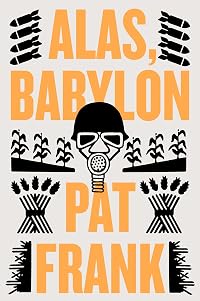
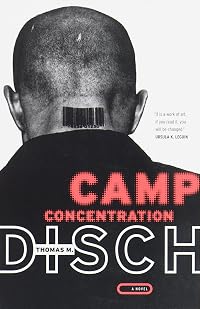
leigonj Ape and essence is Huxley's 'other' dystopian novel beside Brave New World, a story set in a post-apocalyptic world in a society which has regressed morally, as well as technologically, and developed its own religious beliefs based on the nuclear war that befell it.

reading_fox Very similar scenario, although RW has more explicitly devolved language and less tech.
Member Reviews
From the first paragraph of this remarkable novel, you know you're in for a ride:
On my naming day when I come 12 I gone front spear and kilt a wyld boar he parbly ben the las wyld pig on the Bundel Downs any how there hadnt ben none for a long time before him nor I aint looking to see none agen. He dint make the groun shake nor nothing like that when he come on to my spear he wernt all that big plus he lookit poorly. He done the reqwyrt he ternt and stood and clattert his teef and made his rush and there we wer then. Him on 1 end of the spear kicking his life out and me on the other end watching him dy. I said, 'Your tern now my tern later.'
Post-apocalytic dystopia, coming-of-age novel, survival thriller – it is a genre-breaking feat, show more written in a degenerate, demotic English spoken by those who populate the ragged bands and settlements that have survived the "1 big 1" and the "Master Chaynjis" which followed. It's not an easy read (although the language repays being read out loud) but is utterly compelling.
The fractured, post-nuclear, landscape which Riddley Walker, the eponymous narrator, moves across is a haunting remnant of a future England, bleakly and beautifully described. The social landscape, no less bleak and beautiful, is built through Riddley's encounters, nightmarish or absurd, and through the telling and retelling of myths – attempts to make sense of the world through a partially-rendered bricolage of genuine history, folk tales, misremembered science, puppet shows, religion and art. Violence is always very close to the surface – although the novel asks us to wonder about the possibility of transcending our violent nature, of finding and taming and using only for good what lies at the heart of things (the Littl Shyning Man, the Addom) or reaching and making peace with the idea that lurks at the heart of the self, "lorn and loan and oansome".
Riddley Walker is intense, richly textured, tragic and wonderful. I can't recommend it highly enough. show less
On my naming day when I come 12 I gone front spear and kilt a wyld boar he parbly ben the las wyld pig on the Bundel Downs any how there hadnt ben none for a long time before him nor I aint looking to see none agen. He dint make the groun shake nor nothing like that when he come on to my spear he wernt all that big plus he lookit poorly. He done the reqwyrt he ternt and stood and clattert his teef and made his rush and there we wer then. Him on 1 end of the spear kicking his life out and me on the other end watching him dy. I said, 'Your tern now my tern later.'
Post-apocalytic dystopia, coming-of-age novel, survival thriller – it is a genre-breaking feat, show more written in a degenerate, demotic English spoken by those who populate the ragged bands and settlements that have survived the "1 big 1" and the "Master Chaynjis" which followed. It's not an easy read (although the language repays being read out loud) but is utterly compelling.
The fractured, post-nuclear, landscape which Riddley Walker, the eponymous narrator, moves across is a haunting remnant of a future England, bleakly and beautifully described. The social landscape, no less bleak and beautiful, is built through Riddley's encounters, nightmarish or absurd, and through the telling and retelling of myths – attempts to make sense of the world through a partially-rendered bricolage of genuine history, folk tales, misremembered science, puppet shows, religion and art. Violence is always very close to the surface – although the novel asks us to wonder about the possibility of transcending our violent nature, of finding and taming and using only for good what lies at the heart of things (the Littl Shyning Man, the Addom) or reaching and making peace with the idea that lurks at the heart of the self, "lorn and loan and oansome".
Riddley Walker is intense, richly textured, tragic and wonderful. I can't recommend it highly enough. show less
_Riddley Walker_ is the book that put Russell Hoban on the map (inasmuch as he is on the map…he is criminally neglected as an author) and will likely be the one work for which he will be remembered (sadly he passed away in late 2011). So far I have read three other Hoban novels and while I have thoroughly enjoyed all of them I must admit that I think this one is his very best.
Many, upon reading the first page, will dismiss the book as “gimmicky” (I am growing to hate that term as applied to books) due to the style in which Hoban writes. Admittedly his language isn’t easy to slip right into given that he has created his own broken, not quite phonetic, future version of English that is further complicated for many readers by show more being based on the Kentish dialect. Thus we have as our introduction to Riddley and his world:
Our hero, the eponymous Riddley Walker, is a young boy just coming of age at a moment when his world stands at a crossroads, change is either going to sweep humanity forward or back into the dustbin of history. Riddley truly is the crux of the novel (both thematically through the role he plays in the plot and stylistically given that the narrative is his own first-person account), the centre around which it revolves and also the primary element upon which it succeeds or fails for the reader. For me his character is an unqualified success. He is an everyman who harbours within himself unknown potential. He is a realist not given to self-delusion and yet in him is a belief in the human spirit, a sense of the positive, that is uplifting without being cloying. Through Riddley we are given an effective melding of hopelessness and hopefulness: a picture of a world steeped in melancholy and loss that may be the dying gasp of humanity or its first step forward out of the ashes.
Riddley's world is a grey one, painted in the broad strokes of grizzled rain, decaying edifices of the past, and a hard life of scrounging amidst the muck and ruins in search of the bare necessities of survival. Despite this bleak setting Hoban still presents us with a fully realized world of warmth, humanity, danger, and loss. It is obviously a post-apocalyptic world that stands on the far edge of the fall: the ‘Bad Time’ of fire and destruction is now only a distant legend (as is the world that preceded it), as opposed to those ‘survivalist’ post-apocalyptic books that take place while the horror of loss and oblivion is still a fresh wound. As is to be expected Riddley’s world is not an easy one. He lives in an Iron Age society in an England that had been bombed back to the Stone Age and is slowly clawing its way back up the ladder. The old ways are starting to die out as the nomadic, foraging lifestyle is gradually being replaced by the more settled life of farming. The old tales and stories of our own lost time are perpetuated primarily through the existence of a modified Punch and Judy show. This puppet show is a government-sponsored propaganda machine wherein the main character is Eusa (a degraded and highly modified version of St. Eustace), a stand-in for the perpetrators of Armageddon, in which old knowledge and new superstition are mixed together to create a truly unique experience. Through the Eusa Show and the legends it spawned we come to see the hum drum aspects of our own age both through the eyes of wonder and awe, a sort of golden age when giants walked the earth, and through the lens of condemnation: how could those so wise have been so foolish? How could the god-like beings humans had once been have allowed Armageddon to have occurred? ”O what we ben! And what we come to!” laments Riddley at one point. These people are keenly aware of their loss. Whether it is through fluid medium of stories and legends or the more concrete witness of the ruins of burnt out cities and the hulks of dead machines, the ghost of the past lives on in Riddley’s present and is carried on the backs of those that remain as both a reminder and a deadly weight.
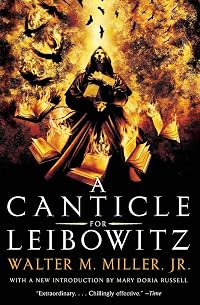
Government lackeys travel from place to place and perform their ‘Eusa Shows’ based on a memorized approved text, usually in order to give a government spin on recent events and enforce the accepted truths of what has been and what will be. In the midst of this endless round of ‘business as usual’ there is beginning to grow a renewed interest in the “cleverness” of the old ways and knowledge, especially that which revolves around power and destruction (known in Riddley’s vernacular as the “1 Little 1” and the ”1 Big 1”)…it’s a common theme in this type of literature: the human fascination with the worst side of our nature that seems inevitably to lead us to commit the same horrible mistakes time and time again no matter how harsh the lessons taught us (see Miller’s [b:A Canticle for Leibowitz|164154|A Canticle for Leibowitz|Walter M. Miller Jr.|http://photo.goodreads.com/books/1329408540s/164154.jpg|250975] for another example of this; these two books would actually make for a good paired reading).
Of course the huge stumbling block for this book is obvious, it jumps out at you once you flip to the first page: the language itself. Is this degraded form of English nothing more than a gimmick? There will I suppose always be those for whom the answer is “yes”, but for me that isn’t the case…or at least it could have been simply a gimmick if it didn’t work, if there wasn’t more to the text than a degraded phonetic spelling. Luckily the language is built around a great story with much thoughtfulness on the human condition and human nature. Who are we and why do we act as we do? What does it mean to be human at all? Why do we live, and what is the purpose of our seemingly unimportant little lives? How do we connect with each other, and what are the things in life that are truly worth cultivating? How much of our life is determined and how much is freely chosen? All of these questions and more are asked in the text and while precious few answers may be given the possibilities that are presented give much food for thought. The language also allows the required distance between our world and this one of the far off future to be built and emphasized. Perhaps most importantly it allows us to zero in on what matters as we are forced to pay close attention not only to what is said, but how it is said. The strangeness of the language forces you to look at the familiar in a new way, to see things with new eyes as you work your way towards an understanding of what exactly is being discussed or viewed. Finally it also lets us inhabit the mind of our narrator and protagonist Riddley (as well as his world) in a uniquely engaging way.
This book is one of my favourites and it is highly recommended. The labour expended in reading it will be amply repaid as we go “roading thru that rainy dark” with Riddley Walker. show less
Many, upon reading the first page, will dismiss the book as “gimmicky” (I am growing to hate that term as applied to books) due to the style in which Hoban writes. Admittedly his language isn’t easy to slip right into given that he has created his own broken, not quite phonetic, future version of English that is further complicated for many readers by show more being based on the Kentish dialect. Thus we have as our introduction to Riddley and his world:
On my naming day when I come 12 I gone front spear and kilt a wyld boar he parbly ben the las wyld pig on the Bundel Downs any how there hadnt ben none for a long time befor him nor I aint looking to see none agen.That’s definitely one of the easier passages and things get more complicated when words and phrases are elided or significantly changed when they refer to things from the deep past (our present), and concepts that people in Riddley’s day don’t fully comprehend or whose meaning has changed in their time. Still, for me _Riddley Walker_ is probably the non plus ultra of post-apocalyptic fiction. Sure there are many others out there that are excellent, and I have by no means read in the genre exhaustively (I still have to read classics like [b:The Death of Grass|941731|The Death of Grass|John Christopher|http://photo.goodreads.com/books/1309962069s/941731.jpg|797220] and [b:Earth Abides|93269|Earth Abides|George R. Stewart|http://photo.goodreads.com/books/1320505234s/93269.jpg|1650913]), but there is something about Hoban’s work that seems to define the genre for me. His ability to capture a world that is at the same time horrifying and homely, a world that shows humanity utterly changed and yet exactly the same as we’ve always been is superlative.
Our hero, the eponymous Riddley Walker, is a young boy just coming of age at a moment when his world stands at a crossroads, change is either going to sweep humanity forward or back into the dustbin of history. Riddley truly is the crux of the novel (both thematically through the role he plays in the plot and stylistically given that the narrative is his own first-person account), the centre around which it revolves and also the primary element upon which it succeeds or fails for the reader. For me his character is an unqualified success. He is an everyman who harbours within himself unknown potential. He is a realist not given to self-delusion and yet in him is a belief in the human spirit, a sense of the positive, that is uplifting without being cloying. Through Riddley we are given an effective melding of hopelessness and hopefulness: a picture of a world steeped in melancholy and loss that may be the dying gasp of humanity or its first step forward out of the ashes.
Riddley's world is a grey one, painted in the broad strokes of grizzled rain, decaying edifices of the past, and a hard life of scrounging amidst the muck and ruins in search of the bare necessities of survival. Despite this bleak setting Hoban still presents us with a fully realized world of warmth, humanity, danger, and loss. It is obviously a post-apocalyptic world that stands on the far edge of the fall: the ‘Bad Time’ of fire and destruction is now only a distant legend (as is the world that preceded it), as opposed to those ‘survivalist’ post-apocalyptic books that take place while the horror of loss and oblivion is still a fresh wound. As is to be expected Riddley’s world is not an easy one. He lives in an Iron Age society in an England that had been bombed back to the Stone Age and is slowly clawing its way back up the ladder. The old ways are starting to die out as the nomadic, foraging lifestyle is gradually being replaced by the more settled life of farming. The old tales and stories of our own lost time are perpetuated primarily through the existence of a modified Punch and Judy show. This puppet show is a government-sponsored propaganda machine wherein the main character is Eusa (a degraded and highly modified version of St. Eustace), a stand-in for the perpetrators of Armageddon, in which old knowledge and new superstition are mixed together to create a truly unique experience. Through the Eusa Show and the legends it spawned we come to see the hum drum aspects of our own age both through the eyes of wonder and awe, a sort of golden age when giants walked the earth, and through the lens of condemnation: how could those so wise have been so foolish? How could the god-like beings humans had once been have allowed Armageddon to have occurred? ”O what we ben! And what we come to!” laments Riddley at one point. These people are keenly aware of their loss. Whether it is through fluid medium of stories and legends or the more concrete witness of the ruins of burnt out cities and the hulks of dead machines, the ghost of the past lives on in Riddley’s present and is carried on the backs of those that remain as both a reminder and a deadly weight.
Government lackeys travel from place to place and perform their ‘Eusa Shows’ based on a memorized approved text, usually in order to give a government spin on recent events and enforce the accepted truths of what has been and what will be. In the midst of this endless round of ‘business as usual’ there is beginning to grow a renewed interest in the “cleverness” of the old ways and knowledge, especially that which revolves around power and destruction (known in Riddley’s vernacular as the “1 Little 1” and the ”1 Big 1”)…it’s a common theme in this type of literature: the human fascination with the worst side of our nature that seems inevitably to lead us to commit the same horrible mistakes time and time again no matter how harsh the lessons taught us (see Miller’s [b:A Canticle for Leibowitz|164154|A Canticle for Leibowitz|Walter M. Miller Jr.|http://photo.goodreads.com/books/1329408540s/164154.jpg|250975] for another example of this; these two books would actually make for a good paired reading).
You can get jus as dead from a kick in the head as you can from the 1 Littl 1 but its tha natur of it gets people as cited. I mean your foot is all ways on the end of your leg innit. So if youre going to kick some 1 to death it aint all that thrilling is it. This other tho youve got to have the Nos. of the mixter then youve got to fynd your gready mints then youve got to do the mixing of the mixter and youve got to say the fissional seakerts of the act befor you kil some body its all that chemistery and fizzics of it you see. Its some thing new. Which ever way you look at it I dont think Aunty and her red eyed rat be too far from us.
Of course the huge stumbling block for this book is obvious, it jumps out at you once you flip to the first page: the language itself. Is this degraded form of English nothing more than a gimmick? There will I suppose always be those for whom the answer is “yes”, but for me that isn’t the case…or at least it could have been simply a gimmick if it didn’t work, if there wasn’t more to the text than a degraded phonetic spelling. Luckily the language is built around a great story with much thoughtfulness on the human condition and human nature. Who are we and why do we act as we do? What does it mean to be human at all? Why do we live, and what is the purpose of our seemingly unimportant little lives? How do we connect with each other, and what are the things in life that are truly worth cultivating? How much of our life is determined and how much is freely chosen? All of these questions and more are asked in the text and while precious few answers may be given the possibilities that are presented give much food for thought. The language also allows the required distance between our world and this one of the far off future to be built and emphasized. Perhaps most importantly it allows us to zero in on what matters as we are forced to pay close attention not only to what is said, but how it is said. The strangeness of the language forces you to look at the familiar in a new way, to see things with new eyes as you work your way towards an understanding of what exactly is being discussed or viewed. Finally it also lets us inhabit the mind of our narrator and protagonist Riddley (as well as his world) in a uniquely engaging way.
This book is one of my favourites and it is highly recommended. The labour expended in reading it will be amply repaid as we go “roading thru that rainy dark” with Riddley Walker. show less
I started this book prepared for it to be difficult to get to grips with, because that's what most of the reviews say. The broken and twisted English, the mutated grammar and future-slang, all adding to the appeal of the story, but hard to wade through. That's not what I found, though.
Maybe it's exposure to text-spelling, Twitter-speak and Facebook-English, but I found the language of the book fell into place fairly quickly and naturally. That's not to say that there weren't words and phrases that I had to pause on and mull over, but that's part of the book's charm. I hope that nobody would be put off reading Hoban's amazing story by concerns over the language in which it's written.
The story comes from the science-fiction staple of the show more post-apocalyptic, nuclear-war-ravaged future, with people struggling to survive at an Iron Age level of technology, whilst surrounded by the ruins and shattered artifacts of the "advanced" civilization that destroyed itself. But it mixes into that Celtic mythology, English folklore, Christian iconography, and a jumbled, incomplete and incomprehensible science. The narrative is allusive and there are lots of double meanings that reward the reader's time in mulling over.
This is one of the best books I've read in a long time. show less
Maybe it's exposure to text-spelling, Twitter-speak and Facebook-English, but I found the language of the book fell into place fairly quickly and naturally. That's not to say that there weren't words and phrases that I had to pause on and mull over, but that's part of the book's charm. I hope that nobody would be put off reading Hoban's amazing story by concerns over the language in which it's written.
The story comes from the science-fiction staple of the show more post-apocalyptic, nuclear-war-ravaged future, with people struggling to survive at an Iron Age level of technology, whilst surrounded by the ruins and shattered artifacts of the "advanced" civilization that destroyed itself. But it mixes into that Celtic mythology, English folklore, Christian iconography, and a jumbled, incomplete and incomprehensible science. The narrative is allusive and there are lots of double meanings that reward the reader's time in mulling over.
This is one of the best books I've read in a long time. show less
I re-read this book, which I first read in Britain twenty-five years before, at the same time as I was re-reading William Golding's The Inheritors, both of which I decided to re-read after reading Ronald Wright's A Short History of Progress. That's because, taken together they form a set of bookends around the long march of human aggression and stupidity, from its (imagined) earliest beginnings to its (potentially) last stages. Not much hope there, at either end. The awareness of our dark nature that authors like these can so vividly provide us hasn’t saved us from ourselves yet. On the other hand, we haven't gone under for the last time yet, either.
Bought on a whim while browsing a beer and book venue, I didn't know what to expect with Riddley Walker. I'm always intrigued by things that are trying something different though, and the opening page sends that message pretty loud and clear. Written entirely in broken English, from the perspective of a post-nuclear citizen, where history and fact evolve through stories, performances and "connexions", the book is a unique puzzle as much as it is a novel. Gene Wolfe springs to mind as a comparison, but somehow Gene's legible brand of the enigmatic felt more tedious and obnoxious to me than Hoban's less accessible approach here; a more apt comparison might be Joyce or Burgess, though this likely sits somewhere in-between the two. One show more would be forgiven for abandoning Riddley in spite of its short length, although I do think perseverance will have most finding it more readable than they expect, since much of the language involves familiar words spelt oddly, and only a handful of potentially impenetrable terms.
It's not a book I can recommend to just anyone. The story is inspired by and steeped in specific aspects of British culture, with a particularly heavy thematic drawn from Punch and Judy. If you don't know who Punch and Judy are, then I would recommend reading up on it and browsing a show or two on youtube for context before setting foot in this book. I grew up with showings of those mischievous puppets but I still felt out of my depth enough to do some refreshing. I think it also helps to know that understanding everything in Riddley Walker is probably neither possible nor required, and in some ways that's part of the appeal for me. It gives a greater sense of tangibility to the world and gives me the motivation to return for a reread. Atmosphere and ideas are something I'm a real sucker for and I think that's why this worked so well for me in spite of some occasionally frustrating passages. It's an entirely unique experience but also probably a jar of Marmite. Consider yourself warned. show less
It's not a book I can recommend to just anyone. The story is inspired by and steeped in specific aspects of British culture, with a particularly heavy thematic drawn from Punch and Judy. If you don't know who Punch and Judy are, then I would recommend reading up on it and browsing a show or two on youtube for context before setting foot in this book. I grew up with showings of those mischievous puppets but I still felt out of my depth enough to do some refreshing. I think it also helps to know that understanding everything in Riddley Walker is probably neither possible nor required, and in some ways that's part of the appeal for me. It gives a greater sense of tangibility to the world and gives me the motivation to return for a reread. Atmosphere and ideas are something I'm a real sucker for and I think that's why this worked so well for me in spite of some occasionally frustrating passages. It's an entirely unique experience but also probably a jar of Marmite. Consider yourself warned. show less
Wow, this is quite a book. Ridley Walker, the narrator of the story, is a 12 year old living in a post-apocalyptic East England. His language is a heavily distorted, and simplified, English (making some parts tricky to decipher), reflecting the essentially medieval society he lives in, 2000 years after The Bad Time.
Just about all knowledge from our time has been lost, but there are fragments of it echoed in nursery rhymes and folk tales that recur throughout the novel. Just as Riddley's language is a distorted echo of our English, with faux-amis-like homonyms revealing unintended meanings, the nursery rhymes and folk tales contain kernels of forgotten knowledge from the time before the apocalypse. This is done exceptionally well - show more while part of the fun of the book is trying to spot the origins of these folk stories, they are not the clumsy, direct allegories one might expect, but have the real ring of organic myth.
It is interesting that the society seems restrained by their knowledge of the pre-apocalyptic world. If they were starting from scratch you feel they'd make greater progress. As it is, they are trying to recreate what they knew we have without the necessary foundations, and so seem doomed to stagger around in fruitless circles (like an emergent religion based on fossilised world models, à la J. G. Frazer's The Golden Bough).
This, along with the depravation and sheer grimness of Riddley's world, and the inevitable power struggles and cruelty make the book a somewhat depressing, harrowing read with an underlying despair at the human condition. But then there are also definitely kernels of optimism, partly from the eponymous character's resilience, but also from the creativity evinced by their new myths and the emergent culture that comes from it.
Riddley Walker is a great book - linguistically rich and challenging, with a well-constructed future-primitive world with a convincing culture. Not always easy, but it grabbed me and kept me reading - even if, sometimes, only a couple of pages at a time. And as soon as I finished I wanted to go back and re-read sections of it - as well as look up other people's thoughts about the book (I haven't done that yet). There are so many characters, phrases and incidents which have firmly lodged themselves in my subconscious that Riddley Walker will stay with me for quite a while. show less
Just about all knowledge from our time has been lost, but there are fragments of it echoed in nursery rhymes and folk tales that recur throughout the novel. Just as Riddley's language is a distorted echo of our English, with faux-amis-like homonyms revealing unintended meanings, the nursery rhymes and folk tales contain kernels of forgotten knowledge from the time before the apocalypse. This is done exceptionally well - show more while part of the fun of the book is trying to spot the origins of these folk stories, they are not the clumsy, direct allegories one might expect, but have the real ring of organic myth.
It is interesting that the society seems restrained by their knowledge of the pre-apocalyptic world. If they were starting from scratch you feel they'd make greater progress. As it is, they are trying to recreate what they knew we have without the necessary foundations, and so seem doomed to stagger around in fruitless circles (like an emergent religion based on fossilised world models, à la J. G. Frazer's The Golden Bough).
This, along with the depravation and sheer grimness of Riddley's world, and the inevitable power struggles and cruelty make the book a somewhat depressing, harrowing read with an underlying despair at the human condition. But then there are also definitely kernels of optimism, partly from the eponymous character's resilience, but also from the creativity evinced by their new myths and the emergent culture that comes from it.
Riddley Walker is a great book - linguistically rich and challenging, with a well-constructed future-primitive world with a convincing culture. Not always easy, but it grabbed me and kept me reading - even if, sometimes, only a couple of pages at a time. And as soon as I finished I wanted to go back and re-read sections of it - as well as look up other people's thoughts about the book (I haven't done that yet). There are so many characters, phrases and incidents which have firmly lodged themselves in my subconscious that Riddley Walker will stay with me for quite a while. show less
This is the best book I've read so far this year, and the only postapocalyptic fiction I've ever loved. Hoban invents a whole new English (not that it's called that) for Riddley and his fellow Iron-Age survivors of a nuclear war two millennia earlier. The language isn't just a fun prop, the gaps between it and our English tell as much of the backstory as we're going to get. Hoban also invents a mythos based on a flyer from a twentieth-century cathedral, whose rituals have evolved from Punch and Judy shows. The whole thing is dazzling and surprisingly humane. The Onion AV Club's initial discussion says way more than I can, especially the entries from Leonard Pierce and Ellen Wernecke.
Members
- Recently Added By
Lists

The Guardian's 1000 Novels Everyone Must Read
1,005 works; 550 members

Best Science Fiction Novels
816 works; 430 members

Best Dystopias
280 works; 271 members

Best Post-Apocalyptic Stories
143 works; 88 members
1001 Books You Must Read Before You Die
1,448 works; 1,133 members
Survey of Classic Science Fiction
171 works; 48 members

Unread books
1,063 works; 87 members

Larry McCaffery's 20th Century Greatest Hits: 100 English-Language Books
103 works; 12 members

Best Contemporary Literary Fiction (Around the Last 30 Years)
388 works; 124 members

Slipstream or Interstitial Fiction
160 works; 19 members

S.F. Masterworks (Complete)
229 works; 15 members

Backlisted
109 works; 9 members

Experimental Literature
141 works; 18 members

An End of the World Reading List
63 works; 4 members

Most difficult novels
68 works; 27 members

Books Read in 2014
2,343 works; 89 members

Dystopian and Apocalyptic Literature
350 works; 74 members

Best First Lines
133 works; 8 members

Anthony Burgess 99 Post War Novels
99 works; 7 members

Julie Parson’s Old Books
52 works; 4 members

TML 200 Best Books 1950-1999
202 works; 10 members

Books Read in 2020
4,379 works; 124 members

SF Masterworks
193 works; 8 members

Books That Changed Our Perspective
423 works; 168 members

1980 great books
63 works; 1 member

Fiction with Men's Given Names in the Title
302 works; 11 members
Read These Too
458 works; 9 members
Reading LIst
648 works; 1 member
School Made Us Read It
380 works; 196 members

Linguistics in Science Fiction
27 works; 4 members

Top Five Books of 2023
767 works; 317 members

TBR - Older Books
92 works; 1 member
David Pringle's Science Fiction: The 100 Best Novels
101 works; 9 members

BingoDOG - Language in Fiction
35 works; 12 members
Harold Bloom - The Western Canon: D. The Chaotic Age
833 works; 24 members

Post-Apocalyptic Fiction
57 works; 3 members

The Modern Library (The Two Hundred Best Novels....
202 works; 1 member

Undiscovered Classics to Read
70 works; 15 members

Speculative Fiction to Read
706 works; 32 members
Author Information

Russell Hoban was born in Lansdale, Pennsylvania on February 4, 1925. He attended art school in Philadelphia and during World War II, he served in the Army and earned a Bronze Star. He taught art in New York and Connecticut, and also worked as an advertising copywriter and a freelance illustrator before beginning his career as a writer. He began show more publishing children's books in the late 1950s, including What Does It Do and How Does It Work?, Bedtime for Frances and the six other books featuring Frances, The Story of Hester Mouse Who Became a Writer, What Happened When Jack and Daisy Tried to Fool the Tooth Fairies, and The Mouse and His Child, which was adapted as an animated film in 1977. In 1973, he published his first adult novel, The Lion of Boaz-Jachin and Jachin-Boaz. His other books for adults include Turtle Diary, Pilgermann, and Ridley Walker. He received the John W. Campbell Memorial Award and the Australian Science Fiction Achievement Award for Ridley Walker. He died on December 13 at the age of 86. In 2015 he made the Kate Greenaway Medal shortlist for his title Jim's Lion wth illlustrator Alexis Deacon. (Bowker Author Biography) show less
Some Editions
Awards and Honors
Awards
Notable Lists
Series
Belongs to Publisher Series
SF Masterworks (New design)
Work Relationships
Is contained in
Is expanded in
Common Knowledge
- Canonical title
- Riddley Walker
- Original publication date
- 1980
- People/Characters
- Riddley Walker; Abel Goodparley; Erny Orfing; Lissener; Belnot Phist; Granser
- Important places
- Cambry, UK (Canterbury); Fork Stoan, UK (Folkstone); Do It Over, UK (Dover); Canterbury, Kent, England, UK
- Epigraph
- Jesus has said:
Blessed is the lion that
the man will devour, and the lion
will become man. And loathsome is the
man that the lion will devour,
and the lion will become man.
Gospel of Thomas, Logi... (show all)on 7
Translated by George Ogg - Dedication
- To Wieland
- First words
- On my naming day when I come 12 I gone front spear and kilt a wyld boar he parbly ben the las wyld pig on the Bundel Downs any how there hadnt ben none for a long time befor him nor I aint looking to see none agen.
- Quotations
- O what we ben! And what we come to!
(p. 100)
Im so old you know my memberment is mosly gone I jus have bits of this and that in my head like meat and vedgerbels in a stew Im jus a old stew head is all I am.
(p. 149)
I dont have nothing only words to put down on paper. Its so hard. Some times theres mor in the emty paper nor there is when you get the writing down on it.
(p. 158) - Last words
- (Click to show. Warning: May contain spoilers.)Stil I wunt have no other track.
- Blurbers
- Burgess, Anthony; DeMott, Benjamin; Thwaite, Anthony; Dirda, Michael; Leonard, John; Kenner, Hugh (show all 7); Self, Will
- Canonical DDC/MDS
- 813.0876220
- Canonical LCC
- PS3558.O336
Classifications
- Genres
- Fiction and Literature, Science Fiction, General Fiction
- DDC/MDS
- 813.0876220 — Literature & rhetoric American literature in English American fiction in English By type Genre fiction Adventure fiction Speculative fiction Science fiction Post-apocalypse Nuclear apocalypse
- LCC
- PS3558 .O336 — Language and Literature American literature American literature Individual authors 1961-
- BISAC
Statistics
- Members
- 1,484
- Popularity
- 15,660
- Reviews
- 28
- Rating
- (4.20)
- Languages
- English, French, Spanish
- Media
- Paper, Ebook
- ISBNs
- 19
- ASINs
- 23