On This Page
Description
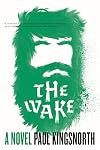
In the aftermath of the Norman Invasion of 1066, William the Conqueror was uncompromising and brutal. English society was broken apart, its systems turned on their head. What is little known is that a fractured network of guerrilla fighters took up arms against the French occupiers. In The Wake, a postapocalyptic novel set a thousand years in the past, Paul Kingsnorth brings this dire scenario back to us through the eyes of the unforgettable Buccmaster, a proud landowner bearing witness to show more the end of his world. Accompanied by a band of like-minded men, Buccmaster is determined to seek revenge on the invaders. But as the men travel across the scorched English landscape, Buccmaster becomes increasingly unhinged by the immensity of his loss, and their path forward becomes increasingly unclear. Written in what the author describes as "a shadow tongue"-a version of Old English updated so as to be understandable to a modern audience-The Wake renders the inner life of an Anglo-Saxon man with an accuracy and immediacy rare in historical fiction. show lessTags
Recommendations





Member Recommendations

pnorth England, devastation, language.
Member Reviews
This was both solid and interesting! (And disappointing!)
Solid, because this worked very well as a work of historical fiction. The Wake deals with the run-up to and the fallout of the Norman conquest of England in 1066, as experienced by a conquered people attempting guerilla war. It is also a portrait of the narcissist that is its main character, Buccmaster of Holland. At the beginning of the story he is a prideful freeholder, one of the few in his village deep in the marshy fens, where most farmers are unfree thralls. His psyche is obsessed with his own superiority over those on lower social rungs, those who work for him, and the other members of his household, where he will not tolerate even imagined slights against his god-given show more patriarchy. He is hateful of any kind of attempted control over him (real or imaginary), and driven by a constant need for validation and admiration. When the Normans come and conquer England, Buccmaster loses his lands and, worse, his status. He becomes an outlaw instead, nurturing delusions of infamy and obsessed with maintaining control over his little band of merry men, usually through bullying, manipulation and self-serving biases. His only measure for people’s worth is how high he ranks in their estimation.
Where this gets interesting is the language this book is written in. In order to set his novel in an Anglo-Saxon world that was lost with the Norman conquest, Kingsnorth has produced what he calls a “shadow tongue” of Old English: present-day English re-spelled and purged of French-derived vocabulary in order to make it feel like Anglo-Saxon. It is easier to illustrate than to explain: i stands on a long seolfor strand it is night all is deorcness but the mona thynne lic a sithe blaed the sea is cuman in and risan and fallan on the strand lic the beatan of a heorte (p. 76). It may take a few pages to get used to, but this “shadow tongue” is mostly just unusually-spelled regular English, and adjusting to it shouldn’t be hard. (Though see the tangent below.)
So. If you feel like you can deal with a violent narcissist as a main character, written in English dressed up as its eleventh-century forebear, I think the book is definitely worth your effort.
***
Ok, super nerdy tangent here, probably irrelevant to most of you reading this. You see, I have two MAs in historical linguistics, I am working towards a PhD in this field, I have studied older versions of several Germanic languages and I may or may not have published papers on these subjects. In other words, I think I have a few more things to say about the language in this book. They are not things that are likely to matter to many others, but they do to me.
Frankly, I was actually pretty disappointed with Kingsnorth’s “shadow tongue”. I do realise that a) I am in a very atypical position here, b) this is, realistically speaking, the best fake Old English I am going to get in a traditionally published work of fiction, and c) this book was written pretty much to cater to my interests. But still. I have to admit that what Anglo-Saxon flavour there was in this re-spelled Present-day English, it wasn’t nearly enough! And it fell short of its goals in some pretty obvious ways, too.
My biggest complaint is that I would have liked to see a greater variety of word endings. Nominal morphology is bare-bones, adjectival morphology is non-existent. But it is verbal morphology that is particularly poor: Kingsnorth uses one single ending for the simple present paradigm (I is, thu is, he/she is, we is, thu is, they is); one for the simple past; and one for all non-finite forms. This is so completely unlike Old English that it was a major disappointment. Especially for I is, wtf was he thinking there? Also, the auxiliaries used for tense, aspect and mood were straight-up modern English -- annoyingly so. Also also, I don’t think I can forgive Kingsnorth for doing away with case distinctions in the 2nd person pronouns in exactly those places where Present-day English has none.
Secondly, Kingsnorth’s attempt to simultaneously shun words with French origins and to (mostly) avoid Anglo-Saxon words that require a glossary has a predictable result: the language ended up way too simplistic. While the limited, oft-repeated vocabulary kinda helped in illustrating Buccmaster’s thoughts going round and round in the same rut, it also made Kingsnorth’s fake Anglo-Saxon feel too impoverished to be a proper language. And I think that may have been the opposite of what he was going for.
And finally, and this is more of an anachronism than anything else, Kingsnorth uses the word fuck(ing) quite a bit (spelled as fucc or fuccan). And while Present-day English may use a sexual taboo word as an all-purpose swear word, none of the reasons why that is the case are really valid in the era in which this novel is set. (Much of this goes for other four-letter words, too.) Similarly, Buccmaster (and others) are often very sarcastic in how they express themselves -- again, that feels more like 21st-century speech patterns rather than eleventh-century ones.
In his afterword, Kingsnorth professes impatience with historical fiction written in Present-day English for imposing contemporary speaking patterns on historical eras. In some superficial ways he may have succeeded in avoiding this, because the language used in this book does look and sound a little like Anglo-Saxon. But in others the grammar and the speaking patterns of modern English are so unnecessary and so dominant. And in yet other ways (the limited vocab, having characters say I is, argh!), he makes his characters sound like simple-minded “Dark Age” folk, a caricature that’s the bane of medievalists’ existence. So yeah: speaking as a professional historical linguist: Kingsnorth's "shadow tongue" was frustrating: it had the right ideas, but ended up under-delivering. I am disappointed :( show less
Solid, because this worked very well as a work of historical fiction. The Wake deals with the run-up to and the fallout of the Norman conquest of England in 1066, as experienced by a conquered people attempting guerilla war. It is also a portrait of the narcissist that is its main character, Buccmaster of Holland. At the beginning of the story he is a prideful freeholder, one of the few in his village deep in the marshy fens, where most farmers are unfree thralls. His psyche is obsessed with his own superiority over those on lower social rungs, those who work for him, and the other members of his household, where he will not tolerate even imagined slights against his god-given show more patriarchy. He is hateful of any kind of attempted control over him (real or imaginary), and driven by a constant need for validation and admiration. When the Normans come and conquer England, Buccmaster loses his lands and, worse, his status. He becomes an outlaw instead, nurturing delusions of infamy and obsessed with maintaining control over his little band of merry men, usually through bullying, manipulation and self-serving biases. His only measure for people’s worth is how high he ranks in their estimation.
Where this gets interesting is the language this book is written in. In order to set his novel in an Anglo-Saxon world that was lost with the Norman conquest, Kingsnorth has produced what he calls a “shadow tongue” of Old English: present-day English re-spelled and purged of French-derived vocabulary in order to make it feel like Anglo-Saxon. It is easier to illustrate than to explain: i stands on a long seolfor strand it is night all is deorcness but the mona thynne lic a sithe blaed the sea is cuman in and risan and fallan on the strand lic the beatan of a heorte (p. 76). It may take a few pages to get used to, but this “shadow tongue” is mostly just unusually-spelled regular English, and adjusting to it shouldn’t be hard. (Though see the tangent below.)
So. If you feel like you can deal with a violent narcissist as a main character, written in English dressed up as its eleventh-century forebear, I think the book is definitely worth your effort.
***
Ok, super nerdy tangent here, probably irrelevant to most of you reading this. You see, I have two MAs in historical linguistics, I am working towards a PhD in this field, I have studied older versions of several Germanic languages and I may or may not have published papers on these subjects. In other words, I think I have a few more things to say about the language in this book. They are not things that are likely to matter to many others, but they do to me.
Frankly, I was actually pretty disappointed with Kingsnorth’s “shadow tongue”. I do realise that a) I am in a very atypical position here, b) this is, realistically speaking, the best fake Old English I am going to get in a traditionally published work of fiction, and c) this book was written pretty much to cater to my interests. But still. I have to admit that what Anglo-Saxon flavour there was in this re-spelled Present-day English, it wasn’t nearly enough! And it fell short of its goals in some pretty obvious ways, too.
My biggest complaint is that I would have liked to see a greater variety of word endings. Nominal morphology is bare-bones, adjectival morphology is non-existent. But it is verbal morphology that is particularly poor: Kingsnorth uses one single ending for the simple present paradigm (I is, thu is, he/she is, we is, thu is, they is); one for the simple past; and one for all non-finite forms. This is so completely unlike Old English that it was a major disappointment. Especially for I is, wtf was he thinking there? Also, the auxiliaries used for tense, aspect and mood were straight-up modern English -- annoyingly so. Also also, I don’t think I can forgive Kingsnorth for doing away with case distinctions in the 2nd person pronouns in exactly those places where Present-day English has none.
Secondly, Kingsnorth’s attempt to simultaneously shun words with French origins and to (mostly) avoid Anglo-Saxon words that require a glossary has a predictable result: the language ended up way too simplistic. While the limited, oft-repeated vocabulary kinda helped in illustrating Buccmaster’s thoughts going round and round in the same rut, it also made Kingsnorth’s fake Anglo-Saxon feel too impoverished to be a proper language. And I think that may have been the opposite of what he was going for.
And finally, and this is more of an anachronism than anything else, Kingsnorth uses the word fuck(ing) quite a bit (spelled as fucc or fuccan). And while Present-day English may use a sexual taboo word as an all-purpose swear word, none of the reasons why that is the case are really valid in the era in which this novel is set. (Much of this goes for other four-letter words, too.) Similarly, Buccmaster (and others) are often very sarcastic in how they express themselves -- again, that feels more like 21st-century speech patterns rather than eleventh-century ones.
In his afterword, Kingsnorth professes impatience with historical fiction written in Present-day English for imposing contemporary speaking patterns on historical eras. In some superficial ways he may have succeeded in avoiding this, because the language used in this book does look and sound a little like Anglo-Saxon. But in others the grammar and the speaking patterns of modern English are so unnecessary and so dominant. And in yet other ways (the limited vocab, having characters say I is, argh!), he makes his characters sound like simple-minded “Dark Age” folk, a caricature that’s the bane of medievalists’ existence. So yeah: speaking as a professional historical linguist: Kingsnorth's "shadow tongue" was frustrating: it had the right ideas, but ended up under-delivering. I am disappointed :( show less
This book took me by surprise in more than one way. I went into it sort of blind--knowing the author from other sources and picking up the first book by him I could find.
I thoroughly enjoyed the shadow tongue in which this book was written. There is a little work up front, but once you click in, you become transported. You might dream in the words or syntax, so immersive does it become. I thought it was brilliant.
Spoilers ensue.
I did not expect to dislike Buccmaster, our protagonist, but as it turned out, he's pretty much your textbook narcissist. Is that a spoiler? It snuck up on me. I guess I expected a William Wallace type and every time Buccmaster had a chance to live up to it, he descends into a spiral of hypocrisy and paranoia in show more which everyone, even his beloved sister, is against him, and therefore wrong. Shoots himself in the foot. Lies compulsively and makes a big deal that he always tells the truth. He's not unlike some American presidents I know about.
But I appreciated that, while Buccmaster isn't exactly a paragon of virtue, neither is anyone else, so he fits in pretty well with his surroundings. Of course we've got a brutal foreign monarch making war on a somewhat settled people in the name of Christ but in reality bringing down an oppressive system of feudalism that England had done quite well without (I think? It sounded like a better system than the king owning all the land, from what I've read).
We've also got English folks happy to keep their little lives and be spared others' gory details, thank you very much, at the expense of their dignity and freedom. We've got the English bringer of news and tales who sells out Buccmaster's war band to the French.
We've got armed bishops atop horses preaching that Jesus finds this earthly stuff of creation evil, which is an easy heresy to rebuke, but the priests of the English apparently haven't been doing an adequate job teaching and tending to their flocks, no surprises there. The authorities have turned Christianity into one more religion just like all the rest, until it no longer resembles itself.
And in the background, which Buccmaster even acknowledges, if passingly, we have the people who were on the island before the Angles ever came: Picts, Welsch, Scottish, Celts: these wild tribes that, to my limited learning, tried to drive back the Romans and ended up extinct or in the wild extremities of the land. Buccmaster nurtures a burning hatred for foreigners when in fact he is descended of foreigners who maybe burned the thatched roof cottages of the people who came before them.
Nobody gets away innocent. No one is righteous. No one understands. No one does good, not even one.
Except maybe Aelfgifu. show less
I thoroughly enjoyed the shadow tongue in which this book was written. There is a little work up front, but once you click in, you become transported. You might dream in the words or syntax, so immersive does it become. I thought it was brilliant.
Spoilers ensue.
I did not expect to dislike Buccmaster, our protagonist, but as it turned out, he's pretty much your textbook narcissist. Is that a spoiler? It snuck up on me. I guess I expected a William Wallace type and every time Buccmaster had a chance to live up to it, he descends into a spiral of hypocrisy and paranoia in show more which everyone, even his beloved sister, is against him, and therefore wrong. Shoots himself in the foot. Lies compulsively and makes a big deal that he always tells the truth. He's not unlike some American presidents I know about.
But I appreciated that, while Buccmaster isn't exactly a paragon of virtue, neither is anyone else, so he fits in pretty well with his surroundings. Of course we've got a brutal foreign monarch making war on a somewhat settled people in the name of Christ but in reality bringing down an oppressive system of feudalism that England had done quite well without (I think? It sounded like a better system than the king owning all the land, from what I've read).
We've also got English folks happy to keep their little lives and be spared others' gory details, thank you very much, at the expense of their dignity and freedom. We've got the English bringer of news and tales who sells out Buccmaster's war band to the French.
We've got armed bishops atop horses preaching that Jesus finds this earthly stuff of creation evil, which is an easy heresy to rebuke, but the priests of the English apparently haven't been doing an adequate job teaching and tending to their flocks, no surprises there. The authorities have turned Christianity into one more religion just like all the rest, until it no longer resembles itself.
And in the background, which Buccmaster even acknowledges, if passingly, we have the people who were on the island before the Angles ever came: Picts, Welsch, Scottish, Celts: these wild tribes that, to my limited learning, tried to drive back the Romans and ended up extinct or in the wild extremities of the land. Buccmaster nurtures a burning hatred for foreigners when in fact he is descended of foreigners who maybe burned the thatched roof cottages of the people who came before them.
Nobody gets away innocent. No one is righteous. No one understands. No one does good, not even one.
Except maybe Aelfgifu. show less
The best novel, and best book, that I read in 2017.
Imagine if Robin Hood was real, but was a member of the 1066 version of British National Party, and instead of stealing from the rich, he just murdered a couple of French soldiers and spent most of his time trying to survive winter in the Lincolnshire Wolds.
Then imagine if this story was written in a daring approximation of Old English, excluding all modern and French-derived words, and was the first crowdfunded book to be longlisted for the Booker Prize.
I loved everything about this book, and the news that Mark Rylance has bought the rights for a potential film felt like the literary equivalent of finding £20 in an old pair of trousers.
Want to understand angry, disenfranchised, show more British men? Then read this. (Especially if those particular men happen to have been born before the Edward the Second.) show less
Imagine if Robin Hood was real, but was a member of the 1066 version of British National Party, and instead of stealing from the rich, he just murdered a couple of French soldiers and spent most of his time trying to survive winter in the Lincolnshire Wolds.
Then imagine if this story was written in a daring approximation of Old English, excluding all modern and French-derived words, and was the first crowdfunded book to be longlisted for the Booker Prize.
I loved everything about this book, and the news that Mark Rylance has bought the rights for a potential film felt like the literary equivalent of finding £20 in an old pair of trousers.
Want to understand angry, disenfranchised, show more British men? Then read this. (Especially if those particular men happen to have been born before the Edward the Second.) show less
‘The Wake’ is a demanding novel to read and, honestly, I was tempted to give up on it after fifty pages. It wasn’t so much the language, but the fact that nothing much occurred except the narrator Buccmaster seemed annoyingly UKIPpish. Once William came a-conquering, however, the narrative became darker and more eventful, and Buccmaster much more interesting. It’s Kingsnorth’s invention of a hybrid old English, though, that makes this a distinctive and beguiling read. As he states in his afterword, ‘I wanted to be able to convey, not just in my descriptions of events and places but through the words of the characters, the sheer alienness of Old England’. He succeeds admirably in this, as his Oldish English is as strange show more yet comprehensible-with-concentration as that of [b:Riddley Walker|776573|Riddley Walker|Russell Hoban|https://images.gr-assets.com/books/1383166398s/776573.jpg|762606]. (Possibly more so, I read that many years ago.) I became accustomed to Kingsnorth’s rhythm and vocabulary, to the point of finding it curiously addictive. Although I was intrigued to find out what would happen to Buccmaster, the main appeal was the experience of reading rather than the narrative itself. An arbitrarily chosen passage:
This odd patchwork of familiar and unfamiliar words, largely without punctuation, feels more like reading poetry than prose. It undoubtedly creates a striking sense of largely doom-laden atmosphere. The story is one of disaster and hopeless resistance against invasion in the years after 1066. The blurb describes it as ‘a post-apocalyptic novel set a thousand years ago’, which convinced me to read it and is essentially accurate. This is a novel of catastrophe, genocide, and loss, with a memorably unreliable and alarming narrator. Once I stopped trying to find Buccmaster likeable, 'The Wake' became much easier to read. He is a compelling and deeply ambivalent figure.
I am curious about Kingsnorth’s inspiration for ‘The Wake’, given what I’ve read of his non-fiction in [b:Confessions of a Recovering Environmentalist and Other Essays|31450661|Confessions of a Recovering Environmentalist and Other Essays|Paul Kingsnorth|https://images.gr-assets.com/books/1483077976s/31450661.jpg|52153539]. Themes of fatalism, retreat, and connection to nature run through both. Despite its weirdness, the fictionalised world of 1066 offers some parallels with efforts to protect the environment from the rapaciousness of capitalism.Buccmaster is unbalanced, violent, and dangerous, yet often the reader cannot help but see his point. When he commits murders, the novel is asking - do you think this is justified? When other characters doubt him, you wonder whether they just don’t see as clearly how bad things are. Then again, his intense self-involvement and paranoid messianic tendencies show what terrible extremes a sense of conviction can result in. All very relevant to our own times.
I’m very glad that I persisted with ‘The Wake’. It takes perhaps 80 pages to get going, but beyond that it becomes a unique, disquieting, and memorable experience. show less
i seen that the names of the folcs of angland was part of anglisc ground lic the treow and rocc the fenn and hyll and i seen that when these names was tacan from the place where they had growen and cast down on other ground and when their place was tacan by names what has not growan from that ground is not of it and can not spece its tunge then a great wrong has been done. then sum thing deop and eald had been made wrong and though folcs wolde forget cwic the eald gods and the eald places the eald trees and the eald hylls these things wolde not forget what had been broc and how things used to be and sceolde be and one daeg though not in our lifs one daeg all will be made right again
This odd patchwork of familiar and unfamiliar words, largely without punctuation, feels more like reading poetry than prose. It undoubtedly creates a striking sense of largely doom-laden atmosphere. The story is one of disaster and hopeless resistance against invasion in the years after 1066. The blurb describes it as ‘a post-apocalyptic novel set a thousand years ago’, which convinced me to read it and is essentially accurate. This is a novel of catastrophe, genocide, and loss, with a memorably unreliable and alarming narrator. Once I stopped trying to find Buccmaster likeable, 'The Wake' became much easier to read. He is a compelling and deeply ambivalent figure.
I am curious about Kingsnorth’s inspiration for ‘The Wake’, given what I’ve read of his non-fiction in [b:Confessions of a Recovering Environmentalist and Other Essays|31450661|Confessions of a Recovering Environmentalist and Other Essays|Paul Kingsnorth|https://images.gr-assets.com/books/1483077976s/31450661.jpg|52153539]. Themes of fatalism, retreat, and connection to nature run through both. Despite its weirdness, the fictionalised world of 1066 offers some parallels with efforts to protect the environment from the rapaciousness of capitalism.
I’m very glad that I persisted with ‘The Wake’. It takes perhaps 80 pages to get going, but beyond that it becomes a unique, disquieting, and memorable experience. show less
2019, audiobook read by Simon Vance, ★★★★★
Wow! Vance's masterful narration revealed new layers of detail, enabled a deeper immersion into the plot and setting, and even more disturbingly exposed Buccmaster's mental disintegration.
Since first reading this in 2015-2016, I have stood on the battlefield of Hastings and now feel, if possible, even more of an attachment to the period of the conquest and the regular folk caught up in it.
The Wake has become one of my favourite books.
2016, paperback, ★★★★☆
'English history... seems the work of a temperate community, seldom shaken by convulsions. But there are moments when history is unsubtle; when change arrives in a violent rush, decisive, bloody, traumatic; as a truck-load show more of trouble, wiping out everything that gives a culture its bearings - custom, language, law, loyalty. 1066 was one of those moments.'
― Simon Schama, A History of Britain: At the Edge of the World? 3500 BC-AD 1603 (2000)
Imagine the world described above as seen through the eyes of an angry, prideful, domineering, foul-mouthed, violent, desperate, delusional, and (though he would never admit it) conquered Anglisc man. Then imagine him telling you the story of his world falling apart in a language you only half recognize but which seems eerily familiar. Innovative, earthy, and shocking, The Wake will surely challenge you like it did me. show less
Wow! Vance's masterful narration revealed new layers of detail, enabled a deeper immersion into the plot and setting, and even more disturbingly exposed Buccmaster's mental disintegration.
Since first reading this in 2015-2016, I have stood on the battlefield of Hastings and now feel, if possible, even more of an attachment to the period of the conquest and the regular folk caught up in it.
The Wake has become one of my favourite books.
2016, paperback, ★★★★☆
'English history... seems the work of a temperate community, seldom shaken by convulsions. But there are moments when history is unsubtle; when change arrives in a violent rush, decisive, bloody, traumatic; as a truck-load show more of trouble, wiping out everything that gives a culture its bearings - custom, language, law, loyalty. 1066 was one of those moments.'
― Simon Schama, A History of Britain: At the Edge of the World? 3500 BC-AD 1603 (2000)
Imagine the world described above as seen through the eyes of an angry, prideful, domineering, foul-mouthed, violent, desperate, delusional, and (though he would never admit it) conquered Anglisc man. Then imagine him telling you the story of his world falling apart in a language you only half recognize but which seems eerily familiar. Innovative, earthy, and shocking, The Wake will surely challenge you like it did me. show less
I'm still thinking about this book, six months after reading it.
The Wake is set in eleventh century England after the Norman Conquest. The narrator Buccmaster is pathetic and his arrogance is terrifying; he is a man stuck in the past who sees himself as powerful, important and unfairly treated. He's unable to reflect on his thoughts or actions and is completely unwilling to understand the perspectives of others. When the Normans take over Buccmaster's old life is gone, but he doesn't have the flexibility and insight to respond. The story is about what happens when Buccmaster is forced to act. That all sounds horrible but it's completely absorbing.
The book is written in a quasi-Old English which really helps to highlight the familiar show more strangeness of this period in English history. This is the anchovy in the pizza - you'll either love it or you really really won't. There are some Old English words that might be unfamiliar but most of the time reading aloud or just going with the flow worked just fine. It takes time to adjust. If you hated reading Riddley Walker then I would probably think twice about starting this. Similarly, if you're a precise reader who must know the meaning of every word before you proceed, this book might drive you bonkers. But if you're prepared to plunge into a well-constructed past world with a memorable narrator, it's well worth the effort. show less
The Wake is set in eleventh century England after the Norman Conquest. The narrator Buccmaster is pathetic and his arrogance is terrifying; he is a man stuck in the past who sees himself as powerful, important and unfairly treated. He's unable to reflect on his thoughts or actions and is completely unwilling to understand the perspectives of others. When the Normans take over Buccmaster's old life is gone, but he doesn't have the flexibility and insight to respond. The story is about what happens when Buccmaster is forced to act. That all sounds horrible but it's completely absorbing.
The book is written in a quasi-Old English which really helps to highlight the familiar show more strangeness of this period in English history. This is the anchovy in the pizza - you'll either love it or you really really won't. There are some Old English words that might be unfamiliar but most of the time reading aloud or just going with the flow worked just fine. It takes time to adjust. If you hated reading Riddley Walker then I would probably think twice about starting this. Similarly, if you're a precise reader who must know the meaning of every word before you proceed, this book might drive you bonkers. But if you're prepared to plunge into a well-constructed past world with a memorable narrator, it's well worth the effort. show less
As I read the first few pages of The Wake I had the feeling that picking it up was a huge mistake. Paul Kingsnorth has written this novel of England at the time of the Norman Conquest in an invented language that approximates Old English. I battled with his style initially, but once the reader gets attuned to the novel's patois the narrative fairly rattles along, with only an occasional need to consult the pretty meagre glossary provided up the back.
The narrator of the novel is Buccmaster, a free farmer who owns a large holding in the fens country of Lincolnshire. Buccmaster comes across as a man seething with resentments: at the Christians who seek to supplant the Anglish gods, at his father, at the people of his village whom he show more considers his inferiors, at the feudal lords who take away his sons and working men to fight for King Harald and, most of all, at the bastard french duke who comes to his country and has his farm burnt and his wife killed.
Buccmaster is inspired by visions of a great Anglish hero, Weland the Smith. He takes Weland's sword, given to him by his grandfather, and flees into the woods and the fens, assembling a small band of men to help him fight the French. He struggles to make any headway or to establish himself as the great war leader he imagines himself to be. Buccmaster is somewhat like Don Quixote in this respect, only his visions begin to taunt him, calling him weak and contrasting him with the greater hero of the resistance, Hereward the Wake. Buccmaster comes to despise Hereward almost as much as he despises the French.
Kingsnorth has written a truly original historical novel in The Wake, far more original than the Wolf Hall novels that created such a stir. He works in significant details of the life and speech of the Angles at the time, of the course of the conquest and of the resistance, yet does not weigh his story down excessively. Buccmaster is a disturbing and fascinating central character and his outraged narrative engages the reader in its intensity. show less
The narrator of the novel is Buccmaster, a free farmer who owns a large holding in the fens country of Lincolnshire. Buccmaster comes across as a man seething with resentments: at the Christians who seek to supplant the Anglish gods, at his father, at the people of his village whom he show more considers his inferiors, at the feudal lords who take away his sons and working men to fight for King Harald and, most of all, at the bastard french duke who comes to his country and has his farm burnt and his wife killed.
Buccmaster is inspired by visions of a great Anglish hero, Weland the Smith. He takes Weland's sword, given to him by his grandfather, and flees into the woods and the fens, assembling a small band of men to help him fight the French. He struggles to make any headway or to establish himself as the great war leader he imagines himself to be. Buccmaster is somewhat like Don Quixote in this respect, only his visions begin to taunt him, calling him weak and contrasting him with the greater hero of the resistance, Hereward the Wake. Buccmaster comes to despise Hereward almost as much as he despises the French.
Kingsnorth has written a truly original historical novel in The Wake, far more original than the Wolf Hall novels that created such a stir. He works in significant details of the life and speech of the Angles at the time, of the course of the conquest and of the resistance, yet does not weigh his story down excessively. Buccmaster is a disturbing and fascinating central character and his outraged narrative engages the reader in its intensity. show less
Members
- Recently Added By
Published Reviews
ThingScore 88
Truly understanding The Wake therefore entails taking on Buccmaster’s suffering, paring down the rich variety of your own language as you watch the French strip everything from him. Understanding him and empathizing with him are one and the same, a coin’s face and its obverse. It took me just about 50 pages to get a feel for it—50 pages before his syntax settled into my bones, before his show more voice came through clearly, before his heartbreak was mine. Though different readers will experience the book in different ways, I suspect I’m not alone in reaching that 50-page milestone. If you’re not at ease by this point, you’re unlikely to keep reading.
The trouble is that Buccmaster may not be worthy of the empathy we develop. show less
The trouble is that Buccmaster may not be worthy of the empathy we develop. show less
added by elenchus
Kingsnorth is a green activist, author of an attack on corporate control and blandness called Real England, and his first novel has a fierceness about it that gives it real heft.
added by melmore
Lists

Best Historical Fiction
620 works; 261 members

Man Booker Prize Longlist 2014
13 works; 9 members

Best Contemporary Literary Fiction (Around the Last 30 Years)
388 works; 124 members
Booker Prize
491 works; 62 members

Historical Fiction
889 works; 91 members

Folio Prize 2015 Longlist
79 works; 2 members

Five star books
1,767 works; 110 members

Books Read in 2020
4,379 works; 124 members

Books Read in 2015
3,299 works; 129 members
Talk Discussions
Past Discussions
2014 Booker Prize longlist: The Wake in Booker Prize (August 2014)
Author Information

21+ Works 2,579 Members
Paul Kingsnorth was born in 1972 in Worcester. He is an English writer who was former deputy -editor of the Ecologist and a co-founder of the Dark Mountain Project. He was educated at St. Anne's College, Oxford, where he studied modern history. During this period he became involved in the British road protest movement at sites including Twyford show more Down and Solsbury Hill London. In 2004, he was one of the founders of the Free West Papua Campaign, which campaigns for the secession of the provinces of Papua and West Papua from Indonesia. In recent years, he has written for or contributed to the Guardian, Independent, Daily Telegraph, Daily Express, Le Monde, and New Statesman. His first book, One No, Many Yeses, an investigative journey through the 'anti-globalisation' movement, was published in six languages in thirteen countries. His second book, Real England, was published by Portobello Books in 2008. His first collection of poetry, Kidland and other poems, was published by Salmon in 2011.He won the Poetry Life National Competition in 1998, and was named BBC Wildlife Poet of the Year in the same year. In 2012, he won the Wenlock Prize.His first novel, The Wake, published in April 2014, was longlisted for the Man Booker Prize and the Folio Prize, shortlisted for the Goldsmiths Prize and won the Gordon Burn Prize. It also won the inaugural Book of the Year at UK Bookseller Industry Awards. (Bowker Author Biography) show less
Awards and Honors
Awards
Distinctions
Series

Common Knowledge
- Canonical title
- The Wake
- Original title
- The Wake
- Original publication date
- 2014
- People/Characters
- Buccmaster of Holland (narrator | identified in intro); Ecceard of Holland; Odelyn (wife of Buccmaster); Asger (gebur of Buccmaster); Gamel (gebur of Buccmaster); Annis (gebur of Odelyn) (show all 18); Eadberht (son of Buccmaster & Odelyn); Dunstan (son of Buccmaster & Odelyn); Weland Smith; Grimcell (cottar of Bacstune); Ulf the Gleoman (Ulf the Scop); Aelfgar; Gamel; Wluncus; Wulf; Godric; Siward; Osbern
- Important places
- England, UK (as England); Lincolnshire, England, UK; Holland, Lincolnshire, England, UK; the brunnesweald, England, UK; Stamford, Lincolnshire, England, UK
- Epigraph
- I have persecuted the natives of England beyond all reason.
Whether gentle or simple I have cruelly oppressed them.
Many I unjustly disinherited; innumerable multitudes
perished through me by famine or the s... (show all)word.
Having gained the throne of that kingdom by so many crimes,
I dare no leave it to anyone but God.
Deathbed confession of Guillaume Le Bâtard, 1087
England is become the residence of foreigners and the property
of strangers...they prey upon the riches and vitals of England;
nor is there any hope of a termination of this misery.
William ... (show all)of Malmesbury, 1125 - First words
- the night was clere though i slept i seen it.
- Last words
- (Click to show. Warning: May contain spoilers.)it is deorc it is late
none cums when called
out
late late
none lystens none sees
deoful
deoful
deoful
beorn angland
beorn - Blurbers
- McBride, Eimear; Pullman, Philip; Catton, Eleanor; Dyer, Geoff; Rylance, Mark
Classifications
Statistics
- Members
- 859
- Popularity
- 31,748
- Reviews
- 44
- Rating
- (3.72)
- Languages
- English
- Media
- Paper, Audiobook, Ebook
- ISBNs
- 12
- ASINs
- 9