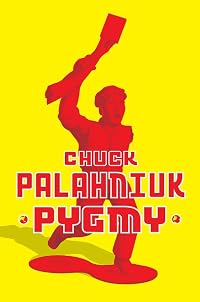
Pygmy
by Chuck Palahniuk
On This Page
Description
"Begins here first account of operative me, agent number 67 on arrival Midwestern airport ____ . Flight ____. Date ____. Priority mission top success to complete. Code name: Operation Havoc."Thus speaks Pygmy, one of a handful of young adults from a totalitarian state sent to the US, disguised as exchange students to live with typical American families and blend in, all the while planning an unspecified attack of massive terrorism. Palahniuk depicts Midwestern life through the eyes of this show more thoroughly indoctrinated little killer, who hates us with a passion, in this cunning double-edged satire of an American xenophobia that might, in fact, be completely justified.
The Manchurian Candidate meets South Park in Chuck Palahniuk's finest novel since the generation-defining Fight Club.
. show less
Tags
Recommendations


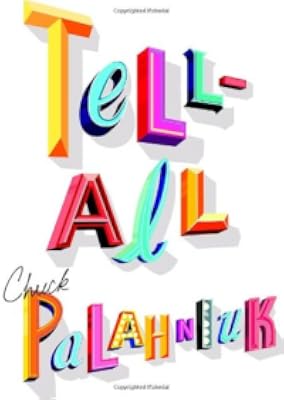
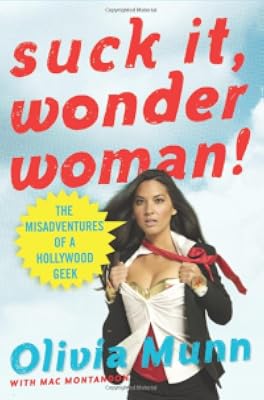
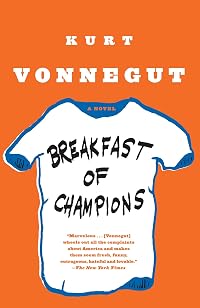
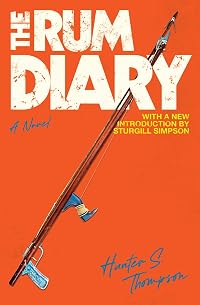
Member Recommendations
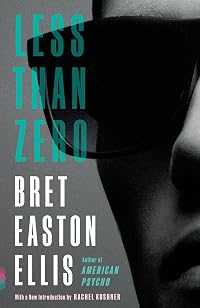
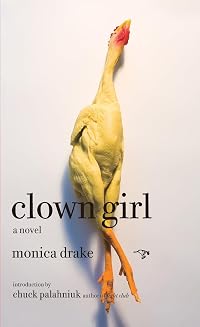
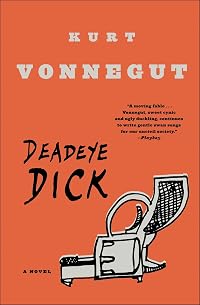
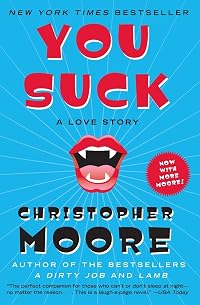
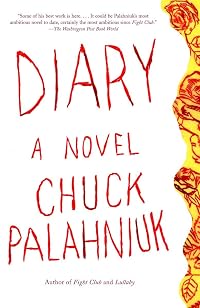
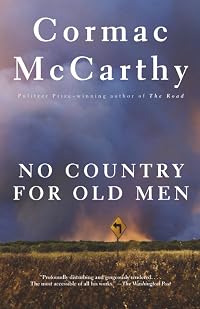
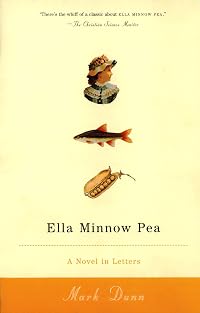
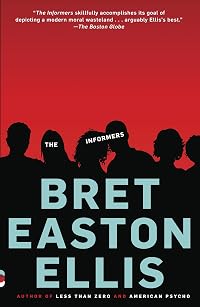
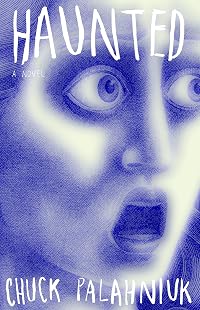
fugitive I make this recommendation primarily based on the unique artificial dialects created by both Palahniuk and Burgess.
souci Actually a better look at fractured English.

fugitive The protagonist uses a fractured, and manufactured language which takes some getting used to.

paradoxosalpha Narrative from a twisted, terroristic, undercover anti-protagonist
Member Reviews
Exchange Terrorists
Chuck Palahniuk casts a jaundiced eye on and takes a highly satirical pen to American life, and in the end American life wins out, sort of. There was a time when we called an idea like Pygmy high camp, meaning a whole conglomeration of things, exaggerated, vulgar, ostentatious, and the like. Palahniuk’s novel is all of these things, and maybe a bit more. While it will probably not be to everybody’s liking, especially those who dislike reading dialect (here a stylized Engrish with a distinct Mr. Spock attitude), those who revel in over the top humor will appreciate it.
A nameless nation that feels like North Korea and ISIS rolled into one has trained almost from birth an elite core of terrorists. When the novel show more begins, they have just become teenagers and have been brought to the U.S.A. by an evangelical church in a Midwestern city as exchange students. The idea, of course, is to inculcate them with American and Christian values. However, they come over on a mission, code name Operation Havoc. Chief among the group of adolescent terrorists is “agent number 67.” He relates the story of their arrival, their training, the purpose of their mission, and he in particular their take on various aspects of American life, which he approaches as a decadent society busy destroying the world. Seen through his eyes, life here gets exposed for its absurdity. Unrequited love for his host family’s daughter whom he calls Cat Sister (the father is Cow Father, the mother is Chicken Mother, and the brother Pig Dog Brother, which gives you idea of the novel’s tone), this unrequited love undoes him, or does him, if you’re of that mindset.
Palahniuk’s inventiveness in describing and skewering aspects of American life makes the novel enjoyable. After all, not only is seeing how you live from another, albeit extreme, vantage point funny, but it also can be enlightening. Let’s be honest here, not everybody views America as the pinnacle of living well, including many living the American dream. So, from Agent 67’s perspective we have “retail product distribution facilities” (Walmart), “religion propaganda distribution outlets” (church), “domestic structure Cedar” (his host family’s house), “public education institutions” (school), and the like.
In keeping with the tone of the novel, the characters are more caricatures, highlighting certain aspects of their personalities for humorous effect. Pig Dog Brother thinks only about sex, evaluates women on their physical characteristics, and lobs more euphemisms for breasts than you probably thought existed. Sex obsesses Chicken Mom, who keeps a vibrator handy and, on the Thanksgiving recounted in the story, in her. Cat Sister practices stealth thievery from her father’s business to keep herself well stocked in office supplies. And, not to be outdone, Agent 67 has sex on his mind, though purely as a means of producing more warriors.
To keep the story moving, Palahniuk packs the novel with plenty of humorous, often slapstick violent, set pieces, among them the science fair massacre, the school dance brawl, the Thanksgiving dinner drugging, Devil Tony’s (Agent 67’s name for the pastor) murder in the church, the exploding dildo experiment, and these are just samples. What will happen next, you’ll wonder, and how outrageous will it be?
So, should you give Pygmy a try? If you like your funny novels very broad, absolutely you should. And if you break a smile at the following short excerpt from the science fair, you’ll certainly want to grab a copy:
“Next, parade learned academics arrive experiment invented stealth cat sister. Rested atop table, display moderate missile comparable to light mortar round Japan artillery, caliber fifty-millimeter Type 89 ‘leg’ mortar shell. Missile encased skin pink-color plastic. Smooth polished. Painted letter across placard, written: ‘Bliss 2.0.’” show less
Chuck Palahniuk casts a jaundiced eye on and takes a highly satirical pen to American life, and in the end American life wins out, sort of. There was a time when we called an idea like Pygmy high camp, meaning a whole conglomeration of things, exaggerated, vulgar, ostentatious, and the like. Palahniuk’s novel is all of these things, and maybe a bit more. While it will probably not be to everybody’s liking, especially those who dislike reading dialect (here a stylized Engrish with a distinct Mr. Spock attitude), those who revel in over the top humor will appreciate it.
A nameless nation that feels like North Korea and ISIS rolled into one has trained almost from birth an elite core of terrorists. When the novel show more begins, they have just become teenagers and have been brought to the U.S.A. by an evangelical church in a Midwestern city as exchange students. The idea, of course, is to inculcate them with American and Christian values. However, they come over on a mission, code name Operation Havoc. Chief among the group of adolescent terrorists is “agent number 67.” He relates the story of their arrival, their training, the purpose of their mission, and he in particular their take on various aspects of American life, which he approaches as a decadent society busy destroying the world. Seen through his eyes, life here gets exposed for its absurdity. Unrequited love for his host family’s daughter whom he calls Cat Sister (the father is Cow Father, the mother is Chicken Mother, and the brother Pig Dog Brother, which gives you idea of the novel’s tone), this unrequited love undoes him, or does him, if you’re of that mindset.
Palahniuk’s inventiveness in describing and skewering aspects of American life makes the novel enjoyable. After all, not only is seeing how you live from another, albeit extreme, vantage point funny, but it also can be enlightening. Let’s be honest here, not everybody views America as the pinnacle of living well, including many living the American dream. So, from Agent 67’s perspective we have “retail product distribution facilities” (Walmart), “religion propaganda distribution outlets” (church), “domestic structure Cedar” (his host family’s house), “public education institutions” (school), and the like.
In keeping with the tone of the novel, the characters are more caricatures, highlighting certain aspects of their personalities for humorous effect. Pig Dog Brother thinks only about sex, evaluates women on their physical characteristics, and lobs more euphemisms for breasts than you probably thought existed. Sex obsesses Chicken Mom, who keeps a vibrator handy and, on the Thanksgiving recounted in the story, in her. Cat Sister practices stealth thievery from her father’s business to keep herself well stocked in office supplies. And, not to be outdone, Agent 67 has sex on his mind, though purely as a means of producing more warriors.
To keep the story moving, Palahniuk packs the novel with plenty of humorous, often slapstick violent, set pieces, among them the science fair massacre, the school dance brawl, the Thanksgiving dinner drugging, Devil Tony’s (Agent 67’s name for the pastor) murder in the church, the exploding dildo experiment, and these are just samples. What will happen next, you’ll wonder, and how outrageous will it be?
So, should you give Pygmy a try? If you like your funny novels very broad, absolutely you should. And if you break a smile at the following short excerpt from the science fair, you’ll certainly want to grab a copy:
“Next, parade learned academics arrive experiment invented stealth cat sister. Rested atop table, display moderate missile comparable to light mortar round Japan artillery, caliber fifty-millimeter Type 89 ‘leg’ mortar shell. Missile encased skin pink-color plastic. Smooth polished. Painted letter across placard, written: ‘Bliss 2.0.’” show less
I'll state from the outset that I greatly admire Chuck Palahniuk for his inventive storytelling, muscular language, and his ability to talk about really nasty stuff in a funny way. So, my reading of his latest novel, PYGMY, is definitely colored by that bias.I'd say this is a worthy addition to his canon. But like his other work, PYGMY isn't without its challenges. It's dark, visceral, and dripping with various bodily fluids.PYGMY follows the misadventures of Agent Number 67, sent to the American Midwest by an undisclosed Maoist dictatorship to inflict "Operation Havoc" on the corrupt, fat and stupid running dogs of Imperialism known to us as the American people. He and a number of other agents have been sent in a student exchange show more program. At first, you might find the way the story is told to be quite a hurdle. Pygmy (so named by his host family because of his short stature) tells the story in a series of dispatches to his government, using a kind of pidgin English. I got used to it within a chapter or so, but there are occasional paragraphs that are so dense with description you will definitely have to read them twice to understand what he's really trying to say. For example:
"Traversing dark environment en route destination, surrounded mating cry cricket, croak of bulls frog, lecture this agent concerning France missive entitled Le Defi Americain. How admonish intellectual elite over manner United States numerous multinational corporation Kodak, Gillette, General Motor endeavor tangle entire globe ensnared tentacles sucking wealth for digest and fatten parent sovereign American nation, leeching life energy addition opportunity during render subject nation stripped resources and native cultures."But when Pygmy's voice works, it really sings. I found the book came to life in the scenes where Pygmy describes traditional high school rituals, such as Glee Club, the Model United Nations, school dances, and the adolescent ritual of dodgeball:
"Commencement of ritual, physical superior males select best combatants for accompany into battle, thus ranking all from most-best to least desirable for reproduction during females note close attention. Next then, divided males engage violent assault upon each opposite army, battering with inflated bladders latex rubber."Over course conflict, males boasting superior musculature inflict injury upon males typical of superior intellect, although suffering inferior height-to-weight ratio, body mass index, and stature."At completion dodgeball ritual, females made full aware which males present most-desirable physical traits. Vanquished males culled by injury, weak reproductive citizens force self-select, redirect, instead impregnate mates, procreate offspring, instead channel aggressions chess club, focus sexual ambitions science club."And it is the Science Fair that is the focus of Pygmy and the other agent's "Operation Havoc" -- for Pygmy, this is not just because of his orders, but because his host sister, "cat sister" as he calls her, is also working on a science project for the fair, and while she works on it, he falls for her. (She is one of the few Americans for whom he has any respect.) Yes, this is a kind of love story in addition to being a satire.In many ways, this is a more broad satire than I've seen in other Palahniuk works, but I enjoyed the farcical nature of some of the scenes -- I laughed out loud in a few places. Also really enjoyed the double-edged nature of the satire, which is always the best kind. It makes fun of American culture and in some ways, the satire of totalitarianism is just as savage. (You don't see many books opening with a quote by Hitler.) I'd recommend it, with the proviso that you should check out the sample chapter [pdf link:], to see if the way the story is told will work for you.Oh, and don't stop reading at chapter two -- the anal rape scene is a central plot point, so it's not gratuitous. (Perhaps some of the description, but not the event itself.)You can learn more about the book at Chuck's official website, and there are more reviews available at Goodreads. show less
Wow.
Given the extreme constraints of the form and narrative voice, the (at times) disturbing content and the withering condemnation of contemporary America.. quite how this book manages to be not only readable, but enjoyable, hilarious and ultimately quite moving is beyond me.
Given the extreme constraints of the form and narrative voice, the (at times) disturbing content and the withering condemnation of contemporary America.. quite how this book manages to be not only readable, but enjoyable, hilarious and ultimately quite moving is beyond me.
Exchange Terrorists
Chuck Palahniuk casts a jaundiced eye on and takes a highly satirical pen to American life, and in the end American life wins out, sort of. There was a time when we called an idea like Pygmy high camp, meaning a whole conglomeration of things, exaggerated, vulgar, ostentatious, and the like. Palahniuk’s novel is all of these things, and maybe a bit more. While it will probably not be to everybody’s liking, especially those who dislike reading dialect (here a stylized Engrish with a distinct Mr. Spock attitude), those who revel in over the top humor will appreciate it.
A nameless nation that feels like North Korea and ISIS rolled into one has trained almost from birth an elite core of terrorists. When the novel show more begins, they have just become teenagers and have been brought to the U.S.A. by an evangelical church in a Midwestern city as exchange students. The idea, of course, is to inculcate them with American and Christian values. However, they come over on a mission, code name Operation Havoc. Chief among the group of adolescent terrorists is “agent number 67.” He relates the story of their arrival, their training, the purpose of their mission, and he in particular their take on various aspects of American life, which he approaches as a decadent society busy destroying the world. Seen through his eyes, life here gets exposed for its absurdity. Unrequited love for his host family’s daughter whom he calls Cat Sister (the father is Cow Father, the mother is Chicken Mother, and the brother Pig Dog Brother, which gives you idea of the novel’s tone), this unrequited love undoes him, or does him, if you’re of that mindset.
Palahniuk’s inventiveness in describing and skewering aspects of American life makes the novel enjoyable. After all, not only is seeing how you live from another, albeit extreme, vantage point funny, but it also can be enlightening. Let’s be honest here, not everybody views America as the pinnacle of living well, including many living the American dream. So, from Agent 67’s perspective we have “retail product distribution facilities” (Walmart), “religion propaganda distribution outlets” (church), “domestic structure Cedar” (his host family’s house), “public education institutions” (school), and the like.
In keeping with the tone of the novel, the characters are more caricatures, highlighting certain aspects of their personalities for humorous effect. Pig Dog Brother thinks only about sex, evaluates women on their physical characteristics, and lobs more euphemisms for breasts than you probably thought existed. Sex obsesses Chicken Mom, who keeps a vibrator handy and, on the Thanksgiving recounted in the story, in her. Cat Sister practices stealth thievery from her father’s business to keep herself well stocked in office supplies. And, not to be outdone, Agent 67 has sex on his mind, though purely as a means of producing more warriors.
To keep the story moving, Palahniuk packs the novel with plenty of humorous, often slapstick violent, set pieces, among them the science fair massacre, the school dance brawl, the Thanksgiving dinner drugging, Devil Tony’s (Agent 67’s name for the pastor) murder in the church, the exploding dildo experiment, and these are just samples. What will happen next, you’ll wonder, and how outrageous will it be?
So, should you give Pygmy a try? If you like your funny novels very broad, absolutely you should. And if you break a smile at the following short excerpt from the science fair, you’ll certainly want to grab a copy:
“Next, parade learned academics arrive experiment invented stealth cat sister. Rested atop table, display moderate missile comparable to light mortar round Japan artillery, caliber fifty-millimeter Type 89 ‘leg’ mortar shell. Missile encased skin pink-color plastic. Smooth polished. Painted letter across placard, written: ‘Bliss 2.0.’” show less
Chuck Palahniuk casts a jaundiced eye on and takes a highly satirical pen to American life, and in the end American life wins out, sort of. There was a time when we called an idea like Pygmy high camp, meaning a whole conglomeration of things, exaggerated, vulgar, ostentatious, and the like. Palahniuk’s novel is all of these things, and maybe a bit more. While it will probably not be to everybody’s liking, especially those who dislike reading dialect (here a stylized Engrish with a distinct Mr. Spock attitude), those who revel in over the top humor will appreciate it.
A nameless nation that feels like North Korea and ISIS rolled into one has trained almost from birth an elite core of terrorists. When the novel show more begins, they have just become teenagers and have been brought to the U.S.A. by an evangelical church in a Midwestern city as exchange students. The idea, of course, is to inculcate them with American and Christian values. However, they come over on a mission, code name Operation Havoc. Chief among the group of adolescent terrorists is “agent number 67.” He relates the story of their arrival, their training, the purpose of their mission, and he in particular their take on various aspects of American life, which he approaches as a decadent society busy destroying the world. Seen through his eyes, life here gets exposed for its absurdity. Unrequited love for his host family’s daughter whom he calls Cat Sister (the father is Cow Father, the mother is Chicken Mother, and the brother Pig Dog Brother, which gives you idea of the novel’s tone), this unrequited love undoes him, or does him, if you’re of that mindset.
Palahniuk’s inventiveness in describing and skewering aspects of American life makes the novel enjoyable. After all, not only is seeing how you live from another, albeit extreme, vantage point funny, but it also can be enlightening. Let’s be honest here, not everybody views America as the pinnacle of living well, including many living the American dream. So, from Agent 67’s perspective we have “retail product distribution facilities” (Walmart), “religion propaganda distribution outlets” (church), “domestic structure Cedar” (his host family’s house), “public education institutions” (school), and the like.
In keeping with the tone of the novel, the characters are more caricatures, highlighting certain aspects of their personalities for humorous effect. Pig Dog Brother thinks only about sex, evaluates women on their physical characteristics, and lobs more euphemisms for breasts than you probably thought existed. Sex obsesses Chicken Mom, who keeps a vibrator handy and, on the Thanksgiving recounted in the story, in her. Cat Sister practices stealth thievery from her father’s business to keep herself well stocked in office supplies. And, not to be outdone, Agent 67 has sex on his mind, though purely as a means of producing more warriors.
To keep the story moving, Palahniuk packs the novel with plenty of humorous, often slapstick violent, set pieces, among them the science fair massacre, the school dance brawl, the Thanksgiving dinner drugging, Devil Tony’s (Agent 67’s name for the pastor) murder in the church, the exploding dildo experiment, and these are just samples. What will happen next, you’ll wonder, and how outrageous will it be?
So, should you give Pygmy a try? If you like your funny novels very broad, absolutely you should. And if you break a smile at the following short excerpt from the science fair, you’ll certainly want to grab a copy:
“Next, parade learned academics arrive experiment invented stealth cat sister. Rested atop table, display moderate missile comparable to light mortar round Japan artillery, caliber fifty-millimeter Type 89 ‘leg’ mortar shell. Missile encased skin pink-color plastic. Smooth polished. Painted letter across placard, written: ‘Bliss 2.0.’” show less
(Reprinted from the Chicago Center for Literature and Photography [cclapcenter.com]. I am the original author of this essay, as well as the owner of CCLaP; it is not being reprinted here illegally.)
I hope this doesn't come across as sour grapes, but the older I get, the more I realize that there's a legitimate danger that comes with a young artist having a big hit early in their career -- and that's that the public then forever compares each new project of theirs to that big hit, most of the rest suffering in comparison and usually called derivative and worse, because to be frank this is what most artists in general do, is endlessly repeat themes and motifs over the course of their entire career. Usually we don't notice, because most show more artists slowly get better with each new project, keeping their early work deservedly obscure and their later masterpieces simply better treatments of the same subjects; but when it comes to someone like, say, transgressive gay author Chuck Palahniuk, this endless reshuffling of elements becomes particularly noticeable, because of him first clearly laying these elements out in his massively popular early hit Fight Club (made into an even more massively popular movie by David Fincher), and literally not getting an ounce either better or worse at it in the 15 years and 11 novels since. I've reviewed two of his past books here before, 2007's Rant and 2008's Snuff, while just recently finishing up his latest, the post-Bush terrorism comedy Pygmy; and just like the others, I felt that though it was a decent book on its own, it unfortunately also feels many times like a laundry list of quirky Palahniukian touches, to be checked off a master list like a version of car bingo designed by David Lynch. Impossibly ludicrous storyline based on a cartoonishly named plan to take over the world? Check! Gay men who can only relate romantically through the filter of violent, forced sex? Check! Insanely over-the-top random unbelievable events thrown in every 30 pages just to keep everyone on their toes? Check! Main character with a pathological disgust for the human body? Check! Said main character repeating nonsense catchphrases every five minutes or so? Check!
It doesn't necessarily make the individual books themselves that bad, but it certainly diminishes their collective impact in an incremental way, and makes you roll your eyes just a little more the bigger a veteran you are of Palahniuk's work, a main reason why so many authors with big hits early in their careers end up sorta petering out by the ends of them, attracting a regularly shrinking audience who with each new release look back yet a little more nostalgically on that early bestseller that seemed so fresh and daring at the time. I'll keep reading Palahniuk's newest releases for sure, mostly because they're short and punchy and only come along once a year or so, but I've long since given up on the idea of being startled by one in the same I was by Fight Club. That's a bit of a shame, but also very typical, and shouldn't come as much of a surprise from an artist who has proven by his own actions to have only a handful of truly brilliant original ideas.
Out of 10: 7.9 show less
I hope this doesn't come across as sour grapes, but the older I get, the more I realize that there's a legitimate danger that comes with a young artist having a big hit early in their career -- and that's that the public then forever compares each new project of theirs to that big hit, most of the rest suffering in comparison and usually called derivative and worse, because to be frank this is what most artists in general do, is endlessly repeat themes and motifs over the course of their entire career. Usually we don't notice, because most show more artists slowly get better with each new project, keeping their early work deservedly obscure and their later masterpieces simply better treatments of the same subjects; but when it comes to someone like, say, transgressive gay author Chuck Palahniuk, this endless reshuffling of elements becomes particularly noticeable, because of him first clearly laying these elements out in his massively popular early hit Fight Club (made into an even more massively popular movie by David Fincher), and literally not getting an ounce either better or worse at it in the 15 years and 11 novels since. I've reviewed two of his past books here before, 2007's Rant and 2008's Snuff, while just recently finishing up his latest, the post-Bush terrorism comedy Pygmy; and just like the others, I felt that though it was a decent book on its own, it unfortunately also feels many times like a laundry list of quirky Palahniukian touches, to be checked off a master list like a version of car bingo designed by David Lynch. Impossibly ludicrous storyline based on a cartoonishly named plan to take over the world? Check! Gay men who can only relate romantically through the filter of violent, forced sex? Check! Insanely over-the-top random unbelievable events thrown in every 30 pages just to keep everyone on their toes? Check! Main character with a pathological disgust for the human body? Check! Said main character repeating nonsense catchphrases every five minutes or so? Check!
It doesn't necessarily make the individual books themselves that bad, but it certainly diminishes their collective impact in an incremental way, and makes you roll your eyes just a little more the bigger a veteran you are of Palahniuk's work, a main reason why so many authors with big hits early in their careers end up sorta petering out by the ends of them, attracting a regularly shrinking audience who with each new release look back yet a little more nostalgically on that early bestseller that seemed so fresh and daring at the time. I'll keep reading Palahniuk's newest releases for sure, mostly because they're short and punchy and only come along once a year or so, but I've long since given up on the idea of being startled by one in the same I was by Fight Club. That's a bit of a shame, but also very typical, and shouldn't come as much of a surprise from an artist who has proven by his own actions to have only a handful of truly brilliant original ideas.
Out of 10: 7.9 show less
Not nearly in the running to be one of my favorite Chuck Palahniuk books, Pygmy still had the author's twisted sense of humor in evidence. The first-person narrative voice -- attributed to the protagonist, terrorist exchange-student infiltrator "Pygmy" -- shuns standard English, which, if not a deal-breaker for me, makes it unlikely that I will enjoy a novel much. So I guess it succeeded in that uphill struggle. A representative sentence: "Horde scavenger feast at overflowing anus of world history" (146).
The whole story is over-the-top and not at all believable, but it scores a few obvious criticisms of American culture, while instating (on a more fundamental and tacit level) a defense of that same culture. It amplifies the cartoonish show more elements evident in earlier Palahniuk work like Survivor. I don't regret having read it, but I can see how many readers would. show less
The whole story is over-the-top and not at all believable, but it scores a few obvious criticisms of American culture, while instating (on a more fundamental and tacit level) a defense of that same culture. It amplifies the cartoonish show more elements evident in earlier Palahniuk work like Survivor. I don't regret having read it, but I can see how many readers would. show less
"'Whoever looks at America will see: the ship is powered by stupidity, corruption, or prejudice.'"
Described by the publisher as "The Manchurian Candidate meets South Park," Chuck Palahniuk's latest novel, Pygmy, is perhaps the most innovatative fiction written by the 47-year-old author of Fight Club and Choke. Reading just the first page, we can see that Palahniuk this time has not just turn the novel on its head, but indeed, the English language. In the novel, Palahniuk inverts grammar as we know it, speak in broken English, and in such a way, gives readers an entirely new perspective on American culture as something that is both disgusting yet irrestible. But that's only if you can get past the hurdle of language.
If you do get past show more that, within its pages, Pygmy tells the story of a 13-year-old foreign exchange student who is sent to the United States from an unknown country to implement Operation Havoc. Dubbed as "Pygmy" by his host family, we follow his explotations to impregnant his host sister, steal his father's false eye to steal secret nuclear information, and find his way to the nation's capital. Along the way he rapes the school's bully, destroy an evil vibrator, and attends many funerals. Balancing his book's outrageous situations, Palahniuk also uses flashbacks to Pygmy's early years as he is trained to be the killer that he is supposed to be, which is arguably where the story lies.
In the end, Palahniuk gives his reader a touching story that is an improvement from last year's disappointing Snuff. While readers will long for something new, fresh, something like Fight Club, Pygmy is nevertheless a fun meditation on American culture from a writer who has left his mark on the literary scene as the master of transgression. show less
Described by the publisher as "The Manchurian Candidate meets South Park," Chuck Palahniuk's latest novel, Pygmy, is perhaps the most innovatative fiction written by the 47-year-old author of Fight Club and Choke. Reading just the first page, we can see that Palahniuk this time has not just turn the novel on its head, but indeed, the English language. In the novel, Palahniuk inverts grammar as we know it, speak in broken English, and in such a way, gives readers an entirely new perspective on American culture as something that is both disgusting yet irrestible. But that's only if you can get past the hurdle of language.
If you do get past show more that, within its pages, Pygmy tells the story of a 13-year-old foreign exchange student who is sent to the United States from an unknown country to implement Operation Havoc. Dubbed as "Pygmy" by his host family, we follow his explotations to impregnant his host sister, steal his father's false eye to steal secret nuclear information, and find his way to the nation's capital. Along the way he rapes the school's bully, destroy an evil vibrator, and attends many funerals. Balancing his book's outrageous situations, Palahniuk also uses flashbacks to Pygmy's early years as he is trained to be the killer that he is supposed to be, which is arguably where the story lies.
In the end, Palahniuk gives his reader a touching story that is an improvement from last year's disappointing Snuff. While readers will long for something new, fresh, something like Fight Club, Pygmy is nevertheless a fun meditation on American culture from a writer who has left his mark on the literary scene as the master of transgression. show less
Members
- Recently Added By
Published Reviews
ThingScore 50
Readers of Palahniuk’s excellent early work (“Fight Club,” “Invisible Monsters”) will sense a shallow, phoned-in quality to his new novel. Despite its transgressive trappings and cultural-critique posturing, “Pygmy” is as defanged as Marilyn Manson.
added by CarlosMcRey
For all its satirical tail-swallowing, however, the novel's strongest currents of feeling swirl around the hero's experiences in the education system. Behind the often quite funny overkill and casually exiguous plot, it's essentially a fantasy about being a small, picked-on outsider in high school while fancying yourself a secret agent on a mission of revenge.
added by CarlosMcRey
Sloppy yet smart, Chuck Palahniuk's "Pygmy" veers from sublimely ridiculous to just plain ridiculous, sometimes within a single paragraph.
added by CarlosMcRey
Lists

The American Experience
173 works; 18 members

Adult Books for YA Readers
194 works; 6 members

Books You Couldn't Finish
202 works; 32 members

Books Read in 2010
631 works; 11 members
Author Information

100+ Works 103,977 Members
Chuck Palahniuk was born in Pasco, Washington on February 21, 1962. He received a BA in journalism from the University of Oregon in 1986. Before becoming a full-time author, he worked as a journalist and as a diesel mechanic. He has written numerous novels including Survivor, Invisible Monsters, Lullaby, Diary, Haunted, Rant, Snuff, Pygmy, show more Tell-All, Damned, Doomed, Beautiful You, and Make Something Up: Stories You Can't Unread. Fight Club was made into a film by director David Fincher and Choke was made into a film by director Clark Gregg. He is also the author of Fugitives and Refugees, a nonfiction profile of Portland, Oregon, and the nonfiction collection Stranger Than Fiction. (Bowker Author Biography) show less
Awards and Honors
Awards
Distinctions
Series
Belongs to Publisher Series
Common Knowledge
- Canonical title
- Pygmy
- Original title
- Pygmy
- Original publication date
- 2009-05-05
- People/Characters
- Agent 67; Operative Oleg; Operative Magda; Reverend Tony
- Important places
- Walmart
- Epigraph
- He alone, who owns the youth, gains the future. - Adolf Hitler.
- Dedication
- To Amy Hempel - There is no other cheese.
- First words
- Begins here first account of operative me, agent number 67,
on arrival Midwestern American airport greater ##### area. - Quotations
- All beauty created of the deity eventual to pass through American mouth, viscera, excreted anus.
Perhaps true profound affection defined by no entering vagina without consent.
Thank you, much esteemed madam living skeleton.
Succulent barrier much thrusting mammary glands shield operative me, swinging lady buttocks further thwart attacks.
Tongue of operative me lick, licking, touching back tooth on bottom, molar where planted inside forms cyanide hollow, touching not biting.
In greater afraid … within thinking machine operative me, this agent ponder if entire being operative me pitted for destroy American, annihilate homosexual, crackpot Methodist religion, Lutheran and Baptist cult, extinguish... (show all) all decadent bourgeoisie – subsequent successful total such destruction: Render this agent obsolete? Of no worth? - Last words*
- (Click to show. Warning: May contain spoilers.)Inizia qui nuova vita di operativo me.
- Original language*
- Inglese
*Some information comes from Common Knowledge in other languages. Click "Edit" for more information.
Classifications
Statistics
- Members
- 2,633
- Popularity
- 7,126
- Reviews
- 83
- Rating
- (2.88)
- Languages
- 9 — Czech, Dutch, English, French, German, Italian, Russian, Spanish, Turkish
- Media
- Paper, Audiobook, Ebook
- ISBNs
- 37
- ASINs
- 13
