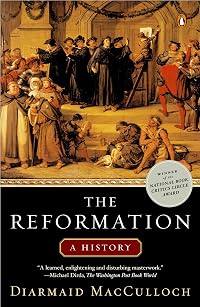
Reformation : Europe's house divided : 1490-1700
by Diarmaid MacCulloch
On This Page
Description
At a time when men and women were prepared to kill-and be killed-for their faith, the Protestant Reformation tore the Western world apart. Acclaimed as the definitive account of these epochal events, Diarmaid MacCulloch's award-winning history brilliantly recreates the religious battles of priests, monarchs, scholars, and politicians-from the zealous Martin Luther and his Ninety-Five Theses to the polemical John Calvin to the radical Igantius Loyola, from the tortured Thomas Cranmer to the show more ambitious Philip II. Drawing together the many strands of the Reformation and Counter-Reformation, and ranging widely across Europe and the New World, MacCulloch reveals as never before how these dramatic upheavals affected everyday lives-overturning ideas of love, sex, death, and the supernatural, and shaping the modern age. show lessTags
Recommendations

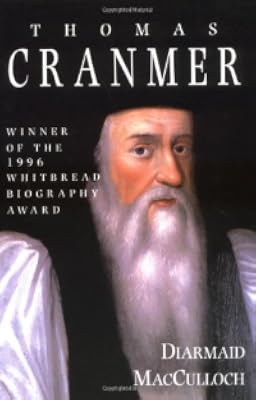
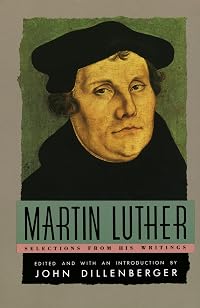
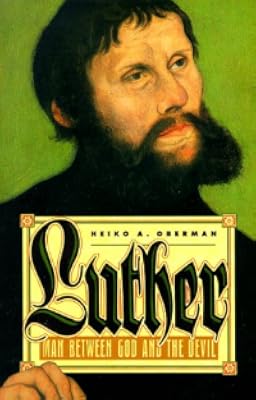




Member Recommendations

Member Reviews
Confronted with the challenge of writing about an era too well-known, Lytton Strachey advised how the explorer of the past would proceed: “He will row out over the great ocean of material, and lower down into it, here and there, a little bucket, which will bring up to the light of day some characteristic specimen, from the far depths, to be examined with a careful curiosity.” This magisterial history of the Reformation by Diarmaid MacCulloch is a prolonged exercise in doing just that.
This is a subject I know a thing or two about, yet his text is liberally sprinkled with facts, insights and interpretations new to me, all of it told in an off-hand style that makes it seem as if he’s just sitting and chatting with you in a diffident show more way. Yet never did I feel that his examples were mere curiosities; invariably they illuminated the topic under discussion.
The section of New Possibilities: Paper and Printing (70–76) is a case in point. Many have made the connection between the invention of movable type and the rapid spread of the ideas of Luther and other Reformers. But MacCulloch thinks further. The rapid proliferation of (affordable) books made it worthwhile to learn to read—this, before 1516. In turn, the proliferation of profitable printers created an opportunity for new texts. The modern concept of “author” had its birth then. And it surely wasn’t accidental that it was only then that the Index was created: an attempt to control which of the new flood of books should not be read.
I also found enlightening his assertion that the Reformation can be seen as a conflict within the legacy of Augustine, with Luther emphasizing the inability of a human to work toward his or her own salvation, making him or her utterly dependent on God’s grace, while his opponents oriented themselves on Augustine’s stress on the need for obedience to the church to attain salvation.
The author shows throughout how much can be gained by considering how social, economic and political aspects of life then factored into the Reformation yet at the same time maintains the centrality of theology. People then were in dead earnest about matters of belief.
One feature of the book is its continent-wide scale. Too often, an emphasis on German-speaking Europe obscures the interesting developments to the east. Another is that after 500 pages of roughly chronological treatment, the author adds a section entitled Patterns of Life dealing with a variety of topics such as the use of images, the frenzy with regard to witches, and matters related to family and sexuality, focusing both on aspects that remained the same despite the split in Western Christianity, as well as what changed.
This is a thick book: my paperback copy has 700 pages of text set in small type, supplemented by suggestions for further reading, notes and an index. It may be more than the casual reader cares to digest. But with the 500th anniversary of the outbreak of the Reformation rapidly approaching, I say with confidence that if you read only one book on the topic, this would be an excellent choice. show less
This is a subject I know a thing or two about, yet his text is liberally sprinkled with facts, insights and interpretations new to me, all of it told in an off-hand style that makes it seem as if he’s just sitting and chatting with you in a diffident show more way. Yet never did I feel that his examples were mere curiosities; invariably they illuminated the topic under discussion.
The section of New Possibilities: Paper and Printing (70–76) is a case in point. Many have made the connection between the invention of movable type and the rapid spread of the ideas of Luther and other Reformers. But MacCulloch thinks further. The rapid proliferation of (affordable) books made it worthwhile to learn to read—this, before 1516. In turn, the proliferation of profitable printers created an opportunity for new texts. The modern concept of “author” had its birth then. And it surely wasn’t accidental that it was only then that the Index was created: an attempt to control which of the new flood of books should not be read.
I also found enlightening his assertion that the Reformation can be seen as a conflict within the legacy of Augustine, with Luther emphasizing the inability of a human to work toward his or her own salvation, making him or her utterly dependent on God’s grace, while his opponents oriented themselves on Augustine’s stress on the need for obedience to the church to attain salvation.
The author shows throughout how much can be gained by considering how social, economic and political aspects of life then factored into the Reformation yet at the same time maintains the centrality of theology. People then were in dead earnest about matters of belief.
One feature of the book is its continent-wide scale. Too often, an emphasis on German-speaking Europe obscures the interesting developments to the east. Another is that after 500 pages of roughly chronological treatment, the author adds a section entitled Patterns of Life dealing with a variety of topics such as the use of images, the frenzy with regard to witches, and matters related to family and sexuality, focusing both on aspects that remained the same despite the split in Western Christianity, as well as what changed.
This is a thick book: my paperback copy has 700 pages of text set in small type, supplemented by suggestions for further reading, notes and an index. It may be more than the casual reader cares to digest. But with the 500th anniversary of the outbreak of the Reformation rapidly approaching, I say with confidence that if you read only one book on the topic, this would be an excellent choice. show less
We had a book in secondary school, an Irish convent secondary school, called Renaissence And Reformation and the one thing I remember about it is that at one point it said something like 'now, obviously, the Spanish Inquisition was no summer camp, but...' The effects of the Reformation are so huge and run so deep they're hard to fathom, but here we go, several hundred years worth of intense theological disagreement and the subsequent social upheavals, displacement of peoples, wars and persecutions, the whole damn thing. A considerable percentage of this book details various and endless and sincere life-or-death disgreements about things that seem to belong in a fantasy novel they're so arbitrary, generated out of the mess of human show more faillibility in an effort to transcend it. It's fascinating. I doubt I'll remember a fraction of it, but it was a marvelous read. show less
I've only read about a quarter of this (about up to the Council of Trent), but it is a fabulous book that I recommend at every possible opportunity. The author is Anglican, which gives him a reasonable claim to be in the /via media/ between Catholic and Protestant, and what I most appreciated about his perspective is that he gives the benefit of the doubt to all participants. He assumes that both sides were by and large acting in good faith -- an assumption which neither side made about the other at the time!
He also pauses periodically to wonder, "If something at this point had happened differently -- if a key player had chosen a different action -- might the schism of the Reformation have been avoided?" Which is a terrific question, show more because it's not like there weren't any disputes over doctrine or authority in the previous 1500 years of the Western church, so why did this one end up so differently?
A particular treat is the first chapter of the book, in which he gives a flavor of the late medieval Catholic church: basically the "Before" picture of the Reformation. show less
He also pauses periodically to wonder, "If something at this point had happened differently -- if a key player had chosen a different action -- might the schism of the Reformation have been avoided?" Which is a terrific question, show more because it's not like there weren't any disputes over doctrine or authority in the previous 1500 years of the Western church, so why did this one end up so differently?
A particular treat is the first chapter of the book, in which he gives a flavor of the late medieval Catholic church: basically the "Before" picture of the Reformation. show less
I found this a difficult read. The topic is vast - two centuries of European history, with side trips the New World, India, China and Japan. The first half of the book is ostensibly a history of the times; the problem is it jumps around geographically and historically to the extent that it's very confusing unless you already are well grounded in Eurpean history for the 16th and 17th centuries. There's also something about the writing style that I couldn't quite put my finger on but that made things hard to follow. And although the period is populated by fascinating characters - Luther, Calvin, Zwingli, Erasmus, Cramer, Xavier, Borromeo - none of them gets a linear biography - you find out a little about Calvin in one chapter, then a show more little more in the next, and so on.
That being said, this is fascinating stuff. There are all sorts of little quirks and details - I never realized that the Transylvanians were Lutherans, or that "effeminate" once described men who were thought to be excessively interested in heterosexual sex.
Several things come through to me:
One is that we have a tendency to think of cultures temporally separated from ours, especially cultures of our ancestral heritage, as "people just like us"; perhaps not having the benefits of automobiles, television, People magazine and Starbucks, but nevertheless people that we could easily relate to assuming there were no language barriers. Historical novels always seem to take this as a given, with 12th Century Scots inevitably behaving like Manhattan yuppies in tartans. In fact, this is a "given" in the modern liberal outlook (I mean "liberal" in the classic sense here, not the modern political sense): that our ancestors would cheerfully embrace the virtues of democracy, religious tolerance, women's rights and free market economics if only they were exposed to them. I admit I am as prone to this belief as the next guy; it just seems "right" somehow; something every intelligent person should see, regardless of when or where they live. It becomes apparent, instead, that if I had time-travelled back to visit my distant ancestors in Reformation Germany and tried to explain things to them, I most likely would have been burned alive. If thus for our own culture across time, why not for different cultures across space? It does not bode well for the situation in the Middle East.
A second result is the reinforcement of something I already knew - there have been and are now a lot of people who take religion very seriously indeed. A lot of my liberal friends (now I'm using "liberal" in the modern sense) just "don't get" faith and its implications. Yet the most caricatured fundamentalist Bible-thumper of modern editorial cartoons is nothing compared to people of the Reformation, who were quite willing to kill their neighbors over whether or not they had communion rails in their church. I willing to bet if you asked the average American what happened during "the Reformation", they would say there was a liberalization of religious attitudes (assuming they even knew what the "Reformation" was, since modern schools can't teach anything, history or otherwise, that has anything to do with religion). The actuality was, of course, the reverse - 200 years of religious warfare. Modern liberals tend to see religious belief as just another political/economic choice - something that is easily negotiable to accommodate current politics. And if the faithful refuse to negotiate, that just indicates stubbornness or ignorance or ill-will on their part. I'm not sure whether religious education - I don't mean education in a religion, but education about religions - would help here - I fear it would be counterproductive, by reinforcing prejudice against religion in the same people whose self image is based on their belief that they are fighting religious prejudice.
I also find a disturbing sense of deja vu. A lot of politics in the 16th and 17th century was based on the expectation that these were the Last Days - the world had been more or less stable for so long, now it was turning upside down - what else could that mean but the imminent Apocalypse? Well, religious people who feel the Apocalypse is upon us are still around, but we now have the phenomenon of the non- and anti-religious also becoming Apocalyptic. What else are the writings of Paul Ehrlich and the rest of the doomsday environmentalists but the preaching of Apocalyptic prophets? When earthquakes and two-headed calves and unusually weather were once looked on as signs of the disfavor of God, they are now seen as the result of global warming and environmental pollution. There is truly nothing new under the sun.
The final unsettling similarity between now and then is the use of terrorism. Terrorists then were just as suicidal as they are now - Henri III, Henri IV, and Willem III were all done in by suicidal assassins, for religious reasons. It's true that terrorists then had a little less in the way of technology - carriage bombs never caught on. But Guy Fawkes and the Gunpowder Plot is not all that different from the London bombings and the St. Bartholomew's Day Massacre is not that different from what went on in Bosnia or Rwanda and what's going on in Darfur and Baghdad.
Thus, I'd say it's worth a read = maybe 3.5 to 4 stars. show less
That being said, this is fascinating stuff. There are all sorts of little quirks and details - I never realized that the Transylvanians were Lutherans, or that "effeminate" once described men who were thought to be excessively interested in heterosexual sex.
Several things come through to me:
One is that we have a tendency to think of cultures temporally separated from ours, especially cultures of our ancestral heritage, as "people just like us"; perhaps not having the benefits of automobiles, television, People magazine and Starbucks, but nevertheless people that we could easily relate to assuming there were no language barriers. Historical novels always seem to take this as a given, with 12th Century Scots inevitably behaving like Manhattan yuppies in tartans. In fact, this is a "given" in the modern liberal outlook (I mean "liberal" in the classic sense here, not the modern political sense): that our ancestors would cheerfully embrace the virtues of democracy, religious tolerance, women's rights and free market economics if only they were exposed to them. I admit I am as prone to this belief as the next guy; it just seems "right" somehow; something every intelligent person should see, regardless of when or where they live. It becomes apparent, instead, that if I had time-travelled back to visit my distant ancestors in Reformation Germany and tried to explain things to them, I most likely would have been burned alive. If thus for our own culture across time, why not for different cultures across space? It does not bode well for the situation in the Middle East.
A second result is the reinforcement of something I already knew - there have been and are now a lot of people who take religion very seriously indeed. A lot of my liberal friends (now I'm using "liberal" in the modern sense) just "don't get" faith and its implications. Yet the most caricatured fundamentalist Bible-thumper of modern editorial cartoons is nothing compared to people of the Reformation, who were quite willing to kill their neighbors over whether or not they had communion rails in their church. I willing to bet if you asked the average American what happened during "the Reformation", they would say there was a liberalization of religious attitudes (assuming they even knew what the "Reformation" was, since modern schools can't teach anything, history or otherwise, that has anything to do with religion). The actuality was, of course, the reverse - 200 years of religious warfare. Modern liberals tend to see religious belief as just another political/economic choice - something that is easily negotiable to accommodate current politics. And if the faithful refuse to negotiate, that just indicates stubbornness or ignorance or ill-will on their part. I'm not sure whether religious education - I don't mean education in a religion, but education about religions - would help here - I fear it would be counterproductive, by reinforcing prejudice against religion in the same people whose self image is based on their belief that they are fighting religious prejudice.
I also find a disturbing sense of deja vu. A lot of politics in the 16th and 17th century was based on the expectation that these were the Last Days - the world had been more or less stable for so long, now it was turning upside down - what else could that mean but the imminent Apocalypse? Well, religious people who feel the Apocalypse is upon us are still around, but we now have the phenomenon of the non- and anti-religious also becoming Apocalyptic. What else are the writings of Paul Ehrlich and the rest of the doomsday environmentalists but the preaching of Apocalyptic prophets? When earthquakes and two-headed calves and unusually weather were once looked on as signs of the disfavor of God, they are now seen as the result of global warming and environmental pollution. There is truly nothing new under the sun.
The final unsettling similarity between now and then is the use of terrorism. Terrorists then were just as suicidal as they are now - Henri III, Henri IV, and Willem III were all done in by suicidal assassins, for religious reasons. It's true that terrorists then had a little less in the way of technology - carriage bombs never caught on. But Guy Fawkes and the Gunpowder Plot is not all that different from the London bombings and the St. Bartholomew's Day Massacre is not that different from what went on in Bosnia or Rwanda and what's going on in Darfur and Baghdad.
Thus, I'd say it's worth a read = maybe 3.5 to 4 stars. show less
A comprehensive - boy, is it comprehensive - analysis of the religious life of Europe spanning two centuries. Just over 700 tightly-packed pages - the remainder comprises notes, bibliography, appendices and a massive index - provide a broadly chronological look at the developments, conflicts, politics and social trends of the Reformation. The broad scope necessarily means that the minutiae of war, politics, doctrine and social trend are overlooked, but 75 pages of notes detailing sources and further reading compensate for this.
MacCulloch begins with the an examination of late medieval Catholicism, moves through the early reformers, the Inquisition and the Counter-Reformation to the Thirty-Years' War and the English Civil War, and show more finishes with a thematic examination of topics including church discipline, the concept of a Protestant work-ethic, attitudes to death, celibacy, marriage, homosexuality, the role of women in the church, witch-hunts and anti-Semitism through the Reformation period.
MacCulloch writes with humour, and in an engaging style. He very helpfully cross-references between chapters on a regular basis, making it a little easier for the reader to keep track of who does what where and when. He pulls no punches about the truly ghastly things that people did to one another in the name of Christianity in the period, but generally remains sympathetic to the fact that, however wrong they were, they were often doing what they thought was right.
A seriously excellent history book, providing an introduction for the student and an accessible overview for the non-academic. show less
MacCulloch begins with the an examination of late medieval Catholicism, moves through the early reformers, the Inquisition and the Counter-Reformation to the Thirty-Years' War and the English Civil War, and show more finishes with a thematic examination of topics including church discipline, the concept of a Protestant work-ethic, attitudes to death, celibacy, marriage, homosexuality, the role of women in the church, witch-hunts and anti-Semitism through the Reformation period.
MacCulloch writes with humour, and in an engaging style. He very helpfully cross-references between chapters on a regular basis, making it a little easier for the reader to keep track of who does what where and when. He pulls no punches about the truly ghastly things that people did to one another in the name of Christianity in the period, but generally remains sympathetic to the fact that, however wrong they were, they were often doing what they thought was right.
A seriously excellent history book, providing an introduction for the student and an accessible overview for the non-academic. show less
Few books will rival Dairmid MacCulloch’s Reformation in terms of scope, scholarship, depth, analysis, or merit. His history of Europe and the Americas from the early 1400’s to the late 1700’s is awe-inspiring. The book is not a straight-forward chronology of event and causes, but rather an intricate interweaving of disparate histories. Chapters move from locale to locale, showing how each area’s events had effects on another’s. From Luther and Calvin, through Cranmer and Zwingli, MacCulloch is a deft historian, blending modern-day analysis with centuries old texts. His tome shows how the Reformation and the Protestant movement shaped the world as we know it today. A daunting but excellent book.
This is a comprehensive history of the Reformation, rich in detail, and even-handed, teasing out the strands of the many varieties of both Catholic and Protestant Christianity that developed in Europe over the 15th to 17th century, and connecting this history meaningfully to our modern religious, national, gender identities. Something very special about MacCulloch's book is that he is able to synthesize many perspectives - theology, politics, social changes - putting it all together in a narrative that makes sense. I have always found this period of history confusing, and as a result, I had an oversimplified concept. This book is illuminating, both a challenge and a joy. Well worth the effort to read.
Members
- Recently Added By
Published Reviews
ThingScore 100
‘Reformation’ is set to become a landmark for academic historians
added by DouglasAtEik
In its field it is the best book ever written.
added by DouglasAtEik
Lists

Mike's Theology Books
74 works; 2 members

In Our Time books
4,934 works; 2 members
Talk Discussions
Past Discussions
MacCulloch’s book a definite improvement in Reformation Era: History and Literature (June 2022)
The Spirituali and MacCulloch’s book in Reformation Era: History and Literature (December 2021)
Author Information

Diarmaid MacCulloch is a Fellow of St Cross College and Professor of the History of the Church, University of Oxford. His many books include A History of Christianity: The First Three Thousand Years.
Some Editions
Awards and Honors
Awards
Common Knowledge
- Canonical title
- Reformation : Europe's house divided : 1490-1700
- Original title
- Reformation : Europe's house divided : 1490-1700
- Original publication date
- 2004
- People/Characters
- Martin Luther (1483-1546); John Calvin (1509-1564); Edward VI, King of England (1537&ndash | 1553); Henry VIII, King of England; Elizabeth I, Queen of England; John Wycliffe (show all 38); Jan Hus; Huldrych Zwingli (1484-1531); Augustine of Hippo (Saint, 354-430); John Knox; Henri IV, King of France; Henri III, King of France; Charles IX, King of France; Philip II, King of Spain; James VI and I, King of Scots and King of England; Mary I, Queen of England; Thomas Cranmer, Archbishop of Canterbury; Philip Melanchthon (1497-1560); Desiderius Erasmus (ca. 1469-1536); Ignatius of Loyola (Saint, c.&thinsp | 1491&ndash | 1556); Martin Bucer (1491-1551); Ferdinand I, Holy Roman Emperor; Maximilian II, Holy Roman Emperor; Ferdinand II, Holy Roman Emperor; Charles V, Holy Roman Emperor (1500&ndash | 1558); Johann Oecolampadius (1482-1531); Johann Heinrich Bullinger (1504-1575); Frederick V, Elector Palatine; Peter Martyr (1500-1562); William Laud, Archbishop of Canterbury; Jan Łaski; Thomas Hooker; Roger Williams; Paul III, Pope; Paul IV, Pope; Clement VII, Pope; Adrian VI, Pope; Leo X, Pope
- Important places
- Wittenberg, Saxony-Anhalt, Germany; Vatican City; Geneva, Geneva, Switzerland; Basel, Basel-Stadt, Switzerland; Zürich, Zürich, Switzerland; Trento, Trentino-Alto Adige, Italy (show all 17); Münster, North Rhine-Westphalia, Germany; Amsterdam, North Holland, Netherlands; London, England, UK; Prague, Czech Republic; Edinburgh, Scotland, UK; Strassbourg, Grand-Est, France; Heidelberg, Baden-Württemberg, Germany; Plymouth, Massachusetts, USA; Providence, Rhode Island, USA; New Haven, Connecticut, USA; Jamestown, Virginia, USA
- Important events
- Reformation; French Wars of Religion; Thirty Years' War; Counter-Reformation; German Reformation; Swiss Reformation (show all 19); Scottish Reformation; English Reformation; Dutch Reformation; Dutch Revolt; St. Bartholomew's Day Massacre; Peace of Augsburg (1555); Schmalkaldic War (1546-1547); German Peasants' War (1524-1525); Edict of Nantes (1598); Peace of Westphalia (1648); Council of Trent (1545–1563); Spanish conquest of the Palatinate (1620–1622); English colonization of North America
- Dedication
- For Simon Yarrow
with whom I discovered Preston Bissett - First words
- Who or what is a Catholic?
- Last words
- (Click to show. Warning: May contain spoilers.)Would God it could please all to become one in that one Christ, whose name we all do carry.
- Publisher's editor
- Proffitt, Stuart
- Blurbers
- Worden, Blair; Grayling, A.C.; Johnson, Daniel; Pettegree, Andrew; Hutton, Ronald; Edwards, David L. (show all 7); Fernandez-Armesto, Felipe
- Original language
- English
Classifications
- Genres
- Religion & Spirituality, History, Nonfiction, General Nonfiction
- DDC/MDS
- 270.6 — Religion History of Christianity History, geographic treatment, biography of Christianity Reformation; Counter reformation (1517-1648)
- LCC
- BR305.3 .M23 — Philosophy, Psychology and Religion Christianity Christianity History By period Modern period
- BISAC
Statistics
- Members
- 2,899
- Popularity
- 6,211
- Reviews
- 35
- Rating
- (4.10)
- Languages
- 5 — Dutch, English, German, Hungarian, Italian
- Media
- Paper, Audiobook, Ebook
- ISBNs
- 16
- ASINs
- 8